Dolly and Wendell

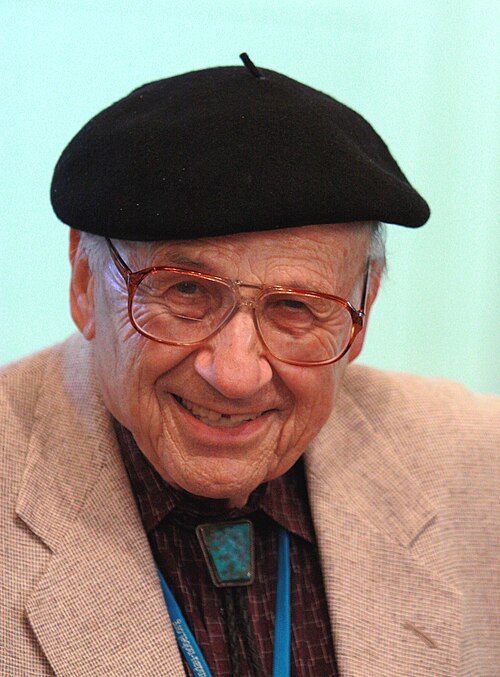
In the closing days of August, two great Americans died: Dolly Parton, age 80, and Wendell Berry, age 92. 

In some ways, they had much in common.  They were from the same part of the country — Dolly’s roots were in the “hollers” of Tennessee and Wendell’s in the hills of nearby Kentucky.  They both carried with them an appreciation of rural values and a powerful blend of humility and pride.  And they both expressed personal truths in a way that spoke to us all.

As best as I can determine, they never met.

I never saw Dolly in person, but like so many, grew to appreciate her art, her persona, and what she stood for.  She honored her upbringing and used her fame and fortune to help others.  She welcomed every person she encountered.   She always took the stage with joy and purpose.  As a music critic friend of mine noted this week, “The nation — nay, the universe — has lost one of its great lights and levelers.” [i]

In contrast, I knew Wendell Berry to be a shy man.  I saw him in person on three occasions: in 1986 at the Campbell Farm in Washington where we were volunteers, in 1993 at the dedication of a local community-supported agriculture project, and several years later as part of an “Environmental Poetry” series at UCSB.

There have been many tributes to each of them in recent days.  I have nothing to add to honor Dolly.  But I do want to offer something to honor Wendell.

This week I looked back over my blog posts and discovered I’d written about him eight different times.  I decided to share two selections.

What Young People Need 

When he spoke at UCSB, he read from a novel he was working on, Jayber Crow.  This was followed by a question-and-answer period.  Someone asked if, given his dedication to family farms, gardening should be a required subject in high school.  Berry paused for a minute, then said, “No, students should read Homer and the Bible, because they need to know the problems they are facing are not new.” 

What Jayber Crow Understood 

I bought the novel Wendell had read from soon after it came out in 2000. Jayber grows up in the small town of Port William.  Early in life, he felt a possible calling to ministry and attended seminary but became disillusioned and left.  He returns to Port William and becomes the town barber, gravedigger and church custodian.  From these vantage points he witnesses people’s lives unfolding.   In one passage, he’s sitting at the back of the church during a service. The young visiting preacher is a fire-and-brimstone kind of guy, and Jayber reflects on those he’s encountered who see the world from that perspective:

…They learned to have a very high opinion of God and a very low opinion of His works — although they could tell you that this world had been made by God Himself.

What they didn’t see was that it is beautiful, and that some of the greatest beauties are the briefest. They had imagined the church, which is an organization, but not the world which is an order and a mystery. To them the church did not exist in the world where people earn their living and have their being, but rather in the world where they fear death and Hell, which is not much of a world.  To them, the soul was something dark and musty, stuck away for later. In their brief passage through or over it, most of the young preachers knew Port William only as it theoretically was (“lost”) and as it theoretically might be (“saved”) and they wanted us all to do our part to spread this bad news to others who had not heard it — the Catholics, the Hindus, the Muslims, the Buddhists, and others — or else they (and maybe we) would go to Hell. I did not believe it. They made me see how cut off I was. Even when I was sitting in the church, I was a man outside.

In Port William, more than any place I had ever been, this religion that scorned the beauty and goodness of this world was a puzzle to me. To begin with, I don’t think anybody believed it. I still don’t think so. Those world condemning sermons were preached to people who, on Sunday mornings, would be wearing their prettiest clothes. Even the old widows in their dark dresses would be pleasing to look at. By dressing up on the one day when most of them had leisure to do it, they signified their wish to present themselves to one another and to Heaven looking their best. The people who heard those sermons loved good crops, good gardens, good livestock and work animals and dogs; they loved flowers and the shade of trees, and laughter and music; most of them could make you a fair speech on the pleasures of a good drink of water or a patch of wild raspberries. While the wickedness of the flesh was preached from the pulpit, the young husbands and wives and the courting couple sat thigh to thigh, full of yearning and joy, and the old people thought of the beauty of the children. And when church was over they would go home to Heavenly dinners of fried chicken, it might be, and creamed new potatoes and creamed new peas and hot biscuits and butter and cherry pie and sweet milk and buttermilk…

…The people didn’t really want to be saints of self-deprivation and hatred of the world. They knew that sooner or later the world would deprive them of all it had given them, but they still liked it.  What they came together for was to acknowledge, just by coming, their losses and failures and sorrows, their need for comfort, their faith always needing to be greater, their wish (in spite of all words and acts to the contrary) to love one another and to forgive and be forgiven, their need for one another’s help and company and divine gifts, their hope and experience of love surpassing death, and their gratitude. (162-163)[ii]

The first time I read this passage, it brought tears to my eyes. It captures why I have felt privileged to serve all my congregations.  It’s never been about promoting any particular doctrine or instilling fear.  Instead, it’s been about practicing a down-to-earth reverence for all of us “ordinary” people trying to live our “ordinary” lives with grace and care.  Wendell described what I have always felt but did not have the words to express.  I think Dolly would know exactly what he was talking about. I’m grateful to them both.


[i] “Goodbye, Dolly,” Joe Woodard, Santa Barbara Independent, September 3, 2026

[ii] What Jayber Crow Understood

Playing the Cards We’ve Been Dealt 


Recently I’ve known several people making important decisions in their life.  Take a new job or keep the one you have? Stay in your small town or make a move to a big city?  Folks who are getting on in years wonder, “Can I keep doing this activity or do I need to give it up?” “Shall I go forward with this recommended surgery or wait?” Meanwhile, I’m facing some of my own decisions. In the process, an old country song started playing on my inner personal jukebox: “The Gambler,” which was major hit for Kenny Rogers back in 1980.   Here’s the chorus:

You’ve got to know when to hold ’em

Know when to fold ’em

Know when to walk away

And know when to run

You never count your money

When you’re sittin’ at the table

There’ll be time enough for countin’

When the dealin’s done.

Investigating the song’s history, I learned about the scene it imagines.  Two strangers are riding a lonely train at night.  The older fellow offers to tell the younger one the secret of life in exchange for some whiskey.  The young guy accepts and hands him the bottle.  The old timer tells him that getting through life is a lot like playing poker.  The gambler states that every situation can be played for better or worse. The trick is to recognize what is worth keeping, choose one’s battles, and not dwell on losses. After he finishes talking, the gambler crushes the cigarette out, and dies in his sleep during the night, leaving the narrator to ponder his wisdom alone.”[i]

You’ve got to know when to hold ’em

Know when to fold ’em

Know when to walk away

And know when to run…

I have limited expertise playing cards.  I mastered “Go Fish” by age 5 and later learned how to keep up with “Uno;” more challenging games such as bridge were beyond me.  But my older brother taught me how to play poker when I was young, and when I got to college I enjoyed playing with friends.  I appreciated the blend of luck, strategy, and acting that made for winning poker hands.  

One of the life truths revealed in poker is reflected in the saying, “You’ve got to play the cards you’ve been dealt.”  We say that when we look at a situation and realize we can’t change the facts, as much as we’d like.   But a skillful poker player over time makes the best of whatever cards they have.  

We know some people are born into families and situations with many advantages – financial and emotional security, for example.  Others come into life with factors that make it difficult to feel safe or believe they’ve got much of a chance to do well.  We also see examples of people born into wealth, privilege, and fame who have difficult and sometimes tragic lives.   We don’t get dealt the same cards as everyone else — we all get different cards and must learn how to play them as best we can.  In that truth, the old gambler was right.  “The Gambler” meets the standard for every great country song: “Three chords and the truth.”

But as much as I like the song, I kept thinking about the message.  For me it’s missing some key bits of wisdom.

One is the value in having a higher purpose beyond just playing to win for ourselves.  Our personal experiences and strengths can help us find our way.  But we can also use them to benefit other people.  

I think of the many hospice volunteers I’ve known.  Often, they have been through personal losses and tragedies and, over time, were able to heal.  Having been through that, they felt a calling to help others who are facing the uncertainties of life and experience of grief.  They don’t try to fix people but instead care for others with patience and reverence.  They take the cards life has dealt them and play them in a way that helps others, and in the process find a sense of satisfaction not possible if they focusied only on themselves.  

The same is true in recovery and mentoring programs, and many kinds of service.

Another missing element is the power that comes from being known and cared for by a force beyond ourselves.  In many Gospel stories, Jesus is traveling from village to village, encountering a wide range of people.  Some have an illness that makes them socially unclean and untouchable.  Others have made poor choices in life and have assumed those decisions will define them forever.  Others feel they are of little worth due to their gender, age, or ethnic background.  Each of these characters hold certain cards in their hand and assume their disappointing lives are the product of bad luck and fate; these are the cards they deserve, and they’ll never have another chance.  Why not “fold em” and give up?  But Jesus comes, sees them, and engages them. He touches and heals people who are ill.  He gives women and children honor and respect.  He sits at tables to break bread with social rejects.  In his actions and words, he offers each person a spiritual wild card — the wild card of grace.  With this new card in their hand and heart, they can see new possibilities in their life and a new community where they are welcome.  They discover that, “when the dealin’s done,” a winning hand is not how many chips we have stacked up for ourself, but how we’ve played the game and why.

Lead image: keepnaturewild.com


[i] https://en.wikipedia.org/wiki/The_Gambler_(song)

Presence of Mind and the Search for Soul

Last week I shared personal thoughts on what it means to have “presence of mind.” I considered examples of how we use the word “mind” and what it means to have the mind “present.” I offered examples: the performance of a master teacher, the act of a gracious theologian I once shared lunch with, and watching Willie Mays play baseball. I ended with this:

It seems “presence of mind” appears when someone can observe multiple thoughts, feelings, or sensations simultaneously and, from a calm place in the middle of it all, decide what is best to do or say. What emerges often feels like fresh insight rather than just a reaction. Truly wise and spiritual people seem to be able to do that well, and it has very little to do with formal education. I have decided to begin contemplating the relationship between “presence of mind” and what some call “soul.”

This past week I set out on that exploration. I reviewed what I had previously written about “soul.” I found three excerpts worth sharing.

“Your Soul Is Like a Wild Animal”

In 2009 I read A Hidden Wholeness: The Journey Toward an Undivided Life by the academic-turned-spiritual-mentor Parker Palmer. Early on, he says he will be using the word “soul.” He knows his academic friends will be dismissive of both the word and the concept. But he believes there is something within us best described with this word — a point of connection and wholeness that all spiritual traditions understand. He also offers a useful metaphor: “The soul is like a wild animal — tough, resilient, and shy. When we go crashing through the woods shouting for it to come out so we can help it, the soul will stay in hiding. But if we are willing to sit quietly and wait for a while, the soul may show itself.”

He goes on to say that much of our culture keeps us distracted, and so our soul withdraws. But in moments of quiet and inner attentiveness, our souls cautiously appear. In those moments, we realize who we really are and how miraculous the world is; in those moments, we often find guidance, assurance, and hope.

Palmer says there is another quality of soul that is like a wild animal: “Like a wild animal, the soul is tough, resilient, resourceful, savvy, and self-sufficient: it knows how to survive in hard places. I learned about these qualities during my bouts with depression. In that deadly darkness, the faculties I had always depended on collapsed. My intellect was useless; my emotions were dead; my will was impotent; my ego was shattered. But from time to time, deep in the thickets of my inner wilderness, I could sense the presence of something that knew how to stay alive even when the rest of me wanted to die. That something was my tough and tenacious soul.”[i]

Takeaway: Finding ways to cultivate “presence of mind” sets the stage for getting in touch with our “soul.”

“Mind Proposes, Soul Disposes”

I once attended a week-long retreat at Esalen with the wise scholar of global spirituality, Huston Smith. My notebook was filled with things he said I wanted to remember. One was a phrase: “Mind proposes, soul disposes.”

I take this to describe an experience we are all familiar with. A thought arises within our mental awareness that seems like a suggestion or an impression. It can appear like words on our inner screen, or perhaps our personal voice speaking to us from within. This is the mind proposing. What do we do with this proposal? A different kind of awareness comes into play as we consider the suggestion. We ask ourselves: Is this the way I want to feel? Is this suggestion something I really want to do? Is this a path I want to follow? As we decide, it is the soul disposing — our inner, “higher self” coming into play, indicating a possible direction like a compass. Then it’s up to us to decide whether we go that way.[ii]

Takeaway: When “present,” the mind can consider all the information and feelings coming into our awareness. The soul then chooses the best path to follow.

“The Buddha Touches the Earth”

I cited the ancient story in which demons pester the Buddha, trying to sow doubt about his enlightenment. He responds by touching the earth, and the demons flee. I like to think of our traditions as ways of “touching the earth.”

Spiritual traditions include specific teachings, participation in community life, and the practice of serving others in tangible ways. As our culture becomes more fragmented and people more socially isolated, many studies have shown that being part of a spiritual community leads to increased emotional and physical health. Our traditions ground us in what really matters, giving meaning to all we do.[iii]

Takeaway: Presence of mind creates a space for our soul to show up. Then we ponder our choices. We may choose to rely only on our own perspective. But we don’t have to. Our traditions give us a vision for what a meaningful life looks like. Sometimes that means putting aside our personal priorities. Sometimes it may mean following new paths that lead to unexpected joy and renewed purpose. In moments of decision, we can ask ourselves: Is this a direction that my best spiritual ancestors and community wisdom would recognize as worth pursuing?

What helps you find “presence of mind”? Regular times of unplugged, silent contemplation? Worship experiences? Long walks? Immersing yourself in music, art, activities, or acts of service that inform and inspire you? And when your shy soul appears, what voices do you trust to help you know what direction you might go?


[i] [i] https://drjsb.com/?s=soul

[ii] [ii] https://drjsb.com/2023/11/04/mind-proposes-soul-disposes/

[iii] [iii] https://drjsb.com/2025/09/06/touching-the-earth-grounding-our-soul/

Choosing Our Copilots

Some years ago, bumper stickers appeared with the slogan, “God is my copilot.”

A little later some animal lovers came up with an alternative sticker: “Dog is my copilot.”

Now when I open Microsoft Word, I’m offered the help of “Copilot,” Microsoft’s AI chatbot.

It looks like we now have got at least three options for support as we are navigating life.

I am using my AI tool Claude for various tasks these days and it is very useful.  Recently I was thinking I should make a list of the titles and dates of all the blog posts I’ve written but hesitated because I knew it would be tedious.  I asked Claude to do it, saying I think there have been around 200. Claude accepted the task and a few minutes later said, “Done — turns out you’re at 283 posts, not just ‘close to 200’! (Post #200 landed back in December 2024, and you’ve kept going strong since.) The index is chronological, oldest to newest, with each title linking straight to the post.”

It’s hard not to play along with the feel of a conversation with a person, so I replied, “Wow. I’m impressed. Thank you.”

Claude responded: “You’re very welcome! Four and a half years of weekly reflections is no small thing — glad you have the whole journey laid out in one place now. Happy blogging!”

What’s not to like about that? I’m saved from a unappealing task and the entity that does the work becomes my personal cheerleader.  

The challenge becomes knowing how far to take the relationship.  

Last January, the New York Times reporter Joseph Bernstein wrote a piece entitled “It Makes Sense That People See AI as God: A religious fervor surrounds our relationship with technology.”[i] In it he cites a series of studies exploring how AI is becoming something like a divine force in peoples’ lives.  One example he gave was prayer.

You can turn to both for guidance.  One thing great about AI is you can get a clear response within seconds.  How often does that happen with God?  

Bernstein says personal chatbots are designed to always affirm us so we will stay engaged; we soon can become more dependent on them — which is where profit lies.  They tell us what we want to hear and avoid “hard truths.” We don’t have to go anywhere to get an answer – just be in front of a screen.  And we don’t have to interact with other people who can sometimes be annoying.  

In terms of spirituality, much of what our traditions offer us is affirmation: we are created in the divine image, we are loved, we are forgiven.  But the traditions offer us more than that. They offer us practices that help us own our shortcomings and mistakes.  Sometimes they offer us truths we may not want to hear — not to condemn or belittle us, but to help wake us up.  To paraphrase a popular saying, “the divine meets us where we are but doesn’t leave us there.”  We are called to recognize selfish tendencies when they appear.  We are called to care for more than ourselves.  

I have a friend who was a Jungian analyst and therapist. I used to see her when I wanted to understand a provocative dream or get some perspective on an important decision.  She had established trust with me, so I knew she cared for me as a client and a person. But our relationship was strong enough that she could point out blind spots in my thinking. That didn’t always make my life easier, but it was welcome. It’s what I needed to hear.

In Mark 10, Jesus encounters a rich young ruler who asks, “What must I do to have eternal life?”  Jesus tells him to keep the commandments.  The rich young man says he’s done that but still feels he’s lacking something.  Then Jesus does a second take – he looks closely at the man with love – and sees more deeply into him.  He then tells him he needs to sell all he has, give the proceeds to the poor, and join Jesus’ community.  But for the young man, that’s asking too much, and he goes away “grieving.”  A.I. can offer a standard answer to a common question, but it will never look into someone’s heart with love and genuine insight.

Our traditions pass on stories and parables that can inspire and comfort us but also challenge us to go beyond what is comfortable to find something better. And being on the journey with others in spiritual community offers us both the real-life, hard-earned wisdom of other people and opportunities for us to offer each other support.

Some observers have begun to make a distinction between two options for our relationship with AI: “Cognitive offloading” and “Cognitive surrender. “Cognitive offloading is the use of external tools (like calculators or GPS) for strategic task delegation, where you remain in charge of the goal and critically verify the output. Cognitive surrender…occurs when you stop constructing answers altogether, passively accepting AI outputs as your own judgment.[ii]  

I’m going to “offload” tasks to my AI tool Claude when it seems appropriate, letting it be my “AI copilot” for what it is good at doing.  But I’m not going to surrender my important personal decisions; I’m keeping as my spiritual copilot the living, divine presence I’ve come to know and cherish over the years.  And I’m not leaving my dog out – she’s welcome to share in my walks and naps, giving me a comfort a keyboard never can.


[i] https://www.nytimes.com/2026/01/23/style/ai-algorithm-god-religion.html


[ii] https://addyosmani.com/blog/cognitive-surrender/

What Are Your “Takeaways” In Life?

Life is complicated.  Every hour all kinds of information comes to us from inside and out — way too much for us to take it all in and use.  So we simplify.  We choose what to remember and value.  We navigate as best we can.


Last month I attended a two-day conference that involved 14 hours of presentations.  If someone were to ask me to convey everything I heard, it would be impossible (and boring) to do so.  But if someone asks, “So what were your takeaways?” I understand that means:  what were the highlights, the points and stories most relevant and useful?


It’s a similar process when we create memorial services.  Someone has lived a life – often many years full of life experiences.   When they’re gone, we try to make sense of it all. As I meet with families to prepare, I often ask who they want to have speak.  When asked, a good speaker draws on a vast amount of information they know about the person and instinctively distill it all, choosing a few themes or stories that illustrate the person’s character.  It’s always meaningful to hear what people value.  


Simplifying our life experiences into key “takeaways” helps us navigate our direction. 


But we need to be careful.  We need to guard against oversimplification — the temptation to assume we know more than we really do.  It’s wise to keep a humble spirit and open mind as we create our “takeaways.” 


I recently was reminded of a passage from Wendell Berry’s novel, Jayber Crow..  Jayber comes from a small town in Kentucky.  As a young man, he felt a spiritual calling and enrolled in seminary.  He asks a lot of tough questions, sometimes to the frustration of his professors.  He mistrusts people who are convinced they have all the questions of faith answered, and who assume whoever doesn’t agree with them is simply wrong. He ends up leaving seminary, returns to his hometown, and becomes a barber.  In his day-to-day life, he carefully observes and listens to ordinary people.  And though he left seminary, he never loses his reverence for the Biblical stories.   At one point he says:


“As I have read the Gospels over the years, the belief has grown in me that Christ did not come to found an organized religion but came instead to found an unorganized one. He seems to have come to carry religion out of the temples into the fields and sheep pastures, onto the roadsides and the banks of the rivers, into the houses of sinners and publicans, into the town and the wilderness, toward the membership of all that is here. Well, you can read and see what you think.”


Unlike Jayber, I finished seminary and got my degree. I became one of those people in “the temple” of an “organized religion” whose duty it is to thoughtfully pass on the “takeaways” the tradition offers.  It has been a privilege to do so.


Like Jayber, I never tire of contemplating the Biblical stories.  After many years, they still often surprise and amaze me.  In the early Gospels for example, Jesus creates not just inspiration among his followers but also a great deal of bewilderment.   Whenever they try to put him in a box, he evades them.  Faith becomes more about following as best we can rather than having every question answered.  And I never tire of listening to people wrestle with life’s challenges, often in response to these timeless stories.


The French writer Paul Ricoeur believed there is a basic process we go through as we seek to understand life.  We begin with what he calls a “first naiveté” – we accept some simple beliefs we’ve been taught and we follow them. But then we start experiencing life in all its complexity and disappointments; we can become disillusioned with those original beliefs.  We may feel like giving up.   But the process doesn’t have to end there.  As we mature, we can accept life’s complexities and mysteries and discover a “second naiveté” — some new basic “takeaways” to help us go on.  These don’t ignore life’s problems but help us deal with them.  


Over the years, people have asked me, “Who are you favorite theologians?”  I have often said, “Rembrandt, Bach, Wendell Berry, and the older people I have known in my congregations.”  What a painter, a composer, a writer and those “ordinary people” have taught me is we don’t have to have all the answers to live a meaningful life.  We find satisfaction in work done well and responsibilities fulfilled.   We savor life’s simple pleasures when they come our way.  We love the best we can.  We care for other people as much as possible.  In that process, a quiet kind of light emerges.  And that light doesn’t stop with us; we sense it extends “…toward the membership of all that is here.”  And that is enough.


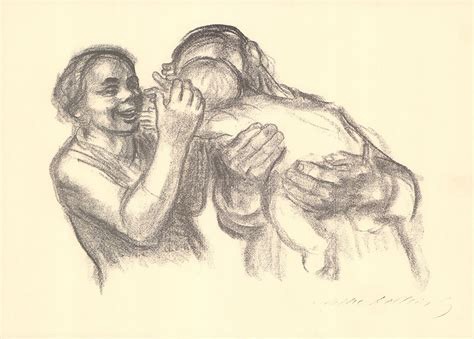
 Art Work: ”Family,” Kathe Kollwitz, 1931


Shaped By Life

Last week we took the Amtrak Coast Starlight for a 32-hour journey to Washington State.  Our goal was to visit friends we’d made when we lived in the farming community of Wapato in central Washington from 1985-1992. 

Once we got settled on the train, I downloaded Pope Leo’s new encyclical on AI to my iPad. While some of it was dry, other parts were compelling.  One section impressed me. I pasted this paragraph to my Notepad:

… we must avoid the misconception of equating this type of “intelligence” with that of human beings. These systems merely imitate certain functions of human intelligence. In doing so, they often surpass human intelligence in speed and computational capacity, offering tangible benefits across many fields. Yet this power remains entirely tied to data processing. So-called artificial intelligences do not undergo experiences, do not possess a body, do not feel joy or pain, do not mature through relationships and do not know from within what love, work, friendship or responsibility mean. Nor do they have a moral conscience, since they do not judge good and evil, grasp the ultimate meaning of situations, or bear responsibility for consequences. They may imitate language, behavior and analytical skills, or even simulate empathy and understanding, but they do not understand what they produce, for they lack the affective, relational and spiritual perspective through which human beings grow in wisdom. Even when these tools are described as capable of “learning,” their way of doing so is different from that of a human person. It is not the experience of those who allow themselves to be shaped by life and grow over time through choices, mistakes, forgiveness and fidelity. Rather, it is a form of statistical adaptation based on data and feedback, which can be very effective, but does not imply inner growth…[i]

We arrived in Seattle at 10 PM.  The next day we visited a friend who lives north of the city, then drove our rental car over Snoqualmie Pass to the Yakima Valley.

The first night a group of friends gathered at a winery to celebrate our memories and relationships. 

The next morning, we drove eight miles south to Wapato, which has 3,000 residents and an 85% poverty rate. 

We began with a visit to the apple farm and retreat center where we lived the first year.  We took photos, including one of the 10 x 50-foot trailer we lived in that is now abandoned.  We drove into town and saw the church I served for six years; the congregation I knew dispersed years ago, and the building is now owned by a Spanish-speaking Pentecostal congregation. 

We drove two blocks past the Dairy Queen to the church-owned house we lived in for six years.  Later we visited a Filipino couple who are dear friends and godparents to our younger daughters.  We spent two more days in the area before driving west over the mountains.  We spent one last night in a downtown hotel in Seattle and boarded the train back home. 

On the way south, I began to sort out my feelings and thoughts. 

I value all my life experiences. Living in a small town few people have heard of amid the poverty was not easy.  But we did it.  We endured because we were embraced by the people in my congregation and those we met through the schools, community, and the local swim team.  We grew to love our new life, the people, the land, and what we were learning. 

Becoming aware of that on the way home, I took my iPad out and looked again at the excerpt from the encyclical.  I was drawn to two sentences:

So-called artificial intelligences do not undergo experiences, do not possess a body, do not feel joy or pain, do not mature through relationships and do not know from within what love, work, friendship or responsibility mean.

…and…

It is not the experience of those who allow themselves to be shaped by life and grow over time through choices, mistakes, forgiveness and fidelity.

I enjoy using Claude, my AI tool.  I appreciate Anthropic, the company that created Claude, which has from the beginning established strong ethical guidelines and whose co-founder was invited to speak at the encyclical’s presentation.

Speed, clarity, ease, amazement:  AI gives us these experiences. 

But life can’t always go quickly. Sometimes it takes a long time to find clarity.  Sometimes the easy way is not the best way.  And sometimes the most lasting sense of appreciation comes not from a device, but from personally experiencing and living through joy and pain and discovering from within the value of “love, work, friendship, and responsibility.”

Living seven years in the Wapato community taught us in a lasting way what love, work, friendship and responsibility mean.  Our life there shaped us for the good.  We will always be grateful for what we learned and the people whose lives became intertwined with our own.  And I am grateful to Pope Leo for reminding us what really matters as we live into the future.


[i] Magnifica Humanitas, paragraph 99

Lead Image: Farm in the hills near Wapato, Washington

Something to Rest On

Gospel music was not something I heard in my home growing up.  But I did know of a singer named Mahalia Jackson, who appeared on television shows and sold millions of records.  She performed at many civil rights demonstrations and before European royalty.  President Kennedy chose her to sing “The Star-Spangled Banner” at his Inaugural Ball in 1961.  She sang “Precious Lord, Take My Hand” at Dr. King’s memorial in 1968. She died in 1972 at the age of 60 and left a legacy of inspired art.

Mahalia Jackson was orphaned at an early age.  She heard gospel music coming from the church next door; it drew her in and she embodied it the rest of her life. 

Many successful gospel singers began in church choirs and later made a career singing the blues, which had a broader audience.   But she never did. She once said, “When you sing gospel you have a feeling there is a cure for what’s wrong. But when you are through with the blues, you’ve got nothing to rest on.”

Ms. Jackson knew pain well and she could express it in her music.  But at the heart of every song was the conviction that reaching out in faith offered “a cure” – “something to rest on.”

Imagine coming upon an old-fashioned water well.  Leaning over the stone wall that surrounds it, we look down to see if there is water.  But the sunlight does not reach far enough for us to know. So we pick up a small stone and drop it down into the well.  If we hear nothing, we might conclude the well is dry.  But if we hear a plunk, we know water is there.

Spiritual belief is like that.  We wonder if there is something beyond us. We drop something down into our inner well — maybe a hope, a prayer, a question, or a plea for guidance.  Sometimes we get only silence. But sometimes we get a response; it may come as a word, a phrase, an image or a conviction.

When we do receive a response, we recognize it is not something we could create on our own — it feels fresh.  When we claim it, we find our life opening to new possibilities.  We have “something to rest on” as our journey continues.

A spiritual well is not a magic wishing well — it’s not about getting what we want every time.  Sometimes we receive prompts that invite us to face and bear challenges we would rather avoid. But the direction we receive always leads to embracing life.

Mahalia Jackson knew a great deal of personal suffering.  But in her faith and in her singing, she found something to “rest on.”  It didn’t make all the problems in the world miraculously disappear. But what she found within herself, in her music, and in her community gave her light, courage and the ability to endure, and she shared that with the world.

We are in the season of Passover and Easter.  The rituals and stories include times when people felt alone and without hope.  But then something happens that opens a way beyond the darkness into new life.  We are reminded we are not alone.  There is a living, divine presence down in that well. We are reminded we have “something to rest on.”


Getting a Peek at Heaven

Let’s say someone asks you, “Got any travel plans?”  Imagine saying, “Yeah… I’m going to the place where heaven and earth meet, poke my head through, and see what I can see.” This is how one artist imagined someone doing that:

(The caption reads: “A missionary of the Middle Ages recounts that he has found the point where heaven and earth meet.”)

For thousands of years, people looked to the skies and imagined what might lie beyond – and wondered if there’s a heaven out there.

Then science came with those telescopes, star charts, and rocket ships.

Years ago, I was teaching an adult class.  The passage we were studying mentioned heaven. One older lady raised her hand.

“You know,” she said, “I’m mad at those astronauts!”

“Why?” I asked.

“Well, when they got up there into outer space I thought they would see heaven.  But they didn’t find it.  Now I don’t know where it is. It makes me angry.”              

I have a friend who was a nun before becoming a doctoral student in mathematics at UCSB before becoming a Jungian therapist.  We used to go to public lectures at the Institute for Theoretical Physics on campus.  I appreciated having her with me because she could explain some of the concepts to me. I once asked her what she thought of the possibility of “worm holes” in space. She told me she thought it was an exciting theory, adding it might explain where heaven is hidden.

In spiritual traditions, “heaven” can be a reality beyond this one, but also accessible now.

In the book of Genesis, Jacob is alone in the middle of nowhere and lies down at night to sleep.  He has a dream in which he sees something like a ladder or staircase leading from earth to heaven with angels traveling back and forth.  He hears the voice of God promising that he will always be with Jacob.  Jacob wakes, remembers the dream and pours oil on the stone on which his head was resting and names it. He says, “This is the house of God, the gate of heaven.”  The story suggests that such an opening can exist in the most unlikely of places.

In the Gospels, Jesus speaks often of the “kingdom of heaven” and the “kingdom of God.”  And while some passages suggest a realm beyond this life, others suggest it’s a reality available to us now: “The kingdom of God is not coming with things that can be observed, nor will they say, ‘Look, here it is!’ or ‘There it is!’ For, in fact, the kingdom of God is among (or within) you…”

I once led a retreat with the theme of how paradise has been envisioned in different spiritual traditions and popular culture.  I showed a clip from the 1935 movie Top Hat in which Fred Astaire is wooing Ginger Rodgers.  In one scene, he invites her to dance with him as he sings the Irving Berlin song “Cheek to Cheek.” Here’s the chorus:

“Heaven, I’m in Heaven, And my heart beats so that I can hardly speak; And I seem to find the happiness I seek When we’re out together dancing, cheek to cheek.”

After seeing the clip, I asked the group to suggest how the scene expresses ideas of heaven.  People noticed that the set was full of light and beauty.  Ginger Rodgers had feather boas on the arms of her costume that floated like angel wings as she moved. We also saw both dancers moving effortlessly with each other, yet each retained their individuality.

And we watched the last scene of the 1989 movie “Field of Dreams.”  It’s a baseball fantasy in which Ray Kinsella has inherited a farm in Iowa and is raising his family.  Ray hears a voice in the corn field calling on him to build a baseball field. He does. Soon players from the past start walking out of the corn to play the sacred game one more time.  As one of them is leaving for the day, he asks Ray if this is heaven. “No,” Ray says, “This is Iowa.” As the story continues, the voice prompts Ray with new tasks, and he follows not knowing where it’s headed or what it means.  The last player to appear turns out to be John Kinsella, Ray’s father; they were estranged years before at the time John died. Ray introduces his father to his wife and daughter.  They begin playing catch.  They have this conversation:

John asks, “Is this heaven?”

Ray: “It’s Iowa.”

John: “Iowa? I could have sworn this was heaven.”


Ray: “Is there a heaven?”

John: “Oh yeah. It’s the place where dreams come true.”


Ray: “Maybe this is heaven.”

I’m not sure where heaven is to be found. Maybe it’s somewhere out there in outer space. Maybe it’s somewhere here in inner space.  Maybe it’s both. I welcome those moments when we seem to catch glimpses of it in our everyday lives, and remain open to the healing and beauty it might hold.

(Dear Reader: Not being satisfied with the way I ended this, two hours after posting I’m adding one more thought…)

I like to think of the fellow in the engraving and imagine what his life would be like when he came back from his journey. I’m guessing he’d be like most people who have had near-death experiences and profound spiritual encounters: he’d feel less fear, more peace, and a fresh committment to making each day matter.

(The lead image is an engraving from The Atmosphere: Popular Meterology, by Camille Flammarion, 1888; featured in Cosmigraphics: Picturing Space Through Time, by Michael Benson)

Maybe Prayers Are Like Snowflakes

One early spring afternoon years ago, I was making the three-hour drive on Interstate 90 from Seattle to our home in central Washington.  The highway passes through Snoqualmie Pass in the Cascade Mountains.  There had been plenty of snow that winter and there were only a few cars on the road as light flurries were falling. I was alone. I heard a loud crashing noise.  On the right side of the road ahead of me I watched a large snow-covered branch fall to the ground from a tall pine tree .  As I continued driving, I wondered how much weight it must take to break that branch off from the trunk of its tree.  How many snowflakes were required to make that happen? Did just one last snowflake tip the balance?

As I continued driving, I wondered if prayers might be like snowflakes.  Individually, they are virtually weightless.  But can they accumulate over time to make something tangible and unexpected happen?

There have been many theories over the centuries about how prayer might actually “work.”  There are many spiritual traditions encouraging people to pray. Many people share stories of how prayer has led to some remarkable outcomes. 

At the same time, many people can remember times when what they prayed for did not come to be.  Much has been written trying to understand “unanswered prayer.”

I have had colleagues in the medical profession recount experiences when they were working with families and individuals who were facing serious health challenges who put all their faith in prayer, sometimes to the exclusion of good science.  If the malady did not disappear, the family was faced not only with the loss of a loved one but questioning their faith as well.

I no longer expect to come up with a definitive answer to what prayer is and just how it “works.” But some stories come to mind. I’m going to share one this week and more in a future posting.

When I arrived to serve my congregation in Goleta, one man who became a friend and mentor was Hank Weaver.  Hank had recently retired after ten years at UCSB in the Education Abroad Program. He was a faithful Mennonite and a lifetime pacifist. Hank was a warm, engaging and brilliant man who walked with a slight limp.  I soon learned his story.  Just two years before, he had been diagnosed with a serious form of cancer in his lower spine.  The initial prognosis indicated he might not have long to live.  He decided to learn as much as he could about what he could do.  He had a PhD in chemistry and, as a dedicated scientist, worked carefully with his oncologist to begin the chemotherapy. 

At this time, people were beginning to use visualization as part of cancer treatment; the idea is you use your imagination in meditatation to visualize the chemo overcoming the cancer.   Hank was told one common example was to imagine cancer cells as small fish swimming in your bloodstream, and the chemo is a shark eating them up one by one.  Hank thought about it and said that wouldn’t work for him due to his belief in nonviolence.  He developed an alternative. He imagined a catfish swimming through his bloodstream, bottom feeding on things his body no longer wanted. 

Hank asked anyone who was willing to pray for his healing to do so, and many did.  One particularly dedicated member (in church speak, a “prayer warrior”) told me she had created an image in her mind of Hank entering the sanctuary fully healed, and many times prayerfully held that image in her mind and soul.  Hank also did all the right things in terms of diet and physical activity.

Months passed.  Slowly, the cancer began to disappear.  Eventually it went into remission.  The damage to his spine meant that his walk would always be impaired, but that was a small price to pay for the outcome.  (He did tell me one benefit of his impairment was the handicapped placard he had now had for his car – he began to get invitations from friends asking to go with him to Dodger games to take advantage of his hard-earned status for a premium parking place.)

Hank ended up self-publishing a book about his experience, Confronting the Big C.  Eventually he and his wife moved to Indiana where he served as interim President of Goshen College before retiring.  Hank had experienced a remarkable healing, and he believed it was the combination of good science and open-minded spirituality that led to his outcome.  He lived twenty-five more years until dying at the age of 93.

I believe Hank would say there are no guaranteed outcomes in this life.  None of us are getting out of here alive, and death will eventually take every one of us. But when facing serious challenges, we can choose to gather and employ all the best resources to increase our chances for a desired outcome.  We may never know how all these different forces – medical, spiritual, social, emotional – might interact with each other.  Some effects we can see and measure. But others, like prayer, may involve forces that are small and subtle.  But that doesn’t mean they can’t make things happen.

Image: Fineartamerica, Tera Fraley

“Old Truth”

                  This past week, my wife and I went north to spend a few days in the presence of Mt. Shasta. While there, I thought often of a recent poem by my treasured friend and long-time colleague, Rabbi Steve Cohen. To me, these words are timeless — like the mountain. Given the state of our world, they are also timely. I’m sharing the poem with you this week.

“Old Truth”

Today we need Old Truth.

We thought it had died so we buried it.

The fact is that we tore down the Old Truth

because it seemed to be a rotten timber.

It had been twisted into a pillar of slavery and oppression

so we tore it down and buried it.

But today we need it again,

remembered and restored to its original sacred power.

When Old Truth goes silent, the Pharoah speaks:

“It is mine, this Nile; I made it for myself.”

Pharoah throws every boy that is born into the river

and says: “Who is God, that I should heed His voice?”

Who, indeed, is God?

How might He deliver us from this Pharoah,

this crocodile king, lying in the river,

certain that he is god, and that he will rule forever?

We need the Old Truth

Not some artificial intelligence, but our Old Human Intelligence.

We still remember that Voice, speaking to us from out of the fire:       

“I am the Lord your God Who brought you forth from the Land of Egypt”

“The voice of your brother’s blood cries out to Me from the earth””

“Do justice, love mercy, and walk humbly with your God.”

We used to stand in class and pledge to be

“One nation, under God, with liberty and justice for all.”

Many times in history, human hands have

“hurled Truth to the ground”

But always, with time, with courage and with help from God,

“Truth springs up from the earth,

and justice gazes down from Heaven.”

You can explore more of Rabbi Steve’s writings at https://www.rabbistevecohen.com.

(sources:  Ezekiel 29:9; Exodus 5:2; Exodus 20:2; Genesis 3:10; Micah 6:8; Daniel 8:12; Psalms 85:11)