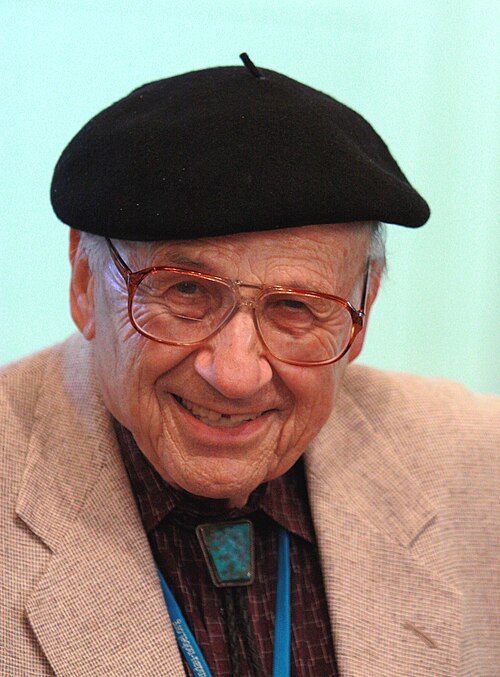
My Brown Bag Lunch with a Nobel Scientist, Quiet Time in My Backyard, and Faith as a Signpost

When we first came to Santa Barbara in the early 1990s, I was finishing a leadership program through Seattle University. One of our assignments was to interview leaders from different disciplines: the arts, education, business, and science. I didn’t know any scientists, so I asked one of my parishioners who worked at UCSB for suggestions. “You should interview Walter Kohn,” Hank said. “People say he may get the Nobel Prize someday.” It was also known that, despite his fame, he came to campus every day on the city bus.

I called Professor Kohn’s office and left a message. He called me back and agreed to meet. “I bring a brown bag lunch every day and eat in my office,” he said. “Why don’t you bring your own lunch and we can talk?” We set a date.

I don’t remember what food I prepared, but I made sure to bring it in a brown paper bag.

I found his office and knocked. He invited me in and offered me a chair.

What remains vivid in my memory is his description of growing up in Vienna in a close Jewish family in the 1920s and ’30s. He was also grateful for the excellent public education he received, including the study of Greek and Latin. He said he gained a lasting appreciation for how Roman civil society and traditions put a high value on personal integrity and public service, which he sought to embody in his life and career.

After the Nazis took control of Austria in 1938, he was separated from his parents, who were later killed in the Holocaust. He made it to England, then Canada, and finally the United States. Along the way, he took advantage of every educational opportunity that came to him. He eventually found his calling as a scientist and came to UCSB in 1979 to become the first director of the Institute for Theoretical Physics.

As is often the case, what we remember from meeting a person may not be the details of what they said but the feeling we gain for who they are. I was struck by Professor Kohn’s modesty, his graciousness, and his desire, born of the suffering he had seen as a young man, to make the world a more just, caring, and peaceful place.

Five years after our lunch, Professor Kohn was awarded the Nobel Prize in Chemistry for his work in quantum mechanics. He died in 2016 at the age of 93.

The memory of that lunch came back to me recently as I was reading a compelling account of the intellectual and cultural legacy of Vienna in the 1920s and ’30s, much of which was brought to America by émigrés after World War II.* I realized Professor Kohn was one of those remarkable people, and a living embodiment of that world.

Looking for more information about him, I found this quote:

“I am very much a scientist, and so I naturally have thought about religion also through the eyes of a scientist. When I do that, I see religion not denominationally, but in a more, let us say, deistic sense. I have been influenced in my thinking by the writing of Einstein who has made remarks to the effect that when he contemplated the world he sensed an underlying Force much greater than any human force. I feel very much the same. There is a sense of awe, a sense of reverence, and a sense of great mystery.” **

A few days later, I was having my morning quiet time in our backyard. When I first become still, my mind is flooded with thoughts and feelings about what happened yesterday and what I’m anticipating in the day to come. When that flow settles, I try to get out of myself and observe my surroundings. I want to notice anything new: Have the leaves of the sycamore tree changed color again? Are any agapanthus still blooming? Is that squirrel running across the top of the fence the same one I saw yesterday?

But this time all was still, and nothing stood out. Then I became aware that just because I don’t see anything dramatic doesn’t mean there isn’t a lot of life going on. Every tree and plant is quietly processing its life in response to the changing environment. Every spider is caring for its web or planning the next one. Every blade of grass is growing cell by cell. The children in our neighborhood, getting ready for school, are growing and changing every day. And as I am processing and planning and growing (and letting go), I am part of all that: “an underlying Force much greater than any human force,” as Professor Kohn said.

I want to remember what his family and so many like them went through. Like him, I want to be part of the ongoing effort to let the impact of our lives be rooted in reverence, not destruction.

Faith is not about having everything figured out. It is a signpost pointing in a direction we want to go, a direction that leads to discovery, delight, hard work, and service.

Professor Kohn wrote an eloquent account of his life story for the Nobel Prize award which you can read at  Walter Kohn Life Summary for Nobel Prize

* Vienna, How the City of Ideas Created the Modern World, by Richard Cockett

**https://todayinsci.com/K/Kohn_Walter/KohnWalter-Quotations.htm#google_vignette
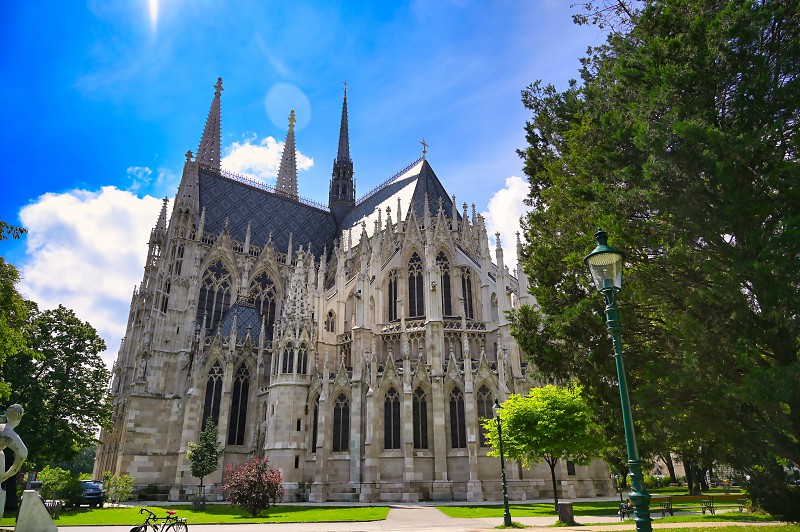
A Restless Candle

On our last day in Vienna this past September, we decided to visit an impressive sight we had been passing every day: the Votivkirche, or ”Votive Church.”[i] Seeing its tall spires and ornate towers, I assumed it was an ancient Gothic cathedral. Upon entering, we discovered it is less than 150 years old — a “neo-Gothic” structure completed in 1879. The building is 325 feet high (second highest peak in the city) and features 78 stained glass windows; when you enter, it feels vast, mysterious and intriguing.

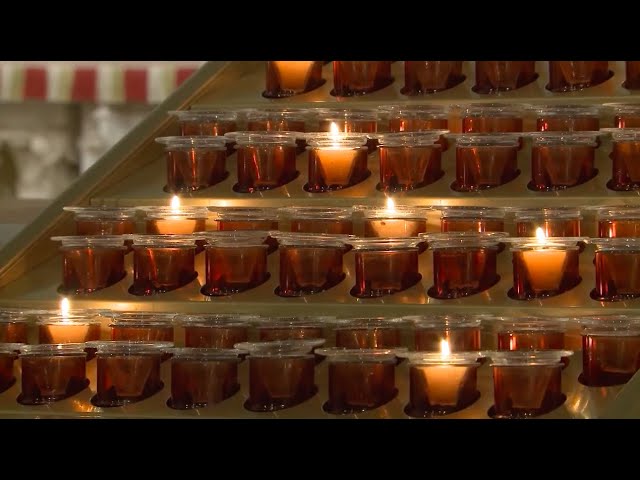
As we explored the interior, I noticed a small plaque on a stone pillar above a votive candle rack. No one else was nearby and only a few candles had been lit.  The words were in German, Italian and English.  Here is the English version:

God, there is a candle in front of me.

It burns restlessly, sometimes with a small flame, sometimes with a large flame.

God, I too am often restless.

May I become calm in you.

The candle gives me light and warmth.

God, may I also become a light for the world.

                  A simple prayer focusing on a single candle.

As we wandered and read more about the history of the building, we learned it was built as an expression of gratitude after the Austrian Emperor Franz Joseph survived an assassination attempt.  It was expected to be a place where Austrian monarchs would be buried for generations to come.  But history happened.

World War 1 began in 1914. The building was damaged, and the military was permitted to melt down parts of the organ and bells for the war effort.  The war also led to the collapse of the monarchy. In the 1930s, the Nazis took control of the city and renamed the square outside the church Göring Square after the Nazi General. Following World War 2, the square was renamed Roosevelt Square after FDR. The building was restored in the 1970s.

A recent addition is the Multhausen stained glass window, designed and installed to commemorate the 90,000 who died in the Multhausen Concentration Camp.  The window portrays prisoners helping each other up a stairway, supporting each other in their suffering; Christ is leading them at the top of the stairs.

Amid dramatic change and tragedy, the cathedral has been a sanctuary where anyone can enter, light a small candle, reflect, and pray.

I’ve been thinking how the life of a candle is like the life we live:

  • Both have a beginning and an end.
  • Both are vulnerable to being extinguished.
  • Neither needs to understand how it exists in order to exist.
  • Neither lights itself.  A flame is given to it, which it bears as long as it can.
  • Both experience the world from its own point of view, and both affect the world around it.

The winter season is a time when we become more aware of light. 

Christian communities observe Advent using a wreath with four candies in a circle and a single candle in the center.  On each Sunday before Christmas, one of the outer candles is lit.  On Christmas, the Christ candle at the center is lit.

Jewish communities celebrate Hannukah using a menorah of nine candles; the one at the center is always burning.  Night after night, that flame is used to light one more of the other eight until all are glowing. 

Both rituals assume there is a central flame.  Both invite us to behold each candle as it is lit.  In both, individuals become a community with the divine light at the center.   Both affirm light can endure darkness.

I am paying more attention to candles this season, curious about what they can teach me. I know there are many candles burning.  I know there are many people wondering.   And here I am.   This candle is me, burning as best I can, grateful to bear light as long as I can.

God, there is a candle in front of me.

It burns restlessly, sometimes with a small flame, sometimes with a large flame.

God, I too am often restless.

May I become calm in you.

The candle gives me light and warmth.

God, may I also become a light for the world.


[i] Votive: (adjective): consisting of or expressing a vow, wish, or desire.

Small Moments to Savor

As I was planning our trip to Europe, I explored the possibility of staying in a hostel instead of a hotel. I knew I was too old to sleep in a dorm room but wanted to experience the open and hospitable spirit I had known as a young backpacker.  For the stay in Berlin, we booked a place at the “The Circus Hostel.”  It’s a five-story building in the “Mitte” (central) section of the city, close to many points of interest.  They had a 2-bedroom apartment on the top floor available. My sister agreed we should try it.

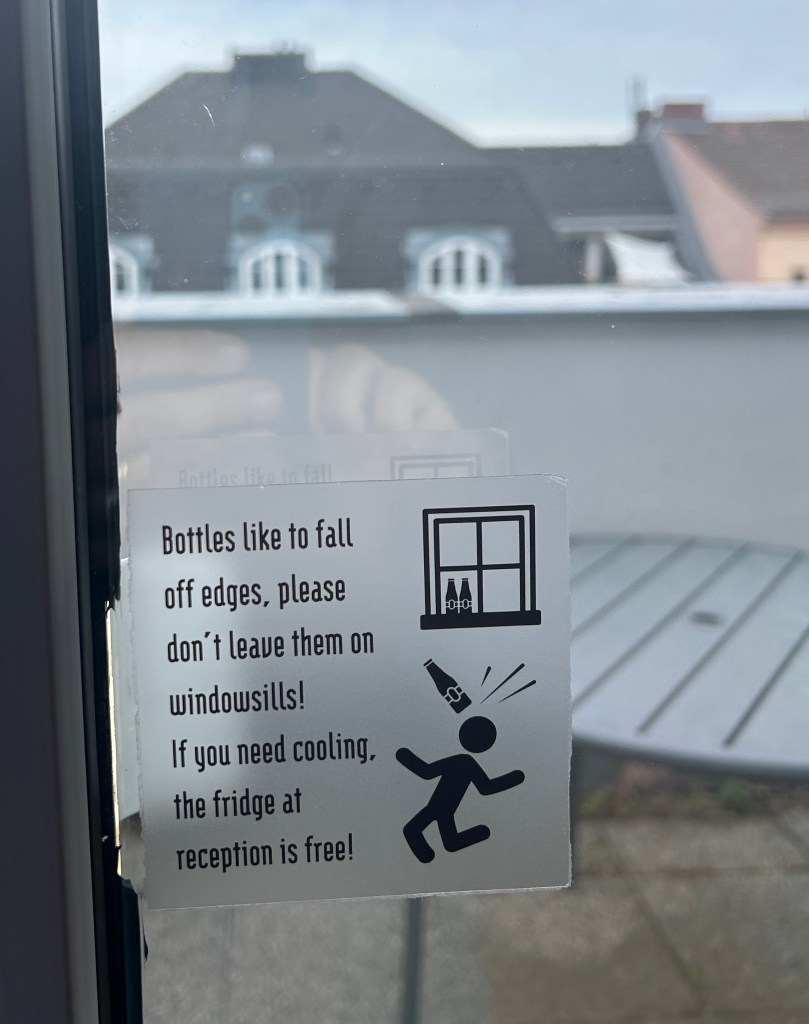
              In the basement they have their own pub and small brewery.  On the ground floor is a café and reception area.  Upper floors are for the bunk beds and apartments.  As we settled in, I began noticing the posted signs.  On the sliding glass door leading to the balcony:

The notice to set out when you want maid service:

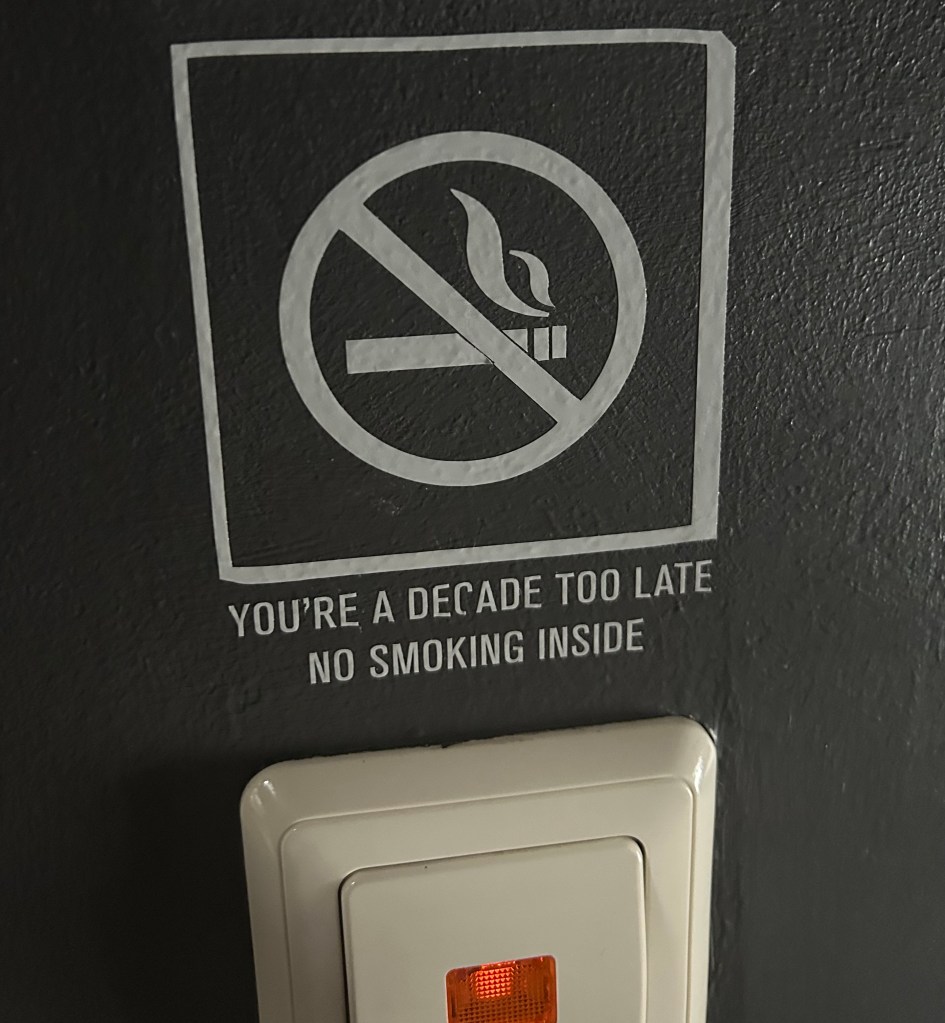
On the wall next to the elevator call button:

A similar playful spirit was on display in nearby cafes.  French fries are very popular in Belin, and a busy place across the street had this window:

I didn’t go to Berlin expecting to eat Mexican food, but appreciated this sentiment:

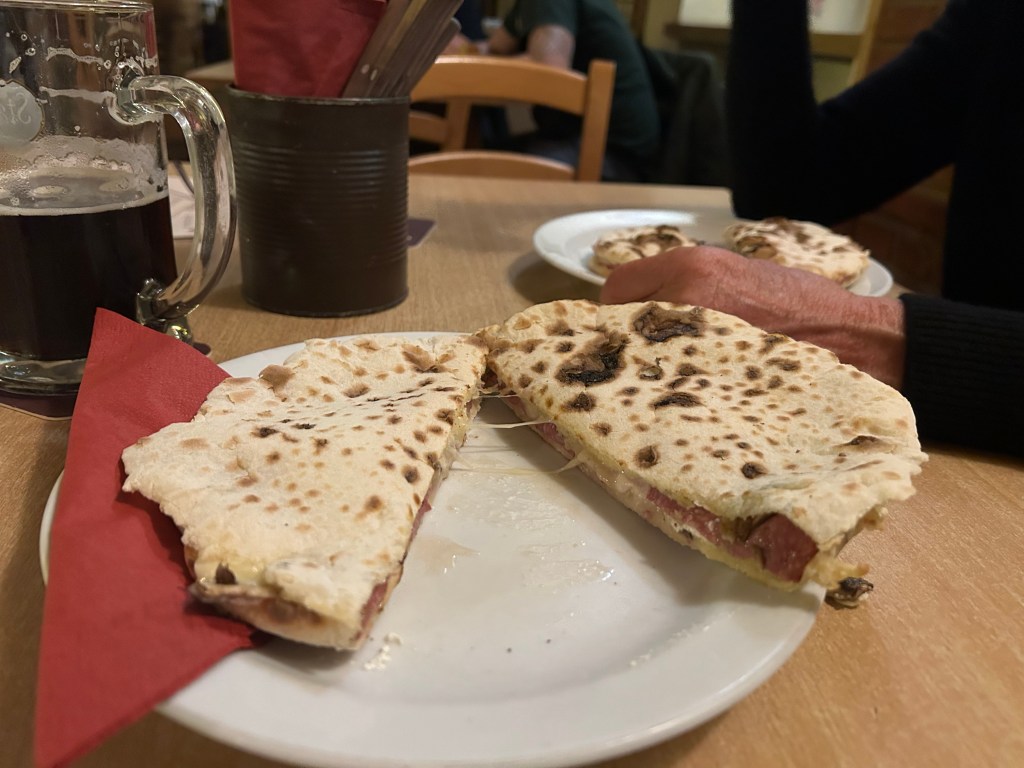
Not far from Sigmund Freud’s Vienna home and office where he probed the hidden recesses of the human psyche, we found a brewery/pub that offered more than two dozen pitas with your choice of pizza-like filings (including tuna, camembert, cranberry jam, turkey, olives, sour cream, onions, hardboiled egg, tomato sauce, etc., etc.).  On the wall was this timeless question:

I don’t know if Freud pondered that dilemma – for him a bigger question might have been about how many cigars were enough.  But after hours contemplating tragic historical events and staring at modern expressionist paintings, these were “welcome signs.” Small moments to savor along with new tastes and friendly places.

They Survived a Pandemic and Built a Cathedral –How Will We Remember COVID?

A great plague struck Vienna in the early 1700s.  Rulers often left the cities during such times, but Charles VI remained, joining the inhabitants to pray for deliverance. They particularly prayed to St. Charles Borromeo, who had been canonized out of admiration for the way he cared for victims of a plague in the 1570s.  When in 1712 the plague finally subsided, the Emperor, filled with gratitude, pledged to build a great cathedral. Construction began in 1716 and was completed in 1737. It was called Karlskirche, or St. Charles Church.  It became an architectural landmark in Vienna; people married in the chapel include Mozart, Mahler and Hedy Lamar.  It continues to be a popular sight.

            When I arrived in Vienna in January 2020, Karlskirche was not on my list of places to see. But it was close to my hotel and became one of the first places I visited.  Initially I was put off by the overly ornate architecture – way too frilly and overdone for my tastes. And the paintings of the saint caring for plague victims seemed to portray events of a distant past. But something kept drawing me back.  On a cold Saturday night – you were given a wool blanket when you entered — I attended a performance of the Mozart Requiem there.  I visited again two days later.  And on my last night in the city, I was on my way to a concert. It was foggy as I passed Karlskirche and its bells were ringing; I realized I had become enamored.

            I returned from Europe in early February.  A short time later, COVID-19 began shutting down Europe and the world. So far, 3.8 million people have died —  614,000 in America alone – and it is still threatening many people in the world.  It is finally subsiding in America, and California is scheduled to lift most restrictions on June 15.

            As life begins to return to normal, I’ve been wondering: Will we do what the Austrians did? Will we take time to be grateful for those who helped us survive the COVID plague?  Will we find a way to remember what lessons we have learned?  We have memorials for many painful experiences, including the Vietnam Memorial in D.C. and the 9/11 Memorial in Manhattan.  The art and themes of Karlskirche focus on the spiritual figures and beliefs that were prominent in 18th century Vienna.  What themes might we include for our COVID experience?

            If I was on the design committee, here are some themes I would suggest:

  • Healthcare workers We need to honor the healthcare workers who lived every day on the edges of this invisible and deadly biological disaster, and who, like St. Charles, cared for the sick and dying at mortal risk to themselves.  How about a simulated balcony where, below you, images of nurses, doctors, and hospital workers pass by hour after hour?  Your job is to pick up kitchen pans and create a cacophony of gratitude.
  • Frontline workers We need to honor the countless people who could not cocoon at home with Zoom, but worked on farms and in grocery stores keeping us fed. And for post office, FedEx and UPS workers who became human lifelines.  Peggy Noonan, longtime conservative columnist for the Wall Street Journal, was in the middle of the COVID apocalypse in New York.  She wrote: “We know who kept America going during the pandemic—the stackers, counter clerks and others, some of whom were here illegally. When this is over, give them full U.S. citizenship, no questions or penalties.”[i]
  • Scientists We need to honor the scientists who created the vaccine that saved our lives and our world.  Maybe create a life-size model of the labs where Moderna, Pfizer and J&J employees worked around the clock to develop the vaccine?  And testimonies about what it was like to do this critical work?
  • Nursing homes We need to remember the unique human toll COVID took in nursing homes. This suffering was largely invisible.  Millions of elderly and medically vulnerable people had to live as if they were under house arrest, unable to see or hug loved ones. Low-income caregivers kept showing up, often returning to cramped housing to care for their own families. We should not let this be forgotten.
  • Volunteer networks.  Around the country, countless individuals stepped up to organize help for neighbors and people in need.  In the parish I was serving, members created a food distribution network that fed thousands of people over several months.  Similar efforts blossomed everywhere.  We need to remember this display of what it looks like to love your neighbor, no matter who that neighbor is.
  • Our political failures.  When I’ve heard stories of hard times in American history, such as the depression and World War 2, there has often been a common perspective: “It was hard.  But we came together. We shared the burdens.  We united as a nation to face a common threat.”  I don’t think we will hear that about COVID.  Politics often took precedence over the clear and present danger.  It was a mess.  We need to find a way to remind future generations of the cost of personal and political pettiness.

            If COVID had never happened, my memory of visiting Karlskirche would be simply one more positive experience in a trip that had many.  But it’s become more than that. It’s an example of how one culture expressed gratitude for surviving a plague. We need to create memorials that insure the profound lessons learned during COVID will not be forgotten.


[i] https://www.wsj.com/articles/a-look-back-at-the-pandemic-year-11608847540?mod=article_inline

(Photo: High Altar Apotheosis of Saint Charles Borromeo, by Alberto Camesina.jpg)