London Calling, Pt. 1: “See It, Say It, Sort It’

I’ve passed through London a few times over the years, but never dedicated time to appreciating it. This winter I decided it was time to make up for that. I’ve been here for four days so far and will be staying four days more, attending a series of events and visiting many historical sights. As so many people have told me, it’s a marvelous city.
I am taking a little time now to put into words some of the personal meaning I am finding.

I’ll start this reflection with a security announcement.


We are riding the subway/Tube often. When you step into the car and it’s ready to go, the doors shut and an announcement comes over the PA system. First it says where the train is going and what the next stop is. Then you hear: “If you see something that doesn’t look right, speak to staff or text British Transport Police on 61016. We’ll sort it. See it, say it, sorted.”


Apparently this announcement was introduced 10 years ago as a way to invite passengers to assist with security concerns. As we rumbled on to the next stop again and again, I sensed it had possibilities for other aspects of life beyond subway security. (I confess at first I did not hear the last word — “sorted” — clearly; I thought the word was “sort it.” But I’m going with my version: “See it, say it, sort it.”)


Simply put, if we are trying to comprehend something we are experiencing, we can experiment with this phrase. “See it….” In other words, “What am I observing?” Then we take time to formulate words for what we are considering, and “Say it,” either silently or out loud. Since we don’t have an official agency to analyze it and create an action plan, we have to try on our own, “Sort it” suggests we figure out what this experience means and what we are going to do about it.


Here’s my first attempt to “See it, Say it, Sort it.”


THE DISPLAY OF WEALTH AND POWER
There are many magnificent buildings and sights in London. I’ve gone through Westminster Abbey, the Houses of Parliament, and the Tower of London, among others. But after appreciating all that’s there, I began to feel ambivalent about how much wealth has been invested to glorify the kings and queens. In the Tower of London, for example, there is a glass case displaying the communion set used for royal religious ceremonies. The plate is probably two feet in diameter and solid gold, with detailed engravings. It is impressive. But I thought, “Using something this doesn’t ensure that the ceremonies in which it is used will automatically be filled with genuine spiritual integrity.” Or seeing the royal crowns embedded with diamonds, rubies, emeralds, and exotic gems is certainly impressive. But does it guarantee whoever is wearing it acts with justice and mercy?


REMINDERS OF MORAL COURAGE, RESILIENCE AND HUMAN CREATIVITY
We were walking past a formidable government building near Trafalgar Square where masons were filling joints between the stones with mortar. I noticed there were many chunks of the stones that were missing and it was clear the masons were not going to attend to them. I asked one fellow about it. He said the stones were damaged during the bombing blitz at the beginning of World War 2. The government decided to leave them as they were to remind future generations of what Londoners endured in the war. Britain’s courageous endurance eventually led to victory, not just for Great Britain but much of Europe and what we have called “The Free World.”


In the Houses of Parliament, there were statues of leaders who led the people through times of war, like Churchill. There were also tributes to those who expanded the government from rule by elites to a truer democracy: those who had fought to outlaw slavery, others who championed extending voting rights to working people and women, and others who had helped create the national health care system. And there are many reminders of kings and queens who, while wearing the elaborate costumes of royalty, advocated for the best interests of all people.

At the Globe Theater I saw a delightful production of Shakespeare’s “The Tempest,” and was reminded of the power of human creativity to create works of art that continue to give us entertainment, insight, and wisdom for centuries.


These are some of the things I “saw” and have wanted to “say” and “sort.” The displays of wealth and power can fill me with awe, but also raise questions when so much power and status is granted to those at the “top” of society. At the same time, the many examples of people standing up for the rights and dignity of all people are inspiring.

Experiencing England may be all the more vivid to me because in my own country there is a leader who seeks to be a king, building ornate ballrooms and putting his name everywhere he can. This is not the vision my country was founded upon. I am newly aware of how bold our original vision was, and how grateful I am to take my turn to be a guardian of that vision.


I’m still sorting out all my impressions which accumulate day by day. But one constant has been the courtesy and warmth of the British people we encounter. Some no doubt trace their roots far into the English past. But many others have immigrated here from all over the world and appreciate the life they are making here. It’s inspiring. History and monuments can teach us a great deal. But what is more impressive than being a stranger in a country and finding kindness at every turn?

Getting a Peek at Heaven

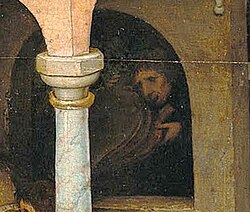
Let’s say someone asks you, “Got any travel plans?”  Imagine saying, “Yeah… I’m going to the place where heaven and earth meet, poke my head through, and see what I can see.” This is how one artist imagined someone doing that:

(The caption reads: “A missionary of the Middle Ages recounts that he has found the point where heaven and earth meet.”)

For thousands of years, people looked to the skies and imagined what might lie beyond – and wondered if there’s a heaven out there.

Then science came with those telescopes, star charts, and rocket ships.

Years ago, I was teaching an adult class.  The passage we were studying mentioned heaven. One older lady raised her hand.

“You know,” she said, “I’m mad at those astronauts!”

“Why?” I asked.

“Well, when they got up there into outer space I thought they would see heaven.  But they didn’t find it.  Now I don’t know where it is. It makes me angry.”              

I have a friend who was a nun before becoming a doctoral student in mathematics at UCSB before becoming a Jungian therapist.  We used to go to public lectures at the Institute for Theoretical Physics on campus.  I appreciated having her with me because she could explain some of the concepts to me. I once asked her what she thought of the possibility of “worm holes” in space. She told me she thought it was an exciting theory, adding it might explain where heaven is hidden.

In spiritual traditions, “heaven” can be a reality beyond this one, but also accessible now.

In the book of Genesis, Jacob is alone in the middle of nowhere and lies down at night to sleep.  He has a dream in which he sees something like a ladder or staircase leading from earth to heaven with angels traveling back and forth.  He hears the voice of God promising that he will always be with Jacob.  Jacob wakes, remembers the dream and pours oil on the stone on which his head was resting and names it. He says, “This is the house of God, the gate of heaven.”  The story suggests that such an opening can exist in the most unlikely of places.

In the Gospels, Jesus speaks often of the “kingdom of heaven” and the “kingdom of God.”  And while some passages suggest a realm beyond this life, others suggest it’s a reality available to us now: “The kingdom of God is not coming with things that can be observed, nor will they say, ‘Look, here it is!’ or ‘There it is!’ For, in fact, the kingdom of God is among (or within) you…”

I once led a retreat with the theme of how paradise has been envisioned in different spiritual traditions and popular culture.  I showed a clip from the 1935 movie Top Hat in which Fred Astaire is wooing Ginger Rodgers.  In one scene, he invites her to dance with him as he sings the Irving Berlin song “Cheek to Cheek.” Here’s the chorus:

“Heaven, I’m in Heaven, And my heart beats so that I can hardly speak; And I seem to find the happiness I seek When we’re out together dancing, cheek to cheek.”

After seeing the clip, I asked the group to suggest how the scene expresses ideas of heaven.  People noticed that the set was full of light and beauty.  Ginger Rodgers had feather boas on the arms of her costume that floated like angel wings as she moved. We also saw both dancers moving effortlessly with each other, yet each retained their individuality.

And we watched the last scene of the 1989 movie “Field of Dreams.”  It’s a baseball fantasy in which Ray Kinsella has inherited a farm in Iowa and is raising his family.  Ray hears a voice in the corn field calling on him to build a baseball field. He does. Soon players from the past start walking out of the corn to play the sacred game one more time.  As one of them is leaving for the day, he asks Ray if this is heaven. “No,” Ray says, “This is Iowa.” As the story continues, the voice prompts Ray with new tasks, and he follows not knowing where it’s headed or what it means.  The last player to appear turns out to be John Kinsella, Ray’s father; they were estranged years before at the time John died. Ray introduces his father to his wife and daughter.  They begin playing catch.  They have this conversation:

John asks, “Is this heaven?”

Ray: “It’s Iowa.”

John: “Iowa? I could have sworn this was heaven.”


Ray: “Is there a heaven?”

John: “Oh yeah. It’s the place where dreams come true.”


Ray: “Maybe this is heaven.”

I’m not sure where heaven is to be found. Maybe it’s somewhere out there in outer space. Maybe it’s somewhere here in inner space.  Maybe it’s both. I welcome those moments when we seem to catch glimpses of it in our everyday lives, and remain open to the healing and beauty it might hold.

(Dear Reader: Not being satisfied with the way I ended this, two hours after posting I’m adding one more thought…)

I like to think of the fellow in the engraving and imagine what his life would be like when he came back from his journey. I’m guessing he’d be like most people who have had near-death experiences and profound spiritual encounters: he’d feel less fear, more peace, and a fresh committment to making each day matter.

(The lead image is an engraving from The Atmosphere: Popular Meterology, by Camille Flammarion, 1888; featured in Cosmigraphics: Picturing Space Through Time, by Michael Benson)

Better to Focus on the Green than The Sand Trap (Some Spiritual Advice)

I’m going to start with a bit of golf wisdom and then move on to something more important.

Golf is a funny game.  When you get ready to hit a shot, an endless number of thoughts can flood your mind. Some may be specific ideas about how you are going to direct your body.  Others may concern timing or an awareness of who might be watching you. What you have in mind before you swing is important.

If you are getting ready to hit a shot that has a chance of landing in a sand trap instead of on the green, a common thought is, “I just don’t want the ball to land in that sand trap!” But more often than not, having that thought will result in the ball finding its way to the sand.  “That’s exactly what I didn’t want to do!” we say to ourselves.  On we go, not only lamenting the outcome but frustrated with ourselves.

Wise coaches tell us the key is understanding how our mind works.  The theory is that our mind will direct our body to try and fulfill what we want.  However, it’s designed to focus more on a clear visual image than a word.  When we say, “I just don’t want to land in that sand trap,” our mind sees “sand trap” but doesn’t hear the word “don’t.” 

The better option, they say, is to take a long look at the green and think, “I want this ball to land on that green.” Then we take a relaxing breath and swing.  There is no guarantee, but more often than not the shot will go in the right direction. 

What does this say about our spiritual life?

I believe it suggests to us what we focus on and expect in our journey is important. 

One problem is that for centuries, dominant strands of the Christian tradition have said the most important truth in life is: “You are a sinner.  There is something fundamentally wrong with you, and you should never forget it.”

To me, it’s basically like telling yourself again and again, “Of course things go wrong. I deserve it.” 

I don’t believe that’s the best approach.

In the parable of the Good Samaritan, Jesus doesn’t dwell on the people who pass by the injured man, but lifts up the person who cared enough to stop and do something to help him.  The implication: “Isn’t this kind of person who you want to be?”

In the Parable of the Prodigal Son, the main message is that the father of the two sons is more generous and forgiving than either son imagined and invites them both to a party celebrating that abundant grace.

I believe this perspective underlies the most profound set of teachings in the New Testament, the Beatitudes.

“Blessed are the poor in spirit, for theirs is the kingdom of heaven” isn’t inviting us to assume feeling empty or broken as a state we deserve.  Instead, it’s an encouragement to trust that beyond our broken hearts there can be healing and new life.

When we hear “Blessed are those who mourn, for they shall be comforted,” we are given hope that our grief can, over time, lead us to discover a humble sense of inner peace.               

And there are the other six statements: “Blessed are the meek…Blessed are those who hunger and thirst for righteousness…Blessed are the merciful…Blessed are the pure in heart…Blessed are the peacemakers… Blessed are those who are persecuted for righteousness’ sake …”  All of these are words of encouragement to do and be the best we can, not dwell on our unworthiness.

Summoning all the best images and intentions as we play golf certainly doesn’t guarantee success every time.   The game is designed to both humble and delight us; we will find our way into sand traps often enough.  But that’s not when we quit. That’s when we do our best to meet the challenge before us, learn from each experience, and move on. 

As maturing human beings, we have plenty of opportunities to recognize our own mixed motives, shortcomings and disappointments.  But we don’t stop there.  We are here for more than that.  We are in this life to learn how to love and endure and serve.  That’s worth keeping at the center of our intentions.

Lead image: St. Georges’s Golf Course, Ontario, Canada

Why Being a TV Analyst is Easier Than Being a Coach (And What That Tells Us about Life)

I once attended a prayer breakfast where the featured speaker was the legendary football coach Joe Gibbs.  Gibbs had led the Washington Redskins (now the Commanders) to nine playoff appearances, four conference titles and three Super Bowl championships.  After retiring as a coach, he became a television analyst.  During the Q & A time, someone asked him to compare being a coach with being a TV analyst.  Gibbs said being an analyst was much easier.  When you are the coach, you have to make quick, irreversible decisions on the field, not knowing what the outcome will be. When you are an analyst, you can see what just happened and evaluate the coach’s decision from the comfort of the broadcast booth. 

When you are a coach, you may be wrong.  When you are an analyst, you can always be right.

What is true in sports is true in life.  This can apply to relationships, parenting, work or any activity we engage in where we are responsible for the choices we make.

As years go by, it’s tempting to look back on decisions we made earlier in our life and be the all-knowing, wise analyst.  We can focus on regrets:

  • “I knew I should have bought that property back then – I can’t afford it now.”
  • “If I could do my education over, I would have made other choices.”
  • “Why didn’t anybody tell me how hard it is to be a parent?”
  • “I should have known not to trust that person.”

… or we can focus on good choices and lucky breaks:

  • “Meeting (that person) turned out to be one of the best things that ever happened to me.”
  • “That was a hard lesson to learn, but my life has been better for having learned it.”
  • “That has been one of the blessings in my life that I didn’t see coming.”
  • “I once was lost but now am found; was blind, but now I see.”

              Analysts can watch the replay and comment on it.  Coaches must call the play.

What do the spiritual traditions say about this tendency?

I think all of them encourage us to be honest about our shortcomings and mistakes.

But they also encourage us to always seek a fresh start, no matter what has happened. 

In both instances, we draw on the wisdom of our ancestors that has been passed on in Scripture and traditions. We also learn from others in our community who have faced similar situations and learned important lessons about life.

We need to embrace both roles.  We need to be wise analysts of what works in life and what does not. But we also need to recognize that, in those moments when we must make an important decision, we may not have all the facts or all the time or a perfect knowledge of what the future may bring.  We do our best and learn from it.

Maybe Prayers Are Like Snowflakes, Part 2

Last week I shared the story of seeing a large branch fall from a tree as the result of accumulated snowfall.  I thought how one last snowflake had made that happen, and imagined ways in which prayers may be like snowflakes.  I shared a story about how my friend and mentor Hank had recovered from cancer using a variety of methods, including prayer.  Other stories came to mind – three of which I am sharing in this post. 

In the 1990s, UCSB had an exciting women’s basketball team.  Many of us from my congregation began attending games. One season, a young woman who played center was invited to speak at our morning worship service about her faith.  The night before, UCSB had won a dramatic game against the University of Hawaii. When she arrived, we invited her to the pulpit.  She said a few words of introduction, then asked if there were any questions.  Someone asked if she had prayed at all during the previous night’s game.  She said she did at halftime.  She was asked if she had prayed that her team would win.  No, she said, she never prays for that. She just prayed that she would be able to do her best.

I once attended an interspiritual retreat at La Casa de Maria as part of an Earth Day weekend.  One of the speakers was a Native American elder from a local tribe.  He described ways in which his tradition was integrated with nature. One example was a custom that was part of fall prayer ceremonies.  They asked the Creator to be with them when they were deer hunting. They prayed they would be led to target deer which were unlikely to survive the winter, leaving untouched members of the herd capable of living a longer life.

Dr. Rachel Naomi Remen was a professor of Integrative Medicine at UCSF Medical School and the author of best sellers on the role of spirituality and medicine.  I treasured her books and heard her speak in person twice.  One of her stories involved a case in which she had visited a patient in the hospital and carefully studied his chart.  She agreed with the treatment plan in place. But she wondered if there was another approach. She decided to take a walk through the hospital to the chapel. She arrived at the chapel and sat in silence. An unexpected idea came to her. The more she thought about it, the more it made sense medically.  She went back and consulted with her team.  They changed the treatment plan, which extended the patient’s life. 

In each of these stories, the person was not praying for a specific event to miraculously occur. They were not praying for something as dramatic as a large branch falling from a tree, or a mountain moving, or a bone mending instantly.   They were seeking something more subtle. They were praying that their thoughts and actions might align with a higher purpose.

Some will say that these stories do not need spiritual beliefs to support or explain them.  They are simply examples of positive or creative thinking. But the people telling these stories believed that there are forces and energies beyond our ordinary understanding that are available to us if we seek them.  Sometimes the “still, small voice” will direct us to outcomes that fulfill our desires.  But sometimes the guidance we receive will lead us in other directions.  We may be prompted to follow a more challenging path than the one we are on.  We may consider giving something up that we’ve held dear.  We may feel prompted to face a difficult problem we’d rather avoid, or to take on a new responsibility.  So it’s not always about making life easier. It’s about making life better by doing the right thing.

If your eyes are closed and a snowflake lands on your cheek, it won’t knock you off balance.  But you will feel it as it melts and becomes a drop of water.  Whether you gently touch it with your finger or let it run down your cheek, you are aware of its presence; its moisture becomes part of you.  You didn’t create the snowflake or see where it came from.  But it reminds you there is something more in your life than just you.  There are subtle forces at play, and we are invited to be part of them.  We are blessed in such moments.  We can be grateful.

Maybe Prayers Are Like Snowflakes

One early spring afternoon years ago, I was making the three-hour drive on Interstate 90 from Seattle to our home in central Washington.  The highway passes through Snoqualmie Pass in the Cascade Mountains.  There had been plenty of snow that winter and there were only a few cars on the road as light flurries were falling. I was alone. I heard a loud crashing noise.  On the right side of the road ahead of me I watched a large snow-covered branch fall to the ground from a tall pine tree .  As I continued driving, I wondered how much weight it must take to break that branch off from the trunk of its tree.  How many snowflakes were required to make that happen? Did just one last snowflake tip the balance?

As I continued driving, I wondered if prayers might be like snowflakes.  Individually, they are virtually weightless.  But can they accumulate over time to make something tangible and unexpected happen?

There have been many theories over the centuries about how prayer might actually “work.”  There are many spiritual traditions encouraging people to pray. Many people share stories of how prayer has led to some remarkable outcomes. 

At the same time, many people can remember times when what they prayed for did not come to be.  Much has been written trying to understand “unanswered prayer.”

I have had colleagues in the medical profession recount experiences when they were working with families and individuals who were facing serious health challenges who put all their faith in prayer, sometimes to the exclusion of good science.  If the malady did not disappear, the family was faced not only with the loss of a loved one but questioning their faith as well.

I no longer expect to come up with a definitive answer to what prayer is and just how it “works.” But some stories come to mind. I’m going to share one this week and more in a future posting.

When I arrived to serve my congregation in Goleta, one man who became a friend and mentor was Hank Weaver.  Hank had recently retired after ten years at UCSB in the Education Abroad Program. He was a faithful Mennonite and a lifetime pacifist. Hank was a warm, engaging and brilliant man who walked with a slight limp.  I soon learned his story.  Just two years before, he had been diagnosed with a serious form of cancer in his lower spine.  The initial prognosis indicated he might not have long to live.  He decided to learn as much as he could about what he could do.  He had a PhD in chemistry and, as a dedicated scientist, worked carefully with his oncologist to begin the chemotherapy. 

At this time, people were beginning to use visualization as part of cancer treatment; the idea is you use your imagination in meditatation to visualize the chemo overcoming the cancer.   Hank was told one common example was to imagine cancer cells as small fish swimming in your bloodstream, and the chemo is a shark eating them up one by one.  Hank thought about it and said that wouldn’t work for him due to his belief in nonviolence.  He developed an alternative. He imagined a catfish swimming through his bloodstream, bottom feeding on things his body no longer wanted. 

Hank asked anyone who was willing to pray for his healing to do so, and many did.  One particularly dedicated member (in church speak, a “prayer warrior”) told me she had created an image in her mind of Hank entering the sanctuary fully healed, and many times prayerfully held that image in her mind and soul.  Hank also did all the right things in terms of diet and physical activity.

Months passed.  Slowly, the cancer began to disappear.  Eventually it went into remission.  The damage to his spine meant that his walk would always be impaired, but that was a small price to pay for the outcome.  (He did tell me one benefit of his impairment was the handicapped placard he had now had for his car – he began to get invitations from friends asking to go with him to Dodger games to take advantage of his hard-earned status for a premium parking place.)

Hank ended up self-publishing a book about his experience, Confronting the Big C.  Eventually he and his wife moved to Indiana where he served as interim President of Goshen College before retiring.  Hank had experienced a remarkable healing, and he believed it was the combination of good science and open-minded spirituality that led to his outcome.  He lived twenty-five more years until dying at the age of 93.

I believe Hank would say there are no guaranteed outcomes in this life.  None of us are getting out of here alive, and death will eventually take every one of us. But when facing serious challenges, we can choose to gather and employ all the best resources to increase our chances for a desired outcome.  We may never know how all these different forces – medical, spiritual, social, emotional – might interact with each other.  Some effects we can see and measure. But others, like prayer, may involve forces that are small and subtle.  But that doesn’t mean they can’t make things happen.

Image: Fineartamerica, Tera Fraley

Five Tips for Your Spiritual Journey

On the first Sunday of the year, I was asked to give a sermon marking “Epiphany,” a day which focuses on the story of the Three Wise Men.  As I kept reflecting on the story, five lessons emerged which I feel can be “wise” guidelines for our own journeys: Be Curious, Go With Friends, Be Careful, Give Your Best, and Be At Peace.  As I resume my blogging practice for the year, I decided sharing this list would be a good beginning.

Be Curious  In the Magi story, I see three forms of curiosity at work. Their quest began as they were studying the stars – it is rooted in a fascination with nature.  They got as far as Jerusalem but then needed local scholars to give them their next clue – they needed to refine their search by turning to spiritual writings.  And they choose to go home by another route after one of them had a dream – they knew how to listen to inner promptings. We can follow their lead:

                  Nature: whether it’s a daily practice of outdoor mediation or walks, studying any dimension of natural sciences, or simply being ready to ponder the mysteries of life that surround us, we can be open to moments of awe in the natural world that expand our mind.

                  Scriptures: Spiritual writings from long ago and the present day can open us to see new meaning in what we experience. 

                  Inner promptings: We can gather important information from science and spiritual writings which can be complimented by paying attention to our own intuition, dreams and feelings.  

Go With Friends  Sometimes we need to go on a journey by ourselves to find what we need. But other times it’s best to go with friends – people who share our values and hopes and are open to new discoveries.  There were at least three Magi.  Spend time with good friends as you navigate your life this year.

Be Careful  The Magi were warned in a dream not to return the way they had come – Herod was not to be trusted.  We go through life wanting and wishing for the best, but we don’t want to be naïve about possible deceptions and wrong turns.  Some leaders, institutions and people can pretend to want to help us, but they may be using us for their own ends.  Be careful as you make important decisions.

Give Your Best The Magi offered gifts with specific significance: gold for a king, frankincense for a spiritual leader, and myrrh for a prophet who will be facing death.  In our lives, sometimes material gifts we give can make an important difference in the world. But there are other ways to give. If we are part of a family, we give our support, love and attention year after year.  This doesn’t guarantee outcomes we may prefer – over time we may have many sleepless nights as events unfold in the lives of people we love that we cannot control.  But we still give our best.  We are asked to love our neighbor, which is not always easy. But making a good effort to meet, understand and befriend people in our communities is what creates authentic social life.  And our spiritual traditions ask us to honor the stranger in our midst, for they too are part of the human family.  We can seek to do that in our jobs and in volunteer work.  And we can do that by supporting worthy causes with our time and talents.  Since retiring, I have been helping raise money for a new community medical clinic in town that serves people who would otherwise be unable to receive such care. I may never know personally anyone who will be served, but I believe it’s the right thing to do.

Be At Peace:  After the Magi worship the child and offer their gifts, they go home and are never heard from again.  It will be 30 years before that child in the manger will begin his work in the world, and it’s unlikely the Magi would still be alive to learn what unfolds. But they did what they could with what they had in the time they had, and they did it well.  As we get older, we realize there are many things we care about and want to know “how it all will turn out.”  But life is never finished.  What we can do is to stay curious, travel with friends, be careful along the way, and give our best.  And then it’s OK for us to be at peace.  We’ve earned it.

Photo credit: pixabay.com

Taking a Break

Dear Reader,

As we turn into the new year, I am going to take a break from writing. Not sure for how long – maybe just one week, or maybe longer. Not sure if I will pick up and keep going like I’ve been doing or do something different.  Words that have come to me include “lie fallow,” “take a hiatus,” and “pause to regroup.”  If you have any advice or ideas, let me know at info@drjsb.com.  I am grateful to have this connection with every one of you.

Steve

Visualizing the Christmas Stories

Over the years, I’ve grown in appreciation for the different ways artists imagine and portray traditional stories.  The Advent and Christmas season is a great example.  Here are a few of the works I have come to treasure over the years.

The Angel Visits Mary

A young peasant girl named Mary receives a surprise visit from the angel Gabriel, who announces she has been chosen to bear a child with a divine destiny. In 1485, Botticelli imagined it this way:

…the incoming of the divine Spirit seems to almost be knocking the angel over as it travels towards Mary.

In 1898, the English painter Tanner imagined it this way:

…the “angel” appears as a shaft of pure light; Mary seems to be contemplating what she is experiencing.

Joseph’s Dreams

Mary was engaged to Joseph, and when he discovers she is pregnant, he decides to break the engagement. But an angel appears in a dream and changes his mind. 

In 1645, the French painter Georges de La Tour imagined it this way:

Joseph has fallen asleep in a chair while reading, and the unseen messenger is near him with an unseen candel illuminating the space between them as the dream is transmitted.

After the child is born, the family must flee due to threats from the government.  In the process, Jospeph is twice more guided by dreams.  In 1645, Rembrandt imagined one of those times this way:

…the angel is in the room with Mary and Joseph as they sleep.  The angel extends the left hand to Mary while touching Joseph’s shoulder to impart the dream.

“The Visitation” — Mary Visits Her Older Cousin Elizabeth

In this episode, the newly pregnant Mary travels south to visit her older cousin Elizabeth, whom the angel Gabriel had told her has also become pregnant.  When Mary arrives and greets Elizabeth, the baby in Elizabeth’s womb senses Mary’s presence and “leaps” in response; the women share an intimate moment of mutual knowing.

In 1440, the sculptor Luca Della Robia created this scene:

…here’s a close-up of the two women looking into each other’s eyes:

In 1530, the Italian painter Pontormo envisioned it this way:

…this image also merits a close-up of the faces as they behold each other:

That woman between the two of them who is looking at us — what does she want us to understand?  No one knows for sure.  I was excited to view this in person recently when it was at the Getty Museum a few years ago.

The Birth of the Child

In 1500, Botticelli created this scene, which he called “Mystic Nativity:”

…the manger is in the center of the picture…Joseph is asleep…Mary and the child are gazing at each other…while above, below, and around them, angels dance in celebration.

In 1646, Rembrandt created this contrasting version:

Simple, earthy, quiet, intimate.

And in 1865, the pioneering British photographer Julia Margaret Cameron created a “Nativity” scene in her studio using working class people as her models:

Great spiritual stories can contain a “surplus of meaning” – there is not just one way they can be interpreted or portrayed.  Just as scientists use math to reveal important truths, artists engage our imagination.  Our souls welcome this.  Imagination allows us to see beyond the surface of life into the mysteries and wonder which surround us.

Merry Christmas, dear readers!

Lead image: “L’Annuncio” (The Annunciation), Salvado Dali, 1967

Holiday Perspectives: Sunsets and Family Gatherings

Some friends offered us their condo in Coronado for this past week.  The unit is on the 9th floor with impressive views of the Pacific, and one night I took this photo of the sunset.  

Seeing our environment from a higher vantage point helps us see beyond our up-close, on-the-ground view of life. We see where we are and what’s around us more clearly. 

While here, we celebrated Thanksgiving with some of our own family and my wife’s sister’s family.  Altogether there were 14 adults and 9 children.  

I’ve heard that all photographs have three levels: bottom, middle and top. In my photograph, the bottom is the pool and shoreline; the middle is the ocean; and the top is the sky.  As I looked at our gathering, I realized there were three groups:  the 9 kids all under the age of 10 who are coming up in the world; the group of adults and parents who are in the middle of their journeys; and the four of us grandparents.  I also became aware of who was not there…parents, grandparents, and friends with whom I’ve shared holidays over the years who now live only in my memory.

I recognized that I was the oldest person present. I’m in the top third of that photo — I am approaching my sunset. But I am also beholding the sun rising and shining in the lives and faces of the children and younger adults we were with.

It again brings to mind a talk I once heard at the local Lobero Theater given by my beloved mentor and scholar of world spirituality, Huston Smith. Someone asked him what he thinks will happen when we die.  He said there are two common ideas. One is that we will be able to forever experience something like the sun rising. The other is that we will be absorbed into the sunlight.  He smiled and said if he was given a choice, he’d watch the sunrise. But after a few thousand years, he assumes he will have had enough. At that point he’d be ready to merge into it.