Vinny’s View

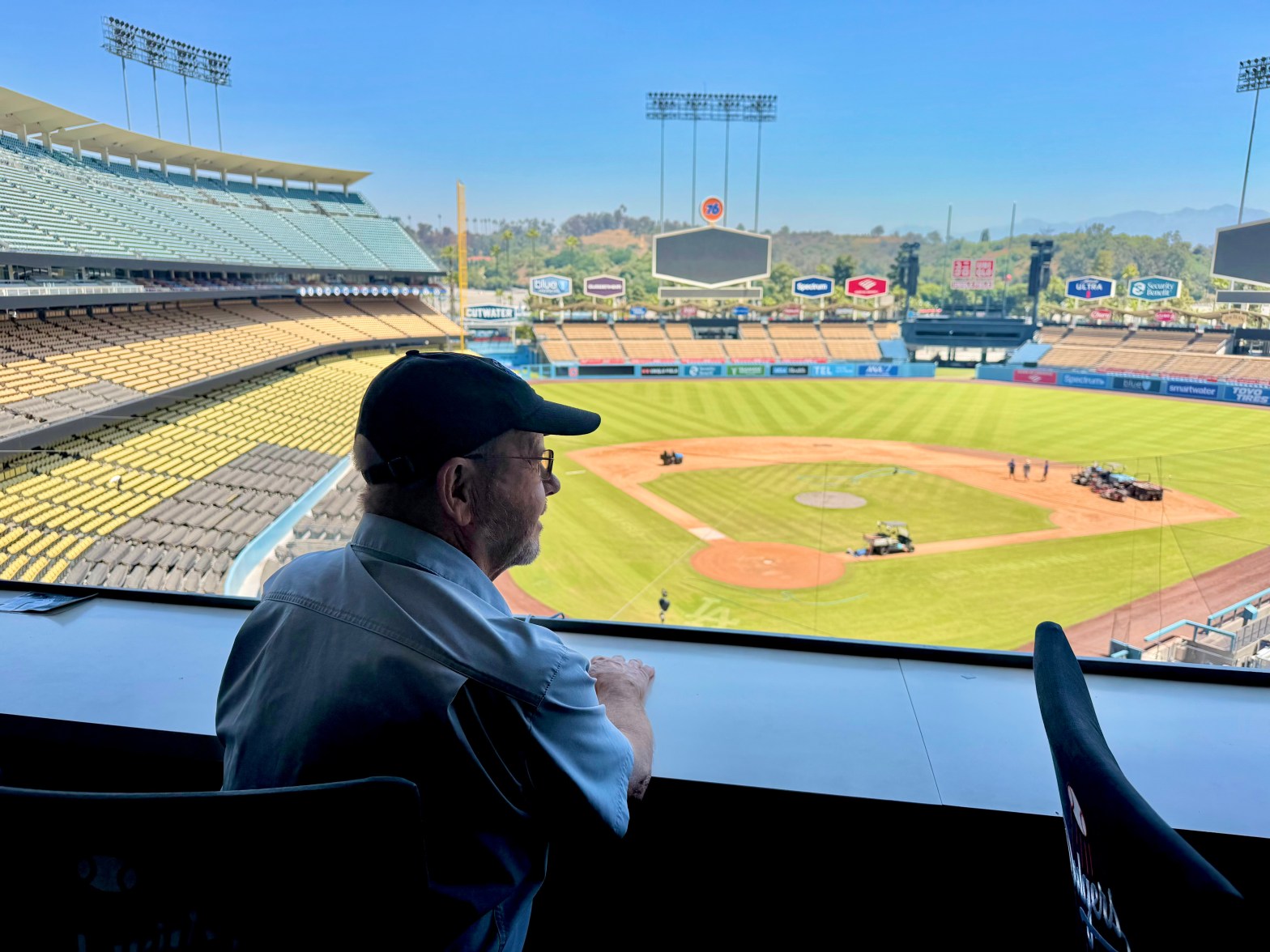
This week I was with a friend in LA for some music concerts.  We were free during the day on Tuesday, and I booked a tour of Dodger Stadium.  It turned out we were the only two people on the 90-minute tour. 

We came to the broadcaster’s booth and the guide said I could sit in an announcer’s chair, which I did.  I looked out at the empty field and quiet stadium.  I began thinking of Vin Scully, the Dodger broadcaster who had seen so much from this perspective.  It wasn’t any particular moment that came to mind, but more a sense of his spirit — how he saw the world.

Vin Scully began his broadcasting career in Brooklyn in 1950.  By the time the team came to Los Angeles in 1958, transistor radios were common and his voice was heard everywhere.  I began listening to him when I was 6 years old and followed him faithfully for 58 years.

If I could add up all the hours in my life I heard his voice, I’m sure it would be a greater sum than the hours I’ve listened to any other person outside my family.  But it wasn’t the information he conveyed that was so compelling. 

In all those years I never heard him say a disparaging word about anyone.  What I did hear was an endless stream of stories about each player’s background — one guy growing up in a Mississippi mill town and what inspired him, or how another guy had made it to the big leagues because his mother always believed in him.  It didn’t matter whether the person he was describing was a Dodger or on the other team — everyone has a story to their life, and when we know their story, we want to see them do well.

He gained that knowledge not by doing internet searches, but by showing up early for the games.  He would mingle with the players, listening carefully to them, and getting to know those he had not yet met.  They learned to respect and trust him. That took time. He made the time.

These days most games involve a team of broadcasters who discuss and debate what is going on between themselves while we listen in. Vin Scully preferred to work alone.  He wanted to have a genuine conversation between himself and each one of us listening and that’s what it felt like.

Vin never talked about his private life. But his first wife had died suddenly when she was 35, leaving him a single dad.  He remarried three years later and took on the hard work of raising a blended family. Later, one of his sons died in a helicopter crash.  He later said it was his strong Catholic faith and his willingness to stop asking “Why?” that got him through it all.  He didn’t have all the answers, but he didn’t have to.

Scully was honored in a pre-game ceremony by the Dodgers on September 23, 2017.  My youngest daughter, her boyfriend, and I attended that game.  Speakers included Sandy Koufax, Clayton Kershaw, and Kevin Costner. I remember him paying tribute to his wife, then leaning out of the broadcast booth, opening his arms wide, and serenading us with “You Are The Wind Beneath My Wings.” He was 88.

In our current culture, much attention is given to quick and simplistic judgments about other people.  Vin Scully was the great counterexample to that.  I believe Vinny’s life was about reverence. Reverence for the game, to be sure.  But also reverence for all those whom the game brings together.  It was all about loving and honoring one another in the midst of our ups and downs, our successes and failures.  He showed us how to practice respect for everyone.  Sitting quietly in that broadcaster’s chair this week, I was reminded once again of who Vin Scully was, what he represented, and why we need to always remember his example.
How Vin Scully Endured Personal Tragedies

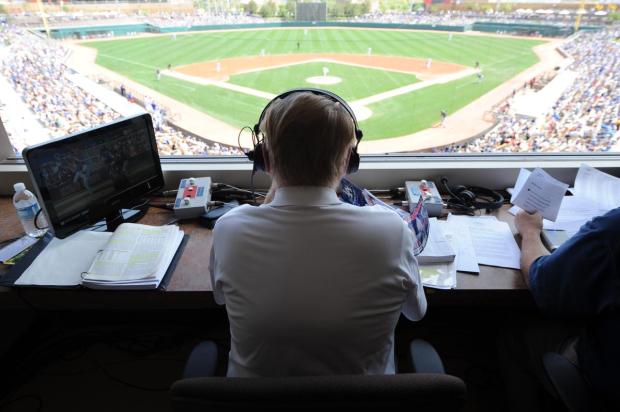
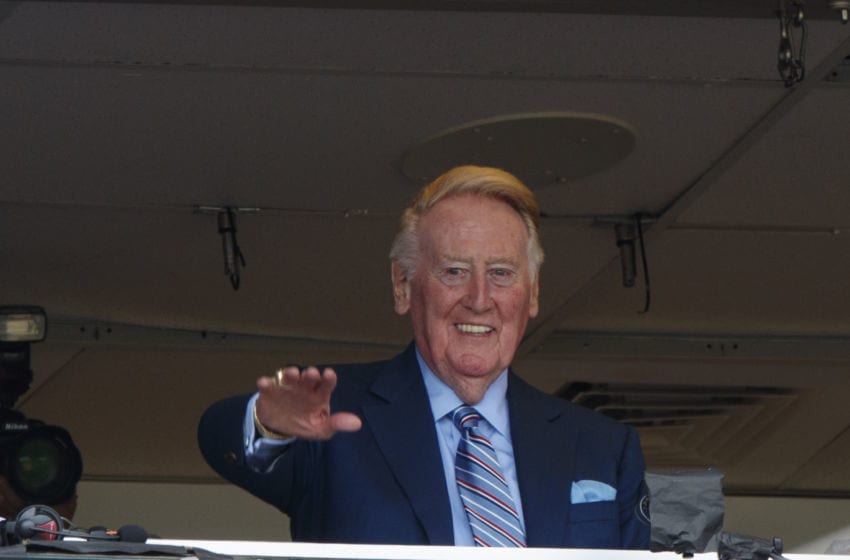
            Many people are writing tributes to the sports announcer Vin Scully, who died this week at 94.  He was the “voice of God” for me and many kids with transistor radios when we were growing up — he was omnipresent, trustworthy, forgiving and always positive. His endless tales of players’ backgrounds were told with reverence and affection.  He was a constant in my life over six decades.  Beyond the famous baseball moments he was part of, I have several other enduring memories.

In 2010, I was in Phoenix for spring training.  After the game, I was exiting behind the stands and happened to see him walking alone as he headed toward his car. He was dressed in a well-worn suit, and I remember thinking he looked older in person than he did on television. 

In 2016, my youngest daughter, her fiancé and I made a pilgrimage to “Vin Scully Day” at Dodger Stadium where we heard him sing “Wind Beneath My Wings” to his wife and 54,000 reverent and faithful fans.

            We all knew he was a very private man.  I vaguely knew his first wife had died and he had remarried, but I never heard him discuss it.

            The one exception came in 2008, when he was interviewed on KCET along with UCLA Coach John Wooden.  At one point, the interviewer changed the topic from sports to personal challenges. He noted that Scully’s first wife had died suddenly at age 35, leaving him with three children.  He’d remarried Sandra, a woman with two children of her own, and together they had one more child.  Later his oldest son died in a helicopter crash at age 32.  Vin was asked how he had gotten through it all.

He said creating a new family after the death of his wife while working full-time was very hard – not the amusing experience of blended families being portrayed on the “Brady Bunch” TV show at the time.  He didn’t go into the loss of his son.  But he concluded by saying the only way he got through it all was to “stop asking why.”

Asking “Why?” is a perennial human question.

“Why did that person have to die when they did?” we ask.  The answers people find are varied. Some attribute it to the intentional act of an inscrutable God.  Others theorize it must be “karma,” a kind of moral accounting system in which we inherit debits and credits from past lives that shape our personal fate.  In modern times, we may look to causes that can be objectively verified, such as family history or the actions of viruses, bacteria, and natural forces.  We may find fault in the way a car is designed or blame a toxin in our food supply. 

We are curious, intelligent creatures, and we yearn to find answers for personal losses and tragedies.  Sometimes we find them. Such answers may bring some peace, and we are reassured that the universe isn’t chaotic after all.

But satisfying answers don’t always come.

Vin’s first wife died of an accidental medical overdose. That’s explainable on one level – simple chemistry. But that doesn’t take away the heartbreak, sorrow, and unfathomable reality that one day a young wife and mother of three is alive and well and the next day she is gone.

His son died working as a helicopter pilot, which may be attributable to a simple error in judgment of a person up in the air at the helm of a large and complex machine.  But the harsh reality that a remarkable young man whom you’ve loved since birth is here one day and absent the next – that will always be a shock.

Vin did, at times, talk about the importance of faith and prayer. He was raised a devout Irish Catholic and remained one his entire life.  His immersion in that faith made a difference in how he endured and how he lived. But he never claimed that any of his prayers helped him find an answer to the question that apparently haunted him in the early days of his grief — why did death come to these two beloved people in such an untimely way?  Vin — the gracious, wise, humane, and compassionate observer of so many human encounters — said the key for him to going on with his life was to “stop asking why.”  I will remember that.  And I will also remember what a joy it was to turn on a radio and hear him invite us all to pull up a chair “wherever we may be” and listen to a master storyteller at work.

Photo credit: “Dodgersway”