Life is complicated. Every hour all kinds of information comes to us from inside and out — way too much for us to take it all in and use. So we simplify. We choose what to remember and value. We navigate as best we can.
Last month I attended a two-day conference that involved 14 hours of presentations. If someone were to ask me to convey everything I heard, it would be impossible (and boring) to do so. But if someone asks, “So what were your takeaways?” I understand that means: what were the highlights, the points and stories most relevant and useful?
It’s a similar process when we create memorial services. Someone has lived a life – often many years full of life experiences. When they’re gone, we try to make sense of it all. As I meet with families to prepare, I often ask who they want to have speak. When asked, a good speaker draws on a vast amount of information they know about the person and instinctively distill it all, choosing a few themes or stories that illustrate the person’s character. It’s always meaningful to hear what people value.
Simplifying our life experiences into key “takeaways” helps us navigate our direction.
But we need to be careful. We need to guard against oversimplification — the temptation to assume we know more than we really do. It’s wise to keep a humble spirit and open mind as we create our “takeaways.”
I recently was reminded of a passage from Wendell Berry’s novel, Jayber Crow.. Jayber comes from a small town in Kentucky. As a young man, he felt a spiritual calling and enrolled in seminary. He asks a lot of tough questions, sometimes to the frustration of his professors. He mistrusts people who are convinced they have all the questions of faith answered, and who assume whoever doesn’t agree with them is simply wrong. He ends up leaving seminary, returns to his hometown, and becomes a barber. In his day-to-day life, he carefully observes and listens to ordinary people. And though he left seminary, he never loses his reverence for the Biblical stories. At one point he says:
“As I have read the Gospels over the years, the belief has grown in me that Christ did not come to found an organized religion but came instead to found an unorganized one. He seems to have come to carry religion out of the temples into the fields and sheep pastures, onto the roadsides and the banks of the rivers, into the houses of sinners and publicans, into the town and the wilderness, toward the membership of all that is here. Well, you can read and see what you think.”
Unlike Jayber, I finished seminary and got my degree. I became one of those people in “the temple” of an “organized religion” whose duty it is to thoughtfully pass on the “takeaways” the tradition offers. It has been a privilege to do so.
Like Jayber, I never tire of contemplating the Biblical stories. After many years, they still often surprise and amaze me. In the early Gospels for example, Jesus creates not just inspiration among his followers but also a great deal of bewilderment. Whenever they try to put him in a box, he evades them. Faith becomes more about following as best we can rather than having every question answered. And I never tire of listening to people wrestle with life’s challenges, often in response to these timeless stories.
The French writer Paul Ricoeur believed there is a basic process we go through as we seek to understand life. We begin with what he calls a “first naiveté” – we accept some simple beliefs we’ve been taught and we follow them. But then we start experiencing life in all its complexity and disappointments; we can become disillusioned with those original beliefs. We may feel like giving up. But the process doesn’t have to end there. As we mature, we can accept life’s complexities and mysteries and discover a “second naiveté” — some new basic “takeaways” to help us go on. These don’t ignore life’s problems but help us deal with them.
Over the years, people have asked me, “Who are you favorite theologians?” I have often said, “Rembrandt, Bach, Wendell Berry, and the older people I have known in my congregations.” What a painter, a composer, a writer and those “ordinary people” have taught me is we don’t have to have all the answers to live a meaningful life. We find satisfaction in work done well and responsibilities fulfilled. We savor life’s simple pleasures when they come our way. We love the best we can. We care for other people as much as possible. In that process, a quiet kind of light emerges. And that light doesn’t stop with us; we sense it extends “…toward the membership of all that is here.” And that is enough.
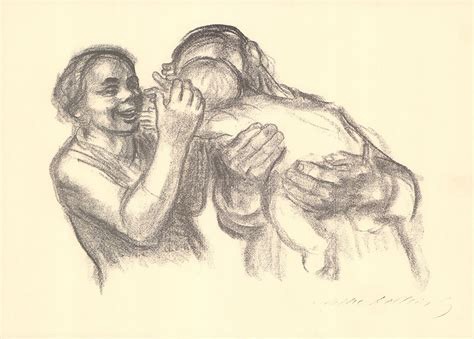
Art Work: ”Family,” Kathe Kollwitz, 1931

 Steve Jacobsen, Ed.D
I like the way you think!
LikeLike
You help me believe I’m not totally off the rails! Tx.
LikeLike
Isn’t wonderful to be one of those older people now!
LikeLike
Yes…it compensates for the physical breakdowns!
LikeLike
I have been following the work done by Aramaic Scholar, Dr. Neil Douglas-Klotz for years. It makes sense to me to understand the idioms and world view of Biblical times. Mis translations and Western culture has distorted so much of the original meaning of scripture. I have always been a seeker after spiritual ideas. Dr. Neil’s work has made the most sense to me. He would describe that light as the unseen world and we extend it through love and caring. Such things as this really can’t be put into words however.
LikeLiked by 1 person
I have not heard of him, Elsa, but I know folks have found the Aramaic very enriching. And that ‘light” certainly lies at the heart of much mystical experience.
LikeLike
Some time back in the 1990’s when I was still volunteering for Hospice one of our patient’s came by my office and said she wanted me to have some of her books. She gave me 3 old books by George M. Lamsa, a native speaking Aramaic Christian, who came to the U.S. in 1917. His story is remarkable and you can find some of his lectures the internet. I became so intrigued I brought his translation of the Bible and many other of his books. Later I heard about Dr. Neil from Sounds True and brought his CD’s, and book he written and now I’m finishing up his classes on The Shift Network.
That one dear soul who so generously gave me her treasured books was absolutely right about my interest. How she knew is a mystery but that’s how the Holy Spirit works in my life. Dr. Neal’s work can be found at abwoon.org. His life story is also fascinating. He is fluent in Aramaic, Hebrew, Arabic, Greek, and can read Coptic. I often listen to Aramaic Chanting of YOUTube. The music speaks directly to my heart.
LikeLike