“London Calling, Part 3: Handel and Hendrix Under One Roof”

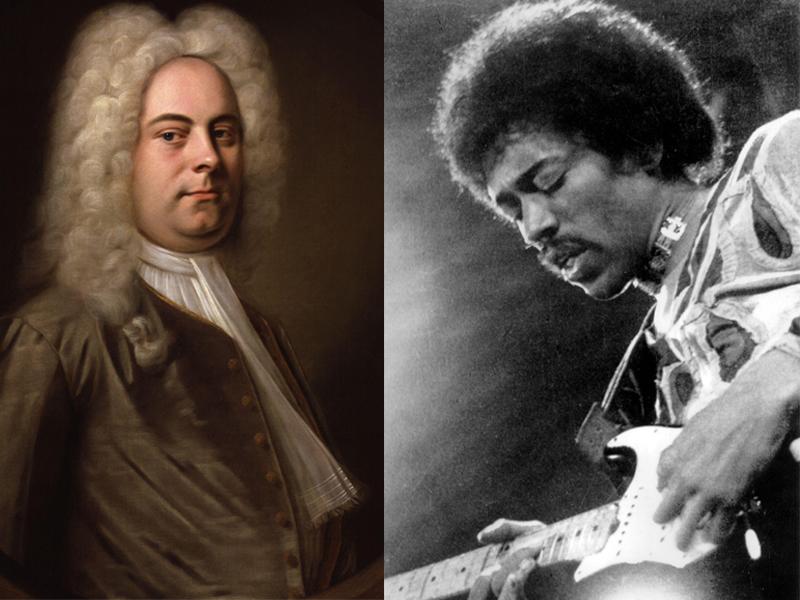
Last year I read “Every Valley: The Desperate Lives and Troubled Times That Made Handel’s Messiah.”  It’s a fascinating account of Handel’s life in London –-the scandals, fundraising challenges, political tensions and personal drama that surrounded him while he composed “The Messiah.” When I began planning my recent trip to London, I wanted to visit the house where Handel lived.  When I Googled it, I discovered that Handel’s house adjoins an apartment Jimi Hendrix rented between 1968 and 1969.  The two residences recently became one museum: The “Handel Hendrix House.”

I was fascinated to consider that two legendary musicians – separated by time and culture – had literally lived under the same roof. Both had been important touchstones in my personal musical experience, and it became a priority to visit.  I want to share the thoughts I had after visiting the site. But I’ll begin with some reflections on what each artist has meant to me.

When I think of Hendrix, I hear the opening chords of “Purple Haze,” which came out in 1967. I was 15 years old, and whenever it came on my car radio, I always turned the volume up.   Like so many of my generation, music had become central to the feeling that a new and exciting era was being born. It had begun with the Beatles and the Beach Boys.  Then the Rolling Stones and so many other groups emerged.  Then came Jimi Hendrix.  What he offered was much more than “I Want to Hold Your Hand” or “I Get Around.”  He was taking rock music into highly imaginative and psychedelic realms…

Purple haze all in my brain
Lately things just don’t seem the same
Actin’ funny but I don’t know why
‘Scuse me while I kiss the sky…”

There were the three studio albums: “Are You Experienced?”  “Axis Bold as Love,” and “Electric Ladyland.” In 1969 he closed Woodstock with “The Star-Spangled Banner.” He became a global sensation.  A year later, he died of an overdose. 

Jimi Hendrix was a visionary creator, a brilliant musician, and one of those human comets that rise high into the sky before burning out.  When I was 19 and living in my first apartment in Isla Vista, we had a large poster of Hendrix on our living room wall.  Listening to his music and seeing him perform evoked awe.

In my early 20s, my youthful abandon was calming down and I began to buy fewer rock albums.  For the first time, I learned to “hear” classical music. Before then, I thought it was meant to be just pleasant and pretty.  But I discovered human spirits from the past were sharing with me passionate, sublime and profound truths they had experienced.  I latched on to Beethoven first, then other composers. When I finally began listening to Handel’s “Messiah,” I learned why it has been treasured by millions of people for more than 250 years.  The most well-known selection is, of course, the “Hallelujah Chorus.” When we hear it sung well, it feels as if the heavens have opened and we join all humanity celebrating something gloriously greater than our self. 

Like Hendrix, Handel created experiences that evoke awe. Both artists have their place in my life.  I couldn’t wait to visit the place they both lived.

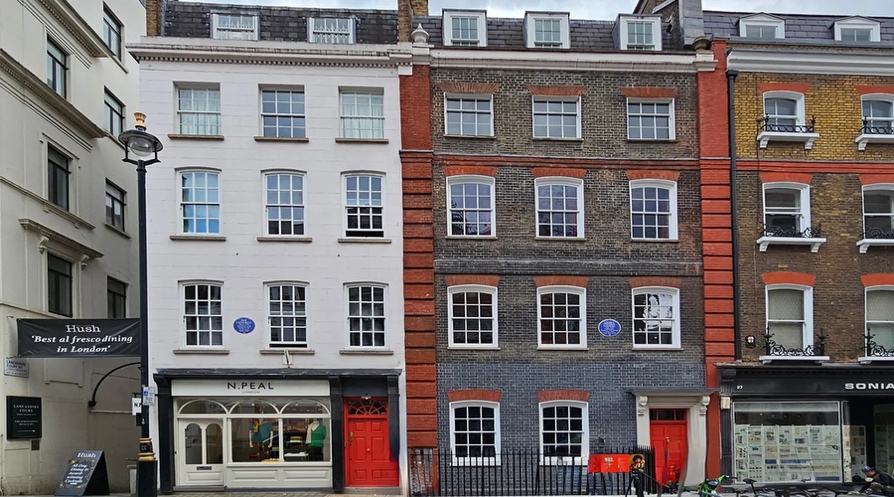
My sister and I followed the Google maps on our phones. We got to 23 and 25 Brook Street. It looks like this:

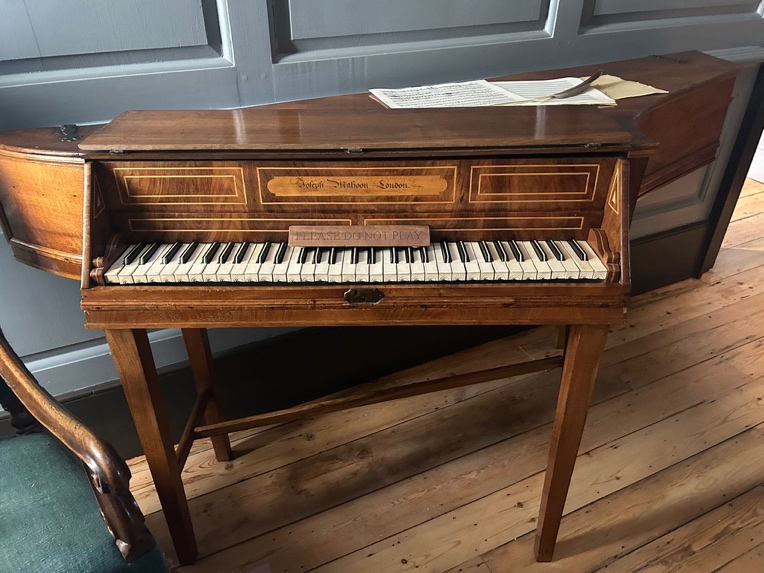
You enter the red door of the gray building on the right and you are in Handel’s house.  You go upstairs and come to a drawing room where Handel composed and rehearsed for many years.  It was in this room that he famously composed the complete “Messiah” in 24 days.  There is a replica of his keyboard:

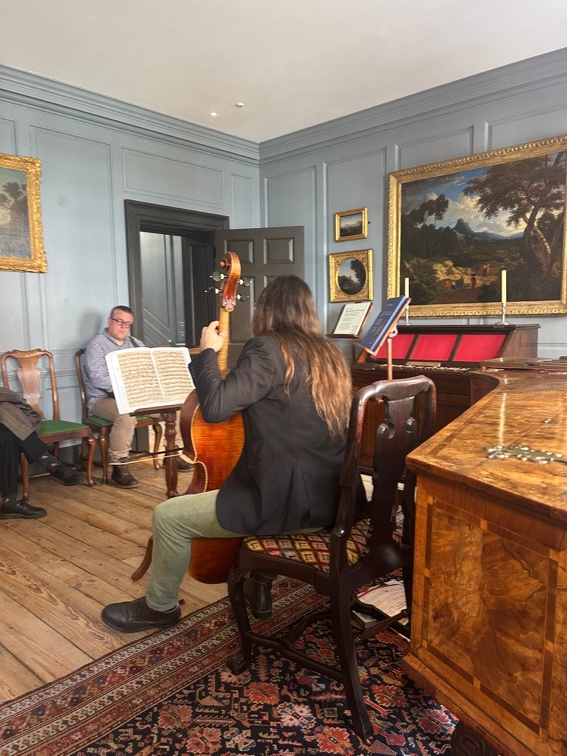
Some days they have guest musicians playing.  We heard a cellist performing pieces from Handel’s era:

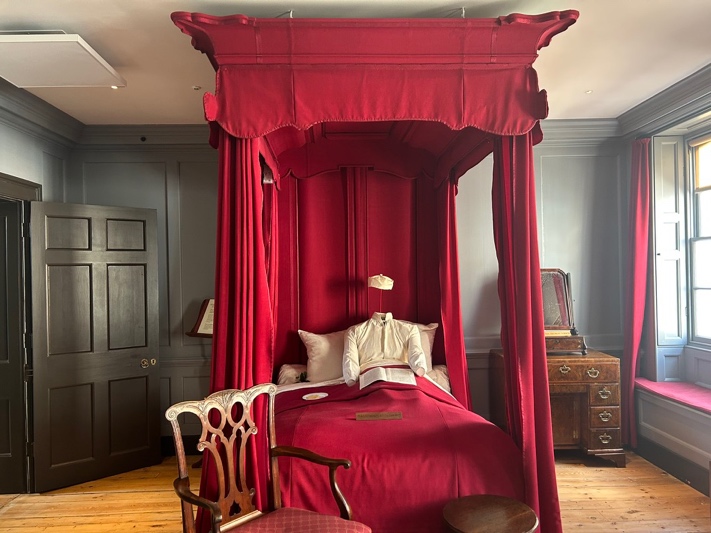
You next pass into his bedroom. 

A sign says: “Here Handel could find privacy and tranquility in his sometimes busy home…It is here that Handel slept, dreamt, recovered from illnesses and wrapped up warm amidst some of the coldest winters on record…He never married and we know nothing about his romantic liaisons while he lived here…In this bedroom, his sanctuary, he may have drawn his last breath.”

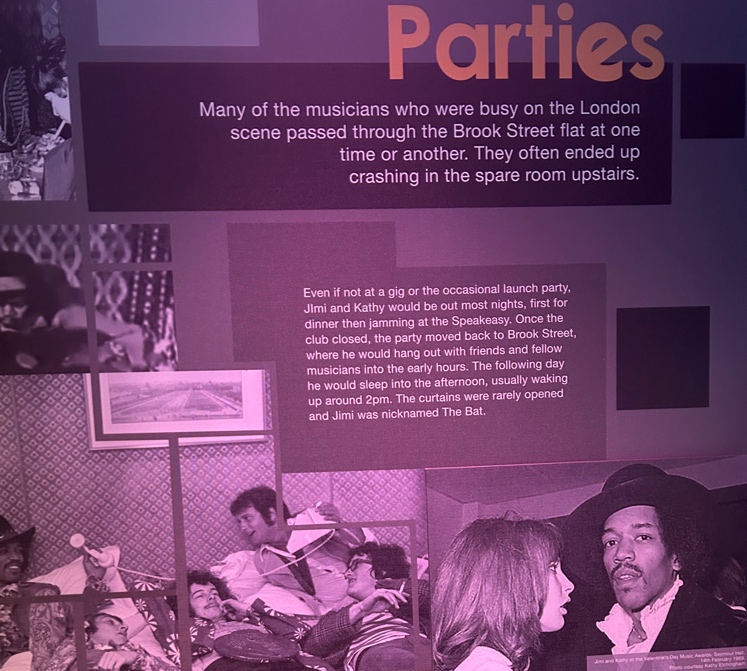
You go to the top floor and pass through a door into the Hendrix apartment. There’s a spare room where people such as George Harrison and Billy Preston gathered late into the night…

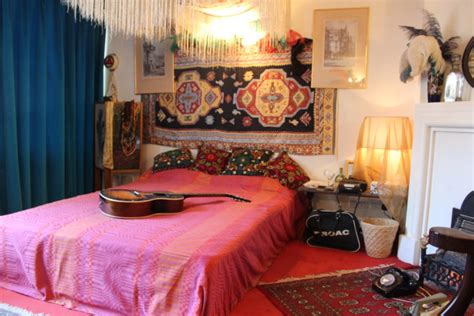
Then there is Hendrix’ s bedroom…

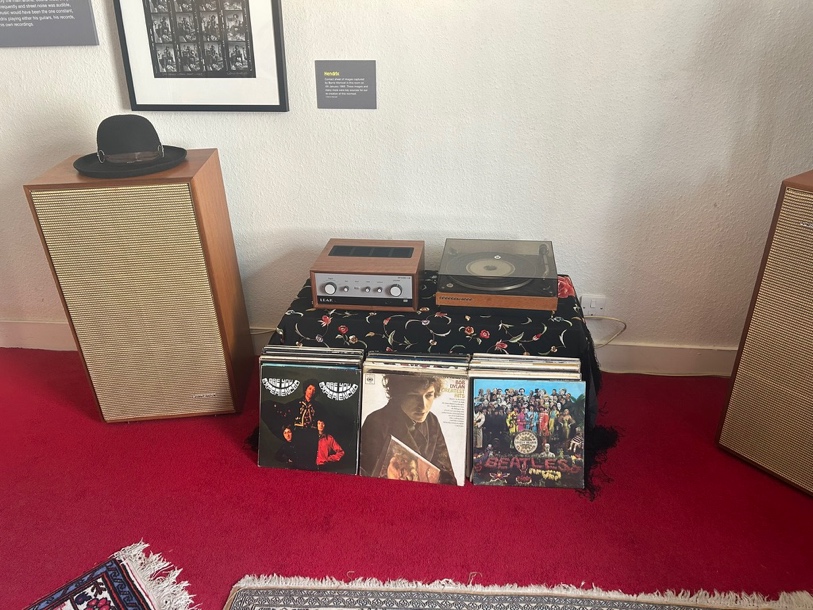
…and a room where you can view his stereo and collection of LPs…

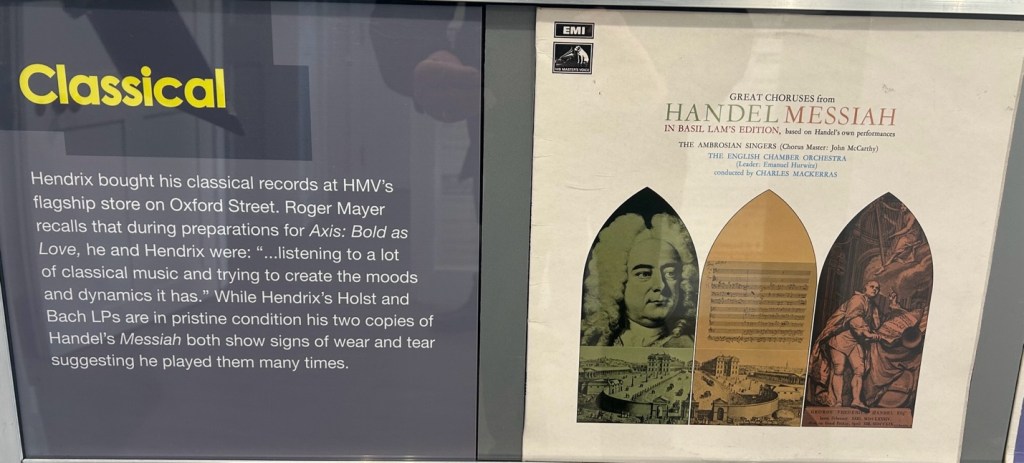
…nearby is this display, noting that Hendrix apparently was inspired by listening repeatedly to a recording of “The Messiah:”

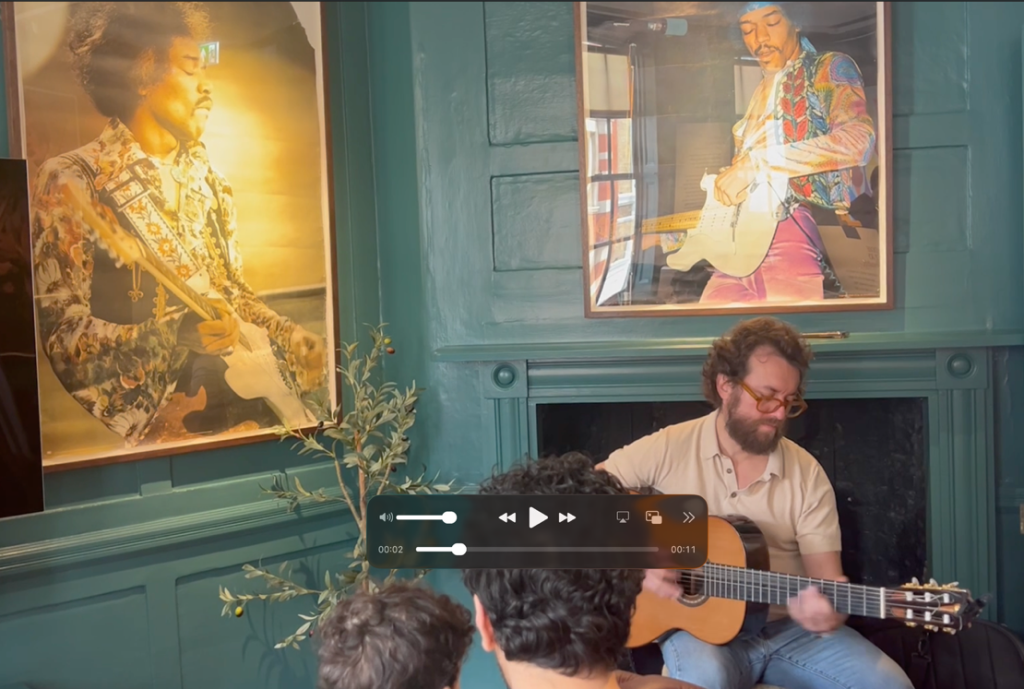
In one of the rooms, a guitarist was playing blues:

And then you’re done.

Completing the tour and heading outside, I was left to wonder what it meant.

The two men could not have been from more different backgrounds.  Handel was nurtured in the courts of 18th Century Europe; Hendrix had to make his way through the “chitlin” circuit of segregated night clubs in the turbulent 1960s.  Handel lived to be 74, Hendrix died tragically at 27. But both found great success and fame. Both entertained friends and musicians late at night in their Brook Street residence.  Both are gone.  But both have given us the great gift of their artistry and music which continues to inspire feelings of awe.

In the movie “Sinners,” the character Annie says: “There are legends of people with the gift of making music so true, it conjures spirits from the past and the future.”  Handel and Hendrix seem to have that power.  And for that we can be grateful.

Three Gifts America Has Given the World

“… when they study our civilization two thousand years from now, there will only be three things that Americans will be known for: the Constitution, baseball and jazz music.  They’re the three most beautiful things Americans have ever created.” writer and essayist Gerald Early, interviewed in Ken Burns’ documentary, Baseball

                  Having just endured an incredible World Series amid our current cultural and political climate, I will comment first on baseball.

                  Baseball may have roots in the English games of cricket and rounders, but by 1900 it had become 100% an American creation.  125 years later, it may not be a universal sport like soccer or basketball.  But it has a passionate following in certain parts of Asia – particularly Japan and Korea – and in the Latin American countries that surround the Gulf of Mexico.  At a time in our history in which “immigrants” are seen as “other,” the recent series included three superstars from Japan (Ohtani, Yamamoto, and Sasaki), a terrific first baseman from Tijuana (Alejandro Kirk), a Canadian playing for Los Angeles (Freddie Freeman), a star from the Dominican Republic (Vladimir Guerrero), a Puerto Rican (Kike Hernandez), a refugee from Cuba (Andy Pages), a Venezuelan (Miguel Rojas), and an African-American from Nashville (Mookie Betts), among others. The Dodger manager Dave Roberts was born in Okinawa to a Japanese mother and an active-duty African American Marine.

                  This American game has become a showcase for talented players from many backgrounds and cultures.  It’s a game of opportunity, celebrating players no matter where they come from.  It’s a game that can focus moment to moment on a particular individual player, but it’s a great team that wins and inspires.  It’s a beautiful thing.

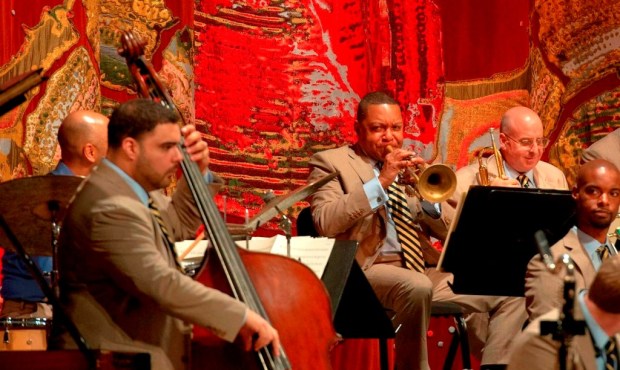
                  And then there’s jazz.  One person who has helped me understand the deeper meaning of jazz is Wynton Marsalis.  Ken Burns turned to Marsalis often in his Jazz documentary series, and everything he said struck me as revelatory.  I saw him in concert several years ago and was again grateful for the insights he shared with the audience.  Here is one of his observations:

As long as there is democracy, there will be people wanting to play jazz because nothing else will ever so perfectly capture the democratic process in sound. Jazz means working things out musically with other people. You have to listen to other musicians and play with them even if you don’t agree with what they’re playing. It teaches you the very opposite of racism and anti-Semitism. It teaches you that the world is big enough to accommodate us all.

Seeing and hearing gifted musicians express their individual gifts and voices while being a part of a larger group and delighting in the give and take with one another creates an experience in which the whole becomes greater than the parts. That’s jazz.  When we experience it, it’s a beautiful thing.

                  And so is the Constitution.

                  Years ago, I was having lunch with a young Muslim grad student from Egypt as part of my community interfaith project.  He told me he first learned about American culture while watching “Mighty Mouse” cartoons as a child.  He shared favorite stories about growing up in Egypt, including how, during Ramadan, he and his childhood friends would wait for the signal that the time of daily fasting was over, then race from home to home enjoying the food set out by neighbors.  He had come to appreciate all that America offers — particularly the constitution.  “Do Americans realize how amazing it is that your country is ruled by a constitution instead of a dictator?” he once asked me.

                  The constitution was created by people who did not want to live in a political system like they had known in Europe – one in which some people would dominate others based on family ancestry, social position or a state-sponsored religion. The founders wanted to create a society in which people would experience a new level of freedom and opportunity. They worked long and hard to create the legal framework.  It assumes people will let their deep passions be balanced by mutual respect and personal restraint.  Like baseball, it assumes people will understand that to participate, everyone must follow established rules and customs until they are changed by due process.  Like jazz, it teaches you this country is big enough to accommodate us all.  When it is disrespected, it’s an offense to our ancestors who have given so much to honor and preserve it.  When it is honored, it’s a beautiful thing.

                  America may leave the world more treasures – after all, there’s Broadway, rap, country music and Hollywood.  But I will always celebrate baseball, jazz and the Constitution for what they offer and what they mean.

Wynton Marsalis

Lead image: “The raising of the American flag as the composer-conductor John Philip Sousa leads the Seventh (“Silk-Stocking”) Regiment Band in playing The Star-Spangled Banner during Opening Day of Yankee Stadium  with the Boston Red Sox and New York Yankees on April 18, 1923 at Yankee Stadium in the Bronx, New York.

Making Sense of It All in Vienna

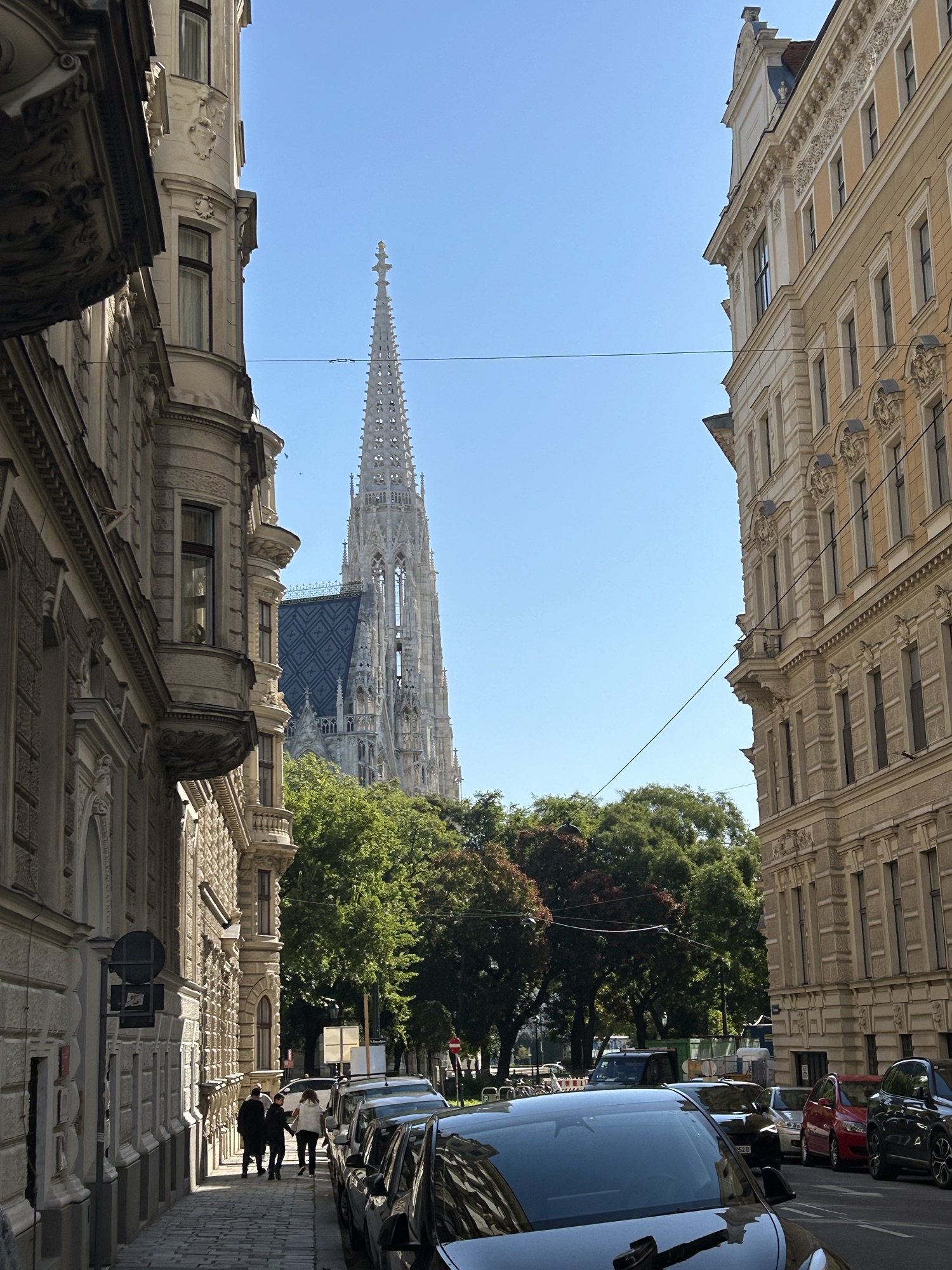
After five days in Berlin, we are completing our fifth in Vienna.  Yesterday I thought about a surprising thread of meaning.

Beethovens Bed In Baden:  One day we went out of the city to visit the famous spa town of Baden, where people have been coming to enjoy the natural sulfur water as a form of relaxation for centuries.  Baden was a favorite place for Beethoven to stay and composed in the summer; it was here that he composed his 9th Symphony in 182…I visited the house he had rented which is now a museum.  In addition to the dining rand composition room was his bedroom.  I was surpirsed the bed was only two feet or so off the ground and it was set in its own enclousure, like a closet.  I leadnred at this time in his life, he was not only deaf but suffering from frequent abdominal pains and other ailments that made sleeping difficult.  His best creative moments came from long walks in the surrounding countryside.  The music he composed when he lived in this house has become one of the most inspiring creations of the human spirit.  But I couldn’t help think about his sleepless nights he spent here as he was trying creating timeless music.

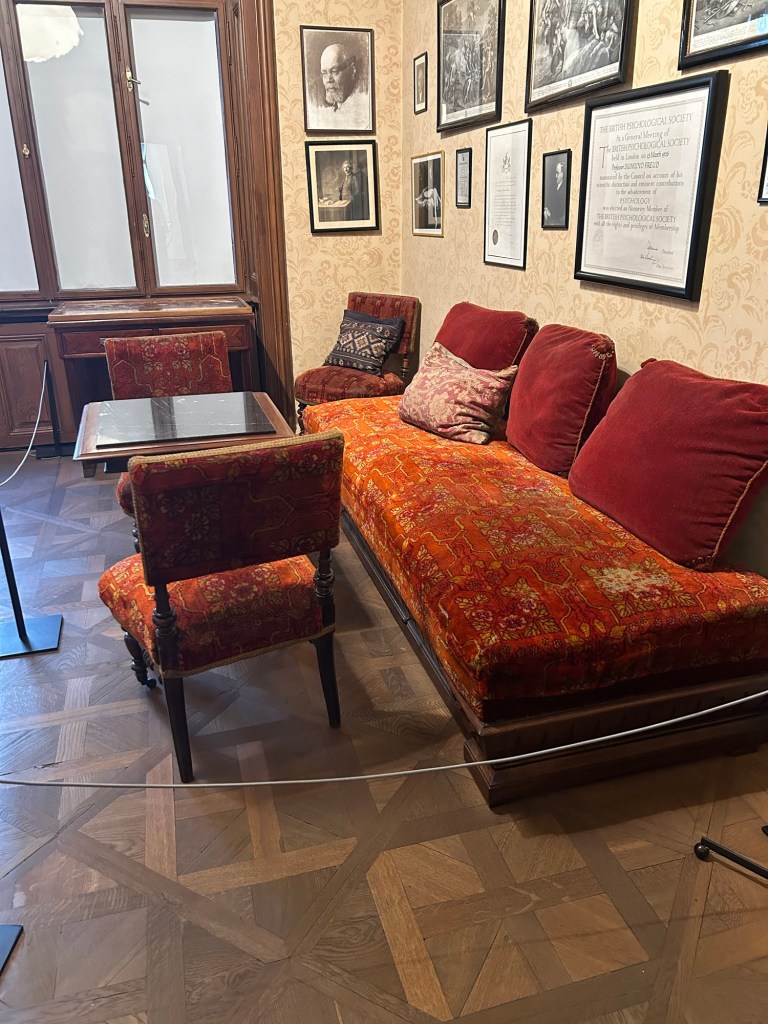
The next day I visited the Freud museum, which turns out to be a short walk from our Airbnb.  Freud lived here from 1891 – 1938, when he was able to go to London to evade the Nazis.  It was here he raised his family, did all his writing, and saw his patients:

Here’s a picture of what the waiting room looks like:

The actual couch where people laid back for analysis is in London, but here’s a photo of what the room looked like then: 

Obviously, this was a couch for reclining while you are awake,not for sleeping.  But just as Beethoven tossed and turned on his bed, I imagined all the many people who laid back here as Freud helped them explore their inner thoughts, hidden desires, and hope for living a meaningful life.

And here is the bed I’ve been sleeping in at our apartment in Vienna:

I do not think this humble space will have any historical significance.  But this is where I lie awake thinking about all the art I’ve seen (medieval to modern) and all the music I’ve heard (from Mozart to jazz to “The Sound of Music” performed in German). I try to integrate it all and what it means to me.  This is also where my dreaming has been taking place (though, bone-tired from the day, I’ve been sleeping so soundly that I would not have much to offer Dr. Freud).  I think of all the human beings in Vienna who are engaged in the same process every day and night, as are all our fellow humans around the world, including you.  How earnestly we are at work trying to live day by day! How grateful we are for the music that inspires us, the art that helps us see in new ways, and the relationships that nurture us.  What a grand and glorious mystery.

Today we head to Amsterdam.