Shaped By Life

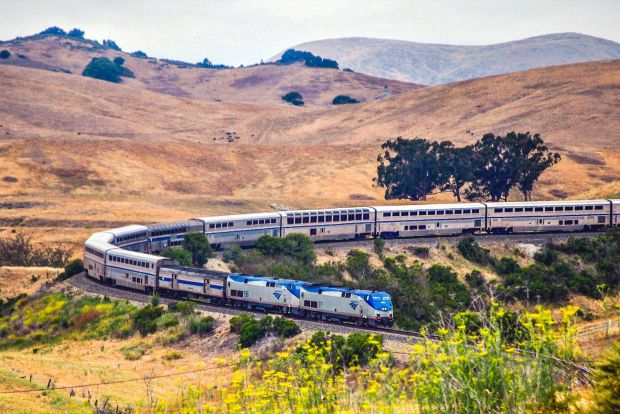
Last week we took the Amtrak Coast Starlight for a 32-hour journey to Washington State.  Our goal was to visit friends we’d made when we lived in the farming community of Wapato in central Washington from 1985-1992. 

Once we got settled on the train, I downloaded Pope Leo’s new encyclical on AI to my iPad. While some of it was dry, other parts were compelling.  One section impressed me. I pasted this paragraph to my Notepad:

… we must avoid the misconception of equating this type of “intelligence” with that of human beings. These systems merely imitate certain functions of human intelligence. In doing so, they often surpass human intelligence in speed and computational capacity, offering tangible benefits across many fields. Yet this power remains entirely tied to data processing. So-called artificial intelligences do not undergo experiences, do not possess a body, do not feel joy or pain, do not mature through relationships and do not know from within what love, work, friendship or responsibility mean. Nor do they have a moral conscience, since they do not judge good and evil, grasp the ultimate meaning of situations, or bear responsibility for consequences. They may imitate language, behavior and analytical skills, or even simulate empathy and understanding, but they do not understand what they produce, for they lack the affective, relational and spiritual perspective through which human beings grow in wisdom. Even when these tools are described as capable of “learning,” their way of doing so is different from that of a human person. It is not the experience of those who allow themselves to be shaped by life and grow over time through choices, mistakes, forgiveness and fidelity. Rather, it is a form of statistical adaptation based on data and feedback, which can be very effective, but does not imply inner growth…[i]

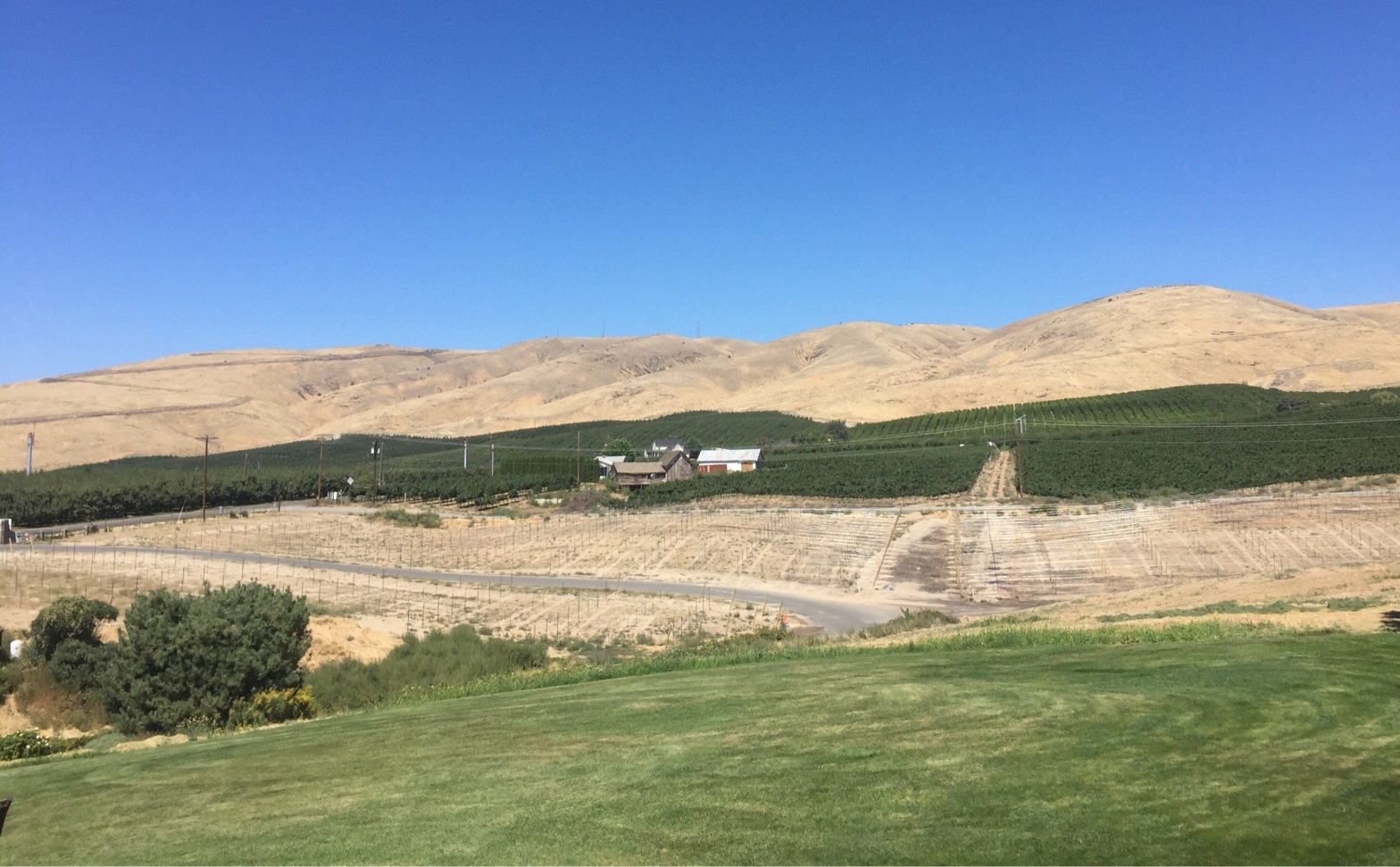
We arrived in Seattle at 10 PM.  The next day we visited a friend who lives north of the city, then drove our rental car over Snoqualmie Pass to the Yakima Valley.

The first night a group of friends gathered at a winery to celebrate our memories and relationships. 

The next morning, we drove eight miles south to Wapato, which has 3,000 residents and an 85% poverty rate. 

We began with a visit to the apple farm and retreat center where we lived the first year.  We took photos, including one of the 10 x 50-foot trailer we lived in that is now abandoned.  We drove into town and saw the church I served for six years; the congregation I knew dispersed years ago, and the building is now owned by a Spanish-speaking Pentecostal congregation. 

We drove two blocks past the Dairy Queen to the church-owned house we lived in for six years.  Later we visited a Filipino couple who are dear friends and godparents to our younger daughters.  We spent two more days in the area before driving west over the mountains.  We spent one last night in a downtown hotel in Seattle and boarded the train back home. 

On the way south, I began to sort out my feelings and thoughts. 

I value all my life experiences. Living in a small town few people have heard of amid the poverty was not easy.  But we did it.  We endured because we were embraced by the people in my congregation and those we met through the schools, community, and the local swim team.  We grew to love our new life, the people, the land, and what we were learning. 

Becoming aware of that on the way home, I took my iPad out and looked again at the excerpt from the encyclical.  I was drawn to two sentences:

So-called artificial intelligences do not undergo experiences, do not possess a body, do not feel joy or pain, do not mature through relationships and do not know from within what love, work, friendship or responsibility mean.

…and…

It is not the experience of those who allow themselves to be shaped by life and grow over time through choices, mistakes, forgiveness and fidelity.

I enjoy using Claude, my AI tool.  I appreciate Anthropic, the company that created Claude, which has from the beginning established strong ethical guidelines and whose co-founder was invited to speak at the encyclical’s presentation.

Speed, clarity, ease, amazement:  AI gives us these experiences. 

But life can’t always go quickly. Sometimes it takes a long time to find clarity.  Sometimes the easy way is not the best way.  And sometimes the most lasting sense of appreciation comes not from a device, but from personally experiencing and living through joy and pain and discovering from within the value of “love, work, friendship, and responsibility.”

Living seven years in the Wapato community taught us in a lasting way what love, work, friendship and responsibility mean.  Our life there shaped us for the good.  We will always be grateful for what we learned and the people whose lives became intertwined with our own.  And I am grateful to Pope Leo for reminding us what really matters as we live into the future.

[i] Magnifica Humanitas, paragraph 99

Lead Image: Farm in the hills near Wapato, Washington

I Like Bob

                  Fr. Virgil Cordano was a legend here in Santa Barbara.  He served as priest at the Mission for more than 50 years and was loved by people all over town for his warmth, wit, intelligence and community leadership.   People would ask him if wanted to be Pope.  “I would for 15 minutes,” he’d say. “I’d make all the changes that need to be made, then resign.  That job is too difficult.”

                  On May 8, we heard the announcement that the job was offered to Bob Prevost from the south side of Chicago.  He accepted and is now Pope Leo XIV,

                  There’s a lot to like about Bob.

                  Places a Premium on Friendship As a young man, he chose the small Augustinian order.  “Being an Augustinian means being pretty open,” Father Moral Antón said, adding that, compared to other orders, theirs does not have “very rigid norms.”  “It’s about eternal friendship, friends, wanting to walk with friends and find truth with friends,” he said. “Wanting to live in the world, to live life — but with friends, with people who love you, with whom you love…It is not always something you find,” he added, “but, well, that’s the ideal.”[i]

                  Does His Own Dishes: When he was a bishop in Chicago, he’d drop by the priests’ residence for dinner. When the meal was done, he would take his own dishes to the kitchen to wash them.  He continued that practice even when he was a cardinal in Rome.  “As a cardinal, he continued to live in an apartment near the Vatican by himself, forgoing the usual nuns who help. He shopped and cooked for himself, and lunched with the young priests, busing their plates.”[ii]

                  He’s a Baseball Fan.  Chicago’s baseball loyalties are famously divided between the two teams that have been there since the 1800s: the Cubs on the north side, and the White Sox on the south.  Bob grew up on the south side and is therefore a White Sox fan.  This is not about choosing a team because you want to be associated with a winner. (Since 1917, the White Sox have won one World Series championship while the New York Yankees have won 27.)  Bob is a White Sox fan because he is loyal to his neighborhood.

                  He Likes Road Trips He is known as someone who would turn down the option of flying to destinations in favor of driving, often by himself. As bishop in Chiclayo, he drove 12 hours down to the capital, Lima, to meet Cardinal Joseph W. Tobin, an old friend from the United States. “I have this image of him covered with dust in a beat-up baseball cap,” Cardinal Tobin said.”[iii]

                  He’s a Global Citizen Bob speaks English, Italian and Spanish. He’s lived with the poor in Peru and traveled in Africa and Asia.  He’s an American by birth but sees himself as serving all the people on the planet.

                  He Has the Courage to Face Complicated Issues Bob’s predecessor and friend, Pope Francis, took a leadership role focused on the challenge of climate change; he listened to experts from many disciplines and produced a terrific ecological encyclical, Laudato Si.  Pope Leo IV is making a similar focus:

…. In his inagural address to the College of Cardinals,  he said the church would address the risks that artificial intelligence poses to “human dignity, justice and labor.” And in his first speech to journalists, he cited the “immense potential” of A.I. while warning that it requires responsibility “to ensure that it can be used for the good of all.”

While it is far too early to say how Pope Leo will use his platform to address these concerns or whether he can have much effect, his focus on artificial intelligence shows he is a church leader who grasps the gravity of this modern issue.”[iv]

                  I appreciate these comments from one of his long-time colleagues: Father Banks said he texted his old boss after Francis died. “I think you’d make a great pope,” he said he wrote, “but I hope for your sake you’re not elected. The cardinal responded, Father Banks said, writing, “‘I’m an American, I can’t be elected.’” He still promptly responds to friends. The pope sometimes signs messages Leo XIV — sometimes Bob.[v]

                  I don’t envy all the challenges Pope Leo XIV faces.  But I’m grateful the world can see a gifted, compassionate leader from America who wants to make a difference for the entire human family.

                  I like Bob.  I wish him well.


[i] “The Small, Tight-Knit Religious Order That Molded Pope Leo XIV,” NY Times, May 13,2025

[ii] New York Times, May 9, 2025

[iii] “Long Drives and Short Homilies: How Father Bob Became Pope Leo,” NYTimes, May 17, 2025

[iv] “Top Priority for Pope Leo: Warn the World of the A.I. Threat,” NYTimes, May 15, 2025

[v] “Long Drives and Short Homilies: How Father Bob Became Pope Leo,” NYTimes, May 17, 2025

Lead image: “Then-Bishop Robert Prevost, now Pope Leo XIV, stands in floodwaters in the Chiclayo Diocese in the aftermath of heavy rains in northwestern Peru in March 2023, in this screenshot from a video by Caritas Chiclayo” (NCR screengrab/Caritas Chiclayo)