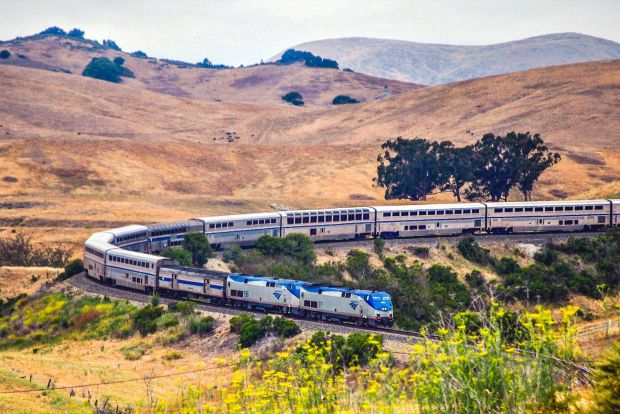
Last week we took the Amtrak Coast Starlight for a 32-hour journey to Washington State. Our goal was to visit friends we’d made when we lived in the farming community of Wapato in central Washington from 1985-1992.
Once we got settled on the train, I downloaded Pope Leo’s new encyclical on AI to my iPad. While some of it was dry, other parts were compelling. One section impressed me. I pasted this paragraph to my Notepad:
… we must avoid the misconception of equating this type of “intelligence” with that of human beings. These systems merely imitate certain functions of human intelligence. In doing so, they often surpass human intelligence in speed and computational capacity, offering tangible benefits across many fields. Yet this power remains entirely tied to data processing. So-called artificial intelligences do not undergo experiences, do not possess a body, do not feel joy or pain, do not mature through relationships and do not know from within what love, work, friendship or responsibility mean. Nor do they have a moral conscience, since they do not judge good and evil, grasp the ultimate meaning of situations, or bear responsibility for consequences. They may imitate language, behavior and analytical skills, or even simulate empathy and understanding, but they do not understand what they produce, for they lack the affective, relational and spiritual perspective through which human beings grow in wisdom. Even when these tools are described as capable of “learning,” their way of doing so is different from that of a human person. It is not the experience of those who allow themselves to be shaped by life and grow over time through choices, mistakes, forgiveness and fidelity. Rather, it is a form of statistical adaptation based on data and feedback, which can be very effective, but does not imply inner growth…[i]
We arrived in Seattle at 10 PM. The next day we visited a friend who lives north of the city, then drove our rental car over Snoqualmie Pass to the Yakima Valley.
The first night a group of friends gathered at a winery to celebrate our memories and relationships.
The next morning, we drove eight miles south to Wapato, which has 3,000 residents and an 85% poverty rate.
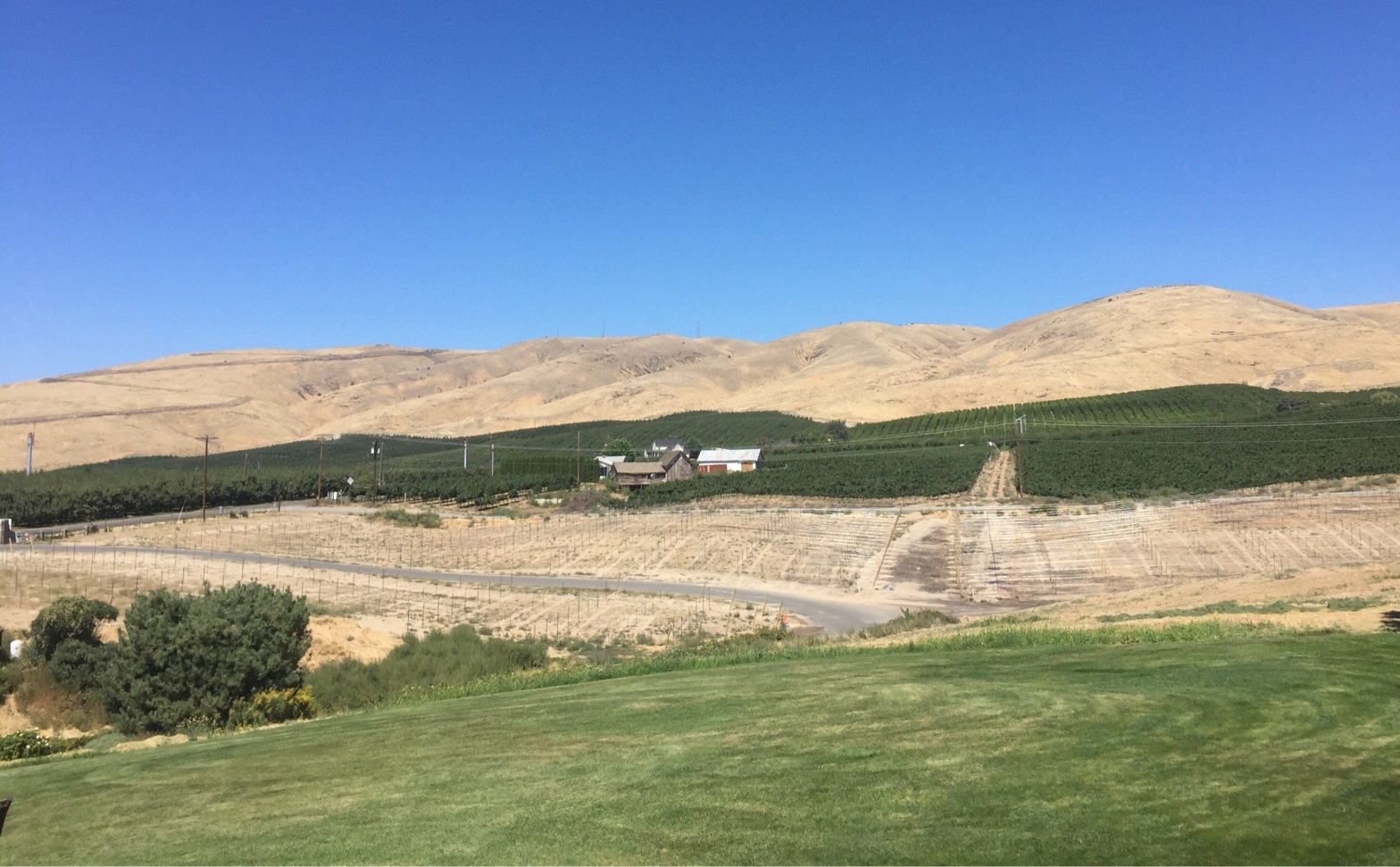
We began with a visit to the apple farm and retreat center where we lived the first year. We took photos, including one of the 10 x 50-foot trailer we lived in that is now abandoned. We drove into town and saw the church I served for six years; the congregation I knew dispersed years ago, and the building is now owned by a Spanish-speaking Pentecostal congregation.
We drove two blocks past the Dairy Queen to the church-owned house we lived in for six years. Later we visited a Filipino couple who are dear friends and godparents to our younger daughters. We spent two more days in the area before driving west over the mountains. We spent one last night in a downtown hotel in Seattle and boarded the train back home.
On the way south, I began to sort out my feelings and thoughts.
I value all my life experiences. Living in a small town few people have heard of amid the poverty was not easy. But we did it. We endured because we were embraced by the people in my congregation and those we met through the schools, community, and the local swim team. We grew to love our new life, the people, the land, and what we were learning.
Becoming aware of that on the way home, I took my iPad out and looked again at the excerpt from the encyclical. I was drawn to two sentences:
So-called artificial intelligences do not undergo experiences, do not possess a body, do not feel joy or pain, do not mature through relationships and do not know from within what love, work, friendship or responsibility mean.
…and…
It is not the experience of those who allow themselves to be shaped by life and grow over time through choices, mistakes, forgiveness and fidelity.
I enjoy using Claude, my AI tool. I appreciate Anthropic, the company that created Claude, which has from the beginning established strong ethical guidelines and whose co-founder was invited to speak at the encyclical’s presentation.
Speed, clarity, ease, amazement: AI gives us these experiences.
But life can’t always go quickly. Sometimes it takes a long time to find clarity. Sometimes the easy way is not the best way. And sometimes the most lasting sense of appreciation comes not from a device, but from personally experiencing and living through joy and pain and discovering from within the value of “love, work, friendship, and responsibility.”
Living seven years in the Wapato community taught us in a lasting way what love, work, friendship and responsibility mean. Our life there shaped us for the good. We will always be grateful for what we learned and the people whose lives became intertwined with our own. And I am grateful to Pope Leo for reminding us what really matters as we live into the future.
[i] Magnifica Humanitas, paragraph 99
Lead Image: Farm in the hills near Wapato, Washington

