Pocket Epiphanies #200: A Buffet of Past Posts

On December 17, 2020, I posted my first piece for this “PocketEpiphanies” blog. It’s hard to believe, but this week marks my 200th. I went back and picked out a dozen that may be worth reposting. Think of this as a “blog buffet” — see if any particular one interests you and put it on your plate. And thank you for being part of this project.

Narcissim of Small Differences  We prize attention to detail in many areas of life.  But we can easily fall prey to the “narcissism of small differences.”   We can make choices about things that have little relation to their actual value.

___________________________________________________

Silver Keys, Mean Moms and Compassion in the Workplace  The right thing to do was not to simply feel compassion for everyone involved, but to find a solution to the problem. That took “art and skill.”

___________________________________________________

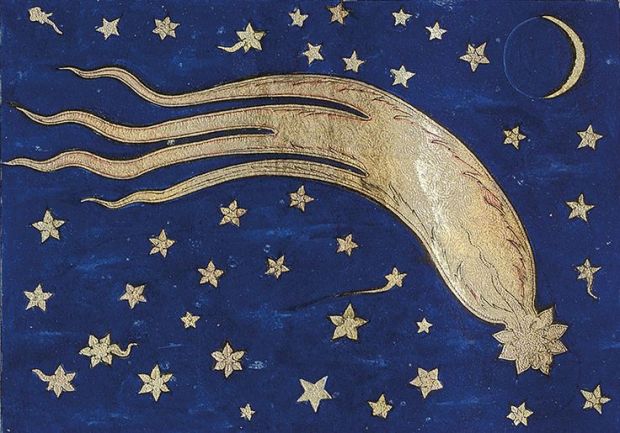
Starstruck: The Relationship Between Awe and Caring Gazing at the heavens may help us make a better world on earth.”

___________________________________________________

Two Questions, Two Art Works, One Life to Live  Maybe the best way to find ourselves is to give ourselves away.

___________________________________________________

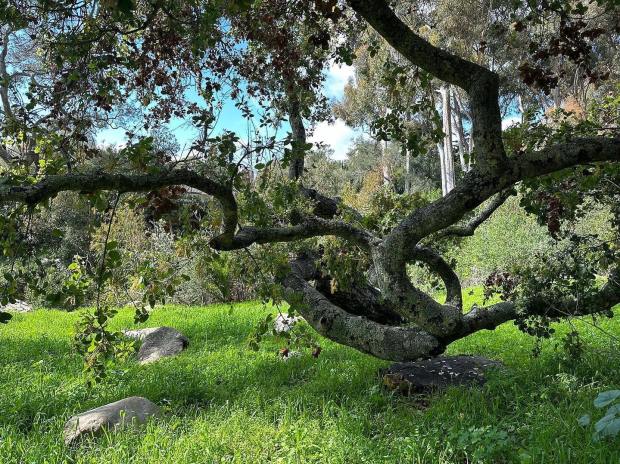
Seeing People Like Trees  And so I practice turning people into trees. Which means appreciating them just the way they are.

___________________________________________________

I Hope I’m Wrong  Dear friends, I hope I’m wrong about all this. I know there may be some very positive uses for AI, especially in medicine. But I’m worried. 

___________________________________________________

The Intrinsic Power of Veriditas What I saw was a glimpse of the viriditas that permeates and surrounds us, an inner force we share.

___________________________________________________

My Plan for Dementia Care  …one of my constant themes is my sense of awe at the miracle of life, and gratitude for all the opportunities and experiences I’ve had. But I don’t want to live “beyond my time,” and I don’t want my family to be emotionally or financially burdened caring for me when I don’t have a life I can appreciate. 

___________________________________________________

“Mind Proposes, Soul Disposes”  “This may be important. I need to be attentive.”

___________________________________________________

GRACE: A Focusing Practice   We are embodied human beings who have been gifted with this amazing multisensory life-form and a miraculous mind which, when they are working together, can open us to a rich awareness of where we are and what is possible.

___________________________________________________

Private Thoughts  I can’t believe a light that burned so brightly in my life has disappeared from my sight.

___________________________________________________

Letting Your Soul Catch Up With You  “Making good time” means you haven’t left your soul behind in the pursuit of speed and efficiency.  Your soul has a chance to be present with you as you travel.


Chatbots, Humans, and the Holiday Season

Generative A.I. took over my life. For one week, it told me what to eat, what to wear and what to do with my kids. It chose my haircut and what color to paint my office. It told my husband that it was OK to go golfing, in a lovey-dovey text that he immediately knew I had not written.”  This is the opening of “I Took a ‘Decision Holiday’ and Put A.I. in Charge of My Life,” from a recent article in the “Business” section of the New York Times[i]. The author, Kashmir Hill, is a working mom with a husband and two young daughters.  She decided to conduct an experiment by engaging more than 20 different A.I. bots to get advice on more than 100 decisions she faced in a week.  Here are some highlights:

  • After giving one chatbot details about her family, it gave her not only a detailed menu plan for the week but also a shopping list for everything she would need in a matter of seconds.  As she prepared meals, she could ask for cooking advice, like how to poach an egg.  The bot’s voice was casual, warm, friendly and patient.
  • She was given a daily schedule for her week that balanced work, personal care, and family time.
  • She took photos of a room she wanted to paint and color swatches at Lowe’s, then let a bot help her choose the ideal color.
  • “Halfway through the week, I found myself in a J. Crew dressing room because A.I. hated my clothes. I had uploaded photos of my wardrobe to StyleDNA.  Based on a scan of my face, it had determined my style and optimal color palette. Most of what I owned, including some of my favorite items, were not a good match for me, according to the A.I. stylist. The app fixated on two garments — a pair of light denim shorts and a fluorescent orange exercise shirt — encouraging me to incorporate them into almost every outfit.  She tried them on and shared the recommendations with some friends.  They thought she looked like a boring mannequin.
  • She wrote a personal greeting and made a video recording reading of it so a bot could use her image and voice to compose new messages to friends and family, as well as social media.  But when it digested one of my articles for a TikTok video, the script was wooden and some of my movements were exaggerated in a creepy way. When I used my avatar to send a loving, A.I.-composed message to my mom, she was horrified. “You seemed so phony!!! I thought you were mad at me!!” she replied.’ 
  • She also had the bot create an invitation to her mother-in-law that didn’t go over well: “The messages A.I. composed on my behalf were overly effusive. Even when they reflected my own thoughts and desires, they came across as inauthentic to others, such as when I let A.I. craft the message to my mother-in-law letting her know she was welcome to come over to our house. “I was really delighted by your response and I felt so loved,” she told me, “and then it struck me that it might be A.I.”

At the end of the week, she concluded that the bots had been very helpful in organizing tasks, diagnosing a child’s illnesses, showing her how to clean the grout in her shower, and researching possible vacation destinations.  “That efficiency allowed me to spend more time with my daughters, whom I found even more charming than usual. Their creativity and spontaneous dance performances stood in sharp contrast to algorithmic systems that, for all their wonder, often offered generic, unsurprising responses.”  She said she “was happy to take back control of my life.”

My thoughts…

In recent years, digital devices, the internet and Smartphones have changed the way we live and learn.  AI bots are accelerating this process rapidly, charming and amazing us along the way.  They are being constantly refined and improved.  We will be offered more and more opportunities to get what we want out of life in ways that we cannot now imagine.   The author found them useful in many ways.   

But if we allow ourselves to become increasing dependent on them, we are setting ourselves up for disillusionment. When the power grid goes out or when our digital systems fail or are hacked, we will be left with just each other and our own wits.  Other people, including family members, are not being “improved” by technological advances day after day.  They may not always act the way we want.  They will make mistakes, show up late, and have ideas we don’t agree with.  But they are real beings who have imagination and genuine feelings.              

Human effort matters to us, and anything secretly crafted, or decided, by machines feels like a deception.  Let’s treasure a handwritten note, a homemade pie, the sound of authentic human voices singing, and hand-made decorations.  The coming holidays are not a time to give thanks for AI or to celebrate the birth of a bot.  They are about human community and the fleeting moments of life.


[i] https://www.nytimes.com/interactive/2024/11/01/technology/generative-ai-decisions-experiment.html

Image: dreamstime.com

Facing the Challenges

This has been an historic week in the U.S., and we are facing uncertain times.  Like many people, I’ve been trying to understand what happened and what it will mean. 

My thoughts have gone back to a piece I wrote several years ago, describing what I learned following the 2018 debris flow in Santa Barbara.  We were put into a prolonged period of uncertainty.  This is one idea that helped me navigate the situation:

Several years ago, I read a book by a Navy Seal who helped other vets get through PTSD experiences. He believed we have an option when we face hardship. Do we ask, “How will this affect me?” and passively let circumstances determine whom we become?  Or do we say, “Facing these challenges, how can I respond in a way that will help me become the person I want to be?” 

Past generations have gone through great challenges, and this may be our turn.  I want to do what I can, where I am, with what I have to meet whatever lies ahead. In the meantime, I will invest in the relationships, activities and principles that bring out the best in us.

I also want to let beauty renew me.  Here is a painting that captured my attention when I saw it in Vienna in September: Dusk, by Carl Moll, painted in 1902.  I’m not sure why it calls me to now.  Perhaps it’s the presence of light in the shadows.

Watching the Ships on Shelter Island

This past week we visited friends in the Point Loma area of San Diego.  This being low tourist season, we got a room with a view on Shelter Island, which forms the northern shore of the harbor.  I’ve always been fascinated by the variety of vessels that pass through, so several times I took time to find a seat and enjoy the sights.  As I watched, I wondered: Why are they here?  What are they for?  What do they tell us about our life?

Sailboats — These come in all sizes.  I’ve taken sailing classes, but don’t know enough to tell a sloop from a sunfish.  When I see the smaller ones, I assume the owner uses it for the simple pleasure shared by humans for millennia: moving across water as skillfully as one can, powered only by the presence of wind. Like a hiker in the wilderness, one can get immersed in the moment-to-moment flow of navigation.  Larger sailboats require a crew, which means folks sharing a purpose and a task.  I have friends who delight in doing so.

Power Boats — These also come in an endless variety of sizes.  Some owners simply enjoy the exhilaration of moving on water.  Others use them for water skiing.  Many use them for sport fishing.  From where I was sitting, I could see the Coronado Islands in the distance; twice I’ve been on boats that went into the Mexican waters for yellowtail and albacore.  (I’ve yet to bring home a prize but remain a fan of tuna sandwiches.)

Commercial Fishing Boats: One of our friends grew up in a nearby neighborhood populated by Portuguese immigrants who brought their fishing heritage and Catholic faith with them; the area was known as “Tunaville.”  I remember attending mass at St. Agnes parish which had a fishing boat in the lap of the Virgin Mary near the altar.  Our friend’s father captained large commercial vessels that went around the world on voyages that could last many months. He was prominent enough to be featured in a Chicken of the Sea commercial at the time. Fishing, like farming, has been part of human life from the dawn of human communities; it’s exciting to see these vessels leaving the harbor wondering what their catch will be.  

Yachts:  We were near three yacht clubs.  Such clubs include a large range of boats, some quite modest and others that are like floating mansions.  (Jeff Bezos owns one valued at $500 million.) There is an ancient human desire to display one’s wealth and status; here one can see the different ways people satisfy that desire.

Navy Ships: Sometimes, while watching the private boats, you see something like this approaching:

When it comes closer, it looks like this:

              Two days earlier, I’d seen the nuclear carrier USS Ronald Reagan leaving port the same way. It brought back memories of when the Reagan had come to Santa Barbara in 2008, and a parishioner active in the Navy League arranged a tour for me.

              The tour was eye-opening.  The top deck is over 1,000 feet long.  The ship is 20 stories high with a crew of 6,000 sailors.  It is powered by two nuclear reactors that can operate for 20 years without refueling.  It can carry more than 80 combat aircraft. Toward the end, a young officer escorted me up to the bridge to show me the control room.  Then we went back down the stairs to the deck. 

              “So, what’s it like to be on this ship when it is on the move…say, heading up the Persian Gulf?” I asked. 

“We wouldn’t be on our own,” she said.  “We’d be part of a battle group…accompanied by a guided missile cruiser, two anti-submarine warships, two destroyers, submarines below us and helicopters and fighter jets above.”

I stood there trying to conceive what it would be like to be a fisherman in the Persian Gulf watching such a formation coming my way.  I doubt he could conceive of the sophisticated and destructive firepower ready to be unleashed if called upon.

Warships of this magnitude are entering and leaving San Diego harbor every day, headed to all parts of the world.  They pass by the little sailboats and outboards and pleasure craft and yachts – as well as people walking their dogs and vacationers sipping margaritas.  I try to make sense of what I’m seeing.

There are some whose spiritual convictions lead them to be pacifists. I have deep respect for those traditions and individuals, but I’m not able to share that perspective. 

In September my sister and I visited the “Resistance Museum” in Amsterdam, which chronicles the Nazi occupation and the ways in which the Dutch fought back.  Towards the end, an exhibit highlights the days when Allied troops set the country free.  My sister and I remembered with gratitude that our father had been a soldier in that liberating army that fought its way through Holland.

We know when there have been times when our armed forces have been used irresponsibly and unnecessarily, creating immense suffering. But in the imperfect world we live in, I believe there are times when the use of military force is necessary. 

Now I am back in Santa Barbara where one sees all kinds of pleasure boats and an occasional cruise ship, but nothing like the carriers coming and going off Shelter Island.  I earnestly hope that those in command of such power will always act with prudence, care, and sober judgement.

Where Were We?

              This past Monday I woke up before sunrise.  After coffee, I went into our backyard for my morning quiet time.  The days are becoming shorter, and it had been a while since I was outside before daybreak.  Ten years ago, I could see most of the night sky from my favorite spot.  But our oak tree and our neighbor’s sycamore have flourished in recent years, and now only a small section of the heavens is visible. As I settled in and looked up to see beyond the trees, the sky was dark; the moon was half-full and next to it was a bright star.  I was captivated.

Ten minutes later, the sun rose in the east, the sky began to brighten, and the star disappeared.  But the fascination with seeing light in darkness remained.

I remembered being in a downtown theater in 2011 watching the opening scenes in Terrance Mallick’s film, The Tree of Life.  It begins in darkness.  Then there’s sound in the background, almost like what you might hear if you are underwater listening to the ocean.  These words appear:

A mysterious image appears – like a flame, but not a flame; it moves and grows:

And then a voice whispers: “Brother, mother…it was they who led me to your door.”  The image fades.

              We see a young red-haired girl looking out a window on a farm, enchanted by what she sees.  We hear her voice: “The nuns taught us there are two ways through life…the way of nature, and the way of grace….”  The girl becomes a mother (played by Jessica Chastain), and her life unfolds.  Over the next two hours, we witness the innocence, joys, struggles, heartbreaks and spiritual searching of her family; interspersed are dreamlike images of nature, evolution, and the mysteries of life. (Given Mallick’s impressionistic style, there are some sequences which make it hard to follow — but it is always entrancing.)   What set the stage for it all is the passage from the book of Job.  After Job questions God why life is the way it is, the divine voice speaks out of a whirlwind: “Where were you when I laid the foundations of the earth?  When the morning stars sang together, and all the sons of God shouted for joy?”

              Huston Smith once described an important difference between scientific and spiritual knowledge.  Both seek to explain truth in everyday terms we can understand, but sometimes that language is not sufficient.  With science, when the focus is the smallest scale of quantum reality or the immense scale of cosmology and ordinary language falls short, it turns to math – often very sophisticated math (which few of us can understand).  Spirituality, on the other hand, also offers many insights in everyday terms, but when it needs to speak of the deepest realities, it turns not to math but to story, metaphor and imagination.

              Some scientists say the Big Bang began with a “disturbance of the quantum field. ”One spiritual story says that in the beginning a divine force moved like wind over a dark void, and said “Let there be light, and there was light.”

              I choose to listen to both. I want to understand the science of life as much as I can (though I’m limited by my knowledge of math.)  But I also want to accept the gift of spiritual imagination with its stories and metaphors; they speak to my heart and resonate with the feeling of awe I feel when a star in the night sky shines before fading in the presence of a rising sun.

              Where were we when that quantum field was disturbed and the universe emerged out of nothingness, bringing into being all the elements of the periodic table, time and space?  Where were we when the foundations of the earth were set, and the morning stars sang together, and all the sons of God shouted with joy?  I don’t know.  But what we are began in those moments.  As did our capacity for wonder and our desire to understand.

              It was still and quiet when I watched the sky that morning.  But in my imagination, I could almost hear the morning stars singing and the first living beings shouting for joy.

If you want to get a sense of the mood of the movie, here’s the official trailer

Falling Leaves

              Earlier this week, I was up early and sitting quietly in my backyard. I’d been asked to speak for a group on spirituality and “wilderness,” and was mentally reviewing what I was planning to say.  Then, ten feet away, a leaf from our Eastern Redbud tree floated to the ground.  It looked like this:

I had noticed this tree had been shedding its foliage, but I don’t remember being present to witness one leaf actually making the transition.

              My life isn’t as busy as it used to be, and I’m grateful I have more time to just observe events like this.

              As I thought about this moment, I remembered times when people found meaning in fallen leaves.

              In my time at Hospice of Santa Barbara, we had an extensive program dedicated to children and families following the death of a parent. I asked one of the counselors what she did with young ones.  In addition to drawing pictures, stories and conversation, a common activity was to go outdoors and observe the natural world. – noticing things that were alive and those were alive no longer.  Then they’d bring their treasures back to the room and talk about the fact that all things that live someday will die.

              At Hospice we had quarterly art shows.  We choose the work not solely on artistic merit, but primarily on the meaning of what the artist was focusing on and how that related to our mission; common themes were healing, transformation, and personal insights.

              One of our presenters was a local artist name Jan Clouse with a show called “Fallen Beauty.”  Here’s a description:

Clouse’s artwork honors the beauty that comes from aging and the natural cycle of loss. By focusing on leaves, twigs, branches and other bits of vegetation that have been shed or fallen to the ground, she concentrates on life cycles present in nature to draw connections to the regenerative cycle of life.

“While most botanical artists capture the beauties of living blooms, I concentrate on detritus, such as pods, seeds and leaves starting to lose living color and taking on a broad range of subtler shades,” said Clouse.

Clouse’s drawing helped her come to terms with the loss of her mother. After her mother’s death, Clouse found a spiritual connection to her mother through her artwork, as it made her focus on the larger picture of life. While visiting her mother, father and grandparents’ graves, Clouse gathered some oak leaves and other bits of vegetation that had fallen nearby. She began to paint these leaves, and found the experience to be meditative while she came to terms with the loss of her loved ones.*

              I am grateful that I am still in relatively good health and hope to be part of the Tree of Life for some years to come.  But the older I get, the more I realize what I have strived to accomplish in my life is becoming less and less visible to me or anyone else.  But I also understand that doesn’t diminish the value of our labors.  I like to think of our lives as having the honor of gradually becoming compost; the fruits of our labor still give us meaning, but it’s more and more about what we have contributed to the life that’s coming after us.

My leaf reunited with its companions.

*Press release: https://www.independent.com/2011/01/21/jan-clouse-featured-artist-hospice-santa-barbara/

Lead image: “Buckeye,” Jan Clouse

Small Moments to Savor

As I was planning our trip to Europe, I explored the possibility of staying in a hostel instead of a hotel. I knew I was too old to sleep in a dorm room but wanted to experience the open and hospitable spirit I had known as a young backpacker.  For the stay in Berlin, we booked a place at the “The Circus Hostel.”  It’s a five-story building in the “Mitte” (central) section of the city, close to many points of interest.  They had a 2-bedroom apartment on the top floor available. My sister agreed we should try it.

              In the basement they have their own pub and small brewery.  On the ground floor is a café and reception area.  Upper floors are for the bunk beds and apartments.  As we settled in, I began noticing the posted signs.  On the sliding glass door leading to the balcony:

The notice to set out when you want maid service:

On the wall next to the elevator call button:

A similar playful spirit was on display in nearby cafes.  French fries are very popular in Belin, and a busy place across the street had this window:

I didn’t go to Berlin expecting to eat Mexican food, but appreciated this sentiment:

Not far from Sigmund Freud’s Vienna home and office where he probed the hidden recesses of the human psyche, we found a brewery/pub that offered more than two dozen pitas with your choice of pizza-like filings (including tuna, camembert, cranberry jam, turkey, olives, sour cream, onions, hardboiled egg, tomato sauce, etc., etc.).  On the wall was this timeless question:

I don’t know if Freud pondered that dilemma – for him a bigger question might have been about how many cigars were enough.  But after hours contemplating tragic historical events and staring at modern expressionist paintings, these were “welcome signs.” Small moments to savor along with new tastes and friendly places.

Where To Plant Your Tree

              I once attended a day-long retreat at La Casa de Maria, “Introduction to Meditation,” led by a well-respected teacher in the local Buddhist community. I’ve attended quite a few similar events over the years and I’m always curious to see how the leader presents the material.

              On this day, I was impressed by the leader’s ability to make the material simple, clear and practical: how to get in the best posture, why your hands can be open on your lap, how to align your spine, what to do with the mental chatter, what to expect over time, etc. 

              At one point in the afternoon, he spoke about why one would commit to making this an ongoing practice.  He noted the personal benefits to our health, both physical and emotional.  He then posed a classic question: if you think of your life like a small house with a fenced front yard, where do you plant your tree of spiritual practice?  Do you locate it close to the house and away from the street so the fruits will be harvested only by you? Or do you plant it just inside your front fence, so that some of the branches grow inward and the other half outward, beyond your property line, inviting neighbors to share in your harvest?  

After taking some time in silence for us to consider the question, he suggested that one of the most important measures of the value of our spiritual practice is how it impacts other people.  The more calm, thoughtful, clear-minded and compassionate we are, the more we can benefit the life of others, not just ourselves.

This seems important to me.  Our contemporary Western culture often focuses entirely on us as isolated individuals; many popular spiritual practices assume that our highest and sole purpose is to find personal peace and enlightenment.  I think that is short-sighted.  I believe spirituality can become a shiny word for narcissism.  We may begin our practice with a focus on ourselves, but true spirituality draws us beyond ourselves toward serving others and the world.

When I began my ministry, I was living in a low-income area.  A couple came to me wanting to get married but could not afford to pay the usual fees.  I offered an option: instead of paying me or the church, they could do ten hours of community service together for a nonprofit of their choice, then report back to me.  The couple chose to volunteer for Habitat for Humanity.  When we next met, they told me how rewarding the “assignment” was.  I encouraged them to remember that the purpose of marriage is not just to benefit the two making the commitment, but also to be of use to the broader community in which they lived.  Looking back on my career, I wish I would have encouraged that practice with many other couples.

The most fruitful lives I have seen are those that include a commitment to serving others; the paradox is we can find deeper personal fulfillment doing that just endlessly focusing on ourselves.

 A Portable Presence

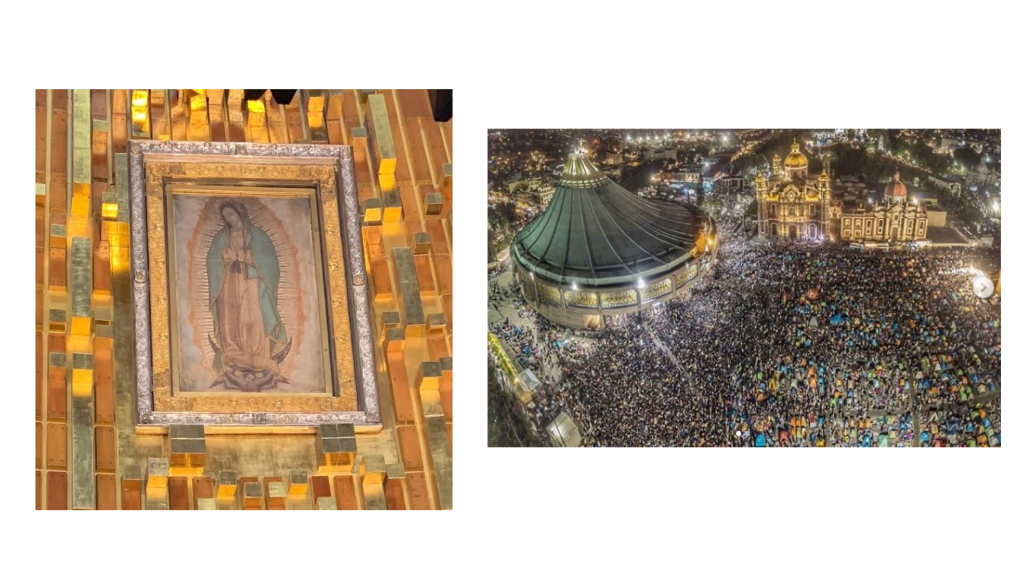
As I was approaching 60, I wanted to do something memorable to mark my six decades on the planet.  I was grateful I had “made pilgrimage” to some timeless places in the world — Jerusalem, Galilee, Buddhist and Hindu sites in India, the Guadalupe shrine in Mexico City, Ellis Island, Wrigley Field in Chicago and Fenway Park in Boston — and thought about where else I could go.   But my work at the time did not allow for ambitious trips abroad.  I decided to turn inward and identify six places in Southern California that had been important in my life that were within a day’s drive.  My plan was to go to each spot, reflect on what I had experienced there and what it meant to me in the present.  Here are the places I visited:

  • My childhood home in San Bernardino: the house had burned down, and a new house had been built on the lot.  I drove to the street and parked. Childhood memories came back, but all the families we’d known were gone.  I felt nothing.
  • The high school I attended: I drove by slowly; it was summer and not in session and the buildings felt lifeless.
  • The beach in San Clemente where our family spent many summers: the shoreline had shifted somewhat; the horizon, ocean and breaking waves were familiar. I was grateful for the joys we shared there, but also aware those times were long past.
  • The apartment in Isla Vista where I had lived in my junior year in college: I sat on a bench across the street thinking about how I had let myself become deeply isolated and self-absorbed that year.  I remembered how lost I had been.
  • The chapel in San Diego where my spiritual journey had taken root: I parked at the curb, went up the stairs and found the door was locked.  I went to the church office and explained to the church secretary why I had come.  She let me in and left me.  I looked around, breathed the air, summoned some faint memories but nothing else came to me.
  • The Goleta church that had brought us back to California: I parked in the lot and walked around the buildings.  I was grateful for all we had experienced there, but also aware that my life had moved on as had that of many people.

I had hoped that going to those places would give me some exciting new insights into my life, but that was not the case. 

Some months later I decided to trade in my Prius for a Honda CRV.  On the day of the transaction, I cleaned out my personal items from the Prius and drove it to the dealer.  A salesperson inspected it and gave me the keys to the new car in exchange for the Prius keys.  I started to walk away, then stopped to look back at the older car.  It had served me well for five years, but now I was leaving it behind and it seemed like an empty shell.  I wondered, “Is this what it’s like when our spirit leaves our body?”

Maybe we look for our personal presence in particular places, but it’s not there; it’s always with us, it’s who we are.

Lead image: Pacific Coast at San Clemente; sanclementeshoreEDIT.webp

Checking In

This month we have been spending time in the mountains…first the Sierras and now near Mt. Shasta. I’m not doing any writing, but will share a few photos.

Our six year old grandson waiting for his turn in his dad’s kayak, Lake Mary, Mammoth.
Cloud formation at sunset over the town of McCloud (population 945) near Mt. Shasta. Fifteenth year we’ve stayed here.
Panther Meadows,Mt.Shasta, 7500 feet.

I hope you are finding moments of rest and reverence.