Three Gifts America Has Given the World

“… when they study our civilization two thousand years from now, there will only be three things that Americans will be known for: the Constitution, baseball and jazz music.  They’re the three most beautiful things Americans have ever created.” writer and essayist Gerald Early, interviewed in Ken Burns’ documentary, Baseball

                  Having just endured an incredible World Series amid our current cultural and political climate, I will comment first on baseball.

                  Baseball may have roots in the English games of cricket and rounders, but by 1900 it had become 100% an American creation.  125 years later, it may not be a universal sport like soccer or basketball.  But it has a passionate following in certain parts of Asia – particularly Japan and Korea – and in the Latin American countries that surround the Gulf of Mexico.  At a time in our history in which “immigrants” are seen as “other,” the recent series included three superstars from Japan (Ohtani, Yamamoto, and Sasaki), a terrific first baseman from Tijuana (Alejandro Kirk), a Canadian playing for Los Angeles (Freddie Freeman), a star from the Dominican Republic (Vladimir Guerrero), a Puerto Rican (Kike Hernandez), a refugee from Cuba (Andy Pages), a Venezuelan (Miguel Rojas), and an African-American from Nashville (Mookie Betts), among others. The Dodger manager Dave Roberts was born in Okinawa to a Japanese mother and an active-duty African American Marine.

                  This American game has become a showcase for talented players from many backgrounds and cultures.  It’s a game of opportunity, celebrating players no matter where they come from.  It’s a game that can focus moment to moment on a particular individual player, but it’s a great team that wins and inspires.  It’s a beautiful thing.

                  And then there’s jazz.  One person who has helped me understand the deeper meaning of jazz is Wynton Marsalis.  Ken Burns turned to Marsalis often in his Jazz documentary series, and everything he said struck me as revelatory.  I saw him in concert several years ago and was again grateful for the insights he shared with the audience.  Here is one of his observations:

As long as there is democracy, there will be people wanting to play jazz because nothing else will ever so perfectly capture the democratic process in sound. Jazz means working things out musically with other people. You have to listen to other musicians and play with them even if you don’t agree with what they’re playing. It teaches you the very opposite of racism and anti-Semitism. It teaches you that the world is big enough to accommodate us all.

Seeing and hearing gifted musicians express their individual gifts and voices while being a part of a larger group and delighting in the give and take with one another creates an experience in which the whole becomes greater than the parts. That’s jazz.  When we experience it, it’s a beautiful thing.

                  And so is the Constitution.

                  Years ago, I was having lunch with a young Muslim grad student from Egypt as part of my community interfaith project.  He told me he first learned about American culture while watching “Mighty Mouse” cartoons as a child.  He shared favorite stories about growing up in Egypt, including how, during Ramadan, he and his childhood friends would wait for the signal that the time of daily fasting was over, then race from home to home enjoying the food set out by neighbors.  He had come to appreciate all that America offers — particularly the constitution.  “Do Americans realize how amazing it is that your country is ruled by a constitution instead of a dictator?” he once asked me.

                  The constitution was created by people who did not want to live in a political system like they had known in Europe – one in which some people would dominate others based on family ancestry, social position or a state-sponsored religion. The founders wanted to create a society in which people would experience a new level of freedom and opportunity. They worked long and hard to create the legal framework.  It assumes people will let their deep passions be balanced by mutual respect and personal restraint.  Like baseball, it assumes people will understand that to participate, everyone must follow established rules and customs until they are changed by due process.  Like jazz, it teaches you this country is big enough to accommodate us all.  When it is disrespected, it’s an offense to our ancestors who have given so much to honor and preserve it.  When it is honored, it’s a beautiful thing.

                  America may leave the world more treasures – after all, there’s Broadway, rap, country music and Hollywood.  But I will always celebrate baseball, jazz and the Constitution for what they offer and what they mean.
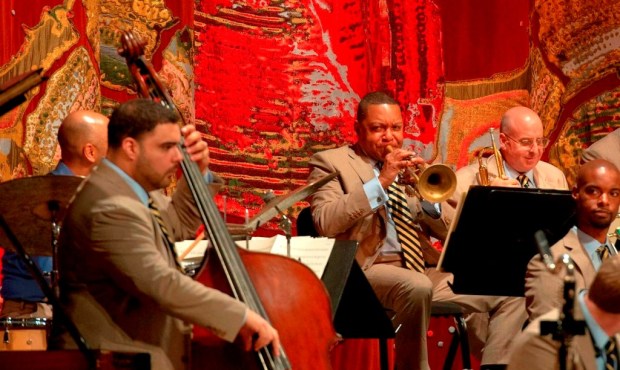
Wynton Marsalis

Lead image: “The raising of the American flag as the composer-conductor John Philip Sousa leads the Seventh (“Silk-Stocking”) Regiment Band in playing The Star-Spangled Banner during Opening Day of Yankee Stadium  with the Boston Red Sox and New York Yankees on April 18, 1923 at Yankee Stadium in the Bronx, New York.

Romantic Fiction, Baseball Passions, and Spiritual Masterpieces

A high school friend once told me her mother had gotten a phone call from a neighbor:

“He died!” the neighbor said in tears, “He’s gone!  He’s really gone!”

My friend’s mother was shaken. “Who?? Who died?”

In between sobs, the friend named a character from her favorite television soap opera.  And continued to cry.

Why do we get invested in imaginary situations?

An anthropology professor I know once invited me to a day-long conference at UCSB focusing on the emerging field of evolutionary psychology.  Scholars were exploring how much human behavior could be explained by tracing it back to the adaptive needs of our ancestors.  While some of the presentations were over my head, one stuck with me. Many people spend a great deal of time reading “romance novels” and “pulp fiction”.  The presenter wondered: why would we be wired to spend our time this way?  It seems like such a waste. If life is all about survival, reading about fictional characters in melodramatic stories seems pointless – it doesn’t put any food on the table or make us physically stronger.  After exploring several alternatives, he concluded that this activity must be a way for us to exercise our capacity to understand and navigate our social relationships without any actual personal risk or vulnerability.  We human beings are social animals who live in groups and tribes: fiction allows us to explore how to do this in a way that doesn’t expose us to any real danger.

Puppies may romp, wrestle and bite each other but never actually hurt one another. Such play is a rehearsal and training for a time when, as adult dogs, they may encounter actual adversaries.   They’re safely rehearsing skills they may need in real life.

Which leads to a critical question someone asked me this week: “Why do you get so wrapped up following your baseball team?  It’s just a game, but you talk about it like its real life.”  I have been pondering this question. Why do I care so much about a made-up game?  When the season is over, nothing has changed in my life or the fate of the world.  I think being a sports fan is like reading compelling works of fiction: It’s a way to see how human beings behave under pressure over a long period of time.  In the process, we become emotionally and mentally invested in the drama and look for lessons to live by. Some examples…If you learn how to function well under high expectations and pressure, you will live a better life.  If you let one disappointing experience stay with you, your performance will suffer.  If you learn how to be a good teammate, you’ll go farther.

Baseball is like a novel with 162 chapters – plus up to 22 bonus episodes if you make the playoffs.  All the while, human drama is unfolding.

When I was a kid, I was short. So was Maury Wills, the Dodger shortstop. He didn’t hit many home runs. But he figured out how to get on first and steal bases. He showed how you could adapt and thrive even if you weren’t the biggest and strongest guy out there.

Or take Sandy Koufax. The greatest pitcher of his time, he declined to pitch the opening game of the 1965 World Series because it fell on Yom Kippur, the sacred Jewish holiday.  He showed everyone what personal integrity looks like.  (As an example of divine favor, he pitched and won the final game that clinched the Series.)

We human beings are story tellers and game players. From these activities we learn crucial lessons.

Our spiritual traditions are full of invaluable stories.

Buddhism has an abundance of tales, parables, and koans that elegantly convey great insight.

Judaism has a remarkable abundance of brilliant stories, passed down over the centuries to help us reflect on our assumptions and values.

An expert once asked Jesus what he needed to do to inherit eternal life.  Jesus affirmed the two most important commandments: love God and love your neighbor. The expert asked him, “Who is my neighbor?”  And Jesus told the story of the Good Samaritan.[i]

When he wanted to teach about the loving and merciful nature of God, he didn’t give a lecture on ethics, but said, “A man once had two sons…” and told the story of the Prodigal Son.[ii]

Many of us have heard these two stories countless times. But they never lose their power.

Both stories are total fictions. They never really happened. Jesus made them up. But they tell us profound truths about who we are and who we can be in simple and unforgettable ways.

Years ago I taught a class in religious studies at Heritage College in rural Washington. One of the required books was Black Elk Speaks, an account of teachings attributed to Black Elk, an Oglala Sioux Medicine Man.  I always have appreciated this statement attributed to him:

“This they tell, and whether it happened so or not I do not know; but if you think about it, you can see that it is true.”[iii]


[i] Luke 10: 25-37

[ii] Luke 15: 11-32

[iii] “The Offering of the Pipe,” Black Elk Speaks, John G. Niehardt, 1932

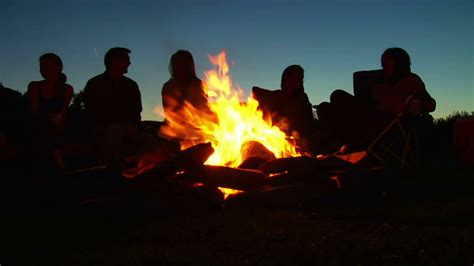
Lead Image: Sitting Around The Campfire; ar.inspiredpencil.com

The Things We Do Without Thinking Too Much

              Are there actions you perform best without thinking about them?

              The legendary Dodger pitcher Fernando Valenzuela died last month.  He began his career in 1981 as an unknown 20-year-old from Etchohuaquilin, a small village in Mexico.  He had developed a unique way to pitch.  He’d begin his motion like most pitchers — by leaning forward to get a sign, then standing tall, then lifting his right leg and rotating his body to his left.  At this point, most pitchers are staring at the catcher’s mitt as the target.  But Fernando did something odd.  Balancing on his left leg, he’d look up to the sky and pause for a minute.  Then he’d focus on the catcher and throw.

              Hitters had never seen anything like it.  He won the first eight games he pitched, giving up an average of less than one run per game.  That year he won not only the Rookie of the Year Award, but also the award for the best pitcher in the league.  He became a sensation, a legend, a folk hero. 

              When someone asked what he was thinking when he went into his motion, he said wasn’t thinking about it at all; “I can’t do it if I think about it. I would fall down.”

              We spend a great deal of energy on planning, training for, and practicing many tasks in life.  But sometimes we learn to do something well without thinking too much about it. 

              My mother was not an accomplished cook.  But she could create amazing apple pies.  She didn’t use a recipe.  She had developed a sense of how much of each ingredient was needed, when the pie dough was ready to be rolled, and how many drops of lemon juice should top the filling beneath the crust.  If you asked her how she did it, she would say she simply did what seemed best; if she had thought too much about each step, it would have distracted her, and her better instincts would have been compromised.

              It was the same playing piano. She had taken a few lessons, but was mostly self-taught.  She could play Gershwin and Broadway tunes beautifully; the music began in her heart and the rest of her found a way to bring what she felt through the keyboard into the room.  It was wonderful to hear.

              I’ve led, participated in, and attended many memorial services over the last 40 years. The person’s accomplishments are often recited. But the most moving testimonials are people describing how the person lived, endured hardships, and treated other people.  My sense is that that behavior was not rehearsed or carefully planned.  If you could go back and ask the person, “How do did you do that?” many would say, “I don’t know. It just seemed right.”

              I want to celebrate the actions we take and the ways we live well that aren’t a product of formulas and mental concentration but arise from a desire to simply do the right thing.

              One of the widespread concerns following this election is the threat to the way we, as a democracy, have gone about the challenges of being an open society.  We have always shared an assumption that we will, despite our differences, respect established norms of decency, foster mutual respect, follow due process and assume personal responsibility.  If someone from another country would ask us, “How do you do that?” we might answer, “We don’t think about it too much. We have always assumed that’s the right way to do things in a democracy.”  I wonder if now what seemed a given is something we are going to have to “think about;” if we don’t recover that attitude, we may very well “fall over.”

              30 years after that first game when he was 51, Fernando was asked to throw out the first pitch to open the season at Dodger Stadium.  In the Los Angeles Times, Dylan Hernandez wrote:

When he winds up to throw the ball, Valenzuela won’t look skyward the way he used to. “I can’t do it if I think about it. I would fall down, especially if I’m wearing street shoes,” he said, laughing… “I didn’t even know I did that until someone showed me a video…”

He said he didn’t notice more Latinos in the seats at Dodger Stadium. Or that he was helping ease long-standing ethnic and cultural tensions in the city. Or that he was drawing the attention of businesses to the growing Latino market. Or that because of him teams were increasingly looking outside the country for players.”[i]

Fernando didn’t plan all that.  He simply found a way to perform a task exceptionally well.  And in the process benefited his teammates, his community and the game.


[i] https://www.latimes.com/sports/la-xpm-2011-mar-30-la-sp-0331-fernandomania-20110331-story.html

We’re Skipping School and Making the Pilgrimage

On Wednesday, May 8, I’m taking our 6 and 8-year-old grandsons out of school for the day.  It’s not for academic enrichment or to observe a religious holiday.  We’re going to a Dodger game.

I chose this game for three reasons.  1) The game starts at noon, which is ideal for young kids since you’ll get home at a decent time. 2) Unlike the Yankees, Red Sox, Giants, or Cubs – teams with millions of fans all over the country — the Marlins have few fans.  As a result, I was able to get terrific seats for a fraction of the usual price, and the traffic should be light.  3) I love the idea of ditching school or work to see a baseball game.

The first time I made the journey to Dodger Stadium was with my father, 62 years ago.  I’ll never forget the feeling of coming out of the tunnel and seeing the splendor of the emerald-green grass of the outfield, the red brick dust of the infield, and the perfectly delineated white chalk foul lines.  There is seating for 54,000 people and everybody is happy as they find their seats. As a kid who loved baseball, I was in heaven.

We will be retracing those steps on May 8.  We’ll take the same “Stadium Way” offramp from Interstate 5.  Then, like pilgrims going to a sacred mountain, we will slowly ascend to the sacred site.  After parking we will continue heaven-ward on foot, using escalators as needed.  Then we’ll take our seats.

But this journey is not just about reliving childhood dreams.  The deeper reasons for making this sacrifice of time and treasure were revealed anew to me this week as I read “Ballparking It,” an article in the April 1 New Yorker, by Adam Gopnik.

Gopnik begins by focusing on the history of baseball in New York City.  He then gets philosophical, exploring why baseball and sporting events of any kind evoke so much passion in so many. Here is a sampling of his points with my comments:

Referring to the legendary sportswriter Damon Runyan from the last century: Runyan knew that these two things were true: the contests were epic in the enjoyment they provided, and they were miniature in their importance. That makes sense.  Why would millions of people watch the Super Bowl, March Madness, or the World Series when the outcome doesn’t make any real difference in the world?  Because they can be “epic in enjoyment,”

Sports are an artificial, deliberately narrowed activity that we create, in order to have moralizing stories to tell. I have a weakness for “moralizing stories.”  Barry Bonds may have hit more home runs than anyone, but we knew he was a cheater who used steroids.  We booed him when he came to LA.  It felt great.

We live with our bodies and honor them by admiring ones nimbler than our own. There seems no way out or up from this preoccupation. It gets its grace by becoming common.  Have you ever watched Steph Curry of the Golden State Warriors play basketball? He’s as graceful as any ballet dancer, and he’s got five 200-pound guys chasing him.  He makes it look easy; “grace becomes common.”

The strength of our moralizing instinct is shown in the vindictive nature of our assessments of right and wrong in sports. See the Barry Bonds comment above and the Houston Astros comment below.

Only in games do we pursue orderly means towards ridiculous goals: touching home plate with your toe is by itself a meaningless purpose, but we learned to do it in ways that are beautifully shaped and orderly and teachable. Both our grandsons play Little League.  Every time they come around to score, there is a sense of victory. I know the feeling.  You’ve been out in the world exposed to danger and now you’re safe; you’ve come home.

Sports are “an unstructured escape from responsibility…” Some might say it’s irresponsible for a grandfather to take kids out of school for a meaningless sporting event — they might miss some important instruction.  But isn’t it important to teach kids that, if you do it well, occasionally escaping responsibility for a few hours can be good for the soul?

The fans regard the game as joyfully ridiculous, and the players regard the fans as deeply ridiculous, and there’s a fluid interchange between the game we see in the play we share.  Who cares if a grown man can take a piece of wood and hit a ball 420 feet over a fence?  It’s ridiculous.  And it’s addictive.  I hope we see some rockets.

That’s why diehard fans, on the whole, take losing harder than the players do. Pro athletes can often say, “They just played better than we did, “or, alternately, “That’s just the way it broke,” more serenely than the fans can. When we watch the players congratulate one another after the game and exchange warm words, the social ritual they are enacting is a way of turning a game back into some decent form of play: Hey, we competed, we all did well, see you next year. It’s been seven years since I sat in that stadium to see the Dodgers lose the seventh game of the World Series to the Houston Astros.  It turned out the Astros were cheating. When I remember that game, I don’t experience serenity.  I feel an emptiness that hasn’t gone away.

Go ahead, baseball, fill me with joy and hope, then break my heart.  Coming back year after year is a discipline — one I hope to pass on to my descendants. 

“Ballparking It: When America’s Pastime was New York’s.” By Adam Gopnik.  New Yorker April 1, 2024

How Vin Scully Endured Personal Tragedies

            Many people are writing tributes to the sports announcer Vin Scully, who died this week at 94.  He was the “voice of God” for me and many kids with transistor radios when we were growing up — he was omnipresent, trustworthy, forgiving and always positive. His endless tales of players’ backgrounds were told with reverence and affection.  He was a constant in my life over six decades.  Beyond the famous baseball moments he was part of, I have several other enduring memories.

In 2010, I was in Phoenix for spring training.  After the game, I was exiting behind the stands and happened to see him walking alone as he headed toward his car. He was dressed in a well-worn suit, and I remember thinking he looked older in person than he did on television. 

In 2016, my youngest daughter, her fiancé and I made a pilgrimage to “Vin Scully Day” at Dodger Stadium where we heard him sing “Wind Beneath My Wings” to his wife and 54,000 reverent and faithful fans.

            We all knew he was a very private man.  I vaguely knew his first wife had died and he had remarried, but I never heard him discuss it.

            The one exception came in 2008, when he was interviewed on KCET along with UCLA Coach John Wooden.  At one point, the interviewer changed the topic from sports to personal challenges. He noted that Scully’s first wife had died suddenly at age 35, leaving him with three children.  He’d remarried Sandra, a woman with two children of her own, and together they had one more child.  Later his oldest son died in a helicopter crash at age 32.  Vin was asked how he had gotten through it all.

He said creating a new family after the death of his wife while working full-time was very hard – not the amusing experience of blended families being portrayed on the “Brady Bunch” TV show at the time.  He didn’t go into the loss of his son.  But he concluded by saying the only way he got through it all was to “stop asking why.”

Asking “Why?” is a perennial human question.

“Why did that person have to die when they did?” we ask.  The answers people find are varied. Some attribute it to the intentional act of an inscrutable God.  Others theorize it must be “karma,” a kind of moral accounting system in which we inherit debits and credits from past lives that shape our personal fate.  In modern times, we may look to causes that can be objectively verified, such as family history or the actions of viruses, bacteria, and natural forces.  We may find fault in the way a car is designed or blame a toxin in our food supply. 

We are curious, intelligent creatures, and we yearn to find answers for personal losses and tragedies.  Sometimes we find them. Such answers may bring some peace, and we are reassured that the universe isn’t chaotic after all.

But satisfying answers don’t always come.

Vin’s first wife died of an accidental medical overdose. That’s explainable on one level – simple chemistry. But that doesn’t take away the heartbreak, sorrow, and unfathomable reality that one day a young wife and mother of three is alive and well and the next day she is gone.

His son died working as a helicopter pilot, which may be attributable to a simple error in judgment of a person up in the air at the helm of a large and complex machine.  But the harsh reality that a remarkable young man whom you’ve loved since birth is here one day and absent the next – that will always be a shock.

Vin did, at times, talk about the importance of faith and prayer. He was raised a devout Irish Catholic and remained one his entire life.  His immersion in that faith made a difference in how he endured and how he lived. But he never claimed that any of his prayers helped him find an answer to the question that apparently haunted him in the early days of his grief — why did death come to these two beloved people in such an untimely way?  Vin — the gracious, wise, humane, and compassionate observer of so many human encounters — said the key for him to going on with his life was to “stop asking why.”  I will remember that.  And I will also remember what a joy it was to turn on a radio and hear him invite us all to pull up a chair “wherever we may be” and listen to a master storyteller at work.

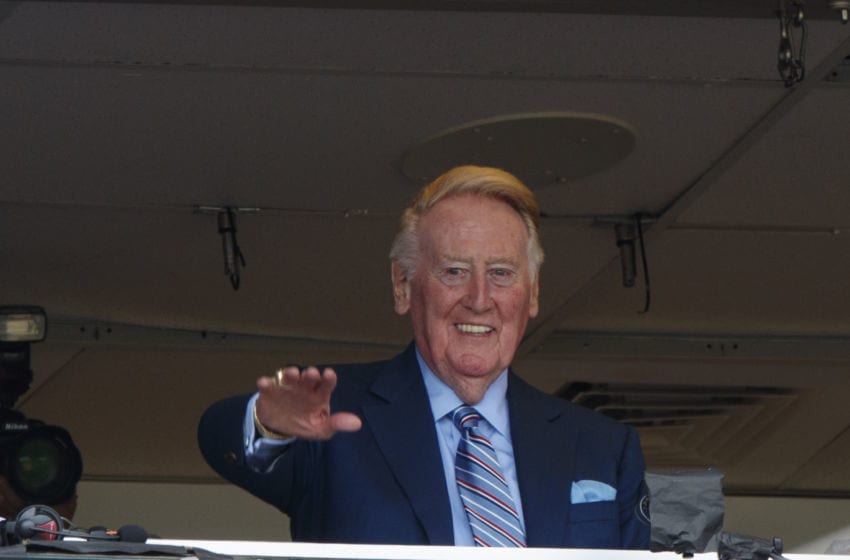
Photo credit: “Dodgersway”

He Thanked 46 Coworkers in Ten Minutes — Now It’s Up to You

Think of how much of your life you’ve spent at work.  Some of the people we work with make it enjoyable and meaningful, while others have the opposite effect.  Do we ever take time to recall those who have employed us, mentored us, labored alongside us, and who have made going to work a positive experience?

            On June 18 I took some family to a Dodger game — “Sandy Koufax Day.”  Like many southern California kids who grew up in the 60s, Sandy Koufax was a superhero to me.   Besides his accomplishments and awards, one of the things he’s famous for is his privacy – he doesn’t endorse products, appear on sports shows, or sell autographed baseballs.  This would be a rare chance to see him in person.

            Bill Plashke wrote an account of what Koufax said that day:

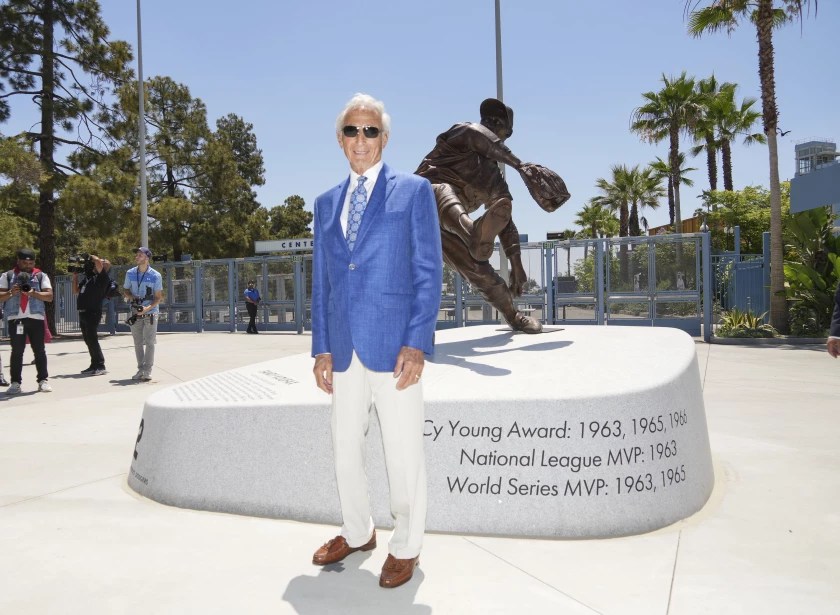
Standing behind his newly unveiled statue in the center-field plaza Saturday morning, Sandy Koufax was winding up to grace Dodger Stadium with one last pitch.

It was, appropriately, a breathtaking curveball.

It was, stunningly, a 10-minute speech from a man who hasn’t publicly spoken that much in 50 years.

It was, wondrously, the humanizing of Los Angeles’ phantom legend, a rare public pulse from a pitcher whose greatness has mostly existed in Dodgers mythology.

It turns out, at age 86, he just wanted to say thank you.

Plashke notes … he thanked 46 people during the span of 10 minutes, surely a record for inclusion and gratitude.[i]

            After I read the article, I thought, “I’m going to do what Sandy did.  I’m going to identify 46 people that I worked with that have had a positive influence on my life.”

            I soon found 46 to be a lofty target. I reset my goal at 23:

  1. Bill and Norma Schy, who gave me my first real job when I was 16 at Swensen’s Ice Cream paying $1.40/hour.  I learned how to interact with customers, clean kitchen equipment and balance out the cash drawer at closing.
  2. Tom Childress, the first painting contractor I worked for, who taught me how to paint a room efficiently and modeled how a good boss treats employees with respect.
  3. San Gorgonio High School English teacher Mr. Kenley, who taught me how to write a structured essay.
  4. UCSB Professor Al Lindemann, who challenged me to do independent research and showed me how.
  5. Bob Hibbs, my supervisor at McBride Realty in Sacramento, who patiently mentored me in the real estate business for a year before I realized it wasn’t for me.
  6. Seminary preaching Professor Randy Nichols, whose insights have guided me for 41 years.
  7. The congregation in Santa Paula who gave me my first job as an Assistant Pastor.
  8. Barb and Cragg Gilbert, who invited us to leave the California suburbs and become volunteers at the Campbell Farm in Wapato, Washington.
  9. Ed and Mary Ellen Hanks, fellow volunteers at the Campbell Farm.  Ed was raised on a ranch in Nevada and had been an agriculture extension agent, and he taught me how to drive a tractor, prune an apple tree, and care for livestock.
  10. The congregation in Wapato, Washington who took a chance on me as a solo pastor and taught me the virtutes of rural life.
  11. Sr. Kathleen Ross, SNJM, the visionary founder and president of Heritage College, who invited me to be her intern for a semester and shared her insights on leadership.
  12. John Gardner, my doctoral advisor at Seattle University, who encouraged me to pursue a dissertation topic that arose from inner passion rather than playing it safe with a less risky topic.
  13. The congregation of the Goleta church, who moved us to Santa Barbara, helped us buy our first house and raise our daughters and employed me for 16 years.
  14. Wade Clark Roof, Professor of Religious Studies at UCSB, who helped me get research grants and encouraged my academic research and writing.
  15. Rabbi Steve Cohen, dear friend and gifted teacher, who, with members of his congregation, introduced me to the depths and richness of Judaism.
  16. Muhktar Kahn, Afaf Turjoman and Hussam Moussa, who introduced me to Muslim faith, traditions, and culture.
  17. Gail Rink, Executive Director at Hospice of Santa Barbara: a fearless, compassionate rebel who changed the way our community approached death and dying. She told me I had what it takes to take her place when she retired in 2008.
  18. The staff at Hospice of Santa Barbara – people like Mary, Michael, and Magdalena — who exemplified compassionate, professional care for those facing death and grieving the loss of a loved one – and were a joy to work with.
  19. Steph Glatt, IHM, and Juliet-Spohn Twomey, IHM, long-time leaders of La Casa de Maria Retreat Center, who invited me to become Director in 2013.
  20. The staff at La Casa de Maria – groundskeepers, housekeepers, hosts, kitchen staff — who showed me what the practice of genuine hospitality looks like.
  21. Jay Grigsby, fundraising consultant at La Casa and other places, who has spent a decade mentoring me in the hard but satisfying work of raising money for good causes.
  22. The St. Andrew’s congregation, who coaxed me out of retirement to serve as their interim, proving “I’m not dead yet.”
  23. Marilyn McEntyre, English professor, poet, writer, master teacher, and friend, who has challenged me and so many others to write from the soul and not just the head.

There are many things to be despondent about in the world these days. But it’s a good practice to take time to remember those who have made our workplaces positive environments for labor and learning.  We can make a list of 5, 10, 23, or — if we are aspiring to the Gratitude Hall of Fame — 46.


[i] https://www.latimes.com/sports/dodgers/story/2022-06-18/sandy-koufax-statue-unveiling-time-of-gratitude-inclusion

Sandy Koufax, 86 years old. Photo taken by 69-year-old pensioner from Reserved Section 7, Row T, Seat 9; June 18, 2022

Caring About Something Foolish

         I’m emotionally drained this week.  I blame it on baseball.

         I’ve been a Dodger fan since I was 6 years old, which means I’ve been vulnerable for 62 years.  Sometimes I wonder — why bother?  It’s just a game.  In such moments of doubt I turn Roger Angell.

         Roger Angell turned 101 last month.  His writing was first published in the New Yorker in 1944.  He’s written on many topics, but a favorite has been baseball.  He is the only writer elected to both the American Academy of Arts and Letters and the Baseball Hall of Fame.  In 1975 he wrote in an essay called “Agincourt and After”:

“It is foolish and childish, on the face of it, to affiliate ourselves with anything so insignificant and patently contrived and commercially exploitative as a professional sports team, and the amused superiority and icy scorn that the non-fan directs at the sports nut […] is understandable and almost unanswerable. Almost. What is left out of this calculation, it seems to me, is the business of caring — caring deeply and passionately, really caring — which is a capacity or an emotion that has almost gone out of our lives. […] It no longer matters so much what the caring is about, how frail or foolish is the object of that concern, as long as the feeling itself can be saved. Naïveté — the infantile and ignoble joy that sends a grown man or woman to dancing and shouting with joy in the middle of the night over the haphazardous flight of a distant ball — seems a small price to pay for such a gift.”

         Tuesday night I was with an ethnically diverser crowd 54,000 naïve and foolish people at Dodger Stadium. The Dodgers played the Giants.  We all watched the “haphazardous flight of a distant ball” for almost four hours.  Win or lose, rooting for the Dodgers or Giants, we were united by a collective sense of passionately caring about something.

         Thank you, Roger Angell, for your reassurance that this “foolish and childish” activity has a deeper purpose.  Bring on Atlanta.

Photo credit: Wall Street Journal