Waking The Dead

The documentary filmmaker Ken Burns was raised in a small, 2-bedroom home in Ann Arbor, Michigan.  A recent article[i] describes his personal journey, which began with a traumatic childhood:

Ken was 11 and his brother, Ric, was 10, when their mother was on her deathbed. Their father, Robert Kyle Burns Jr., an anthropologist, was mentally ill.

As his mother’s cancer metastasized, Ken overheard conversations — his mother pleading with relatives, asking for someone, anyone, to take her boys in the event of her death. “I remember being scared — scared all the time,” he said.

With their mother in the hospital, the boys were left to wait at home for the inevitable. On the night of April 28, 1965, Ken went to bed with one of the worst stomachaches he had ever had — his body registering what none of the adults would speak about.

The pain disappeared suddenly. The phone rang. His mother was gone.

Following his mother’s death, his father would disappear “for hours and then days at a time” and sometimes be gone for months.

There is a saying I learned when I was at Hospice of Santa Barbara: “Pain that is not transformed is often transferred” — meaning if we don’t’ find a way to channel personal hurt and anguish into something positive, we can end up inflicting that pain on ourselves or others.  In his grief and confusion, Burns found such a path:

The filmmaker remembers the exact moment when he decided what he wanted to do with his life: He had never seen his father cry — not in all the years his mother had fought an excruciating illness, not even at the funeral — until one night after her death. His family was in the living room in front of their black-and-white TV, watching a movie, and suddenly his father began weeping.

“I just understood that nothing gave him any safe harbor — nothing,” Ken Burns said, except the film, which had created the space for a bereaved widower to express the fraught emotions he had suppressed.

Burns began creating historical films that would present the past as something much more personal than just a series of facts. Through stories, letters, photographs, and music, he has been able to bring real people to life, whether the topic is baseball, music (jazz and country), war (World War 2 and Vietnam) or any other topic.

The article ends with this:

Years ago, a psychologist finally gave him an answer to the meaning of his work. “Look what you do for a living — you wake the dead,” the psychologist told him.

When I finished the article, I realized much of my life has been about “waking the dead.”   I’ve been reading history and biographies since grammar school, constantly looking for how real people endured hardship and crises.  I love listening to music that can seem to bring the composer’s lived experience accross time and directly into my heart and mind.  I gaze at works of art hoping to time-travel into someone else’s world and imagination. I turn to the great spiritual traditions to listen to their wisdom and insights. I never thought of it as “waking the dead” but maybe that’s what I’m seeking – and not just to “wake” them but to be in a living and learning relationship with them.

Some years ago, I heard the writer, activist and defender of rural values Wendell Berry speak at UCSB as part of a series on environmental poets.  In the question-and-answer period, someone asked if, given his dedication to family farms, gardening should be a required subject in high school.  Berry paused for a minute, then said, “No, students should read Homer and the Bible, because they need to know they problems they are facing are not new.”  Our world has changed a great deal in terms of technology and science, but the challenges of being a responsible and resilient human being have not. I’m grateful for those who can wake the dead so we can learn from them.

“As a baby, Ken Burns appeared in this photo showing his mother spoon feeding him.” (NY Times)


[i] “The Land That Allowed Ken Burns to Raise the Dead,” New York Times, Nov 27, 2024

Lead image: “Burns in the mid-1970s, just as he was starting to create his film studio”  (from the Times article.)

Wherever You Go, There You Are

                  “Wherever you go, there you are” is a quote that has been around for many years.[i] It’s been nudging me recently.

                  This past week I decided to go through some old files.  They included a selection of my academic papers, published articles, old sermons, early courtship letters from our marriage, and family Christmas letters we’d sent to friends over the years.  I was surprised at some things – I didn’t remember taking that particular class or having that specific experience. It felt like I was watching my life go by and also sensing I’m the same person as when it all began.  It’s like being on a train, passing through unknown places and having unexpected experiences, but realizing it’s an unchanged “me” looking out the window the entire trip. Wherever I went, there I was.

                  What I see now in the mirror looks different than what I’ve seen the past but it’s the same me that’s looking.

                  What will eventually happen to this “me” that seems to be the ongoing observer of my life?

A good friend of mine has been a hospice volunteer for many years and at the bedside of many dying people.  Given the right care and support, he tells me people coming close to having their “me” leave their body feel no fear but experience a calm trust in the unknown. 

                  Some say “dust to dust, ashes to ashes” … period.  We are made of eleven basic elements, mostly carbon, oxygen and hydrogen.  How amazing that eleven elements could come together in just the right way to create a space for a “me” that looks out at this world, tries to make sense of it, lives for decades, then dissipates and disappears. 

                  Some say, “dust to dust, ashes to ashes, yet in sure and certain hope of resurrection to eternal life.”  The me that was carried along by the material elements doesn’t disappear when those elements cease functioning but continues in some form, and it all comes as a gift.

                  I remember someone asking Huston Smith, the great scholar of world spiritual traditions, what happens when we die.  He said the spiritual traditions assume one of two possibilities.  The first possibility is that we keep our self-awareness and become witnesses of something awe-inspiring like an eternal sunrise.  The second possibility is our awareness simply dissolves into the sunrise.  Then he smiled and said, “I like to think I might have a choice. If so, I’d choose to first witness the divine sunrise. But after a while – maybe after a thousand years — I’d decide that was enough. Then I’d let go and become part of it all.”

                  Back to sorting files.  Happy New Year.


[i] There are numerous possible sources of this quote, but it gained popularity in 1994 as the title to a book by Jon Kabat-Zinn: Wherever You Go, There You Are: Mindfulness Meditation in Everyday Life.

Where’s Your Axis Mundi?

It’s a word I liked the first time I heard it:  axis mundi. 

I encountered it in graduate school reading The Sacred and Profane, a study of world religion and mythology by Mircea Eliade.  It means the “axis” around which the earth “turns” — not physically, but spiritually and psychologically.  It’s a place where people believe heaven and earth meet.

Jerusalem has long been seen as an axis mundi, a city sacred to Jews, Christians and Muslims.  For traditional Japan, it has been Mt. Fuji.   For Catholics it’s Rome.

Some indigenous tribes in Australia are always on the move, and they carry a sacred pole with them which they erect each place they stay – a portable axis mundi

In 2000, I had a 3-month sabbatical project that focused on how digital technology was beginning to affect everyday life.  I visited and conducted interviews in two locations.   

Silicon Valley was already becoming the axis mundi of the tech age. In my interviews and observations, one could already sense that digital tech was becoming something close to a religion.  In the Tech Museum in San Jose, I purchased a computer mouse pad made to look like a Muslim prayer rug.  I visited one of the largest Fry’s stores (in the pre-internet retail era, Fry’s was a “Mecca” for electronic parts and gadgets.)  Some were designed to look like Mayan temples:

One month later I went to India, which was becoming part of that revolution.  After interviewing tech professionals and academics in Bangalore, I spent time in the ancient city of Varanasi on the banks of the Ganges River.  In Hindu belief, there is no place on earth where heaven and earth come closer, and therefore no better place to bathe, die, be cremated and have your ashes scattered.

                  By 2006, I had realized the most sacred religious site in the Western Hemisphere was the Basilica of Our Lady of Guadalupe in Mexico City. Growing up in California, I had seen the Guadalupe image all my life but knew nothing about what it meant.  I learned that, in Catholic tradition, the Virgin Mary appeared to an indigenous peasant, Juan Diego, in December,1531.  She looked more like a native woman than a European and spoke to him in his own dialect: “Am I not here, I who am your mother?” She gave Juan Diego her robe or tilma.   When he took it to a skeptical archbishop and unfurled it, pink roses fell to the floor and her image had become imprinted on the garment.  The tilma is preserved in a glass case in the cathedral.  I spent a week in the city that summer, making several visits to the Basilica.   I watched thousands of faithful pilgrims arrive to worship and celebrate, and was moved by their joy and devotion.

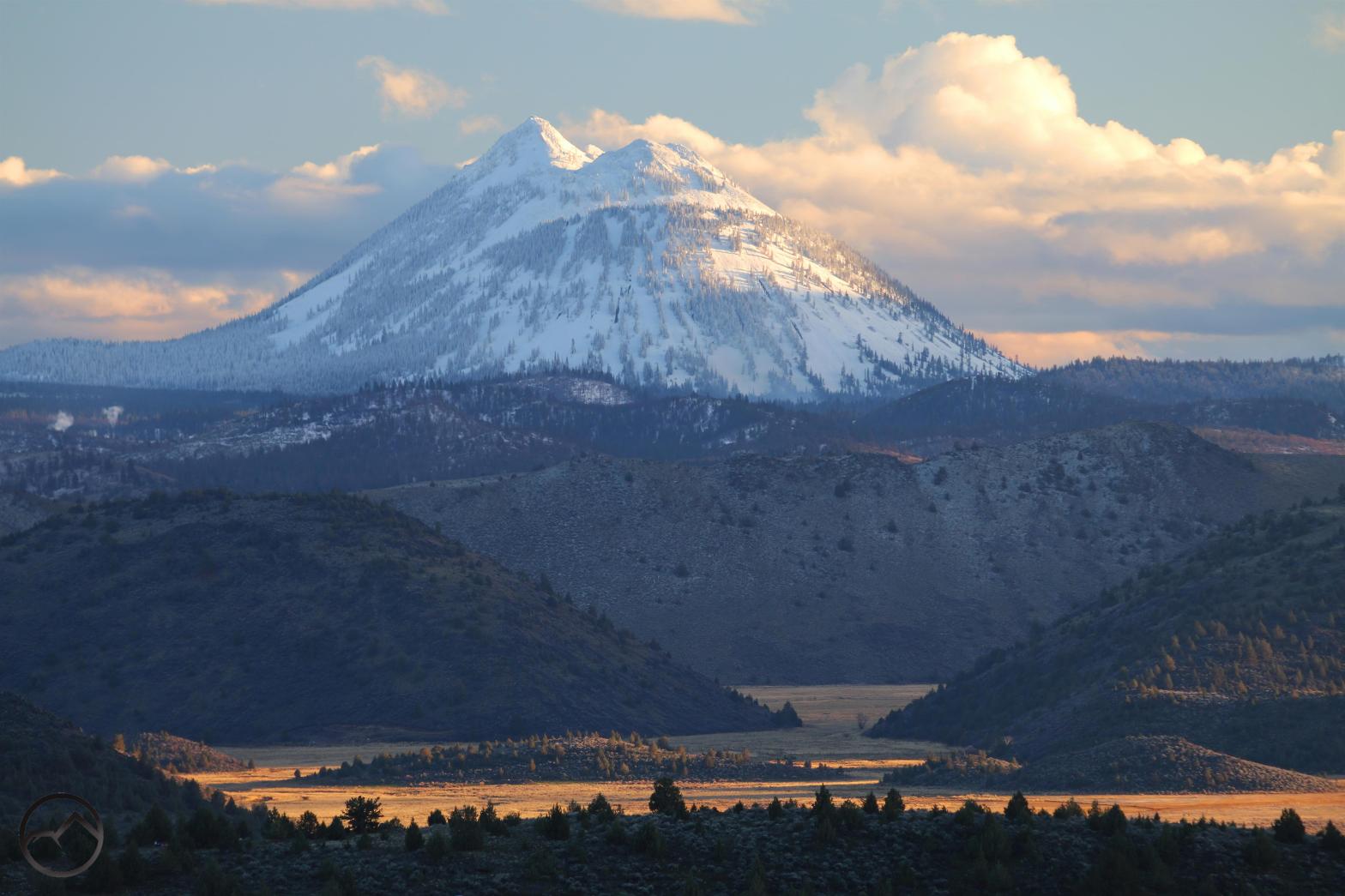
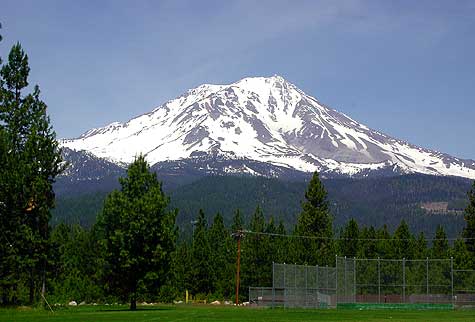
Mt. Shasta is just south of the Oregon border. We’d driven by it many times over the years as we traveled between Washington state and California, but I hadn’t considered it anything more than an impressive volcanic formation. In 2009, we spent a week at a yoga/hiking retreat in the town of McCloud at the base of the mountain. We could see the peak every morning from our window.  As we hiked during the week, we saw it from many angles.   On the last day of the retreat, our group hiked to Squaw Meadows, an alpine meadow on the side of mountain at an elevation of 7,900 feet. I felt smaller and increasingly insignificant in the presence of the mountain’s mystery and majesty; I began to appreciate why both native people and contemporary spiritual seekers from around the world consider it an axis mundi.  We’ve returned to the area every summer for 15 years.

In 1233, St. Francis returned to Italy from the Holy Land where he had visited a cave that was the traditional site of Jesus’ birth. Wanting people to appreciate the setting of the Christmas story, he created the first outdoor nativity scene including live animals.  Nativity scenes have become a familiar axis mundi in countless households and sanctuaries ever since.  When viewed with reverence, candlelight and song, a nativity scene affirms that divine presence can be sensed not only on mountaintops, but also in the lives of humble people in unexpected places.

Some traditions have steered away from emphasizing any particular physical place where we encounter the divine and instead look within our individual awareness.  Quakers affirm that every person has within them an “inward light” or spark of divine energy.  By practicing silent introspection, we can access and experience that light and find guidance from it.

I have visited many sacred sites in my life.  I always try to understand and appreciate the beliefs and imagination of the faithful who are drawn there.

 At the same time, the purpose of visiting such places doesn’t end with the personal encounter. Recent studies have established a powerful connection between experiences of awe and an increased capacity to care for others.[i] Coming into the presence of axis mundi sites can have that effect.  The purpose of spiritual life is not to have a specific experience, but to discover within us a deep reverence for life and others and let that form our character.  As Huston Smith said, “Spirituality is not about altered states but altered traits.”


[i] https://drjsb.com/2022/09/03/starstruck-the-relationship-between-awe-and-caring/

Pocket Epiphanies #200: A Buffet of Past Posts

On December 17, 2020, I posted my first piece for this “PocketEpiphanies” blog. It’s hard to believe, but this week marks my 200th. I went back and picked out a dozen that may be worth reposting. Think of this as a “blog buffet” — see if any particular one interests you and put it on your plate. And thank you for being part of this project.

Narcissim of Small Differences  We prize attention to detail in many areas of life.  But we can easily fall prey to the “narcissism of small differences.”   We can make choices about things that have little relation to their actual value.

___________________________________________________

Silver Keys, Mean Moms and Compassion in the Workplace  The right thing to do was not to simply feel compassion for everyone involved, but to find a solution to the problem. That took “art and skill.”

___________________________________________________

Starstruck: The Relationship Between Awe and Caring Gazing at the heavens may help us make a better world on earth.”

___________________________________________________

Two Questions, Two Art Works, One Life to Live  Maybe the best way to find ourselves is to give ourselves away.

___________________________________________________

Seeing People Like Trees  And so I practice turning people into trees. Which means appreciating them just the way they are.

___________________________________________________

I Hope I’m Wrong  Dear friends, I hope I’m wrong about all this. I know there may be some very positive uses for AI, especially in medicine. But I’m worried. 

___________________________________________________

The Intrinsic Power of Veriditas What I saw was a glimpse of the viriditas that permeates and surrounds us, an inner force we share.

___________________________________________________

My Plan for Dementia Care  …one of my constant themes is my sense of awe at the miracle of life, and gratitude for all the opportunities and experiences I’ve had. But I don’t want to live “beyond my time,” and I don’t want my family to be emotionally or financially burdened caring for me when I don’t have a life I can appreciate. 

___________________________________________________

“Mind Proposes, Soul Disposes”  “This may be important. I need to be attentive.”

___________________________________________________

GRACE: A Focusing Practice   We are embodied human beings who have been gifted with this amazing multisensory life-form and a miraculous mind which, when they are working together, can open us to a rich awareness of where we are and what is possible.

___________________________________________________

Private Thoughts  I can’t believe a light that burned so brightly in my life has disappeared from my sight.

___________________________________________________

Letting Your Soul Catch Up With You  “Making good time” means you haven’t left your soul behind in the pursuit of speed and efficiency.  Your soul has a chance to be present with you as you travel.


The Things We Do Without Thinking Too Much

              Are there actions you perform best without thinking about them?

              The legendary Dodger pitcher Fernando Valenzuela died last month.  He began his career in 1981 as an unknown 20-year-old from Etchohuaquilin, a small village in Mexico.  He had developed a unique way to pitch.  He’d begin his motion like most pitchers — by leaning forward to get a sign, then standing tall, then lifting his right leg and rotating his body to his left.  At this point, most pitchers are staring at the catcher’s mitt as the target.  But Fernando did something odd.  Balancing on his left leg, he’d look up to the sky and pause for a minute.  Then he’d focus on the catcher and throw.

              Hitters had never seen anything like it.  He won the first eight games he pitched, giving up an average of less than one run per game.  That year he won not only the Rookie of the Year Award, but also the award for the best pitcher in the league.  He became a sensation, a legend, a folk hero. 

              When someone asked what he was thinking when he went into his motion, he said wasn’t thinking about it at all; “I can’t do it if I think about it. I would fall down.”

              We spend a great deal of energy on planning, training for, and practicing many tasks in life.  But sometimes we learn to do something well without thinking too much about it. 

              My mother was not an accomplished cook.  But she could create amazing apple pies.  She didn’t use a recipe.  She had developed a sense of how much of each ingredient was needed, when the pie dough was ready to be rolled, and how many drops of lemon juice should top the filling beneath the crust.  If you asked her how she did it, she would say she simply did what seemed best; if she had thought too much about each step, it would have distracted her, and her better instincts would have been compromised.

              It was the same playing piano. She had taken a few lessons, but was mostly self-taught.  She could play Gershwin and Broadway tunes beautifully; the music began in her heart and the rest of her found a way to bring what she felt through the keyboard into the room.  It was wonderful to hear.

              I’ve led, participated in, and attended many memorial services over the last 40 years. The person’s accomplishments are often recited. But the most moving testimonials are people describing how the person lived, endured hardships, and treated other people.  My sense is that that behavior was not rehearsed or carefully planned.  If you could go back and ask the person, “How do did you do that?” many would say, “I don’t know. It just seemed right.”

              I want to celebrate the actions we take and the ways we live well that aren’t a product of formulas and mental concentration but arise from a desire to simply do the right thing.

              One of the widespread concerns following this election is the threat to the way we, as a democracy, have gone about the challenges of being an open society.  We have always shared an assumption that we will, despite our differences, respect established norms of decency, foster mutual respect, follow due process and assume personal responsibility.  If someone from another country would ask us, “How do you do that?” we might answer, “We don’t think about it too much. We have always assumed that’s the right way to do things in a democracy.”  I wonder if now what seemed a given is something we are going to have to “think about;” if we don’t recover that attitude, we may very well “fall over.”

              30 years after that first game when he was 51, Fernando was asked to throw out the first pitch to open the season at Dodger Stadium.  In the Los Angeles Times, Dylan Hernandez wrote:

When he winds up to throw the ball, Valenzuela won’t look skyward the way he used to. “I can’t do it if I think about it. I would fall down, especially if I’m wearing street shoes,” he said, laughing… “I didn’t even know I did that until someone showed me a video…”

He said he didn’t notice more Latinos in the seats at Dodger Stadium. Or that he was helping ease long-standing ethnic and cultural tensions in the city. Or that he was drawing the attention of businesses to the growing Latino market. Or that because of him teams were increasingly looking outside the country for players.”[i]

Fernando didn’t plan all that.  He simply found a way to perform a task exceptionally well.  And in the process benefited his teammates, his community and the game.


[i] https://www.latimes.com/sports/la-xpm-2011-mar-30-la-sp-0331-fernandomania-20110331-story.html

“Do What You Can, With What You Have, Where You Are”

              The great tennis player Arthur Ashe was headed to a speaking engagement and wasn’t sure what his theme should be.  Then he saw this quote on the side of a bus: “Do what you can, with what you have, where you are.”He used it to give an effective presentation.

              I heard this story at a nonprofit conference some years ago. 

              Apparently it’s been around for a long time –it’s often attributed to Teddy Roosevelt.  And it does seem to hold some wisdom.  We can get into situations when we feel we don’t have enough to face a problem and get lost in naming all the things that would make the situation easier. But the idea is to take stock of what resources we do have where we are and find a way to do something.

              When I lived in rural Washington for several years, I learned farmers are used to being self-reliant, coming up with solutions that don’t require an outside expert.  I grew to admire that attitude.

              My father was a real estate broker and called his favorite tradespeople when a house needed repairs or upgrades.  In addition to licensed plumbers, carpenters and electricians, he had people who were known as true “handymen.”  Such folks could fix a problem in standard ways, but also could improvise solutions with the elements at hand. One of his favorite was a guy named “Orville” – I never heard a last name.  My dad never hesitated to call on Orville to fix something and was often amazed at his creativity.  In our family, “Orville” became not just a person’s name, but a word to describe coming up with innovative solutions – “Let’s put The Orville to it!” dad would say.

              This perspective can be useful in areas of our life beyond things.

              The rural town we lived in had a high poverty rate and parts of town were a mess in terms of litter and trash.  One time the community organized a clean-up day. I showed up along with other neighbors.  We were given surgical gloves and trash bags, and each assigned a part of town to cover.  I remember coming up to a cigarette butt on the ground.  Before that day, I would have passed it by with a sense of indignation.  Instead, I reached down, picked it up, and dropped it in the bag. I felt a sense of liberation – instead of just complaining about it, I was “doing something with what I had where I was.”  When we regathered, we all felt less helpless and more empowered.

              This theme is also visible in the improvisational play of children.  One of my congregations had a camping weekend. Our youngest daughter was concerned that “there would be nothing to do” away from the usual devices.  But soon other families arrived. She met a friend from school. They came across an empty aluminum can that had some pebbles in it.  They started kicking it back and forth in creative ways, creating different sounds, laughing all the way.  It continued for 45 minutes.  Do what you “can” with what you have, where you are.

              I also think of this perspective when dealing with people who are ill or aged.  It is easy to want to leave all personal needs to a nurse or an aide, but sometimes we can do simple things for someone.  Crossing that invisible barrier between what our normal social conventions expect us to do can be freeing.  People who are ill or aging often feel self-conscious and “untouchable,” but a simple and unexpected act by someone who is not paid to help them conveys honor and dignity as well as care.

              There are many stories in spiritual traditions in which teachers make use of what is available in the moment to meet a need and make a point.  In one story, Jesus encounters a blind man, “spat on the ground and made mud with the saliva and spread the mud on the man’s eyes, saying to him, “Go, wash in the pool of Siloam” (which means Sent). Then he went and washed and came back able to see.” The winning formula: common saliva, available soil and a dose of spiritual energy. And I remember a wedding meditation in which the celebrant read the story of the “Feeding of 5,000” (also known as the “Miracle of the Loaves and Fishes”).  He said there will be times in any marriage when you don’t think you have enough to meet your needs.  But look at what you have, give thanks, and see how to make the most of it.

              Clearly there are times when we need professional help, experts, and the specially engineered part.  But other times, we can take a deep breath and say, “What can I do right now with what I have in this place?”

Sculpture: “Dutch, Found Object, Junk Art,” Laurie Schnurer, 2014

Where To Plant Your Tree

              I once attended a day-long retreat at La Casa de Maria, “Introduction to Meditation,” led by a well-respected teacher in the local Buddhist community. I’ve attended quite a few similar events over the years and I’m always curious to see how the leader presents the material.

              On this day, I was impressed by the leader’s ability to make the material simple, clear and practical: how to get in the best posture, why your hands can be open on your lap, how to align your spine, what to do with the mental chatter, what to expect over time, etc. 

              At one point in the afternoon, he spoke about why one would commit to making this an ongoing practice.  He noted the personal benefits to our health, both physical and emotional.  He then posed a classic question: if you think of your life like a small house with a fenced front yard, where do you plant your tree of spiritual practice?  Do you locate it close to the house and away from the street so the fruits will be harvested only by you? Or do you plant it just inside your front fence, so that some of the branches grow inward and the other half outward, beyond your property line, inviting neighbors to share in your harvest?  

After taking some time in silence for us to consider the question, he suggested that one of the most important measures of the value of our spiritual practice is how it impacts other people.  The more calm, thoughtful, clear-minded and compassionate we are, the more we can benefit the life of others, not just ourselves.

This seems important to me.  Our contemporary Western culture often focuses entirely on us as isolated individuals; many popular spiritual practices assume that our highest and sole purpose is to find personal peace and enlightenment.  I think that is short-sighted.  I believe spirituality can become a shiny word for narcissism.  We may begin our practice with a focus on ourselves, but true spirituality draws us beyond ourselves toward serving others and the world.

When I began my ministry, I was living in a low-income area.  A couple came to me wanting to get married but could not afford to pay the usual fees.  I offered an option: instead of paying me or the church, they could do ten hours of community service together for a nonprofit of their choice, then report back to me.  The couple chose to volunteer for Habitat for Humanity.  When we next met, they told me how rewarding the “assignment” was.  I encouraged them to remember that the purpose of marriage is not just to benefit the two making the commitment, but also to be of use to the broader community in which they lived.  Looking back on my career, I wish I would have encouraged that practice with many other couples.

The most fruitful lives I have seen are those that include a commitment to serving others; the paradox is we can find deeper personal fulfillment doing that just endlessly focusing on ourselves.

 A Portable Presence

As I was approaching 60, I wanted to do something memorable to mark my six decades on the planet.  I was grateful I had “made pilgrimage” to some timeless places in the world — Jerusalem, Galilee, Buddhist and Hindu sites in India, the Guadalupe shrine in Mexico City, Ellis Island, Wrigley Field in Chicago and Fenway Park in Boston — and thought about where else I could go.   But my work at the time did not allow for ambitious trips abroad.  I decided to turn inward and identify six places in Southern California that had been important in my life that were within a day’s drive.  My plan was to go to each spot, reflect on what I had experienced there and what it meant to me in the present.  Here are the places I visited:

  • My childhood home in San Bernardino: the house had burned down, and a new house had been built on the lot.  I drove to the street and parked. Childhood memories came back, but all the families we’d known were gone.  I felt nothing.
  • The high school I attended: I drove by slowly; it was summer and not in session and the buildings felt lifeless.
  • The beach in San Clemente where our family spent many summers: the shoreline had shifted somewhat; the horizon, ocean and breaking waves were familiar. I was grateful for the joys we shared there, but also aware those times were long past.
  • The apartment in Isla Vista where I had lived in my junior year in college: I sat on a bench across the street thinking about how I had let myself become deeply isolated and self-absorbed that year.  I remembered how lost I had been.
  • The chapel in San Diego where my spiritual journey had taken root: I parked at the curb, went up the stairs and found the door was locked.  I went to the church office and explained to the church secretary why I had come.  She let me in and left me.  I looked around, breathed the air, summoned some faint memories but nothing else came to me.
  • The Goleta church that had brought us back to California: I parked in the lot and walked around the buildings.  I was grateful for all we had experienced there, but also aware that my life had moved on as had that of many people.

I had hoped that going to those places would give me some exciting new insights into my life, but that was not the case. 

Some months later I decided to trade in my Prius for a Honda CRV.  On the day of the transaction, I cleaned out my personal items from the Prius and drove it to the dealer.  A salesperson inspected it and gave me the keys to the new car in exchange for the Prius keys.  I started to walk away, then stopped to look back at the older car.  It had served me well for five years, but now I was leaving it behind and it seemed like an empty shell.  I wondered, “Is this what it’s like when our spirit leaves our body?”

Maybe we look for our personal presence in particular places, but it’s not there; it’s always with us, it’s who we are.

Lead image: Pacific Coast at San Clemente; sanclementeshoreEDIT.webp

Those Days When Our Life Changes Forever

              You never know when something will happen that will change your life.

              The Austrian writer Stefan Zweig was 32 years old on June 29, 1914, savoring the beginning of the summer season outside of Vienna:

I had rarely experienced one more luxuriant, more beautiful and, I am tempted to say, more summery. Throughout the days and nights the heavens were a silky blue, the air soft yet not sultry, the meadows fragrant and warm, the forests dark and profuse in their tender green; even today, when I use the word summer, I think involuntarily of those radiant July days which I spent in Baden near Vienna. In order that I might concentrate on my work I had retired for the month of July to this small romantic town where Beethoven loved to spend his summer holidays…

In light summer dress, gay and carefree, the crowds moved about to the music in the park. The day was mild; a cloudless sky lay over the broad chestnut trees; it was a day made to be happy. The vacation days would soon set in for the people and children, and on this holiday they anticipated the entire summer, with its fresh air, its lush green, and the forgetting of all daily cares. I was sitting at some distance from the crowd in the park, reading a book…Nevertheless, I was simultaneously aware of the wind in the trees, the chirping of the birds, and the music which was wafted toward me from the park. I heard the melodies distinctly without being disturbed by them, for our ear is so capable of adapting itself that a continuous din, or the noise of a street, or the rippling of a brook adjusts itself completely to our consciousness, and it is only an unexpected halt in the rhythm that startles us into listening.”

“And so it was that I suddenly stopped reading when the music broke off abruptly. I did not know what piece the band was playing. I noticed only that the music had broken off. Instinctively I looked up from my book. The crowd which strolled through the trees as a single, light, moving mass, also seemed to have undergone a change; it, too, had suddenly come to a halt. Something must have happened. I got up and saw that the musicians had left their pavilion. This too was strange, for the park concert usually lasted for an hour or more. What could have caused this brusque conclusion? Coming closer I noticed that the people had crowded excitedly around the bandstand because of an announcement which had evidently just been put up. It was, as I soon learned, the text of a telegram announcing that His Imperial Majesty, the successor to the crown, Franz Ferdinand, and his wife, who had gone to the maneuvers in Bosnia, had fallen victims of a political assassination there.”

Franz Ferdinand was not popular in Austria, “and so the news of his murder aroused no profound sympathy. Two hours later signs of genuine mourning were no longer to be seen. The throngs laughed and chattered and as the evening advanced music was resumed at public resorts.” – Stefan Zweig, The World of Yesterday

But the assassination set off a tragic chain reaction of events that led to the outbreak of World War on July 28.  Four years later, 8 million people had died, 7 million people were permanently disabled, and 15 million were seriously injured.  The immense suffering of World War 1 led to the rise of Nazism, the Soviet Union, and World War 2.  Zweig, a beloved writer across Europe, eventually saw his books banned because he was Jewish. He eventually fled to Brazil where he finished The World of Yesterday in 1940. The next day, overcome with despair, he took his own life.

There are dates that change our lives.  December 7, 1941, with the attack on Pearl Harbor.  The attack on the World Trade Center on September 11, 2001. The Hamas attack on Israel October 7.

My friend Father Larry once said that every year we celebrate the date of our birth.  We do not know what day on the calendar will be our last, but that day will surely come; until then we pass it by unaware.

One newsflash, one phone call, one text, and our life changes forever.

Such days are not all dark days.  Some days we remember because they mark turning points that lead to joy:  a day when we fell in love, a day when we got a letter or a phone call offering us a great opportunity in our education or work, a day when a child is born.

I will always remember an afternoon in the spring of 2006. I was rushing to perform a memorial service and was just pulling into a parking space when my cell phone rang.  It was our oldest daughter calling from Seattle.  I answered and, before she spoke, asked if I could call her back in an hour.  “No, dad, I’ve got something to tell you.”  She paused.  “You are going to have a grandson.”  I remember nothing about the service that day; I will always remember her words and that moment.

A major theme of the spiritual traditions is a plea to not take our days for granted — to be aware of the goodness that surrounds us every day.  If I am not rushing off to do something in the early mornings, I take time to recall seven blessings I experienced the previous day.  I remember the details of each one.  I want to be aware of such things while I can.

Another major theme is caring for the world beyond ourselves – doing the things that make for peace. The world we’ve created is a fragile thing; we must handle it with care.

Painting: Dance at Le Moulin de la Galette, Auguste Renoir, 1876

Practicing or Performing?

(Dear Reader: we just returned from a trip, and I’m posting this piece I wrote three years ago; I hope it is useful to you.)

As you go through your day, do you feel like you are on stage every minute, striving to give a stellar performance?

            I once heard an engaging talk by a theology professor, Tom Boyd.  He noted how we may hear someone is “a practicing Christian” or “a practicing Buddhist.”  He then explored the difference between the words “performance” and “practice.”

            Think about playing the piano.  If we are performing a piece and make a mistake, we may be embarrassed and frustrated. But if we are practicing the same piece and miss a note, we don’t worry about it; “I’m just practicing,” we tell ourselves.  Performing can make us tense, afraid and nervous. But if we are practicing, we are relaxed, open and curious.

             He went on to say some people make their spiritual life a performance, rather than a true practice.   They feel great internal pressure to always do the right thing and think the right thoughts, and to appear blameless before anyone who may be watching.  That’s a lot of work, a lot of pressure.

            I remember fondly a professor in seminary, Chris Becker. He grew up in Holland and had lived through World War 2. Seeing so much suffering led him to become a Biblical scholar. He was brilliant and flamboyant.  He smoked a cigarette using a cigarette holder, something I’d only seen in movies. He often had a stylish scarf tossed around his neck. He was known to never turn down an invitation to have a beer with a student.  He was popular not only because he was brilliant but because he was deeply passionate about life. 

            One day a student asked him a question about how a clergy person should live. It touched something in Chris.  He took a long pause as he searched for a response. He looked at the student, then all of us earnest seminarians. “Please,” he said with heart-felt concern, “Don’t let your life become an ordeal of piety.” 

            I’ve been an ordained for 40 years, and I’ve never forgotten his plea: “Don’t let your life become an ordeal of piety.”

            If we are living our life as an “ordeal of piety,” it may be because we see it as a performance, not a practice.  Our spiritual journeys are meant to make us aware of the choices we make as we go through the day. But hopefully we are centered in a sense of gratitude for what we’ve been given and the path we are on. This should put us more at ease.  From an inner awareness of blessing, we don’t have to prove anything; we don’t have to perform.  We can practice responding to grace as best we can.

            The same perspective can be useful in other areas of our life.

            If you are in a relationship, how are you approaching it? is it a performance in which you must do everything right? Or is it a daily practice where you are always learning how to live with and love each other?

            How about parenting – is it a performance you’re being graded on by someone, especially yourself?  Or is it a practice in which you are constantly learning while trying to do your best in new and challenging situations?

            Clearly there are times to “perform.”  I know if I’m “performing” a wedding, I want to do my very best.  And if you are a musician, actor or athlete, there is a special excitement in doing as well as you possibly can when you perform.  But it’s helpful to remember most of the time, we can simply practice doing whatever we are doing.

            I’ve been playing golf since I retired.  Recently I ruptured the bicep tendon in my right arm.  After tests and consultations, I began physical therapy.  When I asked the therapist about playing golf, he said I could try it and see how it felt – but be careful not to try to do too much.

            After a month I decided to see how it felt to play just 9 holes.  In my mind I said, “Take it easy. Don’t push it.  You’re just practicing.”

            On the second hole, my drive took one bounce and disappeared into the hole.  It was my very first hole in one.  I was shocked.  I played well the rest of the day.

            A week later I came out again, convinced I could build on my success. My expectations were higher, and I began pressing.  It was a disaster. I played poorly all day.

            We can bear in mind the distinction between performing and practicing and choose which approach we want to use in different situations.  Who wants life to be an “ordeal of piety?”