An Unexpected Ending: “The Sound of Music” in Vienna

 When we got tickets for a German language production of “The Sound of Music” in Vienna, I was expecting to be amused. 

                  Of course, the songs are familiar.  After seeing the 1965 movie starring Julie Andrews and Christopher Plummer, my mother bought the LP and played it often. The movie won five academy awards, and by 1971 became the highest grossing film up to that time.  The music has become a part of our popular culture.

                  My sister and I bought tickets for a Sunday night performance at the Volksoper, thinking it would be interesting to see what an American musical by Rodgers and Hammerstein would be like in German.

The play is set in 1938 in Austria as the Nazis are threatening to take over the country. After the overture, the curtain rose with Maria on an imaginary mountain top singing “The hills are alive…” in German. (Some of the dialogue and lyrics were translated into English and projected as “supertitles” above the stage, but not all).  We learn Maria is a free-spirited young nun who is assigned to be a nanny to the Von Trapp family.  There she meets the seven children and wins them over.  After a chilly beginning, her relationship with their widower father blossoms into love and, in the end, she and the Captain marry. The family escapes the Nazis by fleeing to Switzerland.  Along the way, we hear familiar songs including “Maria” (‘How Do You Solve A Problem Like Maria?’),” “I Am Sixteen Going on Seventeen,” “Climb Every Mountain,” “My Favorite Things,” “Do-Re-Mi”, “The Lonely Goatherd,” “Edelweiss,” and “So Long, Farewell.”

I did not realize until this performance how significant “Edelweiss” is in the story.  I had assumed that it was a well-known Austrian folk song that was included in the production to give it authenticity.  The tune and lyrics are simple:

Edelweiss, Edelweiss

Every morning you greet me

Small and white clean and bright

You look happy to meet me.

Blossom of snow, may you bloom and grow

Bloom and grow forever

Edelweiss, Edelweiss

Bless my homeland forever…

                  As sung by the Captain, it reflects his deep love for his threatened country; in this production, his anxiety about his country’s future makes it hard for him to complete it.

                  When the curtain came up for the last act, we were startled to see the set.  In the front was the simple stage where the Von Trapp family would be performing in the musical contest.  But at the center rear of the stage was a huge red and black Nazi flag – I’m guessing it was 15-20 feet high. My sister and I had just spent five days in Berlin visiting many sites associated with the rise of Hitler and the extent of the terror and suffering he imposed on Europe, including the Holocaust.  We had walked down the street where Hitler greeted crowds of admirers and stood at the site of his bunker where he spent his last days before committing suicide.  We had been told that it was now illegal in Germany to make the “Heil Hitler” salute.  And here we were in Vienna – where Hitler had spent his early years, and later came back as conqueror – and this massive swastika was glaring at us. The terror that Austria had lived through took center stage. 

                  The action unfolds. Two characters greet each other with the Nazi salute, which was also jarring when we imagine there are people in the audience who had lived through that terror.  In the contest the family sings “Edelweiss,” then “So Long, Farewell” as they make their escape.  The scene shifts and the flag rises from the stage. The Gestapo pursues the family.  They hide in a convent and the nuns help them escape.  In the final scene they join hands and disappear into the mountains and towards freedom.

                  The curtain fell and the audience cheered.  The cast came back to take their bows.  Then the surprising thing happened – the cast led everyone in the theater in singing “Edelweiss.” They stood at the edge of the stage, the audience stood, and full-throated everyone was singiing together.  My sister and I couldn’t help but join in, thanks to the lyrics being projected above the stage.  This was no longer a charming folk song about a little flower.  It was a way to express a love of one’s country, the memory of being liberated from darkness, and the human passion for dignity and freedom.  It was one of those moments when you go from looking at something to entering into it; you’re no longer a viewer but a participant.

                  After the performance, I learned that “Edelweiss” was not a traditional Austrian folk song, but an original number written by Oscar Hammerstein for the production and has gradually gained the affection of the Austrian people.  A simple song in the right context can contain a powerful message; a small wildflower on an Alpine Mountain can become an abiding symbol of what we hold dear.

Making Sense of It All in Vienna

After five days in Berlin, we are completing our fifth in Vienna.  Yesterday I thought about a surprising thread of meaning.

Beethovens Bed In Baden:  One day we went out of the city to visit the famous spa town of Baden, where people have been coming to enjoy the natural sulfur water as a form of relaxation for centuries.  Baden was a favorite place for Beethoven to stay and composed in the summer; it was here that he composed his 9th Symphony in 182…I visited the house he had rented which is now a museum.  In addition to the dining rand composition room was his bedroom.  I was surpirsed the bed was only two feet or so off the ground and it was set in its own enclousure, like a closet.  I leadnred at this time in his life, he was not only deaf but suffering from frequent abdominal pains and other ailments that made sleeping difficult.  His best creative moments came from long walks in the surrounding countryside.  The music he composed when he lived in this house has become one of the most inspiring creations of the human spirit.  But I couldn’t help think about his sleepless nights he spent here as he was trying creating timeless music.

The next day I visited the Freud museum, which turns out to be a short walk from our Airbnb.  Freud lived here from 1891 – 1938, when he was able to go to London to evade the Nazis.  It was here he raised his family, did all his writing, and saw his patients:

Here’s a picture of what the waiting room looks like:

The actual couch where people laid back for analysis is in London, but here’s a photo of what the room looked like then: 

Obviously, this was a couch for reclining while you are awake,not for sleeping.  But just as Beethoven tossed and turned on his bed, I imagined all the many people who laid back here as Freud helped them explore their inner thoughts, hidden desires, and hope for living a meaningful life.

And here is the bed I’ve been sleeping in at our apartment in Vienna:

I do not think this humble space will have any historical significance.  But this is where I lie awake thinking about all the art I’ve seen (medieval to modern) and all the music I’ve heard (from Mozart to jazz to “The Sound of Music” performed in German). I try to integrate it all and what it means to me.  This is also where my dreaming has been taking place (though, bone-tired from the day, I’ve been sleeping so soundly that I would not have much to offer Dr. Freud).  I think of all the human beings in Vienna who are engaged in the same process every day and night, as are all our fellow humans around the world, including you.  How earnestly we are at work trying to live day by day! How grateful we are for the music that inspires us, the art that helps us see in new ways, and the relationships that nurture us.  What a grand and glorious mystery.

Today we head to Amsterdam.

Sensing the Angels in Berlin

As I write this, I’ve been in Berlin for three days. I’ve come to explore the city and its complicated history, view great art and listen to great music, taste the food, and walk among the crowds.  Being here brings to mind one of my favorite movies that is set in Berlin before the Wall came down: “Wings of Desire” by Wim Wenders.

The movie came out in 1987.  It’s a kind of realistic fantasy that depicts a city where angels are present.  They don’t look like the angels in famous paintings — they dress like everyone else, often wearing trench coats.  Most people can’t see them — only children.  They listen in on peoples’ private thoughts, and if someone is troubled or depressed, they come close to them, hoping by their presence to bring feelings of hope and reassurance.  They are on the streets, in the library, and at a local circus.  They live forever, and have been in the city as long as people have lived there.

But one of the angels, Damiel, is getting restless.  He is tired of being purely “spiritual” and not experiencing the complex realities of human life.  He and his friend Cassiel are sitting in a car, sharing some of the intimate moments they’d observed in the people they’ve been watching over:

Cassiel: “ˆIn the vineyards, an old man was reading from the Odyssey to a child, and the little listener stopped blinking altogether. And you, what do you have to say?”

Damiel: ”A passerby who folded up her umbrella in the middle of the rain – and got wet.”

“A student who described to his teacher how a fern grows out of the ground. And the amazed teacher.”

“A blind woman who was feeling for her watch when she sensed me.”

“It is wonderful to live only spiritually and to testify to people day after day for eternity about something purely spiritual.”

“But sometimes my eternal mental existence becomes too much for me.”

“I don’t want to float above it all the time. I want to feel a weight on me that will lift the boundlessness around me and make me grounded.”

“I would like to be able to say “now, and now and now” with every step or gust of wind and not “forever and ever” as always. To sit down at the free spot at the card table and be greeted, even if only with a nod.”

“The whole time, whenever we took part, it was only for show.”

“We pretended to dislocate our hips in a night-time wrestling match with one of them, and pretended to catch a fish. We pretended to sit at the tables, and pretended to eat and drink. We had roast lamb and wine served to us outside by the tents in the desert, just for show.”

“Not that I want to father a child or plant a tree right away. But it would be something to come home after a long day and feed the cat like Philip Marlowe.”

“Having a fever, black fingers from reading the newspaper.”

“Not always just getting excited about the mind, but finally about a meal, a neckline, an ear.”

“Lies. As printed.”

“Feel the bone structure moving as you walk.”

“Finally have an inkling instead of always knowing everything.”

“Being able to say `Ah` and `Oh` and `Woe` instead of `Yes and Amen`.”

Cassiel: “Yes. – To be able to get excited about evil for once. To transfer all the demons of the earth to yourself from the passers-by as you walk by and finally chase them out into the world.”

(Damiel makes a strong exhale, as if he is chasing away an unwelcome sprit.)

Cassiel: “Being a savage.”

Damiel: “Or to finally feel what it’s like to take your shoes off under the table – and point out your toes. Barefoot. Like that.” (And he looks toward his feet, imagining what it might feel like to wiggle his toes.)

Soon, Damiel takes the leap.  He drops his wings and his invisible presence and enters the complicated daily experience of being a mortal person.  He drinks hot coffee, falls in love with a trapeze artist, and begins to find his way.

Being in this city brings to mind not just scenes from the movie, but its theme: day after day, we strive to put our lives in order, wishing for a less complicated existence.  Yet sometimes in my private thoughts I reflect on what it’s going to be like to not be alive anymore.  I think I will deeply miss some of the fleeting moments when we are aware of the mystery of being alive. This includes moments of spiritual insight and peace, but also those moments when we are feeding a pet, enjoying a meal, feeling our “bone structure moving” as we walk, and, just for fun, stretching out our toes under the table. Tasting a sausage covered in catsup and curry. Looking at the people in a crowded subway car and wondering what their lives are like. Having a cold Pilsner at the end of a day.

“Do What You Can, With What You Have, Where You Are”

              The great tennis player Arthur Ashe was headed to a speaking engagement and wasn’t sure what his theme should be.  Then he saw this quote on the side of a bus: “Do what you can, with what you have, where you are.”He used it to give an effective presentation.

              I heard this story at a nonprofit conference some years ago. 

              Apparently it’s been around for a long time –it’s often attributed to Teddy Roosevelt.  And it does seem to hold some wisdom.  We can get into situations when we feel we don’t have enough to face a problem and get lost in naming all the things that would make the situation easier. But the idea is to take stock of what resources we do have where we are and find a way to do something.

              When I lived in rural Washington for several years, I learned farmers are used to being self-reliant, coming up with solutions that don’t require an outside expert.  I grew to admire that attitude.

              My father was a real estate broker and called his favorite tradespeople when a house needed repairs or upgrades.  In addition to licensed plumbers, carpenters and electricians, he had people who were known as true “handymen.”  Such folks could fix a problem in standard ways, but also could improvise solutions with the elements at hand. One of his favorite was a guy named “Orville” – I never heard a last name.  My dad never hesitated to call on Orville to fix something and was often amazed at his creativity.  In our family, “Orville” became not just a person’s name, but a word to describe coming up with innovative solutions – “Let’s put The Orville to it!” dad would say.

              This perspective can be useful in areas of our life beyond things.

              The rural town we lived in had a high poverty rate and parts of town were a mess in terms of litter and trash.  One time the community organized a clean-up day. I showed up along with other neighbors.  We were given surgical gloves and trash bags, and each assigned a part of town to cover.  I remember coming up to a cigarette butt on the ground.  Before that day, I would have passed it by with a sense of indignation.  Instead, I reached down, picked it up, and dropped it in the bag. I felt a sense of liberation – instead of just complaining about it, I was “doing something with what I had where I was.”  When we regathered, we all felt less helpless and more empowered.

              This theme is also visible in the improvisational play of children.  One of my congregations had a camping weekend. Our youngest daughter was concerned that “there would be nothing to do” away from the usual devices.  But soon other families arrived. She met a friend from school. They came across an empty aluminum can that had some pebbles in it.  They started kicking it back and forth in creative ways, creating different sounds, laughing all the way.  It continued for 45 minutes.  Do what you “can” with what you have, where you are.

              I also think of this perspective when dealing with people who are ill or aged.  It is easy to want to leave all personal needs to a nurse or an aide, but sometimes we can do simple things for someone.  Crossing that invisible barrier between what our normal social conventions expect us to do can be freeing.  People who are ill or aging often feel self-conscious and “untouchable,” but a simple and unexpected act by someone who is not paid to help them conveys honor and dignity as well as care.

              There are many stories in spiritual traditions in which teachers make use of what is available in the moment to meet a need and make a point.  In one story, Jesus encounters a blind man, “spat on the ground and made mud with the saliva and spread the mud on the man’s eyes, saying to him, “Go, wash in the pool of Siloam” (which means Sent). Then he went and washed and came back able to see.” The winning formula: common saliva, available soil and a dose of spiritual energy. And I remember a wedding meditation in which the celebrant read the story of the “Feeding of 5,000” (also known as the “Miracle of the Loaves and Fishes”).  He said there will be times in any marriage when you don’t think you have enough to meet your needs.  But look at what you have, give thanks, and see how to make the most of it.

              Clearly there are times when we need professional help, experts, and the specially engineered part.  But other times, we can take a deep breath and say, “What can I do right now with what I have in this place?”

Sculpture: “Dutch, Found Object, Junk Art,” Laurie Schnurer, 2014

The Parable of the Poisoned Arrow

Several years ago, I was listening to a series of lectures on Buddhism and heard “The Parable of the Poisoned Arrow.” It exists in several versions.  Here’s a simple one:

“Suppose a man is struck by a poisoned arrow and the doctor wishes to take out the arrow immediately. Suppose the man does not want the arrow removed until he knows who shot it, his age, his parents, and why he shot it. What would happen? If he were to wait until all these questions have been answered, the man might die first.” The point: “Life is so short. It must not be spent in endless metaphysical speculation that does not bring us any closer to the truth.”

In some versions, the wounded man’s questions include the social class of the archer, his physical appearance, his hometown, what the bow was made of, what bird had supplied the feathers, etc.  The questions are endless — but our time is limited.

When we are suffering physical pain, it is reassuring if the doctors can confidently identify and treat it. But sometimes they can’t. Years ago, I had a parishioner whose lungs were thickening and the tissues becoming increasingly stiff.  After many tests, the doctors gave it a name: “Idiopathic pulmonary fibrosis.”  It took me a minute to grasp the meaning of that first word: “Idio-pathic.”  There is a pathology going on, but we are “idiots” in terms of knowing exactly why.  It’s a disease having no known cause.  Not having a definitive name for it made the situation more difficult.

Our predecessors have tried to understand the source of our suffering and came up with many explanations.  Maybe it’s karma – the mysterious burden of our ancestor’s behavior in past lives. Maybe it’s divine judgement – God does not let people get away with anything, so if we are suffering, we must have done something wrong.  St. Augustine came up with the idea of “Original Sin,” claiming that death and suffering are a result of some act of disobedience in our ancient past. 

In our modern age, we can seek the reasons for our emotional pain by exploring our family of origin: when you were a child, you adapted your behavior in response to what was going on in your family, and those behaviors have stuck with you ever since.  Sometimes the insights are illuminating and liberating.  Working with insightful counselors over the years, I can see how many of my behaviors are explainable based on my family’s dynamics. But I’ve also known families with six children, all of whom turn out very differently.  And sometimes knowing the source doesn’t improve our lives at all.

When we are suffering, do we need to know every reason behind our condition? Or is it enough to pull the arrow out as quickly as possible so we can move forward?

I know a woman who suffered from panic attacks.  She had seen counselors and talked to friends, but nothing helped. She went to see someone who specialized in anxiety.  At the first session, she was surprised that he did not delve very much into her past or her emotions. Instead, he focused on the thought processes she experienced when she began to feel anxious.  She came back for more sessions and soon she was experiencing some relief.  She was still “wired” as she’d always been, and the causes for that may never be known.  But he helped her focus on the runaway train of her thinking patterns and ways to redirect it; the aim was to get the arrow out, rather than knowing why it was there in the first place.

Buddhism does not focus on mystical speculation as to why our suffering is here.  It focuses on ways to alleviate it.

In many of the Gospel stories, someone comes to Jesus with a problem.  He seems to understand what they need in that moment and offers a shift in their focus. Maybe it’s being assured of divine forgiveness apart from social prejudices and self-doubt.  Maybe it’s with a healing touch.  Maybe it is by inspiring them to go beyond themselves to love and care for others.  There’s no interest in speculation – the focus is redirecting each person in ways they can live their life with grace and freedom in the here and now.

Looking back on my life, I see that many people who have died in peace have given up trying to understand the deep reasons for anything.  They just live life as best they can and help others as much as they are able.

The questions about the deeper causes of our suffering can be endless — but our time is limited.

Where To Plant Your Tree

              I once attended a day-long retreat at La Casa de Maria, “Introduction to Meditation,” led by a well-respected teacher in the local Buddhist community. I’ve attended quite a few similar events over the years and I’m always curious to see how the leader presents the material.

              On this day, I was impressed by the leader’s ability to make the material simple, clear and practical: how to get in the best posture, why your hands can be open on your lap, how to align your spine, what to do with the mental chatter, what to expect over time, etc. 

              At one point in the afternoon, he spoke about why one would commit to making this an ongoing practice.  He noted the personal benefits to our health, both physical and emotional.  He then posed a classic question: if you think of your life like a small house with a fenced front yard, where do you plant your tree of spiritual practice?  Do you locate it close to the house and away from the street so the fruits will be harvested only by you? Or do you plant it just inside your front fence, so that some of the branches grow inward and the other half outward, beyond your property line, inviting neighbors to share in your harvest?  

After taking some time in silence for us to consider the question, he suggested that one of the most important measures of the value of our spiritual practice is how it impacts other people.  The more calm, thoughtful, clear-minded and compassionate we are, the more we can benefit the life of others, not just ourselves.

This seems important to me.  Our contemporary Western culture often focuses entirely on us as isolated individuals; many popular spiritual practices assume that our highest and sole purpose is to find personal peace and enlightenment.  I think that is short-sighted.  I believe spirituality can become a shiny word for narcissism.  We may begin our practice with a focus on ourselves, but true spirituality draws us beyond ourselves toward serving others and the world.

When I began my ministry, I was living in a low-income area.  A couple came to me wanting to get married but could not afford to pay the usual fees.  I offered an option: instead of paying me or the church, they could do ten hours of community service together for a nonprofit of their choice, then report back to me.  The couple chose to volunteer for Habitat for Humanity.  When we next met, they told me how rewarding the “assignment” was.  I encouraged them to remember that the purpose of marriage is not just to benefit the two making the commitment, but also to be of use to the broader community in which they lived.  Looking back on my career, I wish I would have encouraged that practice with many other couples.

The most fruitful lives I have seen are those that include a commitment to serving others; the paradox is we can find deeper personal fulfillment doing that just endlessly focusing on ourselves.

 A Portable Presence

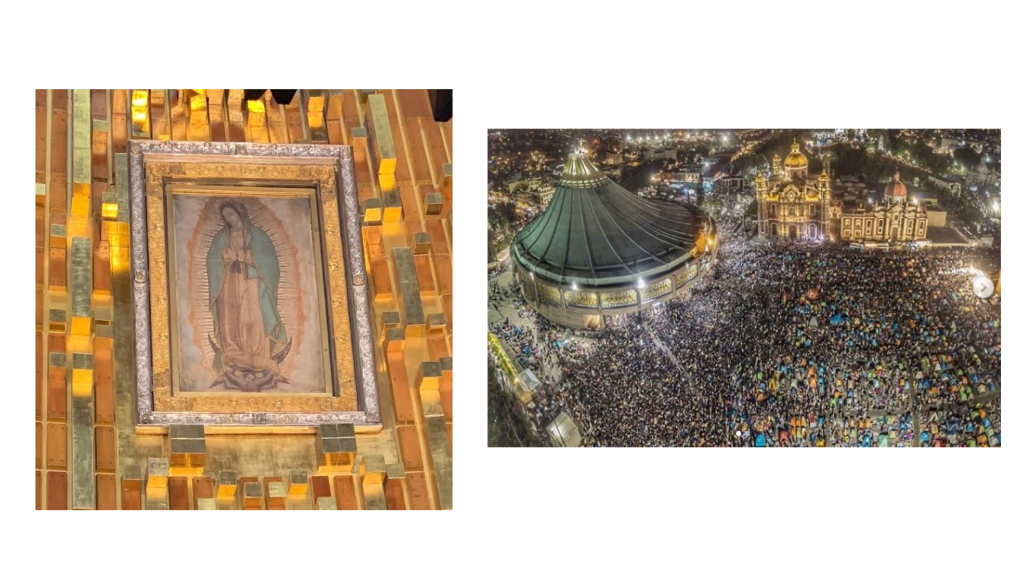
As I was approaching 60, I wanted to do something memorable to mark my six decades on the planet.  I was grateful I had “made pilgrimage” to some timeless places in the world — Jerusalem, Galilee, Buddhist and Hindu sites in India, the Guadalupe shrine in Mexico City, Ellis Island, Wrigley Field in Chicago and Fenway Park in Boston — and thought about where else I could go.   But my work at the time did not allow for ambitious trips abroad.  I decided to turn inward and identify six places in Southern California that had been important in my life that were within a day’s drive.  My plan was to go to each spot, reflect on what I had experienced there and what it meant to me in the present.  Here are the places I visited:

  • My childhood home in San Bernardino: the house had burned down, and a new house had been built on the lot.  I drove to the street and parked. Childhood memories came back, but all the families we’d known were gone.  I felt nothing.
  • The high school I attended: I drove by slowly; it was summer and not in session and the buildings felt lifeless.
  • The beach in San Clemente where our family spent many summers: the shoreline had shifted somewhat; the horizon, ocean and breaking waves were familiar. I was grateful for the joys we shared there, but also aware those times were long past.
  • The apartment in Isla Vista where I had lived in my junior year in college: I sat on a bench across the street thinking about how I had let myself become deeply isolated and self-absorbed that year.  I remembered how lost I had been.
  • The chapel in San Diego where my spiritual journey had taken root: I parked at the curb, went up the stairs and found the door was locked.  I went to the church office and explained to the church secretary why I had come.  She let me in and left me.  I looked around, breathed the air, summoned some faint memories but nothing else came to me.
  • The Goleta church that had brought us back to California: I parked in the lot and walked around the buildings.  I was grateful for all we had experienced there, but also aware that my life had moved on as had that of many people.

I had hoped that going to those places would give me some exciting new insights into my life, but that was not the case. 

Some months later I decided to trade in my Prius for a Honda CRV.  On the day of the transaction, I cleaned out my personal items from the Prius and drove it to the dealer.  A salesperson inspected it and gave me the keys to the new car in exchange for the Prius keys.  I started to walk away, then stopped to look back at the older car.  It had served me well for five years, but now I was leaving it behind and it seemed like an empty shell.  I wondered, “Is this what it’s like when our spirit leaves our body?”

Maybe we look for our personal presence in particular places, but it’s not there; it’s always with us, it’s who we are.

Lead image: Pacific Coast at San Clemente; sanclementeshoreEDIT.webp

Those Days When Our Life Changes Forever

              You never know when something will happen that will change your life.

              The Austrian writer Stefan Zweig was 32 years old on June 29, 1914, savoring the beginning of the summer season outside of Vienna:

I had rarely experienced one more luxuriant, more beautiful and, I am tempted to say, more summery. Throughout the days and nights the heavens were a silky blue, the air soft yet not sultry, the meadows fragrant and warm, the forests dark and profuse in their tender green; even today, when I use the word summer, I think involuntarily of those radiant July days which I spent in Baden near Vienna. In order that I might concentrate on my work I had retired for the month of July to this small romantic town where Beethoven loved to spend his summer holidays…

In light summer dress, gay and carefree, the crowds moved about to the music in the park. The day was mild; a cloudless sky lay over the broad chestnut trees; it was a day made to be happy. The vacation days would soon set in for the people and children, and on this holiday they anticipated the entire summer, with its fresh air, its lush green, and the forgetting of all daily cares. I was sitting at some distance from the crowd in the park, reading a book…Nevertheless, I was simultaneously aware of the wind in the trees, the chirping of the birds, and the music which was wafted toward me from the park. I heard the melodies distinctly without being disturbed by them, for our ear is so capable of adapting itself that a continuous din, or the noise of a street, or the rippling of a brook adjusts itself completely to our consciousness, and it is only an unexpected halt in the rhythm that startles us into listening.”

“And so it was that I suddenly stopped reading when the music broke off abruptly. I did not know what piece the band was playing. I noticed only that the music had broken off. Instinctively I looked up from my book. The crowd which strolled through the trees as a single, light, moving mass, also seemed to have undergone a change; it, too, had suddenly come to a halt. Something must have happened. I got up and saw that the musicians had left their pavilion. This too was strange, for the park concert usually lasted for an hour or more. What could have caused this brusque conclusion? Coming closer I noticed that the people had crowded excitedly around the bandstand because of an announcement which had evidently just been put up. It was, as I soon learned, the text of a telegram announcing that His Imperial Majesty, the successor to the crown, Franz Ferdinand, and his wife, who had gone to the maneuvers in Bosnia, had fallen victims of a political assassination there.”

Franz Ferdinand was not popular in Austria, “and so the news of his murder aroused no profound sympathy. Two hours later signs of genuine mourning were no longer to be seen. The throngs laughed and chattered and as the evening advanced music was resumed at public resorts.” – Stefan Zweig, The World of Yesterday

But the assassination set off a tragic chain reaction of events that led to the outbreak of World War on July 28.  Four years later, 8 million people had died, 7 million people were permanently disabled, and 15 million were seriously injured.  The immense suffering of World War 1 led to the rise of Nazism, the Soviet Union, and World War 2.  Zweig, a beloved writer across Europe, eventually saw his books banned because he was Jewish. He eventually fled to Brazil where he finished The World of Yesterday in 1940. The next day, overcome with despair, he took his own life.

There are dates that change our lives.  December 7, 1941, with the attack on Pearl Harbor.  The attack on the World Trade Center on September 11, 2001. The Hamas attack on Israel October 7.

My friend Father Larry once said that every year we celebrate the date of our birth.  We do not know what day on the calendar will be our last, but that day will surely come; until then we pass it by unaware.

One newsflash, one phone call, one text, and our life changes forever.

Such days are not all dark days.  Some days we remember because they mark turning points that lead to joy:  a day when we fell in love, a day when we got a letter or a phone call offering us a great opportunity in our education or work, a day when a child is born.

I will always remember an afternoon in the spring of 2006. I was rushing to perform a memorial service and was just pulling into a parking space when my cell phone rang.  It was our oldest daughter calling from Seattle.  I answered and, before she spoke, asked if I could call her back in an hour.  “No, dad, I’ve got something to tell you.”  She paused.  “You are going to have a grandson.”  I remember nothing about the service that day; I will always remember her words and that moment.

A major theme of the spiritual traditions is a plea to not take our days for granted — to be aware of the goodness that surrounds us every day.  If I am not rushing off to do something in the early mornings, I take time to recall seven blessings I experienced the previous day.  I remember the details of each one.  I want to be aware of such things while I can.

Another major theme is caring for the world beyond ourselves – doing the things that make for peace. The world we’ve created is a fragile thing; we must handle it with care.

Painting: Dance at Le Moulin de la Galette, Auguste Renoir, 1876

Practicing or Performing?

(Dear Reader: we just returned from a trip, and I’m posting this piece I wrote three years ago; I hope it is useful to you.)

As you go through your day, do you feel like you are on stage every minute, striving to give a stellar performance?

            I once heard an engaging talk by a theology professor, Tom Boyd.  He noted how we may hear someone is “a practicing Christian” or “a practicing Buddhist.”  He then explored the difference between the words “performance” and “practice.”

            Think about playing the piano.  If we are performing a piece and make a mistake, we may be embarrassed and frustrated. But if we are practicing the same piece and miss a note, we don’t worry about it; “I’m just practicing,” we tell ourselves.  Performing can make us tense, afraid and nervous. But if we are practicing, we are relaxed, open and curious.

             He went on to say some people make their spiritual life a performance, rather than a true practice.   They feel great internal pressure to always do the right thing and think the right thoughts, and to appear blameless before anyone who may be watching.  That’s a lot of work, a lot of pressure.

            I remember fondly a professor in seminary, Chris Becker. He grew up in Holland and had lived through World War 2. Seeing so much suffering led him to become a Biblical scholar. He was brilliant and flamboyant.  He smoked a cigarette using a cigarette holder, something I’d only seen in movies. He often had a stylish scarf tossed around his neck. He was known to never turn down an invitation to have a beer with a student.  He was popular not only because he was brilliant but because he was deeply passionate about life. 

            One day a student asked him a question about how a clergy person should live. It touched something in Chris.  He took a long pause as he searched for a response. He looked at the student, then all of us earnest seminarians. “Please,” he said with heart-felt concern, “Don’t let your life become an ordeal of piety.” 

            I’ve been an ordained for 40 years, and I’ve never forgotten his plea: “Don’t let your life become an ordeal of piety.”

            If we are living our life as an “ordeal of piety,” it may be because we see it as a performance, not a practice.  Our spiritual journeys are meant to make us aware of the choices we make as we go through the day. But hopefully we are centered in a sense of gratitude for what we’ve been given and the path we are on. This should put us more at ease.  From an inner awareness of blessing, we don’t have to prove anything; we don’t have to perform.  We can practice responding to grace as best we can.

            The same perspective can be useful in other areas of our life.

            If you are in a relationship, how are you approaching it? is it a performance in which you must do everything right? Or is it a daily practice where you are always learning how to live with and love each other?

            How about parenting – is it a performance you’re being graded on by someone, especially yourself?  Or is it a practice in which you are constantly learning while trying to do your best in new and challenging situations?

            Clearly there are times to “perform.”  I know if I’m “performing” a wedding, I want to do my very best.  And if you are a musician, actor or athlete, there is a special excitement in doing as well as you possibly can when you perform.  But it’s helpful to remember most of the time, we can simply practice doing whatever we are doing.

            I’ve been playing golf since I retired.  Recently I ruptured the bicep tendon in my right arm.  After tests and consultations, I began physical therapy.  When I asked the therapist about playing golf, he said I could try it and see how it felt – but be careful not to try to do too much.

            After a month I decided to see how it felt to play just 9 holes.  In my mind I said, “Take it easy. Don’t push it.  You’re just practicing.”

            On the second hole, my drive took one bounce and disappeared into the hole.  It was my very first hole in one.  I was shocked.  I played well the rest of the day.

            A week later I came out again, convinced I could build on my success. My expectations were higher, and I began pressing.  It was a disaster. I played poorly all day.

            We can bear in mind the distinction between performing and practicing and choose which approach we want to use in different situations.  Who wants life to be an “ordeal of piety?”

Checking In

This month we have been spending time in the mountains…first the Sierras and now near Mt. Shasta. I’m not doing any writing, but will share a few photos.

Our six year old grandson waiting for his turn in his dad’s kayak, Lake Mary, Mammoth.
Cloud formation at sunset over the town of McCloud (population 945) near Mt. Shasta. Fifteenth year we’ve stayed here.
Panther Meadows,Mt.Shasta, 7500 feet.

I hope you are finding moments of rest and reverence.