Three Gifts America Has Given the World

“… when they study our civilization two thousand years from now, there will only be three things that Americans will be known for: the Constitution, baseball and jazz music.  They’re the three most beautiful things Americans have ever created.” writer and essayist Gerald Early, interviewed in Ken Burns’ documentary, Baseball

                  Having just endured an incredible World Series amid our current cultural and political climate, I will comment first on baseball.

                  Baseball may have roots in the English games of cricket and rounders, but by 1900 it had become 100% an American creation.  125 years later, it may not be a universal sport like soccer or basketball.  But it has a passionate following in certain parts of Asia – particularly Japan and Korea – and in the Latin American countries that surround the Gulf of Mexico.  At a time in our history in which “immigrants” are seen as “other,” the recent series included three superstars from Japan (Ohtani, Yamamoto, and Sasaki), a terrific first baseman from Tijuana (Alejandro Kirk), a Canadian playing for Los Angeles (Freddie Freeman), a star from the Dominican Republic (Vladimir Guerrero), a Puerto Rican (Kike Hernandez), a refugee from Cuba (Andy Pages), a Venezuelan (Miguel Rojas), and an African-American from Nashville (Mookie Betts), among others. The Dodger manager Dave Roberts was born in Okinawa to a Japanese mother and an active-duty African American Marine.

                  This American game has become a showcase for talented players from many backgrounds and cultures.  It’s a game of opportunity, celebrating players no matter where they come from.  It’s a game that can focus moment to moment on a particular individual player, but it’s a great team that wins and inspires.  It’s a beautiful thing.

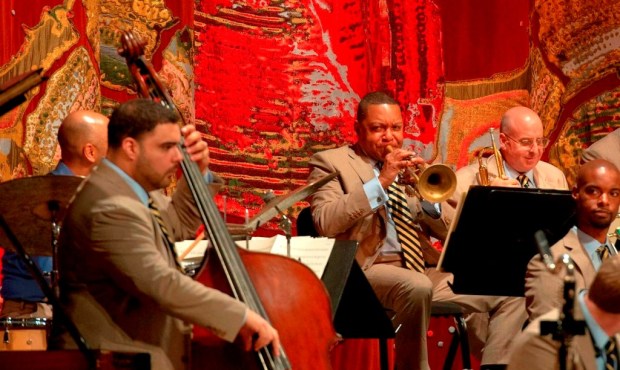
                  And then there’s jazz.  One person who has helped me understand the deeper meaning of jazz is Wynton Marsalis.  Ken Burns turned to Marsalis often in his Jazz documentary series, and everything he said struck me as revelatory.  I saw him in concert several years ago and was again grateful for the insights he shared with the audience.  Here is one of his observations:

As long as there is democracy, there will be people wanting to play jazz because nothing else will ever so perfectly capture the democratic process in sound. Jazz means working things out musically with other people. You have to listen to other musicians and play with them even if you don’t agree with what they’re playing. It teaches you the very opposite of racism and anti-Semitism. It teaches you that the world is big enough to accommodate us all.

Seeing and hearing gifted musicians express their individual gifts and voices while being a part of a larger group and delighting in the give and take with one another creates an experience in which the whole becomes greater than the parts. That’s jazz.  When we experience it, it’s a beautiful thing.

                  And so is the Constitution.

                  Years ago, I was having lunch with a young Muslim grad student from Egypt as part of my community interfaith project.  He told me he first learned about American culture while watching “Mighty Mouse” cartoons as a child.  He shared favorite stories about growing up in Egypt, including how, during Ramadan, he and his childhood friends would wait for the signal that the time of daily fasting was over, then race from home to home enjoying the food set out by neighbors.  He had come to appreciate all that America offers — particularly the constitution.  “Do Americans realize how amazing it is that your country is ruled by a constitution instead of a dictator?” he once asked me.

                  The constitution was created by people who did not want to live in a political system like they had known in Europe – one in which some people would dominate others based on family ancestry, social position or a state-sponsored religion. The founders wanted to create a society in which people would experience a new level of freedom and opportunity. They worked long and hard to create the legal framework.  It assumes people will let their deep passions be balanced by mutual respect and personal restraint.  Like baseball, it assumes people will understand that to participate, everyone must follow established rules and customs until they are changed by due process.  Like jazz, it teaches you this country is big enough to accommodate us all.  When it is disrespected, it’s an offense to our ancestors who have given so much to honor and preserve it.  When it is honored, it’s a beautiful thing.

                  America may leave the world more treasures – after all, there’s Broadway, rap, country music and Hollywood.  But I will always celebrate baseball, jazz and the Constitution for what they offer and what they mean.

Wynton Marsalis

Lead image: “The raising of the American flag as the composer-conductor John Philip Sousa leads the Seventh (“Silk-Stocking”) Regiment Band in playing The Star-Spangled Banner during Opening Day of Yankee Stadium  with the Boston Red Sox and New York Yankees on April 18, 1923 at Yankee Stadium in the Bronx, New York.

Our Frames of Mind

              In the fifth game of the World Series, Toronto pitcher Trey Yesavage — a young man who has only been pitching in the major leagues for a few months — faced the most feared hitter in baseball, Shohei Ohtani:

Ohtani led off the bottom of the first inning with a comebacker. Yesavage bobbled the ball and then dropped it, but he had what you might call veteran poise, picking up the ball and throwing what Toronto manager John Schneider called “kind of a shovel pass” to first base for the out.  “The fact that he kind of shoveled it the way he did and kind of had a little smile on his face,” Schneider said, “it actually gives you a little bit of confidence that he’s in the right frame of mind.” (October 30, LA Times)

              What is the “right frame of mind” in this situation? It seems it’s being in a high-pressure situation, making a mistake, not losing your cool, remembering your purpose, and accomplishing your task – with “a little smile.”  Doing that demonstrated “veteran poise.”  Yesavage maintained that poise, set World Series pitching performance records that night, and helped his team win the game.

              This has got me thinking about the term, “frame of mind.”

              A picture frame is a structure we use to hold something we want to see well.  We choose a particular frame to highlight the photo or painting it will border. A good frame focuses our attention on what is important. 

A “frame of mind” is an attitude we use that helps us focus on who we want to be and what we want to accomplish.

              I’ve been thinking about “frames of mind” I have seen in action.

              I worked with a church custodian who always displayed a positive attitude no matter what the challenge might be.  One time I asked him how he did that.  He said he used to be a person who often complained.  But then he visited a pediatric oncology ward and saw children being treated for life-threatening illness. That day he decided he would never again let himself complain about everyday problems.  The experience helped shaped his frame of mind every day.

              Some years ago, I attended a special installation service for a new Catholic bishop. In his remarks, he said he had had polio when he was young, and though he had largely recovered, he was still falling occasionally.  “If you are with me when that happens,” he said, “…don’t become anxious… just extend your hand to me, help me to my feet, and we will go on.  And if, as your bishop, I make a mistake, don’t become anxious – just extend your hand to me, help me back to where I should be, and we will go on.” 

              At a conference last year at Westmont College, a group of staff members were interviewed about their jobs.  They were asked if they had any favorite Scripture verses to guide them in their work. A long-time student advisor cited 2 Corinthians 4:18: “…for we look not at what can be seen but at what cannot be seen, for what can be seen is temporary, but what cannot be seen is eternal.”  When she began working with a student, that verse helped her focus not on her initial impressions but on what the student’s deepest concerns and hopes might be.

              I recently heard a presentation from a colleague who had been the chair of an academic department.  One of his responsibilities was to interview people being considered for teaching positions. He established a practice of meeting each candidate for breakfast at a particular restaurant.  While they were talking, he observed how the candidate treated the waiter and employees who came to the table: did the candidate demonstrate courtesy and respect, or did they act as if the employees didn’t matter?  He came to believe that this behavior would predict how the person would treat students and anyone of “lesser status.”  He would only recommend the people who showed respect. 

              Spiritual traditions and practices can remind us of how we can find deeper meaning in life and how we can best serve others, offering us “frames” for doing that well.

              What frame of mind we choose as we go through our day will shape how we experience each day and our effect on other people.  A good frame can help us keep our poise, perspective, and purpose. And when we make mistakes, it can empower us to maintain our composure and do our best to still get the job done – with a little smile.

Lead Image: “Person Carrying a Big Empty Frame Outdoors,” freepik.com

Are You an “Everyday Mystic?”

For centuries, a “mystic” was someone who had a rare and unique spiritual experience, different from what most of us would ever know.

This is reflected in the word itself: The term mystic is derived from the Greek noun “mystes,” which originally designated an initiate of a secret cult or mystery religion.   In Classical Greece and during the Hellenistic Age, the rites of the mystery religions were largely or wholly secret. The term” mystes” is itself derived from the verb “myein” (“to close,” especially the eyes or mouth) and signified a person who kept a secret.[i]

But in recent years, the term “everyday mystic” has come into use. Here’s one description:

An “everyday mystic” is someone who seeks or experiences spiritual depth and transcendence within ordinary daily life, rather than through withdrawal from the world or extreme ascetic practices.

The concept suggests that mystical experience—that sense of connection to something greater, moments of profound awareness, or spiritual insight—doesn’t require monasteries, retreats, or renouncing worldly responsibilities. Instead, everyday mystics find the sacred in mundane activities: washing dishes, walking to work, caring for children, or sitting in traffic.[ii]

I have known quite a few “everyday mystics.” They don’t try to be different or better than anyone else — they are simply doing something they feel called to do and, in the process, find a deep connection beyond and within themselves.  They don’t do it for money, or to prove their worth, or to puff up their ego. 

Some examples came to my mind:

  1. A physical therapist who told me there were times working with patients when his mind would become quiet and he would feel as if light was passing through him to the person he was treating.
  2. Farmers, gardeners and hikers who sense a silent and limitless bond with the earth and the mysterious processes which underly all life.
  3. Musicians who feel as if the music is playing through them.
  4. Grandparents when they behold their grandchildren.  They had loved their own children from the moment each child was born, but so much of parenting is about being a manager, behavior coach and the one person responsible for everything to do with the child. But then a grandchild appears and seeing them evokes a sense of pure wonder.
  5. Artists who get immersed in their process and end up creating something far beyond what they could have imagined when they started and don’t know how it happened.
  6. Mechanics who have an innate sense of what is wrong with a car and how to fix it with the least cost and effort, working in harmony with all the moving parts instead of simply using their will to fix something that is wrong.
  7. A young man who told me he was pitching for his college team and for a few innings the ball seemed to go exactly where he intended every time.  The experience passed and he never had it again.  He could not explain how it happened but has never forgotten what it felt like.
  8. Golfers who watch a ball rise and fall through the air with a grace and purpose that feels as if something more is present than a little ball being struck.
  9. Ocean swimmers who love the mystery of being on the surface of the limitless sea, and who feel deeply at home in salt water—perhaps sensing an unbroken thread of experience going back to our pre-human ancestors as well as our personal life as it began in the womb.
  10. People who know they are dying and “descend into the heart,” losing their fear and becoming open and observant towards everything around them.

Richard Rohr said, “For me, “mysticism” simply means experiential knowledge of spiritual things, as opposed to book knowledge, secondhand knowledge, or even church knowledge.”[iii]

Huston Smith said, “Most mystics do not want to read religious wisdom; they want to be it. A postcard of a beautiful lake is not a beautiful lake, and Sufis may be defined as those who dance in the lake.”[iv]

We can always be grateful when such moments come to us.

“Hands Cradling a Child’s Head,” Kathe Kollwitz, 1920

[i] https://www.britannica.com/topic/mysticism

[ii] https://claude.ai/chat/468625b2-74aa-4984-ba6e-8eb7f17a257a

[iii] https://cac.org/daily-meditations/sidewalk-spirituality/

[iv] Huston Smith, Jeffery Paine (2012). “The Huston Smith Reader,” p.93, Univ of California Press

Lead Image: “Ocean Swimmer In Thick Fog Near Reykjaice,” storyblocks.com

Cat Stevens Went Away — and Came Back

“When he was a child in Catholic school in London, (he) asked a nun, Sister Anthony, what might have been his first existentialist question: “When do the angels start writing down your sins?”

After a pause, she told him the scorecard began when children turn 8, a relief since he was still a year or two away. 

“Religion constantly made me feel guilty about nice-looking things,” he writes in his book. “But balancing those kind of fearful images with what was going on outside the doors of the church after school, I felt the pull of the world mighty overpowering.”[i] 

The boy to whom Sister Anthony was speaking to was Steven Georgiou.  The call to find some beauty in the outside world led him to become a musician and a songwriter. He had gifts which he developed and shared. He changed his name to Cat Stevens.

I remember well the impact he made on my generation. In 1970 much of the music of the time reflected angst and outrage.  But then albums came out that carried with them a softer tone.  James Taylor’s Sweet Baby James was one.  Another was Cat Stevens’ Tea for the Tillerman, with songs like “Where Do the Children Play?” and “Wild World.” Then came his biggest selling album, “Teaser and the Firecat.”  We heard songs like “Moonshadow,” “Peace Train,” and the English hymn, “Morning Has Broken.” There was still social concern, but the mood was more poignant, reflective and hopeful.

Several years later, Cat Stevens disappeared.  Word came he had given up music and become a Muslim, taking the name Yusuf Islam.  Only recently has he seemed to resurface. In a recent interview in the New York Times, he shared highlights of his spiritual journey which includes three close encounters with death. 

The first came when he was a teenager.  He and some friends were jumping between rooftops when he slipped and one of his buddies saved him from falling at the last second.  The second came when he was 20 and discovered he had tuberculosis.  Then there was the third:

Late in 1975, soon after Islam turned 27, his career seemed to be flagging. While he waited for lunch with his manager and label boss in Malibu, Calif., he decided to swim in the Pacific. After 15 minutes in the cold water, he tried to head back, only to find that the current was sweeping him to sea.

“I thought I could swim well, but I could not fight or beat the ocean. I had only seconds left,” Islam, 77, said recently during a video interview from a rented London apartment. So he prayed, insisting that, if he lived, he would work for God. A wave pushed him forward. “When I realized my vulnerability, what else could I do? My body was disappearing. I had only my soul left.”[ii] He began an earnest spiritual journey which led to his conversion to Islam in 1977.

Recently I’ve been in group discussions where a key concept of Richard Rohr’s has kept surfacing.  According to Rohr, our spiritual journeys can often go through three phases: order, disorder, and reorder.  In the “order” stage, we have clear ideas about who we are and what we believe.  But times can come when it’s not making sense anymore – we experience things that challenge that clear sense of order.  We enter “disorder,” a kind of spiritual wilderness where we are not sure what we can trust and believe. But eventually, we can form a new sense of direction and place – our world has been reordered.  And the process can keep repeating.

Looking back on Cat Stevens’ life, it seems he went from the order of his Catholic upbringing, to the disorder of seeking a new identity “outside the doors of the church,” to finding a new reorder as a rock star, to finding that was not enough and entering a new time of disorder as a spiritual seeker.  Eventually he found a new reorder as a devout Muslim which included giving up music.  In recent years, he’s looked for yet a new reorder in his life, integrating his faith with his musical gifts.  He has gone away and come back more than once – something he needed to do to adapt to life while also honoring his soul.

I find many of us go through similar journeys.  We’ve gone through phases of being settled, then unsettled. Then settled again. Then unsettled.  We may not come close to drowning in the ocean like he did at age 27, but we experience our “vulnerability” as we deal with changes and challenges in our personal life, relationships and world; as years go on, we may even feel our bodies are slowly “disappearing.”  But the spiritual life is a pilgrimage in which we are constantly learning and adapting.  Along the way, it’s a beautiful thing to realize we will always have our “soul left.”  And we can be grateful for those who are sharing the journey with us.

For an old, grainy video of Cat Stevens singing “Moonshadow” in 1971 before an adoring crowd of long-haired fans, click on https://www.youtube.com/watch?v=kGNxKnLmOH4

[i] “As Cat Stevens, He Knew That He Had to Go Away,” NYTimes, Sept 21, 2025

[ii] Ibid.

What We Run From Pursues Us

Last month I attended a hospice event featuring David Kessler, a leading educator and author specializing in grief work.  He shared one of his guiding principles: “What we run from pursues us.  What we face transforms us.”  

It resonated with a comment I recently read in The Tears of Things by Fr. Richard Rohr: “Remember, if you do not transform your pain and egoic anger, you will always transmit it in another form.  This transformation is the supreme work of all true spirituality and spiritual communities.”[i]

Rohr gave an example of this in a recent YouTube interview with Oprah Winfrey. Over the years, he has done a great deal of work with men’s groups.  Early on, he learned many of them had fathers who were often angry.  Midway through the retreat and when a sense of mutual trust had been established, Rohr would tell the men that the source of such anger is often unexpressed sorrow.  If we don’t express the sorrow, it builds up and becomes anger.  When the men at his retreat heard this, their feelings towards their fathers often shifted from resentment to compassion.

Sometimes we need to be in the right environment – like a retreat center or in the presence of a caring person — to let the pain surface.

When I was at Hospice of Santa Barbara, we obtained funding to initiate a community spiritual care program.  Believing there is a great deal of hidden pain and grief in nursing homes and retirement communities, we offered weekly visits from our staff to several nearby facilities.  One of our counselors was asked by the social services director at one facility to visit a new resident who had become reclusive since moving in.  He went for the first visit and was politely received.  She told him her adult children had wanted her to make the move from the East Coast so she would be closer to them. She appreciated their intent, but moving cross-country meant she had to leave her long-time community and friends.  After an hour of cordial conversation, he offered to come back the next week for a second visit, which she accepted. 

During the next visit, she talked more openly about her sense of dislocation and loss. 

He came back the next week, and after some brief conversation, she began weeping, then sobbing. Then, he said, emotion came out so strongly that she was physically shaking; he had rarely seen someone break down so intensely.  Eventually she became calm and composed. Their time was up, and she thanked him for the visit. 

When he returned the next week, she suggested instead of staying in her apartment she show him the nearby rose gardens.

When we can face and bear the pain that pursues us, we find not only a sense of release and relief but also greater awareness of the blessings around us.

I’m reminded of the last verse of the 23rd Psalm.  After alluding to times when the writer needed rest and renewal, as well having passed through the “valley of the shadow of death,” the imagery shifts to a sense of gratitude: “Surely goodness and mercy shall follow me all the days of my life…” Years ago I read a commentary on the Psalm by Rabbi Harold Kushner.  He posed the question: What does it mean that goodness and mercy follow me?  Aren’t they with me all the time?  They are, he says, but we are often too distracted and are running out ahead of them. But when we take time to stop and be present with our life, they can catch up with us and come sit in our lap.

[i] Rohr, The Tears of Things, pg.6

Lead Image: Outdoor labyrinth, La Casa de Maria          

Two Lessons I Learned from Jane Goodall

              Getting a chance to hear Jane Goodall in person was a compelling reason to go to Salt Lake City for the “Parliament of World’s Religions” in 2015.  Like so many people, I had been captivated by the way she had befriended and lived with a tribe of wild chimpanzees. That was a childhood dream of mine.  I grew up on the classic Tarzan films and imagined having a companion like “Cheetah.”  I identified with “Curious George” who was always getting into mischief. I created my own “Monkey Club” in second grade (although I don’t remember if we did anything monkey-like, such as climbing trees.) Now I was going to see someone who had lived that dream.

              It was standing room only in the auditorium on the afternoon she spoke.  As we waited, I wondered why we are all so excited to hear her.  After all, this was a conference focusing on the world’s religions – Ms. Goodall did not represent or speak for any religious group or spiritual tradition. The root meaning of the word “religion” is re-ligio, with the Latin word ligio being the source of our word “ligament” – something that binds us together as a “tribe” or community.  Maybe, despite our different cultures, we share a deep longing to bond with other living creatures — our fellow primates as well as dolphins, dogs, cats, and horses.  Here was someone who had been welcomed into a tribe of chimps. We couldn’t wait to discover what she could teach us about developing such a bond.

              The moment she entered the room everyone stood and applauded.  She shared stories and insights from her life and career, as well as her concern for the effects of climate change. Looking back, I distinctly remember two points she made.

              The first was a discovery that surprised her.  She told us one of the reasons she had been drawn to live with wild chimpanzees was her disillusionment with humanity, as we are often reckless and destructive.  She wanted to dwell with primates who live in harmony and peace. She learned many inspiring things about them. But that’s not all she found:

She was dismayed to discover that these chimps also were capable of warfare, infanticide and cannibalism. “I thought they were like us, but nicer than us,” she said. “Then suddenly we found that chimpanzees could be brutal—that they, like us, had a darker side to their nature.”[i]

              The second point involved a formative experience she had as a young adult.  She had experienced humanity’s “darker side” as a child in England when her family endured 71 bombing raids in World War 2. But after the war her mother sent her to live in Germany for a year to “teach me that not all Germans were evil.”  She appreciated discovering that to be true.

              Seeing the news she died this week at age 91, these stories came back to me.  The first story affirms we are not far removed from our primitive inheritance – we have dark passions that can lead to brutal and destructive acts.  But her mother sending her to post-war Germany suggests we also have some “better angels” in us.  We don’t have to always succumb to the darker passions — we can strive to understand and overcome them.  This, perhaps, is what our spiritual traditions teach us.  We need to acknowledge our flaws and temptations.   And we also need to do our best to transcend them.

Dr. Goodall was a child when her father gave her a stuffed monkey doll that she named Jubilee.  (Jane Goodall Institute)

[i] https://www.wsj.com/science/jane-goodall-who-studied-chimpanzee-behavior-for-decades-in-africa-dies-at-91-4be27d08

I Still Think About a List I Made a Long Time Ago

                  In the early 1980s we were living in Santa Paula, California where I was an Assistant Pastor. There was a new movement emerging in America – hospice.  I was asked to be on the local board of directors that was forming.  I had little personal experience with death, dying or grief but was honored to be asked and curious to learn what I could.  I said yes.

                  On a Saturday afternoon a small group of us participated in a training event.  At one point we were given a sheet of paper with a numbered list of twenty blank spaces.  Without much of an introduction, we were asked to write down 20 things we value in life.  I don’t have my copy anymore, but I think it looked something like this:

20 Things I Value in Life

  1. Being with my family.
  2. Being with friends.
  3. My spiritual beliefs and community.
  4. Swimming in the ocean.
  5. Eating good food (doesn’t have to be fancy).
  6. Going to musical concerts.
  7. Going to baseball games.
  8. Watching movies.
  9. Traveling to Europe (or anywhere I haven’t been).
  10. Reading good books about history.
  11. Playing sports like softball and pick-up basketball.
  12. Learning about other cultures.
  13. Meeting new people.
  14. Volunteering in the community.
  15. Advocating for peace and justice.
  16. Taking naps.
  17. Spending a day at the beach.
  18. Fresh, ripe fruit.
  19. Learning new skills.
  20. Hearing people recount how they got through hard times.

When we finished, we turned to another person and shared our list.  It felt good to realize so many things brought us joy and meaning.

The facilitator then said, “Now I want you to cross ten items off your list.”

That sounded easy but wasn’t.  I thought, “I don’t want to give up any of these.”  Then, “I don’t like this exercise.” 

When we finished, she said: “Now I want everyone to cross off five more.”  This was almost frightening.  I tried to imagine what five things I could give up.  My life was becoming very limited.

“Now cross out three so you have only two left.”

This was painful.  What is life about when you can’t do so many things you have learned to enjoy?

When the last person finished, she led a discussion.   She didn’t ask us what our last two items were.  She did ask, “What did that feel like?”

We all agreed it was difficult.

She said, “For most people, the two last things they hold on to are family and faith.”  Those were my last two.

She then told us this is what having a terminal illness can be like.  Your life gets smaller and smaller as you are able to do less and less.

That day I learned two lessons I have carried with me.

The first lesson is to have empathy for people for whom this is not an exercise but reality.  I won’t know what it’s like until I get there, but I try to imagine.  I want to be supportive of anyone I encounter who is on this journey.

The second lesson is to appreciate the things I value while I can.  At this point in my life, I can’t participate in rigorous sports anymore but feel fortunate to still enjoy most of the items on my original list.  I’m grateful for whatever time I have left.

What’s on your list?

Waking Up With Rip Van Winkle

I knew the story of Rip van Winkel as a child, but it returned to my awareness several years ago. 

My wife and I had moved my mother-in-law into a local retirement community. We attended a meeting for the adult offspring of new residents to help us appreciate some of the challenges faced by our “elders.”  The speaker noted how quickly our culture was changing and how disorienting it can be.  “They can feel like Rip Van Winkel,” the presenter said.  “One day they wake up and everyone has these devices in their hands which seems to claim all their attention.  They wonder: Where did these come from?  Where was I when all this happened?”

Not long after, my mother-in-law asked us why all the “young people” were focused on their phones when they were visiting her.

Here’s a summary of the story, first published in 1819:

Rip Van Winkle, a Dutch American man with a habit of avoiding useful work, lives in a village at the foot of the Catskill Mountains in the years before the American Revolution. One day, he goes squirrel hunting in the mountains with his dog, Wolf, to escape his wife’s irritation. As evening falls, he hears a voice calling his name and finds a man dressed in old-fashioned Dutch clothing and carrying a keg. Rip helps the man carry his burden to a cleft in the rocks from which thunderous noises are emanating; the source proves to be a group of bearded men wearing similar outfits and playing ninepins. Not asking who these men are or how they know his name, Rip joins them in drinking from the keg he has helped carry and soon becomes so drunk that he falls asleep.

Rip awakens on a sunny morning, at the spot where he first saw the keg-carrier, and finds that many drastic changes have occurred; his beard is a foot long and has turned grey, his musket is badly deteriorated, and Wolf is nowhere to be found. Returning to his village, he discovers it to be larger than he remembers and filled with people in unfamiliar clothing, none of whom recognize him. When asked how he voted in the election that has just been held, he declares himself a loyal subject of George III, unaware that the American Revolutionary War has taken place in his absence. He learns that many of his old friends either were killed in the war or have left the village, and is disturbed to find a young man who shares his name, mannerisms, and younger appearance. A young woman states that her father is Rip Van Winkle, who has been missing for 20 years, and an old woman recognizes him as Rip. The young woman and the young Rip are his children, and the former has named her infant son after him as well. (i)

Fast forward to our time.

In 2004, an awkward college student named Mark Zuckerberg created an online platform he called “The Facebook.”  21 years later – about the same amount of time as Rip’s nap – it is now used by 3 billion people worldwide every month; Zuckerberg’s company tracks, analyzes and exploits every interaction.

In 2017, TikTok was launched as a way to share videos.  It currently has more than 1.6 billion users and is considered a potentially serious security threat to the U.S.

In January 2021, a mob of thousands, encouraged by the U.S. President, stormed the nation’s capital, threatening to hang the Vice-President and interrupt the lawful process of certifying the recent election.  Four people died, and among the injured were 174 police officers.  This was the first insurrection of its kind since the nation’s founding.  That same president was reelected in 2024 and pardoned those who had been convicted in the riot; everyday he is disregarding customs and processes that have held our country together for generations.

Where was I when all these events were coming into being?  Sleeping somewhere in the Catskills? 

It is a timeless human experience — life changes more quickly than we expect.  People we love are gone. We look in the mirror and aren’t sure who is looking back at us. Changes happen in our culture that we had no idea were coming.

Some change, both technological and social, is good and we call it “progress.” But not all change is.  There are often unintended consequences that are hard to mitigate – like the detrimental effect on young people of smartphone addiction or the threats to personal privacy and democracy created by social media.  Change is accelerating in the digital age, and AI will only intensify it.

The culture is changing, but I believe the same basic spiritual values remain.  Tell the truth in important moments.  Forgive as best you can.  Try to love your neighbor.  Look out for the people who have no voice or little status.  If you are in a position of power, don’t take bribes or exploit the trust that has been placed in you. Spend time in nature to recover a sense of wonder and humility. Take a day of rest so you don’t burn out.  Enjoy life — and know the joy that comes from serving others.

Rip van Winkel woke up after a deep sleep and found some unexpected blessings when he returned to his village. I hope that’s the case for us, but I’m not so sure. I want to stand up for the values I’ve come to trust in my life and join with others who are determined to do the same. I don’t want to fall asleep quite yet.


[i] Images and excerpt: https://en.wikipedia.org/wiki/Rip_Van_Winkle

Three Strikes and You’re Back in the Car

                  Our annual trek to the Mt. Shasta area was a month later this year, so we arrived as summer was ending and fall arriving.  The forecast was for a chance of rain and thunderstorms on and off during the week. 

                  We spent the first few days exploring favorite lakes and rivers. Our fourth day was going to be our last, and we decided to see how far we could venture up Mount Shasta itself.

                  We drove to a spot known as Panther Meadows.  Half a dozen cars were parked at the trailhead.  The sky was overcast.  We got out and began to follow the trail. Within a few minutes, the sky got dark and an intense hailstorm began.  We joined several other hikers laughing and scurrying back to our cars. Strike One.

                  We drove down the road and within a few minutes had left the hailstorm behind.  We parked at “Bunny Flat” (6,950 feet) a popular staging area.  More than a dozen times we’ve hiked an hour up the trail to Horse Camp and a stone cabin built by the Sierra Club.  We decided to see how far we might go.  We were walking two or three minutes when an intense lightning flash lit up the area around us, and, in the same instant, the loudest and sharpest thunderclap I’ve ever heard roared over and through us. We hurried back to the car, as did the other nearby hikers. Strike Two.

                  We drove down the mountain and thirty minutes later were regrouping at our hotel in the town of McCloud (elevation 3,271 feet, population 945).  After lunch, we decided to try a nearby trail known as Cabin Creek.  We drove several miles down the road that leads south out of town, then turned onto the unpaved road that leads to the trailhead.  Ten minutes later we arrived; one other vehicle was there.  Just as we were parking there was a flash and thunder close to us like what we had experienced on the mountain.  Strike Three. 

  “We are getting a message. Let’s accept it.”  We drove back to our hotel.

                  We talked about how our ancestors could interpret these moments as divine messages.

                  I thought about the story of Moses confronting Pharoah in the book of Exodus, using frightening events to convince Pharoah to let the people go.  As the story has come down to us, Moses “struck” the Nile and turned it into blood; his brother Aaron “struck” the earth with his staff and gnats overwhelmed the land, hail “struck down” plants, trees and animals, and on it goes. After the tenth plague, Pharoah released the people.

                  I once read a biography of the great Puritan theologian Cotton Mather. For Mather and his community, every dramatic natural act was a message meant to be decoded by faithful people. Once he was in a meeting upstairs in his home with one of his church elders when lightning struck close to the room they were in. They both fell to the floor, praying for forgiveness as they tried to determine what terrible act or thought of theirs must have warranted this divine display of displeasure.

                  In our own time, we are experiencing increasingly intense natural disasters that shock and humble us. In my own community, we’ve been “struck” by increasingly intense wildland fires, unusual weather patterns, and the 2018 debris flow.  I don’t see these as divine messages. But isn’t it reasonable to interpret these as nature’s warnings and wake-up calls, summoning us to turn back from the many practices that have contributed to climate change?

                  As life goes on, many people experience unexpected medical challenges.  I hear some say, “I took that as a wakeup call to change my behavior.”  Many find the determination to make changes and, looking back, are grateful for the event that woke them up.

                  Later in the afternoon of “The Day of the Three Strikes,” the threat of thunderstorms had diminished. From our hotel, I went for a walk in the town of McCloud.  Being from Southern California, I was amazed at how green the trees and lawns are. I went to Hoo-Hoo Park, where we’ve often gone for the annual “Lumberjack Fiesta” in late July.  The park and softball fields were empty of people; everywhere the grass was plentiful, thick and rich. The town, surrounded by forest, seemed particularly quiet.  The logging industry has faded over the years, taking with it economic opportunity and prosperity. But the people love and honor the land they live on and respect the mountain that rises above them.   They watch out for each other and do the best they can.

                  As I walked, I had a new appreciation for how vulnerable we are. But the point of life is not to hide in fear. The point is to find wisdom and flourish. I felt I could take three life lessons with me: Be Alert.  Be Careful. And, when the time is right, Be Grateful.

Hoo Hoo Park

Lead Image: Hikemtshasta.org

Touching the Earth, Grounding Our Soul

                  Some years ago, a friend brought this back from India as a gift, and it’s been sitting on my bookshelf ever since:


The hand gesture is based on a famous story in the life of the Buddha:

In one of Buddhism’s iconic images, Gautama Buddha sits in meditation with his left palm upright on his lap, while his right hand touches the earth. Demonic forces have tried to unseat him, because their king, Mara, claims that place under the bodhi tree. As they proclaim their leader’s powers, Mara demands that Gautama produce a witness to confirm his spiritual awakening. The Buddha simply touches the earth with his right hand, and the Earth itself immediately responds: “I am your witness.” Mara and his minions vanish. The morning star appears in the sky. This moment of supreme enlightenment is the central experience from which the whole of the Buddhist tradition unfolds.[i]

                  He is not just thinking about the earth and what it means, he’s physically connecting himself to the earth.  The action symbolizes that the spiritual teachings are not lofty ideas, but literally “grounded” in real life. 

                  This past week, one of Richard Rohr’s daily meditations noted the legacy of Brother Lawrence. Here’s an excerpt:

In the mid-17th century, a man named Nicolas Herman joined the Carmelite monastery in Paris, France. Wounded from fighting in the European Thirty Years’ war, and suffering a sustained leg injury, he took the monastic name “Brother Lawrence of the Resurrection.” He worked in the monastery kitchen and eventually became the head cook. Amid the chaos of food preparation and the clanging of pots and pans, Brother Lawrence began to practice a simple method of prayer that helped him return to an awareness of Divine presence. He called it the practice of the presence of God and described it as “the most sacred, the most robust, the easiest, and the most effective form of prayer.”  Brother Lawrence’s method of prayer is so simple that it might seem misleading. It is to cultivate and hand over one’s awareness to God in every moment, in whatever we are doing. Brother Lawrence recommends that newcomers to the prayer use a phrase to recollect their intention toward the Divine presence, such as “‘My God, I am all yours,’ or ‘God of love, I love you with all my heart,’ or ‘Love, create in me a new heart,’ or any other phrases love produces on the spot.”” [ii]

Brother Lawerence summarized what he learned in the little book, The Practice of the Presence of God.  I first read it early in my spiritual journey, and have — in my best moments — often remembered it when doing the dishes.  Instead of thinking, “This is such a bother – I’m going to finish this job as quickly as possible,” I try to take a Brother Lawerence attitude: “I’m going to slow down and be aware of the tangible experience of this chore: feel each dish in my hand as I pick it up, notice the warmth of the water, appreciate stacking the dishes in the rack one by one, be grateful in these moments of being alive…”  I tend to be easily distracted and lost in thought, but doing household chores in the spirit of Brother Lawerence can be a satisfying practice.

                  Recognizing the way in which daily tasks can “ground us” is a fundamental teaching in the Benedictine monastic tradition, summarized in the phrase “ora et labora.”  Every day, a monk spends time in prayer (“ora”) but also manual labor (“labora”); labora can mean cooking and cleaning, working in the garden or, in some pious communities, carefully brewing beer.[iii]

                  When I was working at La Casa de Maria retreat center, one of our most popular offerings was led by Cynthia Bourgeult, an Episcopal priest and writer.  Each person who came to the 5-day retreat could expect regular lectures by Cynthia, times of chanting and worship, and a daily period of physical labor performed in silence.  One of our staff responsibilities before the retreat was to come up with a list of manual tasks that retreatants could do, such as raking leaves, weeding gardens or caring for our citrus trees.  Sometimes we’d get a call from a person who wanted to register but said they did not see the point of doing any manual labor; Cynthia instructed us to tell the person this was not an option – if they weren’t willing to do it, they should not come at all.  She told us that some people who had initially not wanted to do the labor ended the week saying it became one of their most valuable experiences.

                  I think of the training I received during my hospice time that was based on Zen practices focused on “cultivating presence.” If we are with someone who is in physical or emotional pain, our thoughts and feelings can get tangled up in our concern for the person and we can lose our focus. We were taught to slow down our breathing and become aware of our rear ends in the chair and our feet on the ground, and to imagine the pain passsing through us into the earth. This can free our mind to be remain calm and open as we interact with the person — to be “present” and not distracted or anxious. I have found it to be a worthwhile technique.

Spiritual traditions include specific teachings, participation in community life and the practice of serving others in tangible ways.  As our culture becomes more fragmented and people more socially isolated, many studies have demonstrated that being part of spiritual communities leads to increased emotional and physical health.  The traditions ground us in what really matters, giving meaning to all we do.


[i] https://www.huffpost.com/entry/buddhism-and-climate-change_b_925651

[ii] https://cac.org/daily-meditations/brother-lawrence-of-the-resurrection/

[iii] Many monastic communities saw beer brewing as a particularly meaningful form of labor, and at one time there were a thousand monastic breweries in Europe.  For a current listing, see A List of the World’s Monastic Beers