Maybe Prayers Are Like Snowflakes

One early spring afternoon years ago, I was making the three-hour drive on Interstate 90 from Seattle to our home in central Washington.  The highway passes through Snoqualmie Pass in the Cascade Mountains.  There had been plenty of snow that winter and there were only a few cars on the road as light flurries were falling. I was alone. I heard a loud crashing noise.  On the right side of the road ahead of me I watched a large snow-covered branch fall to the ground from a tall pine tree .  As I continued driving, I wondered how much weight it must take to break that branch off from the trunk of its tree.  How many snowflakes were required to make that happen? Did just one last snowflake tip the balance?

As I continued driving, I wondered if prayers might be like snowflakes.  Individually, they are virtually weightless.  But can they accumulate over time to make something tangible and unexpected happen?

There have been many theories over the centuries about how prayer might actually “work.”  There are many spiritual traditions encouraging people to pray. Many people share stories of how prayer has led to some remarkable outcomes. 

At the same time, many people can remember times when what they prayed for did not come to be.  Much has been written trying to understand “unanswered prayer.”

I have had colleagues in the medical profession recount experiences when they were working with families and individuals who were facing serious health challenges who put all their faith in prayer, sometimes to the exclusion of good science.  If the malady did not disappear, the family was faced not only with the loss of a loved one but questioning their faith as well.

I no longer expect to come up with a definitive answer to what prayer is and just how it “works.” But some stories come to mind. I’m going to share one this week and more in a future posting.

When I arrived to serve my congregation in Goleta, one man who became a friend and mentor was Hank Weaver.  Hank had recently retired after ten years at UCSB in the Education Abroad Program. He was a faithful Mennonite and a lifetime pacifist. Hank was a warm, engaging and brilliant man who walked with a slight limp.  I soon learned his story.  Just two years before, he had been diagnosed with a serious form of cancer in his lower spine.  The initial prognosis indicated he might not have long to live.  He decided to learn as much as he could about what he could do.  He had a PhD in chemistry and, as a dedicated scientist, worked carefully with his oncologist to begin the chemotherapy. 

At this time, people were beginning to use visualization as part of cancer treatment; the idea is you use your imagination in meditatation to visualize the chemo overcoming the cancer.   Hank was told one common example was to imagine cancer cells as small fish swimming in your bloodstream, and the chemo is a shark eating them up one by one.  Hank thought about it and said that wouldn’t work for him due to his belief in nonviolence.  He developed an alternative. He imagined a catfish swimming through his bloodstream, bottom feeding on things his body no longer wanted. 

Hank asked anyone who was willing to pray for his healing to do so, and many did.  One particularly dedicated member (in church speak, a “prayer warrior”) told me she had created an image in her mind of Hank entering the sanctuary fully healed, and many times prayerfully held that image in her mind and soul.  Hank also did all the right things in terms of diet and physical activity.

Months passed.  Slowly, the cancer began to disappear.  Eventually it went into remission.  The damage to his spine meant that his walk would always be impaired, but that was a small price to pay for the outcome.  (He did tell me one benefit of his impairment was the handicapped placard he had now had for his car – he began to get invitations from friends asking to go with him to Dodger games to take advantage of his hard-earned status for a premium parking place.)

Hank ended up self-publishing a book about his experience, Confronting the Big C.  Eventually he and his wife moved to Indiana where he served as interim President of Goshen College before retiring.  Hank had experienced a remarkable healing, and he believed it was the combination of good science and open-minded spirituality that led to his outcome.  He lived twenty-five more years until dying at the age of 93.

I believe Hank would say there are no guaranteed outcomes in this life.  None of us are getting out of here alive, and death will eventually take every one of us. But when facing serious challenges, we can choose to gather and employ all the best resources to increase our chances for a desired outcome.  We may never know how all these different forces – medical, spiritual, social, emotional – might interact with each other.  Some effects we can see and measure. But others, like prayer, may involve forces that are small and subtle.  But that doesn’t mean they can’t make things happen.

Image: Fineartamerica, Tera Fraley

“Old Truth”

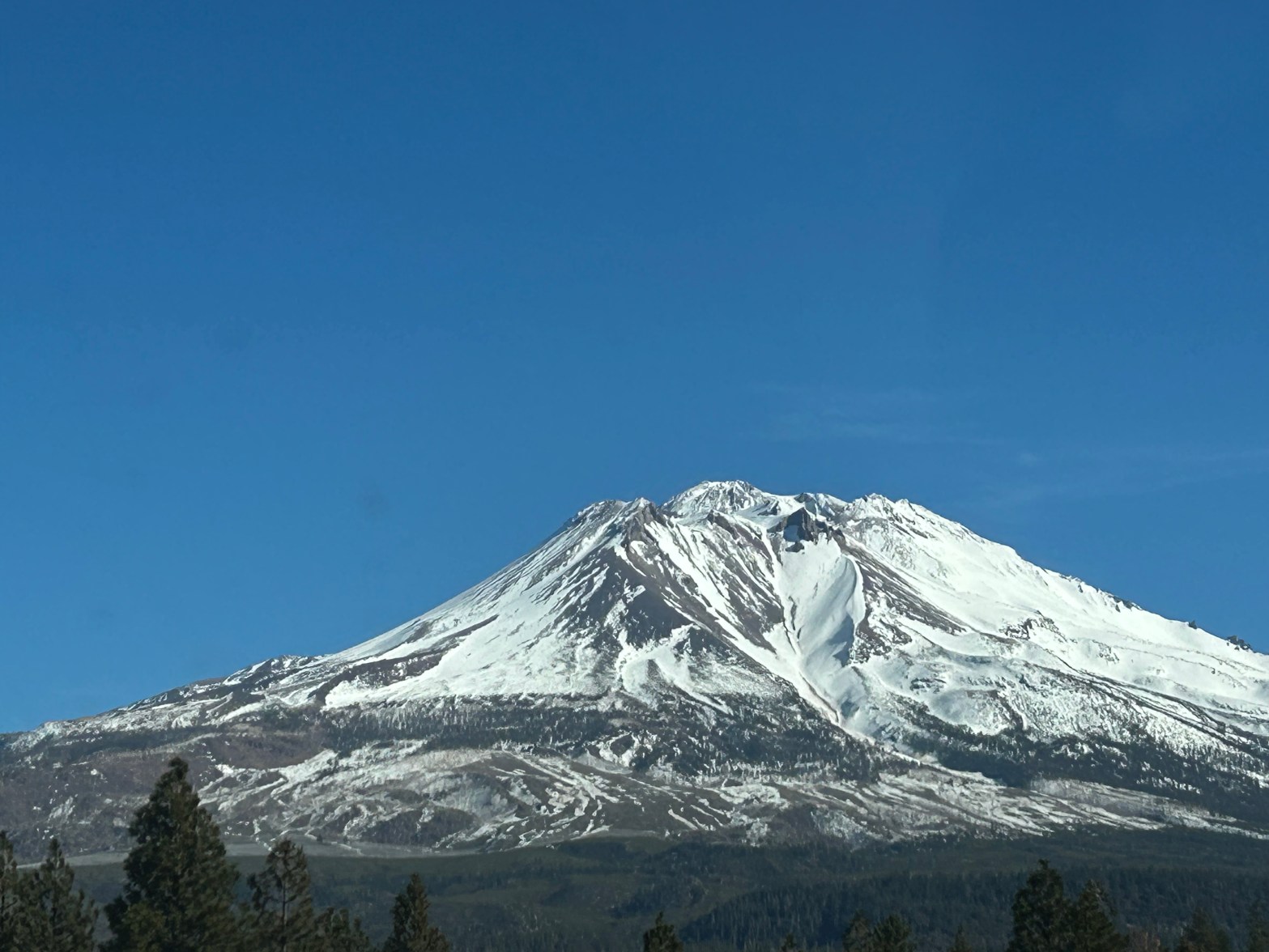
                  This past week, my wife and I went north to spend a few days in the presence of Mt. Shasta. While there, I thought often of a recent poem by my treasured friend and long-time colleague, Rabbi Steve Cohen. To me, these words are timeless — like the mountain. Given the state of our world, they are also timely. I’m sharing the poem with you this week.

“Old Truth”

Today we need Old Truth.

We thought it had died so we buried it.

The fact is that we tore down the Old Truth

because it seemed to be a rotten timber.

It had been twisted into a pillar of slavery and oppression

so we tore it down and buried it.

But today we need it again,

remembered and restored to its original sacred power.

When Old Truth goes silent, the Pharoah speaks:

“It is mine, this Nile; I made it for myself.”

Pharoah throws every boy that is born into the river

and says: “Who is God, that I should heed His voice?”

Who, indeed, is God?

How might He deliver us from this Pharoah,

this crocodile king, lying in the river,

certain that he is god, and that he will rule forever?

We need the Old Truth

Not some artificial intelligence, but our Old Human Intelligence.

We still remember that Voice, speaking to us from out of the fire:       

“I am the Lord your God Who brought you forth from the Land of Egypt”

“The voice of your brother’s blood cries out to Me from the earth””

“Do justice, love mercy, and walk humbly with your God.”

We used to stand in class and pledge to be

“One nation, under God, with liberty and justice for all.”

Many times in history, human hands have

“hurled Truth to the ground”

But always, with time, with courage and with help from God,

“Truth springs up from the earth,

and justice gazes down from Heaven.”

You can explore more of Rabbi Steve’s writings at https://www.rabbistevecohen.com.

(sources:  Ezekiel 29:9; Exodus 5:2; Exodus 20:2; Genesis 3:10; Micah 6:8; Daniel 8:12; Psalms 85:11)

“Have You Seen This Dog?” — Thoughts on Getting Away

(Dear Reader: I had a few tech challenges getting this posted…I hope this comes through now…)

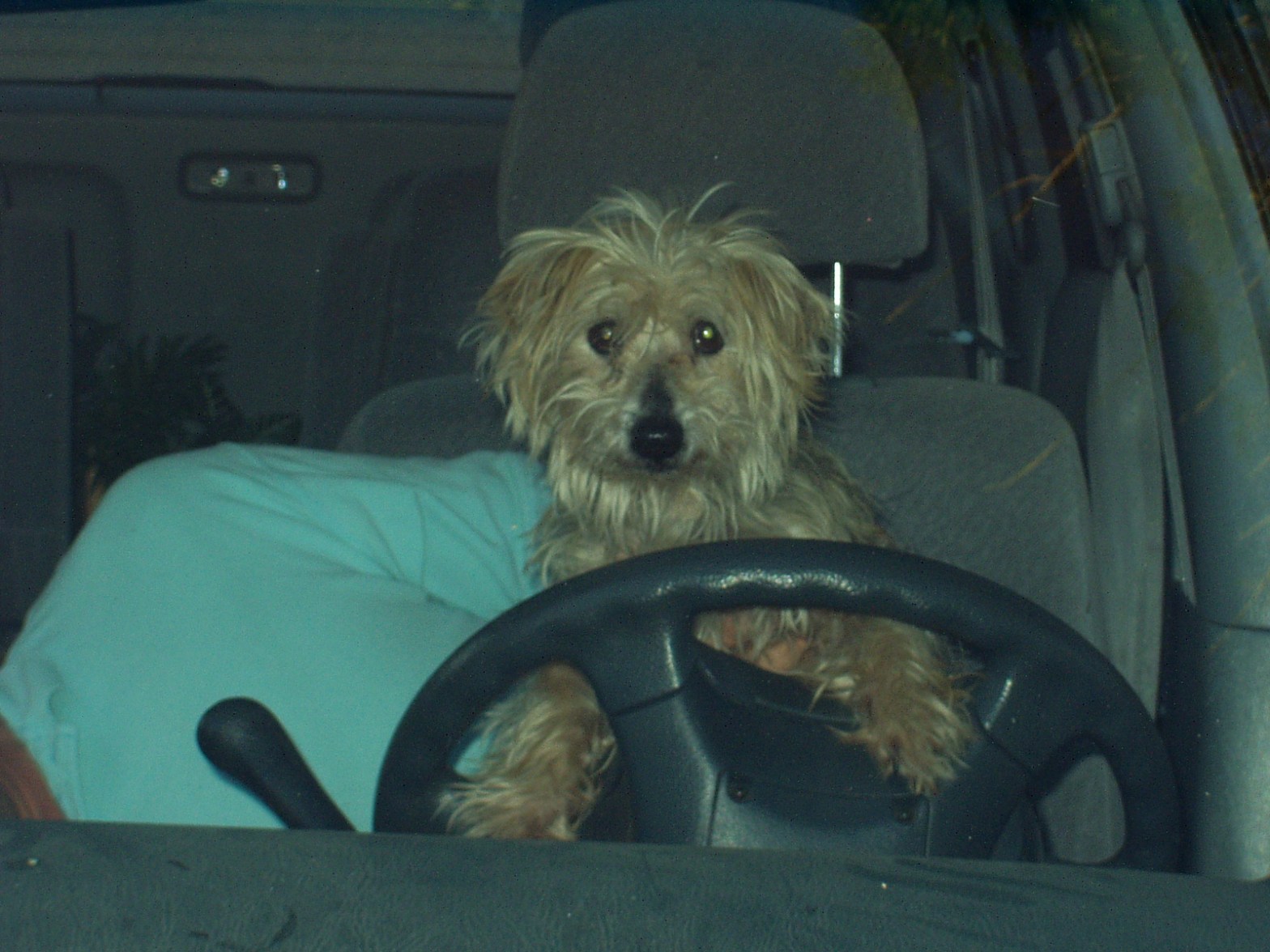
Some years ago, we had a dog named Andy.  He was a feisty soul who lived 18 years.  One day, I had parked our car in the driveway and, for reasons I cannot remember, left him there for a few minutes.  I returned for him, saw him in this pose and took the photo.

Just for fun, the next day I made flyers with “Have You Seen This Dog?” in large print and the photo below it.  I added a comment that he was last seen driving a gray Honda Odyssey van on Patterson Avenue and included my contact info.  I posted the flyer a few on telephone poles in our neighborhood.  No one seemed to notice.  A few days later I took them down.

Earlier this week I happened to come across the photo again.  Something about it called to me — I thought about that impulse we can have to “get away.” 

Do you ever feel this desire?

Maybe it’s just taking a break from our daily tasks and getting outdoors to take a walk. Or going out to spend time with friends. Or engaging in a physical or creative practice that reminds us of our inner capacity to experience new things.  We often return from such activities with renewed energy and optimism.  

The desire may lead us to travel.   I am constantly thinking about trips I want to take to places I’ve never been. The travel industry offers us images and catalogues that stimulate that desire even more.  If we have traveled to a new country or culture, we may return with an increased knowledge of how other people live, what the world offers, and our own possibilities.

Sometimes we “get away” for distraction and entertainment. Sometimes we do so for something deeper.

From a spiritual perspective, many transformational figures have found new direction by “getting away” from what’s familiar to find something new – Buddha, Abraham and Sarah, Moses, Elijah, Jesus, Mohammed and countless others who have gone on vision quests and personal pilgrimages.

In my years of involvement at La Casa de Maria Retreat Center, I saw countless people arrive feeling burned out, sensing they needed a new direction.  They found an environment designed to encourage personal renewal.  They were free to wander the 26 acres of oak trees set alongside a running creek.  They could choose to rest, meditate or reflect at one of the spiritual gardens.  Wonderful food was provided.  Naps were encouraged. Unhurried conversations could take place.  There were no television screens to distract attention.  Time after time, people left feeling like their purpose in life was once again clear. They had found new hope and courage.

When we return from these kind of journeys, we may not feel the need to “get away” again any time soon.  Instead, we can face our life, responsibilities and opportunities with clarity and confidence.  We accept whatever limitations we may have, but now with a willingness to acknowledge them, making the best of the time and resources we have. 

It’s good to get away.  It’s also good to come home.

In my pastoral and hospice experiences, it was often instructive to see how many people at the end of life found purpose and meaning in simple things: personal relationships, a few treasured memories, and an awareness that life is a marvelous mystery and gift.  They didn’t feel a need to be anywhere other than where they were.

I could have asked Andy what led him to take the wheel and contemplate getting away that day.  Was it some deep spiritual calling? Or just a hope he could find a household with better food?  But Andy never wanted to talk about his deeper feelings, and I respected that.  I do know that as I opened the car door, picked him up, and brought him into the house he seemed glad to be home once again.

Artificial Intelligence and Mickey Mouse: A Cautionary Tale (I Hope I’m Wrong, Part 3)

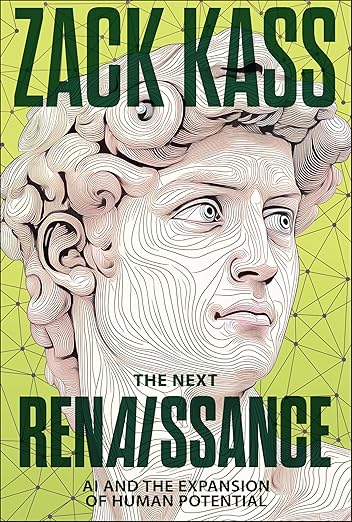
On January 20, I joined a packed crowd at the local Granada Theater to hear a leading promoter of A.I., Zack Kass, give a pitch for his new book, The Next RenAIssance: AI and the Expansion of Human Potential.  The local Montecito Journal ran an article describing Zack’s background:

Zack Kass has been at the forefront of the rapidly emerging field of artificial intelligence for nearly 20 years…After several jobs in the machine learning field, Kass joined OpenAI in 2021 as one of the first 100 employees. He served OpenAI as the head of their Go-to-Market – the business unit responsible for introducing a new product to consumers. In that role he built sales, partnerships, and customer success teams to commercialize OpenAI’s research and help launch ChatGPT, turning the company’s cutting-edge R&D into real-world business solutions. 

… The book and the event draw on his 16 years in the field, exploring the arrival and continued expansion of Unmetered Intelligence (defined as AI’s ability to deliver limitless cognitive power at near-zero cost), and explaining how that phenomenon stands to reshape the foundations of work, education, science, art, and more.

Zack is an engaging young man – earnest, smart, funny, and passionate about A.I.’s potential. His background is a local-kid-makes-good story, as his father, Dr. Fred Kass, has been a much-loved oncologist in our town for decades. Zack believes many of our fears about AI – from the safety of self-driving cars to the threat of taking away jobs to being misused by scammers and criminals – are challenges will be solved.  He feels the upside of AI is almost unlimited in making human life more meaningful and satisfying.  He may be right.

But I’m not so sure. 

On my way home that night, I remembered two pieces I posted in 2023.  I noted what we are facing with A.I. is exciting and new from a technological perspective.  But the human psyche has not significantly changed for millennia.  We may have grown in our ability to create amazing things and devices, but we have not always demonstrated wisdom in using what we develop.  We have impulses that can lead us into places we do not want to be.

 In those posts I noted many ancient myths and contemporary movies recognize what can begin as innocent, well-meaning choices can unintentionally result in unleashing forces beyond our control. Stories from our cultural past include the Greek tale of Pandora’s Box and the Biblical stories of the temptation in the Garden of Eden.  In our own time, fantasy and sci-fi movies include the original Frankenstein, 2001: A Space Odyssey, the Terminator series, I, Robot, and the Lord of the Rings trilogy.

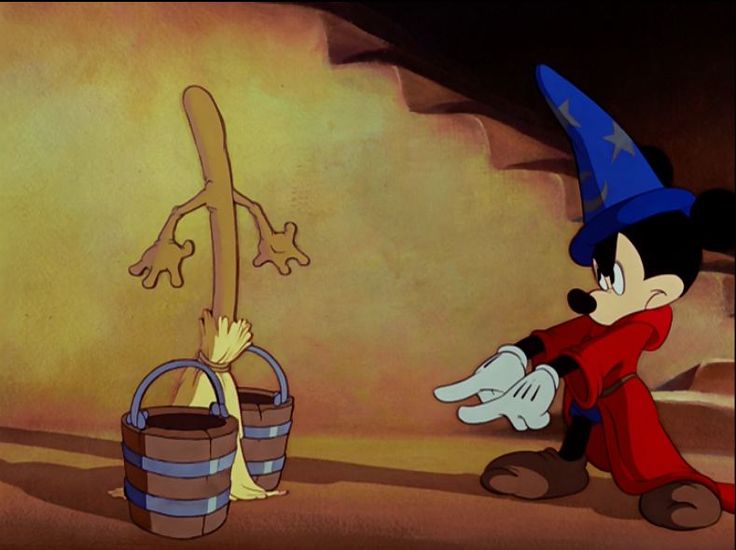
The next day, I thought of one more cultural work to add to my list: the “The Sorcerer’s Apprentice” segment of the 1940 Disney film, Fantasia. I purchased it on AppleTV (only $4.95!) and watched it.

It had been many years since I had seen it.   I forgot what a work of art it is.  Long before CGI, every image was hand-drawn by Disney artists — 600 alone to create this movie. And they were masters of their craft.

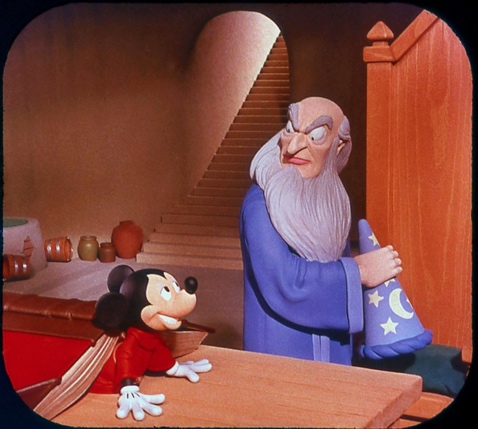
The story begins with Mickey Mouse as an assistant to a powerful Sorcerer who uses his magic to make amazing things happen. He assigns Mickey the job of carrying water back and forth to fill up a cistern and he begins the tedious manual labor.  Meanwhile, the Sorcerer takes of his hat, puts it on a table, and leaves.  Mickey pauses. He looks at the hat and wonders what it must be like to have such power. He decides to try it on.  He puts on the hat and casts a spell on a broom.  The broom sprouts two arms and begins hauling water.

As it works, Mickey is pleased with himself and takes a nap. He dreams of having the power to make the stars dance in the sky. But he is woken by the feeling of water surrounding him. It turns out the broom has taken its own initiative and gone beyond the limits of what Mickey had intended. Now the house is flooded.  Alarmed, Mickey knows he needs to stop it.  He finds an ax and cuts the broom in two.  But the broom splinters and becomes a multitude of water carriers working at twice the speed as before.  Mickey desperately searches the Sorcerer’s manual for a solution but can’t find one.  Just when all seems lost, the Sorcerer returns and sees what has happened.  He reverses the spell, the brooms disappear, and the water recedes.  He walks up to Mickey and swipes the hat off his head.

 Mickey is penitent.  Lesson learned.

Poor Mickey.  He had seen a compelling opportunity to increase his ability to manipulate the world to make his life easier.  But what he creates escapes his control and brings chaos.

Back to Zack’s vision.

More and more people I know are finding A.I. to be useful, delightful and amazing.  In many jobs, utilizing A.I. is a requirement.  In many areas of our life it is already creating great improvements. I myself have begun to use Claude as an A.I. resource for research and editing.  I chose Claude because it does not track, store or sell personal information. Its parent company, Anthropic, is committed to security, safety, and serving the public good.  I like it. But I want to be careful.

In recent years, many forces in the private sector and government wanted to establish safeguards to make sure the rapidly expanding power of A.I. is not misused.  But last spring the Trump administration appointed David Sacks to oversee government policy. Sacks tossed aside the regulatory initiatives and ever since has been encouraging unhindered development.

That’s exciting to some. But is it wise?

We see what Smartphones did to a generation of children and teenagers.  Few people saw that coming. Now, in many schools and communities, restrictions are in place and the results are universally positive.  But A.I. dwarfs Smartphones in its capacity to enchant, engage, coopt and overwhelm us.

Since reading his fascinating history of humanity, Sapiens, I have been closely following the opinions of the Israeli historian, anthropologist, and commentator Yuval Noah Harari.  In recent years he has been an articulate spokesperson regarding the hidden dangers of A.I.. He spoke last week at the Davos conference in Switzerland. Here’s what a reporter from Forbes Magazine had to say:

I have just had the pleasure of listening to Yuval Noah Harari at Davos 2026. I spend my life thinking and writing about AI, but this still landed with real force. Harari didn’t offer another prediction about automation or productivity, but questioned something deeper: whether we are sleepwalking into a world where humans quietly surrender the one advantage we have always believed made us exceptional.

Harari’s opening was as simple as it was disruptive. “The most important thing to know about AI is that it is not just another tool,” he said. “It is an agent. It can learn and change by itself and make decisions by itself.” Then he delivered the metaphor that cut through the polite Davos nodding. “A knife is a tool. You can use a knife to cut salad or to murder someone, but it is your decision what to do with the knife. AI is a knife that can decide by itself whether to cut salad or to commit murder.”

That framing matters because most of our technology rules assume the old relationship: humans decide, tools execute. Harari’s argument is that AI is beginning to break that relationship, and once it does, the usual models of accountability, regulation and even trust start to wobble. (https://www.forbes.com/sites/bernardmarr/2026/01/21/when-ai-becomes-the-new-immigrant-yuval-noah-hararis-wake-up-call-at-davos-2026/

In Mickey’s case, the Sorcerer reappears and saves the day. But as A.I.’s powers expand far beyond what we can envision and it becomes something more than we could have ever imagined, who or what will be able to stop it from becoming a destructive force?

Zack Kass may be right – the future with AI will be an amazing new world to celebrate.  But I’m not so sure.  In the recent history of our species, we human beings have often created things with the best intention. But in the process, we conjure up forces that don’t produce the results we intended.  There is no Sorcerer who’s going to miraculously show up, take the magic hat off our head, and get everything back to the way it was.  This is it.

I’m hope I’m wrong.  #3.

The prior posts: https://drjsb.com/2023/04/29/i-hope-im-wrong; https://drjsb.com/2023/05/06/i-hope-im-wrong-part-2-artificial-intelligence-pandoras-box-the-lord-of-the-rings-and-the-garden-of-eden/

Personal Thoughts on “The Two Most Powerful Emotions: Humiliation and Dignity”

Last month, two long-time columnists of the New York Times, David Brooks and Thomas Friedman, were interviewed about how they are viewing the world we are living in.  One of the comments caught my attention:

Friedman: … Let me start with what is a bedrock thing in my identity, and I think it’s in yours, too. For me, the two most powerful emotions driving human beings are one: humiliation and dignity. The quest for dignity and the revulsion of humiliation.That’s why I changed my business card back in 2015 from “New York Times Foreign Affairs Columnist” to “New York Times Humiliation and Dignity Columnist.” I felt that’s really what I was covering, whether it’s about China or Russia or Palestinians or anything else…”[i]

Brooks and Friedman continued discussing how this idea applied to politics, and it’s an impressive discussion.  Leaving world affairs to them, I decided to see how this perspective might also illuminate everyday experiences.

I can start with something as trivial as being aware of the kind of car we drive.

Some years ago, I was invited to an event at “The Ritz-Carlton Bacara,” a 5-star luxury hotel here in Santa Barbara.  I had been there before and remembered they had valet parking.  I was driving a used Prius at the time, and my ego started thinking about how most other cars would be Porsches, Bentleys, Mercedes Benz and Land Rovers.  I thought, “People will see my car and know I’m not a person of high status.”  I decided not to care.

I thought of pets.  If you have a dog or cat, the animal is not at all concerned with your social status. In their eyes, you have a full measure of dignity and deserve every ounce of their devotion.  What’s not to love?

As we age, we can become disabled, dependent and frail.  It’s not who we used to be, and we never thought this would be us.  When we go out in public, it’s easy to feel humiliated.  How meaningful it is when people interact with us in a way that recognizes our inherent dignity.

In my own career, I’ve attended many memorial services which are instructive and inspiring events.  We often hear why the person being honored made a difference in the lives of others.   A common theme is how they treated people – family members, employees, friends and strangers – with care and honor.

At their best, spiritual traditions affirm every person’s dignity.

In the Hebrew Bible, we read that human beings are created “in the image of God.” 

Jesus was notorious for associating with people who were looked down upon – prostitutes, tax collectors, people with diseases and troubling spirits.  He spoke to them with respect and broke bread with them.  In those encounters, they began to release what society had said about them and instead discover their inherent worth.  His form of execution was meant by Roman culture to be the ultimate display of humiliation.  But instead, it became a paradoxical display of how divine love transcends the dehumanizing forces of life, conferring eternal dignity in the process.

In The Autobiography of Malcom X, the author describes his first visit as a Muslim to Mecca for the great hajj pilgrimage.  Every person – no matter their race or social status in their home country– put on identical robes and joined the masses circling the Kabba and praying.  After a lifetime of discrimination and humiliation as a black man in America, for the first time in his life he felt he was truly an equal: “There were tens of thousands of pilgrims, from all over the world. They were of all colors, from blue-eyed blonds to black-skinned Africans. But we were all participating in the same ritual, displaying a spirit of unity and brotherhood that my experiences in America had led me to believe never could exist between the white and non-white.”[ii] The experience changed Malcom’s life.  From then on, he saw the common humanity of all people.

In human affairs, politics and everyday life, there are forces at work which are used to humiliate other people. How powerful it is to reject those forces and instead affirm the dignity of others.  This is what America’s best leaders have done.  This is what Dr. King stood for. This is what our spiritual traditions call us to do. 


Image: “Mother and Child,” Kathe Kollwitz, Kollwitz Museum, Berlin

[i] “Thomas L. Friedman Says We’re in a New Epoch. David Brooks Has Questions. Two columnists debate this strange moment.” New York Times, Dec. 12, 2025

[ii] “Letter from Mecca,” Malcom X, April 1964; https://malcolm-x.org/docs/let_mecca.htm

Five Tips for Your Spiritual Journey

On the first Sunday of the year, I was asked to give a sermon marking “Epiphany,” a day which focuses on the story of the Three Wise Men.  As I kept reflecting on the story, five lessons emerged which I feel can be “wise” guidelines for our own journeys: Be Curious, Go With Friends, Be Careful, Give Your Best, and Be At Peace.  As I resume my blogging practice for the year, I decided sharing this list would be a good beginning.

Be Curious  In the Magi story, I see three forms of curiosity at work. Their quest began as they were studying the stars – it is rooted in a fascination with nature.  They got as far as Jerusalem but then needed local scholars to give them their next clue – they needed to refine their search by turning to spiritual writings.  And they choose to go home by another route after one of them had a dream – they knew how to listen to inner promptings. We can follow their lead:

                  Nature: whether it’s a daily practice of outdoor mediation or walks, studying any dimension of natural sciences, or simply being ready to ponder the mysteries of life that surround us, we can be open to moments of awe in the natural world that expand our mind.

                  Scriptures: Spiritual writings from long ago and the present day can open us to see new meaning in what we experience. 

                  Inner promptings: We can gather important information from science and spiritual writings which can be complimented by paying attention to our own intuition, dreams and feelings.  

Go With Friends  Sometimes we need to go on a journey by ourselves to find what we need. But other times it’s best to go with friends – people who share our values and hopes and are open to new discoveries.  There were at least three Magi.  Spend time with good friends as you navigate your life this year.

Be Careful  The Magi were warned in a dream not to return the way they had come – Herod was not to be trusted.  We go through life wanting and wishing for the best, but we don’t want to be naïve about possible deceptions and wrong turns.  Some leaders, institutions and people can pretend to want to help us, but they may be using us for their own ends.  Be careful as you make important decisions.

Give Your Best The Magi offered gifts with specific significance: gold for a king, frankincense for a spiritual leader, and myrrh for a prophet who will be facing death.  In our lives, sometimes material gifts we give can make an important difference in the world. But there are other ways to give. If we are part of a family, we give our support, love and attention year after year.  This doesn’t guarantee outcomes we may prefer – over time we may have many sleepless nights as events unfold in the lives of people we love that we cannot control.  But we still give our best.  We are asked to love our neighbor, which is not always easy. But making a good effort to meet, understand and befriend people in our communities is what creates authentic social life.  And our spiritual traditions ask us to honor the stranger in our midst, for they too are part of the human family.  We can seek to do that in our jobs and in volunteer work.  And we can do that by supporting worthy causes with our time and talents.  Since retiring, I have been helping raise money for a new community medical clinic in town that serves people who would otherwise be unable to receive such care. I may never know personally anyone who will be served, but I believe it’s the right thing to do.

Be At Peace:  After the Magi worship the child and offer their gifts, they go home and are never heard from again.  It will be 30 years before that child in the manger will begin his work in the world, and it’s unlikely the Magi would still be alive to learn what unfolds. But they did what they could with what they had in the time they had, and they did it well.  As we get older, we realize there are many things we care about and want to know “how it all will turn out.”  But life is never finished.  What we can do is to stay curious, travel with friends, be careful along the way, and give our best.  And then it’s OK for us to be at peace.  We’ve earned it.

Photo credit: pixabay.com

Taking a Break

Dear Reader,

As we turn into the new year, I am going to take a break from writing. Not sure for how long – maybe just one week, or maybe longer. Not sure if I will pick up and keep going like I’ve been doing or do something different.  Words that have come to me include “lie fallow,” “take a hiatus,” and “pause to regroup.”  If you have any advice or ideas, let me know at info@drjsb.com.  I am grateful to have this connection with every one of you.

Steve

Visualizing the Christmas Stories

Over the years, I’ve grown in appreciation for the different ways artists imagine and portray traditional stories.  The Advent and Christmas season is a great example.  Here are a few of the works I have come to treasure over the years.

The Angel Visits Mary

A young peasant girl named Mary receives a surprise visit from the angel Gabriel, who announces she has been chosen to bear a child with a divine destiny. In 1485, Botticelli imagined it this way:

…the incoming of the divine Spirit seems to almost be knocking the angel over as it travels towards Mary.

In 1898, the English painter Tanner imagined it this way:

…the “angel” appears as a shaft of pure light; Mary seems to be contemplating what she is experiencing.

Joseph’s Dreams

Mary was engaged to Joseph, and when he discovers she is pregnant, he decides to break the engagement. But an angel appears in a dream and changes his mind. 

In 1645, the French painter Georges de La Tour imagined it this way:

Joseph has fallen asleep in a chair while reading, and the unseen messenger is near him with an unseen candel illuminating the space between them as the dream is transmitted.

After the child is born, the family must flee due to threats from the government.  In the process, Jospeph is twice more guided by dreams.  In 1645, Rembrandt imagined one of those times this way:

…the angel is in the room with Mary and Joseph as they sleep.  The angel extends the left hand to Mary while touching Joseph’s shoulder to impart the dream.

“The Visitation” — Mary Visits Her Older Cousin Elizabeth

In this episode, the newly pregnant Mary travels south to visit her older cousin Elizabeth, whom the angel Gabriel had told her has also become pregnant.  When Mary arrives and greets Elizabeth, the baby in Elizabeth’s womb senses Mary’s presence and “leaps” in response; the women share an intimate moment of mutual knowing.

In 1440, the sculptor Luca Della Robia created this scene:

…here’s a close-up of the two women looking into each other’s eyes:

In 1530, the Italian painter Pontormo envisioned it this way:

…this image also merits a close-up of the faces as they behold each other:

That woman between the two of them who is looking at us — what does she want us to understand?  No one knows for sure.  I was excited to view this in person recently when it was at the Getty Museum a few years ago.

The Birth of the Child

In 1500, Botticelli created this scene, which he called “Mystic Nativity:”

…the manger is in the center of the picture…Joseph is asleep…Mary and the child are gazing at each other…while above, below, and around them, angels dance in celebration.

In 1646, Rembrandt created this contrasting version:

Simple, earthy, quiet, intimate.

And in 1865, the pioneering British photographer Julia Margaret Cameron created a “Nativity” scene in her studio using working class people as her models:

Great spiritual stories can contain a “surplus of meaning” – there is not just one way they can be interpreted or portrayed.  Just as scientists use math to reveal important truths, artists engage our imagination.  Our souls welcome this.  Imagination allows us to see beyond the surface of life into the mysteries and wonder which surround us.

Merry Christmas, dear readers!

Lead image: “L’Annuncio” (The Annunciation), Salvado Dali, 1967

The Fragrance of a Christmas Tree

              The holiday season can be full of sensory experiences that call forth memories and emotions.  I recently came into a room that had been decorated with an advent wreath, pine tree cuttings, and a live Christmas tree. The fragrance was inspiring, and I’ve been thinking about why.  Do any of these associations resonate with you?

  • It reminds me of childhood.  Going to a Christmas tree lot which smelled amazing.  Bringing the tree home and letting it fill our home with that aroma.  The odor became the olfactory backdrop for all the joy of the season.
  • It calls to mind being in a forest. It could be the Sierra Nevada, the Cascades, or any other forest — places many of us have gone for vacation and renewal.  The trees could be pine, fir, cedar, or redwood, but the association is the same: we have left our distracted lives and are now in a natural cathedral of quiet and timeless living beings.  
  • Smelling the fragrance calls forth the color green – always a sign of life.
  • The fragrance smells clean. Maybe it’s the association with being in nature. I don’t know why but that comes to mind.
  • And the more I thought about it, another word that comes to mind is pure.  The fragrance of a live Christmas tree is evocative on its own; it doesn’t need anything added.  But the aroma at this time of year complements the visual experience of gazing at lit candles in a darkened room or quiet sanctuary: they both suggest the mysterious source of life is with us, fresh and full of promise.  Our eyes behold a symbol of that truth, and the fragrance of a Christmas tree, wreaths and cuttings confirm it. Light and life arise in darkness and the darkness will never overcome it.

Deleting Photos as a Spiritual Practice

                  How often have you looked at a digital photo and immediately deleted it? It may have been a totally accurate image but may not show the person “in their best light.” Maybe they looked disheveled. Or upset. Or confused. Or looking older than they want to be. Instead, we find the very best ones to save and possibly share – moments when the person appears happy, relaxed, confident and grateful. 

                  Of course, many times “that person” is us.

                  Recently I’ve been wondering about that process and how it could become a spiritual practice.  After all, don’t those deleted photos reveal an aspect of who we really are?  Do we want to pretend otherwise?

                  It reminds me of going through boxes of old family photos from the pre-digital age.  We want to find and keep ones that capture the best memories and gladly toss those that don’t.  But then I think about what minute-to-minute, day-to-day was really like.  There were many good times.  But there were also times when someone was angry or confused or depressed or uncertain.  Those don’t get memorialized with a camera.  But weren’t they part of life?  Looking back, can we find some empathy for every person, knowing now what they were going through then?

                  Years ago, I taught a religious studies class at Heritage College in Washington.  The reading list included a book by the Dalai Lama.  At one point he discusses how we can cultivate deep compassion for others. He notes that we may all think of ourselves as loving and caring people.  But it is easy to love people who act in ways we like. If we want to develop a more profound sense of compassion and love– one that transcends our own needs and moods — we can try to cultivate within ourselves those feelings for people we may not like at all. 

He suggested a specific meditation practice.  We choose two photographs: one of someone we love unconditionally and one of a person we dislike.  We place them next to each other in a place we’ve chosen for meditation.  We sit before the two photos. We look at the first person and recognize how positive we feel about them. Then we gaze at the second person and notice how our reactions change.  We patiently go back and forth, seeing if we can summon any of the positive feeling we have for the first person for the second.  It is not easy to do, and he acknowledged it may take many sessions to experience a shift.  But he believed if we can stick with it, we can tap into a well of compassion and care that arises from a place not tied to our ego or preferences, but from somewhere more transcendent and profound.

                  A core Biblical teaching is to love your neighbor as you love yourself.  A wise pastoral counselor once said it’s good to start with the second part – to regularly practice loving yourself.  This means accepting who you are, your best qualities as well as your faults.  Love it all. Then take that same approach towards other people.  

                  That doesn’t mean we accept or condone every behavior that surfaces in ourselves or others.  It does mean we can tap into a reverence for people that goes beyond our self.  As one mystic said, “God does not love as we love. God loves as an emerald is green.”

                  Years ago, I led a memorial service for a parishioner who had lived with cancer for an extended period of time.  In her last months she had endured a series of surgeries and treatments.  After she died, I met with the family to plan the service.  Her son, a young filmmaker, volunteered to share a video he’d made of her as part of the service.  When we came to the point in the service for the video, I expected a series of scenes showing his mother over the years in her “best” moments.  But that was not what he gave us.  Instead it was clips of his mom in her final weeks. Some shots were in the living room and some were in the backyard.  From a superficial point of view, she did not look “her best.” What he captured were moments when she turned and looked right into the camera and smiled.  In her eyes and in her face, we could see her soul shining through the illness; in those fleeting moments we recognized the person we loved.

                  Let’s continue to delete those unwanted photos! But as we do so, we can pause and summon love and compassion for the imperfect people we are.  And if we accept that for ourselves, perhaps we can see others through that same lens.