I worked for 43 years in the nonprofit and spiritual development fields....Executive Director of Hospice of Santa Barbara, Director of La Casa de Maria Retreat Center (before it closed in 2018 following the mud and debris flow event), and as a Presbyterian pastor in a variety of states and settings. I've been active in inter-spiritual work for 20 years, particularly with the Jewish, Muslim and Buddhist communities. I've served on several nonprofit boards and published a dozen articles. I enjoy baseball, classical music, listening to peoples' personal stories, politics, history and my family.
As we turn into the new year, I am going to take a break from writing. Not sure for how long – maybe just one week, or maybe longer. Not sure if I will pick up and keep going like I’ve been doing or do something different. Words that have come to me include “lie fallow,” “take a hiatus,” and “pause to regroup.” If you have any advice or ideas, let me know at info@drjsb.com. I am grateful to have this connection with every one of you.
Over the years, I’ve grown in appreciation for the different ways artists imagine and portray traditional stories. The Advent and Christmas season is a great example. Here are a few of the works I have come to treasure over the years.
The Angel Visits Mary
A young peasant girl named Mary receives a surprise visit from the angel Gabriel, who announces she has been chosen to bear a child with a divine destiny. In 1485, Botticelli imagined it this way:
…the incoming of the divine Spirit seems to almost be knocking the angel over as it travels towards Mary.
In 1898, the English painter Tanner imagined it this way:
…the “angel” appears as a shaft of pure light; Mary seems to be contemplating what she is experiencing.
Joseph’s Dreams
Mary was engaged to Joseph, and when he discovers she is pregnant, he decides to break the engagement. But an angel appears in a dream and changes his mind.
In 1645, the French painter Georges de La Tour imagined it this way:
Joseph has fallen asleep in a chair while reading, and the unseen messenger is near him with an unseen candel illuminating the space between them as the dream is transmitted.
After the child is born, the family must flee due to threats from the government. In the process, Jospeph is twice more guided by dreams. In 1645, Rembrandt imagined one of those times this way:
…the angel is in the room with Mary and Joseph as they sleep. The angel extends the left hand to Mary while touching Joseph’s shoulder to impart the dream.
“The Visitation” — Mary Visits Her Older Cousin Elizabeth
In this episode, the newly pregnant Mary travels south to visit her older cousin Elizabeth, whom the angel Gabriel had told her has also become pregnant. When Mary arrives and greets Elizabeth, the baby in Elizabeth’s womb senses Mary’s presence and “leaps” in response; the women share an intimate moment of mutual knowing.
In 1440, the sculptor Luca Della Robia created this scene:
…here’s a close-up of the two women looking into each other’s eyes:
In 1530, the Italian painter Pontormo envisioned it this way:
…this image also merits a close-up of the faces as they behold each other:
That woman between the two of them who is looking at us — what does she want us to understand? No one knows for sure. I was excited to view this in person recently when it was at the Getty Museum a few years ago.
The Birth of the Child
In 1500, Botticelli created this scene, which he called “Mystic Nativity:”
…the manger is in the center of the picture…Joseph is asleep…Mary and the child are gazing at each other…while above, below, and around them, angels dance in celebration.
In 1646, Rembrandt created this contrasting version:
Simple, earthy, quiet, intimate.
And in 1865, the pioneering British photographer Julia Margaret Cameron created a “Nativity” scene in her studio using working class people as her models:
Great spiritual stories can contain a “surplus of meaning” – there is not just one way they can be interpreted or portrayed. Just as scientists use math to reveal important truths, artists engage our imagination. Our souls welcome this. Imagination allows us to see beyond the surface of life into the mysteries and wonder which surround us.
Merry Christmas, dear readers!
Lead image: “L’Annuncio” (The Annunciation), Salvado Dali, 1967
The holiday season can be full of sensory experiences that call forth memories and emotions. I recently came into a room that had been decorated with an advent wreath, pine tree cuttings, and a live Christmas tree. The fragrance was inspiring, and I’ve been thinking about why. Do any of these associations resonate with you?
It reminds me of childhood. Going to a Christmas tree lot which smelled amazing. Bringing the tree home and letting it fill our home with that aroma. The odor became the olfactory backdrop for all the joy of the season.
It calls to mind being in a forest. It could be the Sierra Nevada, the Cascades, or any other forest — places many of us have gone for vacation and renewal. The trees could be pine, fir, cedar, or redwood, but the association is the same: we have left our distracted lives and are now in a natural cathedral of quiet and timeless living beings.
Smelling the fragrance calls forth the color green – always a sign of life.
The fragrance smells clean. Maybe it’s the association with being in nature. I don’t know why but that comes to mind.
And the more I thought about it, another word that comes to mind is pure. The fragrance of a live Christmas tree is evocative on its own; it doesn’t need anything added. But the aroma at this time of year complements the visual experience of gazing at lit candles in a darkened room or quiet sanctuary: they both suggest the mysterious source of life is with us, fresh and full of promise. Our eyes behold a symbol of that truth, and the fragrance of a Christmas tree, wreaths and cuttings confirm it. Light and life arise in darkness and the darkness will never overcome it.
How often have you looked at a digital photo and immediately deleted it? It may have been a totally accurate image but may not show the person “in their best light.” Maybe they looked disheveled. Or upset. Or confused. Or looking older than they want to be. Instead, we find the very best ones to save and possibly share – moments when the person appears happy, relaxed, confident and grateful.
Of course, many times “that person” is us.
Recently I’ve been wondering about that process and how it could become a spiritual practice. After all, don’t those deleted photos reveal an aspect of who we really are? Do we want to pretend otherwise?
It reminds me of going through boxes of old family photos from the pre-digital age. We want to find and keep ones that capture the best memories and gladly toss those that don’t. But then I think about what minute-to-minute, day-to-day was really like. There were many good times. But there were also times when someone was angry or confused or depressed or uncertain. Those don’t get memorialized with a camera. But weren’t they part of life? Looking back, can we find some empathy for every person, knowing now what they were going through then?
Years ago, I taught a religious studies class at Heritage College in Washington. The reading list included a book by the Dalai Lama. At one point he discusses how we can cultivate deep compassion for others. He notes that we may all think of ourselves as loving and caring people. But it is easy to love people who act in ways we like. If we want to develop a more profound sense of compassion and love– one that transcends our own needs and moods — we can try to cultivate within ourselves those feelings for people we may not like at all.
He suggested a specific meditation practice. We choose two photographs: one of someone we love unconditionally and one of a person we dislike. We place them next to each other in a place we’ve chosen for meditation. We sit before the two photos. We look at the first person and recognize how positive we feel about them. Then we gaze at the second person and notice how our reactions change. We patiently go back and forth, seeing if we can summon any of the positive feeling we have for the first person for the second. It is not easy to do, and he acknowledged it may take many sessions to experience a shift. But he believed if we can stick with it, we can tap into a well of compassion and care that arises from a place not tied to our ego or preferences, but from somewhere more transcendent and profound.
A core Biblical teaching is to love your neighbor as you love yourself. A wise pastoral counselor once said it’s good to start with the second part – to regularly practice loving yourself. This means accepting who you are, your best qualities as well as your faults. Love it all. Then take that same approach towards other people.
That doesn’t mean we accept or condone every behavior that surfaces in ourselves or others. It does mean we can tap into a reverence for people that goes beyond our self. As one mystic said, “God does not love as we love. God loves as an emerald is green.”
Years ago, I led a memorial service for a parishioner who had lived with cancer for an extended period of time. In her last months she had endured a series of surgeries and treatments. After she died, I met with the family to plan the service. Her son, a young filmmaker, volunteered to share a video he’d made of her as part of the service. When we came to the point in the service for the video, I expected a series of scenes showing his mother over the years in her “best” moments. But that was not what he gave us. Instead it was clips of his mom in her final weeks. Some shots were in the living room and some were in the backyard. From a superficial point of view, she did not look “her best.” What he captured were moments when she turned and looked right into the camera and smiled. In her eyes and in her face, we could see her soul shining through the illness; in those fleeting moments we recognized the person we loved.
Let’s continue to delete those unwanted photos! But as we do so, we can pause and summon love and compassion for the imperfect people we are. And if we accept that for ourselves, perhaps we can see others through that same lens.
Some friends offered us their condo in Coronado for this past week. The unit is on the 9th floor with impressive views of the Pacific, and one night I took this photo of the sunset.
Seeing our environment from a higher vantage point helps us see beyond our up-close, on-the-ground view of life. We see where we are and what’s around us more clearly.
While here, we celebrated Thanksgiving with some of our own family and my wife’s sister’s family. Altogether there were 14 adults and 9 children.
I’ve heard that all photographs have three levels: bottom, middle and top. In my photograph, the bottom is the pool and shoreline; the middle is the ocean; and the top is the sky. As I looked at our gathering, I realized there were three groups: the 9 kids all under the age of 10 who are coming up in the world; the group of adults and parents who are in the middle of their journeys; and the four of us grandparents. I also became aware of who was not there…parents, grandparents, and friends with whom I’ve shared holidays over the years who now live only in my memory.
I recognized that I was the oldest person present. I’m in the top third of that photo — I am approaching my sunset. But I am also beholding the sun rising and shining in the lives and faces of the children and younger adults we were with.
It again brings to mind a talk I once heard at the local Lobero Theater given by my beloved mentor and scholar of world spirituality, Huston Smith. Someone asked him what he thinks will happen when we die. He said there are two common ideas. One is that we will be able to forever experience something like the sun rising. The other is that we will be absorbed into the sunlight. He smiled and said if he was given a choice, he’d watch the sunrise. But after a few thousand years, he assumes he will have had enough. At that point he’d be ready to merge into it.
I first heard about “Third Things” through the work of Parker Palmer. Palmer used “Third Things” to build relationships and trust in retreats and programs over the years, and marriage and family counselors often recommend it to their clients. It can work well with two people and in small groups, with those who have known each other a long time and with those just getting acquainted.
Palmer’s underlying assumption is that our soul is shy like a wild animal.[i] It prefers to remain in the background in everyday conversations and encounters. But “Third Things” can create an atmosphere in which our souls can emerge. It may be a poem, a story, a case study, a spiritual reflection, a piece of music or art, or a shared activity. People take time to focus on the “Third Thing” with one another and give each soul a chance to surface and speak. Here are some personal examples.
Food Preparation My mother suffered several tragedies early in her life and often seemed overwhelmed by the stress of raising four kids; it was rare to have opportunities for more reflective conversations. But one of her gifts was making apple pies. When I was old enough, I would sit with her, observe, and help. She’d peel and cut the apples, add sugar and cinnamon, and let it sit. She’d create the crust, working it until it was just right, spreading it out with a rolling pin, cutting it to the right size, then making “pinwheels” out of the trimmings. The aroma of the baking pies was wondrous, and the pies were always delicious. But focusing on the pie-making calmed and opened her soul, and set the tone for some memorable conversations. As I grew older, I treasured those moments of shared presence as much as the pies themselves.
Commuting. When my daughters were teenagers, it was difficult to get them to talk about what was going on in their life. But on the mornings I’d drive them to school, we would be looking at the road ahead while music played on the radio. Meaningful conversations emerged when it didn’t feel like Dad was putting them on the spot.
Spiritual studies in small groups. A significant time in my spiritual journey came when I started attending a small Bible study group in my early twenties. I went into the Sunday School classroom reluctantly — I was expecting to be told what I was supposed to think or believe. A dozen or so people were gathering in a circle. Most were in their forties and one woman was in her 70s, so I didn’t expect we’d have much in common. But someone in the group would read a chosen passage, make a few comments about the context, and people would take turns reflecting on what it might mean for them. They spoke openly about their struggles, questions and hopes, as well as their desire to do the right thing in whatever situation they were facing. The Scripture passage was not an end in itself – it was an open door through which people entered each other’s lives with care and concern. I’ve experienced that many times since, both in classes I’ve led and ones where I’m a participant. It’s a beautiful thing to be with other people as we are finding our way together.
Travels and work projects. Early in my career I accompanied youth groups to build houses in Mexico. On the six-hour road trip we’d start talking. As we were pounding nails, we’d talk some more. And after each day of shared and satisfying labor, we’d sit around a campfire, exploring whatever was on their hearts and minds. I learned to appreciate how insightful they were — it was a privilege to be with them.
Bearing One Another’s Burdens. Our local representative, Lois Capps, experienced the loss of her young adult daughter while serving in Congress. Lois became part of a support group of other mothers in the House — Democrats and Republicans — who had also lost children. They would meet every other week for breakfast. When apart, they may have voted differently. But when together, they supported each other in their personal journeys of loss.
Sports and activities. When I am out on a golf course with my buddies, part of the focus is on our game. But, being outdoors and away from distractions, between shots we often engage in genuine conversations about what’s going on in our life. That same experience can arise when we are with someone else walking, hiking, camping, fishing, doing art, and going on pilgrimages.
In our current culture we can feel as if we live in a country “divided by algorithms” –much of how we see the world and other people is filtered by the digital news sources we rely on and comments by people who think like us. When we are around people who may see the world differently (sometimes at holiday gatherings) we can feel that gap is unbridgeable. But when we can find “third things” to focus on, we discover we don’t have to remain prisoners within those digital worlds. We can create common ground with one another. Maybe that’s one way we can strive to come together instead of being driven apart.
There is something about having a “Third Thing” that allows our souls to emerge and be present with one another.
A friend and fellow blogger dropped his daughter off at college in Eastern Washington state, then boarded a plane going home to southern California. He recently described how it felt as the plane rose into the air:
Casting a shadow moving away from there. That’s us down there, pointing back toward where the 18 years happened. Watching the long-planned departure take place. Mulling that our part in her life is getting smaller. This is what we hoped for, right? That’s us down there, shrinking.[i]
Brad’s imagery lingered with me. I began imagining how some life experiences are like being on an airplane as we arrive or depart.
Arrivals
The birth of a baby: I remember the moment when the doctor lifted our first daughter from the womb. She looked my way, our eyes met, and she seemed to be thinking, “Where in the world am I?”
A child’s first laugh: My nephew and his wife recently shared an enchanting video of the first time their infant son looked at them and smiled. That week my wife and I had been watching “Dark Winds,” a detective series set in a Navajo community. In one episode, an infant laughs for the first time, which, in Navajo culture, signifies the infant has become a person. The family holds a traditional ceremony to mark that moment.
First personal memory: I was probably 4 years old. I was standing in a bedroom in our house. I had taken three eggs from the refrigerator, snuck into the room, and was carefully dropping them one by one onto the linoleum floor. Just as I dropped the second one, my mother came down the hall, saw me, and said, “What in the world are you doing!?!” I said, “I wanted to see what it looked like when they cracked.” She took the third egg away from me. I can still see the yellow yolks floating in the puddle of egg white on the floor. That is the first time I remember being self-aware. I was watching myself; that same observer is me now, thinking about the words I am typing.
First spiritual awareness: In 1991, the child psychologist Robert Coles published The Spiritual Life of Children, in which he described how children in different cultures wonder about God and the meaning of life. Many of these experiences happen before a child is eight years old. Perhaps you have such a memory.
Landing in a far away country: In 1975, I flew to Europe on Icelandic Airlines. I remember looking out the window as the plane descended from the clouds; we were crossing the English Channel, then suddenly were over the green French countryside. It seemed like a dream.
First day on a new job: My most memorable first day of work was the day I began to serve as Executive Director at Hospice of Santa Barbara in September 2008. I had never imagined being in that role, but there I was. I sat down at my desk feeling both exhilarated and anxious. For months after, I felt like an impostor, as people expected me to know things I had yet to learn. I was a stranger finding his way in a new land.
Departures
Dropping kids off at Junior High: More than once, I drove away remembering what a hormonal and emotional roller coaster that time in life had been for me — and hoping for the best for our offspring.
Sending kids off to college: We did it twice by car, once at an airport. Like Brad says, after so many years it’s a curious feeling to realize you’ll no longer be providing daily oversight. They are on their own, come what may. “That’s us…shrinking.”
Retirement: My last full-time job was Director at La Casa de Maria Retreat Center. I had planned to retire in the fall of 2018. But on January 8, the Montecito Debris Flow swept away eight buildings on our property, including my office where I had posted my diplomas and favorite photographs; it all disappeared and was never found. In the months that followed, we worked on the recovery until the decision was made to shut the Center down indefinitely. I left in June of that year. After saying goodbye to the staff, I drove out the back gate, thinking about how some chapters in our life end so much differently than we had imagined.
Last Call: I don’t know where I will be for my final “departure” – at home, in a hospital, or in a facility. Some hospice nurses have told me that, when someone is in their final days, they suggest the family leaves a window partly open so the spirit will be able to ascend freely when it’s time. I have asked for that. The lyrics of an American folk hymn come to mind:
When the shadows of this life have gone — I’ll fly away Like a bird from prison bars has flown — I’ll fly away (I’ll fly away)
I’ll fly away, oh glory — I’ll fly away (In the morning) When I die, Hallelujah, by and by — I’ll fly away (I’ll fly away)
Life for me hasn’t felt like being a bird behind bars, but more like being a pilgrim in a land of mystery and wonder. Until that final boarding, may we appreciate all the arrivals and departures we have witnessed and those still to come.
“… when they study our civilization two thousand years from now, there will only be three things that Americans will be known for: the Constitution, baseball and jazz music. They’re the three most beautiful things Americans have ever created.”– writer and essayist Gerald Early, interviewed in Ken Burns’ documentary, Baseball
Having just endured an incredible World Series amid our current cultural and political climate, I will comment first on baseball.
Baseball may have roots in the English games of cricket and rounders, but by 1900 it had become 100% an American creation. 125 years later, it may not be a universal sport like soccer or basketball. But it has a passionate following in certain parts of Asia – particularly Japan and Korea – and in the Latin American countries that surround the Gulf of Mexico. At a time in our history in which “immigrants” are seen as “other,” the recent series included three superstars from Japan (Ohtani, Yamamoto, and Sasaki), a terrific first baseman from Tijuana (Alejandro Kirk), a Canadian playing for Los Angeles (Freddie Freeman), a star from the Dominican Republic (Vladimir Guerrero), a Puerto Rican (Kike Hernandez), a refugee from Cuba (Andy Pages), a Venezuelan (Miguel Rojas), and an African-American from Nashville (Mookie Betts), among others. The Dodger manager Dave Roberts was born in Okinawa to a Japanese mother and an active-duty African American Marine.
This American game has become a showcase for talented players from many backgrounds and cultures. It’s a game of opportunity, celebrating players no matter where they come from. It’s a game that can focus moment to moment on a particular individual player, but it’s a great team that wins and inspires. It’s a beautiful thing.
And then there’s jazz. One person who has helped me understand the deeper meaning of jazz is Wynton Marsalis. Ken Burns turned to Marsalis often in his Jazz documentary series, and everything he said struck me as revelatory. I saw him in concert several years ago and was again grateful for the insights he shared with the audience. Here is one of his observations:
As long as there is democracy, there will be people wanting to play jazz because nothing else will ever so perfectly capture the democratic process in sound. Jazz means working things out musically with other people. You have to listen to other musicians and play with them even if you don’t agree with what they’re playing. It teaches you the very opposite of racism and anti-Semitism. It teaches you that the world is big enough to accommodate us all.
Seeing and hearing gifted musicians express their individual gifts and voices while being a part of a larger group and delighting in the give and take with one another creates an experience in which the whole becomes greater than the parts. That’s jazz. When we experience it, it’s a beautiful thing.
And so is the Constitution.
Years ago, I was having lunch with a young Muslim grad student from Egypt as part of my community interfaith project. He told me he first learned about American culture while watching “Mighty Mouse” cartoons as a child. He shared favorite stories about growing up in Egypt, including how, during Ramadan, he and his childhood friends would wait for the signal that the time of daily fasting was over, then race from home to home enjoying the food set out by neighbors. He had come to appreciate all that America offers — particularly the constitution. “Do Americans realize how amazing it is that your country is ruled by a constitution instead of a dictator?” he once asked me.
The constitution was created by people who did not want to live in a political system like they had known in Europe – one in which some people would dominate others based on family ancestry, social position or a state-sponsored religion. The founders wanted to create a society in which people would experience a new level of freedom and opportunity. They worked long and hard to create the legal framework. It assumes people will let their deep passions be balanced by mutual respect and personal restraint. Like baseball, it assumes people will understand that to participate, everyone must follow established rules and customs until they are changed by due process. Like jazz, it teaches you this country is big enough to accommodate us all. When it is disrespected, it’s an offense to our ancestors who have given so much to honor and preserve it. When it is honored, it’s a beautiful thing.
America may leave the world more treasures – after all, there’s Broadway, rap, country music and Hollywood. But I will always celebrate baseball, jazz and the Constitution for what they offer and what they mean.
Lead image: “The raising of the American flag as the composer-conductor John Philip Sousa leads the Seventh (“Silk-Stocking”) Regiment Band in playing The Star-Spangled Banner during Opening Day of Yankee Stadium with the Boston Red Sox and New York Yankees on April 18, 1923 at Yankee Stadium in the Bronx, New York.“
In the fifth game of the World Series, Toronto pitcher Trey Yesavage — a young man who has only been pitching in the major leagues for a few months — faced the most feared hitter in baseball, Shohei Ohtani:
Ohtani led off the bottom of the first inning with a comebacker. Yesavage bobbled the ball and then dropped it, but he had what you might call veteran poise, picking up the ball and throwing what Toronto manager John Schneider called “kind of a shovel pass” to first base for the out. “The fact that he kind of shoveled it the way he did and kind of had a little smile on his face,” Schneider said, “it actually gives you a little bit of confidence that he’s in the right frame of mind.” (October 30, LA Times)
What is the “right frame of mind” in this situation? It seems it’s being in a high-pressure situation, making a mistake, not losing your cool, remembering your purpose, and accomplishing your task – with “a little smile.” Doing that demonstrated “veteran poise.” Yesavage maintained that poise, set World Series pitching performance records that night, and helped his team win the game.
This has got me thinking about the term, “frame of mind.”
A picture frame is a structure we use to hold something we want to see well. We choose a particular frame to highlight the photo or painting it will border. A good frame focuses our attention on what is important.
A “frame of mind” is an attitude we use that helps us focus on who we want to be and what we want to accomplish.
I’ve been thinking about “frames of mind” I have seen in action.
I worked with a church custodian who always displayed a positive attitude no matter what the challenge might be. One time I asked him how he did that. He said he used to be a person who often complained. But then he visited a pediatric oncology ward and saw children being treated for life-threatening illness. That day he decided he would never again let himself complain about everyday problems. The experience helped shaped his frame of mind every day.
Some years ago, I attended a special installation service for a new Catholic bishop. In his remarks, he said he had had polio when he was young, and though he had largely recovered, he was still falling occasionally. “If you are with me when that happens,” he said, “…don’t become anxious… just extend your hand to me, help me to my feet, and we will go on. And if, as your bishop, I make a mistake, don’t become anxious – just extend your hand to me, help me back to where I should be, and we will go on.”
At a conference last year at Westmont College, a group of staff members were interviewed about their jobs. They were asked if they had any favorite Scripture verses to guide them in their work. A long-time student advisor cited 2 Corinthians 4:18: “…for we look not at what can be seen but at what cannot be seen, for what can be seen is temporary, but what cannot be seen is eternal.” When she began working with a student, that verse helped her focus not on her initial impressions but on what the student’s deepest concerns and hopes might be.
I recently heard a presentation from a colleague who had been the chair of an academic department. One of his responsibilities was to interview people being considered for teaching positions. He established a practice of meeting each candidate for breakfast at a particular restaurant. While they were talking, he observed how the candidate treated the waiter and employees who came to the table: did the candidate demonstrate courtesy and respect, or did they act as if the employees didn’t matter? He came to believe that this behavior would predict how the person would treat students and anyone of “lesser status.” He would only recommend the people who showed respect.
Spiritual traditions and practices can remind us of how we can find deeper meaning in life and how we can best serve others, offering us “frames” for doing that well.
What frame of mind we choose as we go through our day will shape how we experience each day and our effect on other people. A good frame can help us keep our poise, perspective, and purpose. And when we make mistakes, it can empower us to maintain our composure and do our best to still get the job done – with a little smile.
Lead Image: “Person Carrying a Big Empty Frame Outdoors,” freepik.com
For centuries, a “mystic” was someone who had a rare and unique spiritual experience, different from what most of us would ever know.
This is reflected in the word itself: The term mystic is derived from the Greek noun “mystes,” which originally designated an initiate of a secret cult or mystery religion. In Classical Greece and during the Hellenistic Age, the rites of the mystery religions were largely or wholly secret. The term” mystes” is itself derived from the verb “myein” (“to close,” especially the eyes or mouth) and signified a person who kept a secret.[i]
But in recent years, the term “everyday mystic” has come into use. Here’s one description:
An “everyday mystic” is someone who seeks or experiences spiritual depth and transcendence within ordinary daily life, rather than through withdrawal from the world or extreme ascetic practices.
The concept suggests that mystical experience—that sense of connection to something greater, moments of profound awareness, or spiritual insight—doesn’t require monasteries, retreats, or renouncing worldly responsibilities. Instead, everyday mystics find the sacred in mundane activities: washing dishes, walking to work, caring for children, or sitting in traffic.[ii]
I have known quite a few “everyday mystics.” They don’t try to be different or better than anyone else — they are simply doing something they feel called to do and, in the process, find a deep connection beyond and within themselves. They don’t do it for money, or to prove their worth, or to puff up their ego.
Some examples came to my mind:
A physical therapist who told me there were times working with patients when his mind would become quiet and he would feel as if light was passing through him to the person he was treating.
Farmers, gardeners and hikers who sense a silent and limitless bond with the earth and the mysterious processes which underly all life.
Musicians who feel as if the music is playing through them.
Grandparents when they behold their grandchildren. They had loved their own children from the moment each child was born, but so much of parenting is about being a manager, behavior coach and the one person responsible for everything to do with the child. But then a grandchild appears and seeing them evokes a sense of pure wonder.
Artists who get immersed in their process and end up creating something far beyond what they could have imagined when they started and don’t know how it happened.
Mechanics who have an innate sense of what is wrong with a car and how to fix it with the least cost and effort, working in harmony with all the moving parts instead of simply using their will to fix something that is wrong.
A young man who told me he was pitching for his college team and for a few innings the ball seemed to go exactly where he intended every time. The experience passed and he never had it again. He could not explain how it happened but has never forgotten what it felt like.
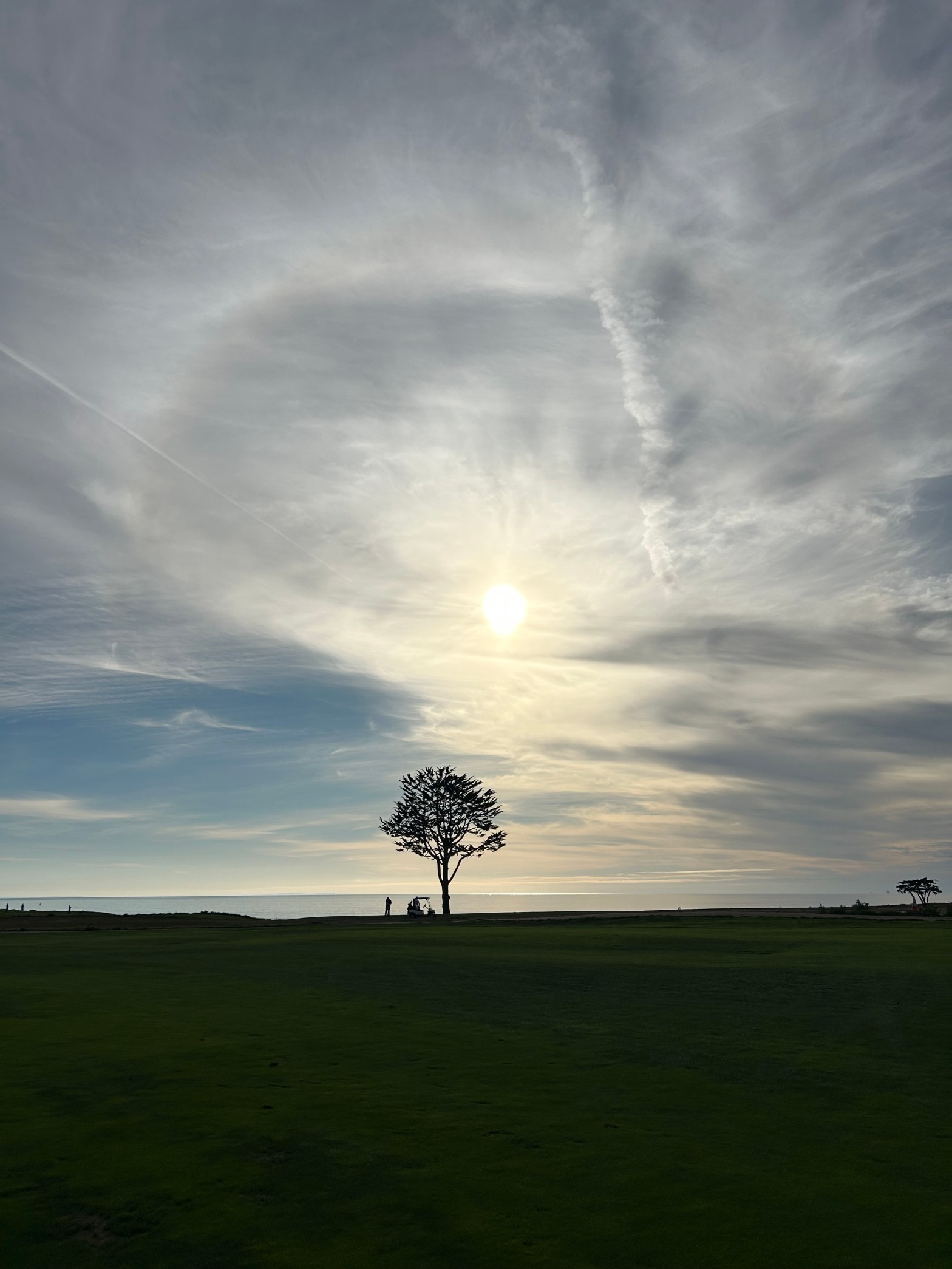
Golfers who watch a ball rise and fall through the air with a grace and purpose that feels as if something more is present than a little ball being struck.
Ocean swimmers who love the mystery of being on the surface of the limitless sea, and who feel deeply at home in salt water—perhaps sensing an unbroken thread of experience going back to our pre-human ancestors as well as our personal life as it began in the womb.
People who know they are dying and “descend into the heart,” losing their fear and becoming open and observant towards everything around them.
Richard Rohr said, “For me, “mysticism” simply means experiential knowledge of spiritual things, as opposed to book knowledge, secondhand knowledge, or even church knowledge.”[iii]
Huston Smith said, “Most mystics do not want to read religious wisdom; they want to be it. A postcard of a beautiful lake is not a beautiful lake, and Sufis may be defined as those who dance in the lake.”[iv]
We can always be grateful when such moments come to us.
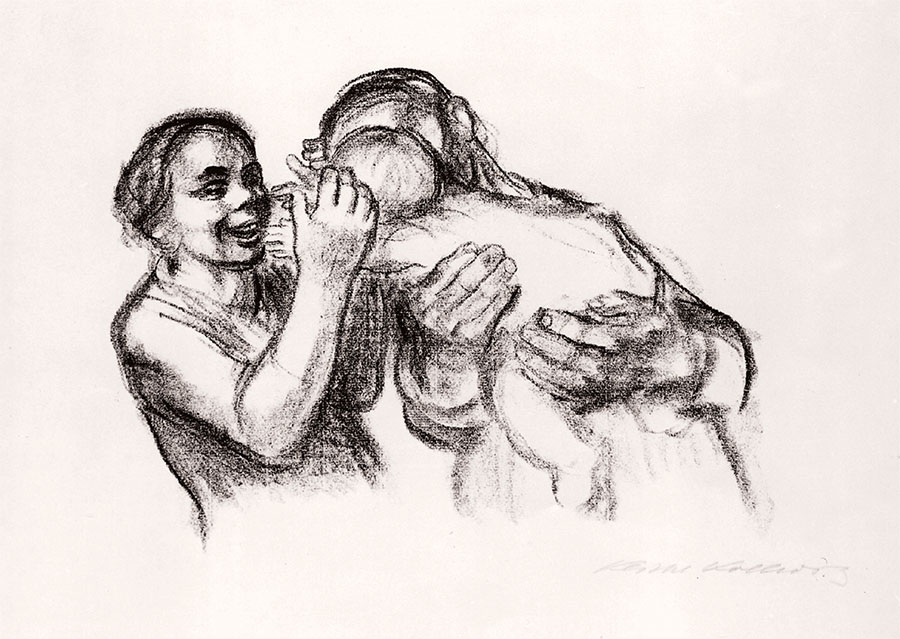
“Hands Cradling a Child’s Head,” Kathe Kollwitz, 1920