Life Among the Organisms

(Dear Reader: the following are my reflections on a recent personal experience. I know many of you have had similar and far more serious challenges in your journey — I would appreciate hearing your thoughts.)

What Happened

         On Tuesday, June 19, I woke up with a sore back.  The next day I was prescribed muscle relaxants which did not eliminate the problem.  Saturday I was running a fever and went to the ER at our nearby hospital.  Multiple tests confirmed something was amiss, but they were not sure what.  Monday, I went to the downtown hospital for an MRI, which revealed a bacterial infection in the area around my cervical spine; I was admitted to the hospital.  In the days that followed, ongoing blood tests and cultures identified the bacteria as Streptococcus anginosus which could be treated with daily injections of the antibiotic ceftriaxone. Friday,I had a PICC line inserted into my right arm and the treatment began. I was released to go home later that afternoon. Saturday a visiting nurse came to administer the medicine and teach my wife how to do it. We expect this to continue for six weeks. My energy is good, and I am not contagious.

What I Learned

         I have visited many people in hospitals and homes for more than 40 years.  I have seen countless situations more serious than what I experienced.  But in sleepless and idle moments, these personal reflections emerged. 

  1. Grateful for modern medicine and skilled doctors.  I asked what would have happened to me if I had this infection in the not-too distant past or was living in a Third World country. The doctor said the infection would spread to other parts of my body, probably my heart and brain, and eventually take my life.  I have a fresh appreciation for the medical training, experience and technology that has been focused on my diagnosis and recovery.
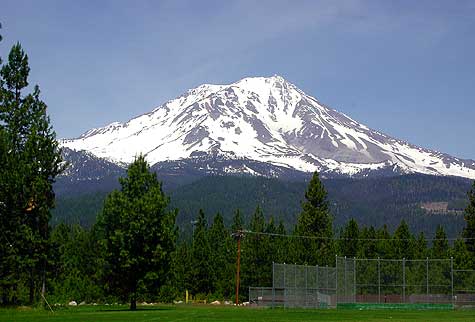
  2. It’s strange to be confined to one room for five days.  This was the first time in my adult life I was an inpatient more than one night.  At times it’s disorienting to be confined around the clock.  But I’m grateful I had a room in the old wing of the hospital that had a view of the mountains.  And I am also grateful I carry around with me a well-equipped inner sanctuary, where I go to recite prayers and meditations I have come to cherish over the years.  (My favorites are the 23rd Psalm and the Orthodox “Serene Light” prayer.[i])
  3. Renewed appreciation for everyday comforts at home.  My own bed with real sheets and pillows.  Our dog napping near me when I am resting. Coffee I can make anytime I want. Privacy. Freedom.
  4. Fresh appreciation for family caregivers.  My wife has had to track all that has happened and now is in the role of a nurse giving injections.  Caregivers carry a lot on their shoulders and in their mind.
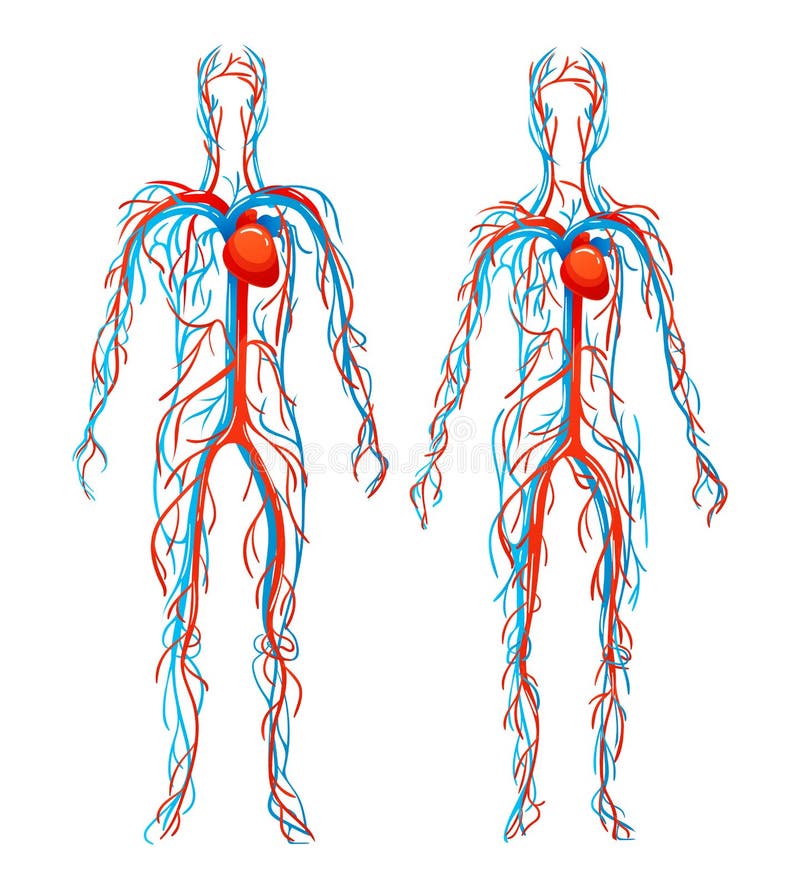
  5. The bacteria and I are both biological organisms pursuing our own aims.  After the doctors described the bacteria to me, I tried to fathom the fact that this tiny organism had found a way to get into my blood stream and then decided to colonize the area around my cervical spine.  It seemed to me an insidious act – a personal affront! — and I felt anger.   But then I thought that this bacteria is just one more organism in the vast realm of living entities doing what they are designed to do: survive as best as best it can.  (The words from the Godfather came to mind: “It’s not personal, it’s strictly business.”)  But I also thought, “And I am an organism who wants to survive. And I’m going to do all I can to eradicate you from my body.  I’ve got lots of resources on my side.  We are going to get you.  It’s not personal, it’s strictly business.”
  6. Empathy for people whose challenges are far beyond mine.  My treatment may last as little as six weeks, and I am otherwise in good health. But I caught at least a glimpse of what something far more serious may be like.
  7. A new opportunity to appreciate the gift of life.  I have been around illness and mortality often.  I have often contemplated when and how my own life will end. But it’s one thing to think about mortality when we are healthy and another when our basic health is in question.  I’m grateful to be alive. 

[i] “Turning Towards the Serene Light”, PocketEpiphanies blog post, July 16, 2022

When Opportunity Whispers

Recently I became curious about the word “opportunity.”   I wondered where the word came from and if it might have application for spiritual life.

I was surprised to find it originated as a sailing term.  The root word in Latin contains the word “port,” meaning a harbor.  The word “ob” means “in front of” or “in the direction of.”  And the Latin word “veniens’ means “coming toward.” Put that together and you have:

…ob portunm veniens “coming toward a port,” in reference to the wind…

I like that: an opportunity is like sailing at sea and realizing a wind has arisen that can take you to a place you want to be.

The Biblical words for “wind” are evocative. In Hebrew, the word “ruah” can mean wind, breath, or spirit.  In Greek, the word “pneuma” also can mean wind, breath, or spirit. Our spiritual ancestors experienced the coming of the divine spirit like the awareness of a fresh breeze.  We don’t know where it comes from, but we sense it moving us in a new direction.    

Some personal stories come to mind.

When I was in seminary, we were in a couples’ group.  The leader asked us to describe how our spiritual journeys began.  One woman said her mother had been a heroin addict.   She was eight years old and had never been to a church.  But one Sunday morning, out of nowhere, she felt a desire to attend a nearby service. She walked down the street by herself.  When she arrived, she felt she had come home.  She began attending regularly, learning all she could about what faith meant.  Over the years, it not only gave her a sense of security and direction but also allowed her to care for her mother more effectively.

I have a friend who is a Catholic priest.  He was living in northwest Washington and planned to be in Seattle for the weekend.  But he got an inner prompting that he needed to go visit a friend who lived in Yakima.  He caught a plane that day. When he landed he called his friend’s house. His friend’s wife answered. She told him she was surprised to hear him, and he could not be showing up at a better time – her husband was dying and would love to see him. My friend went to the house, reunited with his friend, and was at the beside when he died.

More than once, I’ve heard people tell about having been part of a church that focused constantly on how unworthy people are, particularly any that don’t conform to traditional social standards.  Over time, they sensed something was not right.  They begin to feel a nudging to try someplace new and began exploring options.  They cautiously enter some new sanctuary, often sitting in the back row.  The primary message they hear is that the purpose of spiritual life is to not focus on outmoded ideas of divine judgement but instead become open to the power of love and grace.  Often, the person tells me tears of joy began to flow. 

An 8-year-old girl senses a breeze blowing gently towards a small church down the street and sets her sail in that direction.  With little to go on but the appearance of a feeling, a man changes his course for the weekend and heads to the home of a dying friend.  People who had been told they deserve to live on a stormy sea of doubt and condemnation spy an unfamiliar harbor on the horizon, turn their tiller in that direction, and arrive in a harbor that feels like heaven.

Not every hunch, intuition or idea that appears within us is born of the Spirit.  We need to be careful and discerning, remembering that the Spirit will always lead us toward personal responsibility, ethical actions, and service to others.  It can feel risky to follow such promptings.  But when we do, we can experience blessings we had not imagined.

I am reminded of the words of Tagore: “The winds of grace are always blowing, but it is you that must raise your sails.”

Sometimes in our daily life, opportunity knocks.  Sometimes in our spiritual life, opportunity whispers.

Photograph: “Sailing ships entering south harbor in Helsinki, Finland on October 12, 2019, when Traditional Sailing Day is being celebrated in the country.” dreamtime.com

Four Stages of Life: Thoughts While Doing Physical Therapy

The other day I was doing my physical therapy exercises. I was bored.  My restless brain began looking for something to distract itself.  I thought about the different stages of life we can go through and came up with my own scheme. 

Stage 1: I want to be amazing.  This stage begins in infancy when we start to walk, entertain adults and throw tantrums.  It continues in school when we try to figure out what we might be good at so other kids and adults respect us: Sports?  Academics?  Flirting? Gossip? Making money? This stage can continue for a long time.

Stage 2: I seem to be losing ground – but I bet I can be as good as I used to be if I put my mind to it!  This stage can begin in our 40s, 50s, or 60s.  There are some activities we realize we cannot do, but we believe we can reverse this process if we put our mind to it.  We buy self-help books, lots of supplements and find encouraging podcasts. Maybe we join a gym or try online fitness classes.  In the beginning, we feel great and become optimistic.  We imagine a whole new chapter in our life — we will be one of those people who are told, “Wow, you look great for your age!”  Maybe that fantasy comes true. But for most people, not much changes.  One day we realize our youthful ship has sailed.

Stage 3: I’ll never be as good as I used to be, but maybe I can slow the decline. We stay active not to become “Comeback Player of the Year” but to adapt as well as we can.  At first it may feel like a defeat, but it can also bring a sense of relief.  We look at younger people and are amazed at how effortlessly they go through their day.  We look at our own body and our thoughts can change from “Why have you failed me?” to “I’m going to do what I can to honor you in the time we have left.”

Stage 4: Loss and Wonder.  We grieve what we’ve lost and are losing.  But we realize it’s amazing we’ve made it this far, seen what we’ve seen, and done what we’ve done.  We don’t know how much time we have left but we’re not dead yet. We try to be useful to others and enjoy simple pleasures. In quiet moments, we witness the mystery and miracle of being alive. 

I Like Bob

                  Fr. Virgil Cordano was a legend here in Santa Barbara.  He served as priest at the Mission for more than 50 years and was loved by people all over town for his warmth, wit, intelligence and community leadership.   People would ask him if wanted to be Pope.  “I would for 15 minutes,” he’d say. “I’d make all the changes that need to be made, then resign.  That job is too difficult.”

                  On May 8, we heard the announcement that the job was offered to Bob Prevost from the south side of Chicago.  He accepted and is now Pope Leo XIV,

                  There’s a lot to like about Bob.

                  Places a Premium on Friendship As a young man, he chose the small Augustinian order.  “Being an Augustinian means being pretty open,” Father Moral Antón said, adding that, compared to other orders, theirs does not have “very rigid norms.”  “It’s about eternal friendship, friends, wanting to walk with friends and find truth with friends,” he said. “Wanting to live in the world, to live life — but with friends, with people who love you, with whom you love…It is not always something you find,” he added, “but, well, that’s the ideal.”[i]

                  Does His Own Dishes: When he was a bishop in Chicago, he’d drop by the priests’ residence for dinner. When the meal was done, he would take his own dishes to the kitchen to wash them.  He continued that practice even when he was a cardinal in Rome.  “As a cardinal, he continued to live in an apartment near the Vatican by himself, forgoing the usual nuns who help. He shopped and cooked for himself, and lunched with the young priests, busing their plates.”[ii]

                  He’s a Baseball Fan.  Chicago’s baseball loyalties are famously divided between the two teams that have been there since the 1800s: the Cubs on the north side, and the White Sox on the south.  Bob grew up on the south side and is therefore a White Sox fan.  This is not about choosing a team because you want to be associated with a winner. (Since 1917, the White Sox have won one World Series championship while the New York Yankees have won 27.)  Bob is a White Sox fan because he is loyal to his neighborhood.

                  He Likes Road Trips He is known as someone who would turn down the option of flying to destinations in favor of driving, often by himself. As bishop in Chiclayo, he drove 12 hours down to the capital, Lima, to meet Cardinal Joseph W. Tobin, an old friend from the United States. “I have this image of him covered with dust in a beat-up baseball cap,” Cardinal Tobin said.”[iii]

                  He’s a Global Citizen Bob speaks English, Italian and Spanish. He’s lived with the poor in Peru and traveled in Africa and Asia.  He’s an American by birth but sees himself as serving all the people on the planet.

                  He Has the Courage to Face Complicated Issues Bob’s predecessor and friend, Pope Francis, took a leadership role focused on the challenge of climate change; he listened to experts from many disciplines and produced a terrific ecological encyclical, Laudato Si.  Pope Leo IV is making a similar focus:

…. In his inagural address to the College of Cardinals,  he said the church would address the risks that artificial intelligence poses to “human dignity, justice and labor.” And in his first speech to journalists, he cited the “immense potential” of A.I. while warning that it requires responsibility “to ensure that it can be used for the good of all.”

While it is far too early to say how Pope Leo will use his platform to address these concerns or whether he can have much effect, his focus on artificial intelligence shows he is a church leader who grasps the gravity of this modern issue.”[iv]

                  I appreciate these comments from one of his long-time colleagues: Father Banks said he texted his old boss after Francis died. “I think you’d make a great pope,” he said he wrote, “but I hope for your sake you’re not elected. The cardinal responded, Father Banks said, writing, “‘I’m an American, I can’t be elected.’” He still promptly responds to friends. The pope sometimes signs messages Leo XIV — sometimes Bob.[v]

                  I don’t envy all the challenges Pope Leo XIV faces.  But I’m grateful the world can see a gifted, compassionate leader from America who wants to make a difference for the entire human family.

                  I like Bob.  I wish him well.


[i] “The Small, Tight-Knit Religious Order That Molded Pope Leo XIV,” NY Times, May 13,2025

[ii] New York Times, May 9, 2025

[iii] “Long Drives and Short Homilies: How Father Bob Became Pope Leo,” NYTimes, May 17, 2025

[iv] “Top Priority for Pope Leo: Warn the World of the A.I. Threat,” NYTimes, May 15, 2025

[v] “Long Drives and Short Homilies: How Father Bob Became Pope Leo,” NYTimes, May 17, 2025

Lead image: “Then-Bishop Robert Prevost, now Pope Leo XIV, stands in floodwaters in the Chiclayo Diocese in the aftermath of heavy rains in northwestern Peru in March 2023, in this screenshot from a video by Caritas Chiclayo” (NCR screengrab/Caritas Chiclayo)

When I Worry Too Much, I Look Around

A few days ago, I was sitting in the stands at our grandson’s Little League game. The day’s news was heavy on my mind. I was trying to focus on baseball.

At one point, my attention shifted from the game itself to its setting and context; I asked myself, “What do I see going on here?”  I saw a gathering of ethnically diverse, intergenerational families outdoors at a local park on a spring evening watching children play a game. People were cheering for their own team, and for players on the other team who made a good play.  Toddlers were meandering near the snack bar and then petting dogs who welcomed the attention. I was reminded the league is entirely run by parent volunteers.   

What did I see? I saw a community gathered to nurture children and enjoy simple pleasures, respecting the sport and each other.

I decided to observe other events in my neighborhood.

I rode my bike to a local fruit stand which is in the middle of several farms a mile and a half from my home.  There is no attendant present – prices are handwritten on a whiteboard, and you put money through a slot in the payment box.  I bought some fresh romaine lettuce, carrots that still had earth on them and the first strawberries of the season.

What did I see? I saw the goodness of the earth, the rewards of farming, and people trusting their neighbors.

Every afternoon between 4 and 5 our mailman makes his deliveries on our street.  Many of us know him by name, and he knows us.  Sometimes I see him in the morning on a nearby street; as he goes by, he’ll lean out of his truck and say, “Got a package for you – I’ll be dropping off soon!”   In our conversations, I’ve learned he’s putting four kids through school — two are in high school and two in college. He’s proud of how hard they are working and their future plans.

What do I see? I see a dedicated federal government employee and public servant. I see our country is still a land of opportunity.

From my office window, I often observe two older women taking a walk. One is a widow who lives by herself. Her friend checks on her every day and they walk together.

What do I see? I see people caring for each another.

One of my current volunteer activities is helping raise $26 million to support the expansion and upgrades for our local neighborhood medical and dental clinics.  In our brochures, we state our core belief: “Every person in Santa Barbara deserves compassionate, quality healthcare regardless of income or background.” 

What do I see? I see grassroots America in action.

My wife recently got a message from a parent whose son had been in her first-grade class.  The family has always been grateful for her teaching.  They were inviting us to a production of “Mama Mia” at the local high school in which their son had a leading part. We went.  It was terrific.  I wondered: where do these forty teenagers get this talent, commitment, and love of theater?  And when did “Dancing Queen” ever sound so good?

What did I see? I saw a public school where dedicated teachers and young people are sharing the joys of music, drama, discipline and teamwork.

This weekend we will be attending a Celebration of Life for one of our neighbors, who died at age 86.  She worked as an aid with special needs kids in the local school for many years. She lived on a cul-de-sac, and every Halloween, adjacent households joined forces with her for trick-or-treating.  Her garage door was wide open, and tables were set on her driveway with a steady supply of candy and water bottles.  Over the years, her house became a destination for kids and families near and far; hundreds showed up.  

What did I see? I saw people celebrating a holiday by welcoming strangers with open arms.

What I learn from the news can fill me with despair.  But when I go out and see everyday people living their lives, I see hard work, kindness, fairness, mutual respect and hope for the future. I think to myself, “This is what makes America great.”

Local Goleta Farms

Spiritual Discernment in an Evolving Universe

Life involves plenty of decision-making: some minor and some life-changing.  If we are on a spiritual path, important decisions can become part of our journey of discovery and growth.  It’s a process known as discernment.

One description of this process is The Way of Discernment: Spiritual Practices for Decision Making by Elizabeth Liebert. 

Liebert writes from a strong Biblical foundation and thorough knowledge of contemplative traditions.  But she approaches her topic with a contemporary understanding of life and spirituality:

This understanding begins with the universe as a whole: it is open, flexible, and evolving. On our human level, we experience the boundaries that we call the laws of nature. But when we look either more macroscopically or microscopically, we begin to see the universe is dynamic and ever-changing. … we can expect that God, too, is dynamic, ever-changing, continuously creating – not simply repeating what has already been created.  …(and) we are able to participate, with God, in the creation of our future.[i]

In the past, some religious practices were dominated by the question, “Am I good enough?”  A more interesting quesiton is: “How can I personally access divine guidance in a way that will deepen my relationship with its source, helping me to navigate my own life while benefitting the world around me?”

Awareness Examen: She first encourages us to find a regular time to reflect on where we notice God’s presence in our day. Some people do this by journaling before going to sleep at night, others by taking time early in the morning to review the prior day. Where did you see signs of grace, blessing, and insight?  Like bird watchers who become skilled observers over time, we are more likely to recognize such traces if we practice recognizing them.  

Use an Important Decision You Are Facing: Are you facing an important decision about your relationships, responsibilities, or life direction?  Write down a simple summary of the decision you want help with.  Begin to think carefully about it and open yourself to the Spirit’s guidance. Don’t be in a hurry – the process of finding an answer will take time. 

She offers seven different ways we can gather clues.

Memory’s Guidance: Think back to a time in your life when you faced a difficult decision and found a satisfying outcome.  How did that happen? Where did you find guidance? What role did other people play?  What lessons can you draw from such times?

Intuition: Intuitions come in moments when we seem to suddenly know something through a sudden awareness, idea, or sense of direction. It may appear when we are taking a shower, falling asleep, or waking up.  It can come when we are on a walk, doing dishes or gardening.  Intuitions may not give us the final answer but can offer important hints.

Body Awareness: Our body can give us clues to our deepest awareness.  When we think of a possible direction, does our body tense up or relax?  What other physical sensations do we discover when we consider alternatives?

Imagination’s Insight: If we are facing two possible directions in our life, we can use imagination to look at each one separately. If I go Way #1, what might happen, immediately and as time goes on?  Imagine that option for several days.  Then do the same for Way #2.  What do we learn from comparing these two directions? We can also be open to dreams, seeing if they offer clues. We can imagine taking our question to a trusted friend (past or present) for advice; who might that be, and what would they say?  Or think about being at the end of your life looking back on this moment of decision –what path would you wish you had taken?

Reason: A common way to approach a decision is to logically think through what we might do and what the consequences might be. We can make a list of pros and cons and compare the lists.  (But don’t assume if one side has more items, that’s the one we should choose – it could be the shorter list has more significant points.)  Is there someone we know who has a lot of common sense that we can talk to?

Feelings: Modern psychology understands emotions are not “just” feelings which count less than logical ideas.  Feelings can reveal deep inner truths.  When we reflect on different options, what feelings arise?  (Write them down).  What does such an emotional inventory tell us?

Nature We can go outdoors on a walk or hike and see if some aspect of nature “speaks to us.”  One method is to find an appealing spot to sit quietly for a while.  Once we’ve settled in, we then pose the question we are facing.  We don’t expect anything immediately. But in time, we might see or hear something that seems to offer us insight.  A majestic tree might help us believe that we, too, can survive tough times; an emerging sprout might help us recognize something new wants to grow within us.

If we try any or all of these exercises, we may gradually come to a sense of what direction to pursue.  She encourages us to then take a few days and live with this possibility.  Does it seem right?  Will it help us live more authentically grounded in our core spiritual values?

What I have always liked about Liebert’s work is how she encourages us to be open to guidance, insight, and inspiration from many different senses and ways of knowing.  Beyond our digital distractions and limited habits of awareness, our bodies, minds, and hearts can open us to the living, creative, divine Spirit within us and around us.  It is there to guide us and bless us. It is up to us seek it.

.


[i] The Way of Discernment: Spiritual Practices for Decision Making by Elizabeth Liebert, pg. 17

Image: “Fields,” Camille Pissaro, 1877

Pip Discovers the “Power of Money”

              I remember reading Great Expectations by Charles Dickens in Junior High.   I recently thought I would read it again.  I am still early in the story but was struck by one scene.

              Young Pip has been raised by his irritable older sister and apprenticed to her husband Joe, a humble blacksmith.  As Pip goes through his days, we see village life through his young eyes. He has some curious adventures and encounters. A few years pass and he is an adolescent.  A lawyer from London comes to see him and tells him an anonymous benefactor has chosen him to be a person of “Great Expectations.” He will become educated as a gentleman and well-financed for life. He is given a generous sum of money to outfit himself with clothes befitting his new status before going to London.

He goes to the shop of Mr. Trabb, the village tailor.  Mr. Trabb calls Pip into his kitchen to talk while he is having his breakfast.

“Mr. Trabb,” said I, “It’s an unpleasant thing to have to mention because it looks like boasting; but I have come into a handsome property.”

              Mr. Trabb immediately gets up from his meal and begins treating Pip with great care.  He also begins ordering his “boy” (his young assistant) around in a loud voice.

When he had at last done and had appointed to send the articles to Mr. Pumblechook’s on the Thursday evening, he said, with his hands upon the parlor lock, “I know, sir, that London gentleman cannot be expected to patronize local work, as a rule; but if you would give me a turn now and then in the quality of a townsman, I should greatly esteem it. Good morning, sir, much obliged –- Door!

The last word was flung at the boy who had not at least notion what it meant.  But I saw him collapse as his master rubbed me out of his hands, and my first decided experience of this stupendous power of money, was, that it had morally laid upon his back, Trabb’s boy.[i]

“The stupendous power of money” creates an entirely new world for Pip.  His status is instantly elevated by people who paid him little mind the day before.  In contrast, the tailor’s “boy” is treated with public disdain by his master; he “collapses” as his low status is “laid upon his back.”  Pip sees what money can do: elevate some while demeaning others.

              Our youngest daughter once worked for the Santa Barbara International Film Festival.  As a staff member, she received a “Platinum Pass.” This not only permitted the holder to attend all events, but to enter the theater before everyone else, walking up a Red Carpet separated by a rope and security guards from excited fans and photographers.  She knew there was one particular night I wanted to attend. She said, “Dad, I have to work that night, but you can have my Platinum Pass. And I can escort you into the theater.”

              I did not have a personal tailor but dressed up as best I could.  We met on the sidewalk outside the theater.  She put her arm under mine and we walked onto the Red Carpet.  I noticed peoples’ faces as we approached – at first they looked at me with excitement, thinking, “Maybe this guy is important!”  But they quickly realized I was not; the facial expressions of joyful anticipation dissolved and they began looking beyond us, hoping for someone worth seeing.

              It was my one glimpse of stardom.

              But I have had experiences of being in the presence of true greatness.

              I once did a graveside service for a woman I did not know well.  I met her years before when a mutual friend had asked me to visit her after husband had died; since then we had occasionally seen each other around town.  She owned and managed two local dry-cleaning businesses. As I prepared for the service, I spoke to a few of her friends.  They told me she had been dedicated to caring for her employees — providing them with full health care coverage when she wasn’t required to and always treating them like family.  It was a small gathering.  The friends stood closest to the casket. Behind them were the employees, huddled together and weeping quietly. When I finished my part, I invited those who wished to approach the casket to pay their final regards.  The employees waited until others had passed by.  Then they came one by one, pausing to gently touch the casket in silent reverence.

              In moments like these, no one is exalted and no one is demeaned.  Everyone is on the same level, united by love and respect.


[i] Great Expectations, Charles Dickens, Vintage Classics, 2012, pg 142

Illustration: “Pip and Joe on the Marshes,” Victorianweb.org

Being Grateful for Our “Inner Savings Account”

“As a lifelong traveler, I felt in my bones how home is not where you happen to live so much as what lives inside you…my inner savings account…the Sufis say that you truly possess only what you cannot lose in a shipwreck.”[i]

I spent five months backpacking in Europe in 1975.  One summer day I was hitchhiking in Bavaria from the mountain village of Lindenberg towards Munich. There were few cars on the country road, so I was walking more than riding.  I saw a thunderstorm approaching.  I noticed a 2-story farmhouse up ahead and realized it might offer some shelter. I got there and huddled under the eaves as the rain began to fall.  A few minutes later, the door opened. A woman stepped out and offered me a black umbrella with a wooden handle.  I could not speak German well enough to converse with her, but we nodded and smiled at each other. She went back inside.  I opened the umbrella and stood under it. Fifteen minutes later, the rain stopped.  I shook it off, folded it, fastened the fabric strap around it, and knocked on the door to return it.  She opened the door and I handed it to her, bowing my head in gratitude.  But she smiled and motioned to me to keep it.  Surprised, I thanked her and resumed my trek.

I kept that umbrella with me for the rest of my trip.  I took it with me on the flight home. I kept it for years afterward, even as it got frayed.  Every time I would pick it up, I was taken back to that moment and the gracious kindness the woman had shown me.  I’ve kept the memory all these years.  It’s part of my “inner savings account.”

What lives inside us?  Memories of many kinds.

How often do you hear a song that takes you back to a time when you first heard it as it was “deposited” into your memory account? How often does a food remind you of your childhood?   How valuable are our spiritual expereinces and beliefs? How vividly do we remember the unexpected kindness of strangers?

Isn’t it the case that, the older we get, the more likely we are to draw something from that account and share it with others while we still can?  Unlike monetary bank accounts, withdrawing a memory doesn’t mean you lose it; instead, you are keeping it alive.

I have always appreciated listening to peoples’ stories and keen to know what those experiences have taught them about life.  I add them to my storehouse of significant experiences, even though they did not happen to me.  Learning from the memoires of others is like investing in a communal “mutual fund.”  Sharing stories with family, long-time friends, and in spiritual communities is like having shares in “Mutual Memory Funds” from which we all benefit.

As years go on, our ability to access memories in our own personal account may diminish, which is all the more reason to claim them while we can.

Our “Inner Savings Accounts” and “Mutual Memory Funds” are lifetime investments that don’t get lost in shipwrecks, wildfires, floods or fluctuations in the stock market. They are “high yield accounts.”   They live with us and with those with whom we share them.  I no longer have that umbrella, but what it means to me will never be lost.


[i] My notes tell me this is attributable to the writer and world traveler Emily Hahn.

King Tut and The Early Morning Drop-ins

I am continuing to read and reflect on Awe: The New Science of Everyday Wonder and How It Can Transform Your Life, by Dacher Keltner.  Like many of us, I seek out and welcome experiences of awe wherever I can find them.  But I am only now realizing the different ways in which those moments can arise. This week I had two very different experiences that, thanks to Keltner’s work, add to my understanding.

The first was remembering a piece of furniture I saw in 2008 at the “King Tut” traveling exhibit in Los Angeles.  I vaguely recall studying Egypt in grammar school; a more vivid association is seeing Steve Martin’s perform “King Tut” (“Born in Arizona, moved to Babylonia… King Tut”).  We came into a room which had just one object: in the center, a child’s chair.   The description explained that this was the actual chair the 9-year-old Tut sat in when he was first crowned Pharoah.  I had to take time to absorb what I was seeing: “This is the exact chair the little guy sat in 1332 BC where he was hailed as a god and Egypt’s ruler? And here I am in Los Angeles in 2008 close enough to touch it?”  I tried to fathom how much time had passed between now and then. I tried to imagine what might have been going through the 9-year old’s mind as he sat here for the first time looking at all the people worshipping him.  I was in awe.

The next morning, I was sitting in my backyard, waiting for my first cup of coffee to take effect. The sun had just appeared on the horizon and light was coming through our neighbor’s sycamore tree. A few feet away I noticed a single spider web thread waving in the morning air currents; stretching from an oak tree branch to the ground, it must have been 7 feet long.  Two feet in front of me was a piece of patio furniture with a vinyl cover. Suddenly a small clump dropped onto it.  I wasn’t wearing my glasses — I leaned forward, squinted and wondered “What is that?”  A tiny little creature began scurrying away, no bigger than a pencil point.   The horizontal rays of the morning sun cast a shadow behind it three times larger than its actual body.  Then another little bug emerged from the fallen object and began running in another direction. Then three more.  They all took off in opposite directions, hurrying like they were late for work.  My best guess was this was a group of just-hatched gnats.  I thought about what I was seeing.  Until a few moments ago, these little specks of life were all huddled together is a gnat-clump. They all landed like a spaceship on the vinyl cover and now were rushing away from each other to begin their individual lives of adventure.  How small their busy brains must be.  How fast their mini-hearts must be beating.  How strong is their will.  I was in awe.

In Keltner’s research, beholding King Tut’s childhood chair in a museum is an example of cultural awe.  Being mesmerized by a group of newborn gnats rushing off to start their lives is an example of awe found in nature.

Keltner believes we can find awe in many places.  They don’t have to be dramatic events, but can be simple experiences in the midst of our daily life. What such experiences have in common is the emergence of a particular emotion in the face of mysteries we don’t understand.  That emotion liberates us from the constant absorption in ourselves and opens us to the fascinating world around us, which becomes a gateway to humility and gratitude.  Remembering that decorated little chair and those determined little bugs helped me see my own life in a new perspective.  That always feels like a gift.

Lead Image: King Tut’s chair and a solo gnat

This is my third post responding to Keltner’s work. The first was “Rising Above the Phone-Based Culture” (https://drjsb.com/2025/03/01/rising-above-the-phone-based-culture/ and the second was “A Voice in My Mind Said I Feel Awe” (https://drjsb.com/2025/03/29/a-voice-in-my-mind-said-i-feel-awe/

Letting the Sea Speak

What is it about the sea that stirs our imaginations?

What is it about taking a walk on the beach that helps us see life more clearly?

Why is it many of us ask that our ashes be scattered on the ocean?

Many facets of nature can stir our imaginations, offering us metaphors for life and spirituality.  Recently I decided to turn my attention to the sea, searching for what it might teach me. Here’s my emerging list…

Like life, the sea is big, mysterious and wonderful.  The ocean covers 70% of the earth’s surface and holds 97% of the earth’s water.  More than 80% of it has yet to be mapped or seen by humans.  Just as a scientific reality, it’s amazing.  Isn’t life like that?  The millions of years of life evolving into so many forms including us?  Looking out on the sea, we are reminded of how small we are and how much we don’t know.

Both the ocean and the divine creating Spirit were here before us and will be here long after we are gone. But here we are in this moment.  In the big picture, we may be just “a drop in the ocean.” But here we are.  In the time we have we can learn what makes life worthwhile.  The Indian mystic Tagore said, “The butterfly counts not months but moments, yet has time enough.”

We walk on the edge.  When we take a walk on a beach, we can see what is close to us.  But beyond the horizon, the ocean reaches out far beyond our sight.  In our own lives, we “walk” through each day based on what is near us, what we can see and understand.  But at times we are reminded that so much more of life lies beyond our day-to-day living. 

It’s exciting to be on open water.  Two years ago, I took a beginning sailing class at the local harbor.  I remember the thrill the first time I steered the ship past the breakwater into the open water.  It was exhilarating.  Sometimes in life, we make a move or start a new chapter, and it feels like that.

In open water we navigate as best we can, but sometimes strong currents come upon us, pulling us in directions we do not want to go.  When I was a teenager, our family had a small house in San Clemente where we spent many summers.  Every chance I had, I would grab my Duckfeet fins to go bodysurfing.  I became confident enough that when distant storms in Mexican waters sent swells up the coast, I could join the veterans who went out to catch the large waves.  On one such occasion, I was with a group watching the horizon for the next set.  I happened to look back at the shore.  The beach looked like it was rapidly moving southward, which seemed strange since I was treading water.  Then I the realized the shore was not moving – I was.  A strong underwater current had developed and was taking me northward.  The next thing I knew a lifeguard came alongside and pulled me up into a boat, ferrying me and others to the pier. I was grateful someone was looking out for us.  Unforeseen events in life arise and take us with them; it’s not easy to regain control on our own.  It can be frightening.  It’s a gift to discover someone sees us and can help.

It’s vital to know how to find a safe harbor when we need it.  We can find a safe harbor in life in many ways, including having people we can turn to when we feel “out to sea,” confused or overwhelmed.  From a spiritual perspective, it’s a deep blessing to know we have a divine source of courage and wisdom that comes from beyond us.  We can access it in prayer, contemplation, Scripture, music, art and community.  Countless times I’ve seen a spiritual community reaching out and rescuing someone who’s being overwhelmed by life. It’s a beautiful process to see and reassuring to know.

Every time I ride my bike to the local beach, I feel renewed.  Every time we take our grandkids to the beach, they become lost in play.  Every time I’ve been part of a committal service which includes casting a loved one’s ashes on the sea, I feel a sense of peace. I’m grateful for all the ways the sea speaks to us.