While keeping track of the latest news about AI, I found myself thinking about The Wizard of Oz. I wondered if this iconic story is one more cultural treasure that can help us understand the dynamics of our evolving relationship with AI. I began looking for parallels between AI and the movie.
Let’s start with Dorothy, an innocent young woman who feels limited living on a small farm in Kansas. She thinks there must be a more wondrous world “Somewhere Over the Rainbow.” Leaving the safety of her farm, she gets caught up in a tornado that whisks her away to a strange new world, populated by a cast of curious characters she has never seen before, the Munchkins. They become her friends. She wants to go home, and she is told she must head out into uncharted territory to find a mysterious figure known as “the Wizard,” who may be able to help her. We’ll call her “Dorothy the Explorer.”
The Wizard of Oz — a mysterious and powerful character who lives in the far-off Emerald City. Dorothy has been told he can grant anyone’s wishes if they can make personal contact with him. Let’s imagine the Wizard as the great creator of AI technology, living not in an emerald city but in a remote, vast data center in the Midwest (maybe on what used to be a farm in Kansas). Let’s call him “the Wizard of Tech.”
Dorothy the Explorer soon meets the Scarecrow, a character painfully aware that he doesn’t have the brain power needed to live the good life. He sings of what this better life would be:
(Scarecrow) I could while away the hours, conferrin’ with the flowers Consultin’ with the rain. And my head I’d be scratchin’ while my thoughts were busy hatchin’ If I only had a brain. I’d unravel every riddle for any individ’le, In trouble or in pain.
(Dorothy joins in) With the thoughts you’ll be thinkin’ you could be another Lincoln
If you only had a brain.
(Scarecrow continues) Oh, I could tell you why The ocean’s near the shore.
I could think of things I never thunk before. And then I’d sit, and think some more.
I would not be just a nothin’ my head all full of stuffin’ My heart all full of pain.
I would dance and be merry, life would be a ding-a-derry, If I only had a brain.”
The belief that more intelligence will solve all our problems runs deep in modern life. These are the kinds of hopes that the promises of AI express: “…I’d unravel every riddle for any individ’le, In trouble or in pain… think of things I never thunk before…… if I only had AI.” Let’s call the Scarecrow “the True Believer.”
Then there’s the Tin Man, a tender soul encased in a rusted metal body who wants to have a heart. He embodies one of our great hopes: that AI will evolve into a powerful force that truly cares for humanity. We don’t use tin very much anymore, but a key element of computer chips is silicon. So let’s think of him as “the Silicon Man,” longing for a heart and hoping AI will help give him one.
Then there’s the Cowardly Lion. He has a lot of personality but lacks the strength of character and the bravery to feel complete. Maybe the Wizard can grant him that. We’ll let his name be as it is.
In the background are the figures with good intentions and bad. The Wicked Witch of the West represents those who would gladly use special powers, whether ruby slippers or AI, to dominate others. And there’s Glinda the Good Witch, who appears to offer helpful insights and hope.
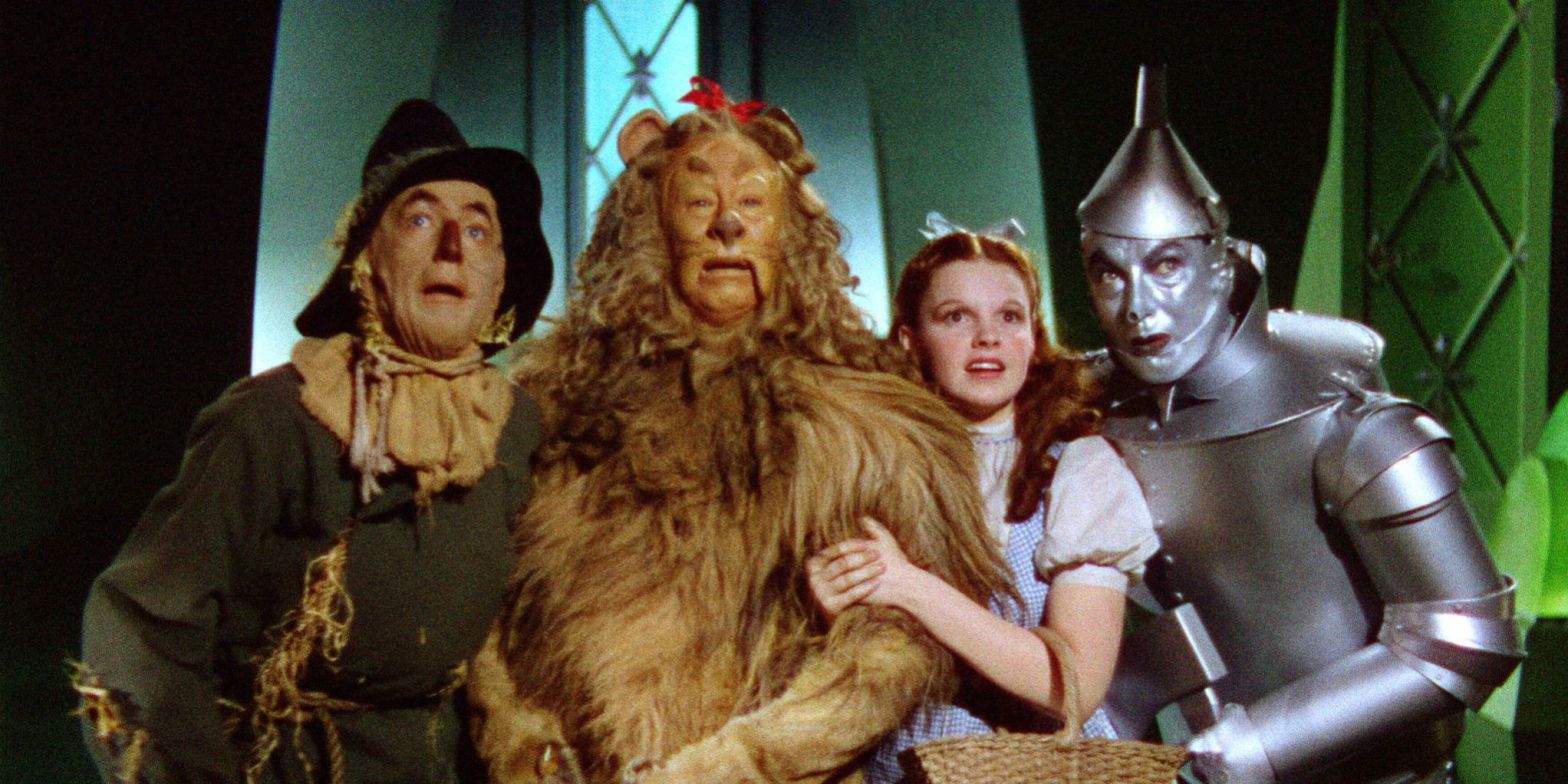
So off they go: Dorothy the Explorer, the Scarecrow the True Believer, the Silicon Man Yearning for a Heart, and the Cowardly Lion Yearning for Courage. They join arms and voices seeking the Wizard of Tech.
On their journey they face many challenges, such as the flying monkeys who scared me as a child. (Now they remind me of malicious scammers.)
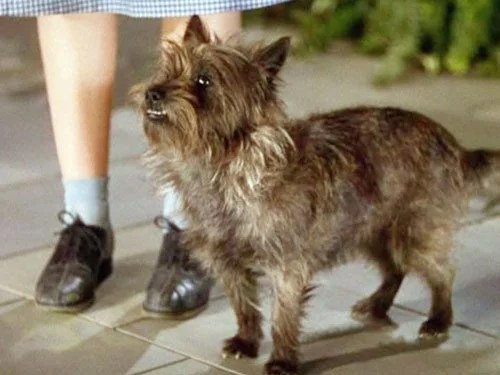
Finally, they meet the Wizard. They discover he is not the all-knowing, all-powerful figure they were led to believe. Instead, he is a flawed man hiding behind an illusion of his own making. The Wizard of Tech cannot give them the gifts they hoped would make life feel right. But the man who created the illusion comes out from behind the curtain to affirm who each of them has become. They have discovered inner resources they did not know they had. They have learned the value of caring for and collaborating with one another. By the time Dorothy clicks the heels of her ruby slippers together three times, she has realized that life’s greatest satisfaction comes from knowing where our “home” is: appreciating where we are and those who are already part of our lives. Like Auntie Em, Uncle Henry, the farmhands, and the ever-faithful Toto.
We are meant to dream and explore. We often feel called to go on journeys beyond what is familiar. If we have the right combination of intelligence, heart, and courage, we can go far. But we must be careful. The bigger our “brains” get the more we need “heart” and “courage.” Our ambition can take us beyond where we are safe. We need to proceed with care, relying on each other and pausing often to listen closely for what is the next wise step. Whatever unfolds with AI, it turns out knowing how to find a sense of home in life is where the rainbow leads.