This week I saw Christopher Nolan’s new movie, “The Odyssey.”
As the movie unfolded, I did my best to try to compare Nolan’s version with what I remember from reading the original epic some years ago. One surprise for me was how he portrayed the encounter of Odysseus with the Sirens.
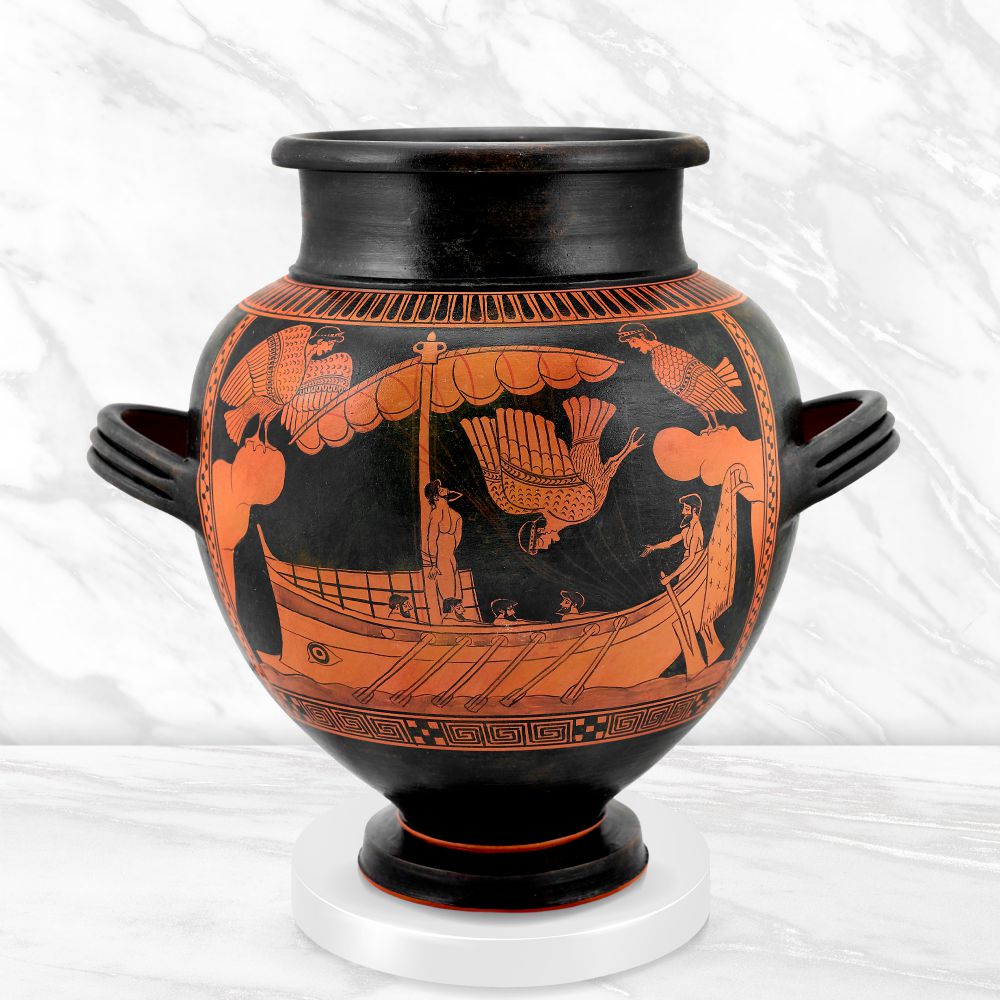
Odysseus has led his men through many challenges as he returns home after the Trojan War. At one point, the ship must pass by an outcropping of rock where the Sirens live. As legend has it, the Sirens are mythic female figures who sing to passing sailors with a “honeysweet sound,” enticing them to abandon their vessel and join them — but anyone who does will drown. Odysseus has his crew plug their ears with wax so they will not be tempted. But Odysseus wants to know what can be so dangerously compelling. He has his crew bind him to the mast and agree not to release him until the ship is safely past, no matter what he might say to them.
A storm is raging as the ship comes near the island and the Sirens begin to sing. Odysseus feels the power of their call, but the ropes restrain him. This is Matt Damon’s expression during his experience:

The ship passes through the storm and beyond the Sirens’ voices to safety.
Over the centuries, many readers have assumed the Sirens’ power comes from musically arousing the most irresistible human desires. But Nolan offers us something else.
After Odysseus is released, one of his men asks him what he heard. In the theater I heard some of what he says, but it went by quickly. I made a mental note to find the exact words when I had a chance.
Two days later, on a website dedicated to the movie I found this excerpt from the script:
“Eurylochus: What was the song of the sirens like?
Odysseus: All the things you want it to be. Then, all the things you wished you never wished for. It was the delicious itch you go to scratch but find it’s under the skin. You can’t reach it. So the delicious itch becomes unbearable. Told you what you most want, is what you most can’t have.
And what you most can’t have, is what you already had, and lost. It was the song of all the promises I failed to keep. And it told me I don’t really want to go home.” *
I found myself rereading these words carefully. It seemed the sentences could be read as pairs, and each pair describes some of our deepest feelings. What did he hear in the song?
“All the things you want it to be. Then, all the things you wished you never wished for.” What would it be like to feel everything you’ve wanted in your life compressed into one moment? And at the same time, feel all the regrets you have accumulated about past desires?
“It was the delicious itch you go to scratch but find it’s under the skin. You can’t reach it. So the delicious itch becomes unbearable.” You reexperience all this and there is no release.
“Told you what you most want, is what you most can’t have. And what you most can’t have, is what you already had, and lost.” I first thought this is just another reminder of remembering a lifetime of unfulfilled desires. But “…what you most can’t have, is what you already had, and lost” is something more. We feel the pain of knowing again all the things we once had but now have lost – people we’ve loved, our youth, opportunities we missed in years gone by, and past decisions we’d make differently.
“It was the song of all the promises I failed to keep. And it told me I don’t really want to go home.” The intense memories continue and now include our personal failures. Perhaps this last sentence suggests that, knowing his shortcomings and pain so vividly, maybe he doesn’t deserve to go home.
No wonder he is in anguish as he experiences the power of all those desires and regrets.
If the story ended there, it would be a depressing drive home.
But the movie doesn’t end here. As his journey continues, Odysseus seems to find a new sense of peace. He’s faced a lifetime of pain and regrets in one intense cathartic experience. He does not abandon hope or give up on himself. He heard the song, felt the feelings, and survived. He can now move toward his life’s completion in peace.
As life goes on, memories of unfulfilled desires and regrets may rise and call to us. If we had to experience them welling up inside us all at once like Odysseus, maybe we’d let out our own primal scream. But we are not on that ship and there are no Sirens calling to us. We can let such feelings and memories arise within us as they may do. Instead of making us desperate, we can meet them with self-compassion, love, and forgiveness. And then let them go.

Lead Image: Red-figure stamnos with Odysseus and the Sirens, 480-470 BCE, British Museum


Ooooh this one evoked, as I read, growing apprehension in my guts – to imagine feeling all my regrets at one time. And it evoked connection with us all, who feel shame and regret; I am not alone. And your blog sparked my curiosity to dive into an instant-relief procedure, like a psilocybin journey, in the attempt to clear these feelings from inside me in one fell swoop. And now with your last lines, I know there is no escaping, only my private compassion for my painful regrets, and love for us all. Thank you Steve.
LikeLike
Yes, deep stuff. I am grateful it resonated.
LikeLike
I see Wendell Berry died. Sigh. Sent from my iPhoneOn Aug 29, 2026,
LikeLike
Yes, a great soul. I saw him in person three times. Writing about him for my post this week.
LikeLike