Cat Stevens Went Away — and Came Back

“When he was a child in Catholic school in London, (he) asked a nun, Sister Anthony, what might have been his first existentialist question: “When do the angels start writing down your sins?”

After a pause, she told him the scorecard began when children turn 8, a relief since he was still a year or two away. 

“Religion constantly made me feel guilty about nice-looking things,” he writes in his book. “But balancing those kind of fearful images with what was going on outside the doors of the church after school, I felt the pull of the world mighty overpowering.”[i] 

The boy to whom Sister Anthony was speaking to was Steven Georgiou.  The call to find some beauty in the outside world led him to become a musician and a songwriter. He had gifts which he developed and shared. He changed his name to Cat Stevens.

I remember well the impact he made on my generation. In 1970 much of the music of the time reflected angst and outrage.  But then albums came out that carried with them a softer tone.  James Taylor’s Sweet Baby James was one.  Another was Cat Stevens’ Tea for the Tillerman, with songs like “Where Do the Children Play?” and “Wild World.” Then came his biggest selling album, “Teaser and the Firecat.”  We heard songs like “Moonshadow,” “Peace Train,” and the English hymn, “Morning Has Broken.” There was still social concern, but the mood was more poignant, reflective and hopeful.

Several years later, Cat Stevens disappeared.  Word came he had given up music and become a Muslim, taking the name Yusuf Islam.  Only recently has he seemed to resurface. In a recent interview in the New York Times, he shared highlights of his spiritual journey which includes three close encounters with death. 

The first came when he was a teenager.  He and some friends were jumping between rooftops when he slipped and one of his buddies saved him from falling at the last second.  The second came when he was 20 and discovered he had tuberculosis.  Then there was the third:

Late in 1975, soon after Islam turned 27, his career seemed to be flagging. While he waited for lunch with his manager and label boss in Malibu, Calif., he decided to swim in the Pacific. After 15 minutes in the cold water, he tried to head back, only to find that the current was sweeping him to sea.

“I thought I could swim well, but I could not fight or beat the ocean. I had only seconds left,” Islam, 77, said recently during a video interview from a rented London apartment. So he prayed, insisting that, if he lived, he would work for God. A wave pushed him forward. “When I realized my vulnerability, what else could I do? My body was disappearing. I had only my soul left.”[ii] He began an earnest spiritual journey which led to his conversion to Islam in 1977.

Recently I’ve been in group discussions where a key concept of Richard Rohr’s has kept surfacing.  According to Rohr, our spiritual journeys can often go through three phases: order, disorder, and reorder.  In the “order” stage, we have clear ideas about who we are and what we believe.  But times can come when it’s not making sense anymore – we experience things that challenge that clear sense of order.  We enter “disorder,” a kind of spiritual wilderness where we are not sure what we can trust and believe. But eventually, we can form a new sense of direction and place – our world has been reordered.  And the process can keep repeating.

Looking back on Cat Stevens’ life, it seems he went from the order of his Catholic upbringing, to the disorder of seeking a new identity “outside the doors of the church,” to finding a new reorder as a rock star, to finding that was not enough and entering a new time of disorder as a spiritual seeker.  Eventually he found a new reorder as a devout Muslim which included giving up music.  In recent years, he’s looked for yet a new reorder in his life, integrating his faith with his musical gifts.  He has gone away and come back more than once – something he needed to do to adapt to life while also honoring his soul.

I find many of us go through similar journeys.  We’ve gone through phases of being settled, then unsettled. Then settled again. Then unsettled.  We may not come close to drowning in the ocean like he did at age 27, but we experience our “vulnerability” as we deal with changes and challenges in our personal life, relationships and world; as years go on, we may even feel our bodies are slowly “disappearing.”  But the spiritual life is a pilgrimage in which we are constantly learning and adapting.  Along the way, it’s a beautiful thing to realize we will always have our “soul left.”  And we can be grateful for those who are sharing the journey with us.

For an old, grainy video of Cat Stevens singing “Moonshadow” in 1971 before an adoring crowd of long-haired fans, click on https://www.youtube.com/watch?v=kGNxKnLmOH4

[i] “As Cat Stevens, He Knew That He Had to Go Away,” NYTimes, Sept 21, 2025

[ii] Ibid.

Romantic Fiction, Baseball Passions, and Spiritual Masterpieces

A high school friend once told me her mother had gotten a phone call from a neighbor:

“He died!” the neighbor said in tears, “He’s gone!  He’s really gone!”

My friend’s mother was shaken. “Who?? Who died?”

In between sobs, the friend named a character from her favorite television soap opera.  And continued to cry.

Why do we get invested in imaginary situations?

An anthropology professor I know once invited me to a day-long conference at UCSB focusing on the emerging field of evolutionary psychology.  Scholars were exploring how much human behavior could be explained by tracing it back to the adaptive needs of our ancestors.  While some of the presentations were over my head, one stuck with me. Many people spend a great deal of time reading “romance novels” and “pulp fiction”.  The presenter wondered: why would we be wired to spend our time this way?  It seems like such a waste. If life is all about survival, reading about fictional characters in melodramatic stories seems pointless – it doesn’t put any food on the table or make us physically stronger.  After exploring several alternatives, he concluded that this activity must be a way for us to exercise our capacity to understand and navigate our social relationships without any actual personal risk or vulnerability.  We human beings are social animals who live in groups and tribes: fiction allows us to explore how to do this in a way that doesn’t expose us to any real danger.

Puppies may romp, wrestle and bite each other but never actually hurt one another. Such play is a rehearsal and training for a time when, as adult dogs, they may encounter actual adversaries.   They’re safely rehearsing skills they may need in real life.

Which leads to a critical question someone asked me this week: “Why do you get so wrapped up following your baseball team?  It’s just a game, but you talk about it like its real life.”  I have been pondering this question. Why do I care so much about a made-up game?  When the season is over, nothing has changed in my life or the fate of the world.  I think being a sports fan is like reading compelling works of fiction: It’s a way to see how human beings behave under pressure over a long period of time.  In the process, we become emotionally and mentally invested in the drama and look for lessons to live by. Some examples…If you learn how to function well under high expectations and pressure, you will live a better life.  If you let one disappointing experience stay with you, your performance will suffer.  If you learn how to be a good teammate, you’ll go farther.

Baseball is like a novel with 162 chapters – plus up to 22 bonus episodes if you make the playoffs.  All the while, human drama is unfolding.

When I was a kid, I was short. So was Maury Wills, the Dodger shortstop. He didn’t hit many home runs. But he figured out how to get on first and steal bases. He showed how you could adapt and thrive even if you weren’t the biggest and strongest guy out there.

Or take Sandy Koufax. The greatest pitcher of his time, he declined to pitch the opening game of the 1965 World Series because it fell on Yom Kippur, the sacred Jewish holiday.  He showed everyone what personal integrity looks like.  (As an example of divine favor, he pitched and won the final game that clinched the Series.)

We human beings are story tellers and game players. From these activities we learn crucial lessons.

Our spiritual traditions are full of invaluable stories.

Buddhism has an abundance of tales, parables, and koans that elegantly convey great insight.

Judaism has a remarkable abundance of brilliant stories, passed down over the centuries to help us reflect on our assumptions and values.

An expert once asked Jesus what he needed to do to inherit eternal life.  Jesus affirmed the two most important commandments: love God and love your neighbor. The expert asked him, “Who is my neighbor?”  And Jesus told the story of the Good Samaritan.[i]

When he wanted to teach about the loving and merciful nature of God, he didn’t give a lecture on ethics, but said, “A man once had two sons…” and told the story of the Prodigal Son.[ii]

Many of us have heard these two stories countless times. But they never lose their power.

Both stories are total fictions. They never really happened. Jesus made them up. But they tell us profound truths about who we are and who we can be in simple and unforgettable ways.

Years ago I taught a class in religious studies at Heritage College in rural Washington. One of the required books was Black Elk Speaks, an account of teachings attributed to Black Elk, an Oglala Sioux Medicine Man.  I always have appreciated this statement attributed to him:

“This they tell, and whether it happened so or not I do not know; but if you think about it, you can see that it is true.”[iii]


[i] Luke 10: 25-37

[ii] Luke 15: 11-32

[iii] “The Offering of the Pipe,” Black Elk Speaks, John G. Niehardt, 1932

Lead Image: Sitting Around The Campfire; ar.inspiredpencil.com

“Welcome to Freedom?”

                  As I’ve been watching Dodger baseball games recently, I have seen the same ad over and over.  The camera is behind a well-dressed woman in an elevator. We see her press the button for the “Casino” floor. The elevator doors open. She steps out into a vineyard. In the middle of the vineyard is a slot machine.  As she walks purposefully toward it, these words appear: “Welcome to Freedom. Chumash Casino Resort.”

                  The ad does not entice me to visit the casino.  It does make me wonder what “freedom” means in our current culture.

                  I recently attended a fascinating class at the local synagogue taught by my dear friend and colleague, Rabbi Steve Cohen.  The topic was the kosher laws.  We began by reading some of dietary restrictions recorded in the book of Leviticus, going back at least 2,500 years. These instructions clearly describe the animals a faithful person should not eat, including camels, rabbits, and pigs.   For the next hour, Rabbi Steve led the class through a survey of how scholars have interpreted these laws over time (including the 11th, 12th, 13th, 16th, and 17th centuries). Why these animals and not others?  Was it all about healthy eating, or something else?  It seemed to me each commentator had an interesting point of view.  I also learned that, in the last 150 years, leaders in the modern, Reformed tradition had decided the faithful did not need to continue strictly observe these guidelines as in earlier times. 

                  But I was intrigued by the comments of a 20th century British scholar, Dr. Isadore Grunfeld:

To the superficial observer it may seem that men who do not obey the law are freer than law-abiding men, because they can follow their own inclinations. In reality, however, such men are subject to the most cruel bondage: they are slaves of their own instincts, impulses, and desires. The first step towards emancipation from the tyranny of animal inclinations in man is, therefore, a voluntary submission to the moral law. The constraint of law is the beginning of human freedom…

The three strongest natural drives in man are for food, sex, and acquisition. Judaism does not aim at the destruction of these impulses, but at their control and sanctification. It is the law which ennobles these instincts and transfigures them into the legitimate joys of life. The first of the three impulses mentioned is the craving for food; it can easily lead to gluttony, and what is worse, to the fundamentally wrong conception that man “liveth by bread alone.” This natural, but dangerous food- instinct, is transformed by the dietary laws into self-discipline. It is no accident that the first law given to man – not to eat of the Tree of Knowledge of good and evil – was a dietary law.  … Self-control and self-conquest must start with the most primitive and most powerful of human instincts – the craving for food. Thus the Dietary Laws stand at the beginning of man’s long and arduous road to self-discipline and moral freedom.[i]

                  I had never thought of it this way.

                  From an evolutionary perspective, these impulses are part of our drive to survive.  But as we became more aware of our instincts, we can develop an ability to manage them instead of blindly following them.

                  In my late teens, I adopted a common cultural practice of the time: smoking cigarettes. I ended up using a pack a day for 5 years.  I finally decided to quit. It was not easy.  I began to realize that, up to that time, every time I reached for a cigarette, I thought I was making a “free choice.”  But the nicotine in my system was demanding the next one, cleverly disguising itself and instead convincing me I was making a free choice.  I am grateful I was able to break the habit.  I also developed empathy for anyone who becomes dependent on such substances and habits. 

                  I have good memories of playing poker with friends.  Many people go to casinos and have a good time.  But I also know that not everyone who walks into a casino is as “free” as they think they are. (That is why gambling ads, like cigarettes, include a message like “Always game responsibly. Call 1-800-GAMBLE.”)  What is true for gambling is true for other aspects of human behavior.  What looks like freedom can, in fact, be bondage.

                  For centuries, some religious traditions have told people they are inherently sinful because they experience such desires.  But what I like about Grunfeld’s perspective is the assumption that having such desires is not bad in itself, but simply part of our biological inheritance.  Spiritual practices, traditions and communities can help us manage them.  And in that mastery, we discover a freedom we did not realize we were missing.  As Huston Smith said, “We are free when we are not the slave of our impulses, but rather their master. Taking inward distance, we thus become the authors of our own dramas rather than characters in the them.” In the process, we can savor even more the simple pleasures of our lives.  It’s not about a slot machine or a ham sandwich – it’s about becoming wise in the ways of living.


[i] “The Dietary Laws: A Threefold Explanation,” https://traditiononline.org/wp-content/uploads/2018/10/The-Dietary-Laws.pdf

Life Among the Organisms

(Dear Reader: the following are my reflections on a recent personal experience. I know many of you have had similar and far more serious challenges in your journey — I would appreciate hearing your thoughts.)

What Happened

         On Tuesday, June 19, I woke up with a sore back.  The next day I was prescribed muscle relaxants which did not eliminate the problem.  Saturday I was running a fever and went to the ER at our nearby hospital.  Multiple tests confirmed something was amiss, but they were not sure what.  Monday, I went to the downtown hospital for an MRI, which revealed a bacterial infection in the area around my cervical spine; I was admitted to the hospital.  In the days that followed, ongoing blood tests and cultures identified the bacteria as Streptococcus anginosus which could be treated with daily injections of the antibiotic ceftriaxone. Friday,I had a PICC line inserted into my right arm and the treatment began. I was released to go home later that afternoon. Saturday a visiting nurse came to administer the medicine and teach my wife how to do it. We expect this to continue for six weeks. My energy is good, and I am not contagious.

What I Learned

         I have visited many people in hospitals and homes for more than 40 years.  I have seen countless situations more serious than what I experienced.  But in sleepless and idle moments, these personal reflections emerged. 

  1. Grateful for modern medicine and skilled doctors.  I asked what would have happened to me if I had this infection in the not-too distant past or was living in a Third World country. The doctor said the infection would spread to other parts of my body, probably my heart and brain, and eventually take my life.  I have a fresh appreciation for the medical training, experience and technology that has been focused on my diagnosis and recovery.
  2. It’s strange to be confined to one room for five days.  This was the first time in my adult life I was an inpatient more than one night.  At times it’s disorienting to be confined around the clock.  But I’m grateful I had a room in the old wing of the hospital that had a view of the mountains.  And I am also grateful I carry around with me a well-equipped inner sanctuary, where I go to recite prayers and meditations I have come to cherish over the years.  (My favorites are the 23rd Psalm and the Orthodox “Serene Light” prayer.[i])
  3. Renewed appreciation for everyday comforts at home.  My own bed with real sheets and pillows.  Our dog napping near me when I am resting. Coffee I can make anytime I want. Privacy. Freedom.
  4. Fresh appreciation for family caregivers.  My wife has had to track all that has happened and now is in the role of a nurse giving injections.  Caregivers carry a lot on their shoulders and in their mind.
  5. The bacteria and I are both biological organisms pursuing our own aims.  After the doctors described the bacteria to me, I tried to fathom the fact that this tiny organism had found a way to get into my blood stream and then decided to colonize the area around my cervical spine.  It seemed to me an insidious act – a personal affront! — and I felt anger.   But then I thought that this bacteria is just one more organism in the vast realm of living entities doing what they are designed to do: survive as best as best it can.  (The words from the Godfather came to mind: “It’s not personal, it’s strictly business.”)  But I also thought, “And I am an organism who wants to survive. And I’m going to do all I can to eradicate you from my body.  I’ve got lots of resources on my side.  We are going to get you.  It’s not personal, it’s strictly business.”
  6. Empathy for people whose challenges are far beyond mine.  My treatment may last as little as six weeks, and I am otherwise in good health. But I caught at least a glimpse of what something far more serious may be like.
  7. A new opportunity to appreciate the gift of life.  I have been around illness and mortality often.  I have often contemplated when and how my own life will end. But it’s one thing to think about mortality when we are healthy and another when our basic health is in question.  I’m grateful to be alive. 

[i] “Turning Towards the Serene Light”, PocketEpiphanies blog post, July 16, 2022

Spiritual Discernment in an Evolving Universe

Life involves plenty of decision-making: some minor and some life-changing.  If we are on a spiritual path, important decisions can become part of our journey of discovery and growth.  It’s a process known as discernment.

One description of this process is The Way of Discernment: Spiritual Practices for Decision Making by Elizabeth Liebert. 

Liebert writes from a strong Biblical foundation and thorough knowledge of contemplative traditions.  But she approaches her topic with a contemporary understanding of life and spirituality:

This understanding begins with the universe as a whole: it is open, flexible, and evolving. On our human level, we experience the boundaries that we call the laws of nature. But when we look either more macroscopically or microscopically, we begin to see the universe is dynamic and ever-changing. … we can expect that God, too, is dynamic, ever-changing, continuously creating – not simply repeating what has already been created.  …(and) we are able to participate, with God, in the creation of our future.[i]

In the past, some religious practices were dominated by the question, “Am I good enough?”  A more interesting quesiton is: “How can I personally access divine guidance in a way that will deepen my relationship with its source, helping me to navigate my own life while benefitting the world around me?”

Awareness Examen: She first encourages us to find a regular time to reflect on where we notice God’s presence in our day. Some people do this by journaling before going to sleep at night, others by taking time early in the morning to review the prior day. Where did you see signs of grace, blessing, and insight?  Like bird watchers who become skilled observers over time, we are more likely to recognize such traces if we practice recognizing them.  

Use an Important Decision You Are Facing: Are you facing an important decision about your relationships, responsibilities, or life direction?  Write down a simple summary of the decision you want help with.  Begin to think carefully about it and open yourself to the Spirit’s guidance. Don’t be in a hurry – the process of finding an answer will take time. 

She offers seven different ways we can gather clues.

Memory’s Guidance: Think back to a time in your life when you faced a difficult decision and found a satisfying outcome.  How did that happen? Where did you find guidance? What role did other people play?  What lessons can you draw from such times?

Intuition: Intuitions come in moments when we seem to suddenly know something through a sudden awareness, idea, or sense of direction. It may appear when we are taking a shower, falling asleep, or waking up.  It can come when we are on a walk, doing dishes or gardening.  Intuitions may not give us the final answer but can offer important hints.

Body Awareness: Our body can give us clues to our deepest awareness.  When we think of a possible direction, does our body tense up or relax?  What other physical sensations do we discover when we consider alternatives?

Imagination’s Insight: If we are facing two possible directions in our life, we can use imagination to look at each one separately. If I go Way #1, what might happen, immediately and as time goes on?  Imagine that option for several days.  Then do the same for Way #2.  What do we learn from comparing these two directions? We can also be open to dreams, seeing if they offer clues. We can imagine taking our question to a trusted friend (past or present) for advice; who might that be, and what would they say?  Or think about being at the end of your life looking back on this moment of decision –what path would you wish you had taken?

Reason: A common way to approach a decision is to logically think through what we might do and what the consequences might be. We can make a list of pros and cons and compare the lists.  (But don’t assume if one side has more items, that’s the one we should choose – it could be the shorter list has more significant points.)  Is there someone we know who has a lot of common sense that we can talk to?

Feelings: Modern psychology understands emotions are not “just” feelings which count less than logical ideas.  Feelings can reveal deep inner truths.  When we reflect on different options, what feelings arise?  (Write them down).  What does such an emotional inventory tell us?

Nature We can go outdoors on a walk or hike and see if some aspect of nature “speaks to us.”  One method is to find an appealing spot to sit quietly for a while.  Once we’ve settled in, we then pose the question we are facing.  We don’t expect anything immediately. But in time, we might see or hear something that seems to offer us insight.  A majestic tree might help us believe that we, too, can survive tough times; an emerging sprout might help us recognize something new wants to grow within us.

If we try any or all of these exercises, we may gradually come to a sense of what direction to pursue.  She encourages us to then take a few days and live with this possibility.  Does it seem right?  Will it help us live more authentically grounded in our core spiritual values?

What I have always liked about Liebert’s work is how she encourages us to be open to guidance, insight, and inspiration from many different senses and ways of knowing.  Beyond our digital distractions and limited habits of awareness, our bodies, minds, and hearts can open us to the living, creative, divine Spirit within us and around us.  It is there to guide us and bless us. It is up to us seek it.

.


[i] The Way of Discernment: Spiritual Practices for Decision Making by Elizabeth Liebert, pg. 17

Image: “Fields,” Camille Pissaro, 1877

A Season of Awe

In recent weeks, I’ve been mulling over Dacher Keltner’s perspective on the different kinds of awe we can experience and how important these experiences are.[i]  I’ve also been aware we are in the season of Passover and Easter.  For more than 40 years, one of my responsibilities was to find fresh meaning in these stories; it’s a habit I have yet to break. I’ve been wondering: does Keltner’s work offer any insights to the spiritual meaning of the season?

At this point, I’m thinking of five specific points Keltner describes:

  • Awe-ful experiences.  While many experiences of awe are inspiring, we can also feel it when we witness something dark and harrowing, like the events of 9/11, contemplating the holocaust, or personal tragedies.
  • Awesome experiences: when we experience something beyond our understanding that is mysterious and fills us with wonder.
  • Moral courage: In Keltner’s research, this is the most frequently reported experience of awe.  We feel it when we see someone selflessly take on serious challenges for the good of others: social justice pioneers, foster parents, people navigating serious disabilities and hardships, etc.
  • Collective effervescence: The powerful feelings we can have when we are part of a group having a shared experience that takes us beyond our ordinary sense of life. This can be at athletic and musical events, moving purposefully in unison, worship services, etc.
  • Awe-inspired resolve: Witnessing or experiencing awe can give us courage to face difficult situations.

With these in mind, I thought of the Passover and Easter stories in a very basic way.  Do these familiar stories contain examples of awe?

Passover

(I am indebted to my Jewish friends and clergy for my understanding of Passover; I hope my comments are valid.)

                  The Hebrew people are suffering as exploited laborers in Egypt.  Moses has a personal divine encounter that directs him to lead them from bondage to freedom.  As he confronts Pharoah, seven disasters (“plagues”) fall upon Egypt, each reminders of how vulnerable human life is.  When the time is right, the people flee. They come to a body of water but have no way to cross.  They look back and see Pharoh’s army coming after them.  Death seems certain.

                  A way through the water appears. The people make their way to the other side, expecting Pharoah’s army to crush them. But the waters return, frustrating Pharoah’s intention. The time of oppression ends and a time of freedom begins.  Moses’ sister Miriam leads the people in celebration. 

                  Where are any elements of awe?

                  The experience of seeing an army approaching determined to destroy you when you are defenseless?  Awe-ful.

                  A mysterious force leads you to a liberated future?  Awesome.

                  Moses’ example, risking his life to lead the struggle?  Moral courage.

                  Joining Miriam in the dance of deliverance?  Collective effervescence.

Becoming a source of inspiration?  The story has been a constant source of inspiration from the early days of Israel up to the civil rights and liberation movements of our time.

Easter

                  Yeshua is a peasant who appears in first century Galilee, healing the sick and engaging people of every background.  He offers a vision of spiritual life embodied in what he calls “the kingdom of God.” In words and actions, he identifies with the poor and marginalized, assuring them of divine favor.  What he says and does threatens the social order.  He is arrested, convicted, and sentenced to death.  While in custody he is abused.  He is paraded through the streets and executed as a public display of the power of the state.  The men he chose to follow him flee. As he nears death, he feels even God abandons him. 

A few days later, several of his female followers come to his tomb.  They begin to have experiences that convince them his personal spirit lives and is present with them.  In the days to come, that experience is shared by a growing number of people.

                  Where are any elements of awe?

Imagining what it would be like to be dying in severe pain, separated from loved ones, and feeling total despair?  This is awe-ful.

Becoming convinced he survived the death of his body and is present with his followers — that darkness cannot extinguish divine light, and in the end, love is stronger than death? This is awesome.

                  Joining the circle of people who experience his risen presence celebrating what this means?  Collective effervescence.

                  Reflecting on his personal journey in those final days and hours, seeing his purpose was to serve and empower others? Moral courage.

                  Becoming a source of inspiration?  The story has inspired countless people, leading them to decide what is worth living for and how to approach death.

                  I believe both stories contain multiple elements of awe.  I have been in gatherings focused on both stories that uplift and inspire me and others. They remind us of what terrifies us.  They invite us to see life in a spiritual perspective, encouraging us to know there is light beyond the darkest of circumstances.  They teach us that our ancestors have overcome great hardship.  They encourage us to share the story, insights, and joy with others through celebration, community, and service. They give us hope and courage.

May we all welcome moments of awe in this season.


Featured image: “Italian Landscape,” Gustav Klimt, 1913

[i] Awe: The New Science of Everyday Wonder and How It Can Transform Your Life, Dacher Keltner, 2023

[iii] “The Offering of the Pipe,” Black Elk Speaks, John G. Neidhardt, ed., 1932

“A Voice in My Mind Said: I Feel Awe”

Dacher Keltner is a psychology professor at UC Berkeley.  For more than 20 years, his research has focused on answering the question, “What makes a good life?”  At one point, he felt he had the answer.  To test it, he and his team conducted thousands of interviews with people around the world and analyzed the results.  What they discovered was also reflected in Keltner’s personal life experiences, including being at the bedside of his dying brother in 2019.

Rolf had been dealing with colon cancer for several years and had decided it was time to take the “cocktail” of prescribed medication that would peacefully bring about his death.  After receiving this news, Dacher drove from Berkeley with his wife and daughters, picked up his mother in Sacramento, and arrived at his brother’s house in the foothills of the Sierras at 10 PM, joining other family members at the bedside. Here are excerpts from his account:

Rolf’s face was full and flushed. The sunken eyes and gaunt cheeks caused by colon cancer were gone; the tightened, sagging skin around his mouth smoothed. His lips curled upward at the corners.

I rested my right hand on his left shoulder, a rounded protrusion of bone. I held it the way I would the smooth granite stones we used to find near the rivers we swam in as young brothers.

“Rolf this is Dach.”

“You are the best brother in the world.”

My daughter Natalie laid her hand lightly on his shoulder blades: “We love you Ralf.”

The cycle of his breathing slowed. He was listening.  Aware.

Listening to Rolf’s breath, I sensed the vast expense of 55 years of our brotherhood… (at this point, Dach’s mind fills with memories of their many shared adventures including skateboarding, playing on the same Little League team, traveling in Mexico, and being the best man at each other’s wedding) …

I sensed a light radiating from Rolf’s face. It pulsated in concentric circles, spreading outward, touching us as we leaned in with slightly bowed heads. The chatter in my mind, clasping words about the stages of colon cancer, new treatments, lymph nodes, and survival rates, faded. I could sense a force around his body pulling him away. And questions in my mind.

What is Rolf thinking?

What is he feeling?

What does it mean for him to die?

A voice in my mind said: I feel awe.

…Watching Rolf pass, I felt small. Quiet.  Humble. Pure. The boundaries that separated me from the outside world faded. I felt surrounded by something vast and warm. My mind was open, curious, aware, wondering.[i]

“A voice in my mind said: I feel awe.” The feeling of awe, Dacher believes, is the most important human emotion we can experience.  He and his team concluded there are eight primary ways we can encounter awe; one of them is being at the boundary of life and death.[ii] 

I experience awe attending memorial services.

This week I attended a celebration of the life of a legendary local building contractor, John Carter, who lived to be 96.  Family, friends and employees shared many stories of his ingenuity, accomplishments, innovations and integrity.  One story in particular has lingered in my mind. John was born on a farm in the San Fernando Valley. One day he and his brother decided to dig their way to China using an empty coffee can.  They dug for days; the hole became deep enough that they could stand in it.  Eventually they gave up. That was the early hint of a life filled with ambitious plans, determination and a love of moving earth and making things.  All those qualities were already present when he was a child and had a vision in his mind and a coffee can in his hand.  Where do such qualities come from?

A few months ago, I attended a private family graveside service for Joe Jowell, who died at 93. His children and grandchildren recounted highlights of his life. Joe was born and raised in Hawaii.  He was a ten-year-old riding his bike on Sunday morning, December 7 when he looked up and wondered why a large group of planes were flying overhead; moments later he saw them dropping bombs on Pearl Harbor.  After finishing high school, he moved to San Francisco.  He served in the Navy during the Korean War. He then spent five years preparing to become a priest in the Boston Maryknoll Brotherhood.  He decided to leave that order to marry and raise a family in Long Beach.  Joe became a certified Appliance Repair Technician and worked for Sears for many years.   He and his wife were raising five children when she died, leaving him on his own. Later one of his sons took his own life.  Joe learned to endure these losses and wanted to help others experiencing grief. He became a Hospice volunteer and served our community for 35 years. I met Joe when I became Director at Hospice of Santa Barbara in 2008 – I was told he was known by his colleagues as “St. Joe.” Sixteen years later I had privilege of hearing his family’s stories at his graveside.  If we had seen Joe at Costco or in a hospital hallway, could we have imagined all he’d experienced and how many people he had cared for?

Watching his brother take his last breath, Derik Keltner said: “My mind was open, curious, aware, wondering.”  He believes experiencing awe puts us in touch with the mysteries of life.  It both humbles and inspires us.

When someone’s life ends, we begin to see what mattered and what it meant.  Time and again, I have been filled with awe.


[i] Awe: The New Science of Everyday Wonder and How It Can Transform Your Life, Dacher Keltner, 2023, pages xxi-xxiii

[ii] The eight categories: moral beauty, collective effervescence, nature, music, visual design, spiritual and religious, awe, life and death, and epiphanies (moments in which a new and grand understanding dawns).

I first came across Keltner’s work as cited by Jonathan Haidt in his book, The Anxious Generation: How the Great Rewiring of Childhood is Causing an Epidemic of Mental Illness,  which was the subject of my recent post, Rising Above the Phone-Based CultureI expect to share more of Keltner’s findings in the weeks to come.

Photo: Late Afternoon, Goleta Beach, January, 2025

Where’s Your Axis Mundi?

It’s a word I liked the first time I heard it:  axis mundi. 

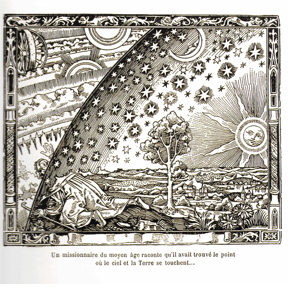
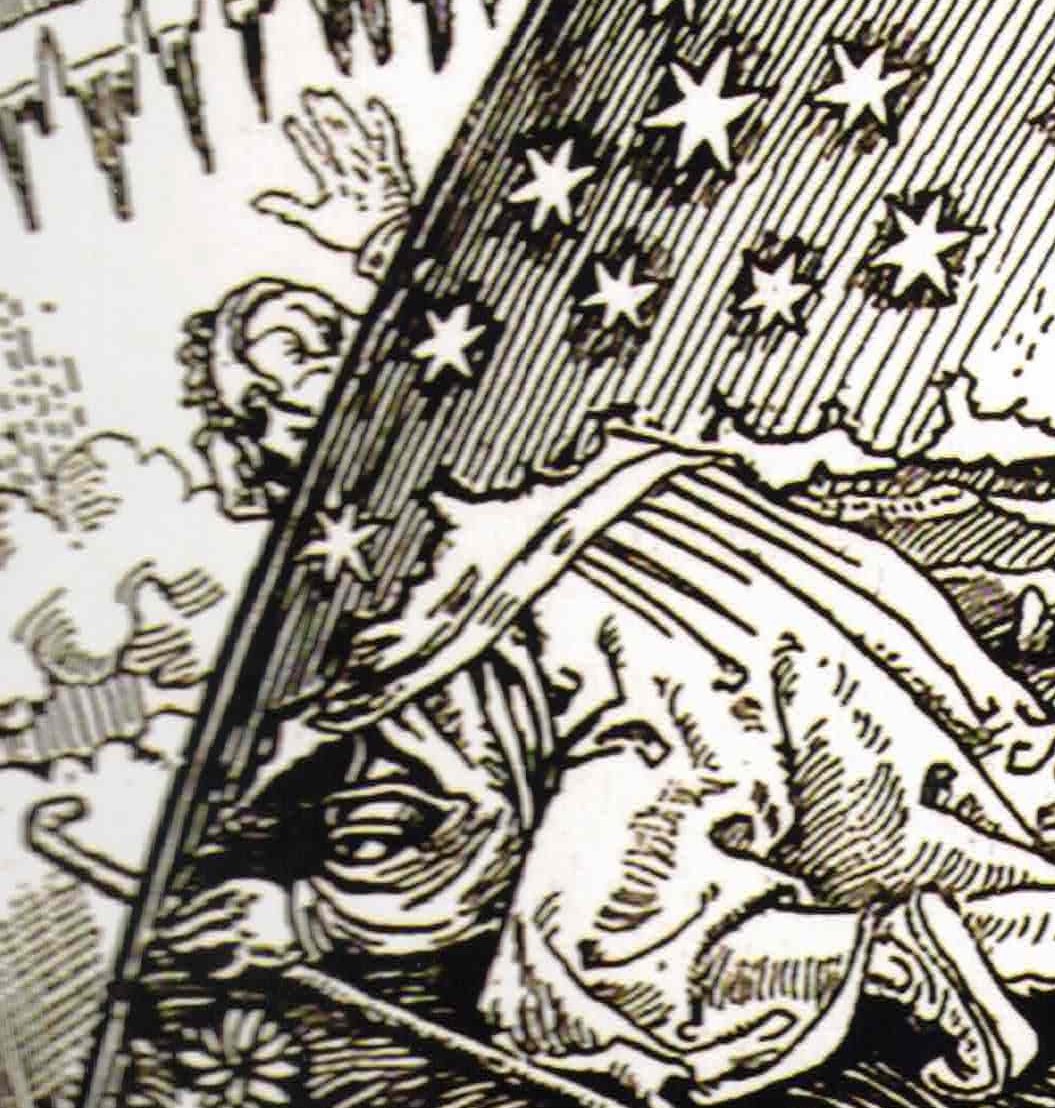
I encountered it in graduate school reading The Sacred and Profane, a study of world religion and mythology by Mircea Eliade.  It means the “axis” around which the earth “turns” — not physically, but spiritually and psychologically.  It’s a place where people believe heaven and earth meet.

Jerusalem has long been seen as an axis mundi, a city sacred to Jews, Christians and Muslims.  For traditional Japan, it has been Mt. Fuji.   For Catholics it’s Rome.

Some indigenous tribes in Australia are always on the move, and they carry a sacred pole with them which they erect each place they stay – a portable axis mundi

In 2000, I had a 3-month sabbatical project that focused on how digital technology was beginning to affect everyday life.  I visited and conducted interviews in two locations.   

Silicon Valley was already becoming the axis mundi of the tech age. In my interviews and observations, one could already sense that digital tech was becoming something close to a religion.  In the Tech Museum in San Jose, I purchased a computer mouse pad made to look like a Muslim prayer rug.  I visited one of the largest Fry’s stores (in the pre-internet retail era, Fry’s was a “Mecca” for electronic parts and gadgets.)  Some were designed to look like Mayan temples:

One month later I went to India, which was becoming part of that revolution.  After interviewing tech professionals and academics in Bangalore, I spent time in the ancient city of Varanasi on the banks of the Ganges River.  In Hindu belief, there is no place on earth where heaven and earth come closer, and therefore no better place to bathe, die, be cremated and have your ashes scattered.

                  By 2006, I had realized the most sacred religious site in the Western Hemisphere was the Basilica of Our Lady of Guadalupe in Mexico City. Growing up in California, I had seen the Guadalupe image all my life but knew nothing about what it meant.  I learned that, in Catholic tradition, the Virgin Mary appeared to an indigenous peasant, Juan Diego, in December,1531.  She looked more like a native woman than a European and spoke to him in his own dialect: “Am I not here, I who am your mother?” She gave Juan Diego her robe or tilma.   When he took it to a skeptical archbishop and unfurled it, pink roses fell to the floor and her image had become imprinted on the garment.  The tilma is preserved in a glass case in the cathedral.  I spent a week in the city that summer, making several visits to the Basilica.   I watched thousands of faithful pilgrims arrive to worship and celebrate, and was moved by their joy and devotion.

Mt. Shasta is just south of the Oregon border. We’d driven by it many times over the years as we traveled between Washington state and California, but I hadn’t considered it anything more than an impressive volcanic formation. In 2009, we spent a week at a yoga/hiking retreat in the town of McCloud at the base of the mountain. We could see the peak every morning from our window.  As we hiked during the week, we saw it from many angles.   On the last day of the retreat, our group hiked to Squaw Meadows, an alpine meadow on the side of mountain at an elevation of 7,900 feet. I felt smaller and increasingly insignificant in the presence of the mountain’s mystery and majesty; I began to appreciate why both native people and contemporary spiritual seekers from around the world consider it an axis mundi.  We’ve returned to the area every summer for 15 years.

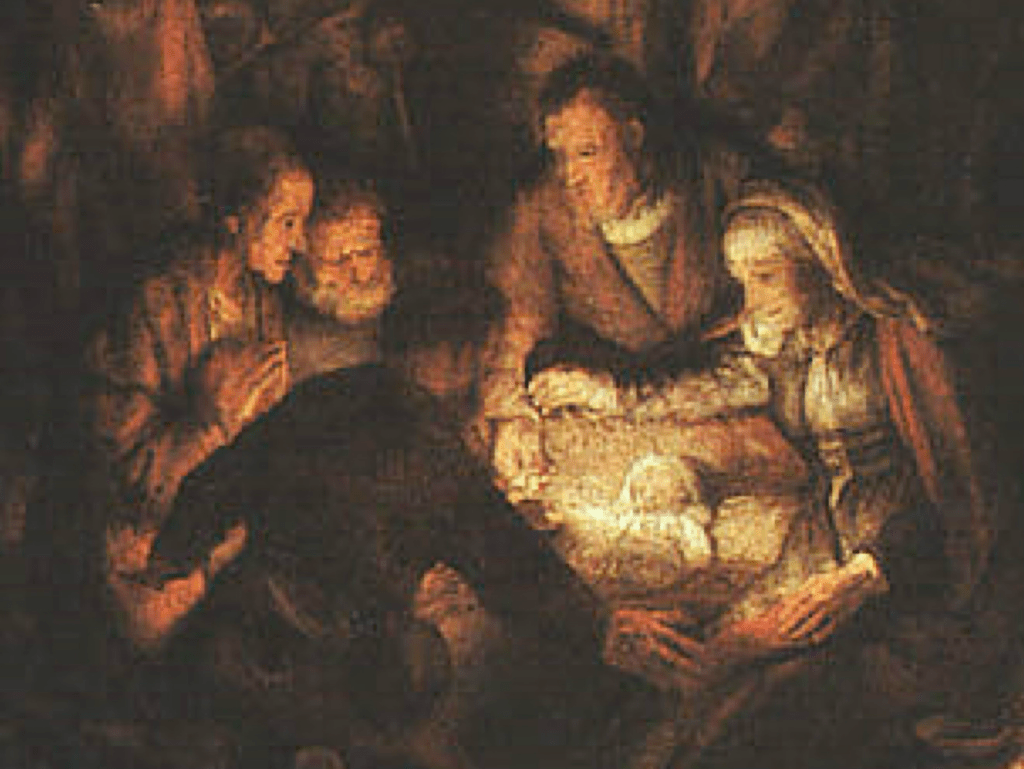
In 1233, St. Francis returned to Italy from the Holy Land where he had visited a cave that was the traditional site of Jesus’ birth. Wanting people to appreciate the setting of the Christmas story, he created the first outdoor nativity scene including live animals.  Nativity scenes have become a familiar axis mundi in countless households and sanctuaries ever since.  When viewed with reverence, candlelight and song, a nativity scene affirms that divine presence can be sensed not only on mountaintops, but also in the lives of humble people in unexpected places.

Some traditions have steered away from emphasizing any particular physical place where we encounter the divine and instead look within our individual awareness.  Quakers affirm that every person has within them an “inward light” or spark of divine energy.  By practicing silent introspection, we can access and experience that light and find guidance from it.

I have visited many sacred sites in my life.  I always try to understand and appreciate the beliefs and imagination of the faithful who are drawn there.

 At the same time, the purpose of visiting such places doesn’t end with the personal encounter. Recent studies have established a powerful connection between experiences of awe and an increased capacity to care for others.[i] Coming into the presence of axis mundi sites can have that effect.  The purpose of spiritual life is not to have a specific experience, but to discover within us a deep reverence for life and others and let that form our character.  As Huston Smith said, “Spirituality is not about altered states but altered traits.”


[i] https://drjsb.com/2022/09/03/starstruck-the-relationship-between-awe-and-caring/