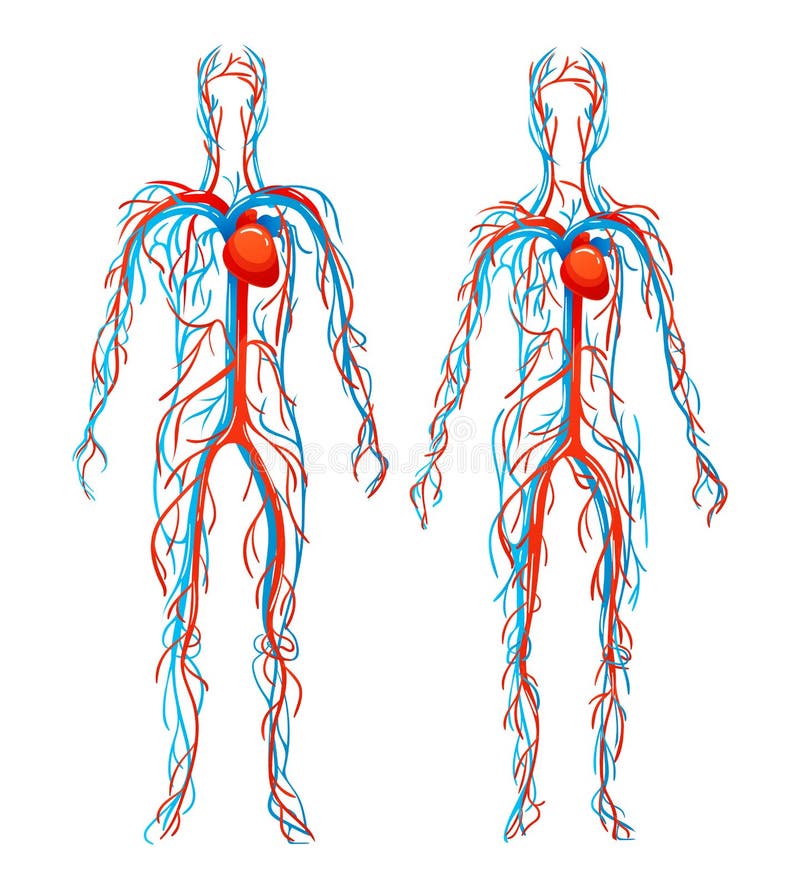
Lifelines

On June 27, I was preparing to be discharged from the hospital after a five-day stay for a strep infection in my cervical spine.  Just before noon, a nurse specialist came to my room to insert a PICC line, the conduit for the daily injections I would need the next 6-8 weeks.

She began by creating a sterile environment around me.  Then, in a 40-minute procedure, she inserted a tiny tube into a vein on the inside of my arm just above my right elbow; using an ultrasound scope to navigate, she threaded it up my arm, across my chest, and to the point above my heart where the medicine would enter my blood stream.  She covered the area around the entry point with a special dressing that a visiting nurse would change every week.  The exposed end of the line consisted of two purple, white and blue plastic insertion receptacles (“lumens”) where the syringes would be attached each morning; these dangled from my forearm when not covered.

The PICC line remained in my body throughout the summer. Every morning it transported saline solution, heparin, and the medicine.

On August 22 (57 days later) I met with the infectious disease specialist.  She told me that the strep infection that had tried to make my cervical spine its summer home had fled the premises; the treatment had succeeded and it was time to remove the PICC line.  I thanked the doctor for her care.

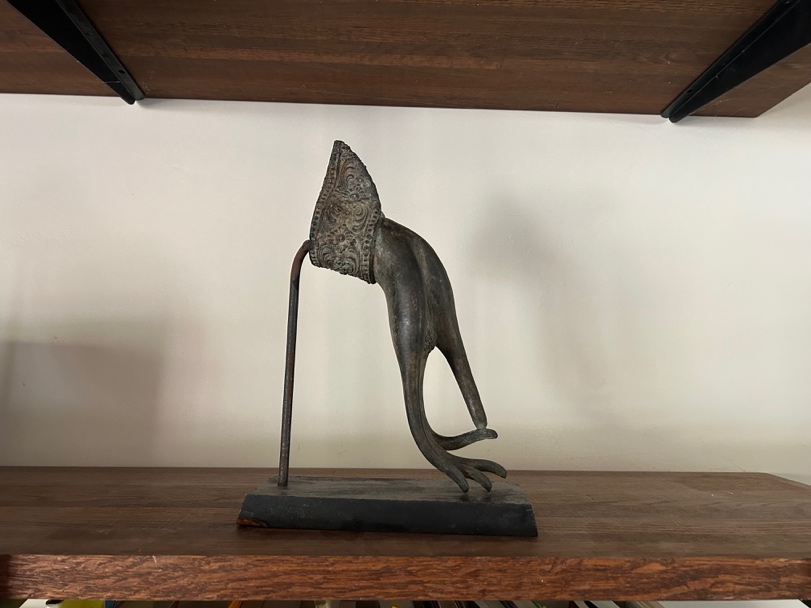
The nurse came in for the removal.  I asked my wife to video the process.  With minimal preparation, the nurse began pulling the line out. I expected it to be a bit messy – won’t there be some blood or fluid?  But it came out clean and dry. I expected to feel some sensation, but didn’t feel a thing. The procedure took about 20 seconds.  Just as a fisherman records the size of a trout, the nurse measured it: 43 centimeters (17 inches). I asked her if I could keep it.  She wrapped it in a sterile glove and gave it to me. I took it home with me like a party favor.  Here it is:

For medical professionals, inserting and removing a PICC line is a routine procedure, as are many other life-giving practices like placing stints, shunts, pacemakers and artificial joints.  But to those of us who benefit from these devices, the experience can seem like a miracle.

In the last week I have been contemplating my PICC line as I would a work of art. It continues to fascinate me: “This little stretch of tubing helped save my life.”

In a sense, it is a work of art.  Somebody had a vision, then probably experimented with different materials, shapes, textures and colors.  They narrowed it down to what could be manufactured, marketed and used. Somebody (perhaps a government agency or university) funded the process.  And now it’s out there in the world, saving lives with simplicity and elegance.

For me the PICC line was literally a lifeline.  And it’s led me to think about other “lifelines.”

Years ago I participated in a drum circle.  At one point the leader had us place our two fingers on the right side of our neck so we could feel our carotid artery pulsing.  He began echoing the steady beat with his drum and invited us to do the same. He reminded us that this artery formed while we were in the womb, picking up the rhythm of our mother’s heartbeat to give us life.  He encouraged us to realize this is an uninterrupted pulse going back in time, passing from one generation to the next, reaching to our most distant biological past.  It is a lifeline that connects us with all that breathes.

I see the people who helped me heal as part of my lifeline: the doctors, nurses and technicians who used their knowledge and skill to serve me.  And my wife was my lifeline.  Morning after morning throughout the summer she carefully followed the 25 minute procedure to give me the injections. 

We rely on many lifelines to live out our days.  I am thankful for them all.

Diagram of the human circulatory system: animalia-life.club

When Scales Fall From Our Eyes

“The phrase “the scales fall from your eyes” means to suddenly understand the truth about something that was previously unclear or hidden. It often refers to a moment of realization or enlightenment.”[i]

A friend once confided to me about an experience she had at a niece’s wedding.  She had not seen the young woman for some time and was excited to travel across country for the celebration.  When she first saw the bride and groom, she was struck by how “generously built” both were and couldn’t get that thought out of her mind.  The time came for the bridal dance. As the couple stepped toward each other, they looked into each other’s eyes, and my friend said their faces were full of love and happiness.  She said she was ashamed she had initially noticed only their outward appearance while being blind to their inner beauty.

Some years ago, I attended a five-day seminar in Berkeley with Marcus Borg, a prominent New Testament scholar.  Borg was a calm, gifted and insightful teacher who prized good thinking and careful reflection.  On the last day, one of the students asked him if he’d had any mystical experiences.  He acknowledged he had but was reluctant to share. The students pressed him, however, and he told us his story.

After spending time in Israel, he and his wife had boarded a plane home. He had settled in his seat and was quietly observing the other passengers as they boarded. One man caught his interest – Borg couldn’t help but note he was particularly awkward looking.  He also remembered looking at the back of the seat in front of him and thinking the vinyl upholstery seemed noticeably dull.  He settled in and the plane soon took off.

A little while later, Borg felt the presence of light growing in the cabin.  It seemed to illuminate everything around him with an unusual radiance; he was transfixed. He could tell no one else was seeing what he was seeing. The other passengers were immersed in this light, and each person seemed to be a wonder to behold; the gentleman who had looked awkward now seemed to bear a palpable dignity. Even the back of the seat in front of him now seemed fascinating.  Borg’s wife could tell something unusual was occurring to him and asked him if he was OK; he nodded to assure her he was, not wanting to break the spell.  

The mysterious light slowly began to dissipate, and soon everything in the cabin looked normal again.  But he could not forget how, in those moments, it seemed he was seeing “reality” as it “really is” – permeated with light.

(In the stories shared by hospice workers and volunteers, this is not an unusual experience as people come to the boundary of this life.)

The phrase “the scales fall from your eyes” means to suddenly understand the truth about something that was previously unclear or hidden. It often refers to a moment of realization or enlightenment.

We go along in life, living with routine assumptions about the people we see and believing we know what “reality” is like.  Then we have moments when “the scales fall from our eyes.”  Like my friend at the wedding, we may suddenly discover how easily we misjudge other people when we look only at their outward appearance and instead begin to appreciate them in new ways.  Like Professor Borg on the airplane, a sense of awe and wonder can come over us unexpectedly, suggesting there is a radiant presence within the everyday objects and people we encounter. 

It can be a shock to realize scales are falling from our eyes.  It can be liberating to discover what new truths are now revealed.


[i] Online version of the Cambridge Dictionary

Lead image: “Airplane window view with wing at sunrise;” Freepik.com

Romantic Fiction, Baseball Passions, and Spiritual Masterpieces

A high school friend once told me her mother had gotten a phone call from a neighbor:

“He died!” the neighbor said in tears, “He’s gone!  He’s really gone!”

My friend’s mother was shaken. “Who?? Who died?”

In between sobs, the friend named a character from her favorite television soap opera.  And continued to cry.

Why do we get invested in imaginary situations?

An anthropology professor I know once invited me to a day-long conference at UCSB focusing on the emerging field of evolutionary psychology.  Scholars were exploring how much human behavior could be explained by tracing it back to the adaptive needs of our ancestors.  While some of the presentations were over my head, one stuck with me. Many people spend a great deal of time reading “romance novels” and “pulp fiction”.  The presenter wondered: why would we be wired to spend our time this way?  It seems like such a waste. If life is all about survival, reading about fictional characters in melodramatic stories seems pointless – it doesn’t put any food on the table or make us physically stronger.  After exploring several alternatives, he concluded that this activity must be a way for us to exercise our capacity to understand and navigate our social relationships without any actual personal risk or vulnerability.  We human beings are social animals who live in groups and tribes: fiction allows us to explore how to do this in a way that doesn’t expose us to any real danger.

Puppies may romp, wrestle and bite each other but never actually hurt one another. Such play is a rehearsal and training for a time when, as adult dogs, they may encounter actual adversaries.   They’re safely rehearsing skills they may need in real life.

Which leads to a critical question someone asked me this week: “Why do you get so wrapped up following your baseball team?  It’s just a game, but you talk about it like its real life.”  I have been pondering this question. Why do I care so much about a made-up game?  When the season is over, nothing has changed in my life or the fate of the world.  I think being a sports fan is like reading compelling works of fiction: It’s a way to see how human beings behave under pressure over a long period of time.  In the process, we become emotionally and mentally invested in the drama and look for lessons to live by. Some examples…If you learn how to function well under high expectations and pressure, you will live a better life.  If you let one disappointing experience stay with you, your performance will suffer.  If you learn how to be a good teammate, you’ll go farther.

Baseball is like a novel with 162 chapters – plus up to 22 bonus episodes if you make the playoffs.  All the while, human drama is unfolding.

When I was a kid, I was short. So was Maury Wills, the Dodger shortstop. He didn’t hit many home runs. But he figured out how to get on first and steal bases. He showed how you could adapt and thrive even if you weren’t the biggest and strongest guy out there.

Or take Sandy Koufax. The greatest pitcher of his time, he declined to pitch the opening game of the 1965 World Series because it fell on Yom Kippur, the sacred Jewish holiday.  He showed everyone what personal integrity looks like.  (As an example of divine favor, he pitched and won the final game that clinched the Series.)

We human beings are story tellers and game players. From these activities we learn crucial lessons.

Our spiritual traditions are full of invaluable stories.

Buddhism has an abundance of tales, parables, and koans that elegantly convey great insight.

Judaism has a remarkable abundance of brilliant stories, passed down over the centuries to help us reflect on our assumptions and values.

An expert once asked Jesus what he needed to do to inherit eternal life.  Jesus affirmed the two most important commandments: love God and love your neighbor. The expert asked him, “Who is my neighbor?”  And Jesus told the story of the Good Samaritan.[i]

When he wanted to teach about the loving and merciful nature of God, he didn’t give a lecture on ethics, but said, “A man once had two sons…” and told the story of the Prodigal Son.[ii]

Many of us have heard these two stories countless times. But they never lose their power.

Both stories are total fictions. They never really happened. Jesus made them up. But they tell us profound truths about who we are and who we can be in simple and unforgettable ways.

Years ago I taught a class in religious studies at Heritage College in rural Washington. One of the required books was Black Elk Speaks, an account of teachings attributed to Black Elk, an Oglala Sioux Medicine Man.  I always have appreciated this statement attributed to him:

“This they tell, and whether it happened so or not I do not know; but if you think about it, you can see that it is true.”[iii]


[i] Luke 10: 25-37

[ii] Luke 15: 11-32

[iii] “The Offering of the Pipe,” Black Elk Speaks, John G. Niehardt, 1932

Lead Image: Sitting Around The Campfire; ar.inspiredpencil.com

“Welcome to Freedom?”

                  As I’ve been watching Dodger baseball games recently, I have seen the same ad over and over.  The camera is behind a well-dressed woman in an elevator. We see her press the button for the “Casino” floor. The elevator doors open. She steps out into a vineyard. In the middle of the vineyard is a slot machine.  As she walks purposefully toward it, these words appear: “Welcome to Freedom. Chumash Casino Resort.”

                  The ad does not entice me to visit the casino.  It does make me wonder what “freedom” means in our current culture.

                  I recently attended a fascinating class at the local synagogue taught by my dear friend and colleague, Rabbi Steve Cohen.  The topic was the kosher laws.  We began by reading some of dietary restrictions recorded in the book of Leviticus, going back at least 2,500 years. These instructions clearly describe the animals a faithful person should not eat, including camels, rabbits, and pigs.   For the next hour, Rabbi Steve led the class through a survey of how scholars have interpreted these laws over time (including the 11th, 12th, 13th, 16th, and 17th centuries). Why these animals and not others?  Was it all about healthy eating, or something else?  It seemed to me each commentator had an interesting point of view.  I also learned that, in the last 150 years, leaders in the modern, Reformed tradition had decided the faithful did not need to continue strictly observe these guidelines as in earlier times. 

                  But I was intrigued by the comments of a 20th century British scholar, Dr. Isadore Grunfeld:

To the superficial observer it may seem that men who do not obey the law are freer than law-abiding men, because they can follow their own inclinations. In reality, however, such men are subject to the most cruel bondage: they are slaves of their own instincts, impulses, and desires. The first step towards emancipation from the tyranny of animal inclinations in man is, therefore, a voluntary submission to the moral law. The constraint of law is the beginning of human freedom…

The three strongest natural drives in man are for food, sex, and acquisition. Judaism does not aim at the destruction of these impulses, but at their control and sanctification. It is the law which ennobles these instincts and transfigures them into the legitimate joys of life. The first of the three impulses mentioned is the craving for food; it can easily lead to gluttony, and what is worse, to the fundamentally wrong conception that man “liveth by bread alone.” This natural, but dangerous food- instinct, is transformed by the dietary laws into self-discipline. It is no accident that the first law given to man – not to eat of the Tree of Knowledge of good and evil – was a dietary law.  … Self-control and self-conquest must start with the most primitive and most powerful of human instincts – the craving for food. Thus the Dietary Laws stand at the beginning of man’s long and arduous road to self-discipline and moral freedom.[i]

                  I had never thought of it this way.

                  From an evolutionary perspective, these impulses are part of our drive to survive.  But as we became more aware of our instincts, we can develop an ability to manage them instead of blindly following them.

                  In my late teens, I adopted a common cultural practice of the time: smoking cigarettes. I ended up using a pack a day for 5 years.  I finally decided to quit. It was not easy.  I began to realize that, up to that time, every time I reached for a cigarette, I thought I was making a “free choice.”  But the nicotine in my system was demanding the next one, cleverly disguising itself and instead convincing me I was making a free choice.  I am grateful I was able to break the habit.  I also developed empathy for anyone who becomes dependent on such substances and habits. 

                  I have good memories of playing poker with friends.  Many people go to casinos and have a good time.  But I also know that not everyone who walks into a casino is as “free” as they think they are. (That is why gambling ads, like cigarettes, include a message like “Always game responsibly. Call 1-800-GAMBLE.”)  What is true for gambling is true for other aspects of human behavior.  What looks like freedom can, in fact, be bondage.

                  For centuries, some religious traditions have told people they are inherently sinful because they experience such desires.  But what I like about Grunfeld’s perspective is the assumption that having such desires is not bad in itself, but simply part of our biological inheritance.  Spiritual practices, traditions and communities can help us manage them.  And in that mastery, we discover a freedom we did not realize we were missing.  As Huston Smith said, “We are free when we are not the slave of our impulses, but rather their master. Taking inward distance, we thus become the authors of our own dramas rather than characters in the them.” In the process, we can savor even more the simple pleasures of our lives.  It’s not about a slot machine or a ham sandwich – it’s about becoming wise in the ways of living.


[i] “The Dietary Laws: A Threefold Explanation,” https://traditiononline.org/wp-content/uploads/2018/10/The-Dietary-Laws.pdf

Who Let the Dogs In? The Genius of Rembrandt’s Spiritual Imagination

Over the years, I’ve done a variety of presentations exploring the way Rembrandt portrays Biblical scenes.  Time and again, I’ve been fascinated by the surprising ways he imagines and creates visual details.  One example is his apparent fondness for dogs.

We can start with “The Hundred Guilder Print.”   This work captures in one scene the various encounters Jesus has with a crowd of people as described in Matthew 19.  Here’s the print:

If we read the text carefully and study the scene, we see how he includes all the important characters: people who are hoping to be healed, scholars who like to debate fine points of law, mothers bringing children to receive his blessing, etc.  Near the bottom left, we find something not mentioned in the text:

When I’ve seen dogs positioned like this, it is usually because they have determined they are near a spot where food scraps are likely to fall.  This is certainly not mentioned in the story – it’s something Rembrandt decided to add.

Here is his portrayal of “The Good Samaritan:”

In the story, a Samaritan sees a stranger who has been beaten and robbed, and no one is stopping to help.  But the Samaritan binds his wounds, puts him on his horse, takes him to an inn, and arranges for the man’s lodging and care. All that is in the story.  But in the lower right corner, we see an unexpected sight:

Suffice it to say, when we see dogs in this posture, we can guess what they are doing.  This is not a detail noted in any translations I am familiar with.

He doesn’t limit canines to outdoor scenes. In “The Presentation in the Temple,” Joseph and Mary bring their 8-day old infant to be dedicated.  Two elders, Simeon and Anna, express joy upon seeing the child.  Divine light streams down from the upper left highlighting the sacred moment:

And there, in the bottom left corner, we see one of our four-legged friends:

This dog is scratching his left ear with his back foot.

I have not found any articles explaining why Rembrandt inserts oridnary dogs into scenes that portray profound spiritual experiences.  But my guess is he understood great spiritual moments in life don’t occur in situations where everything is perfectly staged, as if designed by Martha Stewart.  They happen in nitty-gritty, down-to-earth settings where ordinary human beings experience something profound.  And what is more down-to-earth than the presence of a dog in the midst of a human gathering doing what dogs do?

I have had memorable spiritual experiences in stunning cathedrals and in sanctuaries filled with glorious music.  But I have also had them in hospital rooms next to bedpans and beeping monitors, dusty home building sites in the barrios of Tijuana, and while changing irrigation lines in an alfalfa field. And, like many people, I have had experiences with a dog when I feel a deep bond of knowing and caring for each other in a way that’s hard to explain.  It’s all part of life, and there’s no limit to the ways and settings in which the Spirit can appear. Rembrandt shows us what that looks like.

Lead Image: “Sleeping Puppy,” Rembrandt, 1640; Victoria and Albert Museum

Remembering A Mentor: Gail Rink

Sometimes we start thinking about someone and not know why. This week, Gail Rink, my mentor at Hospice of Santa Barbara began hovering in my awareness.  I became curious and searched my files. I discovered she died July 27, 2010 – fifteen years ago this weekend. I decided to use this space to honor her.

Gail was born in 1944 in Niagara Falls, New York.  As a young woman, she attended a Presbyterian church and felt a call to pursue ministry.  She spoke to her pastor about it. He told her that was not an option for a woman.  She chose social work instead.

She found her way to Santa Barbara and began a 30-year, ground-breaking career.

When the AIDS epidemic emerged, many people were reluctant to care for AIDS patients. Gail trained volunteers and clinicians how to do it; she showed the way, and many followed.  

She became a legendary educator at our local hospital, teaching young medical residents how to sensitively talk with patients and their families about death and dying.  And how to listen.  Dr. Fred Kass, a local oncologist who worked closely with Gail, said this: “She taught me to better understand where patients were coming from and appreciate things from their perspective — not only to say what I needed to say as a doctor, but hear what I had to say as they heard it,” Kass said. “If we could really empathize with them we could be better at helping them.”*

She was down-to-earth and practical, helping people find what they needed to be supported on their journey. She also had a “sixth sense” about people and situations.  “Gail knew when the spirit left the body, and I didn’t realize that you could know that or she had that intuition” one person who worked with her said. “She had access to a whole other world of knowing, a spirit level of knowing that she was privileged to know. She walked in the room and everyone knew it was all OK.” * More than once, I thought that in traditional cultures she would have been recognized as a born shaman.

I was a Hospice Board member when she announced she was going to retire.  I began to wonder if I might apply for her position.  My practical inner voice said, “No way I could follow Gail. I don’t have anywhere near the qualifications, background or experience.”  I put it out of my mind. 

A few weeks later, she called me and told me to meet her for coffee at the local Starbucks.  After we sat down with our drinks, she asked if I had considered applying for her position.  I told her I had decided I was not qualified.  She told me she had recently been sitting in her living room and noticed “dust bunnies” being gently blown by a breeze along the hardwood floor.  She said, “As I watched them it became clear you need to follow me.”  I repeated my concerns.  She said, “Look, Hospice of Santa Barbara is essentially a spiritual organization.  Even if you don’t realize it, you know what that means.  Many people don’t.  Other people will be doing the client work. You need to lead with what you know.”  This did not feel like a suggestion, but a summons.  I applied and was selected.  That was a great crossroads in my life, and I owe it all to Gail (and those dust bunnies).

She loved to cook, entertain and laugh.  She liked having a Manhattan with friends at Harry’s.  She was direct and irreverent in her conversations. She was a dedicated Willie Nelson fan.  She was unpredictable and delightful. She was one of a kind.

One day we were sitting by her pool and I decided it was my turn to speak truth.  I acknowledged her Presbyterian minister may have told her years ago that she should not think of ever becoming a pastor.  But, I said, look what an amazing “ministry” she had: loving and supporting people in their most difficult moments, educating doctors and the community on how to be present and compassionate with patients and families, instructing and inspiring countless volunteers and clinicians how to care.  I told her the world had plenty of Presbyterian ministers, but there was only one Gail Rink. 

The fruits of her labor continue to flourish in the lives of many people, including mine. I am grateful to have known her.

*https://www.noozhawk.com/080210_gail_rink

Red Light, Green Light: Lessons from the Copenhagen Bicycle Commuters

In February 2020, I was in Copenhagen having my early morning coffee in a corner café adjacent to my hotel.  It was raining, and I was watching Danes going to work on their bicycles.  The traffic light turned red and a dozen commuters stopped their bikes and waited.  I looked up and down the intersection and could see there were no cars coming from any direction. I expected they would do what many Americans would do – seeing it was safe, resume their pedaling through the red light.  But the cyclists patiently waited for the light to change. In the rain.  At peace.  The light changed to green, and off they went.

Four years later I was in Berlin and observed the same phenomenon: pedestrians obeying the red crosswalk signal, even when it was safe to cross.  My impatient American-self pleaded with me to cross, but not wanting to reveal my tourist identity, I waited.  Instead of being in a hurry, I became more aware of where I was; “present in the moment,” as the saying goes.

For the rest of my trip, I did my best to practice this discipline at crosswalks: welcoming the red light as an invitation to pause and reflect.  I grew to appreciate it.

Last spring, I shared a story about a group of indigenous porters who had been hired by Westerners on a journey.  After three days of relentless trekking, the Westerners had a sense of pride that they could cover so much ground in just three days. But that night around the campfire, the porters said they would not go any further the next day.  The Westerner asked why.  The response: “…we went so quickly yesterday that we must wait here for our souls to catch up with us.”

In the years I was involved at La Casa de Maria Retreat Center, I saw countless people arrive who had been allowing themselves to work nonstop; even as their body and spirit had been flashing a red light that it was time to slow down, they had pressed on. Now they were burned out. They’d leave their car in the parking lot and, eventually, leave their cell phone in their room. They would begin to slow down. Avoid the news. Nap. Walk.  Hike.   Meditate.  Read. Contemplate. Enjoy the food. Sleep in.  After a few days, you could see the difference in their faces: they were calm, alert and optimistic. Their personal sense of identity and purpose had returned.  As they packed their cars and drove away, they were ready for the green light of re-engagement.

In the last two weeks, I shared my experience of spending five days in the hospital in late June followed by six weeks of daily antibiotic injections.  I am free to do many activities, but there are others I cannot do — swim, play golf, and travel out of town (I had to bow out of three trips we had planned). It’s as if I was charging into summer, looked up, saw a red light, and came to a stop.  A familiar voice within me has been restless, looking for reasons I could charge ahead.  But another voice is inviting me to see this as an invitation to pause and take stock of my life.  I am working on a personal reset and curious to see what I discover. I also look forward to the day when the light turns green.

“Mindfulness Invitations:” Berlin, September, 2024

Lead image: “Copenhagen Bicycle,” ar.inspiredpencil.com

Learning From Each Other

Last week I shared my reflections after being diagnosed with a bacterial infection in my spine and spending five days in the hospital.  I appreciate the many good wishes that came my way and want everyone to know I am doing well. 

Knowing many people have similar stories to share – some challenges much more serious than mine – I asked people to share their own insights.  Here’s a sample of what I received:

  • “l have 2 takeaways from 4 days in the hospital last year for Covid/Pneumonia and dealing with subsequent complications for a couple of months after that. I find it’s a lot easier now to be present and stay in the moment and I no longer take anything for granted.”
  • “Steve so sorry to learn about your ordeal with those invasive organisms. We pray things will continue to go well with treatment. My favorite Psalm is P. 27:  The Lord is my light and salvation!”
  • “Crohn’s disease is a chronic illness, but I resonated with so much of what you shared.”
  • “Read your account of the nasty encounter with Streptococcus anginosus and so grateful that it’s treatable!  I also appreciated ‘What I’ve learned” because it echoes my experiences with my many joint replacements: such gratitude for the level of medical science that lets us walk back home with a good life waiting for us. I’ve been on the other side of the PICC line in the role your good wife has taken on when my sister had a wild ride with an abdominal surgery incision that took a long time to finally close and heal. A unique intimacy evolved in that process that deepened both of us.”  

These responses offer some wise guidelines for our day-to-day life.

  • Be present in the moment and stay in the moment” — Many years ago, I visited a parishioner who was in the hospital for a heart condition.  I asked her how she was doing.  She said the pain was getting better and she would be released soon.  Then she said, “But there’s been an unexpected blessing about being here. From my bed, I can see the ocean and the harbor.” (Her room was on the 5th floor of the old hospital.)  “The last two mornings I woke up before dawn and watched the sun slowly rise over the ocean.  In all my years living in Santa Barbara, I had not done that. All I could do to simply watch it.  It was beautiful.  I’m going to miss it.”  Opportunities for wonder are all around us.  We don’t have to wait until we are confined to a hospital bed to discover them.
  • “No longer take anything for granted.” — We don’t know what the future holds, so it’s important to be aware of the blessings we experience every day.  Once a day we can take time to recall and name seven moments or events that occurred in the last 24 hours that we are thankful for.  This practice can help us pay attention to such moments as they appear.
  • Have a Scripture, prayer, spiritual teaching or song you can turn to in times of uncertainty.  These can help ground and center us when we find ourselves in unexpected situations.  Hymns and spiritual songs harness the power of music to allow us to transcend our limitations.
  • Find common ground with others who share similar challenges.  None of us may fully know what someone else is going through, but sharing our own vulnerabilities and hopes can dissolve the feeling we are completely alone.
  • Be grateful for medical science.  It won’t solve all our problems, cure all our ailments, or allow us to live forever, but it is remarkable how much it can do.
  • Know that caring for someone or being cared for can lead to a “unique empathy.”   “Years ago, anthropologist Margaret Mead was asked by a student what she considered to be the first sign of civilization in a culture. The student expected Mead to talk about fishhooks or clay pots or grinding stones. But no. Mead said that the first sign of civilization in an ancient culture was a femur (thighbone) that had been broken and then healed. Mead explained that in the animal kingdom, if you break your leg, you die. You cannot run from danger, get to the river for a drink or hunt for food. You are meat for prowling beasts. No animal survives a broken leg long enough for the bone to heal. A broken femur that has healed is evidence that someone has taken time to stay with the one who fell, has bound up the wound, has carried the person to safety and has tended the person through recovery. Helping someone else through difficulty is where civilization starts, Mead said. We are at our best when we serve others.” (Ira Byock)

One way to think about life is to see it as a pilgrimage.  People on a pilgrimage are making the journey for their own personal reasons.  But they travel together.  They share stories and memories.  They enjoy each other.  They care for each other along the way.  Getting to the destination is important, but often it’s what they learned on the journey that is most valuable. 

I appreciate the responses I received. They remind us that no matter what challenges we may face, we can always look for opportunities to grow in our appreciation for life and each other.

Photo: Pilgrims on the Camino de Santiago, https://www.ncregister.com

Life Among the Organisms

(Dear Reader: the following are my reflections on a recent personal experience. I know many of you have had similar and far more serious challenges in your journey — I would appreciate hearing your thoughts.)

What Happened

         On Tuesday, June 19, I woke up with a sore back.  The next day I was prescribed muscle relaxants which did not eliminate the problem.  Saturday I was running a fever and went to the ER at our nearby hospital.  Multiple tests confirmed something was amiss, but they were not sure what.  Monday, I went to the downtown hospital for an MRI, which revealed a bacterial infection in the area around my cervical spine; I was admitted to the hospital.  In the days that followed, ongoing blood tests and cultures identified the bacteria as Streptococcus anginosus which could be treated with daily injections of the antibiotic ceftriaxone. Friday,I had a PICC line inserted into my right arm and the treatment began. I was released to go home later that afternoon. Saturday a visiting nurse came to administer the medicine and teach my wife how to do it. We expect this to continue for six weeks. My energy is good, and I am not contagious.

What I Learned

         I have visited many people in hospitals and homes for more than 40 years.  I have seen countless situations more serious than what I experienced.  But in sleepless and idle moments, these personal reflections emerged. 

  1. Grateful for modern medicine and skilled doctors.  I asked what would have happened to me if I had this infection in the not-too distant past or was living in a Third World country. The doctor said the infection would spread to other parts of my body, probably my heart and brain, and eventually take my life.  I have a fresh appreciation for the medical training, experience and technology that has been focused on my diagnosis and recovery.
  2. It’s strange to be confined to one room for five days.  This was the first time in my adult life I was an inpatient more than one night.  At times it’s disorienting to be confined around the clock.  But I’m grateful I had a room in the old wing of the hospital that had a view of the mountains.  And I am also grateful I carry around with me a well-equipped inner sanctuary, where I go to recite prayers and meditations I have come to cherish over the years.  (My favorites are the 23rd Psalm and the Orthodox “Serene Light” prayer.[i])
  3. Renewed appreciation for everyday comforts at home.  My own bed with real sheets and pillows.  Our dog napping near me when I am resting. Coffee I can make anytime I want. Privacy. Freedom.
  4. Fresh appreciation for family caregivers.  My wife has had to track all that has happened and now is in the role of a nurse giving injections.  Caregivers carry a lot on their shoulders and in their mind.
  5. The bacteria and I are both biological organisms pursuing our own aims.  After the doctors described the bacteria to me, I tried to fathom the fact that this tiny organism had found a way to get into my blood stream and then decided to colonize the area around my cervical spine.  It seemed to me an insidious act – a personal affront! — and I felt anger.   But then I thought that this bacteria is just one more organism in the vast realm of living entities doing what they are designed to do: survive as best as best it can.  (The words from the Godfather came to mind: “It’s not personal, it’s strictly business.”)  But I also thought, “And I am an organism who wants to survive. And I’m going to do all I can to eradicate you from my body.  I’ve got lots of resources on my side.  We are going to get you.  It’s not personal, it’s strictly business.”
  6. Empathy for people whose challenges are far beyond mine.  My treatment may last as little as six weeks, and I am otherwise in good health. But I caught at least a glimpse of what something far more serious may be like.
  7. A new opportunity to appreciate the gift of life.  I have been around illness and mortality often.  I have often contemplated when and how my own life will end. But it’s one thing to think about mortality when we are healthy and another when our basic health is in question.  I’m grateful to be alive. 

[i] “Turning Towards the Serene Light”, PocketEpiphanies blog post, July 16, 2022

Reflections on Grief, Gratitude, and Maturity

           (Dear Friends: I did not have the time this week to create a new piece, but went back a few yeas and found this, which I have edited.)

My dear friend Father Larry Gosselin recently posted a quote from Francis Ward Weller, a therapist and grief counselor. I want to share it and a few reflections.

            The work of the mature person

            Is to carry grief in one hand

            And gratitude in the other

            And to be stretched large by them.

            How much sorrow can I hold?

            That’s how much gratitude I can give.

            If I carry only grief, I’ll bend toward cynicism and despair.

            If I have only gratitude, I’ll become saccharine

            And won’t develop much compassion for other people’s suffering.

            Grief keeps the heart fluid and soft,

            Which makes compassion possible.

            At times in my life, I’ve been asked who my “spiritual heroes” are.  My response: the many older people I’ve known in my congregations.  They’ve lived through hard times and personal tragedies, but somehow have become calm, thoughtful, and caring.

            To this I’d add Hospice volunteers who’ve experienced the loss of people they loved, then followed a calling to simply be present with others living in times of fear and unknowing.

            Of course, maturity doesn’t always come with the accumulation of age; some young people have unusual wisdom and insight. We call them “old souls.”

            I’m wary of simplistic formulas for life. I distrust promises that we can be happy all the time if we just make the right effort. 

            I’ve known people who have lost loved ones in ways that will always haunt me, and I don’t know how they bear it.

            I do not believe there is a divine pain manager who sends suffering our way to improve our character. But something is here that can hold us.

____

Image: Close-up of “Return of the Prodigal” by Rembrandt