“Pain Passes, But the Beauty Remains”

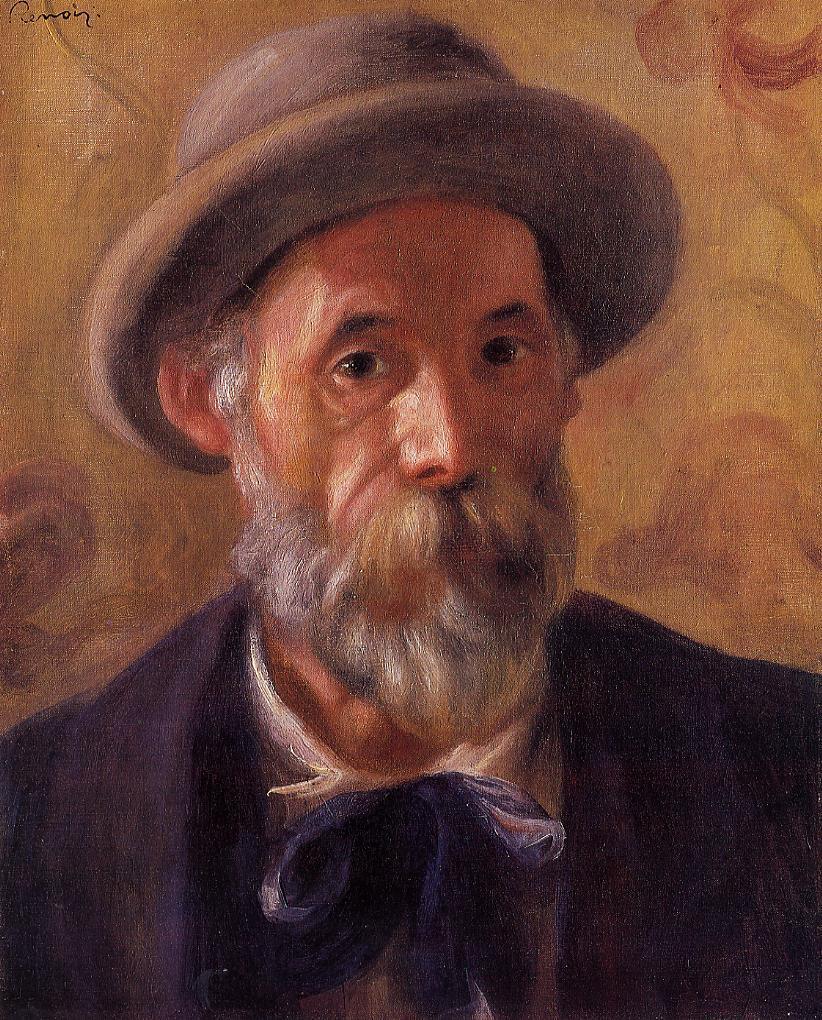
                  In the last years of his life, the French Impressionist painter Jean Renoir continued to paint despite intense pain and physical limitations from rheumatoid arthritis.  At one point he said: “Pain passes, but the beauty remains.”[i]

                  His pain ended with his death, but the beauty of his work lives.

                  I’ve participated in many memorial services in my life.  In such times we have a deep instinct to look for the best in someone’s life, which we hope will transcend whatever pain they endured.  If the person has been able to live a full and meaningful life, this can be easy.  But if the person’s life was marked by tragedy, the desire to focus only on the positive can feel inauthentic — perhaps a way to avoid our own pain and doubts.

                  This week I spoke at a memorial service for a man who died in his late 80s. He’d gone in for a heart procedure that was intended to give him several more years of vitality.  But things happen, and he died at the hospital.  Yet at the service, we reviewed the span of his life, the legacy of his love, and the many joys he knew; all this was far more important than the way he died.

                  This week I also knew a person whose life was drawing to its completion. She had a life of many adventures and much love, but this last year was marked by personal tragedy.  I don’t want to look away from the tragic elements, but I see even more clearly the splendor of her life.

                  From the pain, I want to learn empathy and compassion.

                  From the beauty, I want to practice awe and reverence.

                  Perhaps this drive for transcending suffering is ingrained in life.

A friend who is vacationing in the Caribbean posted some photos this week and commented: “I took a walk on the beach in Barbados tonight and found four turtles coming to shore to lay eggs. I spent about an hour watching one come out of the surf, on to shore and then digging a hole to lay eggs. Incredible.”

                  Patience.  Endurance. Hope. Don’t we all wish this for ourselves and for others: “Pain passes, but the beauty remains?”

Lead image: Pierre-Auguste Renoir, Self-portrait, 1899, Clark Art Institute, Williamstown, MA, USA.


[i] When Art Hurts”

The Remembrance of Things Past

              I led many a meeting over the years. If it was a new group, I would often begin with a question for everyone to answer.  The one I used most often was, “Where did you grow up, and what did you like best about it?”

              I’d wait a minute or two, then offer my own response as an example.  “I grew up in San Bernardino, California.  What I liked best about it was our neighborhood.  It was at the base of the foothills and there were lots of kids on our street.  We spent countless hours getting together to play games like hide and seek, cops and robbers and whatever sport was in season.”

Then others would respond.

“Every summer we’d go back to our grandparents farm for a month.”

“We had a cabin by a lake, and we’d go there for our vacation.  We had every day free to hike, fish, and play games.”

              “In my neighborhood, there was a big vacant lot at the end of the street, and the neighborhood kids would meet there every day and come up with something to do.”

Over time, I saw two common themes.

  1. Almost every treasured memory had to do with extended periods of unstructured time. Alone or with others, children were free to follow their imagination.
  2. As people shared their stories, they became relaxed and happy; they were re-experiencing a joy they’d known unconsciously as a child.

This came to mind as I read a recent article in the New York Times, “Racing to Retake a Beloved Trip, Before Dementia Takes Everything,” by Francesca Mari.[i]  It’s a personal story about her journey with her 72-year-old father who has advancing dementia. He lives alone in Half Moon Bay, and she teaches at Brown University in Rhode Island.  Mari’s mother died when she was 10. Her father never remarried, and she is an only child.  She describes the challenges of caring for a parent with dementia.  Before it gets worse, she decides to take him to Switzerland and Italy, retracing a trip he had with his parents when he was 14 as they visited the village of his grandparents. She hoped this might be a positive experience for them both.

This is a well-told-tale, and I will not try to retell it. Suffice it to say that, despite many challenges, they find his family’s ancestral home in a small Swiss village. Along the way, listening to Beatles’ music in the car and seeing new sights, her father summons up many warm memories, many which she has never heard before.  In some ways, he comes alive again.  Interspersed with their adventures and discoveries, Mari shares insights about the power of nostalgia and reminiscing:

In the 1950s, the tendency of old people to reminisce was thought to be a sign of senility. The first long-term studies of healthy elderly people began at Duke University and the National Institutes of Health’s Laboratory of Clinical Science only in 1955 — and it wasn’t until the early 1960s that Robert Butler, a psychologist then at the National Institutes of Health, realized that nostalgia and reminiscence were part of a natural healing process. “The life review,” as Butler came to call it, “represents one of the underlying human capacities on which all psychotherapy depends.” The goals of life review included the righting of old wrongs, atoning for past actions or inactions, reconciling with estranged family members or friends, accepting your mortality, taking pride in accomplishment and embracing a feeling of having done your best. Interestingly, Butler noted that people often return to their birthplace for a final visit.

Butler believed life reviews weren’t the unvarnished truth but rather the reconciled one, more like the authorized biography. The edited narrative is born of psychological necessity. “People who embark on a life review are making a perilous passage,” Butler wrote, “and they need support that is caring and nonjudgmental. Some people revise their stories until the end, altering and embellishing in an attempt to make things better. Pointing out the inconsistencies serves no useful purpose and, indeed, may cut off the life-review process.”

…. memories must travel between people. Without pollination, they wither. Families collectively remember, they maintain narratives, fill them in and round them out and keep people close long after they’ve left…

I remember listening to my father reminisce in his later years. My mother died 20 years before he did. Growing up, my siblings and I remember many good times, as well as the ways in which they frustrated each other.  But as time went on, dad’s retellings did not include any reference to their differences. Instead, he only saw her in the light of the love he had for her.  Who were we to correct him?

I have been fortunate to spend a great deal of time listening to older peoples’ memories, stories, and lessons they’ve learned.  Now that I am a Medicare-card-carrying-member of this age group, I understand the desire to try to make sense of the lives we’ve lived.

In April, I went back to my hometown to visit the cemetery where my ancestors are buried, including ones who died before I was born.  There was nothing there but gravestones, but something led me to kneel, touch the marker, and thank them.

There is a famous phrase of Shakespeare’s, which, as I discovered, opens his 40th sonnet:

When to the sessions of sweet silent thought

I summon up remembrance of things past,

I sigh the lack of many a thing I sought…

The poem continues with verses describing grieving lost friends, then ends with:

But if the while I think on thee, dear friend,

All losses are restor’d, and sorrows end.

              May we be willing to honor those who reminisce and be grateful for the friends and families with whom we can “pollinate” our fleeting memories.


[i] “Racing to Retake a Beloved Trip, Before Dementia Takes Everything” (If you cannot open the article but want to read it, email me and I’ll send you a PDF copy.)

Photo: The village of Treggia, Switzerland, where the author’s grandfather was born

It’s Ok to Re-Vise Your Life Story (You’re Not Testifying in Court)

              We live life within the stories we create about ourselves.  But, unlike testimony we give in a court of law, we can change our stories if we choose.

              In a writing workshop, Marilyn McEntyre encouraged us to revise our life stories as often as needed.  She points out that the original meaning of “re-vise” is to “look at again, visit again, look back on.” [i]  She encourages anyone (including the people with serious illnesses whom she works with), to not get stuck in our old narratives. You are the author of your life, she says. Events beyond your control may impact you, but you’re free to decide how you will respond, what role you will play, and who you become.

              Thinking about this reminds me of similar insights I’ve heard over the years.

In a blog post two years ago, I shared a comment attributed to Jonas Salk, the creator of the polio vaccine.  When asked what had enabled him to become a successful experimental scientist, he credited his parents.  If he would spill milk in the kitchen, Salk said, they would not get angry with him. Instead, they’d ask, “What did you learn from that?”  This perspective guided Salk in his scientific career, encouraging him to not be afraid to try things.  If we make a mistake, we can re-visit the experience, see what we can learn from it, and decide what to do differently next time.

I have also shared a comment Parker Palmer made about the term “disillusionment.”  When we say we have become disillusioned, we often say it with a sense of sorrow or defeat.  But, he said, think of what the word means: to be dis-illusioned means we realize we had an illusion and it’s been “dissed.”  Instead of feeling discouraged, imagine we’ve been liberated from mistaken assumptions, open to a clearer sense of the truth. 

Looking back on my life, there have been times when I have trusted some people too soon and too much.  When I eventually recognized it, I felt frustration for having been naïve.  But I can “re-visit” the experience and accept I was the one who created the “illusion” of what to expect.  I can be grateful my illusion has been dissed, and plan to be more careful next time.  (I’m still working on this.)

I remember a hospice study in which a medical team examined why some people die in misery and others — with the same illness — die with a sense of peace. One of the factors they identified was “Experience of a sympathetic, nonadversarial connection to the disease process.”[ii]  I can see cancer as a dark, malignant force that is attacking me as a personal aggressive act; if it “wins,” I have not only lost my health but been humiliated and defeated.  But I can see it from a different perspective: cancer is a common occurrence with living beings and there’s nothing personal about it. I will still do all I can to send it into remission, but cancer doesn’t define who I am as a person, nor will it ever be able to harm my spiritual essence which will survive death.  It’s not easy to navigate this process, but I have seen people “re-vise” their understanding of life and illness and find a sense of peace.  A new perspective is powerful medicine.

A common teaching in the spiritual traditions is to be honest about our short-comings and mistakes, but not be bound by them.  Instead, we accept the grace, compassion and forgiveness that comes from a source beyond our egos while remaining thoughtful about our own behavior. Re-vising our life stories does not mean we are avoiding or denying the facts of what happened; instead, we are finding a fresh perspective that can empower rather than diminish us.


[i] https://www.etymonline.com/word/revise

[ii] “Healing Connections: On Moving from Suffering to a Sense of Well-Being,” Balfour Mount, MD,Patricia Boston, PhD, and S. Robin Cohen, PhD; Journal of Pain and Symptom Management, April 2007 (Other factors named in the study: “Sense of connection to Self, others, phenomenal world, ultimate meaning; Sense of meaning in context of suffering; Capacity to find peace in present moment; Ability to choose attitude to adversity; open to potential in the moment greater than need for control)

Marilyn’s publications and workshops, including her work with people dealing with illnesses, can be found at MarilynMcEntyre.

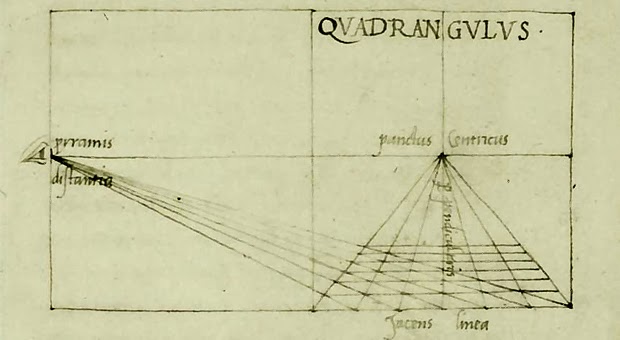
Lead Image: “A Lady Writing,” Vermeer, 1665, National Gallery of Art; lower image: “Quadrangulus,” Milra Artist Tools, LLC

Is “Follow Your Dreams” Bad Advice?

              In a season when many young people are hearing commencement speeches, I was intrigued by a recent column: “’Follow Your Dreams’ and Other Terrible Career Advice.”

              The writer is Bonnie Hammer, an executive at NBC Universal.  She begins by acknowledging that many young people find work is not as rewarding as they had expected.  Here are some excerpts:

Having worked in most facets of the entertainment industry since 1974, from a bottom-rung production assistant to the top of NBCUniversal’s headquarters at 30 Rock, I agree that the problems in today’s workplace are real. But I also think many management experts have identified the wrong problem. The real problem is that too many of us, young and not so young, have been told too many lies about what it takes to succeed at work—and not nearly enough truths. All those bright, shiny aphorisms that are spoon-fed to young employees, like “follow your dreams” and “know your worth” and many more? Well, the truth is that they don’t really work at work…

“Follow your dreams” is the exhortation of many college commencement speeches, but it is nightmare job advice. Americans are already raised on a diet high in dreams, from fairy tales to superheroes…

The larger truth is that professional dreams can be incredibly limiting, particularly at the start of our work lives. When we enter the workplace convinced that we already know what we want to do in a specific field and are committed to it at all costs, we’re saying, in essence, that there is very little left for us to learn, discover or be curious about. That nothing else could make us happy or fulfilled…

…I learned my “workplace worth” fresh out of graduate school when I was hired as a production assistant on a kids’ TV show in Boston. Each PA was assigned a cast member, and as the most junior employee, my cast member was Winston, an English sheepdog. My primary responsibility was to follow him around the set carrying a pooper scooper. I had two university degrees. Winston, on the other hand, was a true nepo-baby, the precious, unhouse-trained pet of one of the show’s producers. Plus, as an on-camera star, Winston out-earned me…

…But while many days I felt like working for Winston was beneath me, I never showed it. I acted like I was pursuing an honors degree in pet sitting, and each poop pickup was an extra-credit opportunity. The work and the attitude paid off. When an associate producer position opened, I was promoted. I pursued a similar strategy for much of my early career: If I wanted to be a valuable asset to my colleagues and bosses, I knew I needed to add concrete value to their days by showing up, staying late and doing whatever needed to be done. So maybe we need to set aside the current myth that remaking the workplace will somehow unleash a wave of professional success. Instead, it might be time for a healthy dose of truth. For young employees who want to feel “engaged” at work, the truth is, you need to engage with your work first. On the job, our worth is determined not by how we feel but by what we do. 

… Looking back, I was only able to work my way up to the top because I started at the very, very bottom. Not only did this starting point allow me the opportunity to really understand the TV and entertainment world, but I also had real empathy and appreciation for the people now doing the work I once did.[i]

              I think of the many times someone receives an Oscar, or wins a sports championship, or has become successful in the arts or business, and they say something like, “This is my dream come true! For all you out there with a dream, don’t give up!” That passionate plea may motivate others to achieve “greatness.” But for most of us, despite hard work and discipline, we may never “succeed” like we thought we would when we were younger.

I dreamed I was going to play shortstop for the Dodgers. Then I dreamed I would be a millionaire lawyer in San Francisco. Then I dreamed with just a little effort I could speak four languages.  I had some dreams.  But I didn’t know how much hard work, focus, stamina, and good luck it can take to realize lofty dreams.  It was a big disappointment.

But along the way, I discovered that I could still enjoy sports without being a star.  I could enjoy being in a city without being a millionaire.  I could have empathy for someone from another country struggling to speak English. I experienced many blessings that I could not have dreamed of when I was young.

Life has a way of showing us our limitations.  It also can teach us that “it’s not about me.”  We can find a kinship working with and serving people who aren’t superstars.  Our youthful dreams may disappear, but we may find we can appreciate life without being in the spotlight.

Ms. Hammer says she has “reached the top.”  I have met some people who have “made it to the top” and been able to keep their humanity and integrity.  I know others who have been consumed by work and dreams of success and are blind to other sources of meaning and purpose.  “What does it profit a person to gain the whole world and lose their soul?”[ii]

Dreams about who we can become and what we might accomplish can serve an important purpose: they can motivate us to see what we are capable of.  But if it doesn’t work out as we had hoped, it doesn’t have to be the end of the world. It may be the beginning of finding something more lasting and rewarding: a deeper connection to the human family and purposes larger than ourselves.

(Note to readers: Some of you have told me you’ve tried to make comments but had issues with the website.  You can always email me directly at steve@drjsb.com)


[i] ‘Follow Your Dreams’ and Other Terrible Career Advice  (WSJ, May 4, 2024)

[ii] Mark 8:36

What Do We Know?

“Even though life is quite a sad business, you can have a good time in the middle of it. I like to laugh, and I think the unsung, real literary geniuses of the world are people who write jokes. Both the Irish and Jews are very fatalistic, but they laugh a lot. Only the Protestants think that every day in every way, life is getting better and better. What do they know?  — American writer Mary Gordon (daughter of a Jewish father and Irish Catholic mother)

         My beloved mentor Huston Smith once gave a talk at the Lobero Theater here in Santa Barbara.  With a smile, he announced his theme: “Five Things You Won’t Agree With.”  One theme was “There’s no such thing as progress.”[i]

         Huston told the story of being a young American scholar in the 1960s when he was invited to speak on the future of society at a conference In Europe.  He spoke glowingly of what he thought the century would bring.  After he finished, the next speaker said, “Professor Smith has just spoken out of 200 years of American successes. I’m now going to speak from 1,000 years of European failures.”  Huston listened and was humbled.

         He went on to say that, to be sure, some things have improved in our modern life.  Plumbing, for one.  Public health, for another.  And there has been some progress in human rights.  But in many ways, our human nature has not changed. We have not outgrown the destructive impulses of our ancestors.  No century in human history saw as many people die in war as the 20th – somewhere close to 50 million.  Some things are better, but we are a long way from having the world we would like to have.  Those “Protestants” who “think that every day in every way, life is getting better and better – what do they know?”

         This perspective could lead to being “fatalistic” – why bother trying to make anything better?  I don’t think that’s an option.

         Social teachings of the Jewish, Catholic, Protestant, and many secular traditions have always included a strong emphasis on “trying to make the world a better place.” Basic compassion and a spiritual calling compel us to do all we can to confront hunger, poverty, injustice, violence, and threats to human dignity.  Here and there, there are signs of “progress.”

         We moved to Santa Barbara in 1992.  With our daughters active in athletics, we became passionate supporters of the UC Santa Barbara women’s basketball team — along with many in my congregation. The team was having great success, making it to the “Sweet Sixteen” in 2004.  One year we invited the outstanding center to speak at the beginning of our worship service.  She was several inches over six feet tall, and it was striking to see her walk down the aisle and step to the pulpit with poise and ease.  UCSB had just won a dramatic game against the University of Hawaii the night before, and someone asked her if she had prayed for a win.  She said she did pray at halftime – but not to win.  She simply prayed that she would do her best, whatever the outcome.  Everyone sensed this young woman possessed great inner strength and character.

         A few days later, I ran into Michelle, one of our members.  I asked her what she thought of hearing the player speak. Michelle said she had wept.  That surprised me and I asked her why.  As a woman who was six feet tall herself, as a teenager she was constantly walking bent over with slumped shoulders so she wouldn’t seem as tall as she was. But on Sunday, when this tall, young woman entered to the delight and admiration of the congregation, she realized how much had changed in just one generation.  Her tears that morning were tears of gratitude that maybe life for young women was improving.

         On the other hand, I remember visiting the “Museum of Communism” in Prague in 2020.  The museum was divided into three sections: “The Promise,” “The Reality,” and “The Nightmare.”  “The Promise” told the story of the genuine idealism that had convinced many earnest people to support the revolutions in the early decades of the last century.  “The Reality” displayed exhibits of how this social experiment was troubled from the start.  “The Nightmare” showed how grim and heartless communist societies became.  People hoped they could make society “better and better”, but it was not to be.

         I believe we should never give up trying to make the world a better place.  At the same time, we can recognize our human nature has a dark side that may resist and undo our best-laid plans and hopes.  Along the way, we welcome the great artists in our midst who help us laugh:


[i] I previously wrote on one of the other points: “Living on the Back Side of the Tapestry”

Answering Mr. Vinegar

In a writing class I took from Marilyn McEntyre, she mentioned we all have different “personas” within us. She encouraged us to experiment with writing from the perspective of each one.  Maybe it’s a familiar concept, but it was new to me. 

Reflecting on Marilyn’s invitation, I realized the “voice” I usually seek to embody when writing is a thoughtful and patient one. It looks for grace and wisdom in a variety of situations – I could call it the “Mr. Nice Guy” voice.  But the more I thought about it, I realized it was not the only voice within me.  I can summon up a “bad boy” voice –- one that’s skeptical, judgmental, smug, and cynical.  (What some psychologists would call a part of my “shadow side.”) As I began to become more aware of it, I found it to be quite amusing.  I’ve given that voice the name of “Mr. Vinegar.”

Recently I’ve been hearing from Mr. Vinegar just as I am finishing writing one of these blog posts.  I usually ignore him. But this week, I decided to let Mr. Vinegar have a conversation with Mr. Nice Guy. 

Here’s what the conversation sounds like.

MR VINEGAR: “Well, Steve, everything you write is so pleasant. One week you have a nice epiphany while contemplating an oak tree.  Another week maybe it’s a little birdie on a branch.  Another week it’s all about some amazing spider web.  But you know, Mr. Nice Guy, the world we live in is a mess.  There’s the war in Gaza and Israel, a war in Ukraine, the breakdown of our politics, the rapid creep of Artificial Intelligence into our lives, global warming, personal tragedies everywhere you look…Why do you avoid these topics? Afraid?” 

MR NICE GUY: “Well, Mr. Vinegar, that’s a good question.  I’ll tell you why I do what I do.

“I think there are many troubling events in the world.  I worry that Russia will overcome Ukraine and we’ll be back in a Cold War that will destabilize a peace in Western Europe we’ve taken for granted for 80 years.  I see the immense tragedies in Gaza and Israel – friends on both sides are frantic with concern – and I don’t think anyone knows when or how it will get resolved.  I truly believe we need to show respect for all sides in our political discussions, but I am deeply concerned that we may re-elect a man who delights in ignoring and mocking the rule of law and being a corrosive personal force.

“And A.I.? That worries me more than almost anything else. It will certainly have some beneficial effects.  But it’s creeping into our lives and millions of people will start depending on it. Many will find it irresistible to use for selfish and destructive ends.  Kids aren’t going to know what it’s like to have to labor over writing an essay or a poem.  Our “entertainment options” are going to become wild and warped.  Unscrupulous political leaders, countries, and crime cartels are going to find A.I. to be an unprecedented weapon to use for their own purposes.  It’s the end of an Age of Innocence. We won’t know what news report, what video, what photo, or what information sources we can trust.  We will become increasingly enfeebled, dependent, and distrustful.

“And global warming? It’s very sobering.  Especially for the poorest people on the planet who don’t have the freedom and resources to adapt.

“So yes, Mr. Vinegar, I see and worry about these things.  But I don’t write about these topics much because there are many others more qualified than me to do that, and I avoid the debilitating effect of constantly focusing on bad news and crises.”

MR VINEGAR “What you just said – did that feel a little risky?  Is it hard to talk about the scary stuff?  Afraid you’ll lose some readers?”

MR NICE GUY: “Maybe.  But here’s the deal. There’s so much going on that can get us down.  To face and endure the challenges before us, we need to be grounded in genuine, personal experiences where we find glimpses of grace and reasons to hope.  We need to be reminded of the importance of the many people in our lives – past and present – who demonstrate integrity, wisdom, and compassion.  We need to tap into the insights of our spiritual traditions that have helped guide people for centuries as human life has evolved. I’m not going to write about issues unless I have something hopeful and constructive to say.”

MR VINEGAR “Well, OK, that’s your choice.  But just don’t let yourself become a pleasant waste of time.”

MR NICE GUY “OK, point taken.  And now that you’ve had a chance to speak out, can I finish writing this?”

MR VINEGAR “Of course. But I’m not going away – I’ll be back. I have too much fun prodding you.”

*****

                  I remember hearing a Jewish story about a rabbi in a small village.  An old man would show up at every event where the rabbi was speaking. He would pester the rabbi with skeptical questions and criticize him time after time.  When he died, no one was expected to show up at the cemetery when he was buried. The gravediggers were surprised when the rabbi showed up. They asked him, “Why are you here? We expected you’d be glad this man is gone.” 

                  “I’m going to miss him,” said the rabbi. “He was the one person in town that kept me honest.”

Time for a Break

Dear Subscribers and Friends,

On December 15, 2020, I posted my first “PocketEpiphanies” article.  My goal was to share some of the insights, memories, and stories that have been meaningful to me over my life and career that might also be of interest to others.

I did not know how long I would keep at it.

As of last week, I’ve written 150 articles now have 169 subscribers.  I’m surprised I’ve gotten this far.

From time to time, I’ll receive a message from someone that a particular post was helpful to them in their journey. When I’m out and about in town, I’ll meet one of you and you’ll tell me you look forward to seeing what I come up with each week.  This makes it worth it.

I have decided that reaching the 150-post milestone is a good time for a break. Over the next few weeks, I’m going to let my mind and imagination lie fallow.  I plan to resume on January 6. Until then, please know that being connected with all of you means a great deal to me.  In these fractured times, I feel this is one way to stay in touch with one another about what matters in life without trying to “monetize,” advertise, or become an “influencer.” Thank you for being part of this journey.

Steve

P.S.: If you haven’t been with me since the beginning, you may want to see what I posted two years ago– pieces written to reflect themes of the season.

The Spiritual Point of Conception: Reflections and Images https://wordpress.com/post/drjsb.com/872

The Power of Spiritual Friendships: Thoughts and Images https://wordpress.com/post/drjsb.com/897

Spiritual Guardians: Carpenters, Mentors and Drummers https://drjsb.com/2021/12/18/spiritual-guardians-carpenters-mentors-and-drummers/

The Nativity: A Hospital Epiphany and Three Works of Art: https://drjsb.com/2021/12/24/the-nativity-a-message-at-the-hospital-and-three-works-of-art/

Image: a photo I took of my parked bike at Goleta Beach, 2020

Faith and Sight

I am fond of each of these three statements and think they are saying the same thing in different ways:

         “We walk by faith and by sight.” – world religion scholar Huston Smith.

         “Pray for a good harvest and hoe like hell.” – a saying I heard once from a farmer.

         “The compass points you true north but does not warn you of obstacles and swamps along the way.” – Abraham Lincoln in Steven Spielberg’s film, Lincoln.

         I found the Huston Smith statement as I was reviewing my notes from my time with him at Esalen in 2010.  I don’t have a record of what led him to quote this or what comments he made about it.  But I believe it’s worth exploring.

         If you have been nurtured in the Christian tradition, it may sound as if he was misquoting a famous passage from St. Paul: “We walk by faith and not by sight.”  (2 Cor 5:7). Over the years, I have heard this read and sung to remind the faithful to trust in divine guidance and providence even when we can’t see how things are going to work out.  We can become over-reliant on “sight” — our current understanding of whatever situation we are facing.  This can lead to despair if we don’t “see” a way through a situation. But reminding us to not be limited by what we see, and instead trust that God is at work in our lives can ease our anxiety and give us courage.

         But Huston must have liked turning the phrase into “We walk by faith AND by sight.”

         As a scholar of global spirituality, he knew every tradition assumes a certain amount of faith and trust in a greater reality beyond our everyday knowing.  Throughout his life, he was plumbing the depths of mystical experience and spiritual ways of understanding life. But he was always in dialogue with scientists, psychologists, and philosophers as they described what they see as real. Rather than make it either/or, he encouraged people to use both faith and reason to navigate life’s challenges.

         The quote about farming can at first sound a bit cynical. For some devout folks, praying for a desired outcome should be enough…isn’t it a bit disrespectful to imply one needs to “hoe like hell?”  Praying for a desired outcome can open us to forces beyond our sight that can bring unexpected blessings.  But we can’t just pray and sit back.  We’ve got to do our part – put in all the necessary hard work as we go along.

         In the Lincoln movie, the President is in a conversation with Senator Thaddeus Stevens, an abolitionist who is focused on establishing complete equality for African Americans.  While Lincoln agrees with him in principle, he knows it’s not possible in the politics of their historical moment.  Complete equality is the “true north” they both seek, but there are many swamps along the way; better to get as far as you can towards the goal than be so high-minded that nothing changes.  Stevens eventually conceded and Congress passed the 13th Amendment.

         I believe in the power of faith and believe we must keep our eyes open as we make our way through life.  I believe in praying for good outcomes and know we need to be ready to work hard to realize them.  I think we must know where true north is in our lives and accept the fact that there may be many swamps that must be negotiated as we head that direction.

         I think of this when I see people face serious medical issues.  Some people of good faith want to trust that faith or positive thinking alone will lead to healing, with little need for medical knowledge. But the wiser people I’ve known blend both.  They find the best doctors and learn all they can.  They also know there are “unseen” forces that can contribute to healing, like meditation, prayer, social support, and guided imagery.  They walk by faith and by sight.

         I think about this with marriage and family.  Over the years as I’ve met with couples as they prepare for making the commitment. I affirm the power of the love, hope, and faith that is leading them. I also encourage them to remember that much work will be required to honor their highest hopes.

         And I think of this with the many great nonprofits I’ve been associated with over the years – Isla Vista Youth Projects, Hospice of Santa Barbara, La Casa de Maria Retreat Center, and the Neighborhood Clinics. They all start with an inspiring vision and faith in what they can accomplish.  But to survive and thrive requires endless hard work, strategic decision-making, and survival skills.  Faith and sight need each other.

Photo credit: abrokenbackpack.com

Is Creating an Empty Space on Your Holiday List?

         A colleague once told of visiting an older writer in Paris whom she’d always admired.  The woman welcomed her at the door and invited her in.  The apartment was full of books, papers, and artwork and it was not clear where to sit.  The woman gestured toward a chair that had some books and papers on it.  “Oh, just put those anywhere.”  My friend picked the items up and was about to place them on a small empty table nearby, but the woman said, “Oh, not there. I try to keep one space empty and open wherever I live.” And she indicated a different spot to lay the items.

         My friend said she never forgot this idea: that even in the smallest of residences, it may be a worthwhile practice to have one place that is not covered with things, but always “empty and open.” 

         This time of year, it’s common to bring out all kinds of things that speak to us of the meaning and memories of the season – figurines, candles, ornaments, greens, lights, seasonal books, etc. I have several playlists of music I return to every year, which fills the air with music.  It can be a busy and joyful time.

         I’ve been thinking — What would it be like this year to create an “empty and open space’ in our living space? What if we choose a spot that we see throughout the day that will remind us to be inwardly open to silent truths, fresh inspirations, and the savoring of mystery?

         In the Biblical story of the angel coming to Mary, she is essentially asked if she will be open to a new life coming into this world through her.  She says yes, and the life arrives from a realm beyond her knowing.

         Isn’t it the same with all children?  We understand how the biology works, but the way children seem to each arrive with a unique soul and presence is surely a wonder.  David Brooks tells of a friend whose spiritual journey began as she held her first child in her arms and thought, “I love this child more than evolution can explain.”

         In the Mexican tradition of La Posada, Joseph and Mary travel from house to house, asking if they might stay for the night. Time after time they are told there is no room for them.  In the end, the only ‘open space” they are offered is a manger. But it is enough.

         I’m going to try this out.  My desk sits next to a bookcase where every shelf is often full of books and CDs.  But I decided to clear off one eye-level shelf and leave it bare for the month.  When I’m tempted to place something there, I’m going to tell myself, “Oh, not there. I try to keep one empty and open space wherever I live.”

         “How silently, how silently, the wondrous gift is given…” In silence and emptiness and openness gifts can appear that may surprise us.

.

The Key May Be Waiting in the Shadows

One recent afternoon my wife and I hiked up a local canyon. On our way back, the sun was beginning to set, and shafts of life were cutting through the oak trees. We stopped to take a few pictures. Here’s one:

As we resumed walking, I began thinking about how our awareness is naturally attracted to whatever in our environment is illuminated.  For example, in this photo, I find myself looking at the lower half where the light is brightest.

This can be a kind of bias — to the tree itself, the parts that I don’t notice because they are in the shadows are just as important as the parts reflecting the sunlight.  I was reminded of a timeless Sufi tale about a man looking for a lost key: 

The great Sufi master Mullah Nasruddin was on his hands and knees searching for something under a streetlamp. A man saw him and asked, “What are you looking for?” “My house key,” Nasruddin replied. “I lost it.” The man joined him in looking for the key, and after a period of fruitless searching, the man asked, “Are you sure you lost it around here?” Nasruddin replied, “Oh, I didn’t lose it around here. I lost it over there, by my house.” “Then why,” the man asked, “are you looking for it over here?” “Because,” Nasruddin said, “The light is so much better over here.”

            This tendency has since become known as the “streetlight effect: “a type of observational bias that occurs when people only search for something where it is easiest to look.”[i]

A psychology professor once described how our unconscious mind is often working to solve problems without our awareness, and sometimes we need to give it some space to help us.  He gave the example of trying to remember someone’s name.  We may stop and try harder and harder to concentrate on locating the fact — like turning up the power on our flashlight to maximum power – but that doesn’t seem to help.  He suggested we try letting our focused search go for a minute and shift our attention to something else, like looking out a window.  When we do that, the name we are looking for will often appear in our awareness like a gift out of the blue.   Turning our attention elsewhere allows the answer to come to us from “the shadows” of our mind.

            I’ve applied this often in conversations.  Someone is telling me a story and gets stuck trying to remember a name.  They get frustrated when they can’t come up with it.  I’ve learned to say, “Just keep telling your story and it will come back to you.”  Almost always, when they resume their story, the fact will come to them and they’ll say, “Oh, now I remember…”

            During COVID, I took some Zoom writing classes from Marilyn McEntyre.  One of them was called, “Writing Into The Unknown.” Marilyn told of being in graduate school and meeting with a professor to receive a paper he had graded. He told her it was flawlessly done. “But,” he said, “it’s boring.” He encouraged her to take more chances.  She realized she had always depended on using outlines, knowing exactly where she was going when she started to write.  This can be useful in some situations. But it can be an impediment in creative and personal writing.  She encouraged us to start with a hunch or a feeling and see where it goes. Often, we surprise ourselves by discovering insights we didn’t know were “in” us.   Moving away from the lamppost can lead us to the key.

This resonates with the book In Praise of Walking,[ii] which I wrote about some months ago. If we have been working on a problem at our desk and feeling stuck, it’s well worth our time to get up and go for a walk.  As our attention shifts away from the problem, interesting ideas often bubble up to the surface of our awareness.  What we’ve done is give the unconscious/shadow part of our mind a chance to share what it’s quietly been working on all along, and it rarely disappoints.

In recent years, I’ve become more aware of “somatic intelligence” – the capacity of our body to know things that our conscious mind hasn’t figured out yet.  Sometimes we “get a feeling” about someone or something and we’re not sure where that comes from, but the feeling/thought turns out to be valid.  We use our rational mind to evaluate what we are feeling, but we do so while recognizing we may know more than we can say and be open to the unseen within us.

Let’s go back to the photo of the tree.  At first, all my attention was drawn to the lower half.  Here’s what the upper section shows:

A very different look from the lower half.  And the more I look at it, the more mysterious and interesting it becomes – so dense with intertwined growth representing years of making its way in this canyon.

            Here’s the original photo, with the illuminated parts of the tree integrated with the shadow side.  Together, they form a whole:

May we appreciate the different aspects of our personal awareness as we navigate the wonders of this life.


[i] https://en.wikipedia.org/wiki/Streetlight_effect#cite_note-1

[ii] https://drjsb.com/2022/04/16/the-gift-of-walking-everyday-problems-electric-toothbrushes-and-an-easter-surprise/