Cat Stevens Went Away — and Came Back

“When he was a child in Catholic school in London, (he) asked a nun, Sister Anthony, what might have been his first existentialist question: “When do the angels start writing down your sins?”

After a pause, she told him the scorecard began when children turn 8, a relief since he was still a year or two away. 

“Religion constantly made me feel guilty about nice-looking things,” he writes in his book. “But balancing those kind of fearful images with what was going on outside the doors of the church after school, I felt the pull of the world mighty overpowering.”[i] 

The boy to whom Sister Anthony was speaking to was Steven Georgiou.  The call to find some beauty in the outside world led him to become a musician and a songwriter. He had gifts which he developed and shared. He changed his name to Cat Stevens.

I remember well the impact he made on my generation. In 1970 much of the music of the time reflected angst and outrage.  But then albums came out that carried with them a softer tone.  James Taylor’s Sweet Baby James was one.  Another was Cat Stevens’ Tea for the Tillerman, with songs like “Where Do the Children Play?” and “Wild World.” Then came his biggest selling album, “Teaser and the Firecat.”  We heard songs like “Moonshadow,” “Peace Train,” and the English hymn, “Morning Has Broken.” There was still social concern, but the mood was more poignant, reflective and hopeful.

Several years later, Cat Stevens disappeared.  Word came he had given up music and become a Muslim, taking the name Yusuf Islam.  Only recently has he seemed to resurface. In a recent interview in the New York Times, he shared highlights of his spiritual journey which includes three close encounters with death. 

The first came when he was a teenager.  He and some friends were jumping between rooftops when he slipped and one of his buddies saved him from falling at the last second.  The second came when he was 20 and discovered he had tuberculosis.  Then there was the third:

Late in 1975, soon after Islam turned 27, his career seemed to be flagging. While he waited for lunch with his manager and label boss in Malibu, Calif., he decided to swim in the Pacific. After 15 minutes in the cold water, he tried to head back, only to find that the current was sweeping him to sea.

“I thought I could swim well, but I could not fight or beat the ocean. I had only seconds left,” Islam, 77, said recently during a video interview from a rented London apartment. So he prayed, insisting that, if he lived, he would work for God. A wave pushed him forward. “When I realized my vulnerability, what else could I do? My body was disappearing. I had only my soul left.”[ii] He began an earnest spiritual journey which led to his conversion to Islam in 1977.

Recently I’ve been in group discussions where a key concept of Richard Rohr’s has kept surfacing.  According to Rohr, our spiritual journeys can often go through three phases: order, disorder, and reorder.  In the “order” stage, we have clear ideas about who we are and what we believe.  But times can come when it’s not making sense anymore – we experience things that challenge that clear sense of order.  We enter “disorder,” a kind of spiritual wilderness where we are not sure what we can trust and believe. But eventually, we can form a new sense of direction and place – our world has been reordered.  And the process can keep repeating.

Looking back on Cat Stevens’ life, it seems he went from the order of his Catholic upbringing, to the disorder of seeking a new identity “outside the doors of the church,” to finding a new reorder as a rock star, to finding that was not enough and entering a new time of disorder as a spiritual seeker.  Eventually he found a new reorder as a devout Muslim which included giving up music.  In recent years, he’s looked for yet a new reorder in his life, integrating his faith with his musical gifts.  He has gone away and come back more than once – something he needed to do to adapt to life while also honoring his soul.

I find many of us go through similar journeys.  We’ve gone through phases of being settled, then unsettled. Then settled again. Then unsettled.  We may not come close to drowning in the ocean like he did at age 27, but we experience our “vulnerability” as we deal with changes and challenges in our personal life, relationships and world; as years go on, we may even feel our bodies are slowly “disappearing.”  But the spiritual life is a pilgrimage in which we are constantly learning and adapting.  Along the way, it’s a beautiful thing to realize we will always have our “soul left.”  And we can be grateful for those who are sharing the journey with us.

For an old, grainy video of Cat Stevens singing “Moonshadow” in 1971 before an adoring crowd of long-haired fans, click on https://www.youtube.com/watch?v=kGNxKnLmOH4

[i] “As Cat Stevens, He Knew That He Had to Go Away,” NYTimes, Sept 21, 2025

[ii] Ibid.

Touching the Earth, Grounding Our Soul

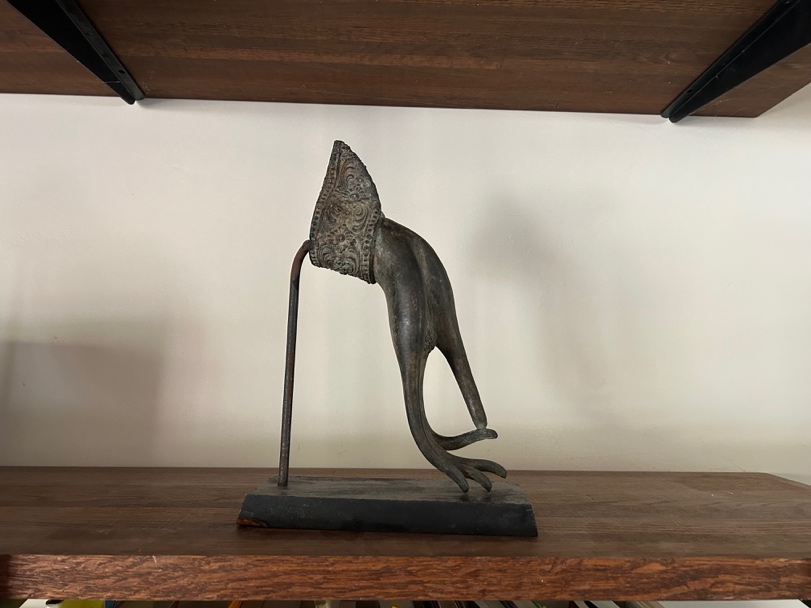
                  Some years ago, a friend brought this back from India as a gift, and it’s been sitting on my bookshelf ever since:


The hand gesture is based on a famous story in the life of the Buddha:

In one of Buddhism’s iconic images, Gautama Buddha sits in meditation with his left palm upright on his lap, while his right hand touches the earth. Demonic forces have tried to unseat him, because their king, Mara, claims that place under the bodhi tree. As they proclaim their leader’s powers, Mara demands that Gautama produce a witness to confirm his spiritual awakening. The Buddha simply touches the earth with his right hand, and the Earth itself immediately responds: “I am your witness.” Mara and his minions vanish. The morning star appears in the sky. This moment of supreme enlightenment is the central experience from which the whole of the Buddhist tradition unfolds.[i]

                  He is not just thinking about the earth and what it means, he’s physically connecting himself to the earth.  The action symbolizes that the spiritual teachings are not lofty ideas, but literally “grounded” in real life. 

                  This past week, one of Richard Rohr’s daily meditations noted the legacy of Brother Lawrence. Here’s an excerpt:

In the mid-17th century, a man named Nicolas Herman joined the Carmelite monastery in Paris, France. Wounded from fighting in the European Thirty Years’ war, and suffering a sustained leg injury, he took the monastic name “Brother Lawrence of the Resurrection.” He worked in the monastery kitchen and eventually became the head cook. Amid the chaos of food preparation and the clanging of pots and pans, Brother Lawrence began to practice a simple method of prayer that helped him return to an awareness of Divine presence. He called it the practice of the presence of God and described it as “the most sacred, the most robust, the easiest, and the most effective form of prayer.”  Brother Lawrence’s method of prayer is so simple that it might seem misleading. It is to cultivate and hand over one’s awareness to God in every moment, in whatever we are doing. Brother Lawrence recommends that newcomers to the prayer use a phrase to recollect their intention toward the Divine presence, such as “‘My God, I am all yours,’ or ‘God of love, I love you with all my heart,’ or ‘Love, create in me a new heart,’ or any other phrases love produces on the spot.”” [ii]

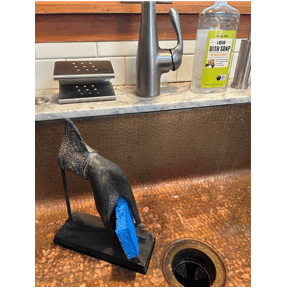
Brother Lawerence summarized what he learned in the little book, The Practice of the Presence of God.  I first read it early in my spiritual journey, and have — in my best moments — often remembered it when doing the dishes.  Instead of thinking, “This is such a bother – I’m going to finish this job as quickly as possible,” I try to take a Brother Lawerence attitude: “I’m going to slow down and be aware of the tangible experience of this chore: feel each dish in my hand as I pick it up, notice the warmth of the water, appreciate stacking the dishes in the rack one by one, be grateful in these moments of being alive…”  I tend to be easily distracted and lost in thought, but doing household chores in the spirit of Brother Lawerence can be a satisfying practice.

                  Recognizing the way in which daily tasks can “ground us” is a fundamental teaching in the Benedictine monastic tradition, summarized in the phrase “ora et labora.”  Every day, a monk spends time in prayer (“ora”) but also manual labor (“labora”); labora can mean cooking and cleaning, working in the garden or, in some pious communities, carefully brewing beer.[iii]

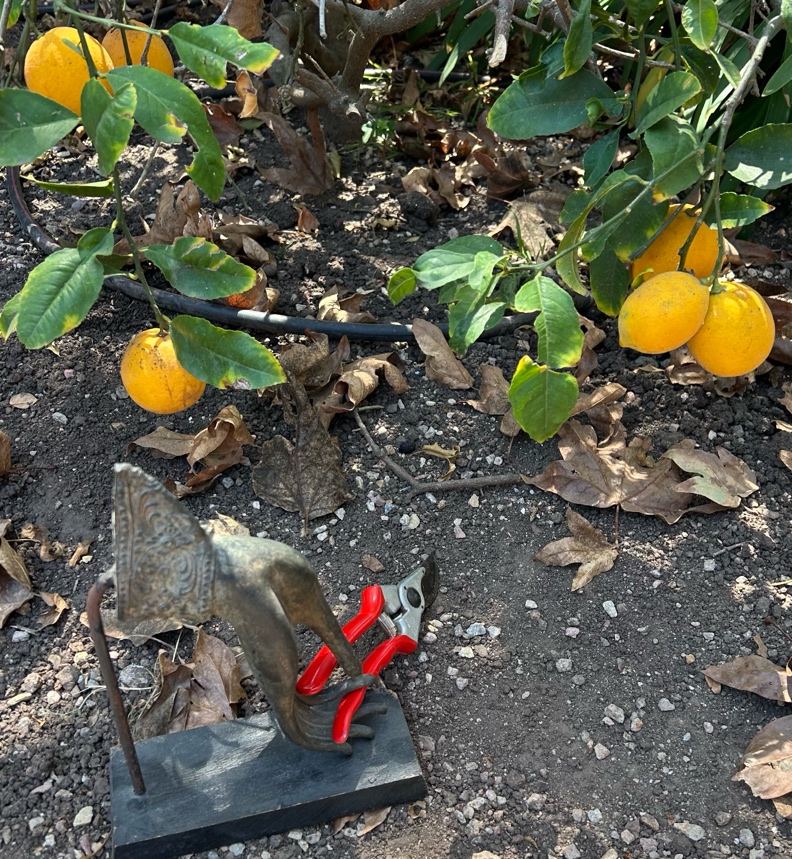
                  When I was working at La Casa de Maria retreat center, one of our most popular offerings was led by Cynthia Bourgeult, an Episcopal priest and writer.  Each person who came to the 5-day retreat could expect regular lectures by Cynthia, times of chanting and worship, and a daily period of physical labor performed in silence.  One of our staff responsibilities before the retreat was to come up with a list of manual tasks that retreatants could do, such as raking leaves, weeding gardens or caring for our citrus trees.  Sometimes we’d get a call from a person who wanted to register but said they did not see the point of doing any manual labor; Cynthia instructed us to tell the person this was not an option – if they weren’t willing to do it, they should not come at all.  She told us that some people who had initially not wanted to do the labor ended the week saying it became one of their most valuable experiences.

                  I think of the training I received during my hospice time that was based on Zen practices focused on “cultivating presence.” If we are with someone who is in physical or emotional pain, our thoughts and feelings can get tangled up in our concern for the person and we can lose our focus. We were taught to slow down our breathing and become aware of our rear ends in the chair and our feet on the ground, and to imagine the pain passsing through us into the earth. This can free our mind to be remain calm and open as we interact with the person — to be “present” and not distracted or anxious. I have found it to be a worthwhile technique.

Spiritual traditions include specific teachings, participation in community life and the practice of serving others in tangible ways.  As our culture becomes more fragmented and people more socially isolated, many studies have demonstrated that being part of spiritual communities leads to increased emotional and physical health.  The traditions ground us in what really matters, giving meaning to all we do.


[i] https://www.huffpost.com/entry/buddhism-and-climate-change_b_925651

[ii] https://cac.org/daily-meditations/brother-lawrence-of-the-resurrection/

[iii] Many monastic communities saw beer brewing as a particularly meaningful form of labor, and at one time there were a thousand monastic breweries in Europe.  For a current listing, see A List of the World’s Monastic Beers

Four Stages of Life: Thoughts While Doing Physical Therapy

The other day I was doing my physical therapy exercises. I was bored.  My restless brain began looking for something to distract itself.  I thought about the different stages of life we can go through and came up with my own scheme. 

Stage 1: I want to be amazing.  This stage begins in infancy when we start to walk, entertain adults and throw tantrums.  It continues in school when we try to figure out what we might be good at so other kids and adults respect us: Sports?  Academics?  Flirting? Gossip? Making money? This stage can continue for a long time.

Stage 2: I seem to be losing ground – but I bet I can be as good as I used to be if I put my mind to it!  This stage can begin in our 40s, 50s, or 60s.  There are some activities we realize we cannot do, but we believe we can reverse this process if we put our mind to it.  We buy self-help books, lots of supplements and find encouraging podcasts. Maybe we join a gym or try online fitness classes.  In the beginning, we feel great and become optimistic.  We imagine a whole new chapter in our life — we will be one of those people who are told, “Wow, you look great for your age!”  Maybe that fantasy comes true. But for most people, not much changes.  One day we realize our youthful ship has sailed.

Stage 3: I’ll never be as good as I used to be, but maybe I can slow the decline. We stay active not to become “Comeback Player of the Year” but to adapt as well as we can.  At first it may feel like a defeat, but it can also bring a sense of relief.  We look at younger people and are amazed at how effortlessly they go through their day.  We look at our own body and our thoughts can change from “Why have you failed me?” to “I’m going to do what I can to honor you in the time we have left.”

Stage 4: Loss and Wonder.  We grieve what we’ve lost and are losing.  But we realize it’s amazing we’ve made it this far, seen what we’ve seen, and done what we’ve done.  We don’t know how much time we have left but we’re not dead yet. We try to be useful to others and enjoy simple pleasures. In quiet moments, we witness the mystery and miracle of being alive. 

Spiritual Discernment in an Evolving Universe

Life involves plenty of decision-making: some minor and some life-changing.  If we are on a spiritual path, important decisions can become part of our journey of discovery and growth.  It’s a process known as discernment.

One description of this process is The Way of Discernment: Spiritual Practices for Decision Making by Elizabeth Liebert. 

Liebert writes from a strong Biblical foundation and thorough knowledge of contemplative traditions.  But she approaches her topic with a contemporary understanding of life and spirituality:

This understanding begins with the universe as a whole: it is open, flexible, and evolving. On our human level, we experience the boundaries that we call the laws of nature. But when we look either more macroscopically or microscopically, we begin to see the universe is dynamic and ever-changing. … we can expect that God, too, is dynamic, ever-changing, continuously creating – not simply repeating what has already been created.  …(and) we are able to participate, with God, in the creation of our future.[i]

In the past, some religious practices were dominated by the question, “Am I good enough?”  A more interesting quesiton is: “How can I personally access divine guidance in a way that will deepen my relationship with its source, helping me to navigate my own life while benefitting the world around me?”

Awareness Examen: She first encourages us to find a regular time to reflect on where we notice God’s presence in our day. Some people do this by journaling before going to sleep at night, others by taking time early in the morning to review the prior day. Where did you see signs of grace, blessing, and insight?  Like bird watchers who become skilled observers over time, we are more likely to recognize such traces if we practice recognizing them.  

Use an Important Decision You Are Facing: Are you facing an important decision about your relationships, responsibilities, or life direction?  Write down a simple summary of the decision you want help with.  Begin to think carefully about it and open yourself to the Spirit’s guidance. Don’t be in a hurry – the process of finding an answer will take time. 

She offers seven different ways we can gather clues.

Memory’s Guidance: Think back to a time in your life when you faced a difficult decision and found a satisfying outcome.  How did that happen? Where did you find guidance? What role did other people play?  What lessons can you draw from such times?

Intuition: Intuitions come in moments when we seem to suddenly know something through a sudden awareness, idea, or sense of direction. It may appear when we are taking a shower, falling asleep, or waking up.  It can come when we are on a walk, doing dishes or gardening.  Intuitions may not give us the final answer but can offer important hints.

Body Awareness: Our body can give us clues to our deepest awareness.  When we think of a possible direction, does our body tense up or relax?  What other physical sensations do we discover when we consider alternatives?

Imagination’s Insight: If we are facing two possible directions in our life, we can use imagination to look at each one separately. If I go Way #1, what might happen, immediately and as time goes on?  Imagine that option for several days.  Then do the same for Way #2.  What do we learn from comparing these two directions? We can also be open to dreams, seeing if they offer clues. We can imagine taking our question to a trusted friend (past or present) for advice; who might that be, and what would they say?  Or think about being at the end of your life looking back on this moment of decision –what path would you wish you had taken?

Reason: A common way to approach a decision is to logically think through what we might do and what the consequences might be. We can make a list of pros and cons and compare the lists.  (But don’t assume if one side has more items, that’s the one we should choose – it could be the shorter list has more significant points.)  Is there someone we know who has a lot of common sense that we can talk to?

Feelings: Modern psychology understands emotions are not “just” feelings which count less than logical ideas.  Feelings can reveal deep inner truths.  When we reflect on different options, what feelings arise?  (Write them down).  What does such an emotional inventory tell us?

Nature We can go outdoors on a walk or hike and see if some aspect of nature “speaks to us.”  One method is to find an appealing spot to sit quietly for a while.  Once we’ve settled in, we then pose the question we are facing.  We don’t expect anything immediately. But in time, we might see or hear something that seems to offer us insight.  A majestic tree might help us believe that we, too, can survive tough times; an emerging sprout might help us recognize something new wants to grow within us.

If we try any or all of these exercises, we may gradually come to a sense of what direction to pursue.  She encourages us to then take a few days and live with this possibility.  Does it seem right?  Will it help us live more authentically grounded in our core spiritual values?

What I have always liked about Liebert’s work is how she encourages us to be open to guidance, insight, and inspiration from many different senses and ways of knowing.  Beyond our digital distractions and limited habits of awareness, our bodies, minds, and hearts can open us to the living, creative, divine Spirit within us and around us.  It is there to guide us and bless us. It is up to us seek it.

.


[i] The Way of Discernment: Spiritual Practices for Decision Making by Elizabeth Liebert, pg. 17

Image: “Fields,” Camille Pissaro, 1877
A Pie for All Reasons: Tangible Benefits of Doing Good

The small rural church I served in Wapato, Washington needed a new roof.  We did not have the money to pay for it. We decided to have a pie auction. 

The church was in the Yakima Valley, an ideal region for growing fruit including apples, peaches, nectarines and cherries.  Many in our congregation were expert pie-makers. We picked a date and encouraged everyone to bring their best offerings.  After the service, we would auction them one by one, hoping to reach our goal.

I got a call from a longtime member asking me to visit. She was no longer able to attend services personally but had heard about the auction. I met with her in her living room. She told me she wanted to contribute to the roof fund and have fun in the process.  She told me her plan.  I would let the auction get going while choosing a pie that appealed to me.  When that one came up, I was to let the bidding build until it felt like it was reaching its peak.  At that point, I was to stand and announce that, on her behalf, I was authorized to make a bid in the amount she told me. 

On that Sunday, I followed her instructions. I set my eye on a particular cherry pie (I knew the baker had her own backyard tart-cherry tree).  The bidding started at $20…went to $25…then $30…then $35…My moment had come.  I stood up. The auctioneer called on me.  I said, “On behalf of Mrs. –, I bid $2,000.”  The room was silent.  Then full of laughter and applause.  The next day I visited her and told her how it went. She was delighted.

Thanks to her generosity, we raised enough for the roof.  We had fun doing it.  I got to keep the pie.

You may have heard that if you want to do something for the greater good, there shouldn’t be any personal reward involved – that would be selfish. But it can be a great feeling to know you are doing something good for other people. 

Much of what’s best in America is the work of nonprofit organizations.  No matter what is happening in our national politics, individuals and communities make a difference.  We can help the Girl Scouts and enjoy the cookies.  We can support a friend running a marathon, honoring our friendship and the cause they represent.  We can support our local school, daycare center, congregation, neighborhood medical clinic, hospice organization, food bank, museum or other cause.  What we do can positively impact the lives of others.

When I donate my money or time, I’m proving to myself I’m not helpless.  I want to help other people and now I’m putting that desire into action. It feels good.  

Sometimes you can have your pie and eat it too.

(The spiritual power of pies seems to be a recurring theme for me…last year I posted The Sky Is In the Pie.)

Dreams and Realities: Thoughts on the LA Fires

In the aftermath of the recent Los Angeles fires, LA Times theater critic Charles McNulty shared his impressions in a column titled “Shakespeare’s ‘The Tempest’ illuminates an existential truth revealed by the Los Angeles fires.”[i]

McNulty writes from a neighborhood just east of the decimated neighborhoods. He’s been reassuring friends back East that he is OK as he tries to make sense of what he has witnessed. He says, Shakespeare helps me envisage the unimaginable, and a speech from “The Tempest” has been running through my mind since images of charred sections of Pacific Palisades and Altadena started circulating.” 

In the play, the exiled Duke Prospero has put on a “supernatural pageant” to entertain his daughter and her fiancé. But at one point Prospero realizes his enemies are plotting to take his life. He abruptly ends the performance.  Speaking of the imaginary world the play created which has suddenly disappeared, he says,

“And, like the baseless fabric of this vision,
The cloud-cappped towers, the gorgeous palaces,
The solemn temples, the great globe itself,
Yea, all which it inherit, shall dissolve,
And like this insubstantial pageant faded
Leave not a rack behind.[ii] We are such stuff
As dreams are made on; and our little life
Is rounded with a sleep.”

                  McNulty describes how the things that make up everyday life can seem so solid and permanent but are, in fact, subject to disappearing at any moment. “The grief of those bearing witness to the fires is more than sympathy. We’ve all been given a shocking lesson in the “baseless fabric of this vision” we call reality but which Prospero recognizes is no more solid than a dream.”

                  Have you ever had an experience in which something that seemed so “real” suddenly disappears like a dream?

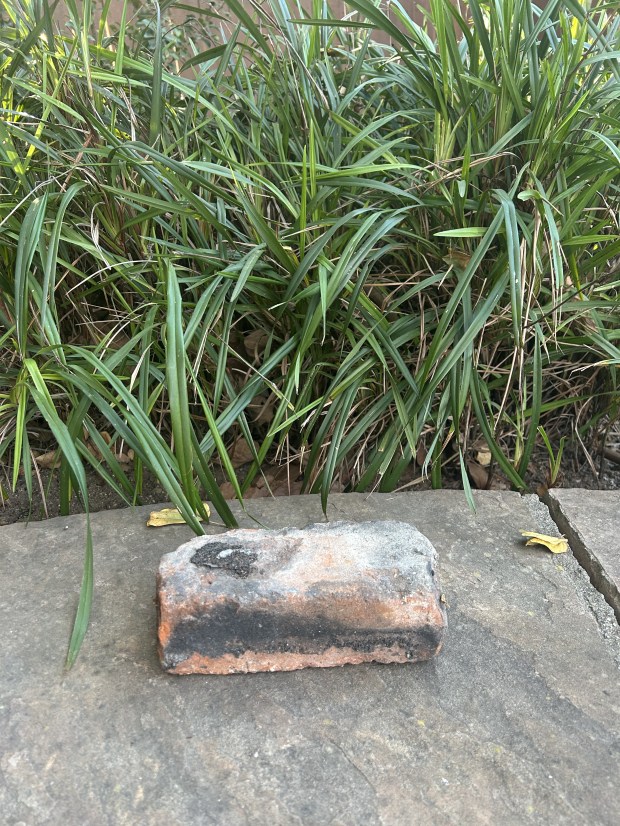
                  My parents built our home in San Bernardino in 1953. They stayed after my siblings and I moved away.  After mom died in 1993, dad lived there on his own there for more than a decade.  Eventually he sold it and moved to a retirement residence; at that point it had been our family home for fifty years.  A year later, the house burned down in a wildfire (after the new owners evacuated). Months later my sisters and I visited.  All that was left was the partially collapsed chimney. I took a charred brick as a memento.  Now I look at old family photos taken there and wonder: ‘Where did it go?”

I was Director at La Casa de Maria Retreat Center in 2018; our work was thriving and the future was bright. On January 9, the Montecito Debris Flow destroyed eight buildings and left half the property a barren field of mud.  La Casa has yet to reopen.  Sometimes when I can’t sleep, I imagine giving a tour of the property like I used to.  I can clearly see everything as it was.   It’s still hard to believe that all those structures, oak trees and our vital work could disappear in an instant.

                  How many of us have suddenly lost a loved one or treasured friend and find it hard to accept the person is really gone?

                  Is everything tangible in life nothing more than a dream?

                  Like Shakespeare, the spiritual traditions teach us that what seems so real one minute can be gone the next.

                  One of the foundational truths of Buddhism is the impermanence of all material reality. Much of our suffering arises from our tendency to ignore that.  The path to enlightenment begins with this understanding.

                  Jesus teaches a similar truth: “Do not store up for yourselves treasures on earth, where moth and rust consume and where thieves break in and steal, but store up for yourselves treasures in heaven, where neither moth nor rust consumes and where thieves do not break in and steal.  For where your treasure is, there your heart will be also.  (Matthew 6: 19-21)   

                  Are we to avoid being attached to anything that might perish? If so, how do we live?

                  For centuries, one path has been to become a monk or a nun.  You give up all your possessions and don’t own anything apart from the clothes on your back. You become celibate. Being unattached to long-term relationships and material goods means you can totally focus on the path to enlightenment and “treasures in heaven.”

                  But there is another path. This path does not forget how quickly things can vanish but does not shy away from embracing them .  This path means we remember that many things in life that seem permanent may disappear at any moment.  But we don’t turn away from them.  We invest ourselves in relationships that matter.  We obtain and care for basic material things, including the dwelling in which we live.  We plan for the future, knowing nothing is guaranteed.  We remember that everything material is subject to change.  But we appreciate what we have while we have it and are ready to share it with others.  We know the deepest meaning in life is found in pursuing spiritual values, yet we also allow ourselves to be grounded in the material world in which we live.

Life is like a dream.  But the people, dwellings, possessions, and commitments in our life are, at this moment, not a dream; they are real.  We hold both perspectives as true.  And we go on.


The brick from our home.

[i] https://www.latimes.com/entertainment-arts/story/2025-01-13/los-angeles-fires-shakespeare-tempest

[ii] McNulty notes the word “rack” meant “a wisp of a cloud’

Lead image: “Still Life with Ham and Fruit,” Jan Davidsz de Heem,1656

Taking Care of Your Gyroscope and Your Compass

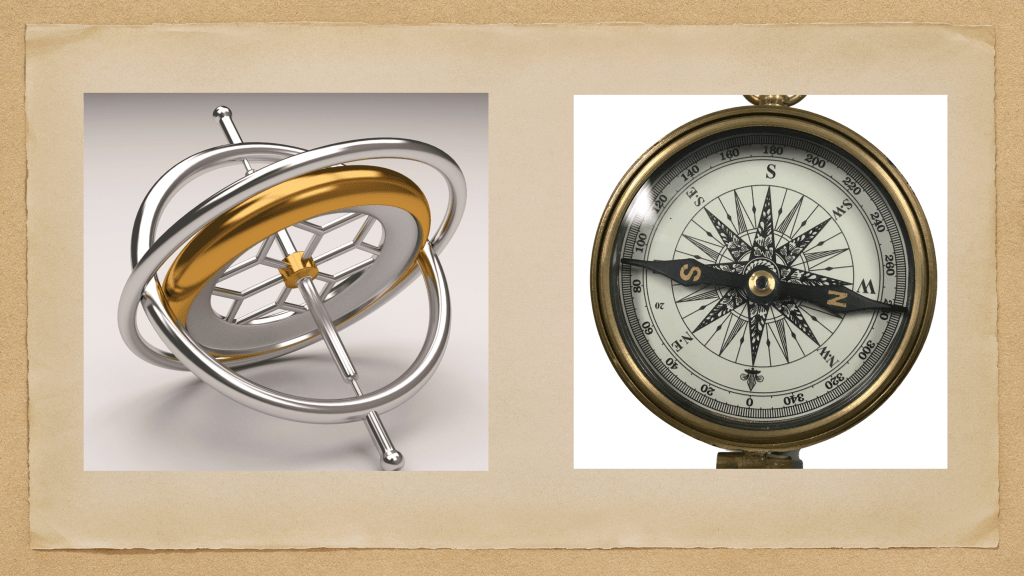
I follow different weekly columnists looking for useful insights.  I recently saw a comment by Peggy Noonan giving advice to fellow commentators as we face what might be a chaotic year: “Keep your tools, compass and gyroscope, clean, dry and level.”[i]

I liked this statement.  The metaphors weren’t new, but I appreciated putting them together: “Keeping your…compass and gyroscope, clean, dry and level.”

I take our personal gyroscope to be what keeps us balanced when our life gets topsy-turvy – what keeps us in touch with our deepest values and best thinking.

A compass helps locate where we are at any one moment.  It gives us trustworthy information with which we can decide on the best direction to go.

It is common for us to start our day, our year and any new chapter in our life with certain assumptions about what’s going to happen and how we will respond. Sometimes things unfold like we expect. But often unforeseen events happen – events that we did not see coming — and we can feel like we’ve been knocked off balance and are lost. Time to check our navigational instruments.

I have previously written about a scene from the movie Lincoln. [ii] In the winter of 1865, Lincoln wants to have Congress pass the 13th amendment (abolishing slavery) before the Civil War ends.  He needs the support of Thaddeus Stevens, an abolitionist who wants an amendment that goes beyond just the abolition of slavery to declare the total equality of the races.  Lincoln and Stevens have the same inner conviction that equality is the ultimate goal – they share a similar gyroscope.  But Lincoln knows Steven’s amendment won’t pass. Lincoln grew up on the frontier and has been in wilderness. He says, “The compass points you true north but does not warn you of obstacles and swamps along the way.”  Where we want to end up may be clear but the way to get there may not be; we must forge ahead as best we can.  Stevens reluctantly agrees to compromise and with his support the amendment passes.

I’ve performed many weddings in my ministry. Early on, I wanted couples to have a good experience in premarital counseling, but knew I was not equipped to provide it. I found marriage and family counselors whom I trusted and arranged with them to see couples for three sessions.  I would tell the couples that an added benefit would be becoming familiar with someone in town they could always go back to for support and advice as time went on – people who could help them get in touch with their “compass and gyroscope” when needed.

One topic I did personally discussed with couples was the vows.  Sometimes people wanted to write their own vows, which I could support. But I would also have them consider the traditional vows:

I, ____, take you, ____, to be my lawfully wedded (husband/wife), to have and to hold, from this day forward, for better, for worse, for richer, for poorer, in sickness and in health, until death do us part.

I would tell them to consider the three couplets: “for better/for worse, for richer/for poorer, in sickness/in health.”  When events in life are going for the “better,” if we are feeling “richer,” and if we are in good health, loving another person is easy.  But consider what might happen when life events are becoming “worse.”  Or circumstances mean you are getting “poorer.”  Or one person becomes seriously ill.  These vows mean that you will not turn away in hard times but promise to dig in and deepen your commitment.  “Hollywood movies show how wonderful falling in love is,” I would say, “but over the years I’ve learned to look at the couples who hang together in hard times.  They develop a love deeper than just emotions – they create a bond that is lasting and profound.”

I would add that spiritual beliefs and practices become particularly valuable in disorienting times.  There is wisdom beyond just ourselves that can be found in prayer and contemplation, in timeless teachings about what makes life worth living, and what our ultimate purpose can be.  Calling on these resources is turning to our spiritual gyroscope.  Then we can check our compass to see if we are headed in the best direction and not get stuck in an egocentric wilderness.

Sometimes we need to find an environment which helps us tune in to our gyroscope and compass.  For three decades, I was involved at the La Casa de Maria Retreat Center as a board member and director.  Individuals and groups would come for a day or several days for retreats.  There were no televisions or newspapers, and we enjoyed limited cell phone service.  People were free to wander our 26-acre oak forest, orchard and spiritual gardens.  They could enjoy good food, leisure time and opportunities for meaningful contemplation and conversation.  This was our mission statement:

The mission of La Casa de Maria

is to be a sanctuary of peace

Where groups and individuals

Can renew their purpose

Strengthen their community

And increase their effectiveness in the world.

La Casa was a place where 12,000 people every year people could tune into their gyroscopes and compasses.  It was inspiring to see what a difference the right environment could make and what it means for people to find a direction in life they know to be right.

In the days to come, may we each make good use of our gyroscopes and compasses.


[i] https://www.wsj.com/opinion/what-is-your-attitude-toward-trump-2-0-f3f8532c

[ii] “Faith and Sight,” Dec 9, 2023,  https://wordpress.com/post/drjsb.com/2925

Lead image: La Casa de Maria, givinglistsantabarbara.com;