A Pie for All Reasons: Tangible Benefits of Doing Good

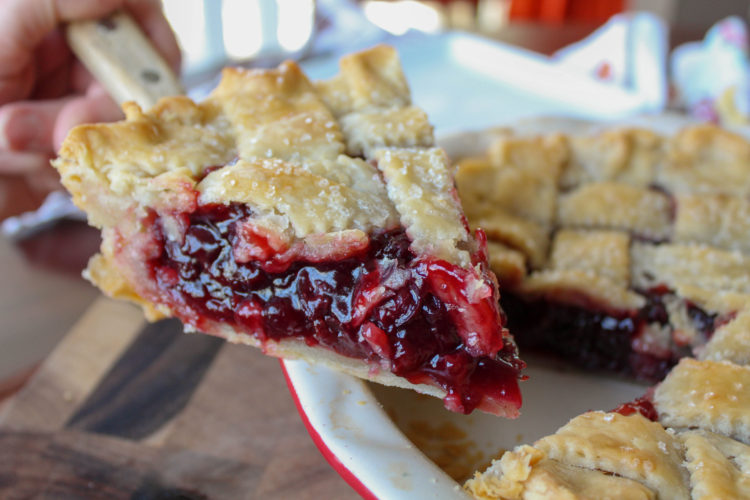
The small rural church I served in Wapato, Washington needed a new roof.  We did not have the money to pay for it. We decided to have a pie auction. 

The church was in the Yakima Valley, an ideal region for growing fruit including apples, peaches, nectarines and cherries.  Many in our congregation were expert pie-makers. We picked a date and encouraged everyone to bring their best offerings.  After the service, we would auction them one by one, hoping to reach our goal.

I got a call from a longtime member asking me to visit. She was no longer able to attend services personally but had heard about the auction. I met with her in her living room. She told me she wanted to contribute to the roof fund and have fun in the process.  She told me her plan.  I would let the auction get going while choosing a pie that appealed to me.  When that one came up, I was to let the bidding build until it felt like it was reaching its peak.  At that point, I was to stand and announce that, on her behalf, I was authorized to make a bid in the amount she told me. 

On that Sunday, I followed her instructions. I set my eye on a particular cherry pie (I knew the baker had her own backyard tart-cherry tree).  The bidding started at $20…went to $25…then $30…then $35…My moment had come.  I stood up. The auctioneer called on me.  I said, “On behalf of Mrs. –, I bid $2,000.”  The room was silent.  Then full of laughter and applause.  The next day I visited her and told her how it went. She was delighted.

Thanks to her generosity, we raised enough for the roof.  We had fun doing it.  I got to keep the pie.

You may have heard that if you want to do something for the greater good, there shouldn’t be any personal reward involved – that would be selfish. But it can be a great feeling to know you are doing something good for other people. 

Much of what’s best in America is the work of nonprofit organizations.  No matter what is happening in our national politics, individuals and communities make a difference.  We can help the Girl Scouts and enjoy the cookies.  We can support a friend running a marathon, honoring our friendship and the cause they represent.  We can support our local school, daycare center, congregation, neighborhood medical clinic, hospice organization, food bank, museum or other cause.  What we do can positively impact the lives of others.

When I donate my money or time, I’m proving to myself I’m not helpless.  I want to help other people and now I’m putting that desire into action. It feels good.  

Sometimes you can have your pie and eat it too.

(The spiritual power of pies seems to be a recurring theme for me…last year I posted The Sky Is In the Pie.)

Dreams and Realities: Thoughts on the LA Fires

In the aftermath of the recent Los Angeles fires, LA Times theater critic Charles McNulty shared his impressions in a column titled “Shakespeare’s ‘The Tempest’ illuminates an existential truth revealed by the Los Angeles fires.”[i]

McNulty writes from a neighborhood just east of the decimated neighborhoods. He’s been reassuring friends back East that he is OK as he tries to make sense of what he has witnessed. He says, “Shakespeare helps me envisage the unimaginable, and a speech from “The Tempest” has been running through my mind since images of charred sections of Pacific Palisades and Altadena started circulating.” 

In the play, the exiled Duke Prospero has put on a “supernatural pageant” to entertain his daughter and her fiancé. But at one point Prospero realizes his enemies are plotting to take his life. He abruptly ends the performance.  Speaking of the imaginary world the play created which has suddenly disappeared, he says,

“And, like the baseless fabric of this vision,
The cloud-cappped towers, the gorgeous palaces,
The solemn temples, the great globe itself,
Yea, all which it inherit, shall dissolve,
And like this insubstantial pageant faded
Leave not a rack behind.[ii] We are such stuff
As dreams are made on; and our little life
Is rounded with a sleep.”

                  McNulty describes how the things that make up everyday life can seem so solid and permanent but are, in fact, subject to disappearing at any moment. “The grief of those bearing witness to the fires is more than sympathy. We’ve all been given a shocking lesson in the “baseless fabric of this vision” we call reality but which Prospero recognizes is no more solid than a dream.”

                  Have you ever had an experience in which something that seemed so “real” suddenly disappears like a dream?

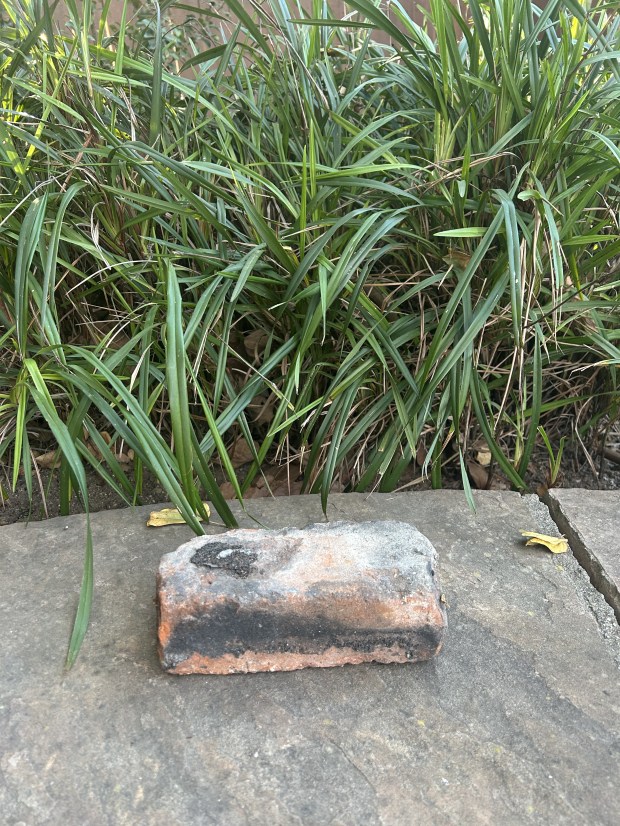
                  My parents built our home in San Bernardino in 1953. They stayed after my siblings and I moved away.  After mom died in 1993, dad lived there on his own there for more than a decade.  Eventually he sold it and moved to a retirement residence; at that point it had been our family home for fifty years.  A year later, the house burned down in a wildfire (after the new owners evacuated). Months later my sisters and I visited.  All that was left was the partially collapsed chimney. I took a charred brick as a memento.  Now I look at old family photos taken there and wonder: ‘Where did it go?”

I was Director at La Casa de Maria Retreat Center in 2018; our work was thriving and the future was bright. On January 9, the Montecito Debris Flow destroyed eight buildings and left half the property a barren field of mud.  La Casa has yet to reopen.  Sometimes when I can’t sleep, I imagine giving a tour of the property like I used to.  I can clearly see everything as it was.   It’s still hard to believe that all those structures, oak trees and our vital work could disappear in an instant.

                  How many of us have suddenly lost a loved one or treasured friend and find it hard to accept the person is really gone?

                  Is everything tangible in life nothing more than a dream?

                  Like Shakespeare, the spiritual traditions teach us that what seems so real one minute can be gone the next.

                  One of the foundational truths of Buddhism is the impermanence of all material reality. Much of our suffering arises from our tendency to ignore that.  The path to enlightenment begins with this understanding.

                  Jesus teaches a similar truth: “Do not store up for yourselves treasures on earth, where moth and rust consume and where thieves break in and steal, but store up for yourselves treasures in heaven, where neither moth nor rust consumes and where thieves do not break in and steal.  For where your treasure is, there your heart will be also.  (Matthew 6: 19-21)   

                  Are we to avoid being attached to anything that might perish? If so, how do we live?

                  For centuries, one path has been to become a monk or a nun.  You give up all your possessions and don’t own anything apart from the clothes on your back. You become celibate. Being unattached to long-term relationships and material goods means you can totally focus on the path to enlightenment and “treasures in heaven.”

                  But there is another path. This path does not forget how quickly things can vanish but does not shy away from embracing them .  This path means we remember that many things in life that seem permanent may disappear at any moment.  But we don’t turn away from them.  We invest ourselves in relationships that matter.  We obtain and care for basic material things, including the dwelling in which we live.  We plan for the future, knowing nothing is guaranteed.  We remember that everything material is subject to change.  But we appreciate what we have while we have it and are ready to share it with others.  We know the deepest meaning in life is found in pursuing spiritual values, yet we also allow ourselves to be grounded in the material world in which we live.

Life is like a dream.  But the people, dwellings, possessions, and commitments in our life are, at this moment, not a dream; they are real.  We hold both perspectives as true.  And we go on.


The brick from our home.

[i] https://www.latimes.com/entertainment-arts/story/2025-01-13/los-angeles-fires-shakespeare-tempest

[ii] McNulty notes the word “rack” meant “a wisp of a cloud’

Lead image: “Still Life with Ham and Fruit,” Jan Davidsz de Heem,1656