Images of Our Lives: Resumes, Eulogies, Compost

(Dear Reader: I was on the road this week and working on two presentations for this weekend, so I’m reposting this piece from 4 years ago. I picked it because I continue to find these perspectives on our lives (resume/eulogy/compost) to be interesting and helpful. — Steve)

   PBS and New York Times commentator David Brooks has experienced a major spiritual transformation in recent years.  One of his epiphanies is that many of us live with two sets of virtues in play.   As he wrote in a column entitled “The Moral Bucket List”:

            It occurred to me that there were two sets of virtues, the résumé virtues and the eulogy virtues. The résumé virtues are the skills you bring to the marketplace. The eulogy virtues are the ones that are talked about at your funeral — whether you were kind, brave, honest or faithful. Were you capable of deep love?

            We all know that the eulogy virtues are more important than the résumé ones. But our culture and our educational systems spend more time teaching the skills and strategies you need for career success than the qualities you need to radiate that sort of inner light. Many of us are clearer on how to build an external career than on how to build inner character.[i]

            From the first time I read this column, I appreciated this distinction and its implications. In this post, I’m going to comment on my own experience with resumes and eulogies, then add an additional thought.

Resumes: Much of my career was spent building my resume, and it was always interesting to read the resumes of others. Earning degrees, seeking accomplishments that I could quantify, publishing articles and serving on boards were all facts to add to the resume. This is what it takes to create a meaningful work life in a competitive society. It’s part of life in the modern world. But a resume does not a life make.

            Eulogies: One of the activities I treasured as a pastor was participating in memorial services.  I was always keen to hear what would be said about the person being remembered, and how the stories would cause each of us to pause and reflect on our own lives.

            If I was organizing the service, I would work with the family to create a simple outline of the person’s life: where they were born, what they did, and what they accomplished – something like their resume.  But that just set the stage for the stories people would share about the person: how they treated other people, and what moments friends and family look back on with appreciation. As David Brooks noted, in eulogies we often hear examples of the virtues of kindness, bravery, honesty or faithfulness – many ways in which people manifest “deep love.” 

            So far, so good.  I like identifying these two important aspects of our lives.

            But as I’ve been thinking of this distinction, I kept feeling like there was something missing, and only recently felt like I knew what it is.

            Resumes exist in print and are plain for all to see.  The “eulogy virtues” may be affirmed as part of a memorial service or obituary.  But what if the person lives a very long life, and dies when there is no one left to hear the eulogy?

            I think of my own father.  He lived to be 91, and almost all of those years were lived in Redlands and San Bernardino. He was active in many civic organizations and a well-known man in his day. In his last few years, my sister and I brought him to a retirement home in Santa Barbara so we could see him more often.  When he died, we arranged for a service back in San Bernardino.  We published an obituary in his hometown paper and spread the word as well as we could. But on the day of the service, only 3 or 4 people showed up besides family.  It was understandable – he had outlived most of the people he knew – but it was also disappointing.

            I’ve done services for people who die in relative obscurity. There’s no one there to describe and affirm the virtues and integrity they saw in the person. It doesn’t seem right.

            A similar thought arises when I’m with my young grandsons.  We share meaningful and fun times.   I find myself hoping they’ll remember our time together when they are older.  But what if I die before the memories take root? Will the time we share “count?”

            It reminds me of the familiar riddle, “If a tree falls in a forest and no one is around to hear it, does it make a sound?” We could rephrase it: “If someone dies and no one is there to give a eulogy, is the life a waste?” 

            Ruminating on this question has led me to think of compost.

            Compost  Many years ago in seminary a preaching and communications professor challenged us to think about how we envision the preaching task.

            “You might tend to think of your sermons as roses,” he said. “A masterpiece that you cultivate it until it’s a thing of beauty.  Then you carefully cut it, and bring it to display before the congregation on a Sunday morning . As people leave the service, you hope people will tell you what a beautiful rose you created.  Well, I invite you to not think of preaching that way.  Think of your sermons as compost.  Compost you work into the soil of peoples’ lives you are serving. The beauty comes from what flowers in their life.”

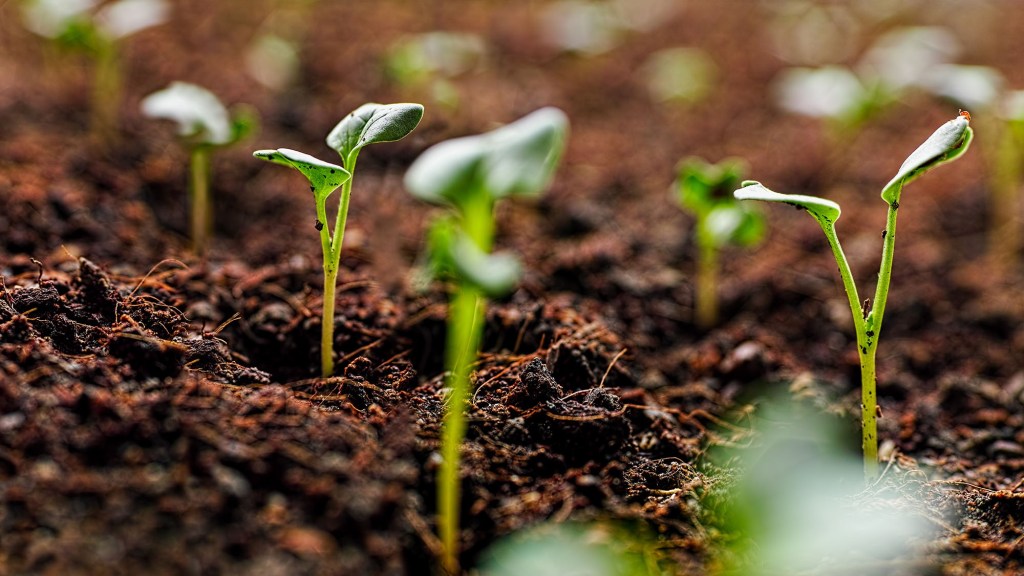
            The purpose of compost is to disappear into the soil, freely giving itself to produce new life.  It doesn’t need to be named to be real and everlasting.  So it is with our lives.  The good we do for others may not be quantified on a resume or be lauded in a eulogy, but that doesn’t mean it’s of no value. It’s a gift we can give, and then let it go.


[i] https://www.nytimes.com/2015/04/12/opinion/sunday/david-brooks-the-moral-bucket-list.html

Rewriting Our Life Stories

This from the 1984 film, The Natural:

         Iris: You know, I believe we have two lives.

         Roy: What do you mean?

         Iris: The life we learn with and the life we live with after that.

And this from David Brooks’ recent column in the New York Times:

         “I believe most of us tell a story about our lives and then come to live within that story. You can’t know who you are unless you know how to tell a coherent story about yourself. You can know what to do next only if you know what story you are a part of. “A man is always a teller of tales,” the philosopher Jean-Paul Sartre observed. “He lives surrounded by his stories and the stories of others, he sees everything that happens to him through them, and he tries to live his own life as if he were telling a story.”[i]

         When I was young, I imagined my life story would be a hero’s tale.  I was going to play shortstop for the Dodgers. After watching Star Trek episodes, I decided I’d be an astrophysicist. Later I knew I was destined to be a successful lawyer in San Francisco. 

         I loved sports but my career peaked in Little League.

         I loved the idea of being a space scientist but wasn’t good enough at math.

         I did do a year of law school.  Meanwhile, I fell in love, took a leave of absence, got married, became a father, had a spiritual awakening, and went in a career direction I would have never imagined.

         Life happens.

         I certainly have had some successes along the way.  I have also learned I could overestimate my abilities.  I learned that some experiences in life can almost break you.  I learned that some of life’s blessings must be gained through hard work, discipline and endurance.  At the same time, unearned and unexpected blessings can come out of the blue and become signs of grace.

         I have often thought of what Iris said: “We have two lives…the life we learn with and the life we live with after that.” 

         For years I’ve been privileged to listen to people share at what point they recognized that the heroic, storybook lives they envisioned when they were younger were no longer valid, and how they have been rewriting their life story ever since.  

         I have heard David Brooks speak about his own two-lives journey. In his 50s, he was at the peak of his professional career in journalism.  He had power and influence. But he went through a divorce and found himself feeling lost and empty.  He realized the life of the rich and powerful in New York and D.C., which had seemed so exciting for so long, now seemed empty and dull.  He began seeking a new direction and new narrative for his life story. He started going to small towns and neighborhoods throughout America, looking for people who have found meaning in life.  He met such people from all walks of life and all kinds of neighborhoods.  Their lives were modest by the standards of the rich and powerful. But these people had a humility that gave them a sense of peace. They had also found ways to serve other people – troubled teens, children caught in rough neighborhoods, and isolated neighbors.  He discovered these people have an inner light, something he did not have.  His “second life” began.

         Life keeps going and our stories keep evolving.

          When we are composing our life stories, we may be tempted to go back and erase what’s happened to us.  But there’s no “delete” key for our past.  We can, however, decide how to incorporate our past into the story we are creating every day.

         The Natural begins with Roy and Iris as naïve teenagers in Nebraska who expect to marry after he begins his baseball career.  He leaves for Chicago for his big chance.  But he misjudges the intentions of a woman on a train and never makes it to the tryout. Roy and Iris lose contact.  Years later they find each other.  He has returned to baseball for one last chance and becomes a star. She is a single mom.  The “two-lives’ conversation takes place in a hospital room where Roy is recovering from an injury, hoping to be strong enough to play in one last playoff game.  As it turns out, Roy does play and has his moment of glory. They reunite and return to Nebraska to raise their son and live happily ever after. 

         Some peoples’ stories turn out like that.  But often our lives become something more complicated, and don’t fit the pattern of story-book endings.  Instead, they become stories that are far richer.


[i] https://www.nytimes.com/2023/09/21/opinion/elon-musk-ambition.html

Lead image courtesy of originalfilmart.com

The scene can be viewed at https://youtu.be/2UpNJlx0EF0?feature=shared.

David Brooks created “Weavers,” a nonprofit dedicated to sharing the stories of the people who are living the kind of lives that inspired him:  https://weavers.org

Five Tips for Everyday Living

Last year, David Brooks wrote a column in which he shared a list of 38 “life hacks” created by a tech writer he admires, Kevin Kelly[i].  They may not be profound spiritual insights or revelations – they’re more like practical suggestions on how to manage everyday situations.  Here are five that spoke to me:

  1. … over the last few years I have embraced, almost as a religious mantra, the idea that if you’re not sure you can carry it all, take two trips.  Many times in my life I’ve parked my car… looked at the various items I want to take in… recognized it was going to be a challenge to get them all in one trip…, and then heard a voice saying “Yeah, it’s a lot, but you can do it!”  I awkwardly fill up my arms with all the items…try to shut the car door with a foot…and something spills on the sidewalk. Or maybe I get as far as the front door, discover it’s locked, and as I try to get my keys out of my pocket, disaster strikes.  Since reading this, I am catching myself in that moment of decision between foolish optimism and sober realism.  Choosing the Calm-and-Practical-Me in such moments makes me feel like a Zen master.  Less spillage, less embarrassment, and a glimmer of maturity.  Low-cost liberation!
  2. Something does not need to be perfect to be wonderful, especially weddings.  I’ve participated in many weddings over the years, and, to tell you the truth, they often make me nervous.  Expectations can be high in terms of the flowers, the decorations, the timing, the participants, the food, the guest list, and the schedule of events.  The most expensive formal wedding I ever presided at started late because the bride and groom were arguing with lawyers about the prenuptial agreement; the marriage itself lasted only a few years.  I contrast that experience with the ceremonies I’ve been part of that have had a mood of ease, quiet joy, humor, reverence, and genuine affection.  These ceremonies may not reach Martha Stewart’s standards, but they are experiences where love and wonder met.
  3. The biggest lie we tell ourselves is, “I don’t need to write this down because I will remember it.”  It’s amazing how many things we think we will remember but forget. Of course, the older we get, the more this occurs. I’m trying to be more intentional about writing things down on notecards or with the memo app on my phone.
  4. If you can’t make up your mind between two options, flip a coin. Don’t decide based on which side of the coin came up. Decide based on your emotional reaction to which side came up.  I’ve often quoted David Brooks’ comment “Our culture assumes we are brains on a stick.”  The truth is we have many ways of knowing including feeling, intuition, and “somatic intelligence” – the idea that our bodies sometimes know truths hidden from our conscious thinking. I have a variety of different routes I walk in our neighborhood. In the last year or two, if I get to a familiar intersection and receive a prompting like, “How about turning left today instead of right and going down a street you rarely go?” I follow it.  I like to think it’s helping me tune in to that hidden way of knowing, which may better access our natural creativity.
  5. Don’t try to figure out what your life is about. It’s too big a question. Just figure out what the next three years are about.  I’ve been trying to figure out what life is about since I was a teenager and I am not giving up.  I intend to stay curious about spiritual insights, new scientific knowledge, and the practical wisdom conveyed by people I meet.  But I like this idea of making a three-year plan for the practical things in life.  It’s manageable.

The original article included 38 such suggestions. That’s way too many for me.  I’m thinking I can hold five at a time without dropping any. I also hope writing them down like this will help – if I remember where I put the list.

Here’s my summary:


[i] David Brooks, The Greatest Life Hacks in the World (for Now); June 2, 2022

Top image: “Monk Writing,” Carl Schleicher, 1903

“Beholding” as a Spritual Practice

            Last week I attended a leadership conference featuring David Brooks, PBS commentator and columnist for the New York Times.  He covered many issues in his three talks, and one I want to share with you concerns the attention we give other people.

David said he recently was working alone at home one evening when his wife came in the front door. He looked up to see her and realized she hadn’t yet noticed him sitting at his desk in the adjacent room.  He decided to simply watch her for a minute.  After she closed the door behind her, she put her things down, and paused.  The house was quiet. She then turned and walked into the kitchen.  In that unplanned moment of simply observing her, he realized how much he loved her. He said the experience of seeing her this way was not just a visual act, but something more: he felt as if he was beholding her.

He contrasted this moment with what we experience often in modern life — looking at each other without really seeing each other.  When we meet someone, we quickly form assumptions about them before they even speak and filter whatever they say through our assumptions.  When someone we know is talking – even someone we know well – our busy mind often isn’t listening carefully to them, but instead preparing what we are going to say in response.  “We are not good at “reading” others,” he said, which has created “an epidemic of social blindness.”  The quality of attention we bring to someone else is a moral act.  If we are truly paying attention with humility and genuine respect, we are granting that person dignity.   We are beholding them.

I looked up the origin of the word.  In Old English, the word bihaldan meant “give regard to, hold in view.”  Modern definitions include, “To hold by, keep, observe, regard, look” and “To look upon, view, consider as (something); to consider or hold in a certain capacity.” If I was to add my own definition, it would be “to give reverent attention to a particular person or experience.” I kept turning the word around in my imagination and was intrigued with the possibility that to “behold” someone could be to “hold” that person’s “being” with a particular sense of awe and care.  We are not looking at them with our “busy mind” but opening ourselves to the mystery and wonder of their living presence.

            In Leaving Church: A Memoir of Faith, Episcopal priest Barbara Brown Taylor described the factors that led her to leave parish ministry. One reason was that she had become weary of people wanting her to tell them what they were supposed to believe.  She said her spiritual journey had not been so much about believing the right thing but inviting others into experiences of beholding —“beholding life on earth in all its glorious and terrible reality.”

            Being with someone when they die can often evoke a feeling there’s something sacred in the room. I remember my sisters and I spending time at our deceased father’s bedside before the mortuary arrived.  We weren’t just looking at dad, we were beholding him.

            And I recall what it’s like raising young children.  You’re busy all day long with them – talking, listening, dressing, negotiating, feeding, bathing, reading a story — and it’s a big accomplishment to finally get them into bed. A little while later you come back to their room to check on them.  You carefully, quietly open the door and see if they’ve fallen asleep. Seeing they are, you sometimes stand there and keep looking at them. You now “see” them for the miracles they are. You may even think, “When they are asleep they look like angels.” In those moments, you’re not just looking at them – you are beholding them

            Maybe we can try beholding one person today and see what we experience.

Imgage: Sleeping Child Covered With a Blanket, Henry Moore, 1942

Three Insights from David Brooks

         This past week I came across notes I had taken while attending two leadership conferences featuring New York Times columnist David Brooks. I’ve always respected David’s insights into culture and politics. But at these two events, David reflected on his personal journey. He said he had achieved everything he ever wanted in his professional life but felt his life had become increasingly empty.  He began searching for clues as to what he was missing and shared with us some of his reflections.   Here are three I want to share with you today

         “Our culture treats us like brains on a stick.” As we spend more time in a digital world, enticed and tracked by Big Tech, we become disconnected and disembodied from nature and neighbors.

         But, he noted, two of his friends had experiences that remind us there is another dimension of life.

         One such moment happened in his friend’s kitchen. The friend had come downstairs and glanced out the kitchen window. Outside was a falcon on a branch.  They looked into each other’s eyes – and kept looking –and it felt as if they were seeing into each other’s depths.  Finally, the falcon flew away.  The encounter changed his friend’s life.

         Another friend told David a thought that surprised her. As she was holding her newborn daughter these words came to her: “I love this child more than evolution can explain.” Science and evolution explain so much about the world we live in. But there are moments, mystical moments, when we realize there is something more, something wonderful, something holy, and we are in the midst of it every day.

         We are not meant to live “like brains on a stick.” Looking into the eyes of our fellow creatures and each other, we can wake up to the great mystery of life, which is tangible, unfathomable, and glorious.

         Thank you, David, for sharing thoughts from your journey.

Images of Our Lives: Resumes, Eulogies, Compost

            PBS and New York Times commentator David Brooks has experienced a major spiritual transformation in recent years.  One of his epiphanies is that many of us live with two sets of virtues in play.   As he wrote in a column entitled “The Moral Bucket List”:

            It occurred to me that there were two sets of virtues, the résumé virtues and the eulogy virtues. The résumé virtues are the skills you bring to the marketplace. The eulogy virtues are the ones that are talked about at your funeral — whether you were kind, brave, honest or faithful. Were you capable of deep love?

            We all know that the eulogy virtues are more important than the résumé ones. But our culture and our educational systems spend more time teaching the skills and strategies you need for career success than the qualities you need to radiate that sort of inner light. Many of us are clearer on how to build an external career than on how to build inner character.[i]

            From the first time I read this column, I appreciated this distinction and its implications. In this post, I’m going to comment on my own experience with resumes and eulogies, then add an additional thought.

Resumes: Much of my career was spent building my resume, and it was always interesting to read the resumes of others. Earning degrees, seeking accomplishments that I could quantify, publishing articles and serving on boards were all facts to add to the resume. This is what it takes to create a meaningful work life in a competitive society. It’s part of life in the modern world. But a resume does not a life make.

            Eulogies: One of the activities I treasured as a pastor was participating in memorial services.  I was always keen to hear what would be said about the person being remembered, and how the stories would cause each of us to pause and reflect on our own lives.

            If I was organizing the service, I would work with the family to create a simple outline of the person’s life: where they were born, what they did, and what they accomplished – something like their resume.  But that just set the stage for the stories people would share about the person: how they treated other people, and what moments friends and family look back on with appreciation. As David Brooks noted, in eulogies we often hear examples of the virtues of kindness, bravery, honesty or faithfulness – many ways in which people manifest “deep love.” 

            So far, so good.  I like identifying these two important aspects of our lives.

            But as I’ve been thinking of this distinction, I kept feeling like there was something missing, and only recently felt like I knew what it is.

            Resumes exist in print and are plain for all to see.  The “eulogy virtues” may be affirmed as part of a memorial service or obituary.  But what if the person lives a very long life, and dies when there is no one left to hear the eulogy?

            I think of my own father.  He lived to be 91, and almost all of those years were lived in Redlands and San Bernardino. He was active in many civic organizations and a well-known man in his day. In his last few years, my sister and I brought him to a retirement home in Santa Barbara so we could see him more often.  When he died, we arranged for a service back in San Bernardino.  We published an obituary in his hometown paper and spread the word as well as we could. But on the day of the service, only 3 or 4 people showed up besides family.  It was understandable – he had outlived most of the people he knew – but it was also disappointing.

            I’ve done services for people who die in relative obscurity. There’s no one there to describe and affirm the virtues and integrity they saw in the person. It doesn’t seem right.

            A similar thought arises when I’m with my young grandsons.  We share meaningful and fun times.   I find myself hoping they’ll remember our time together when they are older.  But what if I die before the memories take root? Will the time we share “count?”

            It reminds me of the familiar riddle, “If a tree falls in a forest and no one is around to hear it, does it make a sound?” We could rephrase it: “If someone dies and no one is there to give a eulogy, is the life a waste?” 

            Ruminating on this question has led me to think of compost.

            Compost  Many years ago in seminary a preaching and communications professor challenged us to think about how we envision the preaching task.

            “You might tend to think of your sermons as roses,” he said. “A masterpiece that you cultivate it until it’s a thing of beauty.  Then you carefully cut it, and bring it to display before the congregation on a Sunday morning . As people leave the service, you hope people will tell you what a beautiful rose you created.  Well, I invite you to not think of preaching that way.  Think of your sermons as compost.  Compost you work into the soil of peoples’ lives you are serving. The beauty comes from what flowers in their life.”

            The purpose of compost is to disappear into the soil, freely giving itself to produce new life.  It doesn’t need to be named to be real and everlasting.  So it is with our lives.  The good we do for others may not be quantified on a resume or be lauded in a eulogy, but that doesn’t mean it’s of no value. It’s a gift we can give, and then let it go.


[i] https://www.nytimes.com/2015/04/12/opinion/sunday/david-brooks-the-moral-bucket-list.html