
I recently gave a sermon focusing on the famous verse from Psalm 23 in which the writer compares God to a shepherd who “… makes me lie down in green pastures…leads me beside still waters…(and) restores my soul.”
The next day, a parishioner sent me this poet by Trinidadian writer, Roger Robinson:
“A Portable Paradise”
“And if I speak of Paradise,
then I’m speaking of my grandmother
who told me to carry it always
on my person, concealed, so
no one else would know but me.
That way they can’t steal it, she’d say.
And if life puts you under pressure,
trace its ridges in your pocket,
smell its piney scent on your handkerchief,
hum its anthem under your breath.
And if your stresses are sustained and daily,
get yourself to an empty room – be it hotel,
hostel or hovel – find a lamp
and empty your paradise onto a desk:
your white sands, green hills and fresh fish.
Shine the lamp on it like the fresh hope
of morning, and keep staring at it till you sleep.”
We seem to have inherited a strong imprint of such places from our hunting and gathering ancestors. If we live in a desert climate, “green pastures” and “still waters” give us a sense of safety and hope; if we live on a Caribbean island, it may be “white sands, green hills and fresh fish.” Such places speak to us of life, rest, and restoration.
This past week, I asked friends where they go when they want to have such an experience. Some say it’s a quiet place in their backyard. Others say it’s a specific beach, park, or trail. Many people will name places in Hawaii or the Sierras.
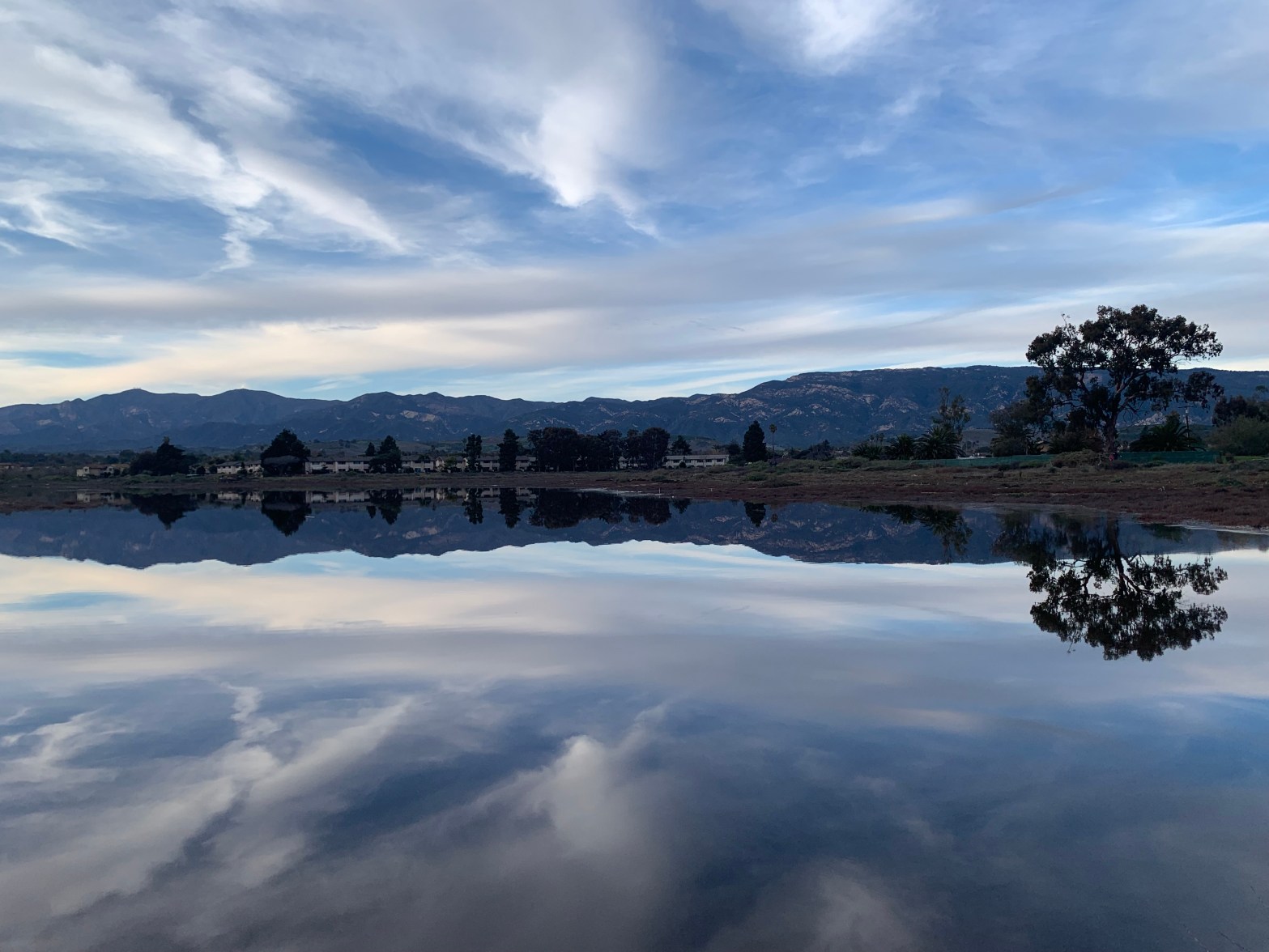
We can carry such places with us in our imaginations. As the poet says, such a place can become our own “portable paradise.” We can go there in times of anxiety and uncertainty, when we are facing an important decision, or when we simply want to remember who we are.
Hospice counselors I know encourage their clients to identify and carry such “safe places” with them so they can imagine being there when feeling worn down by grief. One bilingual counselor told me that some of her Latino clients have never been to places like Hawaii or the Sierras, nor could they identify a safe place from personal experience. She would encourage them to choose a color that might work, and they often chose blue.
For more than a decade, we’ve spent time every summer in the town of McCloud at the foot of Mt. Shasta. There’s an old 9-hole golf course there at the edge of the pine forest. I’ve played it many times by myself in the late afternoon and early evening when it’s just the course, the creek, the mountain, the deer, and me. During COVID, if I was having a hard time sleeping, I’d play a round in my imagination. I would see myself preparing for and executing each shot, then walking patiently to the next one. I didn’t keep score, and often fell asleep before finishing the round.
Calling such places to mind is like tasting delicious food – we can take our time, savoring each aspect of the image as it speaks to us. Our egos may get impatient, nagging us about the urgent things we need to do. But we can tell our busy minds we’ll be right back after a break. When we take time to let our imagination become a servant to our soul, we can find those “paradise places” within that bring us back to life.
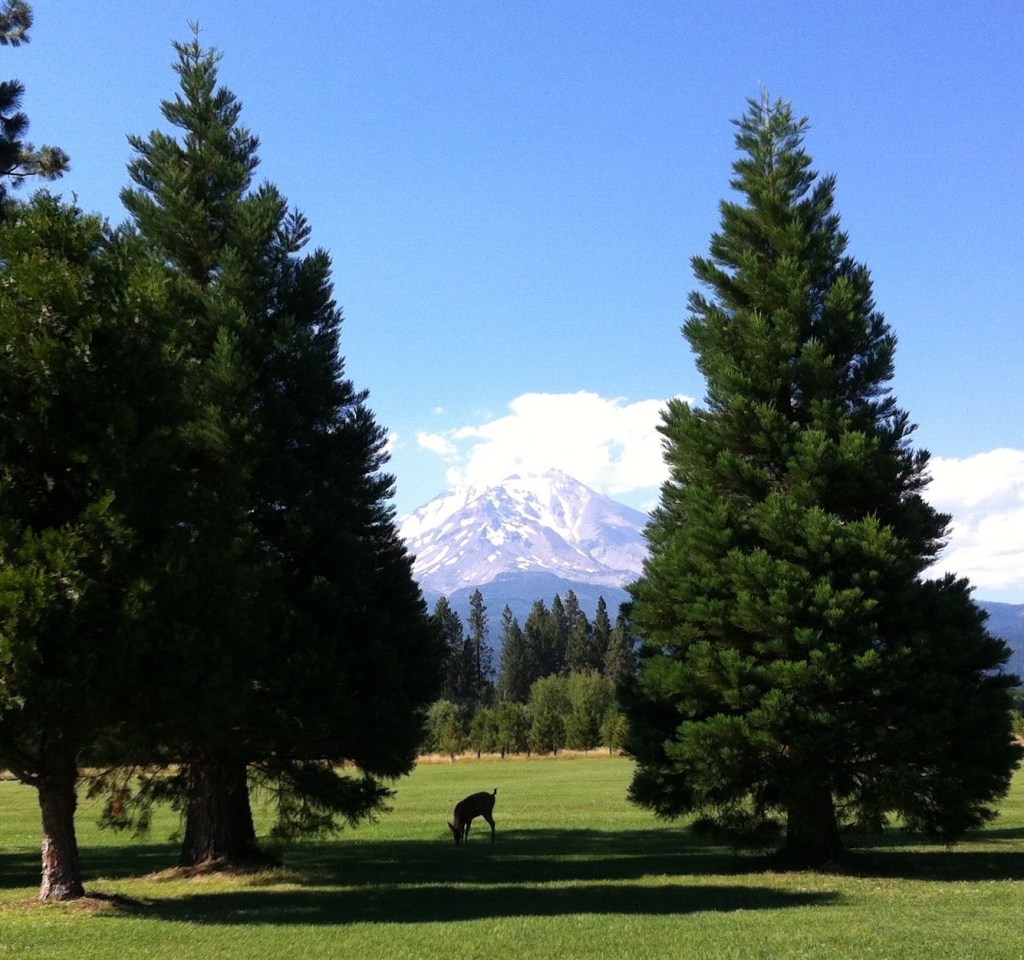
Top image: “Picnic in Paradise,” by Steve Barton; Lower image, “Deer Finding Lost Ball,” McCloud Golf Club


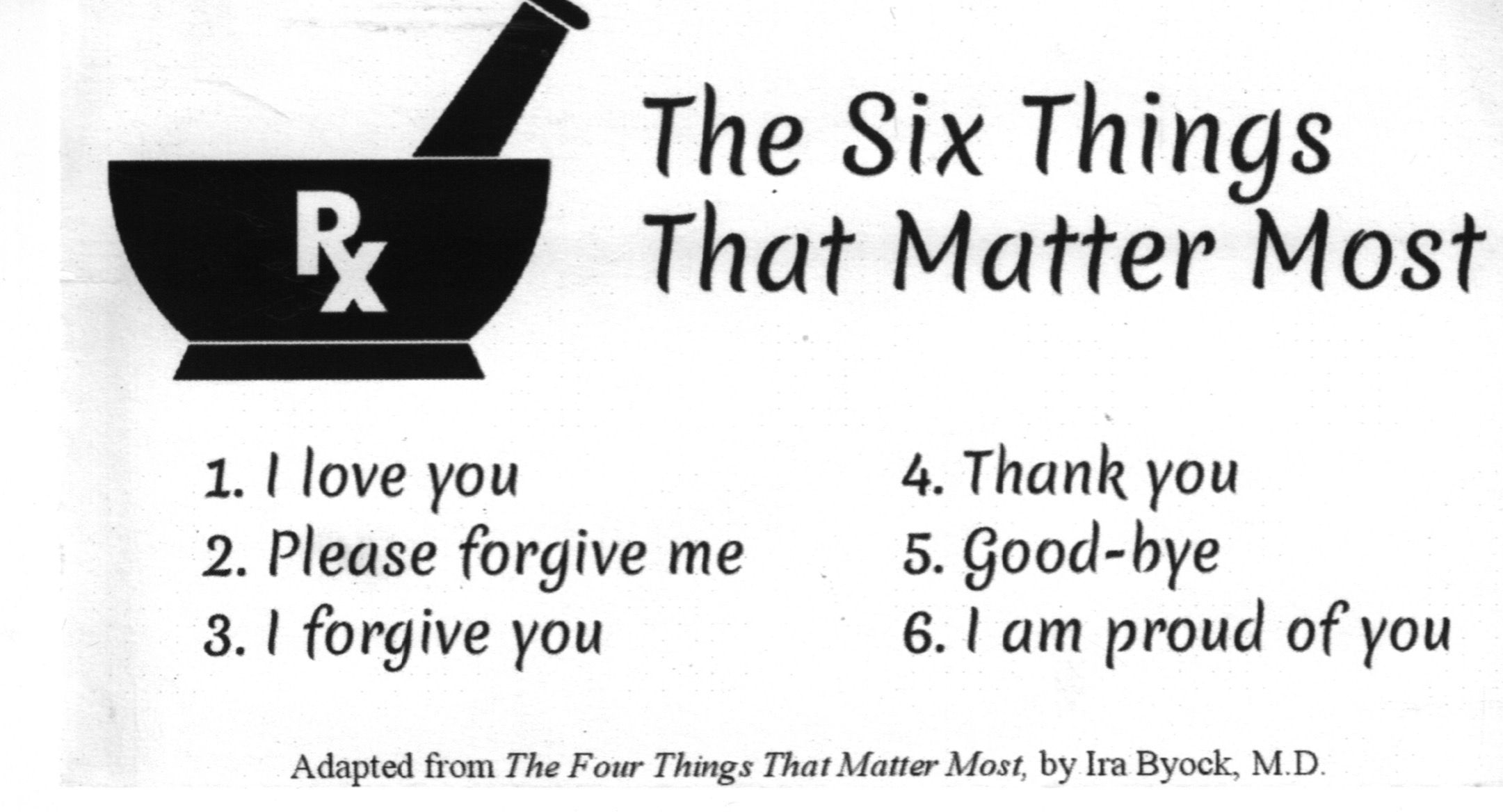 I was grateful to have the card when my father was dying.
He was in his last days at a nursing home. My two sisters and I used the list as a prompt for talking to him. He was no longer responsive, but it felt like the right thing to do. Maybe he heard us or maybe not. Maybe he could sense what we meant through tone or feeling. Or maybe it was just for us.
“Dad, please forgive me for the sleepless nights I gave you as a teenager.”
“There were times when I was growing up when I was afraid of your anger. I knew you were under a lot of pressure and loved us, but it was still scary. I forgive you.”
“Thank you for providing for us, encouraging us and believing in us.”
“For the way you worked so hard to honor mom and provide for us, for the integrity and honesty with which you lived your life, and for your service to our country during the war – we are proud of you.”
Dad wasn’t from a generation when many men would say “I love you.” But we knew he loved us. It was easy for each of us to say, “I love you, Dad.”
The “Goodbye” statement can be tricky. It can be tempting to say it to have some closure, but it may be too early. (I remember one family had asked a harpist to play in the room; the patient woke up and said, “Get that music out of here…I’m not ready for the angels yet!”) But if, say, a family member is leaving town or death is clearly imminent, then “Goodbye” can be fitting.
As I did presentations on hospice in the community, I would pass these cards out. People would later tell me how helpful they were.
But I also knew what everyone who works in hospice knows…the work is not just about the dying, but also about the living. Whether dad was fully aware of what we were saying, it gave us closure.
The list can also be helpful after a death when we didn’t have an opportunity to speak the words in person. We can write a letter to the person using the list as possible prompts. We can then save the letter just for ourselves. Or we can take it to a place we associate with the person, including a gravesite, and read it. When it’s served its purpose, we can keep it or create a simple ritual and burn it.
“Six Things” can also be valuable when death is not on the horizon. Roughly half of Americans die with some form of hospice care, which means there may be time for meaningful bedside moments. It also means the other half of us will die without such an opportunity – heart attacks, strokes, accidents, etc. If these are the six things that matter most, why wait for a moment that we may never have? Why not use them when we are alive and well?
As time went on, I’ve found the “Six Things” a good way to take inventory from time to time in my own life on occasions like anniversaries and birthdays. Is there someone I want to say these words to now since there’s no guarantee I’ll have a chance in the future? Or maybe take one each day, and say it to someone during the day if the time feels right? It doesn’t have to be a dramatic act, just a sincere one. What do we have to lose? Once we do it, we often experience a sense of freedom.
I was grateful to have the card when my father was dying.
He was in his last days at a nursing home. My two sisters and I used the list as a prompt for talking to him. He was no longer responsive, but it felt like the right thing to do. Maybe he heard us or maybe not. Maybe he could sense what we meant through tone or feeling. Or maybe it was just for us.
“Dad, please forgive me for the sleepless nights I gave you as a teenager.”
“There were times when I was growing up when I was afraid of your anger. I knew you were under a lot of pressure and loved us, but it was still scary. I forgive you.”
“Thank you for providing for us, encouraging us and believing in us.”
“For the way you worked so hard to honor mom and provide for us, for the integrity and honesty with which you lived your life, and for your service to our country during the war – we are proud of you.”
Dad wasn’t from a generation when many men would say “I love you.” But we knew he loved us. It was easy for each of us to say, “I love you, Dad.”
The “Goodbye” statement can be tricky. It can be tempting to say it to have some closure, but it may be too early. (I remember one family had asked a harpist to play in the room; the patient woke up and said, “Get that music out of here…I’m not ready for the angels yet!”) But if, say, a family member is leaving town or death is clearly imminent, then “Goodbye” can be fitting.
As I did presentations on hospice in the community, I would pass these cards out. People would later tell me how helpful they were.
But I also knew what everyone who works in hospice knows…the work is not just about the dying, but also about the living. Whether dad was fully aware of what we were saying, it gave us closure.
The list can also be helpful after a death when we didn’t have an opportunity to speak the words in person. We can write a letter to the person using the list as possible prompts. We can then save the letter just for ourselves. Or we can take it to a place we associate with the person, including a gravesite, and read it. When it’s served its purpose, we can keep it or create a simple ritual and burn it.
“Six Things” can also be valuable when death is not on the horizon. Roughly half of Americans die with some form of hospice care, which means there may be time for meaningful bedside moments. It also means the other half of us will die without such an opportunity – heart attacks, strokes, accidents, etc. If these are the six things that matter most, why wait for a moment that we may never have? Why not use them when we are alive and well?
As time went on, I’ve found the “Six Things” a good way to take inventory from time to time in my own life on occasions like anniversaries and birthdays. Is there someone I want to say these words to now since there’s no guarantee I’ll have a chance in the future? Or maybe take one each day, and say it to someone during the day if the time feels right? It doesn’t have to be a dramatic act, just a sincere one. What do we have to lose? Once we do it, we often experience a sense of freedom.





 Steve Jacobsen, Ed.D