As I write this, I’ve been in Berlin for three days. I’ve come to explore the city and its complicated history, view great art and listen to great music, taste the food, and walk among the crowds. Being here brings to mind one of my favorite movies that is set in Berlin before the Wall came down: “Wings of Desire” by Wim Wenders.
The movie came out in 1987. It’s a kind of realistic fantasy that depicts a city where angels are present. They don’t look like the angels in famous paintings — they dress like everyone else, often wearing trench coats. Most people can’t see them — only children. They listen in on peoples’ private thoughts, and if someone is troubled or depressed, they come close to them, hoping by their presence to bring feelings of hope and reassurance. They are on the streets, in the library, and at a local circus. They live forever, and have been in the city as long as people have lived there.
But one of the angels, Damiel, is getting restless. He is tired of being purely “spiritual” and not experiencing the complex realities of human life. He and his friend Cassiel are sitting in a car, sharing some of the intimate moments they’d observed in the people they’ve been watching over:
Cassiel: “ˆIn the vineyards, an old man was reading from the Odyssey to a child, and the little listener stopped blinking altogether. And you, what do you have to say?”
Damiel: ”A passerby who folded up her umbrella in the middle of the rain – and got wet.”
“A student who described to his teacher how a fern grows out of the ground. And the amazed teacher.”
“A blind woman who was feeling for her watch when she sensed me.”
“It is wonderful to live only spiritually and to testify to people day after day for eternity about something purely spiritual.”
“But sometimes my eternal mental existence becomes too much for me.”
“I don’t want to float above it all the time. I want to feel a weight on me that will lift the boundlessness around me and make me grounded.”
“I would like to be able to say “now, and now and now” with every step or gust of wind and not “forever and ever” as always. To sit down at the free spot at the card table and be greeted, even if only with a nod.”
“The whole time, whenever we took part, it was only for show.”
“We pretended to dislocate our hips in a night-time wrestling match with one of them, and pretended to catch a fish. We pretended to sit at the tables, and pretended to eat and drink. We had roast lamb and wine served to us outside by the tents in the desert, just for show.”
“Not that I want to father a child or plant a tree right away. But it would be something to come home after a long day and feed the cat like Philip Marlowe.”
“Having a fever, black fingers from reading the newspaper.”
“Not always just getting excited about the mind, but finally about a meal, a neckline, an ear.”
“Lies. As printed.”
“Feel the bone structure moving as you walk.”
“Finally have an inkling instead of always knowing everything.”
“Being able to say `Ah` and `Oh` and `Woe` instead of `Yes and Amen`.”
Cassiel: “Yes. – To be able to get excited about evil for once. To transfer all the demons of the earth to yourself from the passers-by as you walk by and finally chase them out into the world.”
(Damiel makes a strong exhale, as if he is chasing away an unwelcome sprit.)
Cassiel: “Being a savage.”
Damiel: “Or to finally feel what it’s like to take your shoes off under the table – and point out your toes. Barefoot. Like that.” (And he looks toward his feet, imagining what it might feel like to wiggle his toes.)
Soon, Damiel takes the leap. He drops his wings and his invisible presence and enters the complicated daily experience of being a mortal person. He drinks hot coffee, falls in love with a trapeze artist, and begins to find his way.
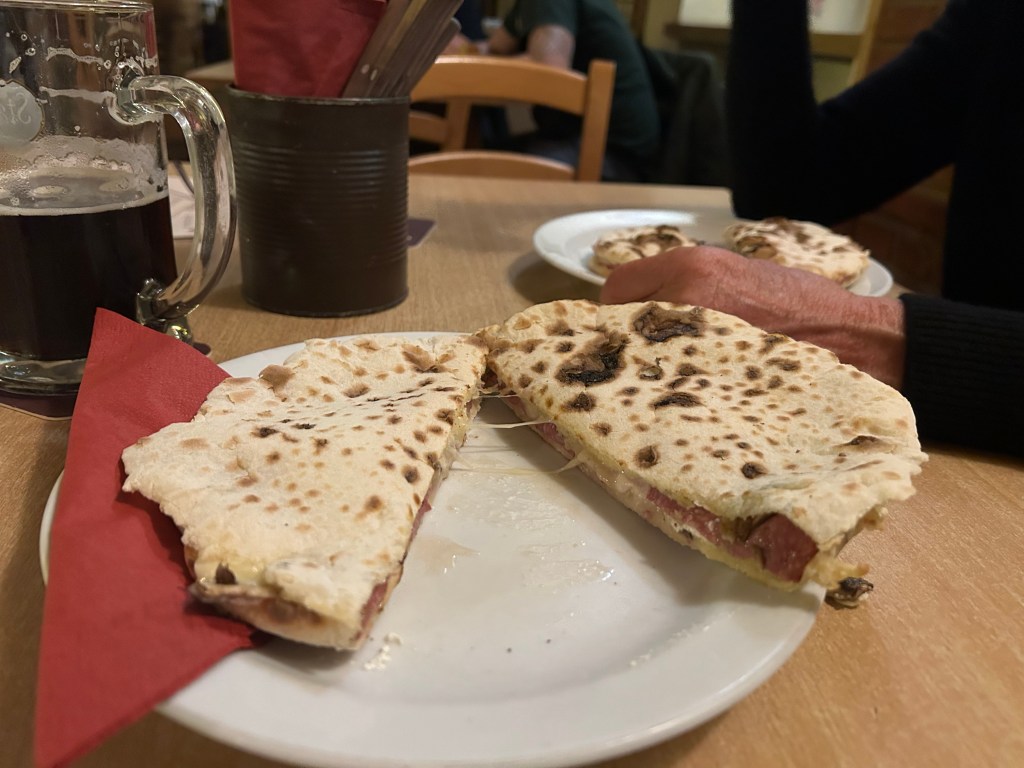
Being in this city brings to mind not just scenes from the movie, but its theme: day after day, we strive to put our lives in order, wishing for a less complicated existence. Yet sometimes in my private thoughts I reflect on what it’s going to be like to not be alive anymore. I think I will deeply miss some of the fleeting moments when we are aware of the mystery of being alive. This includes moments of spiritual insight and peace, but also those moments when we are feeding a pet, enjoying a meal, feeling our “bone structure moving” as we walk, and, just for fun, stretching out our toes under the table. Tasting a sausage covered in catsup and curry. Looking at the people in a crowded subway car and wondering what their lives are like. Having a cold Pilsner at the end of a day.















 Steve Jacobsen, Ed.D