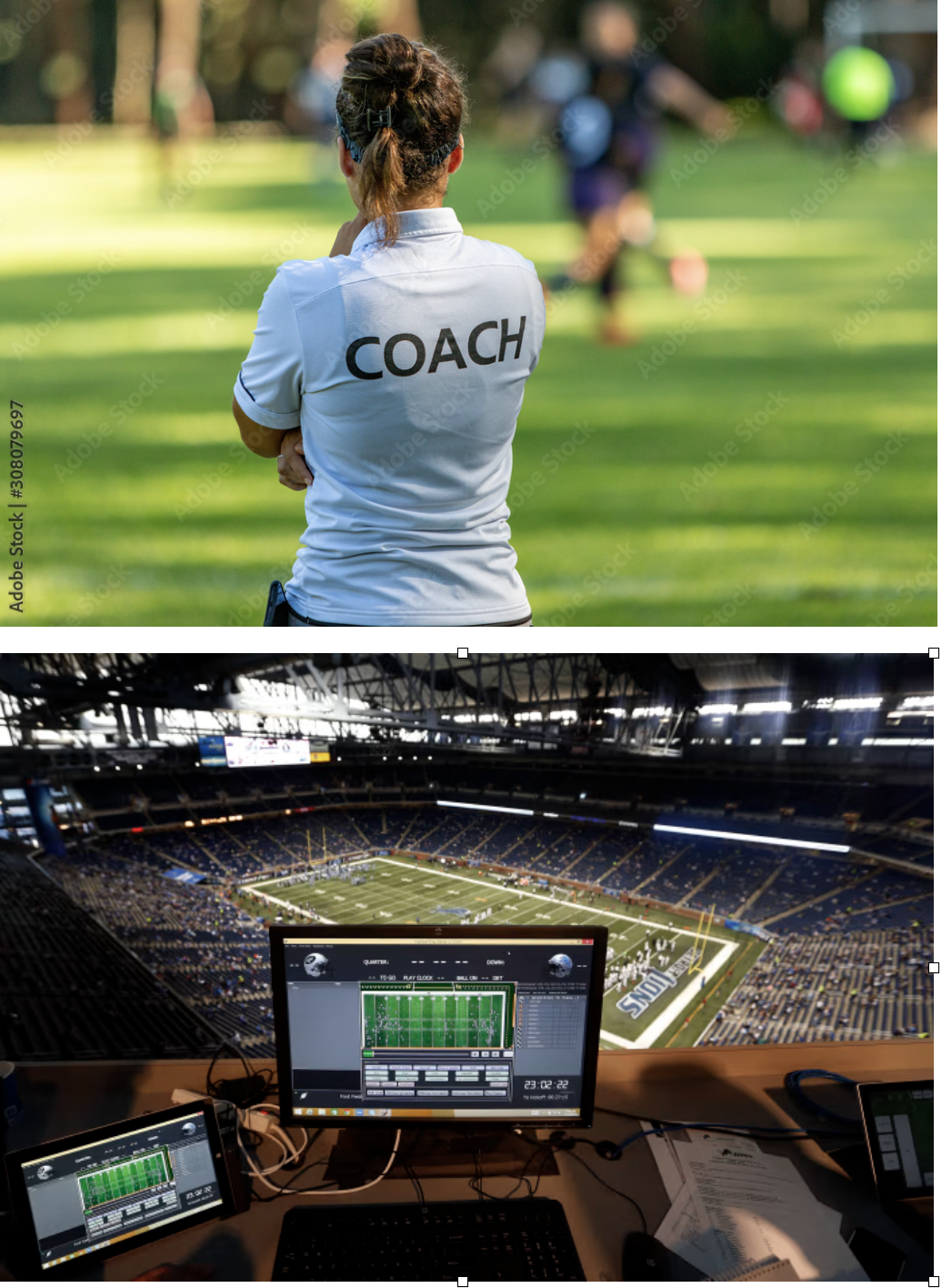
I once attended a prayer breakfast where the featured speaker was the legendary football coach Joe Gibbs. Gibbs had led the Washington Redskins (now the Commanders) to nine playoff appearances, four conference titles and three Super Bowl championships. After retiring as a coach, he became a television analyst. During the Q & A time, someone asked him to compare being a coach with being a TV analyst. Gibbs said being an analyst was much easier. When you are the coach, you have to make quick, irreversible decisions on the field, not knowing what the outcome will be. When you are an analyst, you can see what just happened and evaluate the coach’s decision from the comfort of the broadcast booth.
When you are a coach, you may be wrong. When you are an analyst, you can always be right.
What is true in sports is true in life. This can apply to relationships, parenting, work or any activity we engage in where we are responsible for the choices we make.
As years go by, it’s tempting to look back on decisions we made earlier in our life and be the all-knowing, wise analyst. We can focus on regrets:
“I knew I should have bought that property back then – I can’t afford it now.”
“If I could do my education over, I would have made other choices.”
“Why didn’t anybody tell me how hard it is to be a parent?”
“I should have known not to trust that person.”
… or we can focus on good choices and lucky breaks:
“Meeting (that person) turned out to be one of the best things that ever happened to me.”
“That was a hard lesson to learn, but my life has been better for having learned it.”
“That has been one of the blessings in my life that I didn’t see coming.”
“I once was lost but now am found; was blind, but now I see.”
Analysts can watch the replay and comment on it. Coaches must call the play.
What do the spiritual traditions say about this tendency?
I think all of them encourage us to be honest about our shortcomings and mistakes.
But they also encourage us to always seek a fresh start, no matter what has happened.
In both instances, we draw on the wisdom of our ancestors that has been passed on in Scripture and traditions. We also learn from others in our community who have faced similar situations and learned important lessons about life.
We need to embrace both roles. We need to be wise analysts of what works in life and what does not. But we also need to recognize that, in those moments when we must make an important decision, we may not have all the facts or all the time or a perfect knowledge of what the future may bring. We do our best and learn from it.
A friend and fellow blogger dropped his daughter off at college in Eastern Washington state, then boarded a plane going home to southern California. He recently described how it felt as the plane rose into the air:
Casting a shadow moving away from there. That’s us down there, pointing back toward where the 18 years happened. Watching the long-planned departure take place. Mulling that our part in her life is getting smaller. This is what we hoped for, right? That’s us down there, shrinking.[i]
Brad’s imagery lingered with me. I began imagining how some life experiences are like being on an airplane as we arrive or depart.
Arrivals
The birth of a baby: I remember the moment when the doctor lifted our first daughter from the womb. She looked my way, our eyes met, and she seemed to be thinking, “Where in the world am I?”
A child’s first laugh: My nephew and his wife recently shared an enchanting video of the first time their infant son looked at them and smiled. That week my wife and I had been watching “Dark Winds,” a detective series set in a Navajo community. In one episode, an infant laughs for the first time, which, in Navajo culture, signifies the infant has become a person. The family holds a traditional ceremony to mark that moment.
First personal memory: I was probably 4 years old. I was standing in a bedroom in our house. I had taken three eggs from the refrigerator, snuck into the room, and was carefully dropping them one by one onto the linoleum floor. Just as I dropped the second one, my mother came down the hall, saw me, and said, “What in the world are you doing!?!” I said, “I wanted to see what it looked like when they cracked.” She took the third egg away from me. I can still see the yellow yolks floating in the puddle of egg white on the floor. That is the first time I remember being self-aware. I was watching myself; that same observer is me now, thinking about the words I am typing.
First spiritual awareness: In 1991, the child psychologist Robert Coles published The Spiritual Life of Children, in which he described how children in different cultures wonder about God and the meaning of life. Many of these experiences happen before a child is eight years old. Perhaps you have such a memory.
Landing in a far away country: In 1975, I flew to Europe on Icelandic Airlines. I remember looking out the window as the plane descended from the clouds; we were crossing the English Channel, then suddenly were over the green French countryside. It seemed like a dream.
First day on a new job: My most memorable first day of work was the day I began to serve as Executive Director at Hospice of Santa Barbara in September 2008. I had never imagined being in that role, but there I was. I sat down at my desk feeling both exhilarated and anxious. For months after, I felt like an impostor, as people expected me to know things I had yet to learn. I was a stranger finding his way in a new land.
Departures
Dropping kids off at Junior High: More than once, I drove away remembering what a hormonal and emotional roller coaster that time in life had been for me — and hoping for the best for our offspring.
Sending kids off to college: We did it twice by car, once at an airport. Like Brad says, after so many years it’s a curious feeling to realize you’ll no longer be providing daily oversight. They are on their own, come what may. “That’s us…shrinking.”
Retirement: My last full-time job was Director at La Casa de Maria Retreat Center. I had planned to retire in the fall of 2018. But on January 8, the Montecito Debris Flow swept away eight buildings on our property, including my office where I had posted my diplomas and favorite photographs; it all disappeared and was never found. In the months that followed, we worked on the recovery until the decision was made to shut the Center down indefinitely. I left in June of that year. After saying goodbye to the staff, I drove out the back gate, thinking about how some chapters in our life end so much differently than we had imagined.
Last Call: I don’t know where I will be for my final “departure” – at home, in a hospital, or in a facility. Some hospice nurses have told me that, when someone is in their final days, they suggest the family leaves a window partly open so the spirit will be able to ascend freely when it’s time. I have asked for that. The lyrics of an American folk hymn come to mind:
When the shadows of this life have gone — I’ll fly away Like a bird from prison bars has flown — I’ll fly away (I’ll fly away)
I’ll fly away, oh glory — I’ll fly away (In the morning) When I die, Hallelujah, by and by — I’ll fly away (I’ll fly away)
Life for me hasn’t felt like being a bird behind bars, but more like being a pilgrim in a land of mystery and wonder. Until that final boarding, may we appreciate all the arrivals and departures we have witnessed and those still to come.
The other day I was doing my physical therapy exercises. I was bored. My restless brain began looking for something to distract itself. I thought about the different stages of life we can go through and came up with my own scheme.
Stage 1:I want to be amazing. This stage begins in infancy when we start to walk, entertain adults and throw tantrums. It continues in school when we try to figure out what we might be good at so other kids and adults respect us: Sports? Academics? Flirting? Gossip? Making money? This stage can continue for a long time.
Stage 2: I seem to be losing ground – but I bet I can be as good as I used to be if I put my mind to it! This stage can begin in our 40s, 50s, or 60s. There are some activities we realize we cannot do, but we believe we can reverse this process if we put our mind to it. We buy self-help books, lots of supplements and find encouraging podcasts. Maybe we join a gym or try online fitness classes. In the beginning, we feel great and become optimistic. We imagine a whole new chapter in our life — we will be one of those people who are told, “Wow, you look great for your age!” Maybe that fantasy comes true. But for most people, not much changes. One day we realize our youthful ship has sailed.
Stage 3:I’ll never be as good as I used to be, but maybe I can slow the decline. We stay active not to become “Comeback Player of the Year” but to adapt as well as we can. At first it may feel like a defeat, but it can also bring a sense of relief. We look at younger people and are amazed at how effortlessly they go through their day. We look at our own body and our thoughts can change from “Why have you failed me?” to “I’m going to do what I can to honor you in the time we have left.”
Stage 4: Loss and Wonder. We grieve what we’ve lost and are losing. But we realize it’s amazing we’ve made it this far, seen what we’ve seen, and done what we’ve done. We don’t know how much time we have left but we’re not dead yet. We try to be useful to others and enjoy simple pleasures. In quiet moments, we witness the mystery and miracle of being alive.
I am continuing to read and reflect on Awe: The New Science of Everyday Wonder and How It Can Transform Your Life, by Dacher Keltner. Like many of us, I seek out and welcome experiences of awe wherever I can find them. But I am only now realizing the different ways in which those moments can arise. This week I had two very different experiences that, thanks to Keltner’s work, add to my understanding.
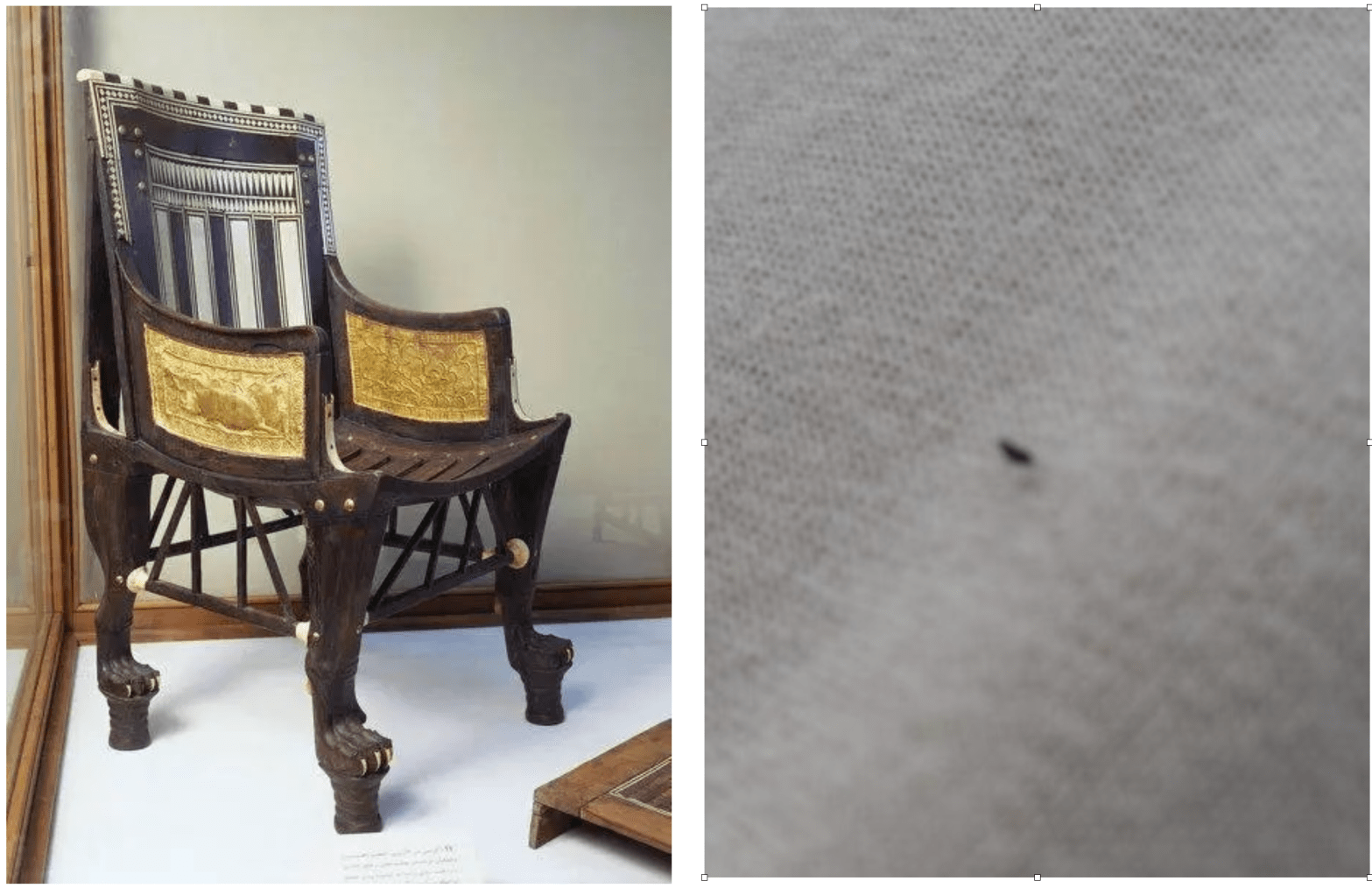
The first was remembering a piece of furniture I saw in 2008 at the “King Tut” traveling exhibit in Los Angeles. I vaguely recall studying Egypt in grammar school; a more vivid association is seeing Steve Martin’s perform “King Tut” (“Born in Arizona, moved to Babylonia… King Tut”). We came into a room which had just one object: in the center, a child’s chair. The description explained that this was the actual chair the 9-year-old Tut sat in when he was first crowned Pharoah. I had to take time to absorb what I was seeing: “This is the exact chair the little guy sat in 1332 BC where he was hailed as a god and Egypt’s ruler? And here I am in Los Angeles in 2008 close enough to touch it?” I tried to fathom how much time had passed between now and then. I tried to imagine what might have been going through the 9-year old’s mind as he sat here for the first time looking at all the people worshipping him. I was in awe.
The next morning, I was sitting in my backyard, waiting for my first cup of coffee to take effect. The sun had just appeared on the horizon and light was coming through our neighbor’s sycamore tree. A few feet away I noticed a single spider web thread waving in the morning air currents; stretching from an oak tree branch to the ground, it must have been 7 feet long. Two feet in front of me was a piece of patio furniture with a vinyl cover. Suddenly a small clump dropped onto it. I wasn’t wearing my glasses — I leaned forward, squinted and wondered “What is that?” A tiny little creature began scurrying away, no bigger than a pencil point. The horizontal rays of the morning sun cast a shadow behind it three times larger than its actual body. Then another little bug emerged from the fallen object and began running in another direction. Then three more. They all took off in opposite directions, hurrying like they were late for work. My best guess was this was a group of just-hatched gnats. I thought about what I was seeing. Until a few moments ago, these little specks of life were all huddled together is a gnat-clump. They all landed like a spaceship on the vinyl cover and now were rushing away from each other to begin their individual lives of adventure. How small their busy brains must be. How fast their mini-hearts must be beating. How strong is their will. I was in awe.
In Keltner’s research, beholding King Tut’s childhood chair in a museum is an example of cultural awe. Being mesmerized by a group of newborn gnats rushing off to start their lives is an example of awe found in nature.
Keltner believes we can find awe in many places. They don’t have to be dramatic events, but can be simple experiences in the midst of our daily life. What such experiences have in common is the emergence of a particular emotion in the face of mysteries we don’t understand. That emotion liberates us from the constant absorption in ourselves and opens us to the fascinating world around us, which becomes a gateway to humility and gratitude. Remembering that decorated little chair and those determined little bugs helped me see my own life in a new perspective. That always feels like a gift.
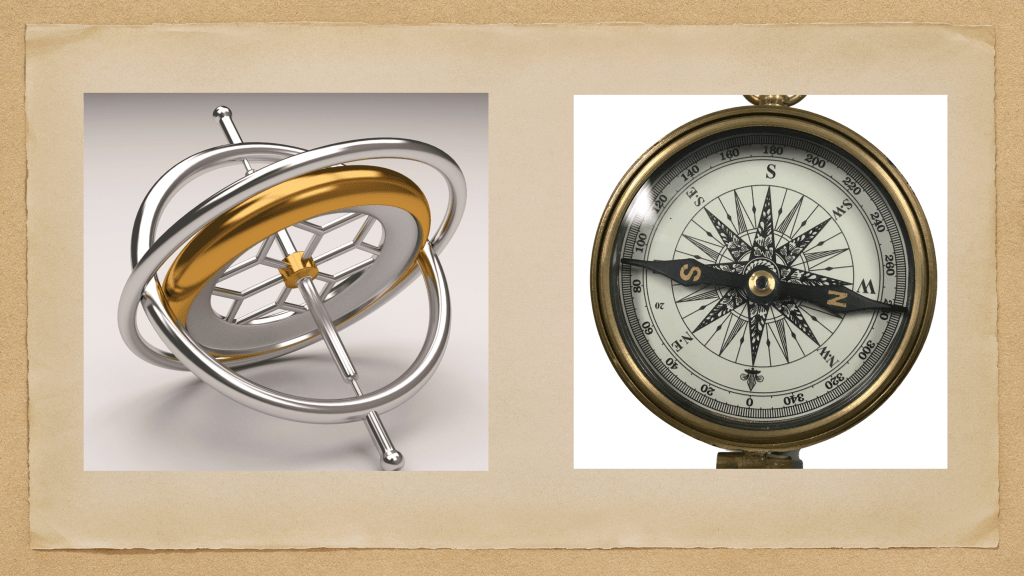
I follow different weekly columnists looking for useful insights. I recently saw a comment by Peggy Noonan giving advice to fellow commentators as we face what might be a chaotic year: “Keep your tools, compass and gyroscope, clean, dry and level.”[i]
I liked this statement. The metaphors weren’t new, but I appreciated putting them together: “Keeping your…compass and gyroscope, clean, dry and level.”
I take our personal gyroscope to be what keeps us balanced when our life gets topsy-turvy – what keeps us in touch with our deepest values and best thinking.
A compass helps locate where we are at any one moment. It gives us trustworthy information with which we can decide on the best direction to go.
It is common for us to start our day, our year and any new chapter in our life with certain assumptions about what’s going to happen and how we will respond. Sometimes things unfold like we expect. But often unforeseen events happen – events that we did not see coming — and we can feel like we’ve been knocked off balance and are lost. Time to check our navigational instruments.
I have previously written about a scene from the movie Lincoln. [ii] In the winter of 1865, Lincoln wants to have Congress pass the 13th amendment (abolishing slavery) before the Civil War ends. He needs the support of Thaddeus Stevens, an abolitionist who wants an amendment that goes beyond just the abolition of slavery to declare the total equality of the races. Lincoln and Stevens have the same inner conviction that equality is the ultimate goal – they share a similar gyroscope. But Lincoln knows Steven’s amendment won’t pass. Lincoln grew up on the frontier and has been in wilderness. He says, “The compass points you true north but does not warn you of obstacles and swamps along the way.” Where we want to end up may be clear but the way to get there may not be; we must forge ahead as best we can. Stevens reluctantly agrees to compromise and with his support the amendment passes.
I’ve performed many weddings in my ministry. Early on, I wanted couples to have a good experience in premarital counseling, but knew I was not equipped to provide it. I found marriage and family counselors whom I trusted and arranged with them to see couples for three sessions. I would tell the couples that an added benefit would be becoming familiar with someone in town they could always go back to for support and advice as time went on – people who could help them get in touch with their “compass and gyroscope” when needed.
One topic I did personally discussed with couples was the vows. Sometimes people wanted to write their own vows, which I could support. But I would also have them consider the traditional vows:
I, ____, take you, ____, to be my lawfully wedded (husband/wife), to have and to hold, from this day forward, for better, for worse, for richer, for poorer, in sickness and in health, until death do us part.
I would tell them to consider the three couplets: “for better/for worse, for richer/for poorer, in sickness/in health.” When events in life are going for the “better,” if we are feeling “richer,” and if we are in good health, loving another person is easy. But consider what might happen when life events are becoming “worse.” Or circumstances mean you are getting “poorer.” Or one person becomes seriously ill. These vows mean that you will not turn away in hard times but promise to dig in and deepen your commitment. “Hollywood movies show how wonderful falling in love is,” I would say, “but over the years I’ve learned to look at the couples who hang together in hard times. They develop a love deeper than just emotions – they create a bond that is lasting and profound.”
I would add that spiritual beliefs and practices become particularly valuable in disorienting times. There is wisdom beyond just ourselves that can be found in prayer and contemplation, in timeless teachings about what makes life worth living, and what our ultimate purpose can be. Calling on these resources is turning to our spiritual gyroscope. Then we can check our compass to see if we are headed in the best direction and not get stuck in an egocentric wilderness.
Sometimes we need to find an environment which helps us tune in to our gyroscope and compass. For three decades, I was involved at the La Casa de Maria Retreat Center as a board member and director. Individuals and groups would come for a day or several days for retreats. There were no televisions or newspapers, and we enjoyed limited cell phone service. People were free to wander our 26-acre oak forest, orchard and spiritual gardens. They could enjoy good food, leisure time and opportunities for meaningful contemplation and conversation. This was our mission statement:
The mission of La Casa de Maria
is to be a sanctuary of peace
Where groups and individuals
Can renew their purpose
Strengthen their community
And increase their effectiveness in the world.
La Casa was a place where 12,000 people every year people could tune into their gyroscopes and compasses. It was inspiring to see what a difference the right environment could make and what it means for people to find a direction in life they know to be right.
In the days to come, may we each make good use of our gyroscopes and compasses.




 Steve Jacobsen, Ed.D