Sunlight Finds the Opals

LODE

Even underground, sunlight

finds the opals and fills them.

So much beauty embedded

in cavern walls, needing no one

to find it, no human eye to see,

waiting in perfect patience,

in due time, to be revealed.    MCM

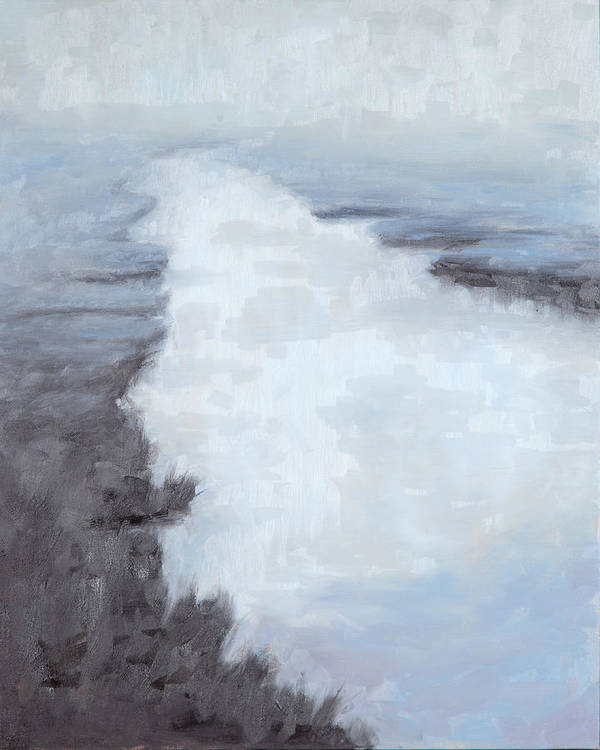
The painting is by John McEntyre and the poem by his wife, Marilyn.  John and Marilyn have been friends and colleagues for many years. Marilyn led several online writing classes during COVID which helped me change my writing process — she discourages using an outline or having an endpoint in mind when beginning, and instead “write into the unknown.” 

As I’ve followed this advice, I’ve found myself coming to surprising perspectives.  I don’t know if the insight is there before I start seeking it, or it is formed as the search progresses. But there is “sunlight” “embedded” in us, and often we need patience, curiosity, and courage to find it.  Maybe it’s through painting or writing.  Maybe it’s on a long walk or during an extended conversation with a trusted friend.  Or maybe it’s letting a sacred text or piece of music open our hearts and imagination to something new. 

I’ve seen many people walk through times of darkness and find such light.

I worked at Hospice of Santa Barbara for 5 ½ years. When I told people where I worked, it was common for them to say, “Oh, that must be depressing.” But I would say it was not. Seeing people work through their grief to find some authentic resolution and a way forward was inspiring.  One 15-year-old said: “Death is like a broken heart.  It hurts and is sad but you get through it.  Your heart is twice as strong.”

Solstice and the sacred stories of the season remind us that there are endless points of light waiting to be revealed in “due time.”  As we face periods of uncertainty, may we trust that the light is there, safely residing in “cavern walls,” “waiting in perfect patience, in due time, to be revealed.”

John’s painting and Marilyn’s poem are used by permission. More information about Marilyn, her publications, her classes, and retreats can be found at https://www.marilynmcentyre.com; John’s work can be seen at https://mcentyreart.com.

Ever Experience the Same Thing Twice?

         In my inbox every morning is “The Writer’s Almanac,” which describes significant events in cultural history. A recent article noted it was the birthday of Claude Monet:

He and his friend Auguste Renoir were among the first European painters to take their canvases outside to paint directly from nature. They would often work as quickly as they could, so that their paintings looked like sketches, and that sketchy style became known as Impressionism. Monet spent the rest of his career exploring the idea that you can never really see the same thing twice. In a single day, he would often paint the same subject half a dozen times, from slightly different angles and in slightly different light, spending no more than about an hour on each canvas. In the last 30 years of his life, he painted almost nothing but the water lilies in his garden at Giverny. Monet bought the four-acre property in 1883, built the bridges, dug the lake, and selected all the flowers and plants himself.

It seems he painted 250 scenes in his garden as a way of “exploring the idea that you can never really see the same thing twice.”

Can we ever experience the same thing twice?

We have grandkids that are 7, 5, and 1, and feel blessed to watch them grow and develop.  This week the one-year-old made the evolutionary leap from being a four-legged mammal to two, ending with a smile confirming she knew that she had just taken a “big step.”  In one sense she’s the same wee person she was the week before – but she’s not exactly the same.

A golf teacher once made the point that your body and mind are always changing, and every time you play, you’ll need to adjust to who you have become.

A yoga teacher said that every day we begin our practice, something in our body has shifted. We may be a bit less flexible or a bit more – it’s hard to predict — but it is something we should expect. 

And what tennis, soccer, or baseball player can completely control time after time where the ball will go?

Modern science tells us there is no such thing as solid, unchanging matter — it’s all energy in varying states and forms.

Every day, countless cells in our body are dying and others are being created; biologically we “are not the person we used to be.” (As we get older, looking in the mirror becomes vivid proof).

So maybe this was what fascinated Monet as he created this “Impression” of the lily pond in his garden…

Nymphea, 1905

…and then sometime later he captured the same pond in a different light:

Nymphea, 1905

On the one hand, it’s exciting to think “you can never really see the same thing twice.”

But on the other hand, it can be a bit unsettling.  It makes me feel like I’m being carried away on a river when I’d prefer to have my feet planted on solid ground, at least occasionally.  Where do we find stability?

This is a central question for many spiritual traditions.

Hinduism assumes we all have an “atman” within us, an essence that is rooted in the divine; it’s like a “witness” within ourselves, observing our life as it ebbs and flows and will be the awareness that continues beyond death.  Buddhism disputes that, at least in the most simplistic form.  Western traditions have often spoken of each person having a “soul.”

There’s a beautiful old English hymn that used to be common at memorial services: “Abide with Me, Fast Falls the Eventide.” The English philosopher Alfred North Whitehead once said these words sum up the universal longing of humanity: “Fast falls the eventide” acknowledges that all life is passing, while “Abide with me” is a plea that our connection with the divine will be a constant.

Two stories from my hospice work come to mind.

Serenity House is a beautiful residential hospice here in Santa Barbara. I knew the Executive Director of the organization as it was being designed and built, and she shared with me some of her hopes during that time.  One key theme was integration with nature: every room has a porch where the patient can enjoy the landscaping as well as a view of the city and the nearby mountain range.  Sometime after it opened, she told me that one patient had asked the gardener to not remove the fallen leaves on her porch but let them remain where they had landed.  The patient said looking at the fallen leaves gave her comfort.  

A friend of mine is a longtime volunteer at Serenity House. He has often been with patients as they are dying, and it is common for them to begin to sense there is something “on the other side.”  Never – not once – has he seen people in those moments experiencing fear.  

“We are born in mystery, we live in mystery, and we die in mystery,” Huston Smith said.  Maybe our whole life is just a series of “impressions” as we try to capture important moments in the changing light. What a gift to be doing so.  And what amazing colors the light reveals.

Top Image: Nymphea, 1903

Water Lilly Pond, 1917-1920

Empathy Means I Don’t Know How You Feel

             “Empathy is not ‘I know how you feel,’ but ‘I don’t know how you feel.’

I recently came across this quote in notes I’d kept from a retreat I attended some years ago. It was credited to Rowan Williams, Archbishop of Canterbury. 

            If we care for people, we want to know how they are feeling.  Making the effort to do so is a genuine act of compassion.  Sometimes we make the connection easily.  But sometimes our assumptions about what another person is feeling can lead us astray.  

            I remember an older woman I visited after she began attending our services. She always dressed more formally than was the norm in California and was always very gracious. When I came to her apartment, she invited me to have a seat in her living room. I noticed the many shelves which were carefully arranged with shiny porcelain figurines and elegant China dishes. It all suggested to me she’d probably led a proper and sheltered life.  I asked her to tell me about herself. She talked briefly about her life before coming to Santa Barbara.  Then she calmly described how her husband had recently died after ten years of dementia. She said for the first five years, she had cared for him by herself in the apartment, needing to be more and more vigilant as his condition deteriorated.  When she could no longer keep him safely, she transferred him to a facility and visited him every day for five years until he died. I was stunned.  Where do people find the strength for such devotion?  

            I once went on a mission trip with teenagers in Mexico.  We’d build homes during the day and return to the campground at night.  I had unconsciously brought with me an assumption – shared with many fellow parents of the time – that teens were becoming so obsessed with digital devices that they must be losing their ability to make genuine connections with others.  But as I sat with them at night around the fire and they talked about their lives, I realized I had misjudged them; they were much better listeners than many adults. 

            I got to know a woman in her 30s who’d been wheelchair-bound her whole life. Once she said something that made me think of Christopher Reeves, the Superman actor who had become paralyzed after a horse-riding accident. “He must be an inspiration,” I said.

            “Not really,” she said. “He’s rich and famous and can pay for 24-hour care and do what he wants. But most of us don’t have his resources. We experience a lot of loneliness and depression.  But no one wants to hear that. People like him because he’s always positive. If he’s feeling down, he can’t talk about it, or he won’t be popular.” 

How little we know about the inner life of others.

            When I began my work at Hospice of Santa Barbara, I attended a workshop focused on caring for families in which the death of a child or parent had occurred.  The speaker had worked for twenty years in hospitals dealing with such situations.  I was hoping for some handy guidelines for such situations. I was surprised when he said what he does before he walks into a room to meet a family: “I get in touch with my helplessness.” That confused me at first.  But the more I thought about it, the more I realized this is a way to set aside that anxious, earnest, “I-want-to -fix-it” impulse within us to become truly open to whatever is present.

            And I remember being at a conference where a prominent nursing educator from the City of Hope was speaking about how easy it is to misjudge people. She said she had once led a support group for women who were dealing with breast cancer.  Each person in the circle was taking a turn describing what emotions they were experiencing.  All the women in the group talked openly about how hard it was, and many shed tears.  One woman, however, seemed unmoved and opted not to share.  The speaker confessed thinking, “This woman is probably repressing her feelings; I’ll speak to her after the session.”  After the session was concluded and the others left, she approached the woman, who agreed to sit down and talk. The leader shared her concern that the woman was perhaps not being forthright and encouraged her to share.  The woman told her what she’d experienced in the last three years. First, her family had lost their home in Hurricane Katrina and couldn’t go back. Then a daughter died. Then she’d lost her husband. “This?” she said, motioning towards her body, “This is just breast cancer.”

            We never can assume we know what someone else is really feeling, or what it’s like to be “in their skin.”

            A seminary teacher once made a reference to a painting that was probably in every Sunday School building in America: “Jesus Blesses The Little Children.”  It’s very simple: Jesus is just sitting in the midst of a group of boys and girls. “You know,” the professor said, “People always assume that he is teaching them something. But maybe he’s just listening.”

Image: Portrait of a Peasant – Patience Escalier, Vincent van Gogh

Waking Up on A Train

“At some point we look out the train window and realize we are in another country.” — David Brooks, commenting on his spiritual journey, “Lead Where You Stand Conference,” June 2022

If you take the Coast Starlight Amtrak from Santa Barbara to Seattle, you’ll board at noon and arrive 30 hours later.  You never know what you’ll see.

Traveling by train is much less stressful than traveling by air.  Seatbelts are not required.  You don’t watch an instructional video telling you what to do if the plane begins falling into the ocean.  You can walk up and down the aisles. You can bring your own food or purchase some onboard. You can choose where to be — the dining car, the café, the observation car – and, if you book a sleeping compartment, you can be in your own private room.

When night comes, the conductor makes your bed.  You get a real pillow and stretch out. Sleeping on a moving train is far easier than having to become a pretzel on a plane.

Unlike driving, you don’t have to stay alert, deal with traffic, or stop for gas.

The scenery on the Coast Starlight route is always changing.  You pass along ocean cliffs, in and out of small towns, by farms and vineyards, and through forests and mountain ranges.

If there are delays, instead of being bound to your seat on the tarmac, you are free to roam; you don’t have to plead for special dispensation to use the facility.

The conductor periodically reminds you where you are and what’s coming next: “Portland. Next stop, 10 minutes. Portland.”

But sometimes you suddenly realize you don’t know where you are.

Maybe it’s in the middle of the night and you wake up because you sense the train is not moving. You pull the curtain aside and wonder, “Where am I?”

During the day you might fall asleep, daydream, or become immersed in a good book or conversation; you find you’re looking at unexpected scenery.

Moving through life can be like being a passenger on a train.  Sometimes you arrive on time at a planned destination. Other times, you are surprised.

         I remember the first day I drove my 1963 Plymouth Valiant to high school by myself. I was short and my father had to install a wooden platform under the drivers’ seat so I could see over the wheel.  But I was licensed and independent.  I pulled out of our driveway, turned on the AM radio, and headed to school.  “I’m really doing this,” I thought.

         In my twenties, I found myself on an unexpected spiritual journey.  The faith tradition I had discounted most of my life was now calling to me, drawing me, along with my doubts and questions, like a force of gravity.  My girlfriend (who became my wife) asked if I wanted to help chaperone the church’s youth group that was going caroling. We got onto the back of a flatbed truck and were handed mimeographed song sheets with “Joy to the World,” “Angels We Have Heard On High,” and all the rest.  As the group started singing, the lyrics that had been routine and familiar to me all my life now seemed vivid, amazing, and inspiring.  In that moment I realized I had crossed from skeptic to “believer.”  “When did that happen?” I wondered.

         A few years ago, I made an appointment at the Social Security office to submit my Medicare paperwork.  I gave it to the clerk who reviewed and approved it.  I walked out wondering, “When did I get to this stage of life?”

         How many times have you looked in the mirror, or at changes in society, or what’s happening to friends and loved ones, and think, “When did I arrive here?”

         Maybe what’s going on “outside” is always going to be changing. In one sense, that’s a bit scary.  But in another sense, what a mystery and privilege to be alive and watching it unfold.

         And I wonder: Will we all, at some point, suddenly find ourselves thinking “I am no longer in my body?”  Will we look out our window and realize we’re headed someplace we’ve never been before?

Top image credit: philly.com

The Weeds and Wheat Within

            Years ago, I was driving downtown to take my turn as a volunteer at the local soup kitchen.  On the way, I noticed the following thought appearing in my awareness: “You know, volunteering at the soup kitchen shows to you and everyone that you are a really good person.  People will notice and think highly of you.”

            Another voice spoke up, “What a tacky thing to think! You’re not going there today to show off.  You are going because you know in your heart this is simply the right thing to do.”

            Next thought: “What an amusing dialogue you are having, Steve.  Sounds like you got one voice that is selfish and another voice that might be decent.”

            I was tempted to think the second voice is the “real me” and the first is “not me.”  But, you know, I seem to have both voices within me all the time.  The first is always performing to impress my self with my self and hoping other people notice what a good guy I am. The second wants to just do the right thing for the right reason without any fanfare.

            41 years after being awarded a “Master of Divinity” degree, I am far from mastering the relentless and petty voice within.  

            I take heart from reading a recent “Daily Meditation” posting by Fr. Richard Rohr.[i]  He writes about the Gospel parable in which the field workers are concerned that weeds are growing in the same field as good grain.  The owner tells them not to worry – in the final harvest the weeds will be separated out, and the good grain will remain. Rohr says that, growing up, he felt the parable told him to be relentlessly looking for the “weeds” in his life and root them out.  But, over time, he sensed that was impossible and gave up. Then, as he matured, he saw the parable in a new way:

Jesus shows us an absolute realism. He says something that was never said to me when I was a young person: “Let the weeds and the wheat both grow together.” Wow! That’s risky. I can’t pretend to logically understand it, although I know it allows me to be compassionate with myself. After all, I’m also a field of weeds and wheat, just like you are, and just like everything is. Everything is a mixed bag, a combination of good and bad. We are not all weeds, but we are not all wheat, either. We have to learn, even now, to accept and forgive this mixed bag of reality in ourselves and in everybody else. If we don’t, we normally become very angry people. Our world is filled with a lot of angry people because they cannot accept their own weeds.

To accept this teaching doesn’t mean we can say, “It’s okay to be selfish, violent, and evil.” It simply means that we have some realism about ourselves and each other. We have to name the weed as a weed. We can’t just pretend it’s all wheat, all good, because it isn’t. We’re not perfect. Our countries are not perfect…. The project of learning how to love—which is our only life project—is quite simply learning to accept this. If you really love anybody, and I hope you all do, then you have learned to accept a person despite, and sometimes even because of, their faults.

            This has strong parallels with Buddhism, in which we avoid the folly of thinking we can block thoughts we don’t want to have. Instead, we learn to let them come into the open, and to observe and assess them. In that freedom, we become more compassionate with ourselves as “complicated” creatures, as well as more compassionate with our fellow human beings who live the same inner complexity.

            This perspective doesn’t mean we passively accept disappointing behavior in ourselves or others. But it does invite us to be realistic that to be human is to be a mixture of wheat and weeds. Constantly sorting out the inner voices is hard work and, like the peasants in the Brueghel painting, sometimes it’s OK to take a break. But it’s vital work, and I’m grateful to Father Richard for this liberating insight.

Image: The Harvesters, Brueghel, 1656


[i] https://cac.org/daily-meditations/the-weeds-and-the-wheat-2022-08-28/

How Vin Scully Endured Personal Tragedies

            Many people are writing tributes to the sports announcer Vin Scully, who died this week at 94.  He was the “voice of God” for me and many kids with transistor radios when we were growing up — he was omnipresent, trustworthy, forgiving and always positive. His endless tales of players’ backgrounds were told with reverence and affection.  He was a constant in my life over six decades.  Beyond the famous baseball moments he was part of, I have several other enduring memories.

In 2010, I was in Phoenix for spring training.  After the game, I was exiting behind the stands and happened to see him walking alone as he headed toward his car. He was dressed in a well-worn suit, and I remember thinking he looked older in person than he did on television. 

In 2016, my youngest daughter, her fiancé and I made a pilgrimage to “Vin Scully Day” at Dodger Stadium where we heard him sing “Wind Beneath My Wings” to his wife and 54,000 reverent and faithful fans.

            We all knew he was a very private man.  I vaguely knew his first wife had died and he had remarried, but I never heard him discuss it.

            The one exception came in 2008, when he was interviewed on KCET along with UCLA Coach John Wooden.  At one point, the interviewer changed the topic from sports to personal challenges. He noted that Scully’s first wife had died suddenly at age 35, leaving him with three children.  He’d remarried Sandra, a woman with two children of her own, and together they had one more child.  Later his oldest son died in a helicopter crash at age 32.  Vin was asked how he had gotten through it all.

He said creating a new family after the death of his wife while working full-time was very hard – not the amusing experience of blended families being portrayed on the “Brady Bunch” TV show at the time.  He didn’t go into the loss of his son.  But he concluded by saying the only way he got through it all was to “stop asking why.”

Asking “Why?” is a perennial human question.

“Why did that person have to die when they did?” we ask.  The answers people find are varied. Some attribute it to the intentional act of an inscrutable God.  Others theorize it must be “karma,” a kind of moral accounting system in which we inherit debits and credits from past lives that shape our personal fate.  In modern times, we may look to causes that can be objectively verified, such as family history or the actions of viruses, bacteria, and natural forces.  We may find fault in the way a car is designed or blame a toxin in our food supply. 

We are curious, intelligent creatures, and we yearn to find answers for personal losses and tragedies.  Sometimes we find them. Such answers may bring some peace, and we are reassured that the universe isn’t chaotic after all.

But satisfying answers don’t always come.

Vin’s first wife died of an accidental medical overdose. That’s explainable on one level – simple chemistry. But that doesn’t take away the heartbreak, sorrow, and unfathomable reality that one day a young wife and mother of three is alive and well and the next day she is gone.

His son died working as a helicopter pilot, which may be attributable to a simple error in judgment of a person up in the air at the helm of a large and complex machine.  But the harsh reality that a remarkable young man whom you’ve loved since birth is here one day and absent the next – that will always be a shock.

Vin did, at times, talk about the importance of faith and prayer. He was raised a devout Irish Catholic and remained one his entire life.  His immersion in that faith made a difference in how he endured and how he lived. But he never claimed that any of his prayers helped him find an answer to the question that apparently haunted him in the early days of his grief — why did death come to these two beloved people in such an untimely way?  Vin — the gracious, wise, humane, and compassionate observer of so many human encounters — said the key for him to going on with his life was to “stop asking why.”  I will remember that.  And I will also remember what a joy it was to turn on a radio and hear him invite us all to pull up a chair “wherever we may be” and listen to a master storyteller at work.

Photo credit: “Dodgersway”

Tasting the Magic Waters

            For more than a decade, I’ve been entranced by the great three-part medieval poem, Dante’s Divine Comedy.  There are many spiritual and psychological insights Dante shares in this work that speak to me. In this posting, I want to share his concept of two symbolic rivers we might sample in our life journey. The description occurs near the end of the second volume, Purgatorio.

By this point Dante’s been given a tour of hell (Inferno) and all its custom-made torments. It’s impressive to see how he imagines the bad guys “get what’s coming to them,” as they used to say in the Westerns.  But Inferno is not as meaningful to me as what follows.

In Purgatorio, he imagines hiking up a mountain to see how all kinds of people are completing their personal soul-work as they prepare for Paradiso.  (Does he – or anyone these days — really believe in a place like purgatory, you might ask? Don’t worry about it, dear reader; let’s just follow what he imagined.)

As he gets to the top of the mountain, he travels through an enchanted forest and, among other experiences, comes to two rivers.  He also encounters a guide, Mathilda.  The first river Mathilda leads him to is the Lethe, which was known in Greek mythology as the river of forgetfulness we pass through after we die.  Dante interprets it in a positive way:

“She plunged me, up to my throat, in the river

And, drawing me behind her, she now crossed

Light as a gondola, near the blessed shore, I heard

“Asperges me,” so sweetly sung that I

Cannot remember or, much less, describe it.” (Canto 31: 94-99)

“Asperges me” means “thou shalt sprinkle me.”  After guiding him across the river, she invites him to take a drink.   All the memories of the mistakes he’s made in life – the poor decisions, the times when he’s hurt someone else or disappointed himself – all are washed away in the Lethe. Think about your regrets in life – what would it feel like to have the painful memory of them disappear?

“The River Lethe,” John Flaxman, 1807

            After more encounters and reflections, he comes to the second river – one Dante created out of his own imagination — the Eunoe.  Matilda is joined by a group of guides and invites Dante and a fellow pilgrim to drink from it.  After he does, he says:

If, reader, I had ample space in which

To write, I’d sing – though incompletely – that

Sweet draft for which my thirst was limitless…(Canto 33: 136-138)

Where the effect of drinking from the Lethe was to allow him to forget all his failings, drinking from the Eunoe allows him to recall all the good deeds he’s done in life, both large and small.  (The word he created, eunoe, combines eu(new) – and noe(mind) – a new, fresh mind.)

The River Eunoë, John Flaxman, 1807

            Think about it. Sure, you’ve made mistakes in life. But you’ve also done many good things – small kindnesses, acts of love and duty, promises kept, hope given, and friendships honored. Imagine what it would be like towards the end of life to forget all the bad stuff you’ve done and remember all the good?

            From the first time I read about these two mythic rivers, I was entranced by imagining what such an experience would feel like.  In the years since, I’ve come to wonder if sometimes people actually experience something similar.

            My father outlived my mother by 19 years.  We knew they loved each other all the years they were married. But we also remember their life together was not free from the stresses and strains of many long-term relationships.  Yet in his last years, whenever dad reflected on their time together, all he talked about were the joys they’d shared — no mention of the hardships.  At first, I was tempted to kindly point out it wasn’t all milk and honey. But something told me to be quiet.  It was as if dad had dipped first into the Lethe, then the Eunoe, and the combination filled him with pure gratitude.

            Recently I visited a former parishioner who had decided to stop receiving life-prolonging treatments. She’d been through many challenges in her life, including years of concern for her children and the obstacles they faced. But, she told me, they were both doing well now and didn’t need her as they had before.  She was tired of the complications her body was having to endure every day and she wanted to be free.  When I came, she was going through a box of old family photos.  After I sat down, she showed me some of her favorites. Each memory had become a delight.  Before I left, I asked her if there was anything she’d like me to pray for. She told me, “Somebody said, If the only prayer we ever offer is thank you, that would be enough.  Just say how grateful I am.’

            Remembering our mistakes helps us to stay humble and keep learning how to do better. Focusing only on the good we’ve done may seem selfish.  But maybe, once in a while, we can close our eyes and imagine sampling those waters – tasting what it’s like to have our regrets washed away, then savoring a pint of gratitude for the good things we’ve done.  Maybe we shouldn’t wait until late in life to see what these magic waters can teach us. 

Painting: “Along the River Lethe,” Kyle Thomas

Status and Community: A Tale of Two Lives

            Dr. Charity Dean lived in our neighborhood before she became famous, and I was looking forward to hearing her speak this week as part of the annual “Lead Where You Stand” conference at Westmont College. I was familiar with her amazing career and legendary grit but, until Wednesday, had never heard about a personal challenge she faced.

Born and raised in a low-income family in rural Oregon, at age 7 she felt a call to become a physician and tropical disease specialist. After earning her medical degrees, she became a resident at Cottage Hospital here in Santa Barbara.  She was brilliant at analyzing data. But she also received invaluable training from Dr. Stephen Hosea who taught her the importance of looking beyond the data and test results to see each patient as a unique person. He also emphasized the importance of physically touching them before making a diagnosis, encouraging her to trust her “sixth sense” to discover what was going on; “I sense and feel things,” she told us.

She became the Public Health Officer for Santa Barbara County, which had traditionally been a largely bureaucratic position.  But she didn’t stay in her office or wait for patients to be brought to her. Instead, she went out to see them wherever they were — homeless shelters, farm worker sites, parks, anywhere.  She observed them, listened to their stories, always using touch as part of her interactions.  She soon gained a reputation as a fearless and formidable public servant who wasn’t afraid of upsetting other officials in serving the public good.

In the summer of 2019, her training and “sixth sense” told her COVID was coming.  She began a relentless struggle to alert and prepare others.  By April 2020, she was Co-chair of the California COVID-19 testing task force in Sacramento and serving on the White House Coronavirus Task Force. She was featured on ABC News and 60 Minutes and is a central figure in Michael Lewis’ The Premonition: A Pandemic Story.

It was fascinating to hear an account of her professional ascent.  But I was impressed in another way when she talked about a personal issue.

Apparently, alcohol had been problematic for her. She did not drink daily, but when she did, she had a hard time stopping. She went to Oregon to visit her mother and asked about the family history.  She was told alcoholism had been pervasive, which she hadn’t know.  She returned home and decided she needed to go to an AA meeting.

When she walked in, she was surprised to see someone who knew her — one of her homeless patients.

“Hello, Dr. Dean,” he said. 

She became a regular.  A year later she received a pin marking her first “birthday” of sobriety.  As she came forward to receive it, the man who followed her was receiving his ten-year pin – another former homeless patient who was living with HIV and had become a friend and supporter.

            As a physician, she said it was humbling to go to that first meeting.  But she discovered everyone in the group had something to teach her about life.

            This brought to mind a story from my time at Hospice of Santa Barbara.

            HSB is a rare form of hospice – one which does not provide direct medical services, but instead offers psychological, social, and spiritual help to anyone facing a life-threatening illness or grieving the death of a loved one.  Thanks to a $40 million bequest we received and community support, we were able to have a staff of 30 skilled and compassionate professionals. Part of HSB’s charter is that all our services are free, with no reliance on government or insurance funding.  When I was there (2008-2013), we were serving hundreds of people of all ages and backgrounds.

            One staff member told me the following story.

A wealthy woman had come for grief counseling. When the first session was completed, she took out her checkbook and asked how much the fee was.  The therapist told her HSB did not accept payment; if she wished she could make a donation when her therapy was completed. She was flustered and uncomfortable at the thought of not being able to pay for the services.  But she kept coming to her appointments.

            Our staff knew that, for many people, being in a group of others who had suffered a similar loss can be helpful.  Our therapist told this client that she had gotten to a point where being part of such a group would be a good next step.  The woman was very resistant — she didn’t think she’d have much in common with a group of ordinary people.

But she agreed to try it. Soon she became a dedicated member.

            When she completed her time with us, she told the therapist that she had never realized how much she had in common with other people.  Sharing this difficult journey with others, she said, was one of the best experiences of her life.

            We seem wired to create and maintain identities for ourselves that can make us think some people are “better’ than others. But in my experience, beneath the facades, we are all human beings trying to find our way in life. On that journey, humility, friendship, and community are priceless gifts.

Blessing of the Feet

            “I want you to join me in a ritual for one of my patients,” M. said.

            M. was a smart, insightful, and creative social worker at Hospice of Santa Barbara.  My job there was largely administrative, and only rarely was I asked to participate in patient care.  But I trusted M.’s professional skill, her instincts, and her chutzpah, and told her I would do whatever she needed.

            One of our guiding principles was, “The family is the unit of care.” Was it a cohesive and caring family unit?  Or would long-standing tensions come to the fore as they were about to lose a loved one?  The family dynamics would play a large role in the experience of the patient in the dying process and how that family would evolve after the death has occurred.

            M. gave me the background.  The patient was a woman in her 80s whose husband had died some years before. Two adult daughters were caring for her.  There had been some issues between them, and M. wanted to do something that might bring them together. The mother was not responsive at this point, but “still here.” M. felt she could create a simple ritual to bless the mother as she came close to dying.  She introduced the idea to the daughters. They would dress mom up in nice clothes, fix her hair, put make-up on, and give her a pedicure and a manicure, talking to her as they worked.  At the appointed time, M. and I would come to the house. M. would stand at the head of mom’s bed and lead us with a daughter on each side, and me at the feet.

            M. and I met at the house at 7 PM. M. introduced me, noting I was a pastor as well as Hospice Director.  Mom’s bed was in the living room, and had been elevated enough that we could each standby it.  M. praised the daughters for how classy mom looked.  Lights in the room were dimmed and candles lit.  She told us each to take our position and explained what would unfold. 

            After a moment of silence, M. began with words of affirmation to the mother, reminding her of all she had accomplished in her life, telling her who was present in the room and what we would be doing.  Each daughter then took a turn, holding one of mom’s hands and telling her how much she had meant to them.

            I remember thinking, “I have no idea what I’m going to say. They didn’t teach how to do this in seminary.”

            When the second daughter finished, I looked at the woman’s bare feet visible past the bottom edge of the blanket. The nail polish was bright red.

            I placed my hands under her feet and raised them a few inches.

            My mind began imagining what these feet had experienced.

            “These feet were part of you when you were a toddler learning how to walk. They were with you in childhood, running out the door at your command to play in the neighborhood and rush to school.  They grew with you as you became a teenager, then a young woman. They enabled you to have your first dance, to walk next to the man you fell in love with, to process down the aisle at your wedding.  After you gave birth to your daughters, it was these feet that carried you as you carried them, pacing back and forth at night comforting them.  In all the years that followed, these feet did as you wished, faithfully supporting you through your challenges and joys. They have been loyal and faithful servants.  We give gratitude to God for them, for you, for your family, for your many years, and for all the love that is in this room with you now.”

            I lowered the feet back on the bed.

            M. spoke to mom, summarizing what each of us had said and closed with a final blessing for her and her daughters.

            I felt Presence in the room.

            Mom’s eyes remained closed, her breathing steady.

            We began to bring our awareness back to “ordinary time.” I thanked the daughters and the mother for the gift of being with them and said good night. M. remained, explaining what would be occurring as their mother approached her last hours.

            The next day, M. called to tell me the mother had died later that night in the living room.  She felt what we had done was already helping the daughters heal past hurts and come together.

            Two days later I realized this had happened on a day known in the Christian tradition as “Maundy Thursday,” when many communities re-enact Jesus washing his disciples’ feet the night before he died.

            The experience left a profound impact on me. This was partly due to the privilege I felt participating in such a sacred moment with this family.  But, for the first time, I realized how extraordinary it is for us to have what we call “feet” that are truly with us throughout all our days, enabling us to do so many things through every stage of life.  Maybe we notice them when we accidently drop something on them, or any time they are a source of discomfort.  But most of the time we take them for granted.  Hour by hour, day by day, year by year, they are our silent servants.

            Feet are the point of contact between our living presence and the solid earth.

            Thich Nhat Hanh, who died two months ago at age 95, famously taught, “People say walking on water is a miracle, but to me walking peacefully on earth is the real miracle. The earth is a miracle, each step is a miracle.”

            May we all be aware of the blessing our humble feet are for us, now, when we have breath to do so.

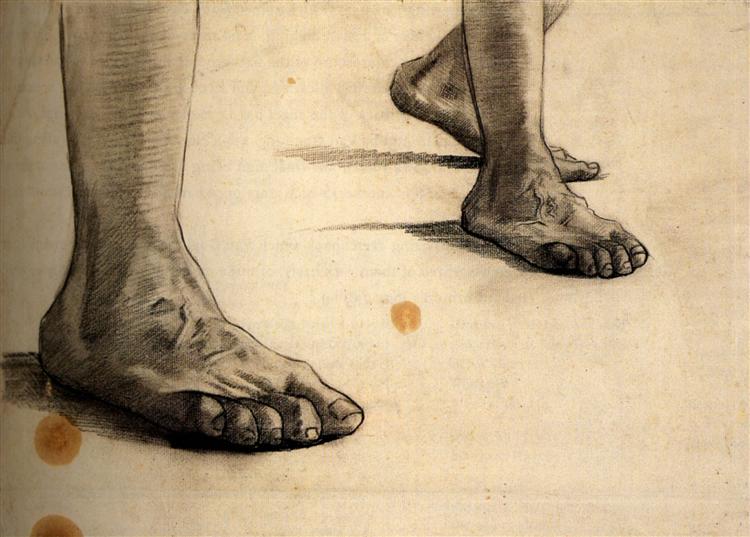
Art work: Feet, Vincent Van Gogh, 1885, Van Gogh Museum, Amsterdam

Postscript: Preparing a body for burial is a common practice in many traditions (e.g., chesed shel emet in Judaism) and has been reemerging in contemporary times, including in secular health care settings.  One study at our local hospital found it not only gave families a significant sense of closure, but also helped with morale and burn-out among nursing staffs.  Blessing the body when the person is close to death, as described in this story, can also be a powerful and positive experience.  There are many ways of doing it that can be customized to fit a family’s values.

“You Never Know”

If there’s one phrase I’ve come to rely on over the years, it’s “You never know.”  Like a Swiss Army knife, it’s handy in many situations.

         Rachel Naomi Reimen is Professor of Family and Community Medicine at UCSF and creator of a widely used medical school course, “The Healer’s Art.”  I’ve appreciated her books, seen her speak several times, and had a chance to meet her personally. Her grandfather was an Orthodox rabbi and master storyteller. In her medical practice, she learned the importance of listening to patients’ stories and being open to mystery, spirituality and the unknown, while still employing the best medical care. A patient would come to her and report that an oncologist had given them six months to live.  She sensed the patient assumed the doctor was all-knowing. She knew better.  She would offer a different, more open perspective.   “Let’s put it another way.  This diagnosis means you’ve started a new chapter in your life. But no one knows yet how the story will unfold.” This didn’t change the medical facts, but it more accurately describes what happens in life: you never know where things will lead.

         I remember a parishioner named Doug.  When I first came to serve the Goleta congregation, I was told he was facing terminal cancer and I should visit him soon.  I remember meeting Doug and his wife Marge in their mobile home park and thinking, “What a nice older couple.” As they were telling me about their background, they mentioned that when Doug retired, they did something they always wanted to do.  I thought, “They probably went on an Alaskan cruise.” But when I asked, they said they’d gone to Europe, bought a Volkswagen bus and traveled there for two years living each day as it came.  I had totally misjudged them. 

         You never know who a person is or what they’ve experienced until you listen to their stories.

         I asked Doug about his cancer. He told me he’d been through a series of chemo treatments and found them quite debilitating.  Doctors said he would need another round, or his time would be very short.  But he had decided it wasn’t worth it.  He decided to stop treatment so he could spend his remaining time enjoying life as best he could, even if it was just a matter of weeks.  

         Doug did not do any more treatments. He lived two more years.  You never know.

         And then there are the people that are heathy and fit and doing all the right things. They have a heart attack and then they’re gone.  You never know.       

         This certainly applies to politics.  In the 2008 Iowa caucuses, Joe Biden finished fifth with 4% of the vote.  In 2020 he was fourth. Now he is president. You never know.

         I’m a Dodger fan.  The most important game of the year was game 5 in the do-or-die playoff series against the Giants. With the score tied in the 9th inning and a runner at third base, the batter who came to the plate, Cody Bellinger, had the worst batting average on the team.  My fan-heart sank.  But he poked a single into right field and the Dodgers won.  You never know.

         By the 1850s, the philosopher Soren Kierkegaard had become well known in his native Denmark. People approached him asking to write his biography. He refused to cooperate. He believed biographies don’t tell the true story of someone’s life. Everyone knows how the story ends, so everything that happens will be seen in that light. But when we are living day by day, we have no idea how our life will turn out.  “Life can only be understood backward, but it has to be lived forward.”[i] 

         Think of decisions you regret.  Weren’t you making your best judgement at the time?

         Or think of blessings in your life you did not anticipate.  Who could have predicted they’d appear?

         If we draw on a particular spiritual tradition, it certainly helps to reflect on core principles and spend time in prayer and contemplation.  But even then, at some point, we must set a course and hope we made a good choice.[ii]

         In real life, we often must make decisions using the available facts and truest feelings we have at the time.  How will it turn out?  You never know. We just do our best and see what happens.


[i] There is, of course, a long tradition in Western philosophy focusing on the question of what we can really know.  I took three quarters of philosophy in college, working from Plato to Aristotle to Descartes to Hume to Kant and into the modern age.  In the end, I think you never know. Life is too complicated.

[ii] In Buddhism, a core emphasis is becoming aware of how susceptible we are to becoming attached to ideas and expectations about life that are more illusory than certain.  Jesus promises the Spirit can be always present with us, and Paul believes that nothing can separate us from the love of God. These are wonderful reminders, which I live by.  But it still leaves us with the inescapable burden of making decisions about our life with limited knowledge.

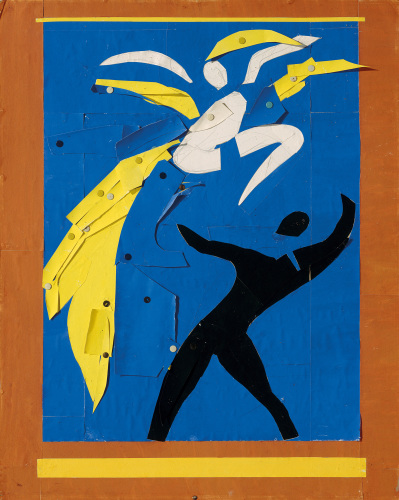
Art Work: “Two Dancers,” Matisse, 1937