When I was growing up, “Rusty” was our family dog. He was a Collie/Shepherd mix and lived to be 17. He had many virtues. For example, when I was disciplined for some misbehavior and exiled to my room, I took him with me. I would put my arms around his neck and pour my heart out, releasing all the feelings of injustice I carried. As I looked at him and he looked back, I knew he felt my pain.
These days we have a 14-year-old, 8-pound Maltese “rescue dog” named Rue. Like many of us as we get older, she’s lost some of what she used to have; in her case, 13 teeth and her left eye. But such losses have not diminished her optimism or constant devotion, and I often share random thoughts with her during the day. My wife will hear me from another room and say, “Are you talking to yourself or the dog?” I always say, “The dog.”
I was in a local bookstore recently and came across a new collection of poems by Billy Collins entitled Dog Show. I rarely buy books of poetry, but I couldn’t resist. It’s clear Mr. Collins understands dogs. Here is one about an encounter he had one night in Paris:
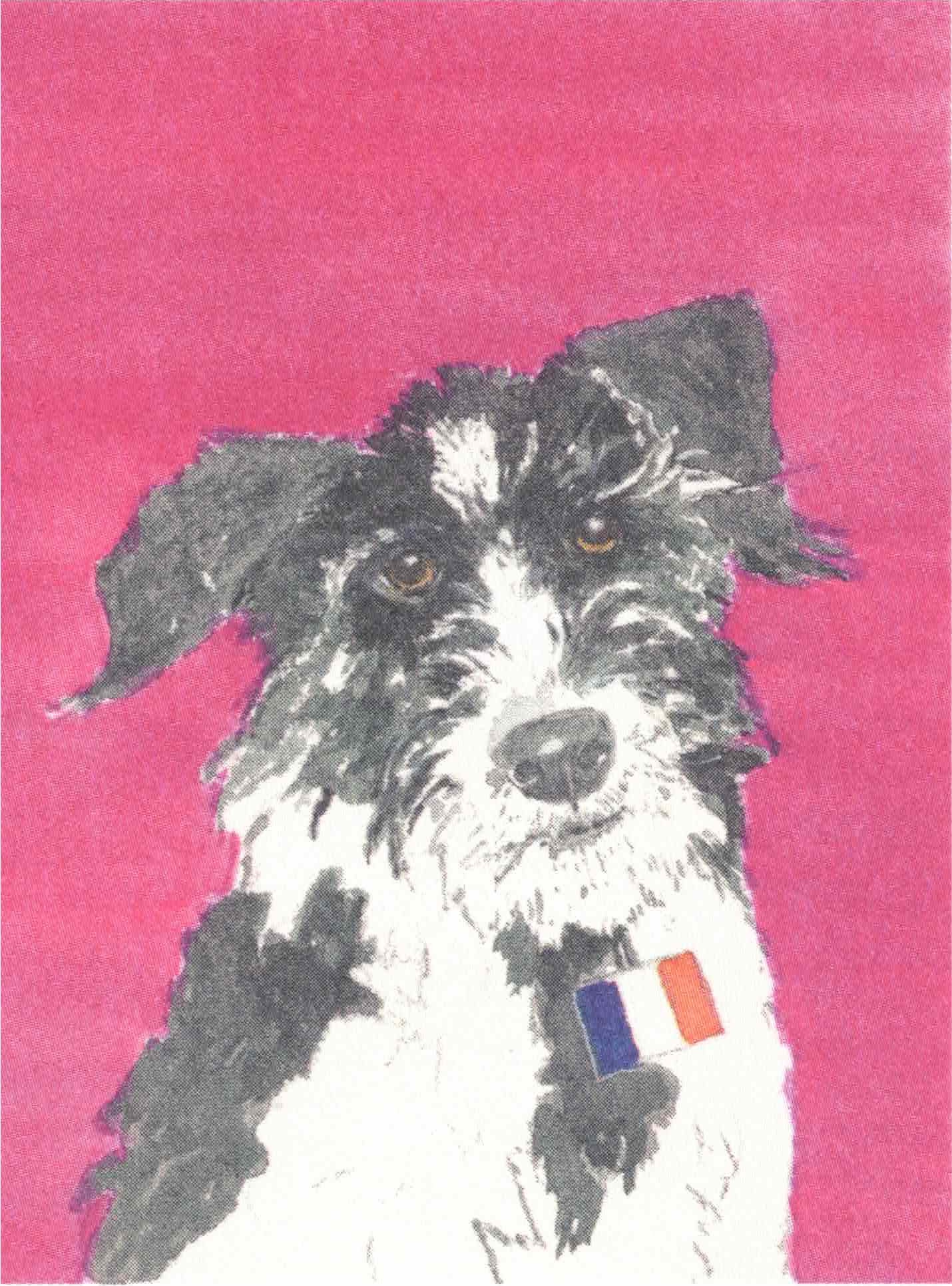
“Le Chien,” a Poem by Billy Collins
I remember late one night in Paris
speaking at length to a dog in English
about the future of American culture.
No wonder she kept cocking her head
as I went on about “summer movies”
and the intolerable poetry of my compatriots.
I was standing and she was sitting
on a dim street in front of a butcher shop,
and come to think of it, she could have been waiting
for the early morning return of the lambs
and the bleeding sides of beef
to their hooks in the window.
For my part, I had mixed my drinks,
trading in the tulip of wine
for the sharp nettles of whiskey.
Why else would I be wasting my time
and hers trying to explain “corn dog,”
“white walls,” and “March of Dimes”?
She showed such patience for a dog
without breeding while I went on—
in a whisper now after shouts from a window—
about “helmet laws” and “tag sale,”
wishing I had my camera
so I could take a picture of her home with me.
On the loopy way back to my hotel—
after some long and formal goodbyes—
I kept thinking how I would have loved
to hang her picture over the mantle,
where my maternal grandmother
now looks down from her height as always,
silently complaining about the choice of the frame.
Then, before dinner each evening
I could stand before the image of that very dog,
a glass of wine in hand,
submitting all of my troubles and petitions
to the court of her dark-brown, forgiving eyes.
What a gift a good dog can be.
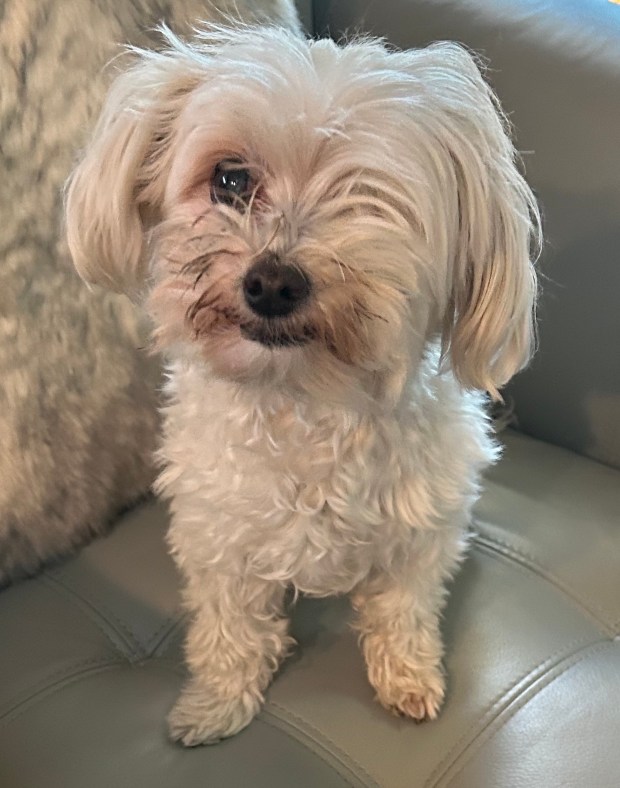
“Portrait of Rue,” photo by author; used with verbal permission from subject.
_________________________________________________
“Le Chien,” by Billy Collins, from Dog Show: Poems, Random House, 2025.
Lead image: watercolor accompanying “Le Chien” by Pamela Sztybel.


