Turning Towards the Serene Light

         In my lifetime, I’ve explored many kinds of prayers, meditations, mantras, mindfulness techniques and awareness exercises.  I’ve used them to help me on my personal journey, to occupy myself at night when I can’t sleep, to center myself before walking into difficult situations, and to share them with others in classes and retreats. One ancient prayer I keep coming back to is the “Serene Light” prayer.  Some of you may already know it. I want to share it and include some personal comments.

         This prayer arose in the Eastern Orthodox tradition centuries ago. In the simplest sense, it uses light as a metaphor of the divine presence – light in darkness being one of the most common metaphors in global spiritual traditions.  It’s not dependent on you believing any specific religious doctrines, but only on a simple desire for a spiritual connection.

         Like many prayers, its effectiveness depends on our intention — the way in which we recite it.

A writing teacher once said that the difference between prose and poetry is that good prose keeps you moving from one idea to the next, speeding up as you go along.  Good poetry – and prayers — are different.  They invite you to slow down, pause and think about what each phrase means, letting it linger and speak. It’s like putting flower petals on water one by one and watching each one float before you add the next one. Or sipping a good glass of wine instead of gulping it down.  The “savoring” approach lets each image or thought take shape and sink in; our sense of time slows down, which eases us into a more reflective state of awareness.

So, here’s the prayer, followed by some of my comments on each phrase:

Serene light,

shining in the ground of my being,

draw me to yourself.

Draw me past the snares of the senses,

out of the mazes of the mind.

Free me from symbols, from words,

that I may discover the signified,

the word unspoken,

in the darkness,

which veils the ground of my being

  • “Serene light” – the light I seek is not glaring or flashing, but calm and quiet. It radiates peace and strength. It is unaffected by my fears and anxiety. In the mystical traditions this light is at the heart of all creation. 
  • “shining in the ground of my being” – In one way, this light is beyond the busy-me that chatters all day. But in another way, it lies deep within me, at my center.  It shines, and in so doing offers me a focus, a goal, and a presence.  I imagine it shining within me.  
  • “Draw me to yourself” – Like a thirsty animal seeking water during a drought, I affirm my desire to come closer to this light.  I am not asking to abandon my own sense of self or avoid my responsibilities. But I want some help, some aid, some infusion of peace as I face what is before me. I trust the light will help me.
  • “Draw me past the snares of the senses” – We are wired to have our attention react quickly to many kinds of stimuli.  If I see something move, my eyes immediately evaluate what it is. If I hear a sound, my brain is compelled to analyze the source.  The same is true of all my senses. I can spend every minute of the day being subject to these distractions, becoming “ensnared” in the constant flow of information. But in this moment, I want to slow down, reduce the mental static, and not give in to distractions. I am choosing instead to seek the light.
  • “…Out of the mazes of my mind.” Just as my senses can keep me constantly distracted, so my mind is in the habit of jumping from one thought to the next, creating strategies and scripts to protect or promote myself.  But right now, I want to ascend above the clouds to see a greater horizon; I want to rise above the “mazes”.
  • “Free me from symbols, from words…”  Most moments of awareness are dependent on ordinary things and familiar concepts, but we can reach beyond them. In this prayer, I am using symbols and words like “light” and “mazes”, but those are not my goal. Beyond my cluttered, ordinary thinking is something greater I can sense when I am still.
  • …that I may discover the signified, the Word unspoken.”  There are endless names for the divine; Islam alone offers 99. Each word suggests a specific spiritual experience and relationship, but all are limited to a specific aspect of our understanding.  In saying this prayer, I want to go beyond all language and move closer to the “serene light.”   Ultimately, I seek the source of the light, which I cannot fully know. But I don’t need to “know” it in an ordinary sense — I only need to draw close to it.
  • “…in the darkness which veils the ground of my being.” The darkness is not a forbidding or dangerous darkness — it’s “dark” because I can’t ever “see” the “ground of my being” as I can an everyday object.  It’s the mysterious dimension in which our souls exist.

It’s ideal to memorize the prayer so it’s available whenever we want it.  And it’s important to know that we don’t have to look for immediate results to experience its power.  Sometimes it’s enough to have taken the time to live within the prayer for a set time, and the effects may be experienced later in the day.  If you do have specific concerns on your mind, you can add those requests after you’ve taken the time to dwell in the prayer; coming from a more peaceful inner space helps us focus what it is we seek.

The “Serene Light” prayer is a gem that I’ve turned to again and again and have always been grateful for where it leads me.  Perhaps it can also be useful to you.

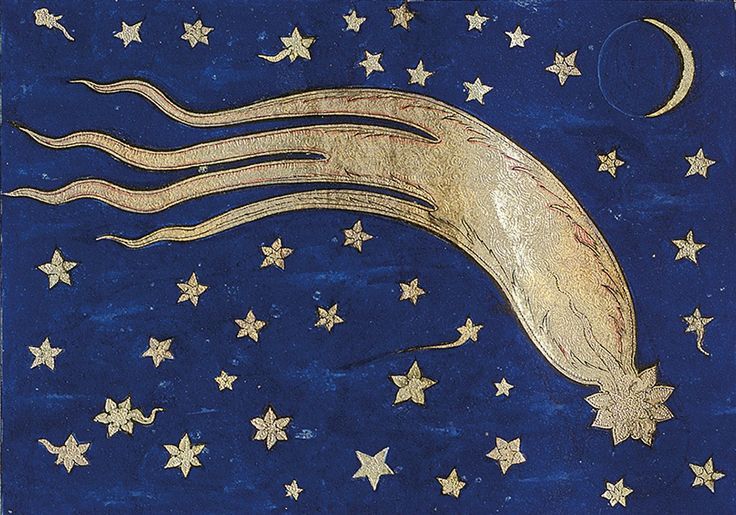
Image: Spika Star, New Forest Observatory

What To Do With a Prized Salmon? (a summer rerun)

(Dear Reader: We are in June Lake for a family gathering this week, so I’m not composing something new. But I thought I’d re-post one of my first pieces that reminds me of the importance of savoring the natural world. Remember The Old Days, when there were “summer reruns” of TV shows? — Steve)

The second congregation I served was in Wapato, Washington – a town of 3,000. George Palmer was retired and drove an older white pick-up truck. An experienced tradesman, he liked to go around town and do household repairs for people who could not afford to have things fixed. He took delight in his small white poodle, Taffy, and had built a special car seat for Taffy so that she could sit next to him and see where they were going. George and Taffy would often stop by my office to visit.

             He told me once about being a child at World Series time.  Radio
broadcasts had not reached rural Washington yet, so everyone who wanted to follow the game would gather in downtown Yakima in front of the offices of the local newspaper, the Yakima Herald. There was a scoreboard with a baseball field painted on it, and as the office would get updates, an attendant would move figures around the field to show and post the scores.  He said it was exciting every time an update came, and the crowd would stand in the street to follow the games for hours.    

             George was also an accomplished fisherman, particularly for salmon.  One time we were talking about fishing, and I asked him what the biggest fish was he ever caught.  He told he had been fishing with friends on the Columbia River, and he hooked what was clearly a huge salmon.  It took him some time to get it close enough that he could net it.  He said when it was within arm’s reach, he realized it was the most impressive fish
he had ever seen.        

I said, “So what did you do with it?
           “Steve,” he said with a smile, “It was so beautiful I just had to let it go.”

So much of our culture is about gaining control over things and making them our possession.  In that moment, I realized that perhaps the best thing we can do is to give thanks for a shining moment, and then let it go.

We’ve All Come to Look for America

            You might know the song, “America,” by Paul Simon. It’s based on a road trip he took with his girlfriend in 1964. Here’s the last stanza:

Cathy, I’m lost, I said though I knew she was sleeping
And I’m empty and aching and I don’t know why
Counting the cars on the New Jersey Turnpike
They’ve all come to look for America
All come to look for America

I have always believed that the essence of America is The Dream: the creation of a society where all human beings “…are created equal, and endowed by their Creator with certain inalienable rights, and among these are life, liberty, and the pursuit of happiness.”  The Constitution, the Bill of Rights, and a shared commitment to human dignity, democratic processes and the rule of law are the means of fulfilling that dream. 

            But there are times when I wonder if I’m naive.  

            In 2010 I attended a conference in Washington, D.C. and visited the Capitol. In the rotunda I viewed eight paintings featuring great moments in American history, including the signing of the Declaration of Independence.  I then turned to the “Frieze of American History,” a fresco depicting 19 other scenes.  Many scenes were ones I expected.  But I was surprised by others: Montezuma greeting Cortez like a God and Juan Pizzaro conquering the Inca people in Peru in search of gold. What are these scenes from Latin American colonial history doing in the U.S. Capitol? As I thought about it, it seemed obvious: the artist understood America as the supreme example of the hemisphere-wide history of Europeans conquest.

We don’t have to look too far in our recent history — from the January 6 attack on the Capitol to the mass shooting at the supermarket in Buffalo – to see that, for some, “the Dream” is not as important as the conviction that, beneath the rhetoric, “America” is really about the continued dominance of a specific group.

            So, if we “look for America,” what do we find? The Dream? Or just another country controlled by a particular tribe?

I remember being in New York for our oldest daughter’s college graduation.  Our two younger daughters and I took the ferry to Ellis Island.  We entered the reception area and saw a large collection of historic luggage on display– suitcases, satchels and woven baskets reflecting cultures from around the world.  We went into the waiting room where wooden benches are arranged end-to-end in parallel rows, so new arrivals would move up one row and down the next until it was their turn to be processed.  We sat on a bench looking out on the Statue of Liberty and read it was one of the actual benches used in the early 1900s.  My maternal grandmother had come through Ellis Island as a 21-year-old in 1912, speaking no English. Her passage had been paid by a family friend living in Riverside who would sponsor young people in exchange for two years of domestic service. I realized she may have sat on this very bench. I never knew her – she died before I was born – and I wished I could ask her what she might have been ‘looking for” when she made the trip by herself. I thought of all the opportunities and blessings my family and I have known – far beyond anything she could have imagined.  This was a moment when The Dream seemed real.

            I remember a 4th of July picnic in Yakima, Washington.  We had become close to several Filipino families in my congregation, and they’d invited us to celebrate the holiday with them.  There is a proud tradition of oratory in Filipino culture. The father gave the first speech, and eloquently described his dream of coming to America, all the obstacles he had to overcome, and how grateful he was to be here with his family.  Then one of his daughters spoke. Soon after she arrived, she had enrolled in the local community college to earn a teaching credential. One instructor told her she would never be a good teacher because her accent was too strong.  In that moment, she said, she became determined to prove him wrong. By the time we knew her, she was an official “Master Teacher” and universally respected in her profession. Being present for these testimonies made me feel closer to the meaning of the 4th of July than any fireworks display.   This was a moment when The Dream seemed real.

            On the day in 2010 when I visited the Capitol rotunda, my walk back to my hotel took me past the White House. There was a black family dressed in African apparel looking through the fence. The Obama family was living there at the time, and I tried to imagine what it felt like for this family to know that.  This was a moment when The Dream seemed real.

            I think of a Muslim grad student from Egypt who became a good friend.  He described what it was like to grow up in a country with a corrupt and repressive government, and how thrilled he was to become a US citizen. “Do Americans realize what an amazing thing the Constitution is?” he asked.  This was a time when The Dream seemed real.

            I’ve never “counted the cars” on the New Jersey Turnpike or Interstate 5, and it’s been a long time since I’ve ridden a Greyhound bus.  But I think about our country at this time in its history.  We’ve “all come to look for America,” and the quest may never end.  But to me, it’s all about The Dream.

He Thanked 46 Coworkers in Ten Minutes — Now It’s Up to You

Think of how much of your life you’ve spent at work.  Some of the people we work with make it enjoyable and meaningful, while others have the opposite effect.  Do we ever take time to recall those who have employed us, mentored us, labored alongside us, and who have made going to work a positive experience?

            On June 18 I took some family to a Dodger game — “Sandy Koufax Day.”  Like many southern California kids who grew up in the 60s, Sandy Koufax was a superhero to me.   Besides his accomplishments and awards, one of the things he’s famous for is his privacy – he doesn’t endorse products, appear on sports shows, or sell autographed baseballs.  This would be a rare chance to see him in person.

            Bill Plashke wrote an account of what Koufax said that day:

Standing behind his newly unveiled statue in the center-field plaza Saturday morning, Sandy Koufax was winding up to grace Dodger Stadium with one last pitch.

It was, appropriately, a breathtaking curveball.

It was, stunningly, a 10-minute speech from a man who hasn’t publicly spoken that much in 50 years.

It was, wondrously, the humanizing of Los Angeles’ phantom legend, a rare public pulse from a pitcher whose greatness has mostly existed in Dodgers mythology.

It turns out, at age 86, he just wanted to say thank you.

Plashke notes … he thanked 46 people during the span of 10 minutes, surely a record for inclusion and gratitude.[i]

            After I read the article, I thought, “I’m going to do what Sandy did.  I’m going to identify 46 people that I worked with that have had a positive influence on my life.”

            I soon found 46 to be a lofty target. I reset my goal at 23:

  1. Bill and Norma Schy, who gave me my first real job when I was 16 at Swensen’s Ice Cream paying $1.40/hour.  I learned how to interact with customers, clean kitchen equipment and balance out the cash drawer at closing.
  2. Tom Childress, the first painting contractor I worked for, who taught me how to paint a room efficiently and modeled how a good boss treats employees with respect.
  3. San Gorgonio High School English teacher Mr. Kenley, who taught me how to write a structured essay.
  4. UCSB Professor Al Lindemann, who challenged me to do independent research and showed me how.
  5. Bob Hibbs, my supervisor at McBride Realty in Sacramento, who patiently mentored me in the real estate business for a year before I realized it wasn’t for me.
  6. Seminary preaching Professor Randy Nichols, whose insights have guided me for 41 years.
  7. The congregation in Santa Paula who gave me my first job as an Assistant Pastor.
  8. Barb and Cragg Gilbert, who invited us to leave the California suburbs and become volunteers at the Campbell Farm in Wapato, Washington.
  9. Ed and Mary Ellen Hanks, fellow volunteers at the Campbell Farm.  Ed was raised on a ranch in Nevada and had been an agriculture extension agent, and he taught me how to drive a tractor, prune an apple tree, and care for livestock.
  10. The congregation in Wapato, Washington who took a chance on me as a solo pastor and taught me the virtutes of rural life.
  11. Sr. Kathleen Ross, SNJM, the visionary founder and president of Heritage College, who invited me to be her intern for a semester and shared her insights on leadership.
  12. John Gardner, my doctoral advisor at Seattle University, who encouraged me to pursue a dissertation topic that arose from inner passion rather than playing it safe with a less risky topic.
  13. The congregation of the Goleta church, who moved us to Santa Barbara, helped us buy our first house and raise our daughters and employed me for 16 years.
  14. Wade Clark Roof, Professor of Religious Studies at UCSB, who helped me get research grants and encouraged my academic research and writing.
  15. Rabbi Steve Cohen, dear friend and gifted teacher, who, with members of his congregation, introduced me to the depths and richness of Judaism.
  16. Muhktar Kahn, Afaf Turjoman and Hussam Moussa, who introduced me to Muslim faith, traditions, and culture.
  17. Gail Rink, Executive Director at Hospice of Santa Barbara: a fearless, compassionate rebel who changed the way our community approached death and dying. She told me I had what it takes to take her place when she retired in 2008.
  18. The staff at Hospice of Santa Barbara – people like Mary, Michael, and Magdalena — who exemplified compassionate, professional care for those facing death and grieving the loss of a loved one – and were a joy to work with.
  19. Steph Glatt, IHM, and Juliet-Spohn Twomey, IHM, long-time leaders of La Casa de Maria Retreat Center, who invited me to become Director in 2013.
  20. The staff at La Casa de Maria – groundskeepers, housekeepers, hosts, kitchen staff — who showed me what the practice of genuine hospitality looks like.
  21. Jay Grigsby, fundraising consultant at La Casa and other places, who has spent a decade mentoring me in the hard but satisfying work of raising money for good causes.
  22. The St. Andrew’s congregation, who coaxed me out of retirement to serve as their interim, proving “I’m not dead yet.”
  23. Marilyn McEntyre, English professor, poet, writer, master teacher, and friend, who has challenged me and so many others to write from the soul and not just the head.

There are many things to be despondent about in the world these days. But it’s a good practice to take time to remember those who have made our workplaces positive environments for labor and learning.  We can make a list of 5, 10, 23, or — if we are aspiring to the Gratitude Hall of Fame — 46.


[i] https://www.latimes.com/sports/dodgers/story/2022-06-18/sandy-koufax-statue-unveiling-time-of-gratitude-inclusion

Sandy Koufax, 86 years old. Photo taken by 69-year-old pensioner from Reserved Section 7, Row T, Seat 9; June 18, 2022

Tasting the Magic Waters

            For more than a decade, I’ve been entranced by the great three-part medieval poem, Dante’s Divine Comedy.  There are many spiritual and psychological insights Dante shares in this work that speak to me. In this posting, I want to share his concept of two symbolic rivers we might sample in our life journey. The description occurs near the end of the second volume, Purgatorio.

By this point Dante’s been given a tour of hell (Inferno) and all its custom-made torments. It’s impressive to see how he imagines the bad guys “get what’s coming to them,” as they used to say in the Westerns.  But Inferno is not as meaningful to me as what follows.

In Purgatorio, he imagines hiking up a mountain to see how all kinds of people are completing their personal soul-work as they prepare for Paradiso.  (Does he – or anyone these days — really believe in a place like purgatory, you might ask? Don’t worry about it, dear reader; let’s just follow what he imagined.)

As he gets to the top of the mountain, he travels through an enchanted forest and, among other experiences, comes to two rivers.  He also encounters a guide, Mathilda.  The first river Mathilda leads him to is the Lethe, which was known in Greek mythology as the river of forgetfulness we pass through after we die.  Dante interprets it in a positive way:

“She plunged me, up to my throat, in the river

And, drawing me behind her, she now crossed

Light as a gondola, near the blessed shore, I heard

“Asperges me,” so sweetly sung that I

Cannot remember or, much less, describe it.” (Canto 31: 94-99)

“Asperges me” means “thou shalt sprinkle me.”  After guiding him across the river, she invites him to take a drink.   All the memories of the mistakes he’s made in life – the poor decisions, the times when he’s hurt someone else or disappointed himself – all are washed away in the Lethe. Think about your regrets in life – what would it feel like to have the painful memory of them disappear?

“The River Lethe,” John Flaxman, 1807

            After more encounters and reflections, he comes to the second river – one Dante created out of his own imagination — the Eunoe.  Matilda is joined by a group of guides and invites Dante and a fellow pilgrim to drink from it.  After he does, he says:

If, reader, I had ample space in which

To write, I’d sing – though incompletely – that

Sweet draft for which my thirst was limitless…(Canto 33: 136-138)

Where the effect of drinking from the Lethe was to allow him to forget all his failings, drinking from the Eunoe allows him to recall all the good deeds he’s done in life, both large and small.  (The word he created, eunoe, combines eu(new) – and noe(mind) – a new, fresh mind.)

The River Eunoë, John Flaxman, 1807

            Think about it. Sure, you’ve made mistakes in life. But you’ve also done many good things – small kindnesses, acts of love and duty, promises kept, hope given, and friendships honored. Imagine what it would be like towards the end of life to forget all the bad stuff you’ve done and remember all the good?

            From the first time I read about these two mythic rivers, I was entranced by imagining what such an experience would feel like.  In the years since, I’ve come to wonder if sometimes people actually experience something similar.

            My father outlived my mother by 19 years.  We knew they loved each other all the years they were married. But we also remember their life together was not free from the stresses and strains of many long-term relationships.  Yet in his last years, whenever dad reflected on their time together, all he talked about were the joys they’d shared — no mention of the hardships.  At first, I was tempted to kindly point out it wasn’t all milk and honey. But something told me to be quiet.  It was as if dad had dipped first into the Lethe, then the Eunoe, and the combination filled him with pure gratitude.

            Recently I visited a former parishioner who had decided to stop receiving life-prolonging treatments. She’d been through many challenges in her life, including years of concern for her children and the obstacles they faced. But, she told me, they were both doing well now and didn’t need her as they had before.  She was tired of the complications her body was having to endure every day and she wanted to be free.  When I came, she was going through a box of old family photos.  After I sat down, she showed me some of her favorites. Each memory had become a delight.  Before I left, I asked her if there was anything she’d like me to pray for. She told me, “Somebody said, If the only prayer we ever offer is thank you, that would be enough.  Just say how grateful I am.’

            Remembering our mistakes helps us to stay humble and keep learning how to do better. Focusing only on the good we’ve done may seem selfish.  But maybe, once in a while, we can close our eyes and imagine sampling those waters – tasting what it’s like to have our regrets washed away, then savoring a pint of gratitude for the good things we’ve done.  Maybe we shouldn’t wait until late in life to see what these magic waters can teach us. 

Painting: “Along the River Lethe,” Kyle Thomas

“Beholding” as a Spritual Practice

            Last week I attended a leadership conference featuring David Brooks, PBS commentator and columnist for the New York Times.  He covered many issues in his three talks, and one I want to share with you concerns the attention we give other people.

David said he recently was working alone at home one evening when his wife came in the front door. He looked up to see her and realized she hadn’t yet noticed him sitting at his desk in the adjacent room.  He decided to simply watch her for a minute.  After she closed the door behind her, she put her things down, and paused.  The house was quiet. She then turned and walked into the kitchen.  In that unplanned moment of simply observing her, he realized how much he loved her. He said the experience of seeing her this way was not just a visual act, but something more: he felt as if he was beholding her.

He contrasted this moment with what we experience often in modern life — looking at each other without really seeing each other.  When we meet someone, we quickly form assumptions about them before they even speak and filter whatever they say through our assumptions.  When someone we know is talking – even someone we know well – our busy mind often isn’t listening carefully to them, but instead preparing what we are going to say in response.  “We are not good at “reading” others,” he said, which has created “an epidemic of social blindness.”  The quality of attention we bring to someone else is a moral act.  If we are truly paying attention with humility and genuine respect, we are granting that person dignity.   We are beholding them.

I looked up the origin of the word.  In Old English, the word bihaldan meant “give regard to, hold in view.”  Modern definitions include, “To hold by, keep, observe, regard, look” and “To look upon, view, consider as (something); to consider or hold in a certain capacity.” If I was to add my own definition, it would be “to give reverent attention to a particular person or experience.” I kept turning the word around in my imagination and was intrigued with the possibility that to “behold” someone could be to “hold” that person’s “being” with a particular sense of awe and care.  We are not looking at them with our “busy mind” but opening ourselves to the mystery and wonder of their living presence.

            In Leaving Church: A Memoir of Faith, Episcopal priest Barbara Brown Taylor described the factors that led her to leave parish ministry. One reason was that she had become weary of people wanting her to tell them what they were supposed to believe.  She said her spiritual journey had not been so much about believing the right thing but inviting others into experiences of beholding —“beholding life on earth in all its glorious and terrible reality.”

            Being with someone when they die can often evoke a feeling there’s something sacred in the room. I remember my sisters and I spending time at our deceased father’s bedside before the mortuary arrived.  We weren’t just looking at dad, we were beholding him.

            And I recall what it’s like raising young children.  You’re busy all day long with them – talking, listening, dressing, negotiating, feeding, bathing, reading a story — and it’s a big accomplishment to finally get them into bed. A little while later you come back to their room to check on them.  You carefully, quietly open the door and see if they’ve fallen asleep. Seeing they are, you sometimes stand there and keep looking at them. You now “see” them for the miracles they are. You may even think, “When they are asleep they look like angels.” In those moments, you’re not just looking at them – you are beholding them

            Maybe we can try beholding one person today and see what we experience.

Imgage: Sleeping Child Covered With a Blanket, Henry Moore, 1942

Status and Community: A Tale of Two Lives

            Dr. Charity Dean lived in our neighborhood before she became famous, and I was looking forward to hearing her speak this week as part of the annual “Lead Where You Stand” conference at Westmont College. I was familiar with her amazing career and legendary grit but, until Wednesday, had never heard about a personal challenge she faced.

Born and raised in a low-income family in rural Oregon, at age 7 she felt a call to become a physician and tropical disease specialist. After earning her medical degrees, she became a resident at Cottage Hospital here in Santa Barbara.  She was brilliant at analyzing data. But she also received invaluable training from Dr. Stephen Hosea who taught her the importance of looking beyond the data and test results to see each patient as a unique person. He also emphasized the importance of physically touching them before making a diagnosis, encouraging her to trust her “sixth sense” to discover what was going on; “I sense and feel things,” she told us.

She became the Public Health Officer for Santa Barbara County, which had traditionally been a largely bureaucratic position.  But she didn’t stay in her office or wait for patients to be brought to her. Instead, she went out to see them wherever they were — homeless shelters, farm worker sites, parks, anywhere.  She observed them, listened to their stories, always using touch as part of her interactions.  She soon gained a reputation as a fearless and formidable public servant who wasn’t afraid of upsetting other officials in serving the public good.

In the summer of 2019, her training and “sixth sense” told her COVID was coming.  She began a relentless struggle to alert and prepare others.  By April 2020, she was Co-chair of the California COVID-19 testing task force in Sacramento and serving on the White House Coronavirus Task Force. She was featured on ABC News and 60 Minutes and is a central figure in Michael Lewis’ The Premonition: A Pandemic Story.

It was fascinating to hear an account of her professional ascent.  But I was impressed in another way when she talked about a personal issue.

Apparently, alcohol had been problematic for her. She did not drink daily, but when she did, she had a hard time stopping. She went to Oregon to visit her mother and asked about the family history.  She was told alcoholism had been pervasive, which she hadn’t know.  She returned home and decided she needed to go to an AA meeting.

When she walked in, she was surprised to see someone who knew her — one of her homeless patients.

“Hello, Dr. Dean,” he said. 

She became a regular.  A year later she received a pin marking her first “birthday” of sobriety.  As she came forward to receive it, the man who followed her was receiving his ten-year pin – another former homeless patient who was living with HIV and had become a friend and supporter.

            As a physician, she said it was humbling to go to that first meeting.  But she discovered everyone in the group had something to teach her about life.

            This brought to mind a story from my time at Hospice of Santa Barbara.

            HSB is a rare form of hospice – one which does not provide direct medical services, but instead offers psychological, social, and spiritual help to anyone facing a life-threatening illness or grieving the death of a loved one.  Thanks to a $40 million bequest we received and community support, we were able to have a staff of 30 skilled and compassionate professionals. Part of HSB’s charter is that all our services are free, with no reliance on government or insurance funding.  When I was there (2008-2013), we were serving hundreds of people of all ages and backgrounds.

            One staff member told me the following story.

A wealthy woman had come for grief counseling. When the first session was completed, she took out her checkbook and asked how much the fee was.  The therapist told her HSB did not accept payment; if she wished she could make a donation when her therapy was completed. She was flustered and uncomfortable at the thought of not being able to pay for the services.  But she kept coming to her appointments.

            Our staff knew that, for many people, being in a group of others who had suffered a similar loss can be helpful.  Our therapist told this client that she had gotten to a point where being part of such a group would be a good next step.  The woman was very resistant — she didn’t think she’d have much in common with a group of ordinary people.

But she agreed to try it. Soon she became a dedicated member.

            When she completed her time with us, she told the therapist that she had never realized how much she had in common with other people.  Sharing this difficult journey with others, she said, was one of the best experiences of her life.

            We seem wired to create and maintain identities for ourselves that can make us think some people are “better’ than others. But in my experience, beneath the facades, we are all human beings trying to find our way in life. On that journey, humility, friendship, and community are priceless gifts.

Your Membership Card for the Spiritual Gymnasium

            Speaking at the Lobero Theater fifteen years ago was the great scholar of world religion, Huston Smith. Almost 90 years old, he had difficulty walking on stage. 

Once he reached the lectern and stabilized himself, he looked out at the audience, smiled, and said, “I’m going to make five statements tonight that I think you will disagree with.”  People shifted a bit in their seats. 

There’s no such thing as progress” was one of them. 

            He acknowledged that, of course, there have been significant improvements in our lives over the centuries.  Plumbing, for instance. Or scientific advances in many fields, including those that have improved health care, eliminated many deadly diseases, and reduced mortality rates.  Not many of us would argue with that.

            There’s been some progress in human rights, particularly regarding race and the status of women.

            But with all our material advances, have we resolved the problems that create human suffering?

            He finished by saying:

            “If you go through life feeling you must solve the problems facing humanity before you die, you are going to come to the end frustrated and discouraged.  But if instead you see life as a spiritual gymnasium – a place designed to learn timeless truths – you will find it’s perfectly equipped.”

In my twenties I realized how deeply embedded the illusion of progress is in our society – that every generation will make things “better.”   Clearly there’s been great material advances.  But would we say there has been “progress” in the arts? Has anyone “improved” on Bach, Mozart, Beethoven, Shakespeare, Ella Fitzgerald, Elvis, the Beatles, Van Gogh, Aretha, Bruce Springsteen, or Bob Marley?  New artists come along and delight us with their creativity, but that’s not “progress,” that’s just new expressions.  There is a timelessness to great art that is very different from a new washing machine model or a television with higher resolution.

            The same can be said about great spiritual teachings.  New insights and interpretations emerge, but core teachings endure. The importance of awe, wonder and gratitude.  The call to love and serve your neighbor and guard the inherent dignity of others.  To participate in a caring community. To treat the earth as a sacred gift.  These values are ageless, and life offers us endless opportunities to practice them.

I find this helpful to remember when events challenge my assumptions of how we should be able to “fix” things.

            When Barack Obama was elected in 2008, many of us thought America might be entering a “post-racial” America.  We were wrong.

            Until the 2020 election, we took it for granted that a president who had clearly lost an election would never call it a “big lie” and encourage a violent attack on the Capitol. We were mistaken.

            Europe has  not seen large-scale armed conflict in 77 years and it seemed we were beyond such events. But Russia attacked Ukraine in February and millions of people have become refugees.

            Ten years ago, after the Sandy Hook shootings, many Americans were determined to do whatever it would take to prevent further tragedies.  Now we have this unfathomable event in Texas just days after the shootings in Buffalo.

            Human behavior, it seems, is not as easy to upgrade as a cell phone.

            But do we give up and disengage?  Absolutely not.

            First, we realize not everything that comes to us can be permanently solved, particularly when it involves human behavior and motivation.  But everything can be addressed and engaged with a desire to make a difference and sometimes advances are made.  That’s how social progress happen.s And it’s always a chance for a work-out in the spiritual gym. 

            One year I worked in inner city Philadelphia with an African American pastor who had grown up in the neighborhood. I once asked her how she kept going.  “We just keep on keeping on,” she said.

            Maybe it’s like practicing medicine.  You can be a faithful physician or nurse without believing every disease will be eliminated in your lifetime.  You just keep bringing your best efforts to every patient while hoping for new advances and better treatments.

At La Casa de Maria Retreat Center, we regularly welcomed people who were striving to make the world a better place. They often arrived discouraged, depleted, and burnt out.  They unplugged and spent a few days resting and reflecting amid the 26-acre natural sanctuary. They’d leave renewed. Father Richard Rohr describes the dynamic:

One of the reasons I founded the Center for Action and Contemplation was to give activists some grounding in spirituality so they could continue working for social change, but from a stance much different than vengeance, ideology, or willpower pressing against willpower. Most activists I knew loved Gandhi’s and Martin Luther King, Jr.’s teachings on nonviolence. But it became clear to me that many of them had only an intellectual appreciation rather than a participation in the much deeper mystery. The ego was still in charge, and I often saw people creating victims of others who were not like them. It was still a power game, not the science of love as Jesus taught it.

            When we begin by connecting with our inner experience of communion rather than separation, our actions can become pure, clear, and firm. This kind of action, rooted in one’s True Self, comes from a deeper knowing of what is real, good, true, and beautiful, beyond labels and dualistic judgments of right or wrong. From this place, our energy is positive and has the most potential to create change for the good.[i]

Welcome to the spiritual gymnasium.  There’s no enrollment payment or monthly fees, and it’s open 24 hours, seven days a week. 

“Where do I get my membership card?” you might ask.

You’ve already got it – it was given to you at birth.

Photo: Huston Smith and me at Esalen, October 2010.  He was born May 31, 1919, in China and died in Berkeley in 2016 at age 97.  He continues to be an abiding inspiration in my life.


[i] Richard Rohr’s Daily Meditations, “The Root of Violence,” May 1, 2022:  https://mail.google.com/mail/u/0/ – search/jspohntwomey%40gmail.com/FMfcgzGpFgwXkxtbHMLVmRqMDsRphSGf.  Thank you to my long-time friend and La Casa colleague Juliet Spohn-Twomey for calling attention to this post.

What?? No WI-FI??

                      In my first college class, “Introduction to Psychology,” I was introduced to a popular concept of that era, “Maslow’s Hierarchy of Needs”:

                      The idea is simple. For human beings to become “self-actualized,” we first need to satisfy our basic needs. Each level going “up” assumes you’ve fulfilled the need that precedes it.  This can help explain why, for instance, it’s difficult to manage life if we’re experiencing hunger, trauma, or deprivation. It has a certain logic to it: what factors need to be in place for you to become your “best self”?[i]

                      Several years ago, I saw a cartoon in the New Yorker that suggested Maslow’s hierarchy needs to be updated. I couldn’t find the actual cartoon this week, but found a graphic that displays the cartoonist’s point[ii]:

                      What’s it like these days if your power is out?  Or your internet is down? Or your cellphone dies?

                      A few years ago, we were staying at a modest, funky hotel on Highway 1 south of Big Sur.  It was in a remote area where cell service was either spotty or nonexistent.  If you were a registered guest, you were given the WIFI password. But they had a policy of not giving the password to anyone who was just passing by because their small parking lot would become full of people stopping only to use their limited system.  I remember an anxious European couple coming into the tiny reception office and being told they would not be given the password since they were not registered guests.  They were aghast.  How does one travel without WIFI or cell service?

                      About the same time, I made a trip to New York to see some baseball games, music concerts and art exhibits. I was walking down a busy street in Manhattan when, out of habit, I checked to be sure my wallet was secure.  It was. But then it hit me — what would I do if I lost my iPhone? That was how I was communicating with my Airbnb hosts, hailing Uber rides, showing my tickets at events, finding my way through the city, checking on my flight details, and keeping in touch with my wife.  

                      Twenty years ago, I had a sabbatical to study how digital technology was beginning to reshape our lives.  My research included interviewing people in Silicon Valley and India and surveying a broad range of experts. I became acutely aware of how our lives and expectations were rapidly changing, often imperceptibly.[iii]

                      The science fiction writer Arthur C Clarke wrote, “Any sufficiently advanced technology is indistinguishable from magic.” 

When the first films were first made and shown, people could not believe images of real people could move across a flat surface.  Then came radio – voices traveling invisibly through the air for many miles – which seemed like another miracle. Black and white TV followed – now people speaking in real time could be seen in the privacy of our homes. Something better was always around the corner.  Color TV and The Wonderful World of Disney! Then VCRs — you can record The Wizard of Oz and watch it anytime you want! Then DVDs — you don’t have to rewind the movie when you’re done! Then unlimited channels with streaming content on the internet — including YouTube with 2 billion users, where you can watch some guy in his kitchen in Tennessee showing you how to unclog a drain in four minutes!  Each new stage truly seems like “magic.”

Then a few years later the miraculous device — the TV, the monitor, the laptop, the smartphone, the modem, or the router — is lying on a card table at a garage sale with a $5 price tag; when it doesn’t sell, it’s dropped off at an “E-waste” site.

                      In Sapiens, Yuval Noah Harari offers an overview of human history from the beginning of time to the present. He points that each time there is an “advance,” there is also some kind of loss. For instance, when our ancestors were hunters and gatherers they were highly attuned to their environment and lived entirely off what nature provided.  When they settled down to become farmers, they were able to create greater quantities of food but soon lost the subtle and detailed environmental knowledge that had taken their ancestors many generations to acquire.  When people moved from farms to cities, they lost the connection to the earth even more and, for many, the practical know-how of how to grow food, as well as create and fix things on their own.  We’ve now moved into the digital age and gained a whole new range of capabilities — but at what cost?  Are we more “self-actualized” or any wiser?

                      Cell phones, digital devices, the internet and WIFI have, in some ways, become as essential to modern life as food, water, warmth and rest. I appreciate all their beneficial uses.  But I’m concerned about how dependent we’ve become.

Featured image: Masaccio, Expulsion of Adam and Eve from Eden, 1427


[i] There have been critiques of this concept, noting it’s very Western, male, and individualistic in its assumptions and completely ignores any spiritual dimensions.  But we’ll save that discussion for another day.

[ii] https://images.techhive.com/images/article/2014/11/wifi-maslow-100530169-large.idge.png

[iii] I published articles based on my research, including “Soul-Keeping in a Digital Age: The Role of Spiritual Practices and Traditions in a High-Tech World,’ which I presented at the “UNESCO Conference on Religious Pluralism” in Seattle in January 2005.  The paper is available at https://drjsb.com/wp-content/uploads/2021/01/soul-keeping-in-the-digital-age-1.pdf

Taken Your “Life-House” Out For A Walk Lately?

         Taken your life-house out for a walk lately?

         Hard to resist if it’s a nice spring day with a bright heaven-candle in the sky.

         Who knows? You might come upon a fresh masterpiece by a weaver-walker.

         Life-house, heaven-candle and weaver-walker are examples of “kenning,” a practice in OId English in which a “figurative phrase or compound noun stands in for a familiar word.”[i] Such words were created by our linguistic ancestors between 500 and 1200 AD. Life-house is a word for “body,” heaven-candle for “sun,” and weaver-walker for a “spider”.

         I think these words are delightful.

         “Body” is a boring word — one definition is simply “the physical aspect of a person.”[ii]  It doesn’t suggest what this “aspect” is really for.  But life-house tells me so much more. This is the “house” I received when I was born and where “I” have resided all these years.  It’s got some deferred maintenance issues, to be sure, and the older we get there are longer lists of things that need to cleaned, replaced, spruced up, covered up, and repainted, not to mention the possibility of discovering leaks as the pipes wear out. But there’s no down payment or mortgage to pay, no crazy real estate market to contend with – it’s a gift we’ve each been given.  Our body is where we live – our one and only life-house.

         “Sun” is defined by NASA as a “a hot ball of glowing gases at the heart of our solar system.”[iii]  Possible digestive and political jokes aside, that’s obviously a scientifically accurate way to put it.  But how much better a word is heaven-candle?  That glowing orb that illuminates the day is like a generous candle that fills the sky with welcome light every day, without which we would bump into all kinds of things.  Our heaven-candle never drips wax on the carpet and is expected to last for another two billion years without being replaced.

         “Spider”: “An eight-legged predatory arachnid with an unsegmented body consisting of a fused head and thorax and a rounded abdomen.”[iv]  Yuck.  “Unsegmented” sounds like somebody needs to make an appointment with an orthopedic surgeon; “fused head and thorax” sounds like they’ve already had at least one such procedure.  As to “rounded abdomen” – not sure what’s polite to say there. But as a description, it sounds depressing.  How much better is weaver-walker?  Doesn’t this word capture the miracle that this creature actually weaves while it walks?  (In spite of all its surgeries?) I’ve known some great knitters in my time, but not one that can do that while strolling down the sidewalk, let alone suspended in mid-air generating its own thread.

         These examples of “kenning” bring to mind words created when our children were young. 

I remember watching Monday Night Football once and a daughter walked in and said, “What are you watching, Daddy?  Catch-the-man?”  Sounds more accurate than “football,” a word which should be permanently released to the custody of soccer.

         Another time, one of the girls was very angry at someone and passionately declared, “They are a Dumbo-airplane!”  Years later, I’m still pondering how to visualize that, but have always appreciated the emotional force behind the phrase.

         Less poetic but similarly useful was a word we created, “birthday-cereal.”  The origins can be traced to taking young kids to the market and walking down the cereal aisle.  Attracted by the graphic images for Fruit Loops, Sugar Crisp, and Cap’n Crunch, they’d constantly beg me to buy one of these nutritional disasters.  It was exasperating.  One day I issued the following edict: they could have any cereal they wanted on their birthday, but on all other days, we would only buy cereal with less than 10 grams of sugar in it per serving.  Not only did the haggling disappear, but it improved their literary and math competency as they became experts at silently rushing from box to box down the aisle, carefully examining the chart of nutritional data on every one like Sherlock Holmes.

         So “catch-the-man,” “Dumbo-airplane,” and “birthday-cereal” were “kenning” creations in our family – I’m guessing every family has their own.

         Let’s turn back one more time to savor a few more of these Old English gems.

         After we’ve taken our life-house out for a walk under the heaven-candle while keeping an eye out for weaver-walkers, we could take a trip to gaze at the wave-path. You know, the sail-road? Ok, I’ll try one more word for it: the whale-way.  Got it? The ocean! “The entire body of salt water that covers more than 70 percent of the earth’s surface”[v] is the dull way to put it.  Wave-path, sail-road, and whale-way are words that help me see movement and life on the sea.

         Finally, after our enlightened walk and time spent gazing from the shore, we should have a dust-viewing.  That’s the Old English description for “visit to a grave.”  After all, that’s where our life-houses will end up.  But we’re not there yet.  And right now, today, we have this divine opportunity to give thanks for the miracles of the heaven-candle, the weaver-walkers, and the endless creativity of our species.  Let’s not let that opportunity dissolve into the dust just yet.

Image: “Spider Web Glowing in the Morning Sun,” Erica Maxine Price

Got some “kenning” examples of your own? Share them in the “Comments” section.


[i] “Here Be Dragons,” book review of The Wordhord, by Hana Videen, WSJ, May 9,2022

[ii] Wordnik.com

[iii] https://www.nasa.gov/sun

[iv] https://www.lexico.com/en/definition/spider

[v] The American Heritage® Dictionary of the English Language, 5th Edition.

One reader, who is not able to post comments on this site, writes this:

Hi Steve,

I so enjoyed your sharing of, “Life-House.” Once again, since my comments are not possible to add on-line, I will share them with via email.

When my children were young they very disliked eating broccoli. We changed the name to “Green Trees” which they took pride in that they were eating a tree.

One of my granddaughters would only eat chicken when she was young. I told her that salmon was pink chicken, she ate it, and even likes it to this day, but embarrassed if I tell anybody she use to call it pink chicken.

In my classroom, I had a small picture frame with a label at the top, “HOT NEWS.” If a child came to school with a heavy or joyful heart from something that recently happened in his life, he/she would have troubling focusing on the work or verbal exchange during the day. Some examples would be, “my goldfish died last night, Grandma & Grandpa are coming today, Mom is going to have a baby, my dog/cat is in the hospital, etc” The advantage of the HOT NEWS is that once the child shared with his friends in the classroom and teacher he/she had the ability to have better focusing skills. The disadvantage is that the Hot News might be information being shared which was a family secret. Examples, Dad said mom is not with her girlfriends this week, but is having nose surgery. The child’s comment “I don’t know if she is getting a shorter or longer nose, but I will tell you later when she comes back home.” Now 25 children know the mom is having a nose job, which they will share with their mom, a top secret the Mom did not want to advertise.

One of my son’s said his teacher was as “dumb as a rock.”

I always told my children and students that they were responsible for answering their body telephone and no one else can. This might mean they need to use the restroom soon, they were not feeling well and needed to go home from school, etc.

To discount the different colors of people, I told my granddaughters and sons when they were young that how they looked was just God’s wrapping paper, but inside we are all the same, except how we share from our heart.

Thank you for letting me share with you some of my favorite examples of words with unique meaning.

I always appreciate and enjoy your words of wisdom and interpretations of life’s experiences.