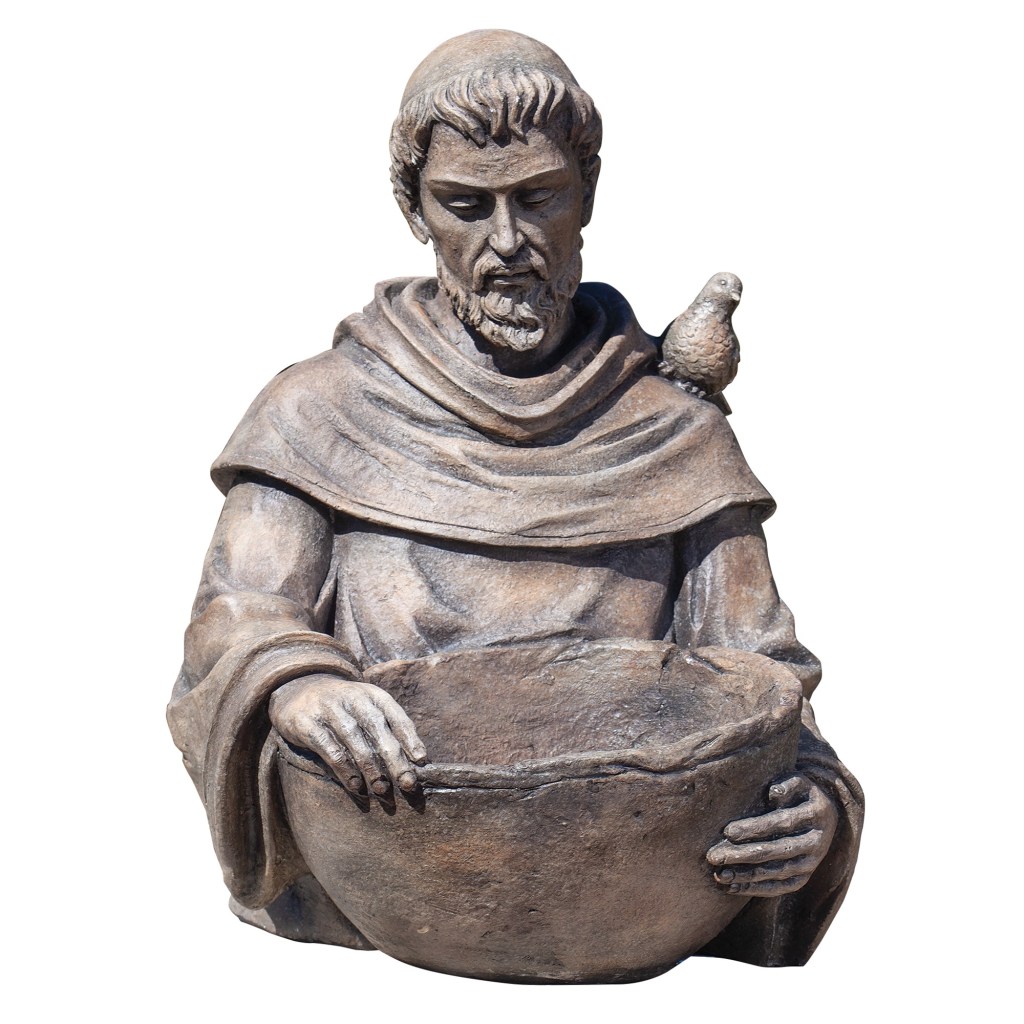
Is Creating an Empty Space on Your Holiday List?

         A colleague once told of visiting an older writer in Paris whom she’d always admired.  The woman welcomed her at the door and invited her in.  The apartment was full of books, papers, and artwork and it was not clear where to sit.  The woman gestured toward a chair that had some books and papers on it.  “Oh, just put those anywhere.”  My friend picked the items up and was about to place them on a small empty table nearby, but the woman said, “Oh, not there. I try to keep one space empty and open wherever I live.” And she indicated a different spot to lay the items.

         My friend said she never forgot this idea: that even in the smallest of residences, it may be a worthwhile practice to have one place that is not covered with things, but always “empty and open.” 

         This time of year, it’s common to bring out all kinds of things that speak to us of the meaning and memories of the season – figurines, candles, ornaments, greens, lights, seasonal books, etc. I have several playlists of music I return to every year, which fills the air with music.  It can be a busy and joyful time.

         I’ve been thinking — What would it be like this year to create an “empty and open space’ in our living space? What if we choose a spot that we see throughout the day that will remind us to be inwardly open to silent truths, fresh inspirations, and the savoring of mystery?

         In the Biblical story of the angel coming to Mary, she is essentially asked if she will be open to a new life coming into this world through her.  She says yes, and the life arrives from a realm beyond her knowing.

         Isn’t it the same with all children?  We understand how the biology works, but the way children seem to each arrive with a unique soul and presence is surely a wonder.  David Brooks tells of a friend whose spiritual journey began as she held her first child in her arms and thought, “I love this child more than evolution can explain.”

         In the Mexican tradition of La Posada, Joseph and Mary travel from house to house, asking if they might stay for the night. Time after time they are told there is no room for them.  In the end, the only ‘open space” they are offered is a manger. But it is enough.

         I’m going to try this out.  My desk sits next to a bookcase where every shelf is often full of books and CDs.  But I decided to clear off one eye-level shelf and leave it bare for the month.  When I’m tempted to place something there, I’m going to tell myself, “Oh, not there. I try to keep one empty and open space wherever I live.”

         “How silently, how silently, the wondrous gift is given…” In silence and emptiness and openness gifts can appear that may surprise us.

.

The Key May Be Waiting in the Shadows

One recent afternoon my wife and I hiked up a local canyon. On our way back, the sun was beginning to set, and shafts of life were cutting through the oak trees. We stopped to take a few pictures. Here’s one:

As we resumed walking, I began thinking about how our awareness is naturally attracted to whatever in our environment is illuminated.  For example, in this photo, I find myself looking at the lower half where the light is brightest.

This can be a kind of bias — to the tree itself, the parts that I don’t notice because they are in the shadows are just as important as the parts reflecting the sunlight.  I was reminded of a timeless Sufi tale about a man looking for a lost key: 

The great Sufi master Mullah Nasruddin was on his hands and knees searching for something under a streetlamp. A man saw him and asked, “What are you looking for?” “My house key,” Nasruddin replied. “I lost it.” The man joined him in looking for the key, and after a period of fruitless searching, the man asked, “Are you sure you lost it around here?” Nasruddin replied, “Oh, I didn’t lose it around here. I lost it over there, by my house.” “Then why,” the man asked, “are you looking for it over here?” “Because,” Nasruddin said, “The light is so much better over here.”

            This tendency has since become known as the “streetlight effect: “a type of observational bias that occurs when people only search for something where it is easiest to look.”[i]

A psychology professor once described how our unconscious mind is often working to solve problems without our awareness, and sometimes we need to give it some space to help us.  He gave the example of trying to remember someone’s name.  We may stop and try harder and harder to concentrate on locating the fact — like turning up the power on our flashlight to maximum power – but that doesn’t seem to help.  He suggested we try letting our focused search go for a minute and shift our attention to something else, like looking out a window.  When we do that, the name we are looking for will often appear in our awareness like a gift out of the blue.   Turning our attention elsewhere allows the answer to come to us from “the shadows” of our mind.

            I’ve applied this often in conversations.  Someone is telling me a story and gets stuck trying to remember a name.  They get frustrated when they can’t come up with it.  I’ve learned to say, “Just keep telling your story and it will come back to you.”  Almost always, when they resume their story, the fact will come to them and they’ll say, “Oh, now I remember…”

            During COVID, I took some Zoom writing classes from Marilyn McEntyre.  One of them was called, “Writing Into The Unknown.” Marilyn told of being in graduate school and meeting with a professor to receive a paper he had graded. He told her it was flawlessly done. “But,” he said, “it’s boring.” He encouraged her to take more chances.  She realized she had always depended on using outlines, knowing exactly where she was going when she started to write.  This can be useful in some situations. But it can be an impediment in creative and personal writing.  She encouraged us to start with a hunch or a feeling and see where it goes. Often, we surprise ourselves by discovering insights we didn’t know were “in” us.   Moving away from the lamppost can lead us to the key.

This resonates with the book In Praise of Walking,[ii] which I wrote about some months ago. If we have been working on a problem at our desk and feeling stuck, it’s well worth our time to get up and go for a walk.  As our attention shifts away from the problem, interesting ideas often bubble up to the surface of our awareness.  What we’ve done is give the unconscious/shadow part of our mind a chance to share what it’s quietly been working on all along, and it rarely disappoints.

In recent years, I’ve become more aware of “somatic intelligence” – the capacity of our body to know things that our conscious mind hasn’t figured out yet.  Sometimes we “get a feeling” about someone or something and we’re not sure where that comes from, but the feeling/thought turns out to be valid.  We use our rational mind to evaluate what we are feeling, but we do so while recognizing we may know more than we can say and be open to the unseen within us.

Let’s go back to the photo of the tree.  At first, all my attention was drawn to the lower half.  Here’s what the upper section shows:

A very different look from the lower half.  And the more I look at it, the more mysterious and interesting it becomes – so dense with intertwined growth representing years of making its way in this canyon.

            Here’s the original photo, with the illuminated parts of the tree integrated with the shadow side.  Together, they form a whole:

May we appreciate the different aspects of our personal awareness as we navigate the wonders of this life.


[i] https://en.wikipedia.org/wiki/Streetlight_effect#cite_note-1

[ii] https://drjsb.com/2022/04/16/the-gift-of-walking-everyday-problems-electric-toothbrushes-and-an-easter-surprise/

What We Take for Granted

This past Monday, I had surgery to repair a torn rotator cuff in my right shoulder. As a result, my right arm is in a sling for the time being.  This is a common procedure that many of you have gone through, and minor compared to the challenges so many people face. But, for the first time in my life, I am going through routine daily tasks without the use of my right arm to do things like sign a check, pick up a box, guide the computer mouse, or drive to the store.  I am finding an increased awareness of the things that I “take for granted.” And my curiosity has lingered on the word: “granted.“

         The word “grant” can mean: “to give or allow something, usually in an official way.”  We may receive something we desire, but it’s not something we have control over – like being granted a pardon or receiving a grant to fund a project.[i]

         The meaning expands when we “take something for granted:”

         Here is one definition: “To believe something to be the truth, without even thinking about it; for example, “I guess we all took it for granted that water would always be freely available.”[ii]

         I think of my right arm: How many millions of years of evolution did it take to create and engineer this arm?  How many of my biological ancestors helped develop its capacities, passing on what is advantageous to future generations and ultimately to me?  My right arm and its capabilities have all come in the form of a grant.  I have never thought of it that way – I have always taken it for granted.

         In 2010, we made a 12-hour journey to attend a week-long yoga retreat near Mount Shasta. That night, I got up out of bed and discovered my left side was partially paralyzed and my speech was impaired. I was taken to the local hospital where I spent the night, not knowing whether the damage would be permanent or temporary. As it turned out, it was a passing incident; my capacities returned by noon the next day and I was discharged. Two days later I went to the morning yoga class to see if I could manage some simple stretches. In one posture I was bending over my outstretched left leg when I suddenly realized that this left leg, which had not been functioning just two nights before, was now responding to my intention as if nothing had happened. For the first time in my life, I looked at my left leg with awe and appreciation; I began silently singing to myself an old Van Morrison song, “Have I told you lately that I love you?”

         This could have been the first time someone had sung that love song to their leg.  All my life, I had taken that leg “for granted.”  But for a while I lost it, and then it came back. I did not want to take it for granted again.

 The tangible experience of taking something for granted, having it taken away, and then having it restored, fills us with gratitude.

          Of course, many things that get taken away from us are never going to be replaced, including people we love. I remember a colleague telling me of his conversation with a person who was highly esteemed for both his spiritual depth and his leadership. The gentleman was a widower in his early 80s at the time.   My friend asked, “What’s it like to have made it so far?”

“Nobody prepared me for the amount of loss that comes,” he said.

Regularly reminding ourselves of all the blessings in our life helps ground us; it keeps us from rushing through our life day after day until suddenly we realize we’ve lost so much without ever appreciating it. But I can’t imagine trying to list all the gifts and blessings I “take for granted” – there are just too many.  Moment by moment, day after day, we move through life sustained and empowered by them without realizing it, the way a dolphin thrives as it swims through the sea.  I may not recognize how much they mean to me until I lose them. But I am thankful for all I’ve been granted nevertheless. 

[i] https://dictionary.cambridge.org/dictionary/english/grant

[ii] https://dictionary.cambridge.org/dictionary/english/take-for-granted

Photo: “Dolphin,” hdwalle.com

Sometimes There’s More than One Right Answer

         Two dogs are looking at the stars at night.  What might they be thinking?

         I have no idea.

         But in a recent New Yorker contest, three people came up with these possibilities:

         Aren’t those great?  Each is a delight…and a very different and original response to the same drawing.

         How about this one?

         Try taking just a minute before looking at the three responses….

…and here they are…

         My first thought: Isn’t it amazing what four people can do — the one who had the idea of the drawing and sketched it, and then the three people who each came up with a delightful range of ideas?

         My second thought: How often have we been taught – or assumed – that there is only one “right answer” to a question?

         Of course, everyday math problems have one right answer. You give a barista a $5 bill for a $3.25 cup of coffee, and you expect the change to be $1.75.

         But there are situations where there can be more than one “right” answer.

         I was in an organization development class where we were introduced to “equifinality.”  Here’s one definition: Equifinality is the principle that in open systems a given end state can be reached by many potential means.[i] The presenter said that it’s common to be on our own or in a group working on a problem, and when the first possible solution appears, we accept it and move on – assuming it is The Answer.   But remembering that there may be more than one solution can open us to more creativity.  He encouraged us to always look for at least three possibilities, and then decide which one is best.

         I think of this when people are looking for a life partner. The phrase used to be, “I’m looking for Mr. Right.” But there may be several potential mates that would work out well; one’s life may turn out differently depending on each person’s characteristics – each rewarding in different ways.

         This can be useful in hiring.  We can create a job description and have a clear idea of what “the ideal candidate” may offer.  But there could be several good candidates who would become excellent employees, each bringing a different set of gifts.

         This is true in the arts.  A great painting can mean different things to different people.  A song like “Amazing Grace” can be sung in many different styles and sound inspired each time.

         And this is exactly why I love dealing with the great stories of our spiritual traditions year after year.  Each time I turn to them, I work and walk and wonder as I seek an insight that feels fresh and relevant until I find one.  Five years later, I’ll come back to the same text and find something new.  That doesn’t mean the prior idea was “wrong;” it means great stories, poems, plays, and works of art have inexhaustible possibilities. They’re not dead things. They are portals into our imagination and experience.

         The French philosopher Paul Ricouer said that timeless stories, legal principles, and works of art can have a “surplus of meaning.” 

         I am reminded of this principle as we witness social and political conflicts.  There’s got to be more than one way to work things out.

         Let’s end with this image of two ears of corn discussing what it’s like to be popped:


[i] The term and concept is due to Hans Driesch, the developmental biologist, later applied by Ludwig von Bertalanffy, the founder of general systems theory, and by William T. Powers, the founder of perceptual control theoryDriesch and von Bertalanffy prefer this term, in contrast to “goal“, in describing complex systems‘ similar or convergent behavior. Powers simply emphasized the flexibility of response, since it emphasizes that the same end state may be achieved via many different paths or trajectories; https://en.wikipedia.org/wiki/Equifinality

Note: The cartoon with the dogs is from the September 25 issue and the ice cream cone cartoon is from the October 16 issue.  When I cut out the cartoon with the popping corn, I failed to note in which issue it appeared.  This is a case where there is One Right Answer, and I don’t have it.

Another Note: All honor goes to the New Yorker, where the genius of cartoon artists is reliably on display week after week after week.

“Mind Proposes, Soul Disposes”

         I remember Huston Smith describing his first meeting with the Dalai Lama in Tibet. In 1964 the Dalai Lama was in his twenties and not well-known.  Huston was a young scholar in India studying Buddhism and had been told he should meet this new spiritual leader. After they greeted each other and he agreed to be interviewed, the Dalai Lama turned to escort Huston to the next room; Huston overheard the Dalai Lama say softly to himself, “This may be important. I need to be attentive.” 

Fifty-six years later, I was spending five days with Huston Smith and two dozen others at the Esalen Retreat Center in Big Sur.  I’d followed his writings for many years and heard him speak in Santa Barbara several times. He’d grown up in China where his parents were Methodist missionaries; the essence of what they taught him was “Be thankful for what you have and bear one another’s burdens.” He grew up speaking English and Mandarin and delighted in Chinese folk culture. He came to the U.S. for college and then spent his life traveling the world learning all he could about the great spiritual traditions. He summarized what he’d learned by writing The World’s Religions, which has sold over 3 million copies.  

Huston was not only a learned man but also a humble pilgrim; he wasn’t just smart, he was wise.  When he spoke, his face would often break into a wide smile and a bright light shined from his eyes.  The chance to be with him for five days of conversation was a dream come true.  My notebook is filled with things he said I wanted to remember.  This week one phrase came to me: “Mind Proposes, Soul Disposes.”

I take this to describe an experience we all are familiar with.  A thought arises within our mental awareness that seems like a suggestion or an impression. It can appear like words on our inner screen or maybe our personal voice speaking to us from within.  This is the “mind proposing.”  What do we do with this “proposal?”  A different kind of awareness comes into play as we consider the suggestion.  We ask ourselves: “Is this the way I want to feel?” “Is this suggestion something I really want to do?”  “Is this a path I want to follow?” As we decide, it is the “Soul Disposing” – our inner, “Higher self” coming into play, indicating a possible direction like a compass.  Then it’s up to us to decide if we go that way or not.

Much of our daily life can be spent without the “soul disposing.”  An idea occurs to us, and we act on it without much thought: “Time to get up.” “I’m going to make some coffee.” “I’m going to get the mail.”  Such actions don’t require a great deal of careful reflection.  But sometimes there are important crossroads we come to when our mind is proposing an action or direction, and we recognize we need to “think about it.”  To put it another way, we need our “soul” to help us – we want to make a good choice, the “right” choice.  Our soul draws on our deepest values and aspirations.  I think this is what the Dalai Lama was reminding himself to do before he sat down for the interview: “I need to be attentive.”

         The psychologist and holocaust survivor Victor Frankl famously said it this way: “Between stimulus and response there is a space. In that space is our power to choose our response. In our response lies our growth and our freedom.”

         For some of us, this is where spirituality comes into play.

         I’ve been reflecting on what “spirituality” means for a long time.  One way to define it is a personal sense that there is something greater than us in this world. On the one hand, this humbles us. On the other hand, this inspires us.  The great traditions tell us stories that can amaze us with their insight.  They teach us to see our life as a divine gift and to embrace the call to serve others. They give us practices to develop and stay in touch with our “souls” – through worship, prayer, music, study, community, time in nature, and acts of service.  When we reach moments when our “mind” has “proposed” an important action, we can call on what we’ve learned to “dispose” of the options, helping us recognize which one we want to pursue. 

Three weeks ago, a friend called to tell me a wise mentor and treasured friend to both of us had suffered a stroke and was in the ICU. He was 92. When I visited the next day, we had a brief but meaningful conversation.  I had recently written him a letter, telling him how much he had meant to me at different times in my career; now I was grateful I had not waited to do that.  He knew how much he meant to me.         

I asked him if he’d like me to pray with him, and he said yes. Over the years, I’ve learned to ask people what they want me to pray for, rather than assume I know.  I asked. He said, “Acceptance.”  We prayed for that. I visited him two days later and he died the next day.

Looking back, I realize he always listened to others carefully.  And when he spoke, you sensed it was his soul calmly speaking to you, often with a smile.

 “Mind Proposes, Soul disposes.” 

This may be important. I need to be attentive.”

Between stimulus and response there is a space. In that space is our power to choose our response. In our response lies our growth and our freedom.

Our Soul often wants to speak.  It’s up to us to take the time to listen.

Huston Smith and me, Esalen, 2010; he was 91 at time.

He lived six more years.

Finding Personal Clarity in Stressful Times

            Recently I’ve been trying to keep up with the unfolding nightmare in the Middle East, the ongoing threats to our democracy, and the growing effects of climate change.  I ask myself what I can do about these and other issues while I do my best to manage my own responsibilities.  As many of you know, it can be exhausting. 

            This week my thoughts turned back to a book that was a bestseller for many years: The Seven Habits of Highly Successful People by Steven Covey.[i]  I’m often skeptical about self-help books that seem to oversimplify the complexities of life. However, I found Seven Habits to be useful.

The first habit he called, “Be Proactive,” and a simple diagram can illustrate it:

Covey said we may be investing our attention in many things during the day and it can leave us feeling overwhelmed.  But what if we separate what concerns us from what we can influence?  To fret about things that concern us when we can’t do anything about them can drain and dissipate our energy. But if we focus on things we can actually do something about, we will discover we are not helpless.  Instead, we will gain an improved focus that allows us to be clear, strong, and effective.

            Many people have expanded on this concept, distinguishing what we can control from what we can’t.  Here’s one example[ii]:

            When you think about the situations and challenges that have occupied your attention today, which circle would you place them in?

            This perspective is like the famous “Serenity” prayer:

God, grant me the serenity to accept the things I cannot change, 
the courage to change the things I can, 
and the wisdom to know the difference.

Deciding to let go of some concerns we can do nothing about and instead focus on those we can influence and control can be empowering. 

But I will confess that sometimes a curious feeling arises in me when I try to see my life through this kind of lens: guilt.  “I should always be concerned about events beyond myself;” I say to myself.  “If I don’t, I’m just being selfish.”     

            But that’s not how it works.

            As 2018 began, I was Director of the La Casa de Maria Retreat and Conference Center.  Our staff of 45 managed 26 acres and hosted 12,000 guests a year. On January 9, a mud and debris flow wiped out eight of our buildings and filled almost half of the property with boulders, crushed oak trees, and silt.  In the time that followed, we had to lay off 2/3 of our staff, some of whom had worked there for more than 30 years.  Day and night I was trying to comprehend what had happened, how this was personally impacting the laid-off employees, how and when we might reopen, and what it would take to rebuild.

At one point I attended a social event at a friend’s house.  I greeted one of our friend’s relatives who had been a wise and caring psychiatrist during her career; in prior years I had enjoyed meaningful conversations with her. She asked how I was. I said I was OK but was constantly thinking about the disaster.  She looked me in the eye and said, “Make denial your friend.”  I was shocked.  Isn’t “denial” something we should never do?  But as we talked, I could see what she meant. Thinking about heavy, complex things all the time can paralyze us.  We need to take time to block out those concerns and engage in activities that replenish us. Then we can return to our responsibilities with fresh vision and energy.

It’s important to discover what renews us when we are trying to sort it all out.

            I recently watched Ken Burns’ documentary “The Roosevelts” for the third time.  It follows the tragedies and challenges Theodore, Eleanor, and Franklin each faced. They not only endured a great deal but became more skilled in leading and serving others.  I was intrigued to discover that in the darkest days of World War 2, when the fate of the “Free World” was hanging in the balance, FDR would regularly take time to go sailing or bird watching.  Then he’d come home and insist on mixing the martinis for his guests at 5 PM and enjoy their company.   These times of “denial” were times of replenishment.  Such practices help us to find the focus we need to make a difference.

            I take my responsibilities in the world seriously and am actively engaged in organizations and activities that address the larger issues.  But I find I need to manage my emotional and mental energy so I don’t become despondent or overwhelmed.  Taking time to separate my concerns from things I can influence — then finding “the courage to change the things I can” – is a liberating and encouraging practice.


[i] The 7 Habits of Highly Effective People, by Steven Covey, 1989.

[ii] Lemonkind.co.uk

What Do We See?

         A neighbor recently posted this photo and commented: “On my morning walk……after seeing houses decorated with fake webs, I came across this, the real thing. Made me happy.”     

When we stop to behold something like this, we can’t help but be amazed at the miracle of it all – how do these little creatures manufacture such extraordinary threads within their tiny body, and then weave them into this marvel of design and engineering?

         A moment like this brings to my mind a popular image in perceptual psychology:

What do we see?  A candlestick? Or the profile of two faces?  We can’t see both at the same time…our mind must decide which one is the object we focus on while the other acts as background.

         When I am taking a walk, I am often immersed in my private thoughts.  My concerns are like the candlestick and the world is the background.  But if I see something like these spider webs, my attention shifts:  my “I” drops into the background and the web becomes the focus. I am, as we say, “outside myself” in an experience of awe and wonder. 

         I recently read this by the astrophysicist, Neil deGrasse Tyson:

 “Humans want to think that they’re the center of the world. Children think this way. Then you come into adulthood and it’s a little disappointing to learn that’s not the case. We still think of events happening locally, in our lifetimes, as significant in a way that is out of proportion with reality. This can be depressing to some people, if you come into it with a high ego. If you go into it with no ego at all, you realize that you can be special not for being different, but for being a participant in life on Earth. That participation, if you’re open to it, can be quite illuminating, even sort of spiritually uplifting. You’re a part of all of life on Earth. Earth is part of all the planets that exist in the galaxy. The galaxy is part of an entire system of the universe.”[i]

         Beholding the spider web, which exists entirely independent of me, “…can be quite illuminating, even sort of spiritually uplifting.”

         For some of us, it’s more than “sort of” – it really is spiritually uplifting.

         When I was in my early 20’s, I was immersed in my own personal world of ambition and desire which led to a personal crisis.  One night I was trying to fall asleep and began to feel like my sanity was slipping away.  At the time, I didn’t believe there was any spiritual presence or power in the world.  But I was desperate.  I prayed (I don’t remember what words I used.)  Three days later, I was painting an apartment ceiling, and in an instant, the memory of that night came back to me…how afraid and desperate I was.  Then I remembered I had prayed for help.  Then I realized something had changed within me.  Where my inner world had seemed so dark and empty, now there was a small, quiet point of light at the center and I felt a sense of inner peace.  I did not hear any voices or get any messages. I did not in any way connect this with organized religion.  But I was totally surprised.  And grateful. And hopeful. The problems that had led me to my despair were not solved in that moment, but somehow, I knew I would be able to begin repairing and redirecting my life.

         Several years later, I found myself skeptically stepping into a church. There it began to dawn on me that my private, mystical experience was like that of many people over the centuries.  When this happens, we no longer feel as if we are at the center of the universe.  Instead, we become a witness to something greater.

         In seminary teacher once used the candlestick/faces image to describe the nature of spiritual awakening: we start out in life assuming we are the candle in the foreground and the world is our background.  But then it reverses — we feel like we are in the background beholding a much greater reality.  Our ego may not like being displaced.  But realizing we are no longer at the center doesn’t feel disappointing; instead, it comes with a sense of liberation.

          There is a 3,000-year-old story that has become a favorite of mine. Jacob is traveling through the desert amid his own complicated life.  At an uninhabited place of no importance, he lays down to sleep for the night, taking a stone for a pillow. He has a dream in which he sees a stairway leading up to the heavens, and the voice of God speaks to him.  In the morning he wakes up, remembers the dream, and says, “Surely the Lord is in this place and I did not know it.” (Genesis 28:16) An environment that had seemed ordinary has become enchanted.  He pours oil on the stone to mark the place of his divine encounter.

…you realize that you can be special not for being different, but for being a participant in life on Earth. That participation, if you’re open to it, can be quite illuminating, even sort of spiritually uplifting.”

It’s a wonderful thing to know we are not the center.  Being a participant is a gift beyond measure.


[i] https://www.garrisonkeillor.com/radio/the-writers-almanac-for-thursday-october-5-2023/

Clayton Kershaw Is A Hero of Mine

         (Dear Readers: I posted this piece on my Facebook page early last week. It focuses on a baseball player. You may or may not have ever heard of him. You may have no interest in baseball or sports of any kind. But this reflection is about much more than one particular sports figure — it’s about how we tend to judge prominent public figures in any field, and even other people in our own lives. So I hope it has some value for anyone who reads it.)

This past Saturday, we saw Clayton Kershaw have the worst outing of his career.  In the first inning in a playoff series-opening game, he got just one out while giving up six runs. To many of us fans, the game – and the Dodgers playoff hopes – seemed already lost, or at least in peril.

         It is a well-known and often-cited fact that, over the years, he has had one of the greatest careers for a pitcher in the modern era. It is equally well-known that he’s struggled in the postseason. If the Dodgers lose and Kershaw retires, this may have been his last appearance.  Many writers are ready to call this a tragic end to his extraordinary career.  In post-game interviews, Kershaw himself was despondent.

         But Clayton Kershaw will forever be a hero of mine.

         We all hope for a glorious ending to our professional careers and our lives.  And what a blessing it is if we can achieve that.

         Baseball fans will forever hear about the storybook ending to Ted Williams’ career, one of the greatest hitters of all time.  In his last at-bat in his last game for the Boston Red Sox, he hit a home run into the right field bleachers at Fenway. He circled the bases and ran off the field through the dugout to the amazement and adoration of the crowd – as he ignored them.

         Ted Williams was an isolated individual obsessed with nothing but succeeding in the sport. He was alienated from his family, uncaring towards his teammates, cold and distant towards the fans. 

         I’d love to have that kind of finish, but not that kind of life.

         By contrast, Clayton Kershaw has never wavered from being a person of integrity, dignity, and class. He’s devoted to his family. He’s always supportive of his teammates a leader for his team. He respects the game, its history, and the mentors he’s had along the way.  He and his wife have done extensive charitable work in Los Angeles and in Africa, even though his home is back in Texas.

         Maybe yesterday was his last outing and it will always be remembered as the tragic end of an incredible career.  But his indelible legacy will include not only his on-field successes but also the way he has conducted himself.

         In my professional life, I have had experiences that have both filled my heart and broken it.  I would have liked to go out like Ted Williams, but I’d rather live a life like Mr. Kershaw.  It is not our last public act that should define us. It’s our life in its entirety.

         Clayton Kershaw will always be a hero of mine. 

GRACE: A Focusing Practice

         Imagine you’re about to do something important and you want to be at your best.  Maybe you are going to visit a friend who is facing a personal challenge. Or maybe you are about to begin a creative activity you enjoy. Maybe it’s an action that requires skill and concentration.  In each of these situations, what can you do to prepare yourself?

         I recently was introduced to a simple practice that may help in these situations.  It uses the acronym G R A C E: Ground yourself, Relax, become Aware, focus on your Center, and Energize.

         I’m going to offer my own perspective on what each step means, drawing from the various classes, retreats, trainings, and readings I’ve done over the years. I don’t consider myself an expert, just an explorer.  Here it goes:

         Ground Yourself — I remember a meditation teacher beginning a session by saying our body is always in the present moment, but our mind is a “time machine” — it’s constantly moving backward into our past and forward into the future, chasing thoughts and feelings.  It’s helpful if we can slow it down and anchor it in the “here and now.”  We can pause and take three deep, slow breaths, noticing our inhales and exhales, inviting that busy mind to settle into the present.  We can pay attention to the sensation of our feet on whatever we are standing on – literally an act of “grounding.”

         Relax – Once we are grounded, we take a moment to put ourselves at ease.  We notice if there’s a part of our body that is tense and release it. 

         Aware — Grounding ourselves and relaxing, we now invite our senses to tell us more about where we are in this moment.  What sounds are we hearing?  Any sounds from nature, like a distant bird song?  What is our skin telling us – is the air warm or cool?  Is there a breeze blowing?  If so, do we want to turn and face that breeze the way cats and dogs do when they sit in a doorway, maybe closing our eyes to heighten that awareness?  Are there fragrances in the air?  What do we see if we look around at our surroundings?  Are there subtle and small details in our environment we did not notice at first?  We are patient with this process – even if we are taking just a few moments, we are not in a hurry.

         Center — When we’ve spent time to ground ourselves, relax, and become aware, our mind may have become more “present in the present.”  In that moment, we may imagine that our awareness is no longer being swept along in mental busyness and anxiety, but closer to the “center” of who we are.

         Energize is the final step.  This is when we calmly move from this time of focusing to engage in whatever activity is before us – knocking on the door of the person we are going to visit, beginning a physical or creative activity, or just consciously entering our day.

         I’ve been exposed to these techniques at different times in my life, but I think GRACE is an easy way to remember these practices in a sequence.

         Here’s the Big Reveal: I came across this practice not at a monastery or mindfulness retreat but at a recent golf event.  The event was organized by an international group that uses golf as a spiritual practice.  Doing this routine before making a shot has surprising results – the shot often goes better than expected.  If it doesn’t, we don’t get upset because we’ve become aware of the wonder of being alive in the moment.  This practice quite simply makes the game much more interesting and enjoyable, whatever the outcome.

         I once attended a hospice training retreat in Marin County led by a teacher who was a long-time friend of the popular spiritual writer Ram Dass. At one session we were able to Skype with him from his home in Maui.  Ram Dass was relaxed and shared some general comments about “presence” and was fielding questions.  Suddenly his expression changed. He became very serious and, addressing our group, said, “You are not a collection of your thoughts. You are loving awareness.”  I’ve heard many definitions of “soul” and “spirit” over the years, and I found this one intriguing.  Maybe at the deepest part within us, we are “loving awareness.”  If so, that is our center.

         By going through this process, we re-mind ourselves that we are more than just a busy brain loosely attached to a body.  We are embodied human beings who have been gifted with this amazing multisensory life-form and a miraculous mind which, when they are working together, can open us to a rich awareness of where we are and what is possible.

         GRACE brings together a variety of popular contemplative practices in a simple, memorable way.  No matter what situation we are facing, who doesn’t want to experience it with a tangible sense of grace?

Photo: UCSB Lagoon

Rewriting Our Life Stories

This from the 1984 film, The Natural:

         Iris: You know, I believe we have two lives.

         Roy: What do you mean?

         Iris: The life we learn with and the life we live with after that.

And this from David Brooks’ recent column in the New York Times:

         “I believe most of us tell a story about our lives and then come to live within that story. You can’t know who you are unless you know how to tell a coherent story about yourself. You can know what to do next only if you know what story you are a part of. “A man is always a teller of tales,” the philosopher Jean-Paul Sartre observed. “He lives surrounded by his stories and the stories of others, he sees everything that happens to him through them, and he tries to live his own life as if he were telling a story.”[i]

         When I was young, I imagined my life story would be a hero’s tale.  I was going to play shortstop for the Dodgers. After watching Star Trek episodes, I decided I’d be an astrophysicist. Later I knew I was destined to be a successful lawyer in San Francisco. 

         I loved sports but my career peaked in Little League.

         I loved the idea of being a space scientist but wasn’t good enough at math.

         I did do a year of law school.  Meanwhile, I fell in love, took a leave of absence, got married, became a father, had a spiritual awakening, and went in a career direction I would have never imagined.

         Life happens.

         I certainly have had some successes along the way.  I have also learned I could overestimate my abilities.  I learned that some experiences in life can almost break you.  I learned that some of life’s blessings must be gained through hard work, discipline and endurance.  At the same time, unearned and unexpected blessings can come out of the blue and become signs of grace.

         I have often thought of what Iris said: “We have two lives…the life we learn with and the life we live with after that.” 

         For years I’ve been privileged to listen to people share at what point they recognized that the heroic, storybook lives they envisioned when they were younger were no longer valid, and how they have been rewriting their life story ever since.  

         I have heard David Brooks speak about his own two-lives journey. In his 50s, he was at the peak of his professional career in journalism.  He had power and influence. But he went through a divorce and found himself feeling lost and empty.  He realized the life of the rich and powerful in New York and D.C., which had seemed so exciting for so long, now seemed empty and dull.  He began seeking a new direction and new narrative for his life story. He started going to small towns and neighborhoods throughout America, looking for people who have found meaning in life.  He met such people from all walks of life and all kinds of neighborhoods.  Their lives were modest by the standards of the rich and powerful. But these people had a humility that gave them a sense of peace. They had also found ways to serve other people – troubled teens, children caught in rough neighborhoods, and isolated neighbors.  He discovered these people have an inner light, something he did not have.  His “second life” began.

         Life keeps going and our stories keep evolving.

          When we are composing our life stories, we may be tempted to go back and erase what’s happened to us.  But there’s no “delete” key for our past.  We can, however, decide how to incorporate our past into the story we are creating every day.

         The Natural begins with Roy and Iris as naïve teenagers in Nebraska who expect to marry after he begins his baseball career.  He leaves for Chicago for his big chance.  But he misjudges the intentions of a woman on a train and never makes it to the tryout. Roy and Iris lose contact.  Years later they find each other.  He has returned to baseball for one last chance and becomes a star. She is a single mom.  The “two-lives’ conversation takes place in a hospital room where Roy is recovering from an injury, hoping to be strong enough to play in one last playoff game.  As it turns out, Roy does play and has his moment of glory. They reunite and return to Nebraska to raise their son and live happily ever after. 

         Some peoples’ stories turn out like that.  But often our lives become something more complicated, and don’t fit the pattern of story-book endings.  Instead, they become stories that are far richer.


[i] https://www.nytimes.com/2023/09/21/opinion/elon-musk-ambition.html

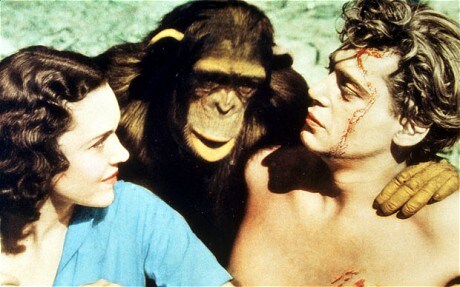
Lead image courtesy of originalfilmart.com

The scene can be viewed at https://youtu.be/2UpNJlx0EF0?feature=shared.

David Brooks created “Weavers,” a nonprofit dedicated to sharing the stories of the people who are living the kind of lives that inspired him:  https://weavers.org