Old Haunts, New Rivers

            In late July, my wife and I traveled north to Sacramento to visit cousins, then on to the Oregon Coast to visit friends.  I was surprised with what perceptions arose in each place, and how the two impressions ended up blending together.

            I had lived in Sacramento in the mid-70s after college, trying my hand at selling real estate.  I made many friends, and grew to appreciate the river, the parks, the Victorian houses, and the neighborhood I lived near the Capitol.  I had not been back since. As we drove up the I-5, a lot of fond memories came back to me.  

We had booked a hotel in Rancho Cordova to be close to where we were going to meet for dinner.  As we came into the city and headed east on Highway 50, I was amazed at how much the city has sprawled and grown.  Logically, I knew the population had tripled since I had lived and worked there and there would be changes. But I was surprised at how out of place I felt.  

Memories kept coming as I thought of the people I knew back then and I wondered if I could trace them down.  But as I remembered each person, I realized I’d lost touch with them and that most of them, no doubt, had died.  It became clear that the life I had known was gone.

            The next day we headed north to Oregon.

Our friends’ home is on the banks of the Siletz River at a point where the river flows into the sea.  It’s a large, impressive river.  I realized that, growing up in southern California, I was familiar with seasonal creeks but no real rivers

Soon I was mesmerized as I sat quietly and watched the river flow.  I thought of our countless ancestors who have watched rivers over the centuries, and who sensed they were watching the unending movement of time. Day-to-day, we live as if our lives are stable. But days, months, and years pass, and we realize life has always been quietly moving all around us, and our lives are part of that constant movement and change.  

            The melancholy feeling of loss I had visiting Sacramento came back, but I saw it in a new light. I understood it was just another example of life’s river flowing.

            A verse from a 3-century old hymn began singing itself in my mind: “Time like an ever-rolling stream bears all its sons away; they fly forgotten, as a dream dies at the opening day.”  The hymn is based on a song of Israel, Psalm 90, which is itself 2,500 years old.  That sense of being part of “an ever-flowing stream” is an ancient awareness.

            A new thought arose: my time in Sacramento may have passed long ago, but many new people have come into that community with most of their lives are in front of them.  New lives have replaced mine and all who are no longer there.  And this is good.

            I kept watching the Siletz River. I could look eastward and imagine, at the headwaters of every tributary, the water’s journey just beginning. Then I could look westward and see the waters finding their way to the sea. The waters will evaporate, form clouds, and bring rain, and the river will replenish itself.  And this is good.

            I’m grateful for what I have seen and what I can still see. And knowing what endures is not me but the river itself.

Top Image: Siletz River looking eastward; image below: the river as it merges with the sea. Photo credit: R. Ellsworth

Playing in Life’s Jazz Orchestra

            A seminary professor once ended a class by offering a memorable metaphor for the spiritual life.

            Life, he said, is like playing in a jazz orchestra where the Divine One is both composer and conductor.  We’ve all been given a score for our life to play, as well as the freedom to play it as we want.  The composer’s aim to use every one of us to create an inclusive and beautiful work of music. 

At times, we may play notes not in the score. Maybe we do so by mistake because we are tired or confused. Or maybe we do so willfully, because we like to strike out on our own, regardless of the consequences for us or others.

 If this was a classical score, playing the wrong notes might ruin the piece.  But it’s a jazz score, always open to improvisation and the unexpected.  The Divine Composer takes whatever notes we have played and instantly rewrites the entire score to incorporate what we’ve done into something new, both for ourselves and others. And, as the composer is also the conductor, we are all invited to play our part in this newly revised score. In this light, no “mistake” is beyond an ultimate redeeming use.  The score is constantly evolving, but the divine intent – to use us all to create something new and beautiful – is unwavering. 

In this orchestra, none of us are mindless robots. All of us experience both the freedom to play as we want and the invitation to make something extraordinary when we follow the conductor’s lead and collaborate with others.

As we learn to trust the notes set before us day by day, we find a deep satisfaction in playing our life score as best we can, both for our own sake and the sake of the larger composition.  Of course, accidentally missed or intentionally misplayed notes can keep appearing, but never are beyond being incorporated into something wonderful.

One thing I like about his metaphor is that it assumes we have free will.  Other models seem to assume there is one, fixed, preordained plan for your life, which is a challenge to understand if we have free will. 

Another point: if we make some poor decisions and play off-key, we’re not thrown out of the group.  Every moment, every day, we are offered a fresh beginning and new music to play.

This model is not coercive.  We are not being commanded to perform or threatened with punishment if we refuse.  If we play it, it’s because we have decided we want to do so. We want to have our life count for something that includes a personal sense of satisfaction but goes beyond us.  Musicians often talk about what a thrill it is to make music with others, creating something exciting that’s more than the sum of the parts.  This is the key to a fulfilling life.

            It could be that the basic teachings of the great traditions – loving God, loving neighbors, caring for the earth, seeking justice, and lifting up those on the margins of life – are like musical scales and keys that are the foundation of every score.  But the genius of the composer is to use these in ever new ways while giving everyone an important part to play in bringing the music to its full potential.

Arguably the greatest jazz composer, arranger and conductor of all time was Duke Ellington.  Here’s a sampling of his wisdom that seems to fit well with I’ve described:

“A problem is a chance for you to do your best.”

“The most important thing I look for in a musician is whether he (or she) knows how to listen.”

“Everyone prays in their own language, and there is no language that God does not understand.”

This metaphor for spiritual life may not be perfect, but it’s as good as any other I’ve encountered.

Photo Credit: Maria Schneider Jazz Orchestra, Blue Note, Tokyo

How Vin Scully Endured Personal Tragedies

            Many people are writing tributes to the sports announcer Vin Scully, who died this week at 94.  He was the “voice of God” for me and many kids with transistor radios when we were growing up — he was omnipresent, trustworthy, forgiving and always positive. His endless tales of players’ backgrounds were told with reverence and affection.  He was a constant in my life over six decades.  Beyond the famous baseball moments he was part of, I have several other enduring memories.

In 2010, I was in Phoenix for spring training.  After the game, I was exiting behind the stands and happened to see him walking alone as he headed toward his car. He was dressed in a well-worn suit, and I remember thinking he looked older in person than he did on television. 

In 2016, my youngest daughter, her fiancé and I made a pilgrimage to “Vin Scully Day” at Dodger Stadium where we heard him sing “Wind Beneath My Wings” to his wife and 54,000 reverent and faithful fans.

            We all knew he was a very private man.  I vaguely knew his first wife had died and he had remarried, but I never heard him discuss it.

            The one exception came in 2008, when he was interviewed on KCET along with UCLA Coach John Wooden.  At one point, the interviewer changed the topic from sports to personal challenges. He noted that Scully’s first wife had died suddenly at age 35, leaving him with three children.  He’d remarried Sandra, a woman with two children of her own, and together they had one more child.  Later his oldest son died in a helicopter crash at age 32.  Vin was asked how he had gotten through it all.

He said creating a new family after the death of his wife while working full-time was very hard – not the amusing experience of blended families being portrayed on the “Brady Bunch” TV show at the time.  He didn’t go into the loss of his son.  But he concluded by saying the only way he got through it all was to “stop asking why.”

Asking “Why?” is a perennial human question.

“Why did that person have to die when they did?” we ask.  The answers people find are varied. Some attribute it to the intentional act of an inscrutable God.  Others theorize it must be “karma,” a kind of moral accounting system in which we inherit debits and credits from past lives that shape our personal fate.  In modern times, we may look to causes that can be objectively verified, such as family history or the actions of viruses, bacteria, and natural forces.  We may find fault in the way a car is designed or blame a toxin in our food supply. 

We are curious, intelligent creatures, and we yearn to find answers for personal losses and tragedies.  Sometimes we find them. Such answers may bring some peace, and we are reassured that the universe isn’t chaotic after all.

But satisfying answers don’t always come.

Vin’s first wife died of an accidental medical overdose. That’s explainable on one level – simple chemistry. But that doesn’t take away the heartbreak, sorrow, and unfathomable reality that one day a young wife and mother of three is alive and well and the next day she is gone.

His son died working as a helicopter pilot, which may be attributable to a simple error in judgment of a person up in the air at the helm of a large and complex machine.  But the harsh reality that a remarkable young man whom you’ve loved since birth is here one day and absent the next – that will always be a shock.

Vin did, at times, talk about the importance of faith and prayer. He was raised a devout Irish Catholic and remained one his entire life.  His immersion in that faith made a difference in how he endured and how he lived. But he never claimed that any of his prayers helped him find an answer to the question that apparently haunted him in the early days of his grief — why did death come to these two beloved people in such an untimely way?  Vin — the gracious, wise, humane, and compassionate observer of so many human encounters — said the key for him to going on with his life was to “stop asking why.”  I will remember that.  And I will also remember what a joy it was to turn on a radio and hear him invite us all to pull up a chair “wherever we may be” and listen to a master storyteller at work.

Photo credit: “Dodgersway”

A-C-T-S: A Simple Form for Personal Prayer

Decades ago, I came across a simple structure for personal prayer I’ve since used countless times. This prayer form is one that works well when you want to pray for the needs of others (the “Serene Light” prayer I wrote about last week is more of a meditation). I like the way it moves from point to point and how it is easy to remember and adapt. When I complete it, it feels like I’ve covered the important bases.  It’s uses A-C-T-S as an acronym … Appreciation, Confession, Thanksgiving, Supplication.

The ACTS prayer will be familiar to some, but I’ve adapted it to make it my own. I start with “Appreciation” rather than the traditional “Adoration.” I avoid stock phrases about God, and don’t dwell on “sin.” My focus is on moments of personal awareness leading to the needs of others. What I’m offering is my own, custom version, not the standard one.  Adapt it as you like.

APPRECIATION – Some prayers start with something like, “Thank you for all my blessings,” but that general statement doesn’t capture actual moments to be savored.  Instead, I begin by recalling at least seven recent experiences I’ve had that feel like blessings – tangible reminders of how good it is to be alive, even amid difficulties.

         Here’s seven moments that came to me recently:

  1. My breakfast Thursday morning — that toasted half of a poppy seed bagel with cream cheese and the last of the smoked salmon.
  2. The lunch I had yesterday with A., catching up on two years of each other’s lives.
  3. The hour my wife and I spent with our seven-month-old granddaughter on Wednesday. She cried because she missed her mom, but the smile on her face when mom came back was something to behold.
  4. Completing the first six weeks of the interim pastoral work I’m doing and meeting new people.
  5. The swim in the ocean I had last week, knowing the ocean where we live is not always warm enough for an old guy to enjoy.
  6. Going to the fish market yesterday and buying fresh yellowtail, grilling it, and eating it.
  7. A good night’s sleep last night — only awoke once.

If we don’t stop and intentionally remember these kinds of blessings, we can easily forget them, and they’ll be lost.

CONFESSION

         I don’t make this into a time to grovel or heap guilt on myself, but to simply reflect on the last few days to see what regrets come to mind…things I said or did, or opportunities to do better that I missed; e.g., “The moment when I lost my patience when we were moving furniture the other day.”  It’s taking an inventory of my behavior with the aim of doing better in the future, but not getting stuck in regret.

THANKSGIVING

         I use this prompt to express gratitude for the divine presence in my life that is always ready to receive my “confession” in a way that encourages me to keep learning how to live.   “God does not love as we love,” the French mystic Simone Weil said, “God loves as an emerald is green.” I take a moment to accept the divine compassion.

SUPPLICATION

         Here’s where I turn to specific situations or people that I want to pray for.  Like the “Metta” prayer in Buddhism, it begins with personal concerns and then moves outward to situations beyond me.

         I begin by visualizing our youngest daughter, her fiancé, and his family. I ask they be surrounded with divine light, strength, and goodness.

         I turn to our middle daughter, her husband, each of their three children, and then to members of his family with the same request.

         I pray for our oldest daughter, her son, and her ex-husband.

         I see my wife and ask for her to be blessed.

         I turn to myself, focusing first on my health, my personal journey, and whatever work or projects I’m involved in currently.

         Sometimes I shift to members of our extended family who are on my mind.

         My attention then moves to specific people I know who are facing health issues, depression, important decisions, or uncertainty.  This may be personal friends or situations I have learned of recently.

         I end by imagining my mind being clear and open and being receptive for any intuitions, prompts or ideas that may arise.  If I sense something, I note it, but I’m not straining for anything…just making my consciousness available.   

         When I’m done, I may simply bow my head and silently say, “Thank you.”

         I’ve used this ACTS prayer form many times in my life.  It’s particularly fitting to do after yoga or some mindfulness practices.  Like the “Serene Light” prayer, I’ve used it on airplane flights, sleepless periods in the night, outside of hospital rooms, and in quiet times in the morning – any place or situation when I would like to center myself in gratitude and compassion for others.

         If we are turning to prayer because we are worried about something or someone else, we may feel tempted to skip the first three parts and get to “supplication.”  But I’ve found taking each step in turn puts me in a better place to pray for others rather than just rushing there right away.

Does it make any difference? Who knows! I’ve been surprised by how many times I’ll bring a familiar concern to mind and realize something good has occurred since the last time I prayed for it. But not always. It’s not magic. 

I remember a story about CS Lewis.  A friend was skeptical that praying accomplished anything and said examples of “answered prayer” describe positive outcomes that are, in fact, just coincidences.  Lewis responded, “Maybe so, but the funny thing is, the more you pray, the more positive coincidences seem to happen.”

Turning Towards the Serene Light

         In my lifetime, I’ve explored many kinds of prayers, meditations, mantras, mindfulness techniques and awareness exercises.  I’ve used them to help me on my personal journey, to occupy myself at night when I can’t sleep, to center myself before walking into difficult situations, and to share them with others in classes and retreats. One ancient prayer I keep coming back to is the “Serene Light” prayer.  Some of you may already know it. I want to share it and include some personal comments.

         This prayer arose in the Eastern Orthodox tradition centuries ago. In the simplest sense, it uses light as a metaphor of the divine presence – light in darkness being one of the most common metaphors in global spiritual traditions.  It’s not dependent on you believing any specific religious doctrines, but only on a simple desire for a spiritual connection.

         Like many prayers, its effectiveness depends on our intention — the way in which we recite it.

A writing teacher once said that the difference between prose and poetry is that good prose keeps you moving from one idea to the next, speeding up as you go along.  Good poetry – and prayers — are different.  They invite you to slow down, pause and think about what each phrase means, letting it linger and speak. It’s like putting flower petals on water one by one and watching each one float before you add the next one. Or sipping a good glass of wine instead of gulping it down.  The “savoring” approach lets each image or thought take shape and sink in; our sense of time slows down, which eases us into a more reflective state of awareness.

So, here’s the prayer, followed by some of my comments on each phrase:

Serene light,

shining in the ground of my being,

draw me to yourself.

Draw me past the snares of the senses,

out of the mazes of the mind.

Free me from symbols, from words,

that I may discover the signified,

the word unspoken,

in the darkness,

which veils the ground of my being

  • “Serene light” – the light I seek is not glaring or flashing, but calm and quiet. It radiates peace and strength. It is unaffected by my fears and anxiety. In the mystical traditions this light is at the heart of all creation. 
  • “shining in the ground of my being” – In one way, this light is beyond the busy-me that chatters all day. But in another way, it lies deep within me, at my center.  It shines, and in so doing offers me a focus, a goal, and a presence.  I imagine it shining within me.  
  • “Draw me to yourself” – Like a thirsty animal seeking water during a drought, I affirm my desire to come closer to this light.  I am not asking to abandon my own sense of self or avoid my responsibilities. But I want some help, some aid, some infusion of peace as I face what is before me. I trust the light will help me.
  • “Draw me past the snares of the senses” – We are wired to have our attention react quickly to many kinds of stimuli.  If I see something move, my eyes immediately evaluate what it is. If I hear a sound, my brain is compelled to analyze the source.  The same is true of all my senses. I can spend every minute of the day being subject to these distractions, becoming “ensnared” in the constant flow of information. But in this moment, I want to slow down, reduce the mental static, and not give in to distractions. I am choosing instead to seek the light.
  • “…Out of the mazes of my mind.” Just as my senses can keep me constantly distracted, so my mind is in the habit of jumping from one thought to the next, creating strategies and scripts to protect or promote myself.  But right now, I want to ascend above the clouds to see a greater horizon; I want to rise above the “mazes”.
  • “Free me from symbols, from words…”  Most moments of awareness are dependent on ordinary things and familiar concepts, but we can reach beyond them. In this prayer, I am using symbols and words like “light” and “mazes”, but those are not my goal. Beyond my cluttered, ordinary thinking is something greater I can sense when I am still.
  • …that I may discover the signified, the Word unspoken.”  There are endless names for the divine; Islam alone offers 99. Each word suggests a specific spiritual experience and relationship, but all are limited to a specific aspect of our understanding.  In saying this prayer, I want to go beyond all language and move closer to the “serene light.”   Ultimately, I seek the source of the light, which I cannot fully know. But I don’t need to “know” it in an ordinary sense — I only need to draw close to it.
  • “…in the darkness which veils the ground of my being.” The darkness is not a forbidding or dangerous darkness — it’s “dark” because I can’t ever “see” the “ground of my being” as I can an everyday object.  It’s the mysterious dimension in which our souls exist.

It’s ideal to memorize the prayer so it’s available whenever we want it.  And it’s important to know that we don’t have to look for immediate results to experience its power.  Sometimes it’s enough to have taken the time to live within the prayer for a set time, and the effects may be experienced later in the day.  If you do have specific concerns on your mind, you can add those requests after you’ve taken the time to dwell in the prayer; coming from a more peaceful inner space helps us focus what it is we seek.

The “Serene Light” prayer is a gem that I’ve turned to again and again and have always been grateful for where it leads me.  Perhaps it can also be useful to you.

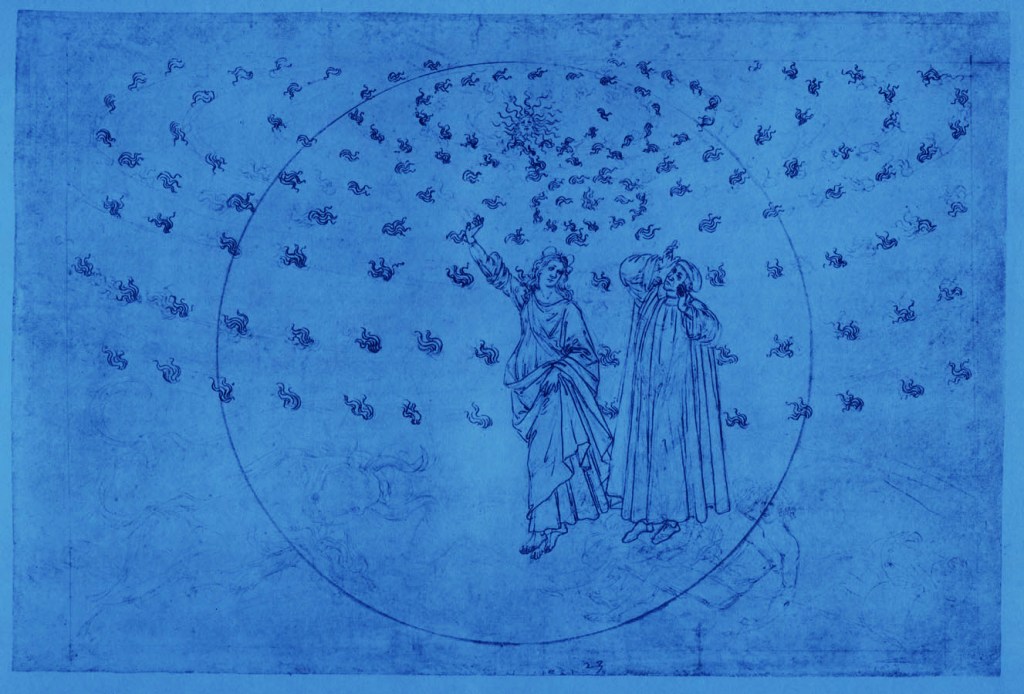
Image: Spika Star, New Forest Observatory

What To Do With a Prized Salmon? (a summer rerun)

(Dear Reader: We are in June Lake for a family gathering this week, so I’m not composing something new. But I thought I’d re-post one of my first pieces that reminds me of the importance of savoring the natural world. Remember The Old Days, when there were “summer reruns” of TV shows? — Steve)

The second congregation I served was in Wapato, Washington – a town of 3,000. George Palmer was retired and drove an older white pick-up truck. An experienced tradesman, he liked to go around town and do household repairs for people who could not afford to have things fixed. He took delight in his small white poodle, Taffy, and had built a special car seat for Taffy so that she could sit next to him and see where they were going. George and Taffy would often stop by my office to visit.

             He told me once about being a child at World Series time.  Radio
broadcasts had not reached rural Washington yet, so everyone who wanted to follow the game would gather in downtown Yakima in front of the offices of the local newspaper, the Yakima Herald. There was a scoreboard with a baseball field painted on it, and as the office would get updates, an attendant would move figures around the field to show and post the scores.  He said it was exciting every time an update came, and the crowd would stand in the street to follow the games for hours.    

             George was also an accomplished fisherman, particularly for salmon.  One time we were talking about fishing, and I asked him what the biggest fish was he ever caught.  He told he had been fishing with friends on the Columbia River, and he hooked what was clearly a huge salmon.  It took him some time to get it close enough that he could net it.  He said when it was within arm’s reach, he realized it was the most impressive fish
he had ever seen.        

I said, “So what did you do with it?
           “Steve,” he said with a smile, “It was so beautiful I just had to let it go.”

So much of our culture is about gaining control over things and making them our possession.  In that moment, I realized that perhaps the best thing we can do is to give thanks for a shining moment, and then let it go.

He Thanked 46 Coworkers in Ten Minutes — Now It’s Up to You

Think of how much of your life you’ve spent at work.  Some of the people we work with make it enjoyable and meaningful, while others have the opposite effect.  Do we ever take time to recall those who have employed us, mentored us, labored alongside us, and who have made going to work a positive experience?

            On June 18 I took some family to a Dodger game — “Sandy Koufax Day.”  Like many southern California kids who grew up in the 60s, Sandy Koufax was a superhero to me.   Besides his accomplishments and awards, one of the things he’s famous for is his privacy – he doesn’t endorse products, appear on sports shows, or sell autographed baseballs.  This would be a rare chance to see him in person.

            Bill Plashke wrote an account of what Koufax said that day:

Standing behind his newly unveiled statue in the center-field plaza Saturday morning, Sandy Koufax was winding up to grace Dodger Stadium with one last pitch.

It was, appropriately, a breathtaking curveball.

It was, stunningly, a 10-minute speech from a man who hasn’t publicly spoken that much in 50 years.

It was, wondrously, the humanizing of Los Angeles’ phantom legend, a rare public pulse from a pitcher whose greatness has mostly existed in Dodgers mythology.

It turns out, at age 86, he just wanted to say thank you.

Plashke notes … he thanked 46 people during the span of 10 minutes, surely a record for inclusion and gratitude.[i]

            After I read the article, I thought, “I’m going to do what Sandy did.  I’m going to identify 46 people that I worked with that have had a positive influence on my life.”

            I soon found 46 to be a lofty target. I reset my goal at 23:

  1. Bill and Norma Schy, who gave me my first real job when I was 16 at Swensen’s Ice Cream paying $1.40/hour.  I learned how to interact with customers, clean kitchen equipment and balance out the cash drawer at closing.
  2. Tom Childress, the first painting contractor I worked for, who taught me how to paint a room efficiently and modeled how a good boss treats employees with respect.
  3. San Gorgonio High School English teacher Mr. Kenley, who taught me how to write a structured essay.
  4. UCSB Professor Al Lindemann, who challenged me to do independent research and showed me how.
  5. Bob Hibbs, my supervisor at McBride Realty in Sacramento, who patiently mentored me in the real estate business for a year before I realized it wasn’t for me.
  6. Seminary preaching Professor Randy Nichols, whose insights have guided me for 41 years.
  7. The congregation in Santa Paula who gave me my first job as an Assistant Pastor.
  8. Barb and Cragg Gilbert, who invited us to leave the California suburbs and become volunteers at the Campbell Farm in Wapato, Washington.
  9. Ed and Mary Ellen Hanks, fellow volunteers at the Campbell Farm.  Ed was raised on a ranch in Nevada and had been an agriculture extension agent, and he taught me how to drive a tractor, prune an apple tree, and care for livestock.
  10. The congregation in Wapato, Washington who took a chance on me as a solo pastor and taught me the virtutes of rural life.
  11. Sr. Kathleen Ross, SNJM, the visionary founder and president of Heritage College, who invited me to be her intern for a semester and shared her insights on leadership.
  12. John Gardner, my doctoral advisor at Seattle University, who encouraged me to pursue a dissertation topic that arose from inner passion rather than playing it safe with a less risky topic.
  13. The congregation of the Goleta church, who moved us to Santa Barbara, helped us buy our first house and raise our daughters and employed me for 16 years.
  14. Wade Clark Roof, Professor of Religious Studies at UCSB, who helped me get research grants and encouraged my academic research and writing.
  15. Rabbi Steve Cohen, dear friend and gifted teacher, who, with members of his congregation, introduced me to the depths and richness of Judaism.
  16. Muhktar Kahn, Afaf Turjoman and Hussam Moussa, who introduced me to Muslim faith, traditions, and culture.
  17. Gail Rink, Executive Director at Hospice of Santa Barbara: a fearless, compassionate rebel who changed the way our community approached death and dying. She told me I had what it takes to take her place when she retired in 2008.
  18. The staff at Hospice of Santa Barbara – people like Mary, Michael, and Magdalena — who exemplified compassionate, professional care for those facing death and grieving the loss of a loved one – and were a joy to work with.
  19. Steph Glatt, IHM, and Juliet-Spohn Twomey, IHM, long-time leaders of La Casa de Maria Retreat Center, who invited me to become Director in 2013.
  20. The staff at La Casa de Maria – groundskeepers, housekeepers, hosts, kitchen staff — who showed me what the practice of genuine hospitality looks like.
  21. Jay Grigsby, fundraising consultant at La Casa and other places, who has spent a decade mentoring me in the hard but satisfying work of raising money for good causes.
  22. The St. Andrew’s congregation, who coaxed me out of retirement to serve as their interim, proving “I’m not dead yet.”
  23. Marilyn McEntyre, English professor, poet, writer, master teacher, and friend, who has challenged me and so many others to write from the soul and not just the head.

There are many things to be despondent about in the world these days. But it’s a good practice to take time to remember those who have made our workplaces positive environments for labor and learning.  We can make a list of 5, 10, 23, or — if we are aspiring to the Gratitude Hall of Fame — 46.


[i] https://www.latimes.com/sports/dodgers/story/2022-06-18/sandy-koufax-statue-unveiling-time-of-gratitude-inclusion

Sandy Koufax, 86 years old. Photo taken by 69-year-old pensioner from Reserved Section 7, Row T, Seat 9; June 18, 2022

Tasting the Magic Waters

            For more than a decade, I’ve been entranced by the great three-part medieval poem, Dante’s Divine Comedy.  There are many spiritual and psychological insights Dante shares in this work that speak to me. In this posting, I want to share his concept of two symbolic rivers we might sample in our life journey. The description occurs near the end of the second volume, Purgatorio.

By this point Dante’s been given a tour of hell (Inferno) and all its custom-made torments. It’s impressive to see how he imagines the bad guys “get what’s coming to them,” as they used to say in the Westerns.  But Inferno is not as meaningful to me as what follows.

In Purgatorio, he imagines hiking up a mountain to see how all kinds of people are completing their personal soul-work as they prepare for Paradiso.  (Does he – or anyone these days — really believe in a place like purgatory, you might ask? Don’t worry about it, dear reader; let’s just follow what he imagined.)

As he gets to the top of the mountain, he travels through an enchanted forest and, among other experiences, comes to two rivers.  He also encounters a guide, Mathilda.  The first river Mathilda leads him to is the Lethe, which was known in Greek mythology as the river of forgetfulness we pass through after we die.  Dante interprets it in a positive way:

“She plunged me, up to my throat, in the river

And, drawing me behind her, she now crossed

Light as a gondola, near the blessed shore, I heard

“Asperges me,” so sweetly sung that I

Cannot remember or, much less, describe it.” (Canto 31: 94-99)

“Asperges me” means “thou shalt sprinkle me.”  After guiding him across the river, she invites him to take a drink.   All the memories of the mistakes he’s made in life – the poor decisions, the times when he’s hurt someone else or disappointed himself – all are washed away in the Lethe. Think about your regrets in life – what would it feel like to have the painful memory of them disappear?

“The River Lethe,” John Flaxman, 1807

            After more encounters and reflections, he comes to the second river – one Dante created out of his own imagination — the Eunoe.  Matilda is joined by a group of guides and invites Dante and a fellow pilgrim to drink from it.  After he does, he says:

If, reader, I had ample space in which

To write, I’d sing – though incompletely – that

Sweet draft for which my thirst was limitless…(Canto 33: 136-138)

Where the effect of drinking from the Lethe was to allow him to forget all his failings, drinking from the Eunoe allows him to recall all the good deeds he’s done in life, both large and small.  (The word he created, eunoe, combines eu(new) – and noe(mind) – a new, fresh mind.)

The River Eunoë, John Flaxman, 1807

            Think about it. Sure, you’ve made mistakes in life. But you’ve also done many good things – small kindnesses, acts of love and duty, promises kept, hope given, and friendships honored. Imagine what it would be like towards the end of life to forget all the bad stuff you’ve done and remember all the good?

            From the first time I read about these two mythic rivers, I was entranced by imagining what such an experience would feel like.  In the years since, I’ve come to wonder if sometimes people actually experience something similar.

            My father outlived my mother by 19 years.  We knew they loved each other all the years they were married. But we also remember their life together was not free from the stresses and strains of many long-term relationships.  Yet in his last years, whenever dad reflected on their time together, all he talked about were the joys they’d shared — no mention of the hardships.  At first, I was tempted to kindly point out it wasn’t all milk and honey. But something told me to be quiet.  It was as if dad had dipped first into the Lethe, then the Eunoe, and the combination filled him with pure gratitude.

            Recently I visited a former parishioner who had decided to stop receiving life-prolonging treatments. She’d been through many challenges in her life, including years of concern for her children and the obstacles they faced. But, she told me, they were both doing well now and didn’t need her as they had before.  She was tired of the complications her body was having to endure every day and she wanted to be free.  When I came, she was going through a box of old family photos.  After I sat down, she showed me some of her favorites. Each memory had become a delight.  Before I left, I asked her if there was anything she’d like me to pray for. She told me, “Somebody said, If the only prayer we ever offer is thank you, that would be enough.  Just say how grateful I am.’

            Remembering our mistakes helps us to stay humble and keep learning how to do better. Focusing only on the good we’ve done may seem selfish.  But maybe, once in a while, we can close our eyes and imagine sampling those waters – tasting what it’s like to have our regrets washed away, then savoring a pint of gratitude for the good things we’ve done.  Maybe we shouldn’t wait until late in life to see what these magic waters can teach us. 

Painting: “Along the River Lethe,” Kyle Thomas

“Beholding” as a Spritual Practice

            Last week I attended a leadership conference featuring David Brooks, PBS commentator and columnist for the New York Times.  He covered many issues in his three talks, and one I want to share with you concerns the attention we give other people.

David said he recently was working alone at home one evening when his wife came in the front door. He looked up to see her and realized she hadn’t yet noticed him sitting at his desk in the adjacent room.  He decided to simply watch her for a minute.  After she closed the door behind her, she put her things down, and paused.  The house was quiet. She then turned and walked into the kitchen.  In that unplanned moment of simply observing her, he realized how much he loved her. He said the experience of seeing her this way was not just a visual act, but something more: he felt as if he was beholding her.

He contrasted this moment with what we experience often in modern life — looking at each other without really seeing each other.  When we meet someone, we quickly form assumptions about them before they even speak and filter whatever they say through our assumptions.  When someone we know is talking – even someone we know well – our busy mind often isn’t listening carefully to them, but instead preparing what we are going to say in response.  “We are not good at “reading” others,” he said, which has created “an epidemic of social blindness.”  The quality of attention we bring to someone else is a moral act.  If we are truly paying attention with humility and genuine respect, we are granting that person dignity.   We are beholding them.

I looked up the origin of the word.  In Old English, the word bihaldan meant “give regard to, hold in view.”  Modern definitions include, “To hold by, keep, observe, regard, look” and “To look upon, view, consider as (something); to consider or hold in a certain capacity.” If I was to add my own definition, it would be “to give reverent attention to a particular person or experience.” I kept turning the word around in my imagination and was intrigued with the possibility that to “behold” someone could be to “hold” that person’s “being” with a particular sense of awe and care.  We are not looking at them with our “busy mind” but opening ourselves to the mystery and wonder of their living presence.

            In Leaving Church: A Memoir of Faith, Episcopal priest Barbara Brown Taylor described the factors that led her to leave parish ministry. One reason was that she had become weary of people wanting her to tell them what they were supposed to believe.  She said her spiritual journey had not been so much about believing the right thing but inviting others into experiences of beholding —“beholding life on earth in all its glorious and terrible reality.”

            Being with someone when they die can often evoke a feeling there’s something sacred in the room. I remember my sisters and I spending time at our deceased father’s bedside before the mortuary arrived.  We weren’t just looking at dad, we were beholding him.

            And I recall what it’s like raising young children.  You’re busy all day long with them – talking, listening, dressing, negotiating, feeding, bathing, reading a story — and it’s a big accomplishment to finally get them into bed. A little while later you come back to their room to check on them.  You carefully, quietly open the door and see if they’ve fallen asleep. Seeing they are, you sometimes stand there and keep looking at them. You now “see” them for the miracles they are. You may even think, “When they are asleep they look like angels.” In those moments, you’re not just looking at them – you are beholding them

            Maybe we can try beholding one person today and see what we experience.

Imgage: Sleeping Child Covered With a Blanket, Henry Moore, 1942

Your Membership Card for the Spiritual Gymnasium

            Speaking at the Lobero Theater fifteen years ago was the great scholar of world religion, Huston Smith. Almost 90 years old, he had difficulty walking on stage. 

Once he reached the lectern and stabilized himself, he looked out at the audience, smiled, and said, “I’m going to make five statements tonight that I think you will disagree with.”  People shifted a bit in their seats. 

There’s no such thing as progress” was one of them. 

            He acknowledged that, of course, there have been significant improvements in our lives over the centuries.  Plumbing, for instance. Or scientific advances in many fields, including those that have improved health care, eliminated many deadly diseases, and reduced mortality rates.  Not many of us would argue with that.

            There’s been some progress in human rights, particularly regarding race and the status of women.

            But with all our material advances, have we resolved the problems that create human suffering?

            He finished by saying:

            “If you go through life feeling you must solve the problems facing humanity before you die, you are going to come to the end frustrated and discouraged.  But if instead you see life as a spiritual gymnasium – a place designed to learn timeless truths – you will find it’s perfectly equipped.”

In my twenties I realized how deeply embedded the illusion of progress is in our society – that every generation will make things “better.”   Clearly there’s been great material advances.  But would we say there has been “progress” in the arts? Has anyone “improved” on Bach, Mozart, Beethoven, Shakespeare, Ella Fitzgerald, Elvis, the Beatles, Van Gogh, Aretha, Bruce Springsteen, or Bob Marley?  New artists come along and delight us with their creativity, but that’s not “progress,” that’s just new expressions.  There is a timelessness to great art that is very different from a new washing machine model or a television with higher resolution.

            The same can be said about great spiritual teachings.  New insights and interpretations emerge, but core teachings endure. The importance of awe, wonder and gratitude.  The call to love and serve your neighbor and guard the inherent dignity of others.  To participate in a caring community. To treat the earth as a sacred gift.  These values are ageless, and life offers us endless opportunities to practice them.

I find this helpful to remember when events challenge my assumptions of how we should be able to “fix” things.

            When Barack Obama was elected in 2008, many of us thought America might be entering a “post-racial” America.  We were wrong.

            Until the 2020 election, we took it for granted that a president who had clearly lost an election would never call it a “big lie” and encourage a violent attack on the Capitol. We were mistaken.

            Europe has  not seen large-scale armed conflict in 77 years and it seemed we were beyond such events. But Russia attacked Ukraine in February and millions of people have become refugees.

            Ten years ago, after the Sandy Hook shootings, many Americans were determined to do whatever it would take to prevent further tragedies.  Now we have this unfathomable event in Texas just days after the shootings in Buffalo.

            Human behavior, it seems, is not as easy to upgrade as a cell phone.

            But do we give up and disengage?  Absolutely not.

            First, we realize not everything that comes to us can be permanently solved, particularly when it involves human behavior and motivation.  But everything can be addressed and engaged with a desire to make a difference and sometimes advances are made.  That’s how social progress happen.s And it’s always a chance for a work-out in the spiritual gym. 

            One year I worked in inner city Philadelphia with an African American pastor who had grown up in the neighborhood. I once asked her how she kept going.  “We just keep on keeping on,” she said.

            Maybe it’s like practicing medicine.  You can be a faithful physician or nurse without believing every disease will be eliminated in your lifetime.  You just keep bringing your best efforts to every patient while hoping for new advances and better treatments.

At La Casa de Maria Retreat Center, we regularly welcomed people who were striving to make the world a better place. They often arrived discouraged, depleted, and burnt out.  They unplugged and spent a few days resting and reflecting amid the 26-acre natural sanctuary. They’d leave renewed. Father Richard Rohr describes the dynamic:

One of the reasons I founded the Center for Action and Contemplation was to give activists some grounding in spirituality so they could continue working for social change, but from a stance much different than vengeance, ideology, or willpower pressing against willpower. Most activists I knew loved Gandhi’s and Martin Luther King, Jr.’s teachings on nonviolence. But it became clear to me that many of them had only an intellectual appreciation rather than a participation in the much deeper mystery. The ego was still in charge, and I often saw people creating victims of others who were not like them. It was still a power game, not the science of love as Jesus taught it.

            When we begin by connecting with our inner experience of communion rather than separation, our actions can become pure, clear, and firm. This kind of action, rooted in one’s True Self, comes from a deeper knowing of what is real, good, true, and beautiful, beyond labels and dualistic judgments of right or wrong. From this place, our energy is positive and has the most potential to create change for the good.[i]

Welcome to the spiritual gymnasium.  There’s no enrollment payment or monthly fees, and it’s open 24 hours, seven days a week. 

“Where do I get my membership card?” you might ask.

You’ve already got it – it was given to you at birth.

Photo: Huston Smith and me at Esalen, October 2010.  He was born May 31, 1919, in China and died in Berkeley in 2016 at age 97.  He continues to be an abiding inspiration in my life.


[i] Richard Rohr’s Daily Meditations, “The Root of Violence,” May 1, 2022:  https://mail.google.com/mail/u/0/ – search/jspohntwomey%40gmail.com/FMfcgzGpFgwXkxtbHMLVmRqMDsRphSGf.  Thank you to my long-time friend and La Casa colleague Juliet Spohn-Twomey for calling attention to this post.