Ever Feel Like You’re an Extra in Someone Else’s Play?

“Remember you are just an extra in everyone else’s play.”

–Franklin Roosevelt

Years ago, I took a class on “Organizational Development.”  We read a fascinating book, Images of Organizations, by Gareth Morgan. His basic point is that we often use metaphors to describe organizations.  But it can be helpful to be aware of what metaphors we are using and to know that we can use different ones.

For instance, if we want to use “organic” or biological imagery, we might say “This place has come alive since she took over…”  Or: “There’s a cancer in that organization and it’s growing.” If we use a mechanistic metaphor, we might say “This place runs like a well-oiled machine.” or “…he showed up and threw a wrench into the works.”  Other options include a brain, cultures, political systems, and systems of domination.  But my favorite metaphor was “psychic prisons” – a rather harsh way of saying that in any place we might work, everyone shows up with their private and personal agendas.  (I might have preferred he call this “psychic dramas.”)  What we do is determined by our job; but what our work means to us drives much of our behavior and sense of satisfaction.

Another way to put it is this: every day, each of us is writing a drama about our life in which we are the central character.  I interpret what my boss or coworker says and does based on what is unfolding in my life.  If I need affirmation, are they affirming me? If I’m climbing the ladder of success, are they doing what I need them to do to advance my career?  If I’m looking for social support and companionship, is work a place where I can find friends and social relationships?

When I started in my career, I had high hopes for what I would accomplish. I wanted to do what I was hired to do and do it well. But I also wanted to put on a good “performance” so that my career would advance. Even as I genuinely respected others and wanted to serve them, in one way they were playing supporting roles in the drama I was writing in which I was the main character.

This perspective was helpful to me when I became responsible for a staff of employees.  I found it enlightening to try to understand what each employee’s life script might be as they came to work so I could look for ways to support them.

It’s fun to consider the possibility that everyone is doing this – everyone has a script they are writing in which they are the main character and the rest of us are “extras” — everybody comes to work as both an employee and a private playwright.  

This is also applicable to family dynamics. I had a colleague who described how stressful Christmas was for her and her sister as they were growing up.  They lived in the same town as their grandmothers.  During the holidays, the grandmothers would compete for the affection of the two girls with gifts and special parties.  The girls could sense the competition and were often anxious that they would disappoint one or the other grandmother.  Each grandmother was writing a play in which they were center stage, and the grandchildren were supporting actors.

FDR was a skilled leader and shrewd politician.  He had a strong sense of what personally motivated other people and how to shepherd them toward a common purpose, letting both their self-interest and higher ideals come into play.  He knew that even as president, he was “just an extra in everyone else’s play.”

As life goes on, the role we play in our life-drama can change.  I do not need to “build my resume” anymore or impress an employer or board member.  I don’t need to be center stage in my drama.  Now I can focus on how to be useful to my community and my family, content with being a “supporting actor.” 

A few years ago, I was wondering – and worrying — if my grandkids would remember much about the time I was spending with them.  Then I realized I was making it about me, not them.  They are now the garden where the future is growing. My job is to simply be compost in their lives; I don’t need to imagine my name in the long list of credits when the movie is over.  This has become a liberating thought.

What does spirituality have to do with this?  I believe spirituality has at least two dimensions: it begins with finding something greater than us that inspires us. We then feel a call to serve that greater reality by serving others.  In the process, we find both a joyful humility and a clear call to action.  We become part of a larger drama where we are not the star – we’re “just an extra.”  But somehow, we discover we’ve never played a more satisfying part.

Answering Mr. Vinegar

In a writing class I took from Marilyn McEntyre, she mentioned we all have different “personas” within us. She encouraged us to experiment with writing from the perspective of each one.  Maybe it’s a familiar concept, but it was new to me. 

Reflecting on Marilyn’s invitation, I realized the “voice” I usually seek to embody when writing is a thoughtful and patient one. It looks for grace and wisdom in a variety of situations – I could call it the “Mr. Nice Guy” voice.  But the more I thought about it, I realized it was not the only voice within me.  I can summon up a “bad boy” voice –- one that’s skeptical, judgmental, smug, and cynical.  (What some psychologists would call a part of my “shadow side.”) As I began to become more aware of it, I found it to be quite amusing.  I’ve given that voice the name of “Mr. Vinegar.”

Recently I’ve been hearing from Mr. Vinegar just as I am finishing writing one of these blog posts.  I usually ignore him. But this week, I decided to let Mr. Vinegar have a conversation with Mr. Nice Guy. 

Here’s what the conversation sounds like.

MR VINEGAR: “Well, Steve, everything you write is so pleasant. One week you have a nice epiphany while contemplating an oak tree.  Another week maybe it’s a little birdie on a branch.  Another week it’s all about some amazing spider web.  But you know, Mr. Nice Guy, the world we live in is a mess.  There’s the war in Gaza and Israel, a war in Ukraine, the breakdown of our politics, the rapid creep of Artificial Intelligence into our lives, global warming, personal tragedies everywhere you look…Why do you avoid these topics? Afraid?” 

MR NICE GUY: “Well, Mr. Vinegar, that’s a good question.  I’ll tell you why I do what I do.

“I think there are many troubling events in the world.  I worry that Russia will overcome Ukraine and we’ll be back in a Cold War that will destabilize a peace in Western Europe we’ve taken for granted for 80 years.  I see the immense tragedies in Gaza and Israel – friends on both sides are frantic with concern – and I don’t think anyone knows when or how it will get resolved.  I truly believe we need to show respect for all sides in our political discussions, but I am deeply concerned that we may re-elect a man who delights in ignoring and mocking the rule of law and being a corrosive personal force.

“And A.I.? That worries me more than almost anything else. It will certainly have some beneficial effects.  But it’s creeping into our lives and millions of people will start depending on it. Many will find it irresistible to use for selfish and destructive ends.  Kids aren’t going to know what it’s like to have to labor over writing an essay or a poem.  Our “entertainment options” are going to become wild and warped.  Unscrupulous political leaders, countries, and crime cartels are going to find A.I. to be an unprecedented weapon to use for their own purposes.  It’s the end of an Age of Innocence. We won’t know what news report, what video, what photo, or what information sources we can trust.  We will become increasingly enfeebled, dependent, and distrustful.

“And global warming? It’s very sobering.  Especially for the poorest people on the planet who don’t have the freedom and resources to adapt.

“So yes, Mr. Vinegar, I see and worry about these things.  But I don’t write about these topics much because there are many others more qualified than me to do that, and I avoid the debilitating effect of constantly focusing on bad news and crises.”

MR VINEGAR “What you just said – did that feel a little risky?  Is it hard to talk about the scary stuff?  Afraid you’ll lose some readers?”

MR NICE GUY: “Maybe.  But here’s the deal. There’s so much going on that can get us down.  To face and endure the challenges before us, we need to be grounded in genuine, personal experiences where we find glimpses of grace and reasons to hope.  We need to be reminded of the importance of the many people in our lives – past and present – who demonstrate integrity, wisdom, and compassion.  We need to tap into the insights of our spiritual traditions that have helped guide people for centuries as human life has evolved. I’m not going to write about issues unless I have something hopeful and constructive to say.”

MR VINEGAR “Well, OK, that’s your choice.  But just don’t let yourself become a pleasant waste of time.”

MR NICE GUY “OK, point taken.  And now that you’ve had a chance to speak out, can I finish writing this?”

MR VINEGAR “Of course. But I’m not going away – I’ll be back. I have too much fun prodding you.”

*****

                  I remember hearing a Jewish story about a rabbi in a small village.  An old man would show up at every event where the rabbi was speaking. He would pester the rabbi with skeptical questions and criticize him time after time.  When he died, no one was expected to show up at the cemetery when he was buried. The gravediggers were surprised when the rabbi showed up. They asked him, “Why are you here? We expected you’d be glad this man is gone.” 

                  “I’m going to miss him,” said the rabbi. “He was the one person in town that kept me honest.”

Got Enthusiasm?

                  After Jim Harbaugh led his Michigan football team to a national championship, he was hired to coach the Los Angeles Chargers professional team and was interviewed in the LA Times:

“The only job you start at the top is digging a hole, so we know we’ve got to earn our way,” Harbaugh said in his statement. “Be better today than yesterday. Be better tomorrow than today. My priorities are faith, family and football, and we are going to attack each with an enthusiasm unknown to mankind.” [i]

                  As a casual football fan, I know what an amazing career Mr. Harbaugh has had.  We used to live in San Diego, and I always felt badly for the Chargers when they were uprooted from their natural habitat and relocated to Los Angeles. I hope Mr. Harbaugh can bring the Chargers back to being a great team.  I like the idea that he’s coming not only with a great deal of wisdom and experience but also enthusiasm.  I wish him well.

                  But I couldn’t help but wonder about that last sentence: what is it like to “attack” not just football but your family and your faith with “an enthusiasm unknown to mankind?”

                  I won’t comment on his family life because I know nothing about it. I do wonder: with this much enthusiasm, it must be quite a sight every time he comes home or starts the barbeque.

                  But what about faith?

                  Let’s look at the root meaning of the word: “…from Greek, enthousiasmos ‘divine inspiration…from enthousiazein, ‘be inspired or possessed by a god, be rapt, be in ecstasy,’ …from en = in + theos= god.”[ii]

So, there’s an ancient connection between “enthusiasm” and intense spiritual experience. 

What would it look like for someone to “attack” faith in “an enthusiasm unknown to mankind?”

Does that person rush his family to every worship service?  Does he sing every hymn at the top of his voice?  Is he overcome with excitement when he puts his weekly donation in the offering plate? What would it be like to preach a sermon that spoke to Mr. Harbaugh?  Would he leap up and declare, “I feel possessed! Rapt!  I am in a state of spiritual ecstasy unknown to mankind!”

I don’t know if I’d be pleased or concerned.

I do know I was often full of enthusiasm early in my spiritual journey. But, in time, most of us experience disappointments and losses.  Not every path we take ends up with us holding a championship trophy amid a cheering crowd.  We welcome enthusiasm, but maybe with a bit of tempering after we discover how complicated life is.

In one of my congregations, there was a young man who was a gifted communicator. He was also very clear about what was right and what was wrong, and who was on the side of truth and who was not.  A friend of mine came to hear him preach. I asked her afterward what she thought.  “He’s a gifted young man,” she said. “I’d like to hear him again after his heart’s been broken.”

Over the years, when I listen to people describe personal experiences of “divine inspiration,” they often describe quiet, reflective moments when they saw or felt something in a new way.  They don’t feel like they’ve attacked something and triumphed — they feel like they’ve received an unexpected gift. Such experiences humble us and expand our hearts. They don’t so much exalt us over other people as help us see others with respect and compassion.

I wish Mr. Harbaugh great success in his endeavors.

And I can’t wait for baseball season to start. In baseball, it’s not so much about conquering your opponent with unprecedented enthusiasm.  It’s all about coming home.


[i] LA Times, Jan 26, 2024

[ii] https://www.etymonline.com/word/enthusiasm

Bird Time

Recently, my attention has been captured by birds sitting calmly by themselves. Sometimes it’s in a tree in our backyard. Sometimes it’s on a telephone line in the neighborhood.  We are both away from our fellow creatures and neither of us is in a hurry. It’s as if we are sharing a contemplative moment.

            As an example, a sparrow joined me in my quiet time early this past Tuesday morning.  It perched on a branch about 15 feet away from where I was sitting and stayed there. I found myself wondering if she (or he) and I had found a shared wavelength. I couldn’t help but ponder: What is that bird thinking about?  It’s not singing or building a nest or foraging for food or looking anxious. It’s just sitting there.  Is it sensing things beyond my awareness, like the earth’s magnetic fields or subtle shifts in the weather?  Is it hearing sounds beyond my capacity and assessing them?

            A meditation teacher once said that our body is always in the present moment, but the mind is a time machine – jumping back and forth between the past and the future. One goal of meditation is to let our mind settle into our body so it can dwell in the present.  When we do that, we can become open to an inner awareness that opens us up to subtle forms of knowing.

            If you have a dog or cat, you know they can spend a long time sitting in an open doorway looking out.  I can get impatient. I’ll say, “Well, which is it? In or out?”  Then I get a glance that seems to say, “Is it not acceptable for me to just sit here?”

            My doctoral dissertation explored what spirituality might mean to 22 leaders in secular organizations identified by their colleagues as ethical and effective.  One of my seven questions was: “Describe what part, if any spiritual traditions have played in the formation of your values, beliefs, ethics.” One Native American woman, who led a large social service agency for her tribe, wrote: “My parents had strict behavior expectations for my sisters and brothers. This included being aware of and respectful of the traditional cultural and religious teachings, customs and beliefs of my people. This included the need to be aware of one’s inner self and to do those things to strengthen one’s inner self, so that one’s life would be in balance. This included time alone, meditation, being quiet, listening, and being respectful of others need to do the same.”

I remember reading her response with amazement – and envy.  No one taught me how to be quiet and alone.  Did anyone teach you?

            When I was at Hospice of Santa Barbara, one of our Spiritual Care Counselors was working with a woman who lived alone and was dying of cancer. The woman had a strong Buddhist meditation practice and was content to spend most of her days in solitude.  Our counselor established a rapport with her, and at times they would meditate together.  The counselor got a call from the woman’s brother in Minnesota. He was on the staff at the Mayo Clinic and a devout Christian. He said he had offered to come to Santa Barbara to be with his sister. Though they were close, she declined. The brother asked if there was anything he could do.  After some thought, our counselor suggested that he and his sister pick a time every day when she would be in meditation, and he could set aside that exact ime to pray for her (adjusting for the two-hour time difference.)  After the woman died, the brother contacted us to say how grateful he was for that suggestion. Up to the time of her death, in that coordinated silent practice, they felt a deep connection despite the distance.

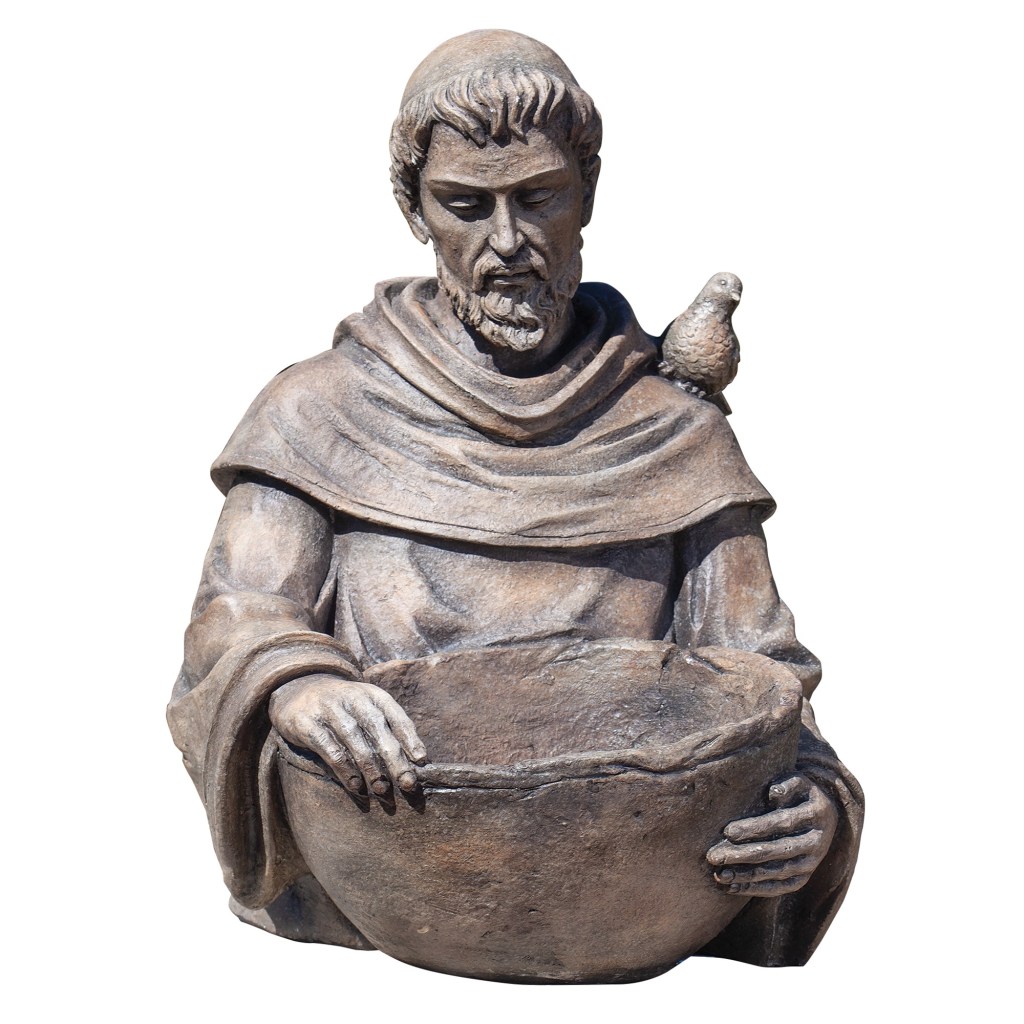
            St. Francis was famous for preaching to the birds.  I wonder how much time he spent with them in silence before he knew he had something to say.

Image: “St. Francis Bird Bath Bowl,” catholiccompany.com

Who Are We?

Human beings are animals. They are sometimes monsters, sometimes magnificent, but always animals. They may prefer to think of themselves as fallen angels, but in reality they are risen apes.”  — Desmond Morris, The Naked Ape [i]

“We are not human beings having a spiritual experience. We are spiritual beings having a human experience.” – attributed to the priest and paleontologist Teilhard de Chardin

Well, which is it?  Are we apes fooling ourselves that we are angels? Or are we spiritual beings inhabiting a body provided for us by our biological cousins?

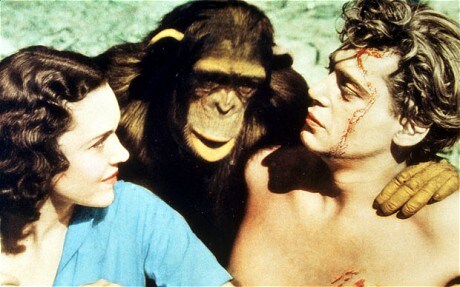
My favorite movie when I was kid was Tarzan and my favorite character was the chimpanzee, Cheetah.  Cheetah was Tarzan’s best friend. They talked to each other in a special language.  If Tarzan was in trouble, Cheetah might dash through the jungle and summon a herd of elephants. Or find some lions and persuade them to save his friend.  I formed the Monkey Club in second grade and was its first (and only) president.  I would have traded all my baseball cards to have a friend like Cheetah. 

         I was a teenager in 1967 when The Naked Ape came out.  It was a popular bestseller describing how similar we are to apes.  I loved it.  I wanted to be a filmmaker at that time. I took our Kodak Super 8 movie camera to the San Diego Zoo and filmed chimpanzees grooming each other. Then I went back home to San Bernardino and planned to secretly film customers at our local barber shop getting similar treatment.  I planned to cleverly edit the clips so the movie would alternate between the human and primate footage, showing how similar we are. But I never did have the chutzpah to secretly film at the barbershop.  And I didn’t know the first thing about film editing.  Unlike the Steven Spielberg character in The Fabelmans, my cinematic career ended early.

  Growing up and going to college, I did not believe in “spiritual” or “religious” experiences. I believed everything could be explained through science.

         Then I had a spiritual experience.  In a time of personal desperation, I prayed without believing in prayer because I had nowhere else to turn.  Three days later, I realized something like a quiet light was now present at the center of my inner emptiness.  It was an unexpected and vivid experience that opened my mind to the possibility that there is a divine presence surrounding us, and it means us good.  Maybe we are “spiritual beings having a human (or biological) experience.”

         I had heard some folks say science and religion were incompatible — you either believe God created the world in seven days or you are a heretic. But that never made sense to me.  Science was not shutting out wonder but uncovering more and more for it.  What’s wrong with “descending” from apes? I considered that a compliment.

         This is not to say everything in nature is pleasant.

         In 2015 I attended the Parliament of World Religions in Salt Lake. There were many interesting speakers from around the world, but no one drew as large a crowd as Jane Goodall. I was thrilled to listen to her – she has come as close to any of us as having friends like Cheetah! She said she first wanted to study chimpanzees because she was disillusioned with human behavior and felt that chimps in the wild must have greater nobility. But after living with them, she realized they could become vicious and violent when attacking a rival tribe. Her idealism ended, but not her reverence for our fellow primates.

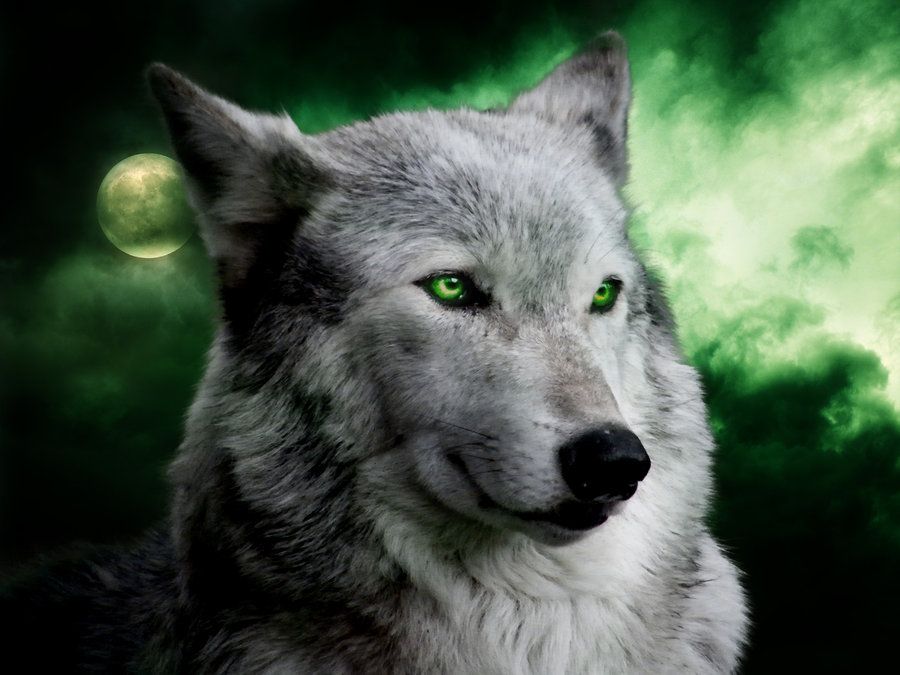
         In 1912, Aldo Leopold was working for the Forest Service in New Mexico.  His duties included hunting wolves.  One day he shot a wolf on a rimrock canyon: “He reached the still breathing wolf and saw something that forever changed him. In his classic text, A Sand County Almanac, Leopold describes the experience, “We reached the old wolf in time to watch a fierce green fire dying in her eyes. I realized then, and have known ever since, that there was something new to me in those eyes—something known only to her and to the mountain. I was young then, and full of trigger-itch; I thought that because fewer wolves meant more deer, that no wolves would mean hunters’ paradise. But after seeing the green fire die, I sensed that neither the wolf nor the mountain agreed with such a view.”[ii]

   Leopold had sensed something profound in the wolf’s eyes and her being – something that inspired reverence.  He became an early prophet of the environmental movement.

         Have you ever looked into the eyes of an animal and felt a deep kinship?

         Would Native and indigenous people believe you must choose between the natural world and spiritual beliefs?

         I look at myself and my fellow human beings: we “are sometimes monsters, sometimes magnificent.”  And I look at life all around us: it can be messy at the same time it is permeated with the miraculous mystery of life.

         So which is it?  Are we “just” animals or are we essentially spiritual creatures? I’m not choosing sides.  I vote for both.


[i] The Naked Ape: A Zoologist’s Study of the Human Animal, 1967

[ii] http://www.nationalforests.org/our-forests/light-and-seed-magazine/aldo-leopold-in-the-gila-wilderness

The Platinum Rule

         One spiritual principle our mother taught us was the Golden Rule: “Do unto others as you would have them do unto you.”  It’s a simple concept, and some say it’s an almost universal teaching in global spiritual traditions.

But I once took a leadership class where the professor encouraged us to think of a variation, the “Platinum Rule:” “Treat others the way they want to be treated.”

         I don’t know who first coined the phrase.  Searching around, it seems to be a common notion in psychology and leadership material.  Whatever its origin, the point is easy to grasp: if I follow the Golden Rule, I may assume someone else would want the same thing I would want.  In broad terms that may be true: all people would like to be treated with respect, for example.  But when it comes down to specifics, what someone else prefers may be very different than me.

         When I was Director at La Casa de Maria, our much-loved gardener Francisco was going to retire after years of faithful service. I asked our Office Manager to come up with some ideas for a special staff event. She suggested a luncheon in the dining room, followed by playing some games we could all enjoy.  We announced that plan to the staff. Later that day, the Landscape Supervisor asked to speak to me.  He politely suggested that what we were planning may not be the ideal event for Francisco.  He offered to organize an outdoor bar-b-q by the pool with some of Francisco’s favorite dishes.  He also wanted to schedule a mariachi band to make a surprise appearance.  That’s what we did.  We were all visiting with each other as the meal was being prepared, and an amazing mariachi band suddenly appeared, singing a popular song in Spanish that referred to someone retiring.  It was wonderful.  I am grateful that we had changed our plans.

         Two stories come to mind from my days at Hospice.

         I was at a national conference and one of the breakout sessions was on the spiritual care of the dying.  While the presenter reviewed some of the common principles in helping people share their spiritual concerns, he said the topic isn’t for everybody.  When his dad was in his last days, he had no interest in talking about spiritual issues. He just wanted to have his son come so they could read the daily newspaper together and discuss sports and the news.  That’s what he did. His father died in peace.

         Our staff was very creative finding ways to do whatever was meaningful for the patients.  One man said he had always enjoyed driving around town in an open convertible smoking a cigar.  We had a volunteer who was happy to do that.  Once a once a week the volunteer picked him up and they cruised around town puffing.  The man was very grateful.

         There are endless stories of how different cultures show respect in different ways. 

In 2000 I was in India on a sabbatical project, interviewing tech people and academics about how digital technology was beginning to reshape personal lives.  I was careful to call ahead to make appointments with whoever I was going to interview, which I took for granted was the proper thing to do. But one of my hosts took me aside and said that was not necessary.  He said calling ahead to make an appointment suggested that the person would not welcome me if just showed up, when in fact, welcoming an unannounced visitor was an honored practice of a good host.

         My congregation established a partnership with a congregation in Ghana. Five of us traveled there first and were warmly welcomed wherever we went.  The next year a group of Ghanaians came to Santa Barbara.  We had arranged for members to host guests in their houses.  One of our hosts had two spare bedrooms, and she welcomed two women to her house, showing each of them the room they would be staying in. After a while, one of the women approached the hostess and – very respectfully – asked if she and her friend could share a room instead of being alone.  Not everyone wants to be by themselves like Americans often do.

         I think of relationships. A colleague recently gave a sermon on marriage. He said that marriages often begin following the idea that “opposites attract.”  We fall in love with someone different than us and make our commitment. Then we spend the rest of our marriage trying to make the person like us.  An alternative, he said, was to ask, “How can I support my partner in becoming not who I want them to be, but who God wants them to be?”  Relationships are often an endless journey in finding the balance between meeting our own needs and that of our partner. I have great respect for my therapist friends who help couples negotiate that journey.

         Applying the Platinum Rule begins with our desire to serve, honor, or support someone else. It requires an open mind and careful attention to discover what the other person truly values.  When someone treats us that way, we feel both valued and respected.

Private Thoughts

A dear friend died last week at age 96.  I’d been visiting her for eleven years. Her health had been declining and she recently went on hospice care, so it was not a surprise.  But it’s hard to accept.

In my visits with her, we explored a wide range of topics: timeless spiritual questions,  great works of art, music (Bach, Mozart, old hymns, and popular songs), politics, and her rich personal history, among others. We’d often jump from one topic to another and lose track of time.  We were frequently surprised at how quickly the time passed and exhilarated by all the ground we’d cover.

I know she is “gone.” I simply can’t believe I’ll never have a chance to visit her again. I can’t believe a light that burned so brightly in my life has disappeared from my sight. 

I play hide-and-seek with our two-year-old granddaughter.  One of us disappears around a corner in the house, and the other comes searching. When the seeker finds the hider, we share an exclamation of delight.  I want to go looking for my departed friend, but I know I will not be able to find her.  Where did she go?

And every time we go out in public, how many people do we pass by who are having similar thoughts as they go thorugh their day?

When will it be time for me to disappear?  Will I see it coming?

(Top photo: Night sky over our house; lower photo: UCSB Lagoon at sunset)

Is the Sky in the Pie?

            In the eighties, a seminary friend underwent a kind of conversion.  He’d been raised with an older form of theology which held that this life is full of sin and suffering, and our best response is to focus on the hope of heaven.  But he became convinced that this perspective was misguided.  It had led our culture into an attitude of disregarding the integrity and sanctity of creation, which in turn contributed to the degradation of the environment; it also kept us from appreciating the blessings present in everyday life. He began to see divine life embedded in the natural world and became an early supporter of the “eco-spirituality” movement.  “Faith isn’t just about the pie in the sky,” he’d say, “the sky is in the pie.”  In other words, the divine presence surrounds us, and a primary spiritual calling in our time is to protect and nurture the earth and appreciate all that it offers.

            A turning point for me was reading Original Blessing, by the feisty priest and scholar, Matthew Fox.  Fox pointed out that Western theology had mistakenly become fixated on the doctrine of “original sin” in the fourth century and has never let it go.  But the Hebrew Scriptures – and Jesus’ teaching — are pervaded with the theme of life being a miraculous gift, not a curse.

            I appreciate the times in human history when peoples’ lives were full of suffering and focusing on future life in heaven – “pie in the sky” – made sense. There are many great spirituals with that theme, and no doubt they were powerful medicine.  I honor and appreciate that experience. But if that is the sole focus of our spiritual life, we are missing so much.

            I confess I come to this theme with a formidable bias – since the time I was a kid, I’ve loved pies.  It started with Mom’s apple pie.  Then it expanded to lemon meringue pies at Denny’s.  It grew further with a masterpiece made with home-grown pie cherries from the baker’s tree in her backyard. These all tasted “heavenly” to me; literal affirmations that “the sky” can be experienced “in the pie.”

            I remember the first time I stayed at a monastery — St. Andrew’s Priory near Pearblossom.  I was expecting to be served some kind of thin gruel.  But when I came into the dining room, a great, multicourse feast was laid out.  It turned out they were welcoming a new novice to their community, so it was my good fortune to be there as they celebrated with this banquet.  I later learned that the monk who cooked that night had been a chef with the Hyatt Regency before taking his vows. 

Several years later I was spending a day at Mt. Calvary Monastery here in Santa Barbara. Before lunch was served, the host said, “We don’t know if God has taste buds, so we consider it a spiritual duty to enjoy what we eat.”

            I’m hoping I can have it both ways. If there is “pie in the sky” after this life is over, I’m all for it.  But I’m not missing any opportunities on this side of the great mystery.  I’m hoping to have my pie and eat it too.

            What’s for dessert?

Time to Get Real? Searching for What Is Authentic

You may have seen this:

Merriam-Webster’s Word of the Year for 2023 is authentic — the term for something we’re thinking about, writing about, aspiring to, and judging more than ever.

A high-volume lookup most years, authentic saw a substantial increase in 2023, driven by stories and conversations about AI, celebrity culture, identity, and social media.

Authentic has a number of meanings including “not false or imitation,” a synonym of real and actual; and also “true to one’s own personality, spirit, or character.” Although clearly a desirable quality, authentic is hard to define and subject to debate—two reasons it sends many people to the dictionary.[i]

When I think of the word authentic,” I think first of food: “That place serves authentic Mexican food” someone will say; “If you want to know what an authentic bagel tastes like, you’ve got to go to New York.”

Occasionally we have pizza delivered from one of the popular places in town. But recently we got some from Ca’Dario’s, a wonderful Italian restaurant in town.  The crust was quite thin, as it is in Italy.  My 8-year-old grandson picked up a piece and said, “This isn’t real pizza.”  I asked why. He said, “It has a floppy crust.” Authenticity can be in the eye of the beholder.

I think of art.  Occasionally we will read of some expert declaring that someone paid a lot of money for a work is fake.

We can debate what makes food or art authentic, but how about people? It’s hard to say how we know someone is “authentic.”  Maybe we could start with what must be the opposite trait — “phony.” 

Sometimes we encounter people who say and do all the right things, but after we are around them, we get the feeling they aren’t authentic.  We say things like “They’re just putting on an act.”  We can resonate with that 1971 soul classic, “Smiling Faces:”

Smiling faces, Smiling Faces, Sometimes they don’t tell the truth.

Smiling faces, Smiling faces tell lies and I got proof.

Beware. Beware of the handshake that hides the snake, 

I’m tellin’ you beware of the pat on the back it just might hold you back.

Jealousy, (Jealousy)  misery, (misery) envy.

I tell you you can’t see behind.[ii]

So, we might sense when someone is not authentic, but how do we know if they are?

Since the sixties, we have often heard that we each need to find our true ‘authentic” selves.  That can mean uncovering some gifts, talents, or creativity we didn’t know we had – a wonderful thing.  But I think it can also become a guise for being selfish – we decide we will act however we please and expect the world and other people to adapt to our needs.  Spirituality in that realm can be finding a set of beliefs that fit perfectly with what my ego wants.

From the point of view of the established spiritual traditions, the best way to find our “authentic self” is to experience and serve a purpose and presence greater than ourselves.  “Whosoever shall seek to save his life shall lose it, and whosoever shall lose his life shall preserve it.”  (Luke 17:33) This is an invitation to imagine there is a way of being beyond my little self and to discover the wonder of being part of it.

I think of the Prodigal Son story.  The younger brother takes half of his inheritance, leaves home, and spends it all on himself. The money runs out and he finds himself in a moment of despair which leads to a discovery – “he came to himself.”   He returns to rejoin his family where he finds love and belonging.

I had a parishioner who is very quiet and prefers to be in the background in any situation.  She is always thinking of others, visiting them when they are sick or sad or alone.  She’s now 102 years old.  If you asked her if she’d found her “authentic self,” she would be mystified by the question. Her “real self” doesn’t exist in isolation as a trophy to display; it lies deeply in her connection with other people.  Her authenticity is a product of her humility.

I went on quite a few trips with teenagers to build homes in Mexico.  In the beginning, many kids were concerned they wouldn’t have the daily conveniences they were used to.  But when the work started, they forgot about their devices.  At evening campfires, as they reflected on their lives, it seemed to me they were finding their “authentic selves” by experiencing a bigger world – one that is challenging and engaging, but also includes a core element of serving others.

            As the announcement noted, one reason there has been so much interest in what is authentic is the advance of Artificial Intelligence.  This week I was making a hospital visit and saw a woman I know.  She told me of a sermon her assistant rabbi had recently given on the topic of AI.  She said it was an impressive presentation, but along the way, she and others felt somehow, something was off.  At the end, he told everyone the sermon had been entirely written by an AI Chatbot – then offered some thoughts about what that means.  “You just knew something wasn’t right,” she said, “But you couldn’t put a finger on it.”

            AI is rapidly becoming more and more capable of creating materials and relationships that will seem more and more “authentic.”  What will life be like?

Although clearly a desirable quality, authentic is hard to define and subject to debate—two reasons it sends many people to the dictionary.  Pondering the word sends me not only to the dictionary but more and more into a new appreciation of being with real, down-to-earth people in my life who aren’t trying to be authentic — but are.  What a blessing.


[i] https://www.merriam-webster.com/wordplay/word-of-the-year#:~:text=Merriam%2DWebster’s%20Word%20of%20the,and%20judging%20more%20than%20ever.

[ii] “Smiling Faces,” Undisputed Truth, 1971: https://youtu.be/g0WPPAN9JyM?si=imeqsAs6Eehn8ZYt

Time for a Break

Dear Subscribers and Friends,

On December 15, 2020, I posted my first “PocketEpiphanies” article.  My goal was to share some of the insights, memories, and stories that have been meaningful to me over my life and career that might also be of interest to others.

I did not know how long I would keep at it.

As of last week, I’ve written 150 articles now have 169 subscribers.  I’m surprised I’ve gotten this far.

From time to time, I’ll receive a message from someone that a particular post was helpful to them in their journey. When I’m out and about in town, I’ll meet one of you and you’ll tell me you look forward to seeing what I come up with each week.  This makes it worth it.

I have decided that reaching the 150-post milestone is a good time for a break. Over the next few weeks, I’m going to let my mind and imagination lie fallow.  I plan to resume on January 6. Until then, please know that being connected with all of you means a great deal to me.  In these fractured times, I feel this is one way to stay in touch with one another about what matters in life without trying to “monetize,” advertise, or become an “influencer.” Thank you for being part of this journey.

Steve

P.S.: If you haven’t been with me since the beginning, you may want to see what I posted two years ago– pieces written to reflect themes of the season.

The Spiritual Point of Conception: Reflections and Images https://wordpress.com/post/drjsb.com/872

The Power of Spiritual Friendships: Thoughts and Images https://wordpress.com/post/drjsb.com/897

Spiritual Guardians: Carpenters, Mentors and Drummers https://drjsb.com/2021/12/18/spiritual-guardians-carpenters-mentors-and-drummers/

The Nativity: A Hospital Epiphany and Three Works of Art: https://drjsb.com/2021/12/24/the-nativity-a-message-at-the-hospital-and-three-works-of-art/

Image: a photo I took of my parked bike at Goleta Beach, 2020