Spiritual or Religious? A Guide for the Perplexed

“Are you religious?”

         “No, I’m spiritual.”

         Over recent decades, fewer and fewer Americans describe themselves as “religious.” Many say they are “spiritual.” What does this mean?

         I’ve been reflecting on those two words for 35 years.  I’m going to offer one way to understand the difference between them.

         “Religion” is a word that combines “re“ with “ligio.”  “Ligio” is the root for the word “ligament,” which means a binding.  So re-ligio means “bound again.” A religion binds someone to a set of beliefs, traditions, and practices. When I was a kid, every Friday the cafeteria served fish sticks. Why? Because Catholics weren’t allowed to eat meat on Friday. If I’m an Orthodox Jew, I’ll only eat kosher food. If I’m a practicing Muslim, you can expect me to be praying five times a day and fasting during the month of Ramadan.  

         “Spiritual” is very different. Let’s go back in time to appreciate its origins.

         In the Hebrew Scriptures, the common word for “spirit” is “ruah.” Here’s a famous passage:

         In the beginning when God created the heavens and the earth,the earth was a formless void and darkness covered the face of the deep, while a wind from God[b] swept over the face of the waters.[i] Did you notice the footnote, (b)? The footnote says: “Orwhile the spirit of God orwhile a mighty wind.” Spirit is synonymous with wind and breath.

         The New Testament was written in Greek.  Just like Hebrew, the original word pneuma (as in pneumatic tire, pneumonia, etc.) can mean spirit, wind, breath. Here’s an example:

              The wind[f] blows where it chooses, and you hear the sound of it, but you do not know where it comes from or where it goes.[ii]  The footnote for “wind” reads: “The same Greek word means both wind and spirit.”

         So “religion” implies a binding, a strong and secure connection.  “Spiritual” implies something more elusive and mysterious, but real. You can’t attach a ligament to the wind; a breeze can be felt but doesn’t bind you. 

         For centuries many people were bound to religious traditions.  But in the 60s, people started questioning authority.  Many began leaving such traditions altogether or picking and choosing which beliefs and practices they’d embrace and which they’d ignore.  A steady decline in membership and influence of religious communities began and continues – the ligaments became weak or were never developed.

         Being cut loose from such restrictive bonds can be exhilarating.  We can begin finding for ourselves what is true and authentic.

         As we’re searching, we may have moments when we sense there is something important beyond everyday reality. Maybe we come upon something in nature that fills us with wonder.  Maybe we are awe-struck as we look into the eyes of a newborn child. Maybe we sense something transcendent in a piece of music.  Maybe we go through a personal crisis and feel we’re being led by something beyond ourselves. Maybe we’re in recovery and find the value of a higher power.  Or, maybe we experiment with ancient Eastern techniques of inner exploration, such as meditation, mindfulness, yoga, or Tai-chi and find an inner peace, strength, and serenity that we never experienced in one of those liga-mented institutions.

         We certainly don’t believe there is an old bearded white guy in the sky in charge of everything. But what about “… an energy field created by all living things. It surrounds us and penetrates us; it binds the galaxy together,” as Obi-Wan Kenobi explains to Luke Skywalker.[iii] This “Force” gives us courage, helps us do what is right, connects us to others and calls us to fight against forces of repression.

         If any of these experiences resonate, we might say we are “spiritual.” We sense something, believe something, feel something that is of great personal importance. And no external authority will control how we experience it or what it means.

         So much of this speaks to me personally.  I don’t believe in something just because someone tells me to. I am curious about every kind of journey people are on and learn new things whenever I can.  I’m fascinated by all things “spiritual.”

         And yet there’s something lost when we have no ligaments.

         Last spring, I was feeling discomfort in my right upper arm while doing yoga. One day, I was playing golf and noticed it was swelling dramatically and my arm was turning purple. I went to Urgent Care. They diagnosed it as a torn ligament, which leads to a swelling known as a “Popeye arm” along with contusions.  Apparently, we have two ligaments connecting shoulders to elbows, and one of mine had become disconnected.  They told me they couldn’t repair it and referred me to physical therapy to begin strengthening the surrounding muscles to compensate.

         A year later, I’m still doing the exercises and feeling fine. But I’ve learned what it’s like to be “de-ligamented.”

         I’ve been around congregations for many years.  Communities that worship and serve together week after week are like bodies that are consistently forming strong ligaments of connection. In a tragedy – a death, a disaster, an urgent social need — those bodies are ready to act decisively.  And they do.

         We can see this principle at work in the war in Ukraine.  After World War 2, NATO was formed, creating voluntary bonds of commitment between participating nations to defend each other against aggression. Some recent politicians wanted our country to be free from our NATO commitment. But we now see those ligaments in action as thirty nations quickly united to oppose Russian aggression.

         I rejoice in the freedom spirituality provides to find what is authentic. I can also sing the old hymn “Blest Be The Tie That Binds” when I see social bonds being used to inspire, strengthen and protect the human family.


[i] Genesis 1: 1-2, New Revised Standard Version

[ii] John 3:8, New Revised Standard Version

[iii] Star Wars, Episode IV: A New Hope

Image: Fall Colors at Kebler Pass, Colorado USA.JPG; aspen groves are now understood to not be individual trees, but one unified biological entity.

Your Soul Is Like A Wild Animal

         When I reflect on the idea of having a “soul,” my mind first goes back to cartoons I watched as a kid.  Some character would get bonked on the head and fall over, and then a wispy image of that character would start floating up from the body with little wings and ascend into the sky.

         In college, I began to get the idea that a modern, scientific person should be skeptical of believing in anything that could not be measured, observed, and analyzed; the idea of human beings having souls was a superstition best left behind.

         Then I had my spiritually transforming experience when I was 22.  I suddenly sensed that there is something in us connected to a living reality beyond what we can see.  In the years that followed, I began to explore the many ways we can conceive of having this spiritual essence that we sometimes call “soul.”

         In 2009 I read A Hidden Wholeness: The Journey Toward an Undivided Life by the academic-turned-spiritual-mentor Parker Palmer.  Early on, he says he will be using the word “soul.” He knows his academic friends will be dismissive about both the word and the concept.  But, he believes there is something within us that is best described with this word — a point of connection and wholeness that all spiritual traditions understand.  And, he says, he found a useful metaphor for it:

         “The soul is like a wild animal – tough, resilient, and shy. When we go crashing through the woods shouting for it to come out so we can help it, the soul will stay in hiding. But if we are willing to sit quietly and wait for a while, the soul may show itself.”[i]  He goes on to say that much of our culture keeps us distracted and so our soul withdraws. But in moments of quiet and inner attentiveness, our souls cautiously appear. In those moments, we realize who we really are and how miraculous the world is; in those moments, we often find guidance, assurance, and hope.

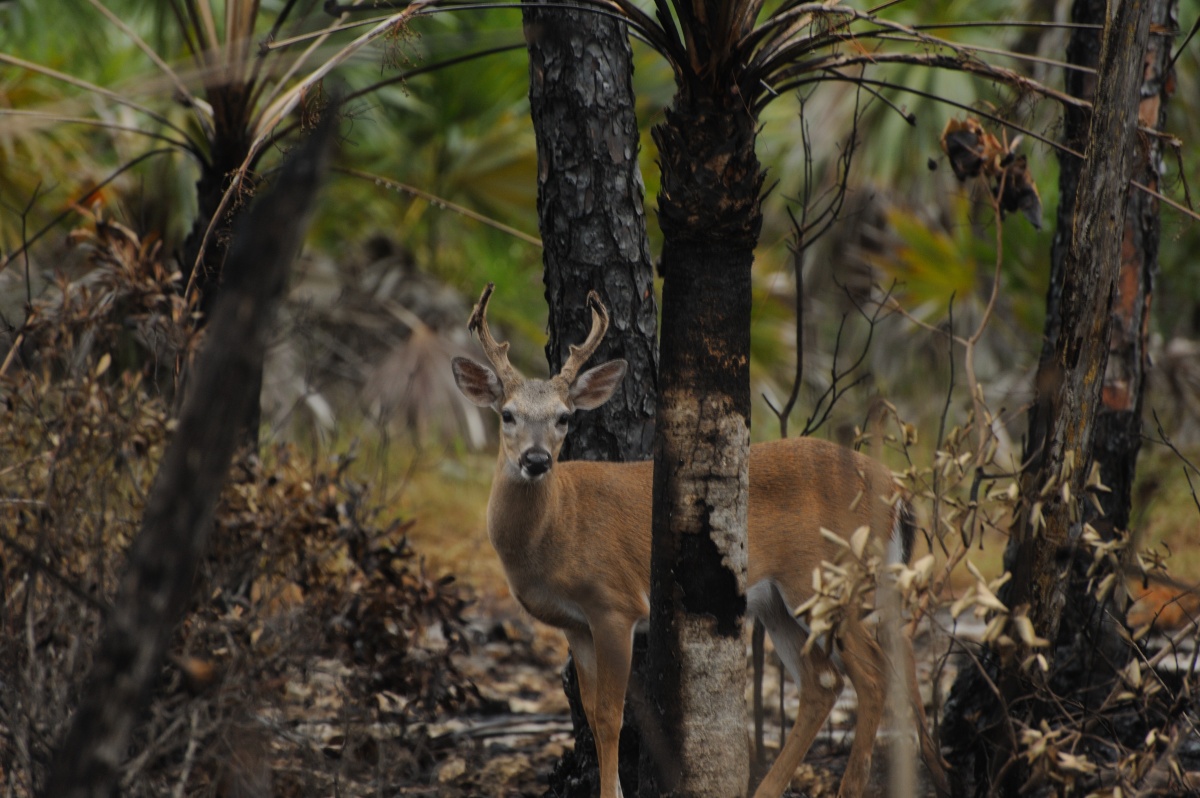
         I loved this idea.  If we are thrashing through the woods, wildlife flees from us and hides. But if we come to a cabin in the woods, sit on the porch and become still, the wildlife emerges, and we can observe it with reverence and wonder.

         Palmer says there is another quality of soul that is like a wild animal:

         Like a wild animal, the soul is tough, resilient, resourceful, savvy, and self-sufficient: it knows how to survive in hard places. I learned about these qualities during my bouts with depression. In that deadly darkness, the faculties I had always depended on collapsed. My intellect was useless; my emotions were dead; my will was impotent; my ego was shattered. But from time to time, deep in the thickets of my inner wilderness, I could sense the presence of something that knew how to stay alive even when the rest of me wanted to die. That something was my tough and tenacious soul.[ii]

         The soul is like a wild animal. It is shy.  But it also can endure great hardship.

         This certainly described what I have witnessed many times in my life. 

         When I worked at Hospice of Santa Barbara, many people came to deal with a personal loss – maybe it had occurred just a few weeks before, maybe years ago. The loss had fractured their sense of meaning and trust.  Their soul had gone into hiding. But they hoped they could somehow make sense of life.  They would be given an appointment with one of our counselors.  The philosophy of our staff was based on a simple assumption: “We can’t fix you, but we can come alongside and journey with you as you find your way.”  The client would begin to experience this caring, skilled, and non-invasive companionship.  It could take weeks or months, but, in time, it was as if the person’s soul could finally come out of hiding and begin to find a way to accept what had happened while forming a new understanding of life.  As they found their way, you could see it in their eyes: there was light where there had been shadows. The soul had reemerged and brought with it a quiet wisdom about hard truths and an awareness of simple blessings.

         In my time at the La Casa de Maria Retreat Center, I would often use this metaphor when giving tours. There were no televisions or newspapers, and, fortunately, very limited Wi-Fi.  As we’d walk the 26 acres of oak groves and gardens, I would point out various places for contemplation they might want to visit during their stay.  As a guest, they would be free to wander the property, enjoy the delicious food, and rest as much as they needed.  “Our souls are like wild animals,” I would say.  “They are shy, like deer in the forest.  But when we are quiet, the deer come out.  Your soul will begin to sense this is a safe place to be.  Give it time, and your soul will come to you.”

         When people arrived, they would often be stressed, tired, and distracted.  At first, many would keep reaching for their cell phones, trying to find a spot with adequate reception, like a dowser looking for water. They were desperate to stay in touch with the busy world that had ensnared them.  But in time, that compulsion would fade. They’d rest, and wander, and explore, and discover whatever it was they needed.  As they were leaving a few days later, you could see the change in their eyes. They’d found their inner light, and with it came peace, clarity, and a renewed sense of purpose.

         Your soul is like a wild animal – shy, but capable of enduring times of great stress.  It is always choosing life instead of darkness. Honor it, care for it, listen to it.


[i] A Hidden Wholeness: The Journey Toward an Undivided Life, pg 58

[ii] Ibid, pg. 58

Photo Credit: Department of the Interior

Invitation to a Wake

This week I did something I’ve wanted to do all my life: take sailing lessons. I signed up at the local harbor for “Beginning Sailing 101.” It’s a three-day class and I’ve completed two days so far. My exam is next week.

            The course includes learning nautical terms – some of which are familiar, some not.  I soon noticed how much sailing jargon is part of our everyday language. 

            At one point the instructor was presenting ways to know if you are moving in the water if you seem to be standing still.  “You look at the boat’s wake,” he said. “If there are bubbles and ripples behind the boat, it means you are moving.”

            I looked over the stern (the back end!) of the boat for the wake. Sure enough, there were the bubbles and ripples.  I started thinking about the term “wake.”

            The first thing that came to mind was the Irish tradition of gathering after someone has died to remember and honor them.   We often associate that experience with heavy drinking of certain distilled liquids. But it was not immediately clear why we would use the word “wake” for such an event.

            Then it came to me — the person has left a “wake” in our lives – an influence or impact – and we instinctively want to gather to reflect on what that means.

            As I pondered this further, it occurred to me that the wake behind a moving boat may seem to dissipate as the boat continues sailing.  But it has made a real impact on the ocean itself, even if it seems small compared to the vastness of the sea. I began thinking about people whose “currents” of influence are still swirling in our lives. 

            My father came to mind. He died almost ten years ago, but every day some word or phrase of his comes to mind.  Most of them are not appropriate to publish in a dignified space such as this, but others can be shared.  For example, he employed a general handyman named Orville.  Orville could often find solutions to practical problems when the proper part was not available.  My dad delighted in his innovative ability, and, when faced with a puzzling problem, he’d say “Let’s see if we can ‘Put the Orville to it.’” Sometimes when I face a similar problem, I’ll think, “Maybe I can ‘Put the Orville to it’,” and it always makes me smile. But it’s more than just remembering the phrase – something about it causes me to reexperience a tangible sense of my dad’s spirit.   It’s one of the ripples of his wake.

            If I hear a jazz artist singing Gershwin’s “Summertime,” I’m taken back to times as a child when my mother would be singing it to herself at the piano as I was walked through the living room. She’s been gone 29 years, but when I hear “Summertime,” it’s different from a pleasant memory – it’s a moment when I feel she’s present again; it’s part of her “wake.”

            It can also be true with organizations.

            A few years ago, I was greeting a new neighbor. She asked where I’d worked. I mentioned Hospice of Santa Barbara. Her eyes widened.  “You worked there?  Your counselors saved my life after my husband died suddenly. I wouldn’t be standing here today without them.” What she expressed was not a simple fact – it was bringing to the surface a healing experience that was very much alive in her.

            Last fall I went to Los Angeles for one of the first post-COVID concerts.  An older woman sat next to me, and we began to talk. She told me she was from West Los Angeles. I told her I was from Santa Barbara.  “What did you do there?” she asked.  “I was Director at La Casa de Maria Retreat Center.”  She almost came up out of her seat.  “That’s one of the most important places in my life!” she said. “My 12-step group went there every year, and we loved it.  It’s an amazing place.”  I could see La Casa’s impact on her had not dissipated but was buoying her spirit even as we spoke.

            These moments aren’t just the retrieval of weightless, neutral thoughts from our past. They are times when we are truly feeling them again in body and soul.  Just as a boat’s wake continues to be present in the ocean long after it is visible, these are strong, visceral experiences that continue to eddy and swirl within us, rising into our awareness in unexpected moments.

            Are there times when such memories come to mind for you, drawing with them your body and soul as if you are still in their “wake?” 

            Finally, I thought about how all of us are “sailing” through our life every day and – know it or not – leaving a “wake” in the lives of those around us. What kind of wake is it?  Are we paying attention to the currents we are setting in motion with our words and actions?  Are we navigating skillfully so that those currents will benefit others, strangers in addition to loved ones? 

            Shipmates, I’ll confess reflecting on the word “wake” caused me to lose track of what the instructor was saying – good thing I wasn’t at the “helm.” But I’m grateful to be out on the sea, and to cherish all the people whose wakes are still with me.

“Sailing Accross the Atlantic,” Oceanpreneur