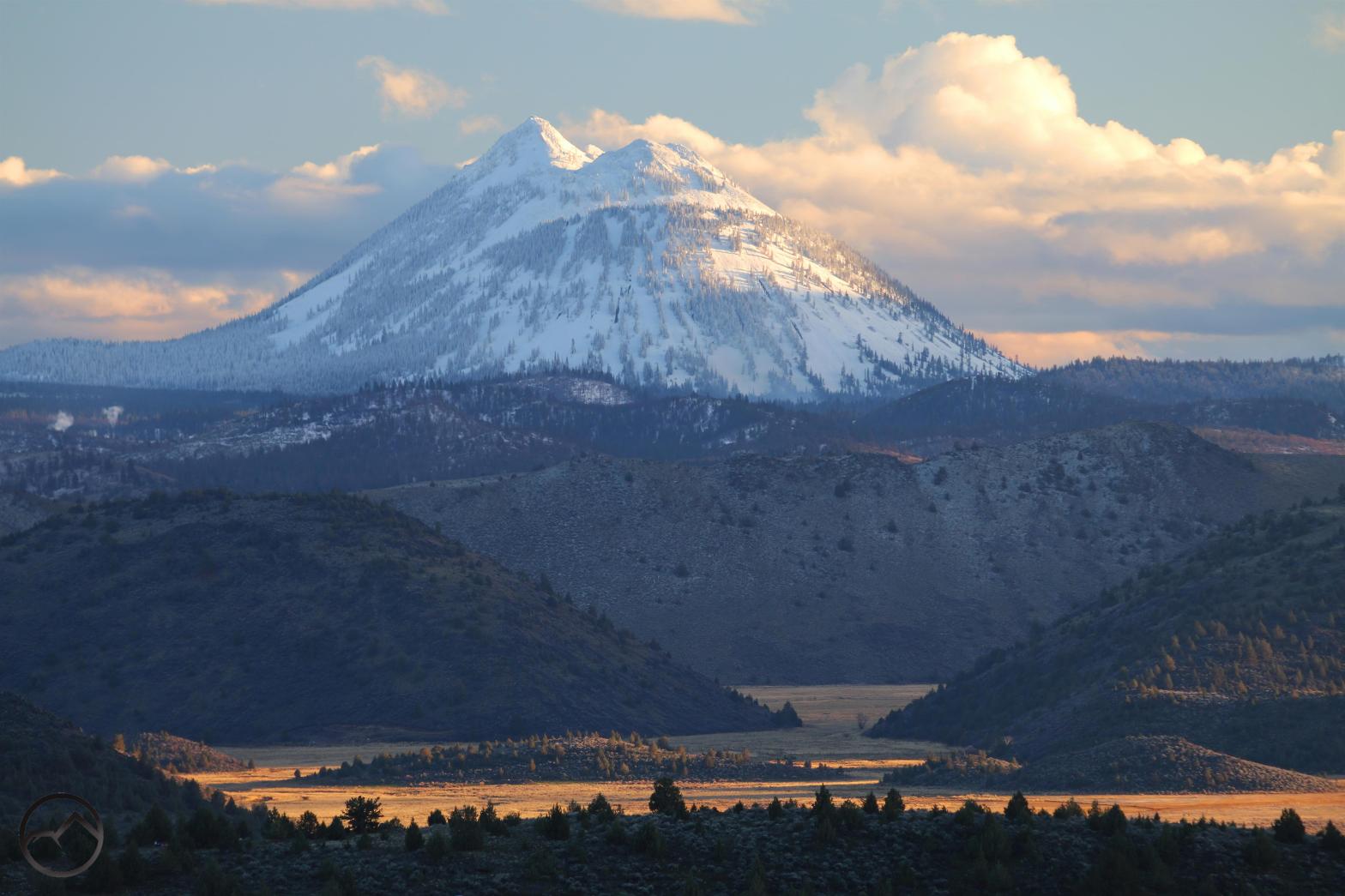
Our annual trek to the Mt. Shasta area was a month later this year, so we arrived as summer was ending and fall arriving. The forecast was for a chance of rain and thunderstorms on and off during the week.
We spent the first few days exploring favorite lakes and rivers. Our fourth day was going to be our last, and we decided to see how far we could venture up Mount Shasta itself.
We drove to a spot known as Panther Meadows. Half a dozen cars were parked at the trailhead. The sky was overcast. We got out and began to follow the trail. Within a few minutes, the sky got dark and an intense hailstorm began. We joined several other hikers laughing and scurrying back to our cars. Strike One.
We drove down the road and within a few minutes had left the hailstorm behind. We parked at “Bunny Flat” (6,950 feet) a popular staging area. More than a dozen times we’ve hiked an hour up the trail to Horse Camp and a stone cabin built by the Sierra Club. We decided to see how far we might go. We were walking two or three minutes when an intense lightning flash lit up the area around us, and, in the same instant, the loudest and sharpest thunderclap I’ve ever heard roared over and through us. We hurried back to the car, as did the other nearby hikers. Strike Two.
We drove down the mountain and thirty minutes later were regrouping at our hotel in the town of McCloud (elevation 3,271 feet, population 945). After lunch, we decided to try a nearby trail known as Cabin Creek. We drove several miles down the road that leads south out of town, then turned onto the unpaved road that leads to the trailhead. Ten minutes later we arrived; one other vehicle was there. Just as we were parking there was a flash and thunder close to us like what we had experienced on the mountain. Strike Three.
“We are getting a message. Let’s accept it.” We drove back to our hotel.
We talked about how our ancestors could interpret these moments as divine messages.
I thought about the story of Moses confronting Pharoah in the book of Exodus, using frightening events to convince Pharoah to let the people go. As the story has come down to us, Moses “struck” the Nile and turned it into blood; his brother Aaron “struck” the earth with his staff and gnats overwhelmed the land, hail “struck down” plants, trees and animals, and on it goes. After the tenth plague, Pharoah released the people.
I once read a biography of the great Puritan theologian Cotton Mather. For Mather and his community, every dramatic natural act was a message meant to be decoded by faithful people. Once he was in a meeting upstairs in his home with one of his church elders when lightning struck close to the room they were in. They both fell to the floor, praying for forgiveness as they tried to determine what terrible act or thought of theirs must have warranted this divine display of displeasure.
In our own time, we are experiencing increasingly intense natural disasters that shock and humble us. In my own community, we’ve been “struck” by increasingly intense wildland fires, unusual weather patterns, and the 2018 debris flow. I don’t see these as divine messages. But isn’t it reasonable to interpret these as nature’s warnings and wake-up calls, summoning us to turn back from the many practices that have contributed to climate change?
As life goes on, many people experience unexpected medical challenges. I hear some say, “I took that as a wakeup call to change my behavior.” Many find the determination to make changes and, looking back, are grateful for the event that woke them up.
Later in the afternoon of “The Day of the Three Strikes,” the threat of thunderstorms had diminished. From our hotel, I went for a walk in the town of McCloud. Being from Southern California, I was amazed at how green the trees and lawns are. I went to Hoo-Hoo Park, where we’ve often gone for the annual “Lumberjack Fiesta” in late July. The park and softball fields were empty of people; everywhere the grass was plentiful, thick and rich. The town, surrounded by forest, seemed particularly quiet. The logging industry has faded over the years, taking with it economic opportunity and prosperity. But the people love and honor the land they live on and respect the mountain that rises above them. They watch out for each other and do the best they can.
As I walked, I had a new appreciation for how vulnerable we are. But the point of life is not to hide in fear. The point is to find wisdom and flourish. I felt I could take three life lessons with me: Be Alert. Be Careful. And, when the time is right, Be Grateful.
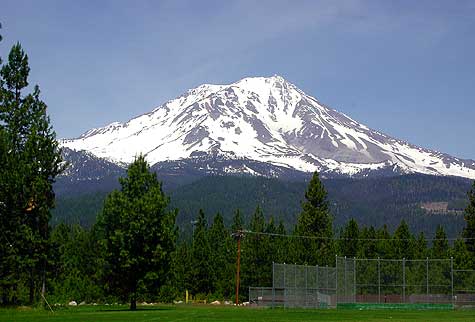
Hoo Hoo Park
Lead Image: Hikemtshasta.org
 Steve Jacobsen, Ed.D