Reflections on Grief, Gratitude, and Maturity

           (Dear Friends: I did not have the time this week to create a new piece, but went back a few yeas and found this, which I have edited.)

My dear friend Father Larry Gosselin recently posted a quote from Francis Ward Weller, a therapist and grief counselor. I want to share it and a few reflections.

            The work of the mature person

            Is to carry grief in one hand

            And gratitude in the other

            And to be stretched large by them.

            How much sorrow can I hold?

            That’s how much gratitude I can give.

            If I carry only grief, I’ll bend toward cynicism and despair.

            If I have only gratitude, I’ll become saccharine

            And won’t develop much compassion for other people’s suffering.

            Grief keeps the heart fluid and soft,

            Which makes compassion possible.

            At times in my life, I’ve been asked who my “spiritual heroes” are.  My response: the many older people I’ve known in my congregations.  They’ve lived through hard times and personal tragedies, but somehow have become calm, thoughtful, and caring.

            To this I’d add Hospice volunteers who’ve experienced the loss of people they loved, then followed a calling to simply be present with others living in times of fear and unknowing.

            Of course, maturity doesn’t always come with the accumulation of age; some young people have unusual wisdom and insight. We call them “old souls.”

            I’m wary of simplistic formulas for life. I distrust promises that we can be happy all the time if we just make the right effort. 

            I’ve known people who have lost loved ones in ways that will always haunt me, and I don’t know how they bear it.

            I do not believe there is a divine pain manager who sends suffering our way to improve our character. But something is here that can hold us.

____

Image: Close-up of “Return of the Prodigal” by Rembrandt

The Way of Nature and the Way of Grace

I’ve been ruminating over these words for fourteen years:

Τhe nuns taught us there are two ways through life- 

the way of nature… and the way of grace.

You have to choose which one you’ll follow.

Grace doesn’t try to please itself.

Accepts being slighted, forgotten, disliked.

Accepts insults and injuries.

Nature only wants to please itself…

– Get others to please it too.

Likes to lord it over them…

To have its own way.

It finds reasons to be unhappy… 

when all the world is shining around it, 

when love is smiling through all things.

Τhey taught us that no one who loves the way of grace

ever comes to a bad end.

We hear this in the voice the mother of the O’Brien family (Jessica Chastain) at the opening of The Tree of Life. As she recites the first six lines, we see dream-like images of her with her young sons in 1950s suburban Texas. At the line, “Nature only wants to please itself…” the camera shifts to the father (played by Brad Pitt) at their dinner table.  After several viewings, I realized the shift in focus suggests the mother embodies the grace the nuns talked about while the father embodies “the way of nature.”

“The way of grace:” self-less, tolerant, forgiving.  The “way of nature:” self-centered, willful, domineering.  Those living “the way of grace” experience a world shining with love; those living the way of nature are blind to all that shines, and instead “finds reasons to be unhappy.”

From the beginning of my spiritual awakening in my twenties, I wanted to “live in the way of grace.”

As a pastor, living “in the way of grace” felt like the ideal job requirement. I strived to lift that up and live that out with the people I was serving. It brought me joy.

As time has passed, I am less certain one can always live in the way of grace.

As Malick uses the phrase “way of nature,” it feels selfish, insensitive, and destructive.  But we can think of it another way. I am going to interpret it as our biological and evolutionary history.  We carry primal instincts within us that recognize our need to survive.  We can draw on a stubborn stamina that enables us to endure hard times with grit and determination.  If we lose at something and it hurts, we may resolve to recover instead of giving up. Winning and accomplishing a goal feels good. We find ourselves in a position of power and appreciate what that offers – not only for ourselves, but for others.  Are these moments we want to run from?

I once organized and participated in an Earth Day retreat at the La Casa de Maria Retreat Center.  We had invited a local trail guide to lead a tour of our property.  He had an interest in both the natural world and ways we can listen to our ancestors.  Our group took an hour to make a slow walk around the 26-acre property, stopping along the way.

We came to the organic garden and paused.  He reminded us human beings have been farming for several thousand years.  He asked us to close our eyes and visualize our own ancestors farming and what their life was like. Most of my ancestors came from Scandinavia. I found myself traveling back in time, watching them work in the cold climate and bare soil.

We came alongside the San Ysidro Creek.  Before agriculture, our ancestors were hunters and gatherers.  We closed our eyes and imagined their life.  I realized my ancestors survived by learning to fish the North Sea and hunt elk.  A hard life.

Living “the way of nature” involves cunning and a strong will.  That can get messy when it demeans other people.  But those instincts in themselves are not bad.

In 2008 I transitioned from parish work to leading nonprofit organizations.  I discovered I could not be, in the eyes of everyone, always “full of grace.” Sometimes I had to make unpopular decisions.  We had to let some people go, and as they left they didn’t feel like “love was smiling through all things.”  But these actions had to be done.  Looking back, I don’t regret them. It was part of my job.

The spiritual life is not an unending experience of grace and beauty.  Jesus was more a lion than a lamb.  Many of his conversations comforted, healed and renewed.  But other times he confronted people with their self-righteousness, and they walked away dejected or angry.  He told people what they needed to hear.

Trying to be gracious every moment doesn’t guarantee ideal outcomes. Sometimes things just go badly.  But we do the best we can.

Is it true — “…there are two ways through life – the way of nature… and the way of grace.  You have to choose which one you’ll follow?” I’m not so sure it’s that simple.  I believe there is a third way, one which draws on both nature and grace.  There are times when we need instincts for survival that nature has given us so we can protect ourselves and others and do the right thing.  But that doesn’t exclude “the way of grace.”  Grace is always worth striving for, and when it emerges it comes with a radiant awareness.

Images: The Tree of Life, Terrence Mallick


Last October I wrote another post inspired by Tree of Life: Where Were We?

In Praise Of Gracie, My Red Wiggler Compost Worm

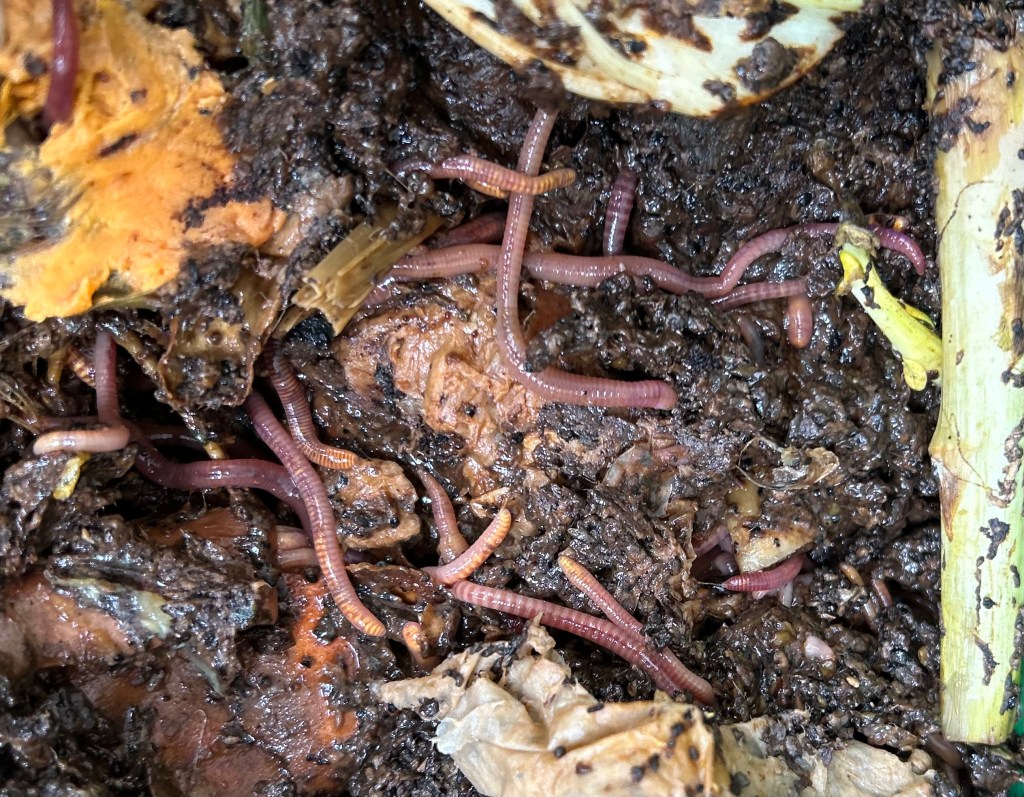
                  This is my friend Gracie. She is a red wiggler worm that lives in our compost bin. She’s a hard worker and important part of our household.  Recently I’ve been telling her what she does is a rich metaphor for the spiritual power of grace.  I asked her if I could tell you her story. She agreed but wants you to know that all the spiritual talk is not her idea, but stuff I’ve made up.

                  Her story begins seventeen years ago when I decided to explore organic gardening. I read articles and attended classes. I planted a variety of heirloom tomatoes.  I experimented with lettuces, beans and peas.  And I created my first worm composting bin.  I don’t do much gardening anymore, but I’ve stuck with the worms.

                  Let me tell you why Gracie and her clan are so amazing:

  • Unlike other pets, you start with one batch (donated by a friend or purchased at a nursery), and you never have to get new ones; they just keep reproducing.
  • You never have to take them to the vet or pay for vaccinations or neutering.
  • They work around the clock in total silence – no barking.
  • They don’t scratch on your door to get out or damage your furniture.
  • They don’t poop on your lawn.
  • You never have to take them to a groomer.
  • You can leave them at home when you go on vacation – no need to hire a Worm-sitter.
  • You never have to buy food for them. They survive on scraps and garbage. Here’s a sample of what I give them: coffee grounds, coffee filters, stale bread, expired tortillas, broccoli stems, banana peels, apple cores, asparagus ends, abandoned quesadillas, moldy cheese, watermelon that has exceeded its firm stage of life, and used paper towels.
  • While Gracie’s clan does much of their work on their own, they do need to be fed and lightly watered occasionally to keep making compost and new worms.  And they don’t like food that’s too acidic.
  • You’ve heard the phrase from computer people, “Garbage in, garbage out?” Not so with compost worms.  They take what you give them and turn it into what organic gardeners call “black gold” – a pure, dark organic compost that is full of all kinds of nutrients for plants.  You can let the material dry and spread it. Or you can shovel it into a bucket and fill it with water and let it soak; in a day or two, you have “worm tea” that can be sprayed or poured around the base of your flowers, vegetables and fruit trees.  Gracie and her gang have their own motto: “Garbage In, Gold Out.”
  • The #1 most amazing thing to me is that if any of material they are given contains organic toxins or harmful bacteria, the compost they create is free of any undesirable elements.  They’re not afraid of anything.  “Give that stuff to me,” Gracie says, “I’ll take all the bad stuff out and give it all a second chance to be something worthwhile in the world.”

Here’s a photo of Gracie’s Clan at work:

                  Now we can turn to the spiritual meaning of composting worms.

                  When I talk about grace here, I’m thinking of the divine spiritual force known as agape, which transcends all our pettiness; it simultaneously humbles us and fills us with a quiet joy.  I’m also thinking of the Buddhist concept of deep compassion, which can help us see, accept and deal with whatever comes our way. 

                  The way spiritual grace works is that it can take all the stuff of your life – the good decisions and the bad, the traits you like about yourself and those you don’t, your victories and defeats – and turn it all into something useful and positive.

  • Once you first experience it – once you realize you’re forgiven for your mistakes, that you are loved despite your imperfections, and that you’re always being drawn forward into your future and not chained to your past – you find a kind of inner freedom that you didn’t know was possible. 
  • You don’t have to pay for it. It’s free.
  • If you keep turning to it and trusting, it will work silently within you whether you are awake or are sleep.
  • It will never leave you…it’s with you forever.
  • You may forget it’s there, but it will never forget you.
  • It doesn’t make messes – it cleans them up.
  • It can do most of its work on its own.  But it does become stronger when we engage in certain activities, like long walks in nature, taking time for music and art, quiet time in meditation and contemplation, conversations about life with trusted and caring friends, participating in uplifting worship services, and actively serving others.
  • When given a chance, the right conditions, and enough time, it can take really bad stuff and take the poison out; “Garbage In, Grace Out.”

There is a legend that St. Francis offered sermons to the birds, and they listened attentively. I tell Gracie all the ways in which I think she symbolizes grace, but I don’t think she’s listening. She’s too busy making all things new.

Gracie’s House (she’s been working at home long before COVID and Zoom)

For a more detailed explanation of what Gracie’s Clan is about, go to https://en.wikipedia.org/wiki/Vermicompost

Reflections on Grief, Gratitude, and Maturity

            My dear friend Father Larry Gosselin recently posted a quote from Francis Ward Weller, a therapist and grief counselor. I want to share it and a few of my own reflections.

            The work of the mature person

            Is to carry grief in one hand

            And gratitude in the other

            And to be stretched large by them.

            How much sorrow can I hold?

            That’s how much gratitude I can give.

            If I carry only grief, I’ll bend toward cynicism and despair.

            If I have only gratitude, I’ll become saccharine

            And won’t develop much compassion for other people’s suffering.

            Grief keeps the heart fluid and soft,

            Which makes compassion possible.

            At times in my life, I’ve been asked who my “spiritual heroes” are.  My response: the many older people I’ve known in my congregations.  They’ve lived through hard times and personal tragedies, but somehow have become calm, thoughtful, and caring.

            To this I’d add Hospice volunteers who’ve experienced the loss of people they loved, then followed a calling to simply be present with others living in times of fear and unknowing.

            Of course, maturity doesn’t always come with the accumulation of age; some young people have unusual wisdom and insight. We call them “old souls.”

            I’m wary of simplistic formulas for life. I distrust promises that we can be happy all the time if we just make the right effort. 

            I’ve known people who have lost loved ones in ways that will always haunt me, and I don’t know how they bear it.

            I do not believe there is a divine pain manager who sends suffering our way to improve our character.

            Eleven years ago, I participated in a retreat at Esalen with the great mystic and global spirituality scholar, Huston Smith.  He was 91 and physically frail.  I remember him saying, “We are born in mystery, we live in mystery, we die in mystery.” He said those words with a full smile and clear light in his eyes.

            Something is here that holds us.

____

Image: Close-up of “Return of the Prodigal” by Rembrandt

When I Fall

         In 1990, I attended a ceremony installing Bishop Francis George as the new bishop of Yakima, Washington.  It was a fancy event, but his personal remarks were brief.

         “I would like you to know,” he said, “that when I was young, I had polio.  As an adult, there are times when I lose my balance and fall.  If that happens and you are near me, don’t be alarmed.  Simply lend me a hand so I can get up, and we will go on.”

         He paused.

         “And as your bishop, there will be times when I may make a mistake performing my duties.  When that happens, don’t be alarmed. Simply lend me a hand so I can get up, and we will go on. Thank you.”

         I’ve thought of this often.  

         I don’t know what it’s like to have had polio or any other challenges people face.  I do know I’ve been absent minded since I was young; I’ve often said most of my life has been an out-of-body experience. I work at it.  And I’ve made it a practice to tell co-workers that I may forget things.  If they see me deciding on an action and wonder if I’ve failed to take something into account, I’ve asked them to let me know.  I want to do things well and I can use the help. 

         In our current “gotcha” culture, people are quick to make judgments about those who make mistakes.  To be sure, many times people need to be held accountable for their harmful actions; various politicians, sports figures, corporate executives, and entertainers quickly come to mind.  But if we make an innocent error, what a gift it is to have someone close to us not be alarmed and, instead, smile and offer us a hand.  We can recover and correct it. And we can go on together.

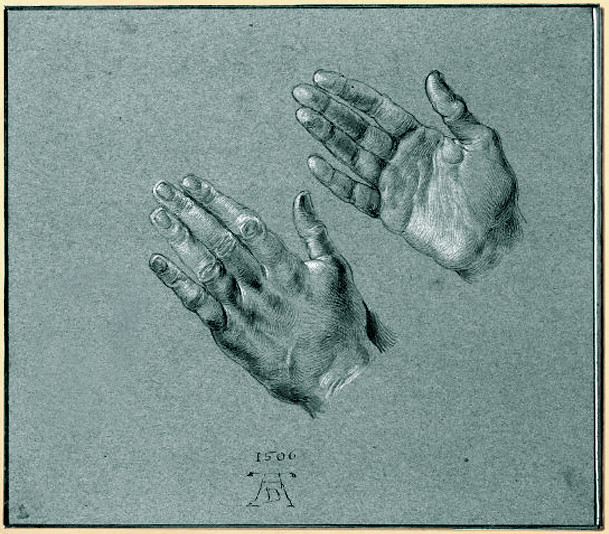
Art work: “Hands of Emperor Maximillian I,” Albrecht Durer, 1506

Honey and Other Things: Exploring Our Inner Selves

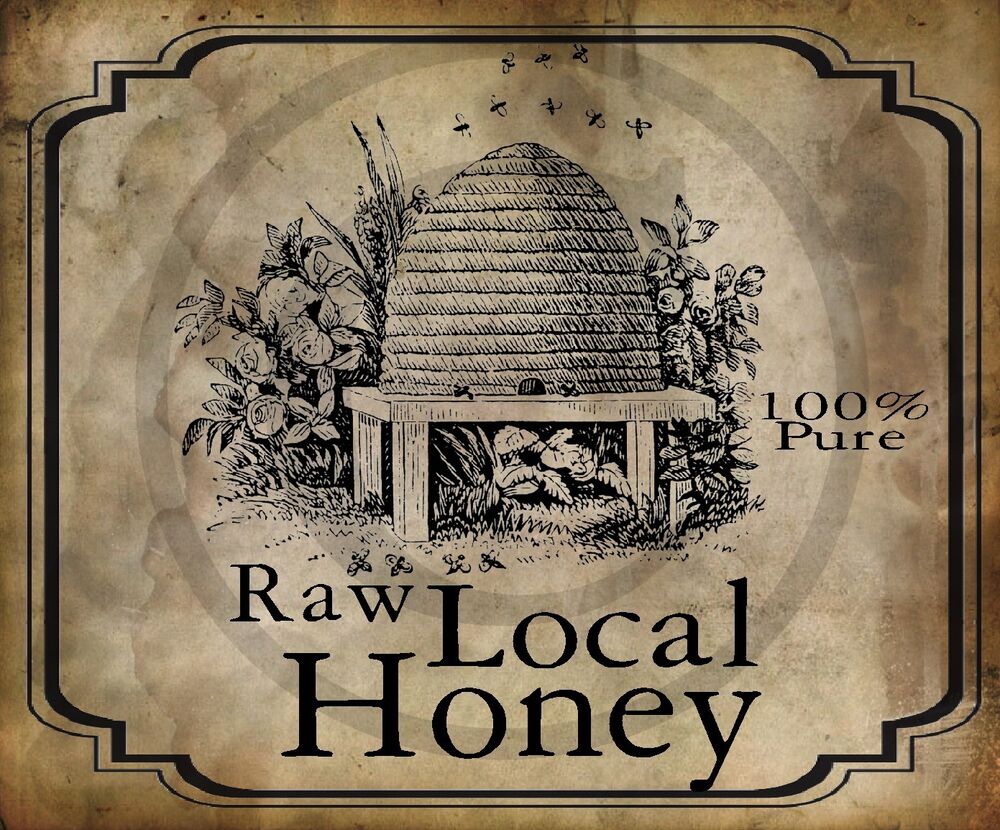
            Years ago, I heard a presentation by Tom Boyd, a philosophy professor from the University of Oklahoma. As a boy he spent summers with his grandfather on a ranch in Texas. One chore was to help harvest honey.   After collecting, they would filter it and pour it into jars, then apply a label, “Pure Honey.” 

            One time a particle had gotten past the filter.  Young Tom didn’t want to put it through the filter again. He told his grandfather they shouldn’t worry about it and sell it as is.

            “We can’t do that, Tom,” he said.  “Because then we’d have to make a new label: “Honey and Other Things.” 

            Tom said he never forgot that.

            Years ago, I was driving downtown on my way to volunteer at the local soup kitchen.  As I was driving, I remember a voice saying, “You know, going to serve the poor means you are a really good person. Other people will think that when they see you. It will add to your reputation.” 

            Another voice was shocked. “How self-centered can you get? That’s not why you’re doing it. You’re doing it because it’s the right thing to do. It’s not at all about showing off.”

            It was only me in the car, so I had to own both voices.

            The genuine voice within me I’m going to think of as the honey. And the self-centered voice will be “other things.”  

            There are endless ideas about how many “selves” or personas we have within us.  Philosophy, theology, and psychology have all explored this question.  I’m going to work with just these two.

            Honey can be the divine presence in us that goes by many names: soul, higher self, inner light, Self, divine spark, etc.  And “other things” can represent our less-than-lofty aspect: the ego, self-centeredness, etc.

            Until my early 20s, I don’t think I was aware of two voices within.  I went day by day reacting to the world as I encountered it.

            After a mystical, transformative experience, I realized how incredibly self-centered I’d been. It had been all about me, and I’d made a mess of my life. But my soul had woken up.  There was now a small drop of honey within, not of my creation. It was a divine gift, it was grace and it became a guiding light.

            As I began to explore Christian spirituality, I often heard the assumption that we must be relentlessly focused on our “sinful nature.”  “You are selfish through and through. You don’t deserve grace. You’ve got to beg for it every day,” was the idea.

            I tried to extinguish that selfishness; I wanted to be pure honey. But in time I realized it was futile.  I concluded my ego wasn’t bad…it was simply trying to protect me. 

            Sometime after that, I was on a long drive on the freeway (apparently a good place for epiphanies).  I visualized standing apart from my ego self.  It was alone and cringing, frightened at being exposed. I walked over, put my arm around it, and said, “Hey, I know you are trying to do the best for me.  I appreciate how hard you work.  But I don’t want you to be in control all the time; you’re a better servant than master. Let’s collaborate instead of compete.” My ego passively accepted my embrace.


            I believe selfishness is a product of our evolutionary past. We do many things to survive, protect ourselves, get what we need, etc.  The “other things” are our biological inheritance. But if we are on a spiritual journey, we’ve decided we don’t want to be stuck there. We want to find something more, a higher good for ourselves and others.

            When I was at Hospice, a group of us attended a 5-day training at the Metta Institute in Marin County on “Cultivating Presence.”  We practiced Zen meditation several times a day, discussed how to care for the dying and heard a variety of speakers.  One of them was Ram Dass, a popular figure from the 60s who had turned from drugs to an Eastern spiritual practice. I’d read some of his work and seen him in person once, but never felt a connection.  One afternoon at the retreat, we had a video linkup with Ram Dass from his home in Maui.  He was talking in general terms and responding to questions in a relaxed and light-hearted way. But at one point, he paused, looked very serious — almost like he was in a trance — and said to us, “You are not a collection of your thoughts. You are loving awareness.”  Then his face relaxed and he continued his talk.

            I’m not sure what was going on, but I honestly felt a pulse of energy at that moment. I have not forgotten that feeling or those words.  Maybe deep within, beyond all the “other things,” we are pure honey … pure loving awareness.

            I don’t know what young Tom and his grandfather saw in that jar…was it a twig? A piece of grass?  Whatever it was, it came from the same blessed earth as the honey. It wasn’t inherently bad. It was just out of place.

            I have been blessed to know some people who seem like they are “Pure Honey.”  But I think most of us are “Honey and Other Things.” And that’s ok. We can accept the “other things” as part of who we are.  We can keep a filter handy. And we can be grateful for any “honey” we find as we go on our way.