Some years ago, I invited my friend Rabbi Arthur Gross-Schaeffer to my congregation to offer an Israeli perspective on the complicated situation in the Middle East. The prior week we had hosted a spokesperson for the Palestinian perspective, and we wanted to hear “both sides.”
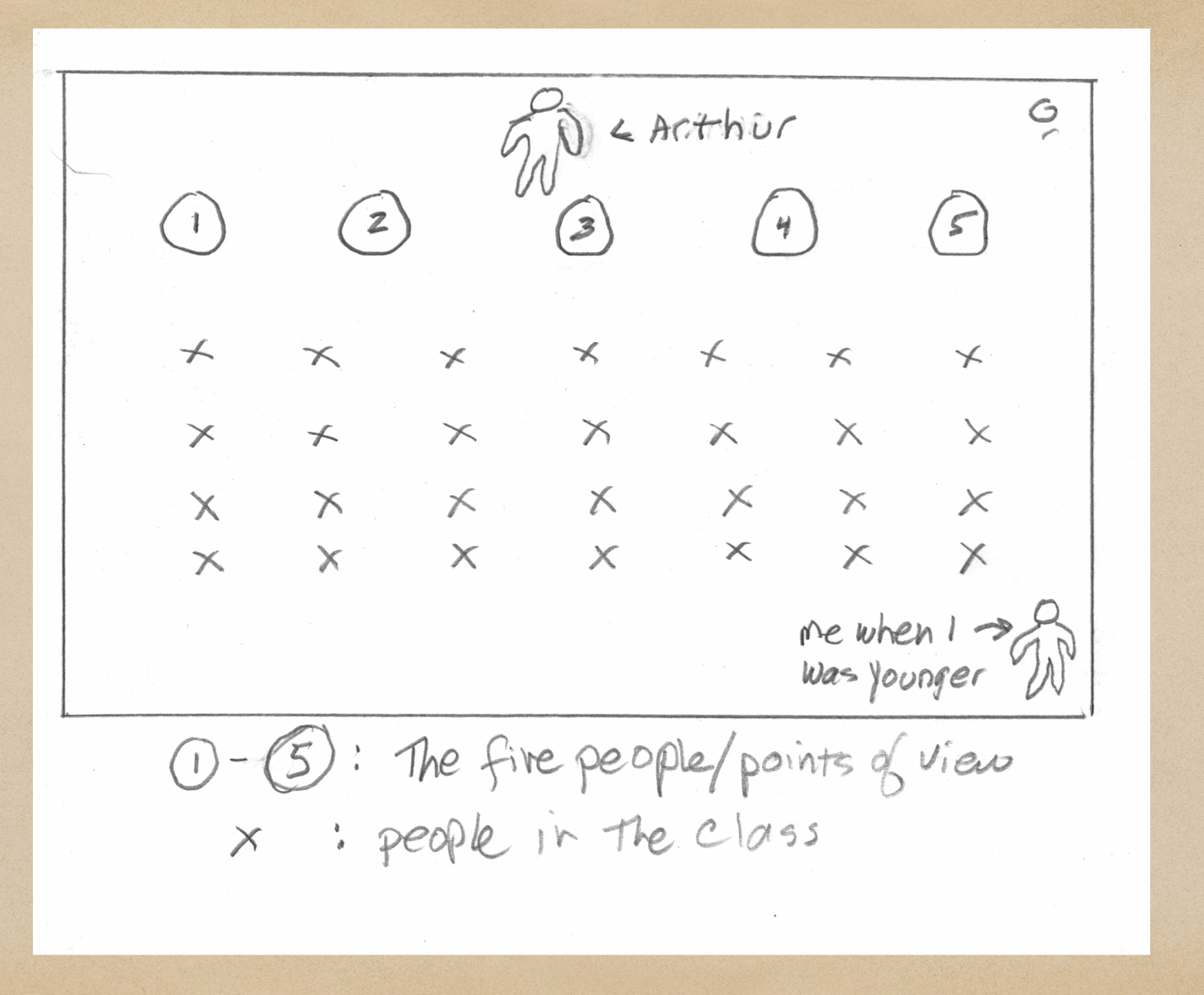
Arthur arrived and I introduced him. People were sitting in several rows, leaving an open space in front. He said he wanted to answer any questions anyone might have but would first tell us about five Israelis he knew personally.
He went from the center of the front of the room to the right side and stopped. He then told us about his first friend – what this man had experienced in his life, how he had come to Israel, and what his current situation was like. He then moved a few feet to his left, stood, and gave a summary of the life of a second friend. He moved to the center and introduced a third friend. He moved to the right several steps and introduced a fourth. Finally, he went to the left side of the room, stood, and told us about a fifth friend. He then went back to the center of the room.
Now that we knew a little about each of his five friends, he invited someone to ask the first question.
I don’t remember what that question was, but I remember what Arthur did. He went to the second spot he had established and told us how that friend would answer the question and why. Then he moved to the fifth position and gave a different answer, based on that friend’s perspective. Then he moved to the third spot and answered from there. He stepped back and invited the next question. For every question, he responded in the same way – standing in at least three of the five positions to tell us what that person would say and why.
As time went on, we could see the five points of view ranged from what we would call conservative on one end to liberal on the other. But there were nuances all along the spectrum. Occasionally he would add a word or two about his own point of view, but he never suggested his perspective was superior to anyone else’s.
The process went on until the hour was up. He thanked us for hosting him, and we thanked him for what he had given us.
One point he demonstrated was that for every question we might ask about what “Israelis” thought about the current crisis, there was not just one or even two points of view, but at least five. If someone later asked us what “the Israeli position” is, we would say, “It’s complicated.”
A second point: for many spiritual and political issues, everyone’s opinion emerges from their life experience. We come to appreciate that when we take time to listen to their stories.
So often we are expected to divide people into two groups, then choose which one we belong to and support. That is a convenient way to navigate information. And there are times when we must choose between two options, like voting in an election. But it’s helpful to remember that real people are more complex than the simple categories we create.
Over my career working with different congregations, I have tried to practice what Rabbi Arthur demonstrated. There are more than one or two ways to view an issue, and each person’s opinion arises out of their personal history and present concerns. Even if I don’t personally agree with someone, I can try to understand why they see the world as they do. Over time I have come to respect those differences. And when I make it clear what my perspective and commitments are, people I’ve listened to might listen more respectfully to me.
What is true in congregations is true in a democracy.
The founders of our country were wary of any government that wanted to impose ideological uniformity on its people. Instead, they created a system that would expect a variety of opinions and a form of government that could take those into account in constructive ways.
Of course, there are times when any organization or country needs to find a sense of unity to pursue a noble vision or defend itself against a threat. But the greatest leaders do that by creating a vision that respects everyone. They listen carefully to multiple viewpoints before setting a course. In the process they earn our respect and fulfill our founders’ vision.
I will always be grateful for what Rabbi Arthur demonstrated that day.
Lead Image: “The Class Set Up That Day,’ original artwork by author using #2 Ticonderoga pencil; in private collection.

