It’s Ok to Re-Vise Your Life Story (You’re Not Testifying in Court)

              We live life within the stories we create about ourselves.  But, unlike testimony we give in a court of law, we can change our stories if we choose.

              In a writing workshop, Marilyn McEntyre encouraged us to revise our life stories as often as needed.  She points out that the original meaning of “re-vise” is to “look at again, visit again, look back on.” [i]  She encourages anyone (including the people with serious illnesses whom she works with), to not get stuck in our old narratives. You are the author of your life, she says. Events beyond your control may impact you, but you’re free to decide how you will respond, what role you will play, and who you become.

              Thinking about this reminds me of similar insights I’ve heard over the years.

In a blog post two years ago, I shared a comment attributed to Jonas Salk, the creator of the polio vaccine.  When asked what had enabled him to become a successful experimental scientist, he credited his parents.  If he would spill milk in the kitchen, Salk said, they would not get angry with him. Instead, they’d ask, “What did you learn from that?”  This perspective guided Salk in his scientific career, encouraging him to not be afraid to try things.  If we make a mistake, we can re-visit the experience, see what we can learn from it, and decide what to do differently next time.

I have also shared a comment Parker Palmer made about the term “disillusionment.”  When we say we have become disillusioned, we often say it with a sense of sorrow or defeat.  But, he said, think of what the word means: to be dis-illusioned means we realize we had an illusion and it’s been “dissed.”  Instead of feeling discouraged, imagine we’ve been liberated from mistaken assumptions, open to a clearer sense of the truth. 

Looking back on my life, there have been times when I have trusted some people too soon and too much.  When I eventually recognized it, I felt frustration for having been naïve.  But I can “re-visit” the experience and accept I was the one who created the “illusion” of what to expect.  I can be grateful my illusion has been dissed, and plan to be more careful next time.  (I’m still working on this.)

I remember a hospice study in which a medical team examined why some people die in misery and others — with the same illness — die with a sense of peace. One of the factors they identified was “Experience of a sympathetic, nonadversarial connection to the disease process.”[ii]  I can see cancer as a dark, malignant force that is attacking me as a personal aggressive act; if it “wins,” I have not only lost my health but been humiliated and defeated.  But I can see it from a different perspective: cancer is a common occurrence with living beings and there’s nothing personal about it. I will still do all I can to send it into remission, but cancer doesn’t define who I am as a person, nor will it ever be able to harm my spiritual essence which will survive death.  It’s not easy to navigate this process, but I have seen people “re-vise” their understanding of life and illness and find a sense of peace.  A new perspective is powerful medicine.

A common teaching in the spiritual traditions is to be honest about our short-comings and mistakes, but not be bound by them.  Instead, we accept the grace, compassion and forgiveness that comes from a source beyond our egos while remaining thoughtful about our own behavior. Re-vising our life stories does not mean we are avoiding or denying the facts of what happened; instead, we are finding a fresh perspective that can empower rather than diminish us.


[i] https://www.etymonline.com/word/revise

[ii] “Healing Connections: On Moving from Suffering to a Sense of Well-Being,” Balfour Mount, MD,Patricia Boston, PhD, and S. Robin Cohen, PhD; Journal of Pain and Symptom Management, April 2007 (Other factors named in the study: “Sense of connection to Self, others, phenomenal world, ultimate meaning; Sense of meaning in context of suffering; Capacity to find peace in present moment; Ability to choose attitude to adversity; open to potential in the moment greater than need for control)

Marilyn’s publications and workshops, including her work with people dealing with illnesses, can be found at MarilynMcEntyre.

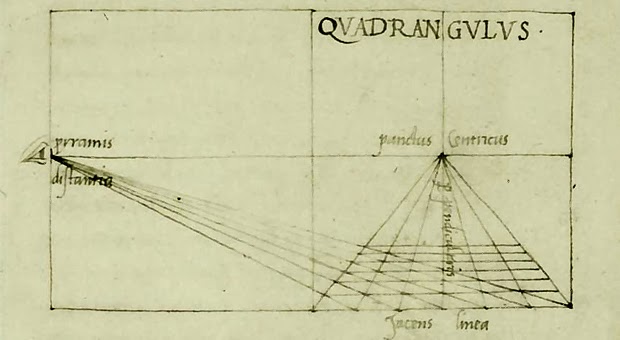
Lead Image: “A Lady Writing,” Vermeer, 1665, National Gallery of Art; lower image: “Quadrangulus,” Milra Artist Tools, LLC

Is “Follow Your Dreams” Bad Advice?

              In a season when many young people are hearing commencement speeches, I was intrigued by a recent column: “’Follow Your Dreams’ and Other Terrible Career Advice.”

              The writer is Bonnie Hammer, an executive at NBC Universal.  She begins by acknowledging that many young people find work is not as rewarding as they had expected.  Here are some excerpts:

Having worked in most facets of the entertainment industry since 1974, from a bottom-rung production assistant to the top of NBCUniversal’s headquarters at 30 Rock, I agree that the problems in today’s workplace are real. But I also think many management experts have identified the wrong problem. The real problem is that too many of us, young and not so young, have been told too many lies about what it takes to succeed at work—and not nearly enough truths. All those bright, shiny aphorisms that are spoon-fed to young employees, like “follow your dreams” and “know your worth” and many more? Well, the truth is that they don’t really work at work…

“Follow your dreams” is the exhortation of many college commencement speeches, but it is nightmare job advice. Americans are already raised on a diet high in dreams, from fairy tales to superheroes…

The larger truth is that professional dreams can be incredibly limiting, particularly at the start of our work lives. When we enter the workplace convinced that we already know what we want to do in a specific field and are committed to it at all costs, we’re saying, in essence, that there is very little left for us to learn, discover or be curious about. That nothing else could make us happy or fulfilled…

…I learned my “workplace worth” fresh out of graduate school when I was hired as a production assistant on a kids’ TV show in Boston. Each PA was assigned a cast member, and as the most junior employee, my cast member was Winston, an English sheepdog. My primary responsibility was to follow him around the set carrying a pooper scooper. I had two university degrees. Winston, on the other hand, was a true nepo-baby, the precious, unhouse-trained pet of one of the show’s producers. Plus, as an on-camera star, Winston out-earned me…

…But while many days I felt like working for Winston was beneath me, I never showed it. I acted like I was pursuing an honors degree in pet sitting, and each poop pickup was an extra-credit opportunity. The work and the attitude paid off. When an associate producer position opened, I was promoted. I pursued a similar strategy for much of my early career: If I wanted to be a valuable asset to my colleagues and bosses, I knew I needed to add concrete value to their days by showing up, staying late and doing whatever needed to be done. So maybe we need to set aside the current myth that remaking the workplace will somehow unleash a wave of professional success. Instead, it might be time for a healthy dose of truth. For young employees who want to feel “engaged” at work, the truth is, you need to engage with your work first. On the job, our worth is determined not by how we feel but by what we do. 

… Looking back, I was only able to work my way up to the top because I started at the very, very bottom. Not only did this starting point allow me the opportunity to really understand the TV and entertainment world, but I also had real empathy and appreciation for the people now doing the work I once did.[i]

              I think of the many times someone receives an Oscar, or wins a sports championship, or has become successful in the arts or business, and they say something like, “This is my dream come true! For all you out there with a dream, don’t give up!” That passionate plea may motivate others to achieve “greatness.” But for most of us, despite hard work and discipline, we may never “succeed” like we thought we would when we were younger.

I dreamed I was going to play shortstop for the Dodgers. Then I dreamed I would be a millionaire lawyer in San Francisco. Then I dreamed with just a little effort I could speak four languages.  I had some dreams.  But I didn’t know how much hard work, focus, stamina, and good luck it can take to realize lofty dreams.  It was a big disappointment.

But along the way, I discovered that I could still enjoy sports without being a star.  I could enjoy being in a city without being a millionaire.  I could have empathy for someone from another country struggling to speak English. I experienced many blessings that I could not have dreamed of when I was young.

Life has a way of showing us our limitations.  It also can teach us that “it’s not about me.”  We can find a kinship working with and serving people who aren’t superstars.  Our youthful dreams may disappear, but we may find we can appreciate life without being in the spotlight.

Ms. Hammer says she has “reached the top.”  I have met some people who have “made it to the top” and been able to keep their humanity and integrity.  I know others who have been consumed by work and dreams of success and are blind to other sources of meaning and purpose.  “What does it profit a person to gain the whole world and lose their soul?”[ii]

Dreams about who we can become and what we might accomplish can serve an important purpose: they can motivate us to see what we are capable of.  But if it doesn’t work out as we had hoped, it doesn’t have to be the end of the world. It may be the beginning of finding something more lasting and rewarding: a deeper connection to the human family and purposes larger than ourselves.

(Note to readers: Some of you have told me you’ve tried to make comments but had issues with the website.  You can always email me directly at steve@drjsb.com)


[i] ‘Follow Your Dreams’ and Other Terrible Career Advice  (WSJ, May 4, 2024)

[ii] Mark 8:36

In Praise Of Gracie, My Red Wiggler Compost Worm

                  This is my friend Gracie. She is a red wiggler worm that lives in our compost bin. She’s a hard worker and important part of our household.  Recently I’ve been telling her what she does is a rich metaphor for the spiritual power of grace.  I asked her if I could tell you her story. She agreed but wants you to know that all the spiritual talk is not her idea, but stuff I’ve made up.

                  Her story begins seventeen years ago when I decided to explore organic gardening. I read articles and attended classes. I planted a variety of heirloom tomatoes.  I experimented with lettuces, beans and peas.  And I created my first worm composting bin.  I don’t do much gardening anymore, but I’ve stuck with the worms.

                  Let me tell you why Gracie and her clan are so amazing:

  • Unlike other pets, you start with one batch (donated by a friend or purchased at a nursery), and you never have to get new ones; they just keep reproducing.
  • You never have to take them to the vet or pay for vaccinations or neutering.
  • They work around the clock in total silence – no barking.
  • They don’t scratch on your door to get out or damage your furniture.
  • They don’t poop on your lawn.
  • You never have to take them to a groomer.
  • You can leave them at home when you go on vacation – no need to hire a Worm-sitter.
  • You never have to buy food for them. They survive on scraps and garbage. Here’s a sample of what I give them: coffee grounds, coffee filters, stale bread, expired tortillas, broccoli stems, banana peels, apple cores, asparagus ends, abandoned quesadillas, moldy cheese, watermelon that has exceeded its firm stage of life, and used paper towels.
  • While Gracie’s clan does much of their work on their own, they do need to be fed and lightly watered occasionally to keep making compost and new worms.  And they don’t like food that’s too acidic.
  • You’ve heard the phrase from computer people, “Garbage in, garbage out?” Not so with compost worms.  They take what you give them and turn it into what organic gardeners call “black gold” – a pure, dark organic compost that is full of all kinds of nutrients for plants.  You can let the material dry and spread it. Or you can shovel it into a bucket and fill it with water and let it soak; in a day or two, you have “worm tea” that can be sprayed or poured around the base of your flowers, vegetables and fruit trees.  Gracie and her gang have their own motto: “Garbage In, Gold Out.”
  • The #1 most amazing thing to me is that if any of material they are given contains organic toxins or harmful bacteria, the compost they create is free of any undesirable elements.  They’re not afraid of anything.  “Give that stuff to me,” Gracie says, “I’ll take all the bad stuff out and give it all a second chance to be something worthwhile in the world.”

Here’s a photo of Gracie’s Clan at work:

                  Now we can turn to the spiritual meaning of composting worms.

                  When I talk about grace here, I’m thinking of the divine spiritual force known as agape, which transcends all our pettiness; it simultaneously humbles us and fills us with a quiet joy.  I’m also thinking of the Buddhist concept of deep compassion, which can help us see, accept and deal with whatever comes our way. 

                  The way spiritual grace works is that it can take all the stuff of your life – the good decisions and the bad, the traits you like about yourself and those you don’t, your victories and defeats – and turn it all into something useful and positive.

  • Once you first experience it – once you realize you’re forgiven for your mistakes, that you are loved despite your imperfections, and that you’re always being drawn forward into your future and not chained to your past – you find a kind of inner freedom that you didn’t know was possible. 
  • You don’t have to pay for it. It’s free.
  • If you keep turning to it and trusting, it will work silently within you whether you are awake or are sleep.
  • It will never leave you…it’s with you forever.
  • You may forget it’s there, but it will never forget you.
  • It doesn’t make messes – it cleans them up.
  • It can do most of its work on its own.  But it does become stronger when we engage in certain activities, like long walks in nature, taking time for music and art, quiet time in meditation and contemplation, conversations about life with trusted and caring friends, participating in uplifting worship services, and actively serving others.
  • When given a chance, the right conditions, and enough time, it can take really bad stuff and take the poison out; “Garbage In, Grace Out.”

There is a legend that St. Francis offered sermons to the birds, and they listened attentively. I tell Gracie all the ways in which I think she symbolizes grace, but I don’t think she’s listening. She’s too busy making all things new.

Gracie’s House (she’s been working at home long before COVID and Zoom)

For a more detailed explanation of what Gracie’s Clan is about, go to https://en.wikipedia.org/wiki/Vermicompost

Ladder Marks

“… I can set a little altar, in the world or in my heart. I can stop what I am doing long enough to see where I am, who I am there with, and how awesome the place is. I can flag one more gate to heaven—one more patch of ordinary earth with ladder marks on it—where the divine traffic is heavy when I notice it and even when I do not. I can see it for once, instead of walking right past it, maybe even setting a stone or saying a blessing before I move on to wherever I am due next.” 

Barbara Brown Taylor, commenting on Jacob’s dream in which he sees a ladder reaching into heaven[i]

Prologue

I was leading a Bible study in the 1980s.   The topic of heaven came up.  An older woman who rarely spoke raised her hand.  I acknowledged her. 

“You know, I’m mad at those astronauts,” she said. 

 “Why?” I asked.    

“Because they went all the way up there and they didn’t find heaven.  Now I don’t know where it went.”

First Mark

I once led an introductory session for a newly formed leadership group in my congregation. I invited them to share a significant experience in their spiritual journeys.  After a time of silence, one woman said she had been very close to her father. When he died, she flew back to Michigan for the memorial service. She was told she could visit the mortuary to view his body if she wished. She wasn’t sure how she’d feel but decided to go.  She went into the viewing room and saw his body lying on the table.  As she looked at his face, she had a clear sense that “he” was not there; she was viewing his body which he’d left behind.  Yet she felt his presence.

Second Mark

Midway through my ministry, I began to periodically lead services that included a time for personal prayer and reflection.  After a brief sermon, I told everyone we were entering a time when they had some options.  They could stay seated and listen to the music we had chosen.  They could use the time for private contemplation.  Or they could go to one of three prayer stations we had set up on the sides and back of the sanctuary.  At each station was a kneeling bench and someone who could pray for them.  I made it clear this was not an “altar call,” and they should do whatever they felt called to do.  If they chose to go to one of the stations, they could tell the person who would be praying for them whatever was on their heart –a concern for themselves or for someone else, or a desire to express gratitude for something in their life.  The music began and I walked to my station. I was surprised at how many people chose to come for prayer.  I remember one woman in her eighties; I knew she had survived cancer and the loss of her husband some years before. As she came closer, she was looking at me and smiling as tears ran down her cheeks.  When she drew close to the bench to kneel, I asked her if she had a request.  “I am just so thankful for my life,” she said. 

When this part of the service concluded, we sang a hymn and dispersed.

In my career I often come home from a service with plenty of adrenalin still flowing.  But on these Sundays, I came home feeling calm.  I hadn’t felt responsible for people’s experiences.  My role had been to simply be present with them as they opened their hearts to God.

Third Mark

I once attended a two-day retreat for end-of-life practitioners at La Casa de Maria Retreat Center. In one segment, the leader asked us to each find a comfortable place in the chapel where we could lie on our backs for a guided meditation.  When we were all comfortable with our eyes closed, he invited us to choose a person from our childhood who seemed to embody wisdom.  I was a bit surprised to “see” my paternal grandmother who had died when I was eight years old. I had just a few memories of her.  I remember she had a garden with snapdragons. I remember she often had Angel Food cake on the center of the dining room table.  And I remember she always listened to me with genuine interest.

I became absorbed in my vision and was no longer listening to the facilitator.  I saw my grandmother working in her garden.  My eight-year-old self came beside her, kneeled, and began to help.  Soon she became weary and needed to go inside.  In the next moment, I was still kneeling beside her, but now in my adult form.  I carefully put my arms under her, lifter her up, and carried her inside; she felt frail and light.  I took her into her bedroom and gently placed her in her bed. I then drew a chair by the bedside and sat quietly beside her. 

I can flag one more gate to heaven—one more patch of ordinary earth with ladder marks on it—where the divine traffic is heavy when I notice it and even when I do not.


[i] Barbara Brown Taylor, “Waking Up to God,” Center for Action and Contemplation, March 21, 2024, https://cac.org/daily-meditations/waking-up-to-god/

Image: “Ladder in the Forest,” Alex Zorychta

Can Anyone Come Out and Play?

It took me a minute to get the point of this recent New Yorker cover:

…eventually, I figured it out: the cat is immersed in chasing the animated mice in the video game on the tablet.  In the background, real mice are having a party.  “When the cat’s away, the mice will play.”  The cat’s body is not “away” – it’s in the same physical space as the mice — but its attention is not there; it’s captivated by the screen.

                  Everywhere we turn, people’s attention is on their screens instead of their immediate surroundings.  Brilliantly designed digital clickbait has become our culture’s catnip. 

                  My thoughts turn to one of my favorite paintings, “Children’s Games” (Brueghel, 1560):

                  As I noted in a post three years ago,[i] there are 80 different games portrayed here: playing with dolls, shooting water guns, wearing masks, climbing a fence, doing a handstand, Blind Man’s Bluff, making soap bubbles, walking on stilts, riding a hobby horse made from a stick, playing with balloons (before latex, made from a pig’s bladder), catching insects, climbing a tree, and 68 others.  This was almost 500 years ago — before electricity, the microchip, Big Tech, and AI.  Kids left alone and unplugged find things and create. 

                  A current bestseller is The Anxious Generation by Jonathan Haidt. Haidt shows how the advent of the digital age has led to increasing isolation among teenagers, which in turn has contributed to a rise in depression and suicide.  He notes that many of the tech innovators in Silicon Valley restrict their own children’s screentime, then lead business ventures that will profit from making screens even more addictive.  Haidt encourages families and schools to restrict screentime and instead let kids be on their own more often to find out how real life works.  He founded “Let Grow,” an organization creating resources for families and schools to nurture kids’ character and self-reliance.

                  Two afternoons a week we care for our grandsons, ages 6 and 8.  They come to our house after school and have a snack.  We let them watch 20 minutes of a favorite show (currently a guide to building more complex “Minecraft” structures on their tablets).  Then we turn the television off and discuss what’s next: board games, crafts, gardening, or some sport.   

                  Recently my wife had to take the 8-year-old to an early baseball practice, so I had 45 minutes with the 6-year-old.  We went out into the backyard to hit whiffle balls.  We used to have ten plastic balls, but as the boys have gotten stronger, their hitting prowess has led to nine being lost over the fence and elsewhere.  We started playing with the last one, the old savvy veteran pitching tossing to the promising rookie.  Soon the ball disappeared over the neighbor’s fence. But I found a partially cracked plastic golf ball buried in the bushes.  I asked if he wanted to see if he could hit it. He liked the challenge and got some great whacks. In the process, the crack expanded.  We were sure one more solid hit would split it in two. But the time came for me to take him home. Last seen, the little broken ball had fled into the bushes to survive for another day.

                  We had just spent 20 minutes playing with a whiffle bat and a broken plastic golf ball.  What we did was not planned or packaged.  It was improvised.  It was fun.  It was physical and mental.  Our bodies, attention, and minds were all present in real time, interacting with each other and the surrounding environment.

                  Tech marches on.  I look forward to the good things that may come our way (maybe from future engineers who became masters at Minecraft).  But I worry every day about where AI is going to take our attention.  We think we are smart, but tech is getting smarter.  I am a constant advocate for putting limits on tech.  This week I signed up with “Let Grow” to follow what they are doing. I want to see more kids hitting balls with sticks.

(The bashed-up plastic golf ball may be hiding in this plant.)


[i] The previous post in which I featured Brueghel’s painting is at https://wordpress.com/post/drjsb.com/376

For a more detailed study of “Children’s Games,” go to https://en.wikipedia.org/wiki/Children%27s_Games_(Bruegel)

Is Life Meant to Rival Paradise? Or Be a Vale of Soul-Making?

“The purpose of life is not to rival paradise but to be a vale of soul-making.”

Global religion scholar Huston Smith

 I wrote these words in my journal over a decade ago while on retreat with Huston Smith. At the time, I wasn’t certain what this quote meant.  I decided to explore it this week.

“The purpose of life is not to rival paradise…” 

I thought about the earliest years of my spiritual journey.  After a transformative mystical experience in my early twenties, I saw the world as something more than just physical matter — it was infused with divine presence. I found a spiritual community where people were truly caring for each other and seeking to align themselves with a higher purpose.  I discovered sacred texts that can possess the power to reveal hidden thoughts and fascinating possibilities.  I learned hymns and songs that filled me with joy. I went off to seminary keeping much of this early enthusiasm. Three years later I was ordained and began serving congregations.  It felt like the world had become a “paradise.” 

As my life and work unfolded, I encountered events that challenged this belief: a mother, standing on the porch of the family’s vacation cabin, watched the private plane carrying her husband and two teenage children crash and burn; a young mom was on her way to work at the local hospital when a semi-truck crossed over the center divider and killed her instantly; parents struggling every day with adult children living with mental illnesses or addiction issues.  Life was no longer a “rival to paradise.” 

“The purpose of life is not to rival paradise but to be a vale of soul-making.”

Since I first heard these words rather than saw them, I wondered if he meant “veil,” like a fabric that partially hides something. But this week, I realized he meant “vale” rather than “veil:”

Vale: river-land between two ranges of hills, early 14c., from Old French val “valley, vale” (12c.), from Latin vallem…”valley”… Now “little used except in poetry” [Century Dictionary]. 

So “vale of soul-making” means a “valley of soul-making.”

If you are making your way through a “vale” or valley, your path is bounded on both sides by mountains or hills. If the land formations are steep, you can’t go up or around…you must find a path through, bound by those limits. It’s hard, patient work.

How is navigating life like traveling through a “vale (or valley) of soul-making?”

There is a sense in which our “soul” can evolve as we go through life.  We see the suffering of others, and instead of turning away, we grow in empathy.  We discover there are situations we cannot fix, but that doesn’t mean we can’t care for the people involved.  There is more ambiguity in life, less black-and-white.

As a pastor, I was sometimes asked, “Who are your favorite theologians?”  In my early years, I would cite scholars who seemed to have everything figured out – as if they held maps to paradise.  But in time I found myself offering a different answer; I would say “Rembrandt, Bach, Wendell Berry, and the older people I’ve known in my congregations.” 

Rembrandt chose to paint portraits not of flawlessly attractive people (the kind displayed these days in fashion shows, on red carpets, and at Met Galas).  He preferred ordinary people in whom he recognized a quiet integrity deep within; they had a beauty that transcended age, social status, and physical appearance. 

“Johann Sebastian Bach lost both of his parents when he was nine and watched ten of his children die young. He was, in other words, well acquainted with death, and may have been uncommonly sensitive to the emotional chaos that it engenders. …Bach possessed a “consciousness of catastrophe”—a feeling for the suddenness and arbitrariness with which suffering descends on unsuspecting souls.”[i] But he took his grief and somehow transformed it into hundreds of pieces of music that miraculously express both the pain of shattered hearts and the joy of sacred knowing. 

Wendell Berry left a high-status academic position in New York to return to his family farm in Kentucky.  In his novels, poems, and essays, he brings to light the endless miracles hidden in the earth and the rugged dignity of people who work the land and revere it. 

And the many older people in my congregations.  As I got to know them, I gained great respect for all they had gone through — wars and hard times, hardships and heartaches, sacrifices and disappointments.  They had given up on naïve illusions or easy answers.  They didn’t have life figured out. Yet they seemed always ready to serve and care for others.  These people spent decades finding their way through the “vale of soul-making,” their own possibilities bounded by the steep terrain they traveled through.  But they endured. In the process, their souls somehow expanded to silently embrace life with all its tragedies and moments of wonder – moments that can feel like glimpses of paradise.

“Jacob Blessing the Sons of Joseph,” Rembrandt, 1656


[i] “The Book of Bach,” Alex Ross, The New Yorker, April 4, 2011

Letting Your Soul Catch Up With You

                  Perhaps many of you know this story, but I only heard it recently.  Here is one version:

Westerners traveling in a foreign country hired indigenous people as porters to help carry supplies. The porters went at a slower pace than the Westerners desired, so after the first two days, they pushed them to go faster. On day three of the trek, the group went twice as far as day two. Around the campfire that evening, the Westerners congratulated themselves for their leadership abilities. But on day four, the workers would not budge.

“What’s wrong?” asked the Westerner.

“We cannot go any further today,” replied the lead porter.

“Why not? Everyone appears well.”

“Yes,” he said, “but we went so quickly yesterday that we must wait here for our souls to catch up with us.”

An easy place to begin is to affirm how busy we are and our need to slow down.  We’ve heard that many times. What makes this story memorable is the spokesman’s reply.

Huston Smith said the difference between our soul and our ego is that our ego always feels a need to control our life, while our soul wants to experience it, whatever comes.

What happens when we slow down and let our soul catch up? Sometimes we become aware of an underlying sadness we’ve been evading.  As Psalm 42 says, Why are you cast down, O my soul?And why are you disquieted within me? (Ps 42:5) The writer then recounts memories of when his life and faith seemed well-aligned and the hope that he will experience that sense of wholeness again.  But the first step to a satisfied soul is to acknowledge when it is “disquieted.”

This goes against our culture’s relentless expectation to be “happy.” But who can be “happy” all the time? Sometimes we have experienced hardship, loss, and disappointment.

I once collaborated with an academic colleague who was a psychology professor.  She had grown up in Ukraine during the Soviet era.  The government was always pressuring people to feel optimistic, despite what they were enduring and the official falsehoods that surrounded them. She grew to resent that pressure.  After coming to America, she was annoyed with popular schools of thought that encourage us to be happy all the time.  Sometimes we feel “cast down” and our soul is “disquieted.” We do well to let our soul reveal what we need to know.

On the other hand, there are times when we take time to let our soul catch up and we find a fresh awareness of blessings we’ve been too busy to acknowledge. Rabbi Harold Kushner wrote a book on Psalm 23. About the phrase “…surely goodness and mercy shall follow me all the days of my life…,” he asked why the writer says goodness and mercy shall “follow” us? Because, he said, we are often so busy that we have run out ahead of them. When we take time to let our soul catch up, goodness and mercy can finally find us and climb into our lap. 

A few days ago, I realized I did not know where I’d left my iPhone. After looking in the obvious places, I took my iPad and brought up the “Find My” app.  From the menu, I touched the “Steve’s iPhone.” I then heard the phone chiming.  It turned out it was ten feet away — in the same room as me— but in a place I had never put it before.  I wondered if there could be a “Find My Soul” app that would alert us when we are spiritually lost.  What tone would capture our attention?

I was in Vienna in 2020.  Ubers and taxis were available to get around town, as was the subway system.  But there was also an old-fashioned electric streetcar system.  You’d often see the trams patiently making their way around the city in a large circle known as the Ringstrasse.  A city guide told me that Viennese often prefer to use the streetcars even though it’s not as fast as the other options; she said it helps them slow down between destinations.

In Zen and the Art of Motorcycle Maintenance, the author and his friend are riding their motorcycles cross country.  At one point he thinks about the term “making good time.” When we say, “You made good time!” we usually mean “You made the trip about as fast as possible!” But when we rush somewhere to make “good time” we often arrive stressed out, tired, and oblivious to where we’ve been.  Instead of opting for freeways and interstates, he preferred taking country roads and older two-lane highways. That way he could appreciate unexpected vistas and new experiences along the way. That kind of traveling may take more time, but one can enjoy the time while you’re doing it.  For Pirsig, this was “making good time.”

“Making good time” means you haven’t left your soul behind in the pursuit of speed and efficiency.  Your soul has a chance to be present with you as you travel. And maybe goodness and mercy will join you instead of being left in the dust.

Beethoven and the Barking Dog

                  A parishioner once posed this question to me: “I like the idea of loving my neighbor.  But my neighbor has a dog that barks all night and the owner refuses to do anything about it.  How am I supposed to love him?”

                  I don’t remember if I had a wise answer.  But the poet Billy Collins does:

Another Reason I Don’t Keep a Gun in the House

The neighbors’ dog will not stop barking.

He is barking the same high, rhythmic bark

that he barks every time they leave the house.

They must switch him on on their way out.

The neighbors’ dog will not stop barking.

I close all the windows in the house

and put on a Beethoven symphony full blast

but I can still hear him muffled under the music,

barking, barking, barking,

and now I can see him sitting in the orchestra,

his head raised confidently as if Beethoven

had included a part for barking dog.

When the record finally ends he is still barking,

sitting there in the oboe section barking,

his eyes fixed on the conductor who is

entreating him with his baton

while the other musicians listen in respectful

silence to the famous barking dog solo,

that endless coda that first established

Beethoven as an innovative genius.

Random notes of absolutely no spiritual value:

  1. Beethoven was deaf at the end of his life, so he wouldn’t be bothered by a barking dog.
  2. When I was in Vienna in 2020, I discovered that Beethoven lived in more than 60 places in the city.  He left some places to avoid paying rent, and others because he played the piano too loudly.
  3. Leopold Mozart, Wolfgang’s father, wrote a “Hunting Symphony” that includes barking dogs in the third movement. Last year, the Danish Symphony performed it with three dogs who barked on cue.  Here’s a video: The Hunting Symphony

Parts Wear Out

                  A good friend of mine shared words of wisdom he often heard from his father, a cardiologist. When patients would wonder why their heart needed work, he’d simply say, “Miles on the vehicle.”  And I’ve heard a similar response at the office of an orthopedist, “Parts wear out.”

                  We know this is true with cars.  With our Honda CRV, we faithfully follow the service schedule, and often it needs nothing more than an oil change and lube.  But there are times of “major service” when key parts need to be carefully inspected and possibly replaced. Our mechanic says if we stick to the maintenance schedule, the car can easily reach 200,000 miles and beyond.

The same is true for furnace filters, water filtration systems, and roofs.  We want them to last as long as possible but know they will eventually need to be replaced.

What’s true in the realm of mechanics is true of our bodies.

                  One of the joys of childhood was losing baby teeth.  That meant you were getting older.  It also meant you could exchange a worn-out part for some hard currency by depositing the tooth under your pillow.  (This may be the last time we will show a profit from having parts replaced.)

                  Life goes on … parts wear out.

For several years, I had pain in my right arm that increased over time. I went through the usual exams and X-rays, and eventually an MRI.  I met with a surgeon.  He recited a list of what was causing my problem: bone fragments, torn tendons, arthritis, etc.  I was surprised at how much wear and tear there was under the surface.  But I also thought, “It’s pretty amazing all these moving parts have been functioning without complaint day after day for 70 years.”  We scheduled the surgery. He made the repairs.  I wore a sling for a month and went through the usual physical therapy. Now I’m pain-free. I can pick up our granddaughter with ease.  Parts were wearing out, and I’m grateful for the repairs.

                  In the meantime, what of our spirit?  Does our spirit wear out like our bodies?

One theory is that our inner awareness dies with our body.  That may be the case.

Many spiritual traditions assume that the awareness that dwells within us does not die when the body dies.  Neither does it wear out.  It’s not a part we ever replace. 

                  St. Paul was not only a scholar but also practiced an important trade in the first century: tentmaking. Roman armies required canvas tents, and all the ships that sailed the Mediterranean used canvas sails.  Paul earned his income making and repairing them.  As he cut and sewed, he must have had plenty of time to think about what wears out and what endures.  In one of his letters, he wrote:

16 So we do not lose heart. Even though our outer nature is wasting away, our inner nature is being renewed day by day. 17 For our slight, momentary affliction is producing for us an eternal weight of glory beyond all measure, 18 because we look not at what can be seen but at what cannot be seen, for what can be seen is temporary, but what cannot be seen is eternal.  For we know that, if the earthly tent we live in is destroyed, we have a building from God, a house not made with hands, eternal in the heavens…The one who has prepared us for this very thing is God, who has given us the Spirit as a down payment.

I’m not quite sure if there are heavenly houses for us out there somewhere.  But I get the point: we live in our “tents,” but are not limited by them.  Our true essence is this mysterious presence we call spirit or soul which is not subject to the same wear and tear as our bodies.

                  Native cultures assume that the spirit outlasts our “parts” and is fundamentally connected to our ancestors.  In some schools of Buddhism, the practice of meditation can lead us into the limitless field of “open awareness” that is untouched by death.  This field can absorb all our fears and pain and give us a sense of profound peace. 

As I think about these teachings, I think of the concept of “agape,” a divine love that underlies all life.  Our everyday emotional “loves” may ebb and flow, but “agape” is timeless.  We do not create it or possess it; we access it through an open heart and mind and can experience a “peace that passes understanding.”

I bought a Prius in 2008.  Five years later I used it as a trade-in for the CRV.  When it was time to drop it off, I took all my personal possessions out and drove it to the dealer.  We finished the paperwork, and I handed the salesman the keys. I started to walk away, then paused and looked back.  I thought of how much life I had lived in that car, and now I was leaving it behind. I was struck by how worn and empty it looked.  I wondered, ‘Is this what it’s like when we die?”

                  Parts wear out.  But we are not just our parts or the sum of our parts.  We are not our thoughts, fears, or feelings.  We are something more.  Something subtle. Mysterious.  Wondrous. And beautiful.

“Eyes Wide Roaming”

Dear Reader: 

This week I want to introduce you to a new blog: “Eyes Wide Roaming.”  It’s written by a friend, Brad McCarter.  Brad is a commercial airline pilot who flies internationally.  When he has a 24-hour layover, he finds a spot like a coffee house or a pub and settles in.  He studies the environment, the people, and his own thoughts and feelings as they arise.  He then captures the essence of his experience in some beautifully crafted words and verses.  Every two weeks he shares a new piece from somewhere in the world.

I enjoy seeing how Brad expresses his experience so succinctly.  And after I read his posts, I feel like I’ve inhabited that space and time with him. This isn’t Lonely Planet or Rick Steves (both of which I enjoy.) This is soulful, personal, and fascinating.  For me, reading his posts is a way to “travel” to places I hope to visit someday.  It’s also about the inward journey we can experience when traveling. You can subscribe if you wish. (Like me, Brad isn’t out to “monetize” his work; it comes from a personal desire to observe the world and then share what one finds.)

I encourage you to take a look at his page and sample one of his pieces. Where would you like to go — Hong Kong, Munich, the Lower East Side of New York, London, or Tel Aviv (as it was before October 7?) Think about it — you don’t have to fasten your seatbelt, straighten your seat, or put the tray table back.

Here’s the link: “Eyes Wide Roaming”

Steve

(The top image is a pub in London, the lower a street in Hong Kong.)