Living on the Back Side of the Tapestry

            Years ago, the great sage and scholar of all things spiritual, Huston Smith, spoke at the Lobero Theater in Santa Barbara.  He announced he had five talking points that evening – statements that the Santa Barbara audience might disagree with.  But, with a smile, he encouraged everyone to consider them.

            Each of the five points was provocative and memorable, and today I will comment on the fifth: “In the end, absolute perfection reigns.”

            He said he knew many people would think this is naive.  With so much suffering in the world, how can anyone believe perfection will emerge in the end?  But he stated it’s one principle all the major wisdom traditions agree on.  He also offered a metaphor to appreciate the concept: tapestries. 

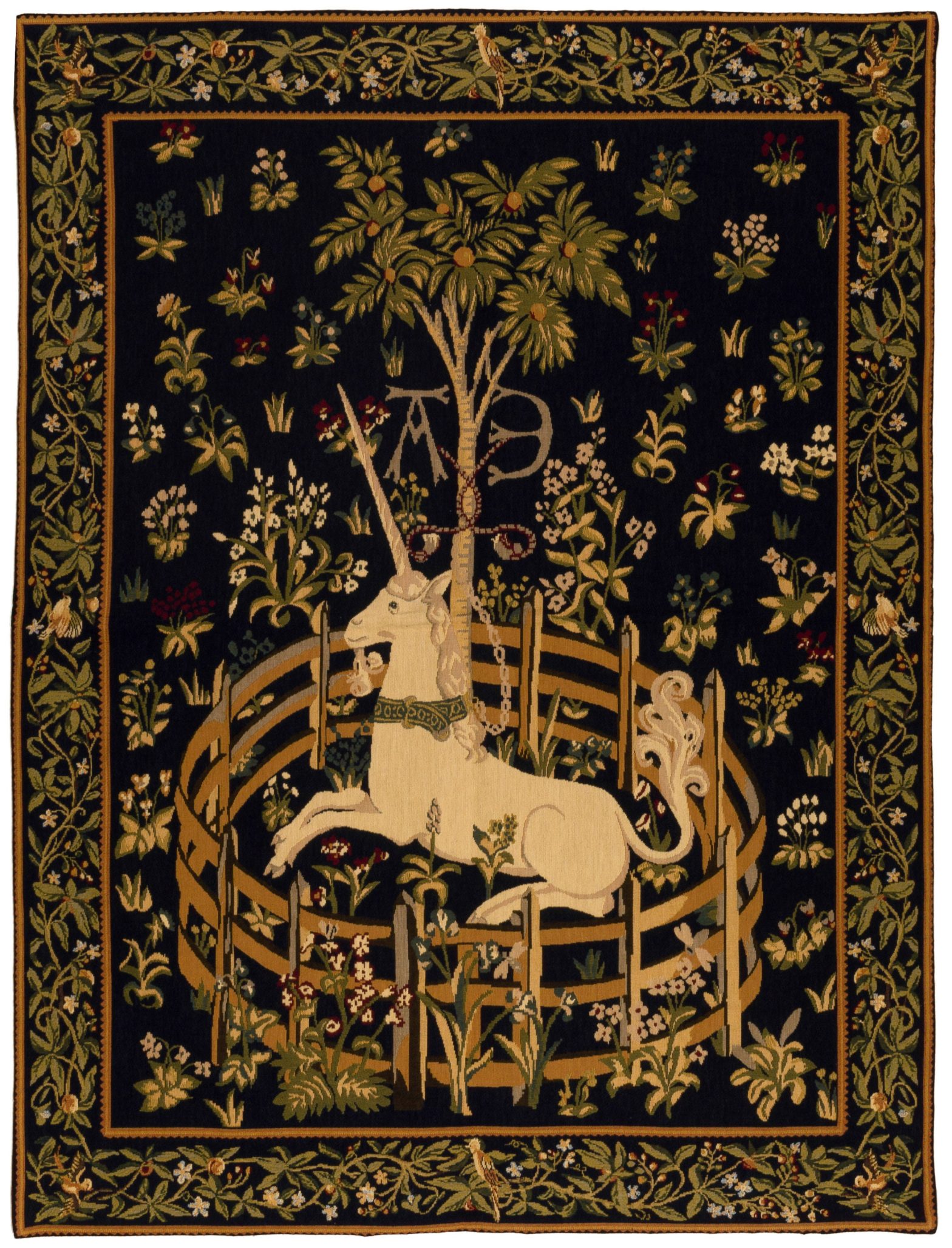
            When you look at a tapestry from behind, it seems like a chaotic scramble of dangling bits of yarn and crossed threads. But if you walk around and see it from the front, you realize it’s actually an integrated, inspiring work of art.

            As we live our lives, he said, we can feel like we are creating something that looks like the back of that tapestry. We may go through days and seasons where we feel things aren’t working out the way we hoped, and our life has become a mess.  But in time – perhaps, as we keep going, or after we have left this life – the strands we felt were mistakes can be rewoven and incorporated into a larger fabric, and they will form something grand.

            I think about my family history.  I try to appreciate all that my ancestors went through, and that includes some dangling threads of tragedy, disappointment, and hardship. I want to live my life in a way that honors their accomplishments and also has compassion for what they may have felt were their failings.  It’s like I’m picking up pieces of thread from their lives and trying to give it new meaning as I find ways to weave their experiences into my own.

            I think about all the suffering people have endured due to race, gender and injustice.  I can’t do anything about the past.  But I can try to honor those sufferings and work towards a more just and humane world.

            I don’t know when my time on earth will be up. I go day by day, weaving my strands as best I can, assuming I’ll die with some left undone.  I hope those who follow me can pick those strands up and incorporate them into the lives they live, creating something good out of what I’ve done and from what I left unresolved.

            And if all humanity is doing that – if we are learning from the past while doing the best we can –that big tapestry is constantly evolving, and all the strands will ultimately find a place in the bigger work of art.

            And if there is a divine force in this world, present in all of nature and within each one of us, and if it’s endlessly at work helping us endure and learn and heal and create and serve – then we are not alone.  As we seek divine guidance and direction, we’ll find there’s a master artist at work alongside us, encouraging our creativity and leading us into new and novel patterns of meaning.

            As I say this, a skeptical voice within me speaks up. It tells me this is all wishful thinking. “We live, we die, life goes on and that’s it.”  I reply, “If that is the way it is, that’s OK…I’m grateful to have lived as long as I have, and to see all I’ve seen, and to have done the best I can.”

            But another voice in me thinks Huston Smith — and so many mystics — may be right. In the end, it’s not just about me, it’s about all of us, and that big, evolving, living tapestry we are all part of.  Maybe, just maybe, led, inspired, and sustained by divine grace, it will be true: “Absolute perfection reigns.”

Top Image: Jacquard paisley shawl (detail of front and reverse sides), Scotland, 19th century. Laura Foster Nicholson at https://lfntextiles.comtps://lfntextiles.com https://lfntextiles.com

Angela Merkel’s Gardener and the Unexpected Mentors in Our Life

I just finished reading The Chancellor: The Remarkable Odyssey of Angela Merkel.  I was impressed by many details of her remarkable life, including the impact made on her by her family’s gardener.

            Angela’s father was a Lutheran pastor who had volunteered to serve in Soviet-controlled East Germany during the Cold War. He and his family were sent to the city of Templin.  He was respected for his dedication and work ethic but was often an intimidating presence.  He had a strict schedule and high expectations for his daughter, and while she learned logical rigor and discipline from him, he was emotionally distant and often absent.  Her mother was busy with her own duties, and Angela was often alone.  As it turned out, she found an unexpected mentor.

            “I remember a gardener, a sturdy older man, who instilled basic trust and great calm in me,” Angela recalled much later.

            “I learned all kinds of things from him about practical life.  I learned how to identify flowers, or when the cyclamen was in season.  From him I learned how to talk to the mentally disabled. With him the atmosphere was warm and trusting, and he allowed me to eat carrots fresh from the ground.  This man awakened a connection to the earth and to nature for me…today I recognize how important time is, more important than possessions.”[i]

            Angela Merkel went on to become a nuclear chemist and a remarkably effective politician.  She was the first woman ever to head a German government – and was elected four times, serving 16 years.  She also led the European Union through many crises, standing up to Vladimir Putin time and again, and was a leading spokesperson for democracy and international cooperation.  Her quiet wisdom, analytical abilities, and patience enabled her to either persuade or outlast many of her opponents.  Throughout her career, she would return to the forests and land of Templin for rest and renewal. Apparently, the lessons she learned from the gardener — ”basic trust,” “great calm,” a deep connection to the earth, and how to talk to anyone respectfully – became hallmarks of her own character.

            This led me to think about people in our lives beyond family who have had a lasting impact on us.  One person who comes to mind for me is an old painting contractor I worked for, Tom Childress.

            As a teenager, I earned money in the summer and on breaks by learning to paint houses.  I often worked on my own, but twice worked for painting contractors.

            One was a big property manager. He paid us $2.50/hour, was often impatient, and more than once missed our payday because he was out of town.

            And then there was Tom.  Old guy with white hair, always dressed in white, paint-speckled overalls who drove a faded-yellow Dodge camper truck.  He was fond of Busch Bavarian beer, and a Styrofoam cooler with a six-pack was always by his side. Tom paid $4/hour.  He patiently taught me all he knew about painting.  Friday was payday, and he often went to the bank at lunch time and came back with a roll of 20s to pay us in cash.  More than once, he’d let us off early on Fridays after paying us for the full day.  

            I worked hard for Tom.  And I learned from him what it’s like to work for someone who genuinely respects their employees.  (Though I have yet to gain an appreciation for Busch Bavarian.)

            I think of Mr. Kenley, a high school English teacher who must have gone through many boxes of red pens.  At first, I resented all the corrections and questions he wrote on every assignment. But in time I realized he was doing his best to make us better writers. After my first year away at college, I went back to his classroom to thank him.

            And something one of my Spanish teachers said still lingers with me.  One day in class, after sharing a personal story, he said, “You know, in life we need two kinds of experiences: some to make us proud and some to keep us humble.  We need both to be a real person.”  It didn’t have anything to do with Spanish, but I’ve never forgotten it.

            I don’t know if Angela Merkel’s gardener lived to see her become Chancellor of Germany.  I’m guessing he could not have imagined that the time he spent with her would shape her character and career, and through her, the fate of democracy in the modern world.  We never know the impact we have on others.

            Who taught you lasting lessons along your way?

Painting: Camille Pissarro, The Gardener: Old Peasant with Cabbage, 1895


[i] The Chancellor: The Remarkable Odyssey of Angel Merkel, by Kati Marton, pg. 7

The “Narcissism of Small Differences:” Toothpaste, Starbucks, and The Human Condition

“Narcissus” was a character in Greek mythology who was strikingly attractive.  He rejected advances from anyone, feeling no one was good enough for him. One day he came by a pool of water.  For the first time in his life, he saw his reflection. He was entranced. Admiring himself was so compelling he could not bear to leave; he died staring into the pool.  He was transformed into a beautiful flower that bears his name.

            Sigmund Freud drew on this myth to describe a curious element of human behavior. He observed that people tend to look for very small differences between things and other people, and then make judgments that lets them feel “special” or superior. To describe this tendency, he coined the phrase “narcissism of small differences.”

            I have found this concept to be very useful.

            Let’s start with toothpaste. 

            I had a friend who lived in Kenya for two years while serving in the Peace Corps.  He said when he would go to the store for toothpaste, there would be one or two choices.  When he returned to the states and went into a drugstore to buy toothpaste, he was overwhelmed by the options. He had to come back the next day to choose.  He said he missed Kenya.

            This week, I went to CVS to pick up a prescription. I stopped by the toothpaste aisle to count the options. I counted at least 30 choices — of Colgate.  Crest? 43 options. Bringing up the rear: Sensodyne, Aquafresh, Arm and Hammer, Tom’s — and the always humble Pepsodent.  That’s more than 80 choices.  How can anyone leave the store without being empowered by their toothpaste selection?

            In the early 90s, a typical supermarket might contain 7,000 items. Now it often ranges between 40,000 and 50,000. We must be royalty to be able to get exactly what we want!

            Time for coffee?

            Restaurants used to serve coffee. Then, there was a second option: decaf. Then Starbucks came along. From the main menu of 40 options, you can specify endless variations. According to an article in the Huffington Post, the possibilities of “getting it your way” run to 80,000.[i] Anybody walking in can announce precisely what they want, then watch the barista obediently prepare it.  Doesn’t it feel good to know you are the master of your destiny?

            We could keep going with these illustrations by considering fashion, cars, wines, craft beers, appliances, and everything else.

            The reason for so many choices? Advertisers and marketers know that if we are presented with many options, choosing the one that we like the best makes us feel empowered. It doesn’t matter if the difference is significant – all that matters is how we perceive it.

            The concept applies not only to products, but also our social relationships.

            Think about what you wore in Junior High.  When I was in 7th grade, at some point it became clear that if you wanted to identify with the cool crowd, you had to wear a pocket t-shirt from Penny’s.  It had to be from Penny’s.  You could easily have bought ones made by Hanes or Fruit of the Loom.  But the other kids would know immediately you were a hopeless klutz. When I finally got one and wore it to school, I felt like I was 10 feet tall (even though I was less than 5 feet high at the time).

            I heard a lecture given by a rabbi at an interfaith conference some years ago. He was talking about our human temptation to feel superior to others based on perceived differences.  He told a joke about a Jewish guy who was stranded on a desert island. When rescuers arrived, they saw two identical structures on the beach.  When asked what they were, he said, “This one is the synagogue I worship in every week.  That other one? I wouldn’t step inside that one if my life depended on it.”

            Christianity is often talked about as one religion.  But recent surveys indicate there are at least 33,280 denominations that call themselves Christian in the U.S.[ii] Each one believes it stands for something unique and important.  I’ve been to lots of churches in my time.  I’ll tell you this: there are some I feel comfortable worshiping in, and some I wouldn’t step into if my life depended on it.

            For our hunting and gathering ancestors, it was an advantage to be able to accurately distinguish between plants that were edible and those that were poisonous, which strangers we can trust and which we cannot, and who has the most status in our group.  We prize attention to detail in many areas of life.  But we can easily fall prey to the “narcissism of small differences.”   We can make choices about things that have little relation to their actual value.  We can make judgments about other people that make us feel superior but blind us from seeing what we have in common.

            Let’s be on the lookout for this tendency, and not fall prey to it.

            And if you’re going by a Starbucks any time soon, could you pick me something?  I’d like a “doppia con panna.”  It’s not on the menu, and you may have to translate the Italian: two shots of espresso with a shot of whipped cream.  They may ask how much whipped cream…I prefer two inches. When you come by to drop it off, just leave it on the doorstep — I don’t want to be disturbed. I’ll probably be out back, sitting contentedly as I gaze into my new, state-of-the-art reflecting pool.

Waterhouse, “Narcissus and Echo”

[i] https://www.huffpost.com/entry/starbucks_n_4890735

[ii] https://nacministers.org/blog/tag/how-many-denominations-of-christianity-in-america/

Top Image: Caravaggio, “Narcissus”

“You Never Know”

If there’s one phrase I’ve come to rely on over the years, it’s “You never know.”  Like a Swiss Army knife, it’s handy in many situations.

         Rachel Naomi Reimen is Professor of Family and Community Medicine at UCSF and creator of a widely used medical school course, “The Healer’s Art.”  I’ve appreciated her books, seen her speak several times, and had a chance to meet her personally. Her grandfather was an Orthodox rabbi and master storyteller. In her medical practice, she learned the importance of listening to patients’ stories and being open to mystery, spirituality and the unknown, while still employing the best medical care. A patient would come to her and report that an oncologist had given them six months to live.  She sensed the patient assumed the doctor was all-knowing. She knew better.  She would offer a different, more open perspective.   “Let’s put it another way.  This diagnosis means you’ve started a new chapter in your life. But no one knows yet how the story will unfold.” This didn’t change the medical facts, but it more accurately describes what happens in life: you never know where things will lead.

         I remember a parishioner named Doug.  When I first came to serve the Goleta congregation, I was told he was facing terminal cancer and I should visit him soon.  I remember meeting Doug and his wife Marge in their mobile home park and thinking, “What a nice older couple.” As they were telling me about their background, they mentioned that when Doug retired, they did something they always wanted to do.  I thought, “They probably went on an Alaskan cruise.” But when I asked, they said they’d gone to Europe, bought a Volkswagen bus and traveled there for two years living each day as it came.  I had totally misjudged them. 

         You never know who a person is or what they’ve experienced until you listen to their stories.

         I asked Doug about his cancer. He told me he’d been through a series of chemo treatments and found them quite debilitating.  Doctors said he would need another round, or his time would be very short.  But he had decided it wasn’t worth it.  He decided to stop treatment so he could spend his remaining time enjoying life as best he could, even if it was just a matter of weeks.  

         Doug did not do any more treatments. He lived two more years.  You never know.

         And then there are the people that are heathy and fit and doing all the right things. They have a heart attack and then they’re gone.  You never know.       

         This certainly applies to politics.  In the 2008 Iowa caucuses, Joe Biden finished fifth with 4% of the vote.  In 2020 he was fourth. Now he is president. You never know.

         I’m a Dodger fan.  The most important game of the year was game 5 in the do-or-die playoff series against the Giants. With the score tied in the 9th inning and a runner at third base, the batter who came to the plate, Cody Bellinger, had the worst batting average on the team.  My fan-heart sank.  But he poked a single into right field and the Dodgers won.  You never know.

         By the 1850s, the philosopher Soren Kierkegaard had become well known in his native Denmark. People approached him asking to write his biography. He refused to cooperate. He believed biographies don’t tell the true story of someone’s life. Everyone knows how the story ends, so everything that happens will be seen in that light. But when we are living day by day, we have no idea how our life will turn out.  “Life can only be understood backward, but it has to be lived forward.”[i] 

         Think of decisions you regret.  Weren’t you making your best judgement at the time?

         Or think of blessings in your life you did not anticipate.  Who could have predicted they’d appear?

         If we draw on a particular spiritual tradition, it certainly helps to reflect on core principles and spend time in prayer and contemplation.  But even then, at some point, we must set a course and hope we made a good choice.[ii]

         In real life, we often must make decisions using the available facts and truest feelings we have at the time.  How will it turn out?  You never know. We just do our best and see what happens.


[i] There is, of course, a long tradition in Western philosophy focusing on the question of what we can really know.  I took three quarters of philosophy in college, working from Plato to Aristotle to Descartes to Hume to Kant and into the modern age.  In the end, I think you never know. Life is too complicated.

[ii] In Buddhism, a core emphasis is becoming aware of how susceptible we are to becoming attached to ideas and expectations about life that are more illusory than certain.  Jesus promises the Spirit can be always present with us, and Paul believes that nothing can separate us from the love of God. These are wonderful reminders, which I live by.  But it still leaves us with the inescapable burden of making decisions about our life with limited knowledge.

Art Work: “Two Dancers,” Matisse, 1937

Spiritual Lessons from a Disaster: Reflections on the Fourth Anniversary of the Montecito Debris Flow

Shortly after 3 AM on January 9, 2018, an intense downpour fell on the foothills above Montecito.  Just a month before, the Thomas Fire had incinerated the native vegetation.  These factors combined to create a geological force I’d never witnessed: a “debris flow.”

            A debris flow is a fast-moving mass of material — slurries of water, rock, soil, vegetation, and even boulders and trees – that moves downhill by sliding, flowing and/or falling. …Debris flows range from a few square yards to hundreds of acres in area, and from a few inches to 50 feet deep.[i]

            In the hours following the rain burst, the debris flow grew as high as 15 feet as it surged down the canyons at speeds up to 20 miles per hour. It consumed everything in its path. Huge sandstone boulders were swept along like ping pong balls.  It uprooted dozens of oak trees and obliterated buildings.  The fast-moving wall of mud and debris became a liquid battering ram as it headed toward the sea.

            It happened in the darkness of night, so there is no video record of what it looked like. It wasn’t until morning that the extent of the destruction began to be understood.

            As it turned out, 23 people died, 2 were never accounted for, and 163 were hospitalized.  More than 100 homes were destroyed and more than 300 damaged. Highway 101 was closed for two weeks.

            I was Director at La Casa de Maria Retreat and Conference Center at the time. La Casa was on a 26-acre parcel adjacent to the San Ysidro Creek and in the direct path.  14 acres of our historic property were wiped clean by the flow. Nine buildings disappeared, including the two-story administration building that had been designed to withstand floods and earthquakes.  Crushed oak trees were everywhere.

            The flow propelled a large boulder through the wall of the historic chapel, filling it with mud and broken furniture. The crucifix, calm and still as it overlooked the scene, was untouched; photos of it went viral.  For many people the chapel scene became an image of both tragic destruction and transcendence amid suffering.

            It quickly became clear that we would not be able to operate again. Our staff of 45 was cut by two-thirds as we began to assess our future.  More layoffs soon followed. Eventually, a decision was made to completely shut the facility down until a later date.  I retired that summer.

            In the weeks after the event, I walked the property, trying to fathom all that had happened. I looked for lessons I could draw from this experience. I came up with four.

            Embrace Environmental Humility  Modern industrial culture has assumed it can do whatever it pleases, “taming” nature if nature gets in the way. We build homes wherever we want, consume natural resources as quickly as we please, and assume we’ll find technological fixes for any problem.  This arrogance is no longer viable.  We must return to a state of mind where we revere and respect the natural forces and ecosystems we are part of and live our lives accordingly.

            Invest in Friendships and Community  Whether it’s floods, wildfires or COVID, one of the keys to survival is support found in friends, family, neighbors, and communities.  Hundreds of people sent messages of concern and pledges of support to La Casa – never before had we realized how much the property meant to so many. As David Brooks has said, our fragmented digital life shapes us into isolated individuals, but we can resist that trend; instead we can “overinvest in friendships.”  In frightening and challenging times, it’s other people we need — we need each other.  Treasure your friends and neighbors every day.

            Go Deep and Reach for Unity  As a pastor and hospice administrator, I have witnessed ways people face mortality many times.  If people have time to reflect, they often go deep within themselves and discover what really matters in life. This frequently becomes a spiritual quest.  When people do clarify their deepest beliefs and values, they often experience not only a sense of inner peace, but also a new appreciation for both nature and other people.  Sitting alone outside in the afternoon, a slight breeze passes, and it feels like a sign of grace. The person who comes to our door to help can seem like an angel.  What is true for our individual experiences is also true when we face disasters.  When we find our spiritual core, we begin to see other people, including strangers, as members of our human family.

Become Determined to Claim Your Integrity  Several years ago I read a piece by a Navy Seal who helped other vets get through PSTD experiences. He believed we have an option when we face hardship. Do we ask, “How will this affect me?” and passively let circumstances determine who we become?  Or do we say, “Facing these challenges, how can I respond in a way that will help me become the person I want to be?”  After the debris flow, all of us who loved and served La Casa became determined to see it rebuild and reopen because we knew how valuable it was to so many.  I now participate with a group that is working tomake that happen.  We hope La Casa will emerge stronger than ever after enduring so much.

            Embracing environmental humility, investing in friendships and community, going deep and reaching for unity, and a determination to claim our integrity – these are the lessons I learned from the Montecito debris flow.

            We have entered the climate change era, regularly facing wildfires, floods, and disasters of all kinds, as well as the COVID pandemic.  I believe these four lessons can help us find our way through it all.

Sadako Peace Garden, La Casa de Maria, January 2018

Dear Reader: Any thoughts about what helps us get through disasters? Please join the discussion and leave a comment. Always interesting to hear from you! — Steve


[i] https://www.conservation.ca.gov/index/Pages/Fact-sheets/Post-Fire-Debris-Flow-Facts.aspx

Celebrating the Light, Wherever It Appears

            In 2006, I went on a personal pilgrimage to Amsterdam and Paris.  Art had increasingly become a source of inspiration and revelation for me, and I wanted to know more.  I was not disappointed.

            In the Van Gogh Museum bookstore in Amsterdam, a book caught my attention: Van Gogh and Gaugin: The Search for Sacred Art, by Deborah Silverman.  I ordered a copy when I got home and found it fascinating. Silverman explores how both artists sought new ways to experience and portray the presence of the sacred. They came from different backgrounds –Van Gogh from a pious Dutch Reformed tradition, Gaugin schooled in Catholic mysticism – and both created their own style. But they shared a common purpose.

            Van Gogh’s The Church at Auvers is one of his many fascinating works when viewed from this perspective.

            Here’s a common interpretation: “The foreground of The Church at Auvers is brightly lit by the sun, but the church itself sits in its own shadow, and ‘neither reflects nor emanates any light of its own…’”  Van Gogh had become disillusioned by the “empty and unenlightened preaching” he had heard too often. Painting became a way to seek and share spiritual truth and energy found beyond the walls of any religious building — in the light and colors all around us.[i]

            This painting, then, suggests the sacred is best found outside the church and its buildings – in the glory of the blue sky, in the light that illuminates ordinary paths and landscapes, and perhaps even within the private thoughts of the anonymous villager passing by.

            I get the point.  In modern times, religious institutions can often seem irrelevant. Fewer and fewer people participate in worshipping communities.  I’ve attended my share of worship services that left me feeling more discouraged than inspired.  I appreciate seeing what Van Gogh sees, and not being limited in any way in my search for the sacred.

            But as I thought about The Church at Auvers this week, I realized my perspective on it has shifted.  Not everything that occurs behind such walls takes place in dull shadows. 

            I’ve heard some terrific, life-changing sermons in my day. Many times, hymns and songs moved me in ways that words cannot.  Within such walls, I’ve met many ordinary people who carry light within them, who gratefully gather with each other and form strong, vibrant communities.

            And I’m not just talking about experiences in my own tradition.

            I’ve attended Torah studies at my local synagogue where everyone fearlessly wrestles with ancient stories and timeless questions, uncovering fresh insights into contemporary life.

            I’ve listened to and meditated with Buddhist teachers who have helped me see life in new ways. 

            I’ve sat in mosques in Jerusalem, Hebron, and Goleta where I felt a strong, quiet sense of reverence. 

            These experiences happened “inside” institutional walls, but there was nothing dull about them.

            In essence, I don’t feel we have to choose being inside or outside these walls to find spiritual light.

            I remember years ago attending a mass in Yakima, Washington where the priest said, “We don’t come to church to experience God. We can experience God every day of the week. We come to church to celebrate what we’ve found.”

            I’m grateful for all the experiences I’ve had — inside and outside spiritual buildings — that have instructed, inspired, challenged, delighted, and nurtured me.

            May we each find the light we need in this new year, wherever it may be.


[i] https://en.wikipedia.org/wiki/The_Church_at_Auvers

The Nativity: A Hospital Epiphany and Three Works of Art

            In September of 2017, I went to Cottage Hospital to see our newborn grandson.  This was during the first year of our former President’s time in office.  I must have heard some distressing news item as I drove to the hospital — I remember walking down the hallway toward “Labor and Delivery”, feeling despondent.  I came to the nursery.  There were seven or eight newborns snug in their blankets, sleeping in basinets.  I took a moment to look at each one.  I remember hearing these words: “Steve, you may feel discouraged about the world right now, but get over it. These innocent children deserve a chance in this world.  Stop moping and do your part.”

            In a recent post I included a comment from a friend of David Brooks.  As she held her infant for the first time, she realized “I love this child more than evolution can explain.”
            Endless songs, carols, poems, sermons, Christmas cards and works of art have been inspired by the story of the birth of Jesus.  There are three images I want to share with you today – two photographs and a painting. 

            In 2009, the Guardian asked nine artists to reimagine the nativity in contemporary society. The photographer Tom Hunter submitted this piece.  The lighting and pose reflect classic manger scenes, especially from the Renaissance. But Jesus was born in a perilous time, and his parents had to flee their homeland to preserve his life.  Having the mother and child be Somali refugees makes the social context of the birth clear.

“Nativity,” Tom Hunter, 2009

            This “Nativity” was created in 1865 by Julia Margaret Cameron.  She began her artistic career at age 48 when her daughter gave her a camera; she became a pioneer in portrait photography.  Some critics thought she was overly sentimental, but I like her work.  This “Nativity” isn’t staged as a manger scene, but simply portrays a working-class family with an infant.  And who is the mother embracing?  A sibling? A cousin?  Or an angel?

“Nativity,” Julia Margaret Cameron

            We close with the visionary “Mystical Nativity” by Botticelli, created in 1501.  Here’s the scene at the center of the canvas:

Boticelli, “Mystical Nativity,” close-up, 1501

Joseph may be sleeping, the baby is reaching for his mother, and Mary is adoring her child as animals stand quietly in the rear.  But Botticelli imagined a scene beyond ordinary sight, where the meaning of the birth is celebrated:

Boticelli, “Mystical Nativity,” 1501

Angels are everywhere…embracing each other at the bottom, drawing close to the manger in the center, and joining hands in a circle dance at the top.  There’s no suggestion that Joseph and Mary can sense their presence in this moment, but, as viewers, we are invited to see it all.

            Botticelli apparently painted this at a time of great anxiety in Florence.  Political leadership was in an upheaval and some prophets proclaimed the end of the world was near.  Perhaps this is the message: no matter what challenges we face in the world, the birth of this child represents the appearance of light amid darkness, and is reason for great rejoicing.

            “The light shines in the darkness, and the darkness shall not overcome it.”

            May we honor the birth of every child as a sacred event, and accept the responsibility of creating a better world on their behalf.  

Spiritual Guardians: Carpenters, Mentors and Drummers

            This month I’m exploring several traditional Christmas stories and sharing with you insights I’ve discovered.  This involves looking beyond the surface of the original story and seeking a symbolic or “soul meaning” that might be there.

            We started with Mary’s story, and I offered Thomas Merton’s revelation that we all have a “pure point” within us.  We followed Mary as she went to visit her pregnant cousin Elizabeth and reflected on the importance of spiritual friendship.  This week we turn to Joseph.

            As the tradition tells us, Joseph was engaged to Mary.  When he found out she had become pregnant, he was going to respectfully annul the contract. But he had a dream in which he’s encouraged to make a different choice.  He’s told the child Mary carries is from God and has a great destiny awaiting. This woman and child need him. Joseph wakes, thinks about his dream, and comes to a decision. He will marry her after all.

            Mary’s been asked by a divine messenger to bear a child.  Joseph is being asked to step beyond the social norms or obligations and protect Mary and the child. It’s more than traditional parenting — it’s extending oneself to be a guardian of someone for whom you have no legal obligation.

            Once the child is born, Joseph continues to protect mother and child. Led by more of his dreams, they flee to Egypt to escape persecution, returning home only when it is safe.    We’re told Joseph was a carpenter. He’s mentioned once more when Jesus is 12, but then disappears from the story. He never says a word.

            For me, Joseph can be a symbol of many people who choose to become spiritual guardians for people in need.

            I can think of many people I’ve seen take on such a role over the years. Adoptive and foster parents.  Volunteers at Boys and Girls clubs.  Mentors and sponsors of all kinds.

            At Hospice of Santa Barbara, we had a program known as “I Have a Friend.” Children who’d lost a parent were paired with an adult who had also lost a parent when young. The two would get together once a week to take walks, do homework, or share a meal. Over time these relationships had a profound effect on both the child, who now had a role model for how to survive such the loss, and the adult, who had a chance to give a young person guidance they had not had themselves. 

            And one person who comes to mind is Mike Ray.

            I first met Mike in a hospital room when his father was dying. I spent time with him and his family planning the service, but we never really connected.

            Time passed. One Sunday morning Mike showed up at my church. He had a light in his eye and smile on his face. When I asked how he’d been doing, he simply said he’d had a spiritual awakening. He started coming every Sunday.  He offered to lead a band for us, which he did. He and his wife became regular coordinators for serving a monthly meal at Transition House, a special program supporting homeless families.

            Over time I learned more about Mike.  Born in 1943, he said he had not been a great student because he was constantly distracted — always tapping his foot, counting out beats, and dreaming of music. He became a drummer. As a young adult, he played in a variety of different groups at clubs and concerts. But as he got older and began a family, the lifestyle no longer worked. So, he opened a drum shop.

            Mike’s Drum Shop was more than a place that sold instruments. It became a music school and a gathering place for many young people. Teenagers who did not have a stable home life would show up often, and Mike took them under his wing. He also volunteered countless hours teaching music in local schools throughout the county. His shop was an institution in town for more than 40 years.

            Mike lived with Parkinson’s his last 23 years but never lost the glint in his eye.

            He died in 2018 at age 77. There was a memorial service in Texas near his family. A few months later, I was asked to lead a local gathering at Mulligan’s Café.

            The room was packed.  As different people stepped forward to speak, they all had a similar story: Mike had noticed them when they came to his shop.  He saw potential in them. If they needed a job, he’d find them one. If they didn’t have money to buy instruments, he’d work something out.  One speaker said Mike co-signed on a car for him, which he desperately needed to get to his gigs.

            One fellow told us he had come to Santa Barbara when he was four years old with his recently divorced father. They lived in a one-bedroom apartment and knew no one. One afternoon they were walking down the street and heard drums. The boy followed the sound, and the father followed the son. They walked into Mike’s Drum Shop and met Mike. Mike saw how important music was for the young boy and told the dad his son could come by the store after school to help out, and Mike would watch over him. Mike gave him lessons. The young boy became a successful musician and entertainer.  In fact, he told us he had just flown to Santa Barbara from Berlin where he was performing as a member of the Blue Man Group. He made the trip to honor Mike. He said he owed his career to Mike who had seen the potential in him.  

            Mike was more than a store owner or music instructor. He became a spiritual guardian for many young people and lived to see them flourish.

            I give thanks for the many spiritual guardians in this world who go beyond routine expectations to protect, guide, and nurture others.

______

Image at top of post: Joseph’s Dream, by De La Tour

Contemporart icon: “Joseph’s Dream”

The Power of Spiritual Friendships: Thoughts and Images

 Dear Reader,

         For December, I’m turning my attention to the traditional readings of the Christmas story. These stories have inspired many artists, and I am including a sampling of images that invite us to imagine the story in new ways.

At a retreat years ago, I was shown how each story can be a rich source for spiritual psychology. Last week I began the process by considering the story of the angel Gabriel visiting Mary (Luke 1: 26-38).  I suggested the “soul meaning” of the story is that the divine can be born within each one of us, and quoted Thomas Merton who described it as a “pure point” of brilliant light. 

            Now let’s pick up Mary’s story after Gabriel departs (Luke 1: 39-56).

            Gabriel had told Mary her cousin Elizabeth was six months pregnant, despite being past the normal age of childbearing. This was a sign that surprising events were unfolding in other lives as well as Mary’s.  Mary travels from Nazareth to Elizabeth’s house in the Judean hill country. Here’s how the Italian sculptor Luca dell Robbia imagined their initial encounter:

Here’s a close-up:

            As Mary enters, the child within Elizabeth “leaps” in her womb.  The Spirit reveals to Elizabeth that Mary’s child is a unique gift from God, and Elizabeth declares how honored she is to have Mary visit. Mary responds with her own declaration of what it means: “My soul magnifies the Lord…”  The story reads like the script to a play or a musical, and is intended to convey truth and joy.

            If you’re Catholic, the words the women exchange (for example, “…blessed is the fruit of thy womb…”) may be familiar from prayers you were taught when you were young. For many others, the story may be unfamiliar.

            But if we look for the “soul meaning” of the story, here’s what I see.  Two people have an unexpected personal spiritual experience.  They carry within them a new spark of life that’s both a mystery and a wonder.  Who can they tell?  Who can they trust? Not everyone will understand. The scene is about finding a soul mate, a spiritual friend.  They form a bond that transcends their age difference. 

A spiritual friendship is similar to other types of meaningful relationships in many ways. What makes it unique is that, at its core, it’s about nurturing a life force that reaches beyond the private lives of just two people. Mary and Elizabeth are giving birth to children (Jesus and John the Baptist) who will have a profound effect on the life of others. Each person benefits from the friendship, but the positive effect of their relationship goes beyond just the two of them.

            Here’s a close-up of Rembrandt’s version of the scene:

Elizabeth is looking up, perhaps describing the inspiration she’s having.  Mary listens affectionately to her older cousin.

            The scene has been envisioned through different cultural lenses. Here’s one by a Vietnamese folk artist:

            This is how the contemporary American feminist artist Janet McKenzie portrays the scene; the women’s attention is turned inward:

            However we imagine it visually, the story of Elizabeth meeting Mary affirms the bond we feel when we find a friend with whom we can share the experiences of our spiritual life. 

            I’ve known many young women who have come to church and ended up forming bonds with older women who’ve become treasured mentors. 

            I’ve found my own mentors in older men in my congregations, and am greatful for the wisdom they’ve passed on.

            I’ve seen many groups in which people form bonds that go beyond gender and age.        

I remember well the first intergenerational spiritual group in which I participated. We were newly married with our first child on the way. I had never been in a spiritual study group before and was apprehensive when I first walked in. There were maybe 15 people of varied ages, gender, and backgrounds. Each week we’d simply read a passage and reflect on what it might mean in our lives; everyone took a turn, and everyone listened respectfully.  At the close, people offered simple prayers for each other.  I particularly remember the oldest member of the group, a widow named Edith, who humbly shared lessons she’d learned in her life. It was exciting. The insights were powerful. The bonds we formed continued long after we moved away.

            All spiritual traditions emphasize the importance of community: a sangha in Buddhism, an ummah in Islam, a shul in Judaism.  The power of the recovery movement lies not only in the 12 Steps themselves, but also in the regular meetings.  Many people I know who’ve suffered the loss of loved ones have described hospice support groups as “lifesaving.” Such groups and friendships can get us through the hardest of times.

            Let’s close with a famous work by the Italian Renaissance artist Pontormo.  I was able to see it in person at the Getty in 2018 after being fascinated by it for many years.  I don’t pretend to understand all the artistic subtleties.  Here’s the full painting:

…and here’s a close-up:

The two women are looking deeply into each other’s eyes.  You sense a spiritual bond, a deep knowing and appreciation.  And there’s that mysterious central figure who is looking right at us.  What does she want us to know? What is she inviting us to be part of?

            In this gift-giving holiday season, let’s be grateful for the gift of our “soul friends” with whom we share our joys and sorrows, our burdens and our hopes.

The Spiritual Point of Conception: Reflections and Images

Is there an invisible “place” within you in which feelings and thoughts appear that seem different from your everyday thoughts?  Something like a “still, small voice” that surprises you at important moments, offering insight, encouragement, or maybe an invitation to do something new?

            I am going to explore this “place” by focusing on a figure whose story is very much a part of the Christmas season: Mary, the mother of Jesus. I’ll share reflections from my journey, a famous passage from Thomas Merton, and six paintings spanning seven centuries which illustrate ways the story has been imagined visually.

            Growing up we had a small plaster nativity set that we unpacked this time of year.  The Mary figurine was painted blue and white; she was kneeling and had acquired a few chips. But she had no personal meaning for me.

            In my mid-twenties, my spiritual journey had begun, and I spent three years earning a Master of Divinity degree at Princeton Theological Seminary.  You’d think if you became a “Master of Divinity” you would learn all the important things.  But that wasn’t the case. 

            After graduation, I became interested in “the inner life”.  I discovered the work of the psychologist Carl Jung and gained an appreciation for truths that come through dreams, visions, myths, and imagination. Biblical stories became richer.  I began practicing meditation, times of silence, and journaling. I went on retreats at monasteries and became curious about the Catholic tradition.

            A new world was opening, and the figure of Mary emerged.  Most of the debates about her had focused on being the “virgin” mother of Jesus.   What fascinated me had nothing to do with sex, biology, miracles, or doctrines, but something else – how Mary can be a rich metaphor for spiritual experience.

            As the story goes, the angel Gabriel appears unexpectedly one day, telling her she is favored by God and chosen to bear Jesus. She is afraid and questions how this could happen.  Gabriel assures her anything is possible for God.  She ponders her choices.  She decides to accept a role she did not seek or imagine, one that will create many challenges for her.  “Let it be to me…” she says.  The angel disappears.  Her life unfolds.

            I know people of good faith who believe the story is completely factual, and others who do not.  My practice over the years is to honor both perspectives and look for the soul meaning of the story, which is more like interpreting a vivid dream than performing scientific or historical research.  I often think of a quote attributed to Black Elk: “This they tell, and whether it happened so or not I do not know, but if you think about it, you can see that it is true.” 

            So what’s the “soul meaning” of Mary’s story?

Imagine this: a thought appears within us that has a different quality than our everyday thoughts. It can feel like a message sent specifically to us.  We consider it. We know we are free to ignore it. But we decide to trust it and change direction in our life.  The change may not make life easier – in fact it may mean taking on challenges and responsibilities we had not sought before.  But as time goes on, we are grateful for the change we made.  We remember the moment we received the message and realize it came with love and wisdom. We feel awe, and we feel gratitude

            Thomas Merton was one of the great spiritual writers of our time.  At one point in his life, he had a profound revelation: Mary’s story is ultimately about how the divine can be born in everyone.  All of us, Merton saw, have within us a pointe vierge, a virgin point:

“At the center of our being is a point of nothingness

which is untouched by sin and by illusion,

a point of pure truth,

a point or spark which belongs entirely to God,

which is never at our disposal,

from which God disposes of our lives,

which is inaccessible to the fantasies of our own mind

or the brutalities of our own will.

This little point of nothingness and of absolute poverty

is the pure glory of God in us …

It is like a pure diamond, blazing with the invisible light of heaven.

It is in everybody,

and if we could see it

we would see these billions of points of light

coming together in the face and blaze of a sun

that would make all the darkness and cruelty of life vanish completely …

I have no program for this seeing.

It is only given.

But the gate of heaven is every- where.”[i]

            I’ve had experiences that lead me to believe Merton is right.  There is something deep within us that is “pure,” an opening to another reality that is “inaccessible to the fantasies of our own mind or the brutalities of our own will.”

             I’ve had promptings that didn’t seem to come from the same inner source that talks to me all day long.   These promptings always surprise me.  They’ve offered me new possibilities I had not imagined or wanted; over time I find I’m being led into a deeper experience of life and service.

            I’ve witnessed such experiences in the lives of many parishioners over the years who, after long periods of struggle and uncertainty, find a peace, calling or insight that surpasses their understanding. 

            In hospice work, I’ve seen people discover unexpected clarity about life that has nothing to do with what they are supposed to believe, but is fresh and authentic.   

            Working at the La Casa de Maria Retreat Center (“The House of Mary”), I saw people of many backgrounds find healing, hope, and courage when they left distractions behind and settled into a calmer, more receptive and reverent state of awareness. The new directions did not come from personal fantasies or restless will, but something deeper, an inner light that is subtle and wondrous and real.

            We can’t control or predict when such points of light appear.  As Merton says, “I have no program for this seeing. It is only given.  But the gate of heaven is every- where.”

            Hail, Mary, full of grace.


[i] Thomas Merton, Conjectures of a Guilty Bystander

Imagining The Annunciation: A Sampling from Art History

Van Eyck, 1434 Notice the colors in the angel wings; Mary does not “see” the messenger directly, but experiences it during a private moment of devotion.
Boticelli, 1485: The spiritual rays of light seem to be driving the angel forward.
Hitchcock, 1887 I first saw this at the Art Institute of Chicago and found it fascinating. Mary is alone in a field of white lillies.
Henry Ossawa Tanner, 1898 The “angel” is a column of light
Salvador Dali, 1947 — perplexing to me…what do you see?
Imagining the story in an African context