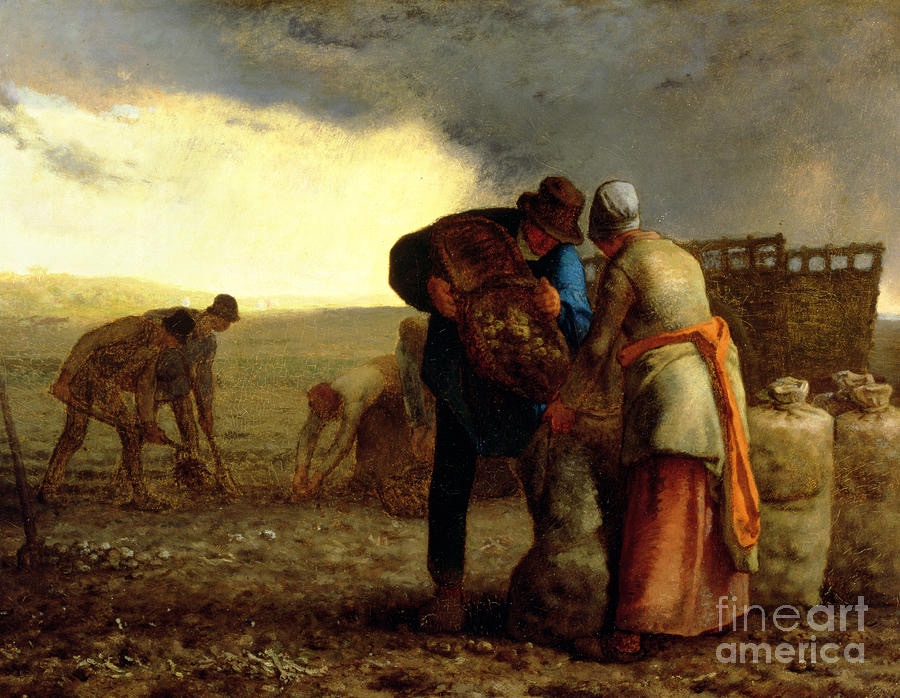
A poem by Wendell Berry, “Whatever Is Forseen In Joy”:
Whatever is foreseen in joy
Must be lived out from day to day.
Vision held open in the dark
By our ten thousand days of work.
Harvest will fill the barn; for that
The hand must ache, the face must sweat.
And yet no leaf or grain is filled
By work of ours; the field is tilled
And left to grace. That we may reap,
Great work is done while we’re asleep.
When we work well, a Sabbath mood
Rests on our day, and finds it good.
Wendell Berry works his own plot of land in a community that has sustained his family and neighbors for generations. They know the weariness that comes from “ten thousand days of work” but are sustained by having the vision of a plentiful harvest that has been “forseen in joy.”
I have known farmers and their families and have come to appreciate the skill and tenacity they bring to their labors. After all their best efforts, they are always subject to unexpected events, severe weather, and price fluctuations.
But most of the people I know are not farmers — we are people who have worked in education, health care, businesses and religious organizations. For us, it can be hard to see or measure the harvest of our labors that we hope will “fill our barns.”
Over the 30 years of being a parish pastor, I worked hard to develop healthy spiritual communities. Of the 3 congregations I served, every one has declined in membership in recent years. I sometimes have asked myself, “What was it all for?”
I once attended a clergy retreat where the leader said he has found many pastors will privately acknowledge that they experience depression. He felt it arose from the feeling that you have failed to achieve what you had envisioned when you started. But, he said, clergy accomplish more good than they realize — the results are not easily measured, but are present in peoples’ lives.
So I look back at the “fields” I have labored in and can see how many relationships were nurtured, how much hope, joy and mutual support was shared, and how much grace was experienced. The buildings may have emptied, but not the lives of those of the people who were part of it all.
And what of your work? Does it feel as if your “ten thousand days of work” filled the barn?
And what of our personal lives — our families and relationships? Lives we have been responsible for may or may not have met our expectations when we began parenting. We may have planted and watered as best we can, but we are not the ones who create the growth.
My mother used to say, “I want to live until I’m a hundred and see how it all turns out.” But she died suddenly at age 75, and all our stories were still unfolding. Thirty years later, they still are. I would love to know what happens to our kids and grandkids in the years to come, but I know my time will be completed when their lives are still being made.
So “the field is tilled and left to grace.” All the people we love and care for are seeking to do their best in this life. We may not know what the ultimate harvest will be of our life’s work, but “when we work well, a Sabbath mood rests on our day, and finds it good.”
May we be grateful for the opportunity to labor in the fields of our lives, as well as the grace that will outlive us.

 Steve Jacobsen, Ed.D
This is beautiful! You have definitely filled your barn through your work
LikeLike
Thank you, LuAnn. Your barn overflows with the grace of your labors!
LikeLike
My life’s work has not filled my my barn, but the work I have and continue to do in the church has filled it. Thank you for showing me the way!
LikeLike
Steve- your barn continues to fill with people (friends, family, and strangers who read these blogs) who love and respect you.
LikeLike
Thank you, dear friend and colleague.
LikeLike