Seeing People Through a Spiritual Lens

            There is ample evidence from evolutionary psychology and brain science that we are wired to make quick assumptions about people based on our culture, perceptions, and experience.  This can be particularly true in our current political climate.

            The spiritual traditions have offered us alternative ways of seeing people, aimed at encouraging us to not judge by outer appearances, but assuming every person has inherent worth.

            Quakers have held that every human has an “inner light” worthy of respect. This core belief led them to oppose slavery long before others in Europe and America.

            In the eastern traditions, a common practice is to bow to others with hands pressed together near our heart and say “Namaste,” meaning we acknowledge the sacred presence in the other.

            Fifteen centuries ago, St. Benedict created a book of precepts to guide the life of the monks. Rule 53:1 reads: “All guests who present themselves are to be welcomed as Christ, for he himself will say: I was a stranger and you welcomed me (Matt 25:35)” This rule is still followed at Benedictine monasteries and has been adopted by many in the Catholic tradition.

            With this in mind, I appreciated the following piece by Mike Kerrigan, a lawyer in North Carolina.  He has been distraught by the “rancor” that is characterizing our culture and sought out a mentor from his past who might help him approach others in a better way:

            I reconnected recently with an old friend and Jesuit priest, Daniel Sweeney, with the intention of asking him.

            In the 1980s, Father Sweeney taught world history at Georgetown Prep, the high school in North Bethesda, Md., where I was a student. He’s now an assistant professor of political science at the University of Scranton.

            Surely my clerical companion, whether drawing on his priestly or academic vocation, could offer the customary good counsel to which I’d grown accustomed in adolescence. Still teaching by anecdote, Father Sweeney didn’t disappoint.

            He recalled a time he’d repaired from the hurly-burly of instructing adolescent males to the tranquility of a faculty lounge. Seated beside him was another Jesuit faculty member, James A.P. Byrne, a priest known for saintly serenity and heroic patience.

            Their peace was interrupted by an obscenely loud knock on the door. It was the kind of gratuitous pounding both men instantly knew had been delivered by the sort of student from whom they’d sought respite. Father Byrne got up, exchanged words with the impertinent young man, and returned to his seat.

            “Who was at the door?” Father Sweeney asked. “It was just our Lord,” Father Byrne replied serenely, his Irish eyes twinkling, “in one of his most unrecognizable forms.” [1]

            I hope to remember that description and use it when needed.

Image: “My Portrait Surrounded by Masks,” James Ensor, 1899


[1] “A Priest Finds Serenity in Humor,” by Mike. Kerrigan, WSJ, August 3, 2021

“How Do You Know If Someone Is Enlightened?”

            Huston Smith has been a guiding light in my life. 

            I first encountered him in the 80s. I was teaching comparative religion in a small college and used his book, The Religions of the World, which students from diverse backgrounds always found engaging. In 1996, PBS broadcast a series of interviews of Huston with Bill Moyers, The Wisdom of Faith.  I saw him speak in Santa Barbara several times at the Lobero Theater and always left with a clear mind and full heart.  

            If you lined up to have him sign a book, he’d ask you to write down your name on a piece of paper because he was wanted to spell it correctly. He would carefully inscribe a greeting and hand you the book. Then he’d look into your eyes and smile.  A bright, warm light illuminated his face.

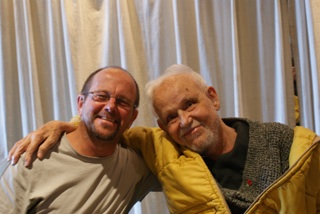
            In 2010, I spent four days with him and a group of 30 retreatants at Esalen Institute in Big Sur (where this photo was taken.)  He’d been teaching there for 50 years, and this turned out to be his last retreat.

            He was 90. He entered the small seminar room slowly on the arm of his daughter, who helped him to his seat.  His clothes were well-worn, and his yellow windbreaker was stained around the cuffs; it must have been a favorite.

            After he was seated, his daughter welcomed us. She noted her father was now very hard of hearing, so we should direct questions to her and she would relay them through his good ear.

            She nodded to him that we were ready.  

            When he began to speak, the wide smile emerged, and that light came to the surface.  His told us his plan for the week was to tell stories about the people he had met over his life: Aldous Huxley, the Dalai Lama (before he was known in the West), Martin Luther King, Jr., Timothy Leary, Ram Dass, Bishop Tutu, Suzuki Roshi, Native American elders, Joseph Campbell and a long list of writers, thinkers and spiritual leaders.  He encouraged us to ask questions at any time.

            In my blog I’ll be sharing memorable statements Huston Smith made.  The first one has to do with enlightenment.

            “How do you know if someone is enlightened?” a woman asked, and his daughter conveyed the question to him.

            He paused for a moment.

            “If they tell you they are enlightened, they are not,” he said with a grin.  “Truly enlightened people don’t think about it; they don’t care.”  He illustrated the point with a story of his first meeting with the Dalai Lama.

            Over my career people have asked me who my favorite theologians are.  I’ve often named Wendell Berry, Bach and Rembrandt.  But I also point to the older people I’ve known in my congregations.  They have lived through many hardships but are at peace with who they are and always looking for quiet ways to serve others.

            I remember one such man, Walt Eby.  Walt was a retired engineer from the Midwest who had come to Santa Barbara as part of a job transfer from Wisconsin.  Walt was soft-spoken. He never served on a committee or spoke at an event.  But at coffee hour, he would stand on the patio and scan for any new people who might benefit from a word of welcome.  He would walk towards them holding his Styrofoam cup of coffee and introduce himself.  Soon you’d see the visitor smiling, relaxing and conversing.  If appropriate, Walt might introduce them to someone else on the patio with a similar interest or background.  He did this every Sunday. His ability of sensing who might need such care was uncanny.

            Walt had a particular gift for connecting with teenagers.  One young man appeared with his mom at our service.  Walt went over and introduced himself and began a conversation.  When they came back the next Sunday, Walt was there again with his friendly, low-key presence.  In time he discovered the family was going through a divorce and took a special interest in the young man.  Walt would call and invite the young man to hit some golf balls or perform some simple job around the church, like mowing the lawn.  He took him to serve the homeless at a soup kitchen. Later, the young man joined our youth group and helped build houses for the poor.  Walt showed him how to serve others and had a profound influence on the young man’s life as he did on many of us.

            The young man’s mother later told me how much Walt’s care and concern meant to both her and her son…it was a steady, loving connection in a difficult time.

            This was his way of being.

            If I had said, “Walt I think you are enlightened,” he would not know what I was talking about. Such words were irrelevant to him. It was just the way he was.

            When I was Director at La Casa de Maria, we annually hosted 200 groups from every spiritual path imaginable, as well as many nonprofits.  I was asked to review the application of a group that had come before. They were a growing group from LA focused on a charismatic leader. I asked the staff for any comments concerning their previous visit.  I was told the leader had once become frustrated, and publicly berated a staff member.  I gave instructions to deny the request.

            “If they tell you they are enlightened, they are not.”

“Six Things That Matter Most” — A List for All Seasons

            There often comes a time when a family is told their loved one has just a few hours or days left before dying.  It can be an agonizing time of not knowing what to do other than wait.   The loved one may still be able to communicate or, more often, is sleeping much of time.  What do you do when “there’s nothing more to be done”?

            Ira Byock, a leading physician in contemporary hospice and palliative medicine, came up with a helpful resource for such times.  He would take his prescription notepad and write four phrases: “Please forgive me. I forgive you. I love you. Thank you.” He would give that to a family member and invite them to consider if any of those statements would be appropriate to say.  He wrote an influential book on the transformative and healing experiences he witnessed arising from people using these simple statements.  As the book became popular, two more were added: “Goodbye” and “I am proud of you.”

            The values represented in these statements — forgiveness, love, gratitude, and acknowledging the cycles of life — are universally present in the great spiritual traditions.

            When I was at Hospice of Santa Barbara, we took those six statements and had them printed on business cards.  Our staff and volunteers could then give them to families when appropriate.  I began to carry some in my wallet, a practice I’ve continued for more than a decade.

            I was grateful to have the card when my father was dying.

            He was in his last days at a nursing home. My two sisters and I used the list as a prompt for talking to him. He was no longer responsive, but it felt like the right thing to do. Maybe he heard us or maybe not.  Maybe he could sense what we meant through tone or feeling. Or maybe it was just for us.  

            “Dad, please forgive me for the sleepless nights I gave you as a teenager.”

            “There were times when I was growing up I was afraid of your anger.  I knew you were under a lot of pressure and loved us, but it was still scary. I forgive you.”

            “Thank you for providing for us, encouraging us and believing in us.”

            “For the way you worked so hard to honor mom and provide for us, for the integrity and honesty with which you lived your life, and for your service to our country during the war – we are proud of you.” 

            Dad wasn’t from a generation when many men would say “I love you.”  But we knew he loved us.  It was easy to say, “I love you, Dad.”

            The “Goodbye” statement can be tricky.  It can be tempting to say it to have some closure, but it may be too early.  (I remember one family had asked a harpist to play in the room; the patient woke up and said, “Get that music out of here…I’m not ready for the angels yet!”) But if, say, a family member is leaving town or death is clearly imminent, then “Goodbye” can be fitting.

            As I did presentations on hospice in the community, I would pass these cards out.  People would later tell me how helpful they were.

            But I also knew what everyone who works in hospice knows…the work is not just about the dying, but also about the living.  Whether dad was fully aware of what we were saying, it gave us closure. 

            The list can also be helpful after a death when we didn’t have an opportunity to speak the words in person. We can write a letter to the person using the list as possible prompts.  We can then save the letter just for ourselves. Or we can take it to a place we associate with the person, including a gravesite, and read it.  When it’s served its purpose, we can keep it or create a simple ritual and burn it.

            “Six Things” can also be valuable when death is not on the horizon. Roughly half of Americans die with some form of hospice care, which means there may be time for meaningful bedside moments.  It also means the other half of us will die without such an opportunity – heart attacks, strokes, accidents, etc.  If these are the six things that matter most, why wait for a moment that we may never have?  Why not use them when we are alive and well?

            Once, I was doing a daylong retreat on this theme. I gave the background and handed out the cards. Then I said, “But let’s not wait. I encourage us all to think if there is anyone we want to say any of these statements to now.”  I gave everyone 45 minutes. I’d brought stationery and envelopes if people wanted to write letters, and also encouraged people to make a phone call, send an email or text a message.  

            When we regathered, I asked for people to share experiences. One woman said she had called her daughter.  The call went to voicemail and mom left a message, “I just want to say I love you!” The daughter called back a few minutes later sounding frantic: “What’s wrong mom?! Are you OK??”  Mom laughed and reassured her she was fine, but was doing this as part of a retreat.  So, giving a little background can help when we are conveying such deep feelings.

            As time went on, I’ve found the “Six Things” a good way to take inventory from time to time in my own life on occasions like anniversaries and birthdays. Is there someone I want to say these words to now, since there’s no guarantee I’ll have a chance in the future?  Why not just do it? Once we do, there is a sense of freedom.

            Six simple statements, loaded with healing power. 

When Compassion Isn’t Enough

As part of my work at Hospice of Santa Barbara, a group of us attended a week-long retreat at the Metta Institute in Marin County. The theme was “Cultivating Presence” and led by Frank Ostateski, an accomplished teacher of both Zen meditation and hospice care.

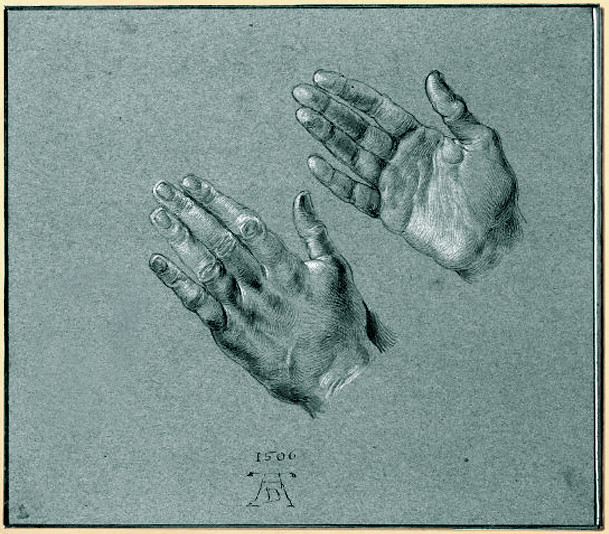
            In one of his talks, Frank focused on the traditional greeting in parts of Asia – “Namaste.”  You clasp your hands palm-to-palm in front of your chin and sometimes follow with a slight bow.  It had become well-known in the West through its frequent use as a way to close a yoga class and was often said to symbolize “I bow to the sacred in you.”  Frank had closed his classes with the familiar gesture, and as students we returned the blessing.

At one session, Frank focused on a deeper meaning “Namaste” can have. One hand can represent the virtue of compassion and the other hand wisdom. He went on to describe the importance of the two virtues always being combined. We may feel great compassion for someone and feel the impulse to take an action. However, actions arising from a genuine motive may have unintended consequences. Therefore, it is critical to evaluate the compassionate urge with patient and practical wisdom if we want to make the best choices.

            I thought this was very helpful and began to share this concept when I was doing the initial training session for hospice volunteers.  Many are led into hospice service out of a compassion for those who are dying, but it is critical we always seek to place that emotion in the presence of wisdom from trained staff and veteran volunteers.  I often used the following story as an illustration. 

            Once we had a very caring volunteer assigned to a low-income family where the father had died.  The volunteer had spent time with the young son in the afternoon and when he dropped the boy off back at home, realized the family had very little food. Moved by compassion and wanting to make a difference, he and a friend went to Costco and bought several hundred dollars’ worth of food for the family and dropped it off at the house.  Soon after, one of the family members called our staff member responsible for the case. They noted how appreciative they were but said they did not have sufficient refrigerated storage to keep so much food and were embarrassed it would be going to waste.  If the volunteer had run his idea by our trained staff member, he would have been affirmed for the impulse, but guided into an action that would better fit the situation.  The compassionate value needed to be matched by wisdom.

            I was reminded of the charge Jesus gives his disciples when he sends them out in pairs for the first time: “… so be wise as serpents and innocent as doves.” (Matthew 10:16).   The serpent was seen a very subtle and clever creature (it was not always identified as evil as it became in later tradition.)  Doves were seen as pure and often symbols for the divine spirit.  Jesus is saying: be open and trusting, but also be smart and strategic.

            I have thought of this many times in my life and career, which I have spent in religious and nonprofit communities.  It was always natural for me to approach any challenging situation with compassion and tact.  Many times, those values led to outcomes I felt good about.  But as time went on and my responsibilities grew, I encountered more complex situations where compassion and “innocence” alone were not enough. I benefited from practical wisdom from others who understood the complexity of organizational challenges and the need to make unpopular decisions that could be perceived as uncaring. When I was able to incorporate that wisdom, outcomes improved.  

            Anyone who has been involved in 12-step programs knows this well.  If someone you care about is struggling with addiction and they beg you for money or help, it is a natural reaction to meet their requests. But that can often make the situation worse.  You need the accumulated wisdom of the support group and the program to make the best choices.

            Caring, empathy, love and compassion are prized virtues.  But the best outcomes arise when they are blended with voices of experience and wisdom. Namaste!