In September of 2017, I went to Cottage Hospital to see our newborn grandson. This was during the first year of our former President’s time in office. I must have heard some distressing news item as I drove to the hospital — I remember walking down the hallway toward “Labor and Delivery”, feeling despondent. I came to the nursery. There were seven or eight newborns snug in their blankets, sleeping in basinets. I took a moment to look at each one. I remember hearing these words: “Steve, you may feel discouraged about the world right now, but get over it. These innocent children deserve a chance in this world. Stop moping and do your part.”
In a recent post I included a comment from a friend of David Brooks. As she held her infant for the first time, she realized “I love this child more than evolution can explain.” Endless songs, carols, poems, sermons, Christmas cards and works of art have been inspired by the story of the birth of Jesus. There are three images I want to share with you today – two photographs and a painting.
In 2009, the Guardian asked nine artists to reimagine the nativity in contemporary society. The photographer Tom Hunter submitted this piece. The lighting and pose reflect classic manger scenes, especially from the Renaissance. But Jesus was born in a perilous time, and his parents had to flee their homeland to preserve his life. Having the mother and child be Somali refugees makes the social context of the birth clear.
“Nativity,” Tom Hunter, 2009
This “Nativity” was created in 1865 by Julia Margaret Cameron. She began her artistic career at age 48 when her daughter gave her a camera; she became a pioneer in portrait photography. Some critics thought she was overly sentimental, but I like her work. This “Nativity” isn’t staged as a manger scene, but simply portrays a working-class family with an infant. And who is the mother embracing? A sibling? A cousin? Or an angel?
“Nativity,” Julia Margaret Cameron
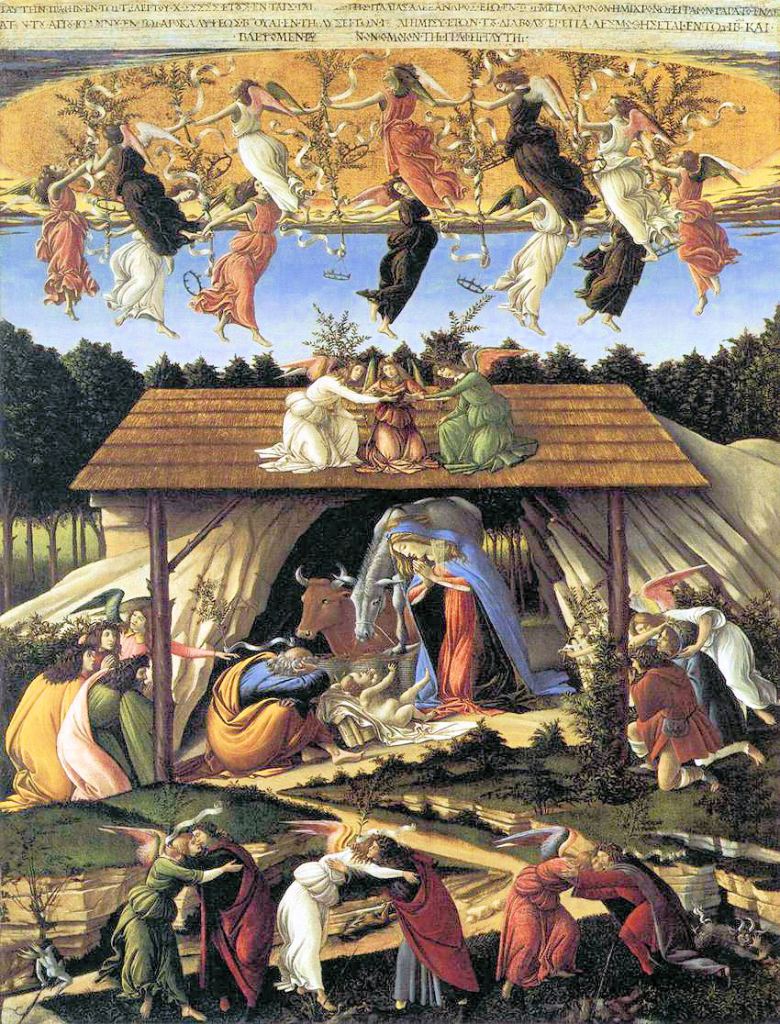
We close with the visionary “Mystical Nativity” by Botticelli, created in 1501. Here’s the scene at the center of the canvas:
Boticelli, “Mystical Nativity,” close-up, 1501
Joseph may be sleeping, the baby is reaching for his mother, and Mary is adoring her child as animals stand quietly in the rear. But Botticelli imagined a scene beyond ordinary sight, where the meaning of the birth is celebrated:
Boticelli, “Mystical Nativity,” 1501
Angels are everywhere…embracing each other at the bottom, drawing close to the manger in the center, and joining hands in a circle dance at the top. There’s no suggestion that Joseph and Mary can sense their presence in this moment, but, as viewers, we are invited to see it all.
Botticelli apparently painted this at a time of great anxiety in Florence. Political leadership was in an upheaval and some prophets proclaimed the end of the world was near. Perhaps this is the message: no matter what challenges we face in the world, the birth of this child represents the appearance of light amid darkness, and is reason for great rejoicing.
“The light shines in the darkness, and the darkness shall not overcome it.”
May we honor the birth of every child as a sacred event, and accept the responsibility of creating a better world on their behalf.
Is there an invisible “place” within you in which feelings and thoughts appear that seem different from your everyday thoughts? Something like a “still, small voice” that surprises you at important moments, offering insight, encouragement, or maybe an invitation to do something new?
I am going to explore this “place” by focusing on a figure whose story is very much a part of the Christmas season: Mary, the mother of Jesus. I’ll share reflections from my journey, a famous passage from Thomas Merton, and six paintings spanning seven centuries which illustrate ways the story has been imagined visually.
Growing up we had a small plaster nativity set that we unpacked this time of year. The Mary figurine was painted blue and white; she was kneeling and had acquired a few chips. But she had no personal meaning for me.
In my mid-twenties, my spiritual journey had begun, and I spent three years earning a Master of Divinity degree at Princeton Theological Seminary. You’d think if you became a “Master of Divinity” you would learn all the important things. But that wasn’t the case.
After graduation, I became interested in “the inner life”. I discovered the work of the psychologist Carl Jung and gained an appreciation for truths that come through dreams, visions, myths, and imagination. Biblical stories became richer. I began practicing meditation, times of silence, and journaling. I went on retreats at monasteries and became curious about the Catholic tradition.
A new world was opening, and the figure of Mary emerged. Most of the debates about her had focused on being the “virgin” mother of Jesus. What fascinated me had nothing to do with sex, biology, miracles, or doctrines, but something else – how Mary can be a rich metaphor for spiritual experience.
As the story goes, the angel Gabriel appears unexpectedly one day, telling her she is favored by God and chosen to bear Jesus. She is afraid and questions how this could happen. Gabriel assures her anything is possible for God. She ponders her choices. She decides to accept a role she did not seek or imagine, one that will create many challenges for her. “Let it be to me…” she says. The angel disappears. Her life unfolds.
I know people of good faith who believe the story is completely factual, and others who do not. My practice over the years is to honor both perspectives and look for the soul meaning of the story, which is more like interpreting a vivid dream than performing scientific or historical research. I often think of a quote attributed to Black Elk: “This they tell, and whether it happened so or not I do not know, but if you think about it, you can see that it is true.”
So what’s the “soul meaning” of Mary’s story?
Imagine this: a thought appears within us that has a different quality than our everyday thoughts. It can feel like a message sent specifically to us. We consider it. We know we are free to ignore it. But we decide to trust it and change direction in our life. The change may not make life easier – in fact it may mean taking on challenges and responsibilities we had not sought before. But as time goes on, we are grateful for the change we made. We remember the moment we received the message and realize it came with love and wisdom. We feel awe, and we feel gratitude
Thomas Merton was one of the great spiritual writers of our time. At one point in his life, he had a profound revelation: Mary’s story is ultimately about how the divine can be born in everyone. All of us, Merton saw, have within us a pointe vierge, a virgin point:
“At the center of our being is a point of nothingness
which is untouched by sin and by illusion,
a point of pure truth,
a point or spark which belongs entirely to God,
which is never at our disposal,
from which God disposes of our lives,
which is inaccessible to the fantasies of our own mind
or the brutalities of our own will.
This little point of nothingness and of absolute poverty
is the pure glory of God in us …
It is like a pure diamond, blazing with the invisible light of heaven.
It is in everybody,
and if we could see it
we would see these billions of points of light
coming together in the face and blaze of a sun
that would make all the darkness and cruelty of life vanish completely …
I’ve had experiences that lead me to believe Merton is right. There is something deep within us that is “pure,” an opening to another reality that is “inaccessible to the fantasies of our own mind or the brutalities of our own will.”
I’ve had promptings that didn’t seem to come from the same inner source that talks to me all day long. These promptings always surprise me. They’ve offered me new possibilities I had not imagined or wanted; over time I find I’m being led into a deeper experience of life and service.
I’ve witnessed such experiences in the lives of many parishioners over the years who, after long periods of struggle and uncertainty, find a peace, calling or insight that surpasses their understanding.
In hospice work, I’ve seen people discover unexpected clarity about life that has nothing to do with what they are supposed to believe, but is fresh and authentic.
Working at the La Casa de Maria Retreat Center (“The House of Mary”), I saw people of many backgrounds find healing, hope, and courage when they left distractions behind and settled into a calmer, more receptive and reverent state of awareness. The new directions did not come from personal fantasies or restless will, but something deeper, an inner light that is subtle and wondrous and real.
We can’t control or predict when such points of light appear. As Merton says, “I have no program for this seeing. It is only given. But the gate of heaven is every- where.”
Imagining The Annunciation: A Sampling from Art History
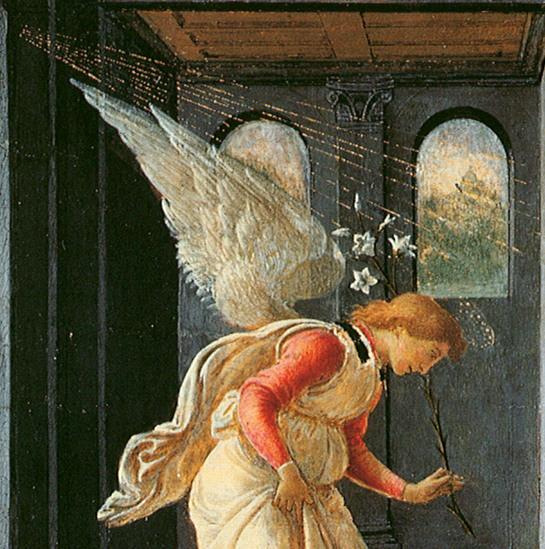
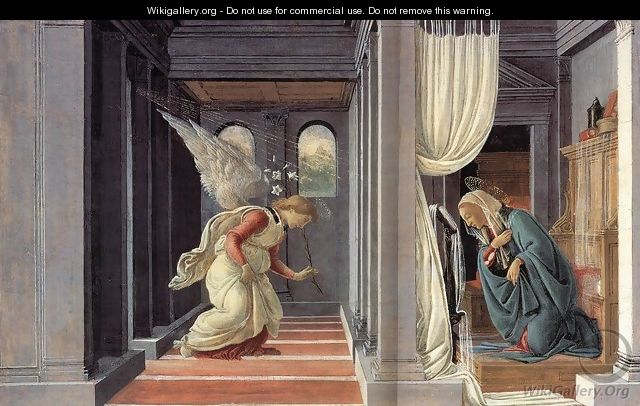
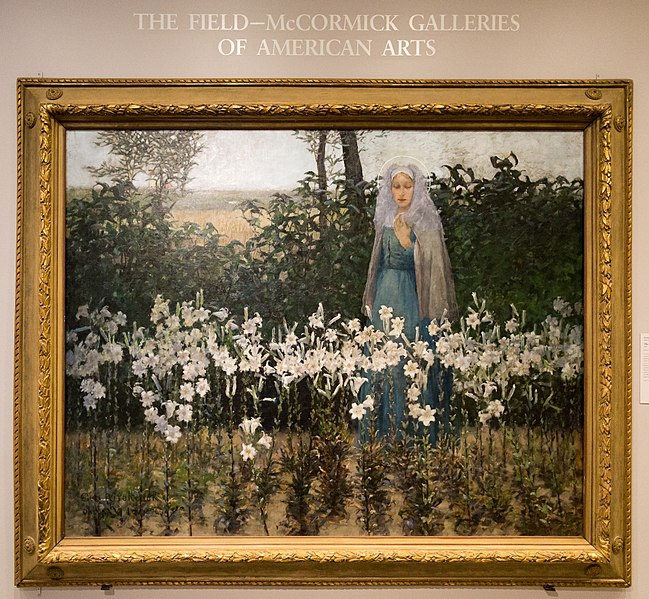
Van Eyck, 1434 Notice the colors in the angel wings; Mary does not “see” the messenger directly, but experiences it during a private moment of devotion.Boticelli, 1485: The spiritual rays of light seem to be driving the angel forward.Hitchcock, 1887 I first saw this at the Art Institute of Chicago and found it fascinating. Mary is alone in a field of white lillies.Henry Ossawa Tanner, 1898 The “angel” is a column of lightSalvador Dali, 1947 — perplexing to me…what do you see?Imagining the story in an African context
My dear friend Father Larry Gosselin recently posted a quote from Francis Ward Weller, a therapist and grief counselor. I want to share it and a few of my own reflections.
The work of the mature person
Is to carry grief in one hand
And gratitude in the other
And to be stretched large by them.
How much sorrow can I hold?
That’s how much gratitude I can give.
If I carry only grief, I’ll bend toward cynicism and despair.
If I have only gratitude, I’ll become saccharine
And won’t develop much compassion for other people’s suffering.
Grief keeps the heart fluid and soft,
Which makes compassion possible.
At times in my life, I’ve been asked who my “spiritual heroes” are. My response: the many older people I’ve known in my congregations. They’ve lived through hard times and personal tragedies, but somehow have become calm, thoughtful, and caring.
To this I’d add Hospice volunteers who’ve experienced the loss of people they loved, then followed a calling to simply be present with others living in times of fear and unknowing.
Of course, maturity doesn’t always come with the accumulation of age; some young people have unusual wisdom and insight. We call them “old souls.”
I’m wary of simplistic formulas for life. I distrust promises that we can be happy all the time if we just make the right effort.
I’ve known people who have lost loved ones in ways that will always haunt me, and I don’t know how they bear it.
I do not believe there is a divine pain manager who sends suffering our way to improve our character.
Eleven years ago, I participated in a retreat at Esalen with the great mystic and global spirituality scholar, Huston Smith. He was 91 and physically frail. I remember him saying, “We are born in mystery, we live in mystery, we die in mystery.” He said those words with a full smile and clear light in his eyes.
Something is here that holds us.
____
Image: Close-up of “Return of the Prodigal” by Rembrandt
My mother had her share of hardships in life. Her first husband died only a few years after they married, leaving her with a young son and pregnant with my older sister. Not long after, her mother died suddenly. She met and married my father; I was born a few years later, my younger sister five years after that. Raising a noisy, blended family of four children while carrying within her the emotional burdens of trauma and grief made it hard for her to be “present” with us individually.
Except when she made apple pie.
I remember watching her from an early age. In time, I became old enough to participate. I learned how to peel, core, and slice the green Pippin apples with a paring knife. The peels were kept in a separate bowl and I would snack on them while we worked. She added sugar and cinnamon to the sliced apples and gave them time to absorb the flavors. She’d make the crust with Crisco, flour, and a few drops of water. She’d roll the dough and create the pie crusts she needed, pressing them into the pie plates. She’d add the apples, dot them with butter and a few drops of lemon juice, then seal them with the top crust. She taught me how to flute the edges of the crust with my fingers before the pie was put into the oven and to use a fork to poke venting holes on the top. The leftover dough was rolled out on the cutting board. She’d add sugar, cinnamon, and butter to it, then cut the dough into strips. She’d roll the strips into “pinwheels,” which would bake along with the pie. Pinwheels only took 10-12 minutes to bake. We’d take them out and let them cool, then enjoy them as the pie continued to bake. The kitchen filled with the smell of a baking apple pie.
My mom wasn’t a great cook, but she was a master at making pies. They were always a highlight of birthday and holiday dinners.
But as I got older, and especially after she died in 1993, I realized what I valued most was not the pies themselves, but the quality of time we shared during the process. Focusing on the manual labor allowed us to become calm and reflective. We listened to each other, laughed together, and simply enjoyed being together. I didn’t realize until I was older how rare and wonderful those times were. What a gift for a child to have such time with a parent!
Eventually, I found a word to describe such activities: “focal practices.” This is a term coined by Albert Borgman, a philosopher who has spent much of his career exploring the role of technology in our lives. The root of the word “focal” is focuser, a Latin word meaning hearth. In Roman families, everything was centered on the hearth. It was location of the family shrine, as it was where symbols of ancestors were carefully arranged and displayed. It’s where food was cooked, and where the family ate together. As Borgmann says, the hearth was where the family gathered to be present with each other and share what they most deeply valued. In our own times, focal practices can include preparing and sharing meals, going on walks and hikes, camping, playing games, crafts, fishing, building things, gardening, and sharing skills of all kinds. Engaging in such activities, we experience life at a deeper level. As Borgman says, focal practices both gather and radiate meaning.
Technological devices are a threat to such practices, he believes. Devices are objects that promise to give us what we want in a more effective way and with less effort. They always promise to save us time and labor. But something is lost when they displace focal practices.
Let’s imagine a device that makes perfect apple pies, like bread-makers make bread. You simply add the ingredients and push a button, and – voilà – a pie as good as mom’s appears. So effortless and convenient. But if we had that when I was a kid, I would have never learned the art of what she did, the satisfaction that came from doing it, or experienced the quality time we spent together. Pie-making was a focal practice. It did “take time”. But time is not an adversary to be conquered. Time is a gift to be received with gratitude.
As we approach the holidays, we can be grateful for memories of “focal practices” we’ve experienced in our past and seek opportunities to share such activities with family and friends this season.
As for me — I’m looking forward to the aroma of homemade pies baking in the oven.
“Taste and see that the Lord is good.”
_______
Borgman, Albert, Technology and the Character of Contemporary Life: A Philosophical Inquiry, University of Chicago Press, 1984; Crossing the Postmodern Divide, University of Chicago Press, 19
This past week I came across notes I had taken while attending two leadership conferences featuring New York Times columnist David Brooks. I’ve always respected David’s insights into culture and politics. But at these two events, David reflected on his personal journey. He said he had achieved everything he ever wanted in his professional life but felt his life had become increasingly empty. He began searching for clues as to what he was missing and shared with us some of his reflections. Here are three I want to share with you today
“Our culture treats us like brains on a stick.” As we spend more time in a digital world, enticed and tracked by Big Tech, we become disconnected and disembodied from nature and neighbors.
But, he noted, two of his friends had experiences that remind us there is another dimension of life.
One such moment happened in his friend’s kitchen. The friend had come downstairs and glanced out the kitchen window. Outside was a falcon on a branch. They looked into each other’s eyes – and kept looking –and it felt as if they were seeing into each other’s depths. Finally, the falcon flew away. The encounter changed his friend’s life.
Another friend told David a thought that surprised her. As she was holding her newborn daughter these words came to her: “I love this child more than evolution can explain.” Science and evolution explain so much about the world we live in. But there are moments, mystical moments, when we realize there is something more, something wonderful, something holy, and we are in the midst of it every day.
We are not meant to live “like brains on a stick.” Looking into the eyes of our fellow creatures and each other, we can wake up to the great mystery of life, which is tangible, unfathomable, and glorious.
Thank you, David, for sharing thoughts from your journey.
Some years ago, I was at a wedding in the Sierras. Guests stayed at a resort for the weekend. The groom was a well-known mountain and rock-climbing guide and offered to teach any guests the basics of rock-climbing.
I remember my lesson well. I was on a safety rope, and slowly made my way up the rock face with Doug coaching from below. I was maybe 20 feet up the rock face when I looked back down. Even though I logically knew I was safe, the adrenaline began to flow, and I envisioned falling. My brain offered a vision of my head hitting the granite below like a dropped watermelon.
“Ok,” I said. “I’m experiencing some fear right now. Should I just ignore it and keep focusing on the next move?”
Doug smiled. “No, your fear has important information to give you. You want to take in the information, but not let fear control you.”
Acting brave, I continued to climb for another ten minutes or so before I slowly made my way back to the ground. I thanked him for his patience.
I learned two lasting truths that day:
I don’t like rock climbing. I’ve never tried it again.
“Your fear has important information to give you. You want to take in the information without letting fear control you.”
I’ve thought of this insight often over the years. It’s come to mind as I’m dealing with unexpected family medical situations, occasional crises at work, financial decisions and even when responding to political events.
I know there are times when fear and adrenalin may save us from danger and there’s no time for thoughtful contemplation.
And I know many people live with phobias, panic attacks, and chronic anxiety – those complex issues are not solved by remembering a simple principle. (In such situations, I’ve seen impressive results from skilled practitioners using Cognitive-Behavior Therapy.)
But I continue to value the basic insight.
It reminds me of one of the five principles taught by Frank Ostateski as he applies Zen mindfulness principles to end-of-life care: “Welcome Everything, Push Away Nothing.” If we can find a still center within, we can observe thoughts and feelings as they arise in us and deal with them calmly and wisely, rather than in a state of fear.
I’m grateful for that lesson: “…your fear has important information to give you. You want to take in the information, but not let fear control you.”
And I’m also grateful I don’t have to pretend I’m calm while I’m clinging to the side of a boulder.
Several years ago, I attended a workshop led by a gifted poet, writer, teacher, friend and mentor, Marilyn McEntyre. Among her many books is Make A List: How A Simple Practice Can Change Our Lives And Open Our Hearts. Marilyn discovered that the value of making lists goes far beyond detailing what we need at the store – making lists can uncover important aspects of our inner life and creativity that may be hidden from us.
One exercise we did at the workshop really hit home for me, and I later put it to good use when my wife and I observed our 40th wedding anniversary. I’m sharing it in this post and encouraging you to try it.
Let’s start with what we did at the workshop.
We were asked to make two lists of ten items each.
The first was to list difficult situations we’ve faced.
When we finished, she had us review what we’d written and share impressions. It was sobering to remember what it felt like to live through those challenges.
Then she asked us to make a second list: significant blessings we’ve experienced.
When finished, we again shared reactions. It was a revelation. I thought, “I’ve faced some hardships in my life,” I thought, “But look at all the graces I’ve received!”
By doing the list of hardships first, the list of blessings became much more than pleasant memories of just positive thoughts. Instead, it became a testimony to the fact that we can find blessings in the hardest of times.
A few months later I decided to adapt the idea for our 40th anniversary and share them with our daughters at dinner. (The original list included specific details about our personal lives known to our family, which I’m omitting here.)
First, I listed 40 challenges my wife and I have lived through. Here’s a sampling:
Getting married when we were naïve and unprepared.
At one point realizing we didn’t have $74 for a dentist visit for our five-year old.
Experiencing my own depression at age 38 when I saw all my friends “getting ahead” – buying houses, vacationing in Hawaii, and going skiing when we could not afford any of that — and feeling I was a total failure.
Raising kids and you realizing you can’t save them from potential harm. The many sleepless nights and ardent prayers. And realizing it doesn’t end when they turn 18.
The sudden death of my mother and brothers.
Caring for our aging and dying parents.
🚴♂️Family medical emergencies that involved ambulances and times in the ICU when we felt helpless and afraid.
Several crises and conflicts in my career.
The tragic death of people we loved over the years, including young mothers and teenagers.
Watching our bodies age and how we could no longer do activities we had taken for granted.
Then I read my list of ”40 Graces.” Here’s a sample:
The amazing discovery of God in our lives.
The way we were embraced and supported by the Point Loma, Santa Paula, Wapato, and Goleta congregations through 30 years.
Looking into the eyes of each of our daughters when they were born and seeing them grow.
The excitement of moving to New Jersey for seminary, even though all we arrived with was a rocking chair and Hoover vacuum cleaner.
Moving to the Campbell Farm in rural Washington and discovering the richness of rural life.
The abiding friendships we’ve developed every place we lived.
The positive impact of the teen “Love Of God” program on each of our daughters.
Holding each of our three grandsons in our arms and seeing them grow.
The love and support we received from friends during emergencies and crises.
The care our parents received at nursing homes from nurses and aides.
Making a list like this is easier than you might think. I encourage you to do something similar for special events, or as a simple way to review your life. You can just start with lists of ten. Like I said, it’s a profound way to appreciate what you’ve gone through and the gifts you’ve received. And when you find yourself once again facing a serious challenge, it can be a reminder that grace is already close and waiting for you.
Photo credit: “Inspiration Point, Santa Barbara,” Brianne from Everyday Runaway
In 1990, I attended a ceremony installing Bishop Francis George as the new bishop of Yakima, Washington. It was a fancy event, but his personal remarks were brief.
“I would like you to know,” he said, “that when I was young, I had polio. As an adult, there are times when I lose my balance and fall. If that happens and you are near me, don’t be alarmed. Simply lend me a hand so I can get up, and we will go on.”
He paused.
“And as your bishop, there will be times when I may make a mistake performing my duties. When that happens, don’t be alarmed. Simply lend me a hand so I can get up, and we will go on. Thank you.”
I’ve thought of this often.
I don’t know what it’s like to have had polio or any other challenges people face. I do know I’ve been absent minded since I was young; I’ve often said most of my life has been an out-of-body experience. I work at it. And I’ve made it a practice to tell co-workers that I may forget things. If they see me deciding on an action and wonder if I’ve failed to take something into account, I’ve asked them to let me know. I want to do things well and I can use the help.
In our current “gotcha” culture, people are quick to make judgments about those who make mistakes. To be sure, many times people need to be held accountable for their harmful actions; various politicians, sports figures, corporate executives, and entertainers quickly come to mind. But if we make an innocent error, what a gift it is to have someone close to us not be alarmed and, instead, smile and offer us a hand. We can recover and correct it. And we can go on together.
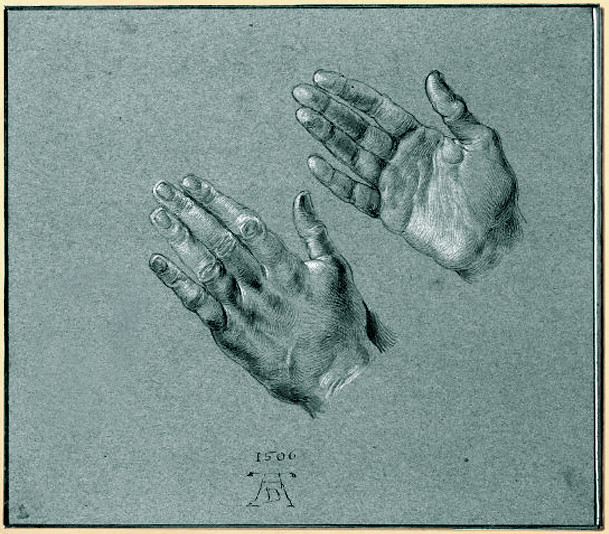
Art work: “Hands of Emperor Maximillian I,” Albrecht Durer, 1506
There is ample evidence from evolutionary psychology and brain science that we are wired to make quick assumptions about people based on our culture, perceptions, and experience. This can be particularly true in our current political climate.
The spiritual traditions have offered us alternative ways of seeing people, aimed at encouraging us to not judge by outer appearances, but assuming every person has inherent worth.
Quakers have held that every human has an “inner light” worthy of respect. This core belief led them to oppose slavery long before others in Europe and America.
In the eastern traditions, a common practice is to bow to others with hands pressed together near our heart and say “Namaste,” meaning we acknowledge the sacred presence in the other.
Fifteen centuries ago, St. Benedict created a book of precepts to guide the life of the monks. Rule 53:1 reads: “All guests who present themselves are to be welcomed as Christ, for he himself will say: I was a stranger and you welcomed me (Matt 25:35)” This rule is still followed at Benedictine monasteries and has been adopted by many in the Catholic tradition.
With this in mind, I appreciated the following piece by Mike Kerrigan, a lawyer in North Carolina. He has been distraught by the “rancor” that is characterizing our culture and sought out a mentor from his past who might help him approach others in a better way:
I reconnected recently with an old friend and Jesuit priest, Daniel Sweeney, with the intention of asking him.
In the 1980s, Father Sweeney taught world history at Georgetown Prep, the high school in North Bethesda, Md., where I was a student. He’s now an assistant professor of political science at the University of Scranton.
Surely my clerical companion, whether drawing on his priestly or academic vocation, could offer the customary good counsel to which I’d grown accustomed in adolescence. Still teaching by anecdote, Father Sweeney didn’t disappoint.
He recalled a time he’d repaired from the hurly-burly of instructing adolescent males to the tranquility of a faculty lounge. Seated beside him was another Jesuit faculty member, James A.P. Byrne, a priest known for saintly serenity and heroic patience.
Their peace was interrupted by an obscenely loud knock on the door. It was the kind of gratuitous pounding both men instantly knew had been delivered by the sort of student from whom they’d sought respite. Father Byrne got up, exchanged words with the impertinent young man, and returned to his seat.
“Who was at the door?” Father Sweeney asked. “It was just our Lord,” Father Byrne replied serenely, his Irish eyes twinkling, “in one of his most unrecognizable forms.” [1]
I hope to remember that description and use it when needed.
Image: “My Portrait Surrounded by Masks,” James Ensor, 1899
[1] “A Priest Finds Serenity in Humor,” by Mike. Kerrigan, WSJ, August 3, 2021
Many Biblical quotes are presented as if they were created for a Hallmark card — pleasant, sunny words of advice that can help us be good people and do nice things. But not all of them. I’ve always been struck by the words Jesus gives to his disciples in Matthew 10:16:
“Be wise as serpents and innocent as doves.”
Over the years, I’ve grown to love the audacity and practical wisdom in this saying. I believe it can have great value in our personal and professional lives. It presents two personal qualities that can seem, at first, mutually exclusive, and asks us to hold them together.
Let’s start with “wise as serpents.”
When hearing this, people will often say, “What a minute… ‘Be wise as a serpent?’… don’t snakes represent evil in the Biblical tradition?” That is a popular belief, going back to the writings of St. Paul in which the snake in the Garden of Eden story represents evil. But that’s not what the original story suggests, nor how I think Jesus intended the reference to be understood.
Genesis 3 begins “Now the serpent was more clever than any other wild animal that the Lord God had made…” Other translations use “subtle,” “shrewd,” “cunning” or “wise.” Traditional cultures sensed various animals had qualities that can be respected, admired, and emulated. Many sensed something particularly mysterious in snakes, and some even worshipped them. But in the original text, the serpent doesn’t have an evil intent; its role is to communicate possibilities in thinking that expanded the imagination of the human characters in the story. The dialogue between the serpent and Eve engages her curiosity and she begins to think for herself.
The way Genesis and Jesus portray it, the serpent can be respected for its cleverness and wisdom, and we can benefit from its example.
So, we are encouraged to be wise and creative. But that raises a question: to what purpose? Are we going to use creative thinking for our selfish agendas, which may be deceptive and manipulative? Or are we going to use our “smarts” for a greater good, something that serves, uplifts, and liberates others?
Jesus pairs “wise as serpents” with “innocent as doves.” Doves were seen as symbols of the divine spirit, a spirit which only works for the enhancement of life, not its exploitation. If we are to be “innocent as doves,” we will use our intelligence for the higher good.
When I think of people who have used natural intelligence for noble purposes, several come to mind.
When I was serving the Goleta congregation, we had an ambitious capital campaign. It began with the intention of creating a new, contemporary sanctuary. As it evolved, it included collaborating with the Cerebral Palsy Foundation to build 13 units of low-income, special needs housing, as well as the ecological restoration of the adjacent creek. People brought their “best game” to the project. One such person was Edith Newman, a retired businesswoman from Philadelphia. Edith loved getting the best return for any money entrusted to her, and she was our campaign treasurer. In the pre-internet era, every day she would check the CD rates at the local banks. If she found a better return somewhere, she’d get in her car and move our money from one bank to the next. Several years later, when our project was completed, one of the finance committee members looked over the records. “Do you know,” he said, “When I added it up, Edith’s account management earned us more than $100,000?” That was twenty years ago, and a lot of money for us. And it was because Edith was a wise money manager and used that gift for a higher purpose.
I recently watched Steven Spielberg’s film Lincoln for the fourth time. It shows how complicated issues of race were in that period, even for Lincoln himself. But it also shows how crafty and brilliant Lincoln was as a politician. Without those skills, the 14th Amendment ending slavery would not have passed.
As a sports fan, it’s always exciting to see someone use creative and strategic intelligence in a game. A favorite memory involves the Hall of Fame pitcher Greg Maddux. In 2008, he was 42 years old and far beyond his best years. The Dodgers signed him, and he played a total of 7 games for them that year. He’d been a crafty pitcher, but a poor hitter and runner. I was watching one game when, much to the surprise of everyone, he got on first base. When he got there, he was chatting with the first baseman, and they seemed to be joking about the fact he’d made it that far. Everyone, including the first baseman, expected him to stay put at first base. But Maddux sensed the other team’s guard was down. Suddenly he took off for second base and arrived safely before the other team realized what was happening. He stood there smiling. What he’d done was fair play and he did it to help his team. I still smile every time I think about it.
A core value in spiritual life is to cultivate a purity of purpose – to be “innocent as doves.” But that doesn’t mean we should be satisfied with a lazy, passive, or naive mind. The world will be a better place if we take some of the smarts we have and get the job done.







 Steve Jacobsen, Ed.D