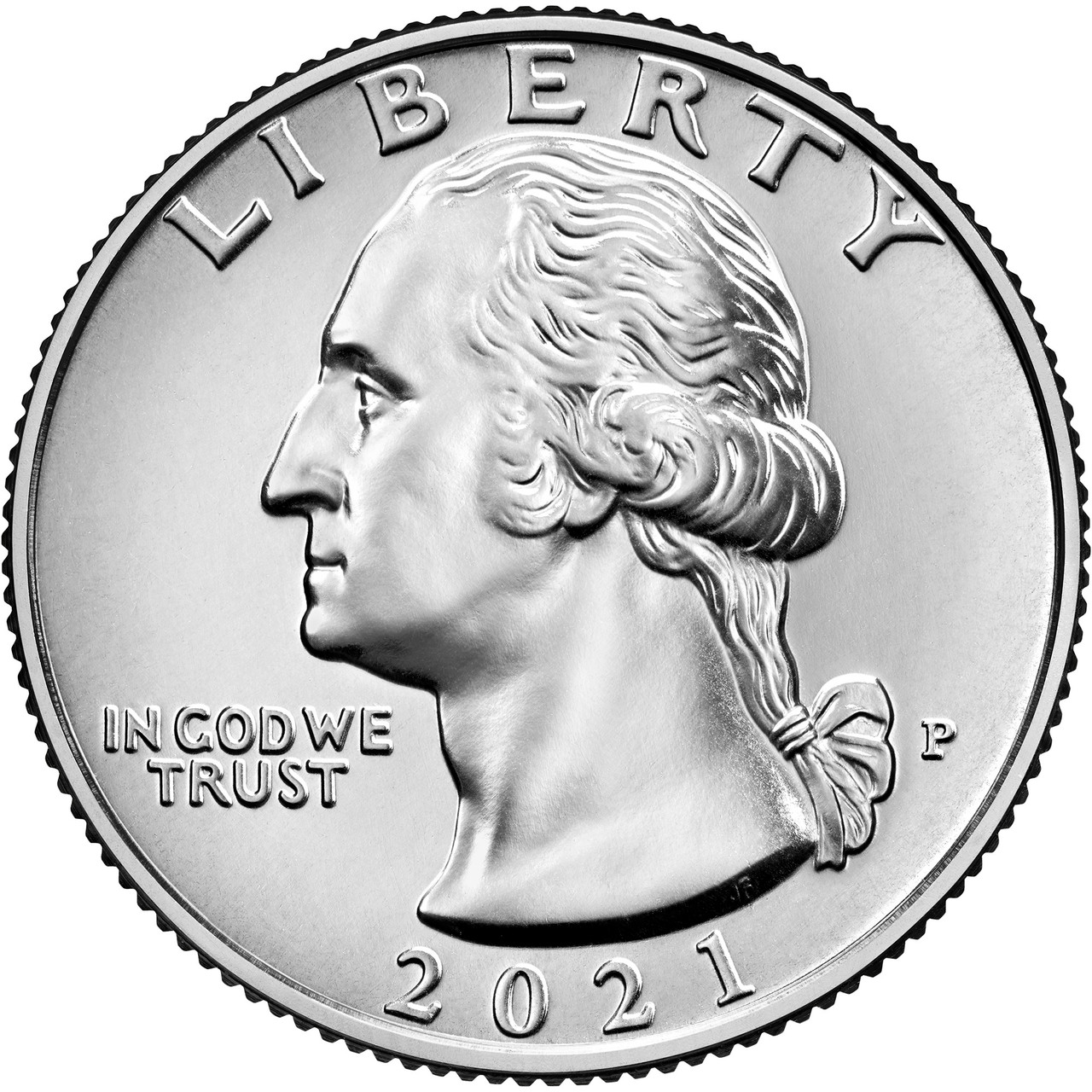
How many times have we held a quarter in our hand and seen his profile? There he is: calm, strong and confident.
Every February, teachers would tell us the story of how young George went to his father and confessed he could not tell a lie – he was the one who had chopped down the cherry tree. We were encouraged to follow his example of honesty.
History books often include the painting of him standing in the middle of a rowboat full of soldiers crossing the icy Delaware River on a winter’s night. They won a daring victory which became a turning point in the Revolutionary War. We were encouraged to be inspired by his courageous leadership.
After winning the war, he was elected our first president, then reelected, then peacefully stepped down. He was honored as “First in war, first in peace, and first in the hearts of his countrymen.” We were taught to revere his life and example.
But nobody told us he died a worried man.
After the 2016 election, the historian Thomas Hicks wrote First Principles: What American Founders Learned from the Greeks and Romans and How That Shaped Our Country. He wanted to know what values guided and inspired our first four Presidents: Washington, Adams, Jefferson, and Madison.
I learned Washington was not as well educated as the other three – they could read Greek and Latin and speak French; he spoke only English. They had spent extensive time in Europe, he never left America. They read books on philosophy and political theory while he preferred books on farming.
He believed you can always learn from your mistakes, which served him well as a military commander. He believed in the importance of personal and civic virtue, which he saw embodied in the great leaders of Classical Rome. He sought to be honest in all his dealings and respected the opinions of those who didn’t agree with him, refusing to be dragged into political factions. Personal integrity and selfless service to his country were of utmost importance.
These ideals served him well in his 45 years of leadership. But after he left office, he saw the rise of political parties which seemed to disregard all he stood for.
A month before he died, he wrote, “I have for some time past viewed the political concerns of the United States with an anxious and painful eye. They appear to me to be moving by hasty strides to some awful crisis…”[i]
“He would die a worried man. On Thursday December 12th, 1799 and the following day, Friday the 13th, he did farm oversight work on horseback, even though the weather was an atrocious mix of rain snow and sleet. That evening he was hoarse. Between two and three in the morning of Saturday December 14th, he woke Martha to tell her he felt ill and that his throat was painfully sore. Doctors came and during the course of the day bled him four times, which probably sped him toward his demise that evening. His secretary Tobias Lear reported to President Adams that Washington went out like a Roman: ‘His last scene corresponded with the whole tenor of his life — not a groan nor a complaint escaped him in extreme distress — with perfect resignation and in full possession of his reason he closed his well spent life.’”[ii]
Hicks’ book gave me a new respect for the complexities of George Washington. It also cast a light on one of his closest followers, James Madison.
Madison had a different view of humanity than his mentor. He did not believe you can count on political leaders being virtuous. (“…it’s not saying that humans are wicked and have no virtue, just that virtue alone is not sufficient.”[iii]) People will be motivated by self-interest and gravitate to others who share their interests, forming factions and parties to advance their aims. We need a system of government with checks and balances that assumes and sets boundaries on such behavior. Madison became the primary architect of our Constitution.
The book was published in 2020, and in the closing chapter Hicks asks: “What would the founders say about the America of today? Is our nation what it was supposed to be, or what they hoped it would be? He answers, “The picture is mixed.”[iv] That was in 2020. I’m guessing he’d give the same answer this year.
George Washington has been called the “Father or Our Country.” Many fathers and mothers come to their last days looking back and wondering what they could have done differently. They are often deeply concerned about how life will go for the people and institutions they have loved and served. They worry. But they’ve done their best. What happens after them depends on the action of those who follow.

Washington Crossing the Delaware, Emanuel Leutze, 1851
Postscript: In light of recent debates regarding the history of American slavery, I found this worth noting: “In his will Washington tried to free as many of the enslaved people on his plantation as legally possible. Some were the property of Martha and her heirs. Others were married to those owned by Martha. He was the only founder involved in human bondage who tried to emancipate so many enslaved people.”[v]
[i] Hicks, pg. 243
[ii] Hicks, pg. 243
[iii] Hicks, pg. 207
[iv] Hicks, pg. 285
[v] Hicks, pg. 243

 Steve Jacobsen, Ed.D